
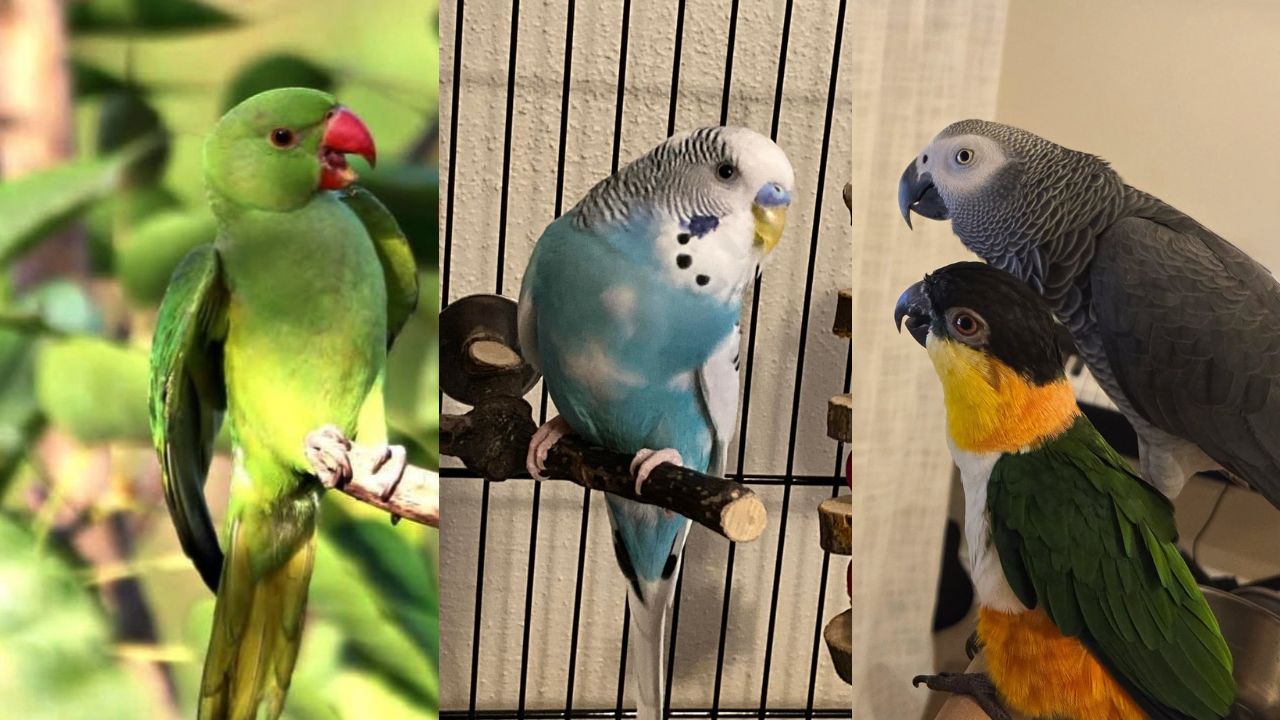

Neil has been keeping, breeding, and selling cage and aviary birds at Paradise Pets Swindon since 1988 — over 35 years of selling birds to new owners, watching what happens next, and noticing the patterns that most individual owners never have the vantage point to see. The pattern he has watched build across those 35 years has become, in recent months, impossible to ignore. Bird rescues across the UK are reporting that they are full to capacity. Budgie-specific rescues are closing their intake lists. The question worth asking honestly is: how did we get here, and what does it mean for anyone thinking about getting a pet bird?
A woman rang the shop about four months ago, not to buy anything. She had a budgie she needed to rehome. Circumstances had changed, she said, without going into detail. She had rung three local rescues before ringing me. Two had waiting lists running into months. One had closed its intake entirely for budgies because it already had over a hundred birds in its care and could not responsibly take any more.
She was not a negligent owner. She had kept the bird well for several years. Something genuine had changed in her circumstances and she had done the right thing by trying to find it a proper home rather than abandoning it. The system designed to catch exactly that situation was overwhelmed and had no space for her.
We found somewhere eventually — through a network of contacts rather than the official route. But the conversation stayed with me.
What The Current Picture Actually Looks Like
Let me be clear about the national situation, because it is more serious than most people realise unless they have a reason to be looking at it directly.
The RSPCA estimates that over a million birds are kept as pets in UK homes — making birds one of the most numerous pet categories in the country, a fact that sits oddly with how little attention bird welfare receives compared to dogs and cats. Those million birds are kept by people with widely varying levels of knowledge, preparation, and life stability. When circumstances change, the birds need somewhere to go.
The specific pressure points right now:
- Bird-specific rescues at full capacity — Charlie’s Place UK, a registered charity focused specifically on budgies, has described being stretched to the operational limit of what a small volunteer-run organisation can manage; Birds and Beaks Rescue has publicly stated it cannot accept budgies because it already has over 100 in care
- The RSPCA’s broader picture mirrors this — the charity described its rescue centres as “full to bursting,” with abandonment rates reaching multi-year highs driven by the pandemic pet acquisition surge and the ongoing cost of living crisis
- Waiting lists for bird surrenders running into months — not a refusal to help, but a system where demand has outpaced capacity to the point that birds wait months for a space to become available
- The pandemic effect has not faded as expected — the influx of pets acquired during 2020 and 2021 lockdowns produced a wave of surrenders as circumstances normalised; the birds bought during an extended period at home are now the birds appearing in rescues across the country
The Pattern I Have Watched Build For 35 Years
I want to be honest about what I have observed across those decades, because it is different from what most individual owners see. They see their own experience with their own bird. I see hundreds of conversations, across 35 years, and the patterns that emerge from that scale of observation are not something any single owner could notice on their own.
The reason birds end up in rescue is, in the vast majority of cases, not cruelty. It is not even negligence in the deliberate sense. It is a gap — sometimes a very large gap — between what the owner thought they were committing to and what the commitment actually required.
That gap has four consistent shapes, in my experience. All four have been present across the entire 35 years I have been doing this. What has changed is the scale.
Gap 1 — Underestimating The Lifespan
This is the one I would most want every new bird owner to sit with before they buy.
A well-kept budgie lives 10 to 15 years. Some go longer. When I sold budgies in 1990, I was selling birds that would still be alive at the turn of the millennium in a household that looked very different from the one they arrived in. Children who were primary school age when the bird came home would be in their mid-twenties when the bird died. Relationships, living situations, work patterns, health — all of it can and does change across a fifteen-year period in ways that are entirely unpredictable from the vantage point of standing in a pet shop on a Saturday afternoon.
Most people, when they buy a bird, are thinking about the next few years. They are not thinking about what happens when the children leave home, or when they move abroad for work, or when someone in the household develops a health condition that makes keeping a bird complicated, or when a relationship ends and a shared household becomes two separate ones. These are not rare or dramatic events. They are the ordinary shape of fifteen years of human life.
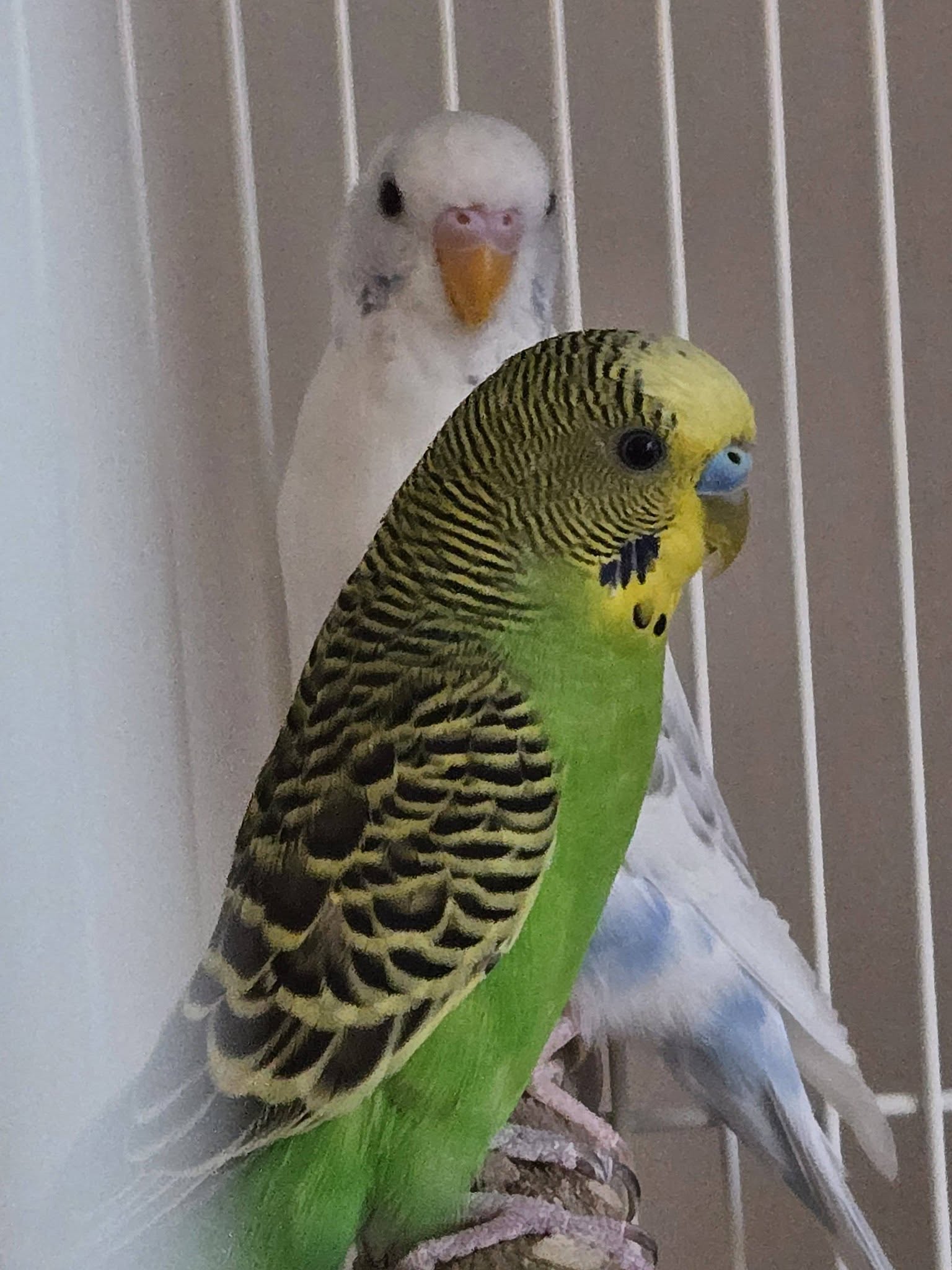
The bird, meanwhile, requires daily care throughout all of it.
- Budgies — 10 to 15 years; this is the commitment you are making when you buy a young bird
- Cockatiels — 15 to 20 years, sometimes longer; a bird bought by a 40-year-old could still be alive when they are 60
- Canaries — 7 to 10 years; shorter than the parrot family, but still a decade of daily commitment
- The pattern in rescue intakes — birds that have been owned for three to six years consistently appear in surrender numbers, suggesting that the initial enthusiasm and the first years of relatively manageable ownership give way to a change in circumstances that the owner had not accounted for when the bird was young
Gap 2 — Underestimating The Social Needs
This is the second most consistent explanation for surrenders in birds specifically, and the one that surprises people most when I raise it.
Budgies are flock birds. Their biology assumes the presence of other birds, and the social deprivation of being kept singly, without adequate daily human interaction as a substitute, produces real and observable effects on the bird’s behaviour and health over time. A single bird that is not receiving adequate daily interaction becomes louder, more demanding, sometimes destructive, and sometimes visibly distressed in ways that an owner unprepared for this reads as the bird being difficult rather than the bird communicating an unmet need.
The surrender story I hear most often for birds is some version of this: “He was fine for the first year. Then he started screaming all the time and we couldn’t work out why.” The “why” is almost always the same. The novelty of the new bird had worn off, the interaction had reduced, and the bird — a social species whose biology requires constant engagement — was telling the household in the only way available to it that something was wrong.
I have written about this at length in our guide for new budgie owners, and in our article on budgie lifespan. The short version: a budgie kept singly needs you to be its flock. If you cannot be, consistently, every day, the bird will show this. And if the household is not prepared for that reality, the bird ends up in a rescue.
Gap 3 — Underestimating The Daily Commitment
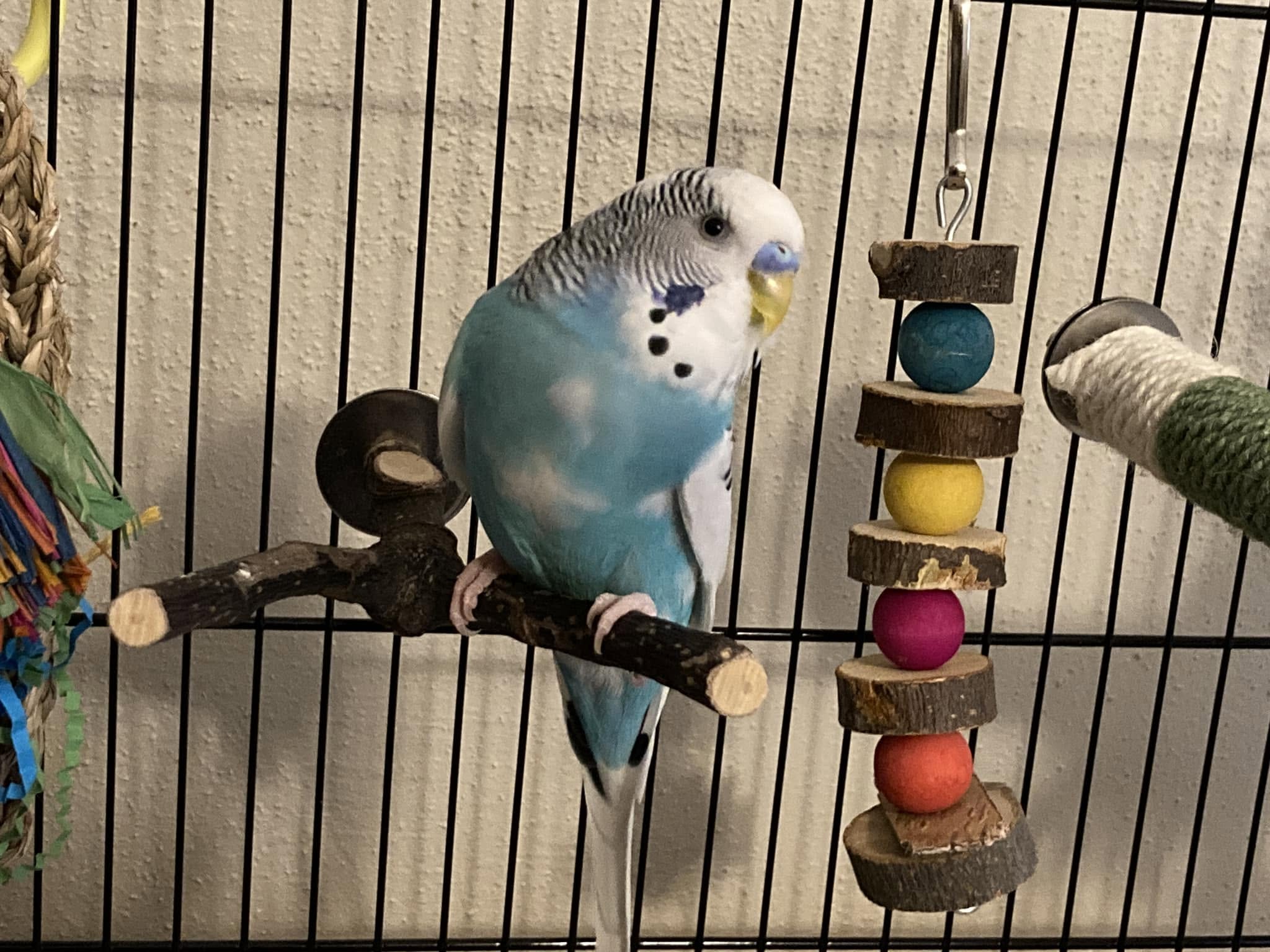
A bird is a daily animal. Unlike some pets that tolerate a day or two of reduced attention without obvious consequence, a bird requires daily feeding, daily fresh water, daily observation for health signs, and regular cage maintenance. It does not understand that today is busy or that you are unwell or that the family is away for a long weekend.
This sounds straightforward. For most people, for most of the time, it is. The problem is the cumulative weight of it across years, in a household where other demands change and grow. The parent of a toddler who buys a bird during a period when they have time and interest may find, four years later, that the bird is the first thing to get deprioritised when the school run, work pressures, and domestic demands all converge on the same tired afternoon.
Nothing dramatic has happened. The bird has not been treated badly. The daily care has just become the task that slips when everything is difficult, and the bird’s welfare has quietly declined in proportion.
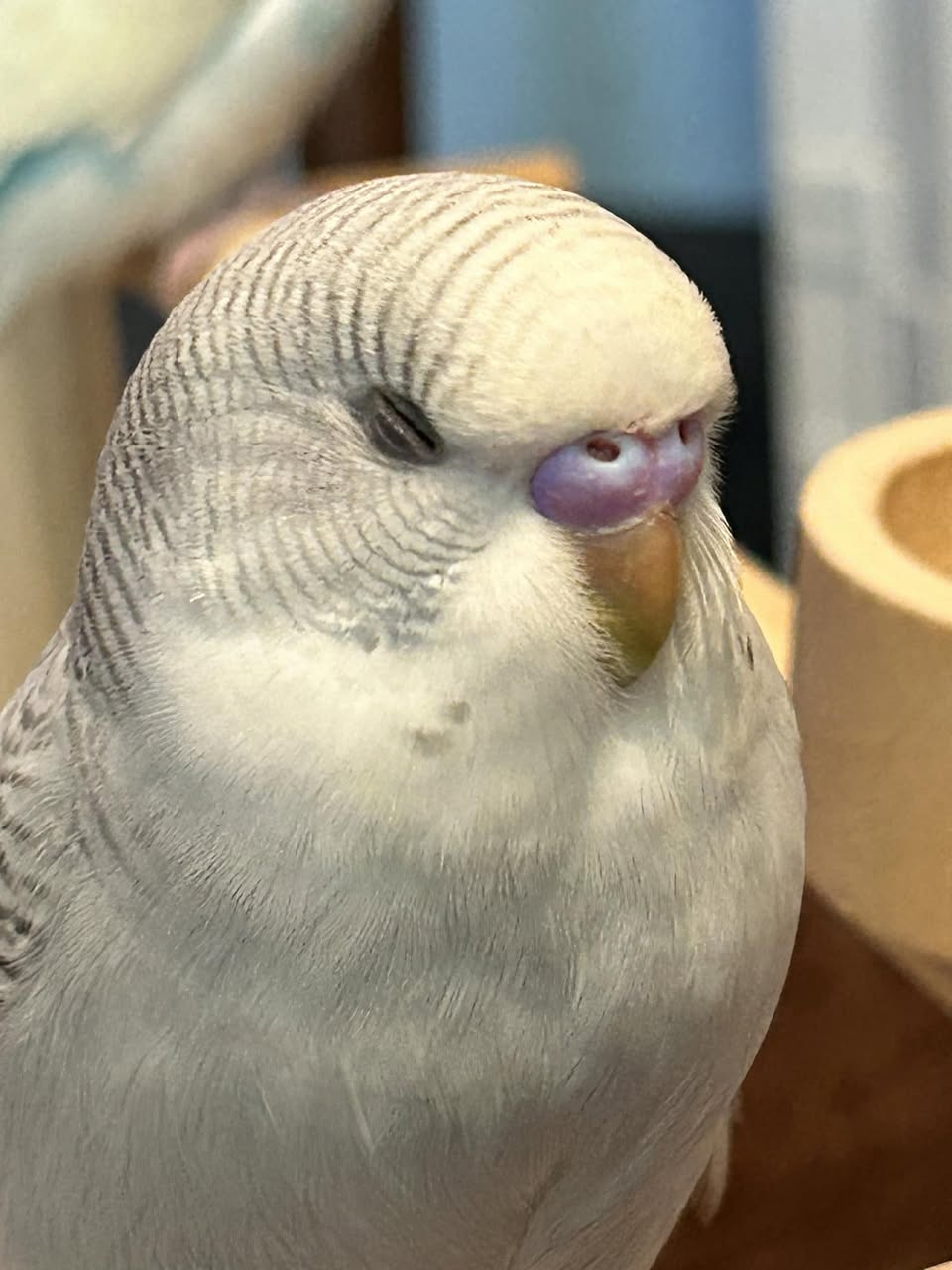
Gap 4 — Buying Without Knowing What “Going Well” And “Going Wrong” Look Like
This fourth gap is less obvious but, in my experience, just as significant. Many owners who surrender a bird do so not because they stopped caring about it, but because they genuinely did not know how to tell whether the care they were providing was adequate.
A bird that is slowly declining from a seed-only diet looks, for years, like a bird that is fine. A bird that is developing liver disease shows almost nothing to an untrained eye until it is significantly ill. A bird in chronic low-level social stress can appear, to someone who does not know what a genuinely thriving bird looks like, perfectly acceptable.
When owners who did not know what thriving looked like eventually discover that the bird has been in poor health for some time, or that the care regime was inadequate in ways they did not recognise, the response is sometimes to surrender the bird rather than to adjust the care. Not always. But sometimes. And the knowledge gap that produced the inadequate care also produces the surrender, rather than the correction.
This is why I write articles like our budgie lifespan piece, our guide to recognising a sick budgie, and our article on signs of a happy budgie. Not as an exercise in producing content, but because the owners who know what they are looking for are the ones who adjust their care rather than surrender their bird.
What The Pandemic Made Worse
I want to address the pandemic specifically, because its contribution to the current rescue situation is real and it is still playing out.
During 2020 and 2021, pet ownership rose sharply across the UK as people working from home had the time, the space, and the domestic presence to manage animals that they might not otherwise have considered. Birds were part of this surge. A household that previously felt a budgie would be alone too much suddenly had someone home all day. A family whose children had been asking for a pet for years suddenly had the bandwidth to say yes.
Many of those purchases were made with genuine care and good intentions. The problem is that the conditions that made them feasible — extended home working, school closures producing a constant domestic presence, a general slowdown in the pace of external life — did not persist. When those conditions normalised, some households found themselves with a bird that had been bought for a way of life they were no longer living. The bird’s needs had not changed. The household had.
I am not raising this to judge anyone who bought a bird during that period. I am raising it because the pattern is clearly visible in what is happening to rescue intakes right now, and because understanding the cause makes it easier to understand what the honest response should be going forward.
What This Means If You Are Thinking About Getting A Bird
I want to be clear that nothing in this article is an argument against getting a pet bird. I have spent 35 years selling birds to people who have gone on to have genuinely wonderful, lasting relationships with them. A well-matched bird in the right household, given the right care, is one of the more rewarding things a household can have. I believe that sincerely, and it is why I am still doing this after 35 years.
What I am saying is that the question to answer before you buy is not “do I want a bird” but “am I prepared for what keeping a bird well actually involves, across the full span of its life?” These are different questions. The first one is easy to answer enthusiastically. The second one requires an honest hour of thought.
- What is the realistic lifespan of the species I am considering? Am I genuinely prepared for that commitment across all of it, not just the first few years?
- What will happen to this bird if my circumstances change significantly? Who would take it? Have I actually thought this through?
- Can I provide — or arrange — adequate daily care every single day? Not on good days, but on difficult ones too?
- Am I buying one bird or two? A single bird without adequate daily human interaction will communicate its distress. Am I prepared for that, or should I be buying a pair from the start?
- Do I know what this species looks like when it is thriving? Not just surviving — genuinely thriving? If not, am I willing to learn before I buy?
- Is the reason I am buying this bird primarily for my own enjoyment, or am I genuinely prepared to centre the bird’s needs in the decision? Both motivations can coexist, but the second one needs to be present.
- Have I read the honest guides rather than just the appealing ones? The article on lifespan. The article on what signs of illness look like. The article on what a happy bird actually looks like versus one that is merely surviving?
If you can answer all of those honestly and positively — come in and let’s find you the right bird. The conversation about which species, which individual bird, what setup, and what ongoing care looks like is one I am genuinely happy to have for as long as it takes.
If some of those questions give you pause — that is the pause worth having. A bird that is not bought is a bird that never needs to be surrendered. That is not a failure. It is the responsible outcome.
What The Rescue System Actually Needs From All Of Us
I want to close this section with something practical for people who are already bird owners, because this article is not only aimed at prospective buyers.
The rescue situation is genuinely difficult for the organisations dealing with it. Many are volunteer-run, operating on minimal funding, and stretched far beyond what they were resourced to handle. If you are a current bird owner, there are things you can do that directly support the wider situation:
- Know the signs that your bird is not thriving — early intervention when something is wrong costs far less, in every sense, than emergency treatment or a surrender forced by a crisis; our sick budgie guide and lifespan article are starting points
- Review the care if anything has felt like it was slipping — a seed-only diet, inadequate space, no routine, chronic stress from the environment; the gap between current and adequate is often closeable without enormous effort if addressed honestly
- If you do need to rehome, plan early rather than at crisis point — a bird surrendered with time to find the right home is in a very different situation from a bird surrendered urgently; if you can see a change coming, start the conversation early
- Consider whether your experience and current situation might support a rescue bird — the rescues that are full have birds that need experienced, stable homes; if you already know how to keep a bird well and your situation is stable, a rescue bird is worth considering alongside purchasing from a breeder
Frequently Asked Questions
Why are UK bird rescues so full right now?
A combination of factors that have built over several years. The pandemic saw a significant surge in pet bird purchases by households that had more time and domestic presence than usual — and as normal life resumed, some of those birds were surrendered. The cost of living crisis has added further pressure, with some owners no longer able to afford veterinary care or food. And the underlying long-term trend of birds being purchased without adequate understanding of the commitment has continued throughout. Bird rescues, many of which are small and volunteer-run, have not been resourced to scale with the intake.
Should I adopt a rescue bird rather than buying from a shop?
This is a genuinely good question and the honest answer is: it depends on your experience and your situation. Rescue birds — particularly budgies — often need experienced owners who understand the species well enough to assess and address whatever has brought them to rescue. A first-time bird owner who has done their research, knows what they are looking at, and is prepared for a bird that may need more time and patience to trust them is a good candidate for a rescue bird. An owner who is new to birds and wants a straightforward introduction to the species may find a young, well-sourced bird from a reputable breeder is a better starting point. Neither option is wrong; the right one depends on the individual owner’s experience and capacity.
What are the most common reasons pet birds are surrendered in the UK?
In my experience across 35 years: change in household circumstances including house moves, relationship breakdowns, or new work patterns; the bird proving more demanding than the owner anticipated, particularly single birds that develop attention-seeking or noisy behaviours; illness in the owner or a family member; the bird living significantly longer than the owner expected; and, in some cases, the gradual realisation that the care being provided has not been adequate and the owner does not feel equipped to correct it. Very rarely is it that the owner stopped caring about the bird. Usually it is that the gap between their expectations and the reality of the commitment has become too wide to bridge.
Is it true that budgies can live 15 years?
Yes, in good conditions. The average UK pet budgie lives 5 to 8 years — which is already a substantial commitment — but well-kept birds regularly reach 12 to 15. We have written about this in detail in our budgie lifespan article. The gap between average and potential lifespan is almost entirely explained by care, which means owners who get the basics right from the start tend to have birds that live considerably longer than those who do not.
Can I rehome my bird through Paradise Pets?
We are not a rescue centre and we do not have the capacity to function as one. What we can do — and have done for 35 years — is help people in difficult situations find the right contacts, talk through options, and navigate what can be an emotionally difficult process. If you are facing the prospect of needing to rehome a bird and you do not know where to start, ring us on 01793 512400. We will not promise a solution, but we will do what we can to help.
What should I do if I cannot find a rescue space for my bird?
Do not release the bird. This is particularly important for budgies and cockatiels — they are not native to the UK, they will not survive in the wild, and releasing a captive bird is both illegal and a welfare disaster for the animal. If official rescue routes are full, local avian veterinary practices sometimes have networks of private contacts; online groups such as Budgie Lovers Rehoming UK have active communities of people looking to take in birds; and in some cases, a temporary private arrangement with someone known to you who has relevant experience is better than waiting months for a rescue space. Ring us and we can talk through the options available in the Swindon area specifically.
Do bird rescues take all species?
Most UK bird rescues that focus on cage birds take budgies, cockatiels, canaries, and small parakeets. Larger parrot species are handled by specialist organisations including Birdline Parrot Rescue and AllStar Parrots, which operate nationally. The position can change depending on current capacity — contact each organisation directly to understand their current intake situation before assuming they can help.
Where can I get honest advice about rehoming or keeping a bird in Swindon?
Come in to Paradise Pets at Manor Garden Centre, Cheney Manor Industrial Estate, Swindon SN2 2QJ — or call us on 01793 512400. We are not a rescue and we cannot magic up spaces that do not exist, but we are happy to talk honestly about any situation involving a bird in your care.
One Last Thing From Me
The woman who rang four months ago has sent me a brief message since to say the bird has settled well with the person who eventually took it on — a retired woman with considerable bird experience who was able to give it the daily time and attention it needed. It worked out. Not through the official system, which had no space, but through the informal network of people who know each other through years of genuinely caring about these animals.
That is, in miniature, what 35 years of this looks like. A network of people who care. A system that is under pressure. And the knowledge — which is all I am trying to offer in this article — of what the honest questions are, and when to ask them.
If you are reading this because you are thinking about getting a bird: I hope the honest version of what that commitment involves helps you make a genuinely informed decision, rather than the version that only tells you what you want to hear.
If you are reading this because you already have a bird and something is not quite right — in the care, in the situation, or in your capacity to continue — please do not wait until it becomes a crisis. Ring us, come in, start the conversation early. The outcome is almost always better than the one that results from waiting.
This counter has been here for 35 years. It will still be here when you need it.

Thinking About Getting A Bird, Or Struggling With One You Have? Come And Talk To Me
Whether you want the honest conversation before you buy, or you are navigating a difficult situation with a bird you already have — come in or ring us. Honest advice, no sales pressure, no judgment. That is how we have done things here since 1988.
⭐ Customer Reviews
Amazing Bird Selection
Had a lovley visit today,staff were very friendly and very helpful,such a great petshop,their selection of birds is incredible,really impressed,thank so much to the staff at Paradise Pets

Friendly Helpful Staff
I have been coming to this place for years and they have a great stock of food for all types of pets. Have a great selection of small mammals and a lot of birds. Staff are friendly and helpful.

Great Quality Hutch
Bought a guinea pigs hutch and run combo, very happy with the service, the hutch was put in my car for me without even asking for help. The wood quality is very good, the instructions easy to follow and we are extremely happy with the fully built hutch. A good size for 2 guinea pigs

Response from Paradise Pets | Wiltshire
Thank you Melanie Latus Nice to provide services to you.
Best Bird Shop Around
It’s the best pet shop in and around Swindon. They always have an amazing selection of birds and all you need to keep them happy. I keep birds myself and the guys there are happy to answer questions and really know their stuff. I have seen budgies etc. in chain pet shops in the area looking really unhealthy and ill – I wouldn’t go anywhere else than Paradise Pets for animals.

Highly Recommended Bird Shop
I could not praise this shop enough. Really helped my Grandson buy his first bird and he’s loving it. Travelled from Somerset and was welcomed with open arms.

Great Shop with Competitive Prices
Great shop with amazing selection for small animals, hamsters, mice ect, highly recommend!
Also has a great selection for dogs & cats too & very competitive prices! 💖

