
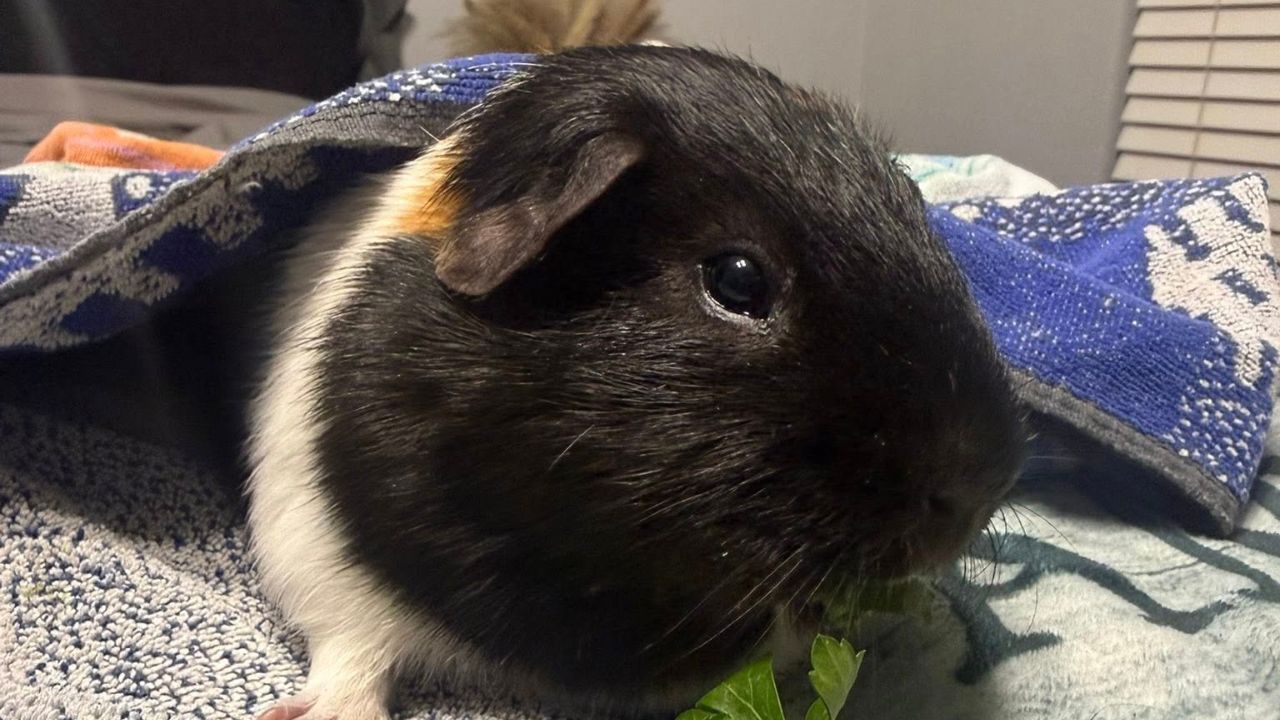

Neil has kept, bred, and sold guinea pigs at Paradise Pets Swindon since 1988 — over 35 years of watching what happens in the first days after a guinea pig goes to a new home. The first week is the most critical period in the animal’s settling process — and it is the period most owners are least prepared for. This is the guide he gives to every new guinea pig owner before they leave the shop.
Most of the problems I see with new guinea pigs happen in the first week. Not because something went medically wrong. Because the owner did not know what to expect and responded to normal guinea pig settling behaviour in ways that made the settling harder, not easier.
A guinea pig arriving in a new home is an animal in the most stressful situation of its life. Everything it knew — the smells, the sounds, the other animals, the layout of the space — has been replaced entirely. It is a prey animal with a nervous system calibrated to treat unfamiliarity as danger. It is not going to immediately sit in your hand and eat vegetables and purr like a cat. It is going to hide, and freeze, and possibly not eat in front of you for several days, and this is going to look to a new owner like something is wrong with it.
Nothing is wrong with it. It is being a guinea pig in an unfamiliar situation and responding exactly as a guinea pig should.
The guide I am about to give you is the honest version of the first week — not the version that tells you everything will be easy, but the version that tells you what you will actually see at each stage and what to do about it. Hour by hour, day by day, through the seven days that determine whether the next few years of this animal’s life in your home start well or start with a setback that takes months to undo.
Before You Bring It Home — The Preparation That Changes Everything
The first hour of a guinea pig’s time in your home matters more than any other single hour — and what happens in that hour depends almost entirely on what you did before you brought the animal home.
The enclosure should be fully set up before you leave to collect the guinea pig. Not mostly ready. Fully ready. Bedding in, food and water in place, hides positioned, the whole environment complete and settled. A cage that is being assembled while the guinea pig is in a travel box nearby is a cage that adds to the chaos of an already stressful transition.
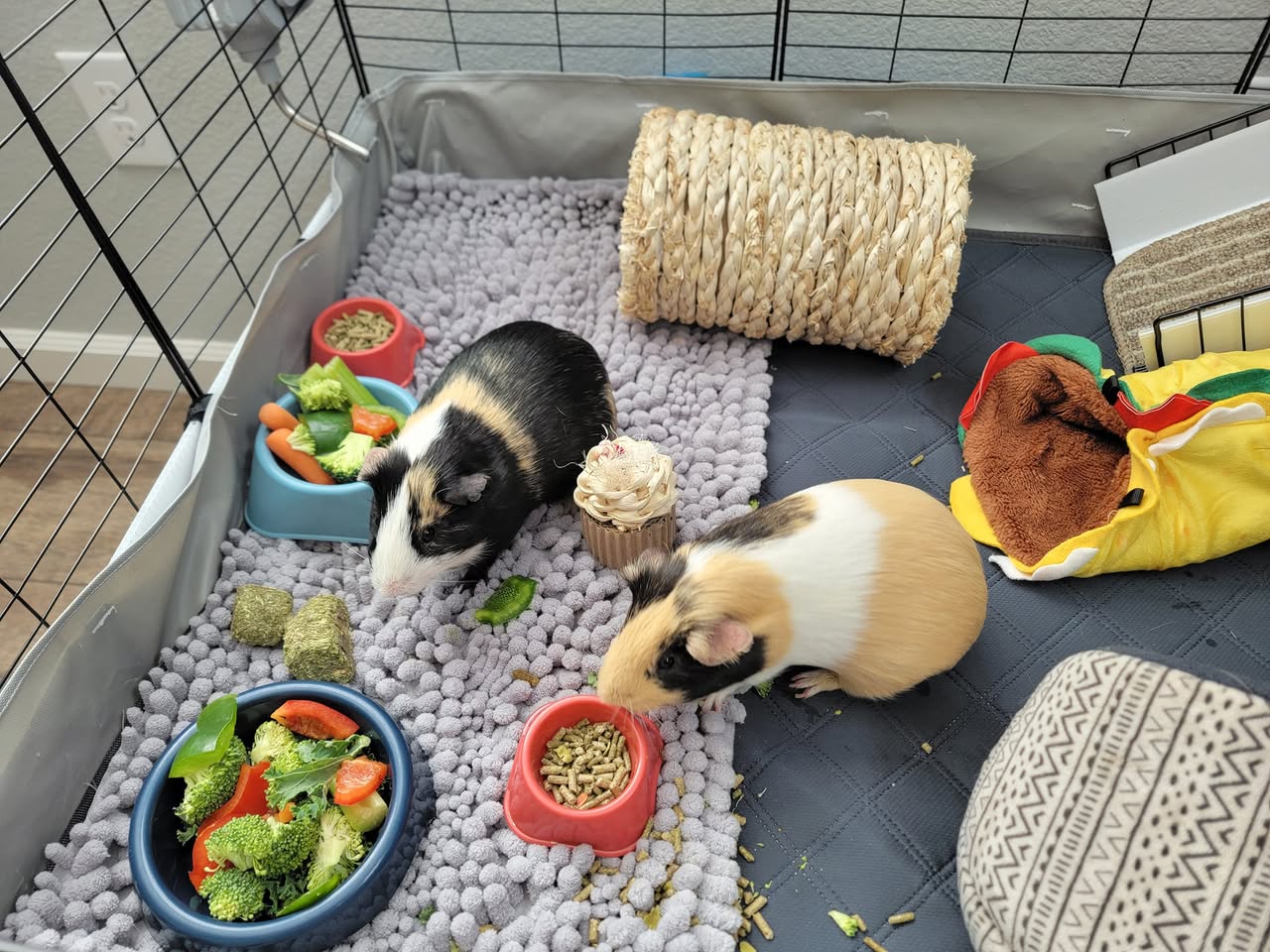
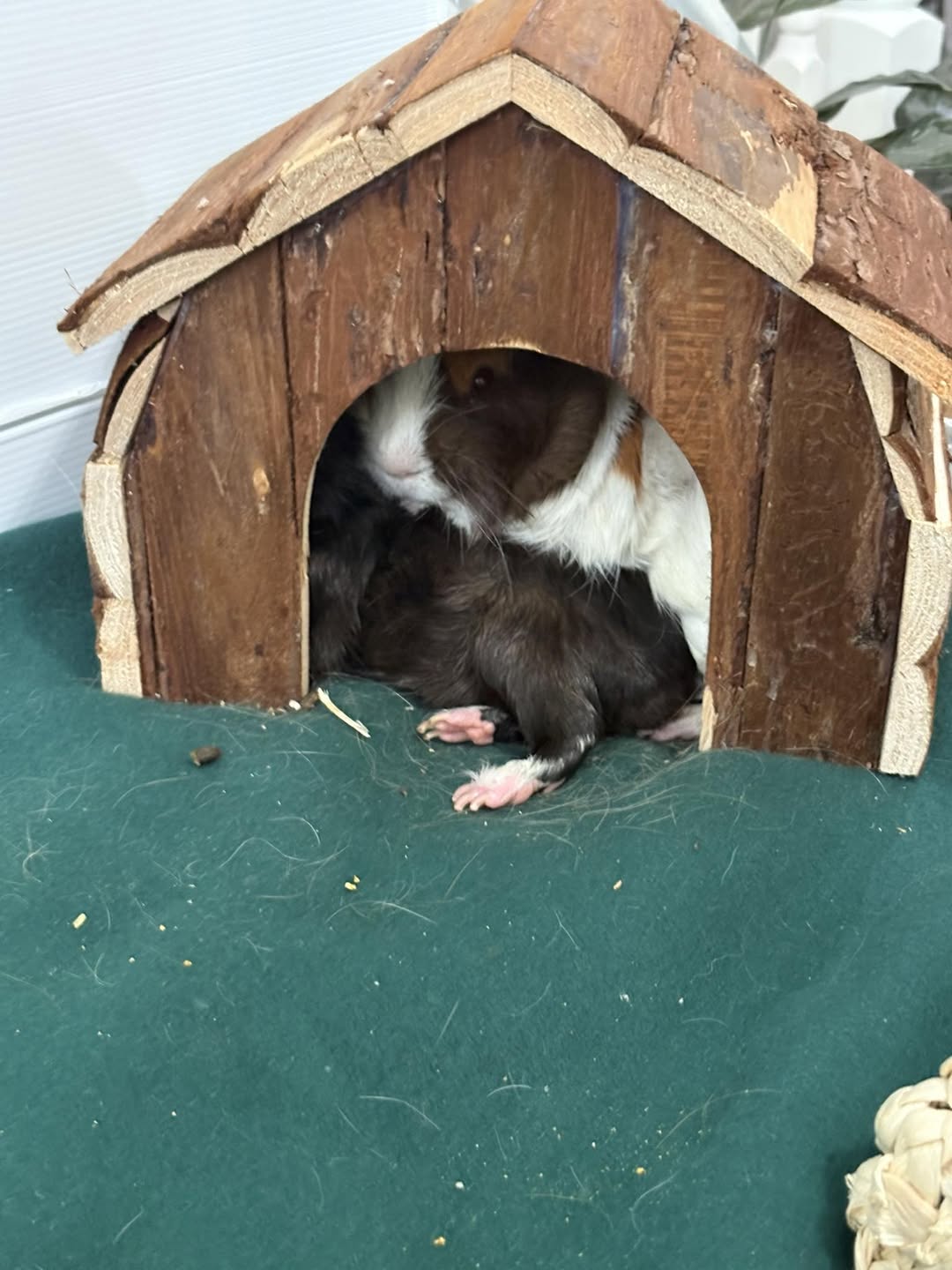
Hides are essential and are worth spending a moment on specifically. A guinea pig arriving in a new home needs somewhere to go that feels enclosed and safe — a hide house, a tunnel, an area of deep bedding it can disappear into. Many first-time owners set up a cage without hides because the animal looks accessible and handleable without them. This is exactly backwards. Hides reduce stress by giving the animal a retreat that its prey-animal psychology genuinely requires. A guinea pig with a hide settles faster than one without. Always provide at least two per animal — one per pig if you have more than one, plus one extra.
Get a small amount of the bedding from wherever the guinea pig was kept before — from the shop, from the breeder — and put it in the new cage before the animal arrives. The familiar smell in an unfamiliar environment gives the animal one point of reference in a world that is otherwise entirely new. This single step reduces the intensity of the initial stress response measurably.
Have the room quiet and calm before you bring the animal in. Not hushed in an unnatural way — but not a room full of children, with the television on, with a dog in the corner. The fewer novel stimuli competing for the animal’s threat-assessment resources in the first hours, the faster those resources are freed up for beginning to settle.
Hour One — Arrival and the First Release
The drive home is stressful for the animal. Keep the travel box covered — a cloth over it blocks visual stimulation and reduces the input the animal is processing. Drive smoothly if you can. Avoid loud music. Minimise stops and starts.
When you arrive home, bring the travel box directly into the room where the enclosure is. Do not make detours — do not carry the animal through multiple rooms, do not let children crowd around the box. Straight to the room, straight to the enclosure.
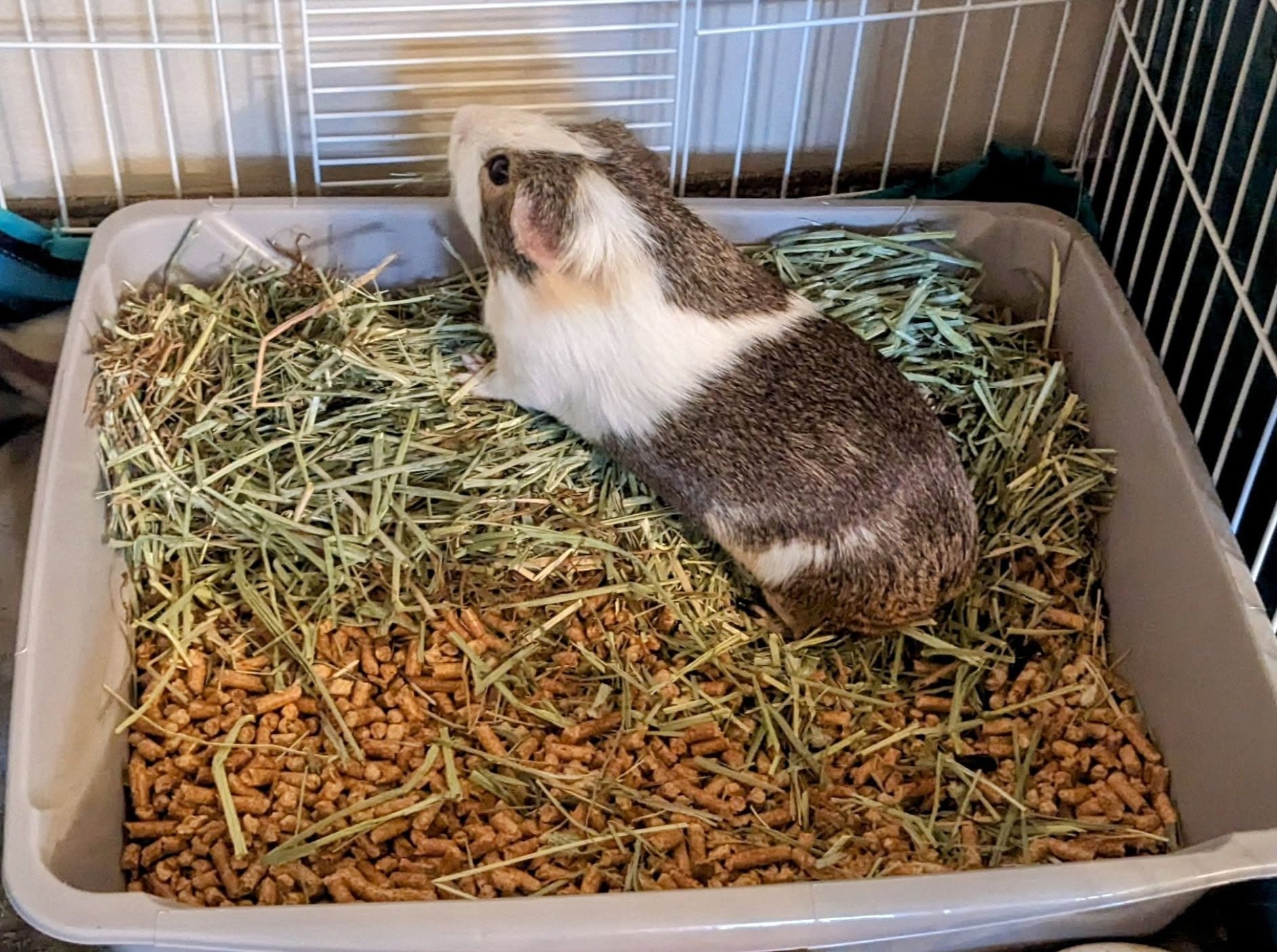
Open the travel box inside the enclosure — or position it with the opening against the enclosure door — so the animal can move from the box into the cage without being picked up or transferred by hand. This is important. The first entry into the new home should be on the animal’s own terms, not in the grip of a human hand. Let it step out of the box and into the cage when it is ready.
Then leave it alone.
This is the instruction most new owners find hardest to follow. The instinct is to watch, to be close, to see what it does, to try to make friends with it immediately. Resist that instinct. Put the animal in the cage, close the enclosure, step back — ideally out of direct line of sight — and give it thirty minutes of complete quiet.
During those thirty minutes, the guinea pig is doing something important. It is beginning to map the new space — scent-marking, exploring, identifying the food and water, locating the hides. It needs to do this without the additional stimulus of a large animal watching it. Let the mapping happen.
After thirty minutes, you can be in the room — sitting quietly, not directly facing the cage, going about ordinary business. The sound of your normal presence is part of what the guinea pig needs to begin associating the new environment with safety.
Hours Two to Six — The Hiding Phase
Expect the guinea pig to hide. In many cases, you will not see it at all for several hours after the initial release. It will be inside a hide, in the deepest corner of the bedding, invisible and apparently unresponsive to anything happening in the room.
This is normal. This is not ill-health. This is not a sign that something is wrong. This is a prey animal doing exactly what prey animals do when they are in an unfamiliar environment — minimising their exposure until they have gathered enough information to begin extending their sense of safety beyond the immediate retreat.
The mistake here is intervention — reaching into the cage to check on the animal, lifting the hide to see if it is alright, picking it up to hold it so it can see that everything is safe. Every one of those interventions reinforces that something threatening is happening. The animal retreats, and the person reaches in, and the animal retreats further, and the message the animal is receiving is that this space is not safe and the threats in it are unpredictable and persistent. The settling clock resets with each intervention.
Your job in hours two to six is to be present and calm without being intrusive. Sit in the room. Talk in a normal voice — not to the guinea pig specifically, just normal household sounds and conversation. Handle the enclosure only to put fresh food and water in, and do this quietly and without fuss.
The guinea pig is listening. Even from inside the hide, it is registering the sounds, the rhythm of the environment, the predictability of what is happening around it. That registration is the beginning of settling, even when the animal is entirely invisible.
The First Evening — Food and Signs of Life
By the first evening — six to eight hours after arrival — most guinea pigs will begin emerging from their hide under the cover of the quieter evening period, particularly if the room has settled and the household activity has reduced.
You may hear it before you see it. Guinea pigs are vocal animals — they wheek, they chutter, they make small contact sounds. The first sounds from the hide are a positive sign. They indicate the animal is becoming aware of its environment as a communicative space rather than simply a threat to be hidden from.
Food behaviour on the first evening varies significantly between individuals. Some animals eat relatively normally within hours of arrival. Others will not eat in front of a human presence for the first day or two, and will only approach the food dish when they believe they are unobserved. The practical management: put fresh food in the enclosure, retreat to a normal distance, and do not watch the food directly. Turn slightly away. Look at something else. Allow the animal to decide when and whether it is safe to approach.
Check that the animal is eating — not by watching it eat in real time, but by checking the food levels at the end of the evening. If the hay and pellets are being consumed, the animal is eating. A guinea pig that eats nothing for the first full day is worth monitoring, but not intervening with unless it is also showing other signs of illness.
Day Two — Voice Before Hands
By day two the animal has had one full cycle of the household’s rhythms. It has heard the morning sounds, the daytime sounds, the evening sounds. It has a beginning sense of when activity increases and decreases. That predictability is the foundation of settling.
Day two is for establishing your voice as a non-threatening sound.
Sit near the enclosure. Talk. Not in a high, excited way — in a normal, calm, conversational tone. Read something aloud if that feels less strange. Describe what you are doing. The content does not matter. The quality of the sound — calm, rhythmic, consistent, emanating from the same source repeatedly — is what the animal is processing. It is learning that this sound is associated with no threat. That is the association that makes the next step — presence with the enclosure open — possible.
Do not handle the animal on day two. Do not reach into the enclosure except to service food and water. The voice work is the entirety of day two’s task with the animal.
If you have children in the household, day two is also the day to set explicit expectations for them about the timeline. Children want to hold the guinea pig. That is natural and understandable. The explanation — that if we rush this, the guinea pig will be scared of us for months, and if we are patient for a few days, it will come to us voluntarily — is one most children can understand when it is explained clearly and with the specific outcome framed positively.
Day Three — First Hand Contact
By day three, a guinea pig that has been given the settling conditions above will almost always be showing more visible activity. Coming out of the hide more. Moving around the enclosure with less visible alertness. Beginning to eat in view rather than only in secret. Possibly wheeking when it hears you approach — which is a very positive sign.
Day three is when hand presence inside the enclosure begins.
Open the enclosure door. Place your hand flat on the floor of the enclosure — not reaching toward the animal, not following it. Flat, still, near the edge, palm upward. Let the animal approach your hand if it chooses. Do not pursue it. Do not follow it if it moves away. The hand is there as an offering, not an imposition.
Put a small piece of the guinea pig’s preferred vegetable on your palm or on the floor beside your hand. Cucumber, a piece of pepper, a small leaf of romaine lettuce. The food is an incentive — but more importantly, it gives the animal a reason to approach the hand that has nothing to do with the hand itself. The animal approaches the food, encounters the hand proximity as part of that approach, and the association being built is: hand plus something good.
Do not be disappointed if the animal does not approach on day three. Some guinea pigs take five or six days to reach this stage. The timeline is the animal’s, not yours. Repeat the exercise once or twice daily — always with the same calm, flat, still hand — and wait.
Day Four and Five — Building the Association
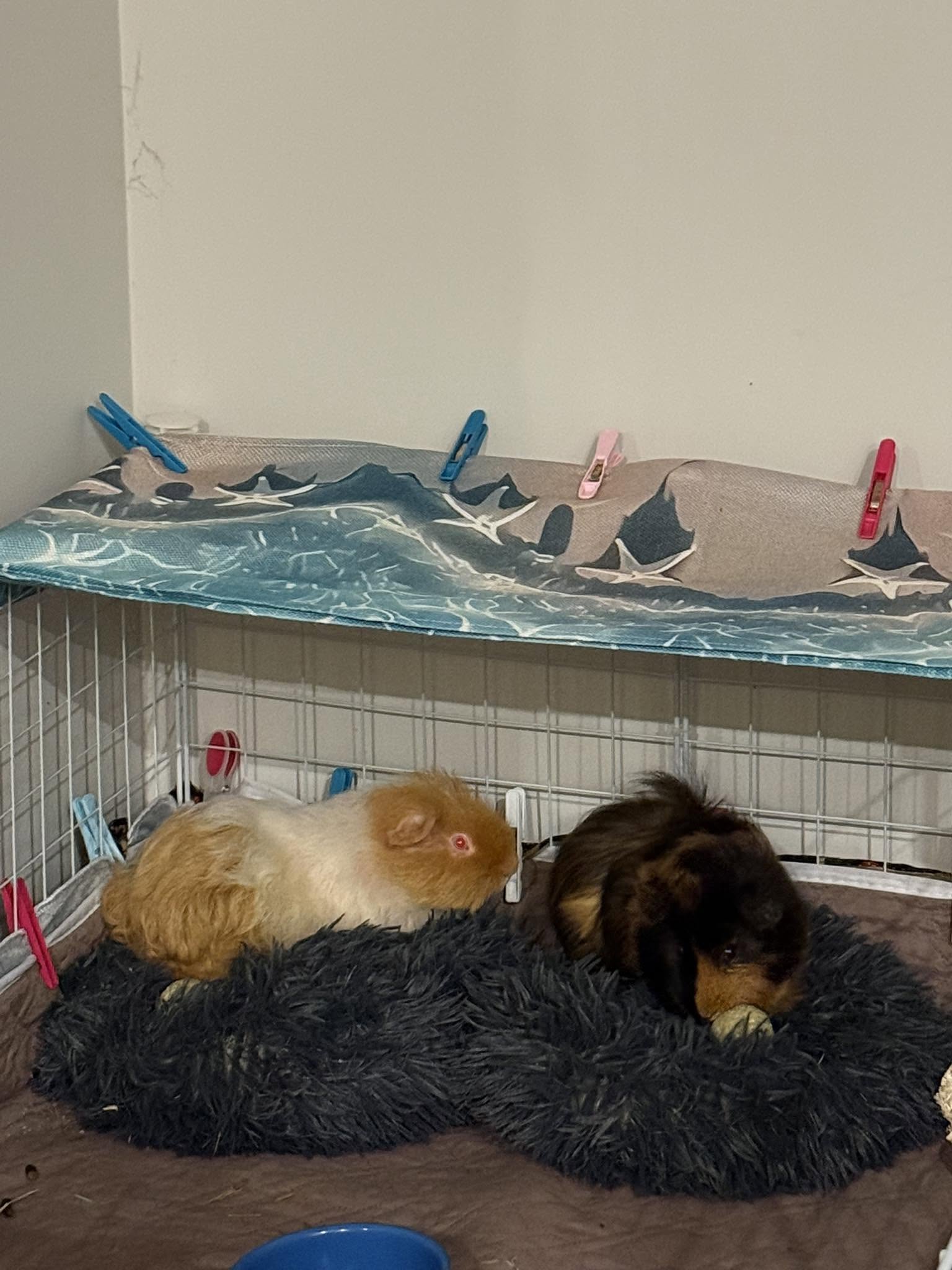
By days four and five, the hand-with-food approach has been repeated several times. The animal’s response should be showing a progression — each session slightly less hesitant than the previous one, the animal coming closer, the approach happening faster.
Continue the same exercise. The food is still the tool. The hand is still flat, still, offered rather than imposed. The length of time you ask the animal to spend near your hand can begin to extend slightly — not dramatically, but enough that the sessions are building.
This is also when you begin to notice the guinea pig’s individual personality. Some are bold and curious from day four onwards — approaching quickly, taking food confidently, sitting contentedly near the hand. Others remain cautious and require more time. Both are normal. The range of individual temperament in guinea pigs is wide, and the timeline for settling reflects that range.
If the animal is now eating reliably in your presence, approaching the enclosure door when you open it, and taking food from near your hand — it is on track. The next step is being picked up, and that step should not be rushed.
Do not clean the cage on day four or five. I say this specifically because the instinct to clean the cage after the first few days is strong — the bedding is used and the owner wants things to be fresh. Cleaning the cage at this stage removes every scent mark the animal has laid down in the new environment. Those scent marks are the animal’s record of its territory — the evidence that this space is known and claimed. Removing them resets the environmental familiarity the animal has been building since day one. Wait until the end of the first week for the first full clean, and then clean only partially — leaving some used bedding to preserve the familiar scent.
Day Six — The First Lift
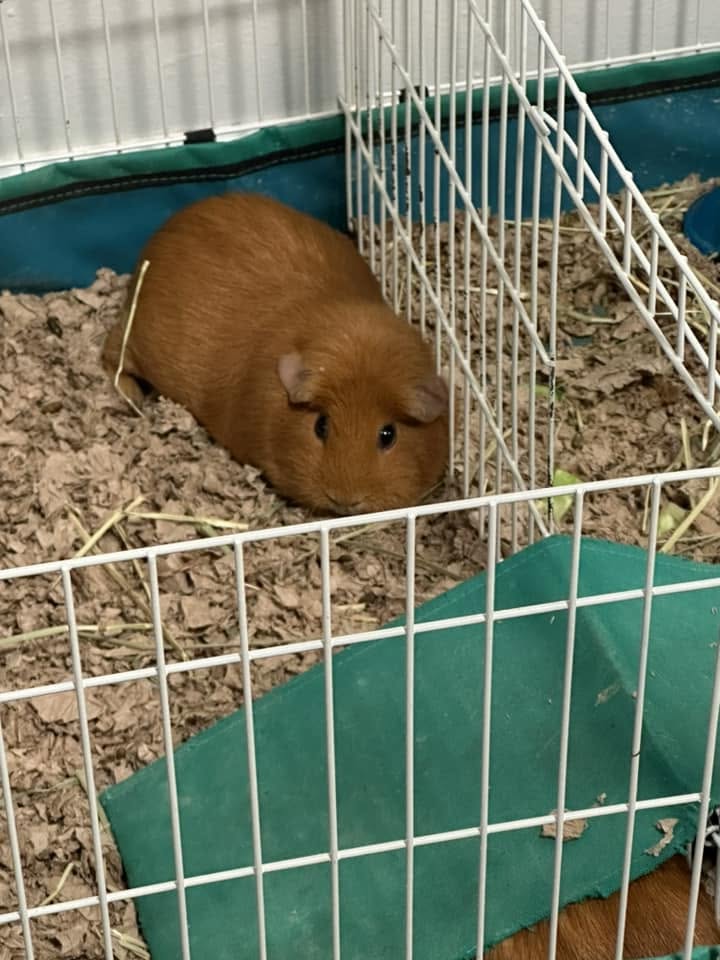
By day six, a guinea pig that has been given proper settling time is an animal that is recognisably more settled than it was on day one. It comes out readily. It eats in front of you. It approaches your hand for food. The signals of active fear — freezing, breath held, eyes wide and unblinking, inability to move — have been replaced by signals of cautious engagement.
This is when the first lift can begin — carefully, briefly, and with a method that minimises the experience of being a prey animal caught from above.
Scoop rather than grab. Place both hands flat beside the animal — not above it, beside it — and slide them under the body from both sides simultaneously, supporting the full weight of the animal rather than gripping it. Lift slowly and bring the animal close to your body, supporting the hindquarters. The sensation of unsupported hindquarters is what causes most guinea pigs to struggle during lifting — the back legs seek something solid to push against. Give them your hand or arm to press against and most animals settle almost immediately.
Keep the first lift brief. Thirty seconds. One minute. Enough for the animal to register that being held did not lead to anything threatening. Then lower it back into the enclosure calmly and allow it to move away. End the session before the animal becomes distressed. A session that ends before distress is reached builds the association. A session that continues until the animal is struggling produces exactly the opposite association.
Day Seven — Where You Should Be
By the end of the first week, a guinea pig that has been given the settling process above should be showing consistent signs of increasing comfort. It should be eating normally in your presence. It should be approaching the enclosure door when you open it. It should be taking food from your hand with reasonable consistency. It should be tolerating brief handling without sustained distress.
It will not be a fully tame animal at day seven. Full tameness — the point at which a guinea pig sits contentedly in your hand, seeks out human contact, wheekes at the sound of the refrigerator opening because it has learned that sound means vegetables — that takes weeks and months, not days.
What day seven gives you is the foundation. An animal that has learned the new environment is predictable and safe. An animal that has learned your presence and voice are associated with nothing threatening. An animal that has begun to build the positive associations with your hand and your handling that will develop over the coming weeks into genuine comfort with contact.
That foundation is everything. Every week of taming that follows is built on it. Spend the first week doing it right and the weeks after it are straightforward. Rush the first week and the rebuilding of trust that becomes necessary takes longer than the patience you did not give it at the start.
What I Tell Every New Guinea Pig Owner Before They Leave
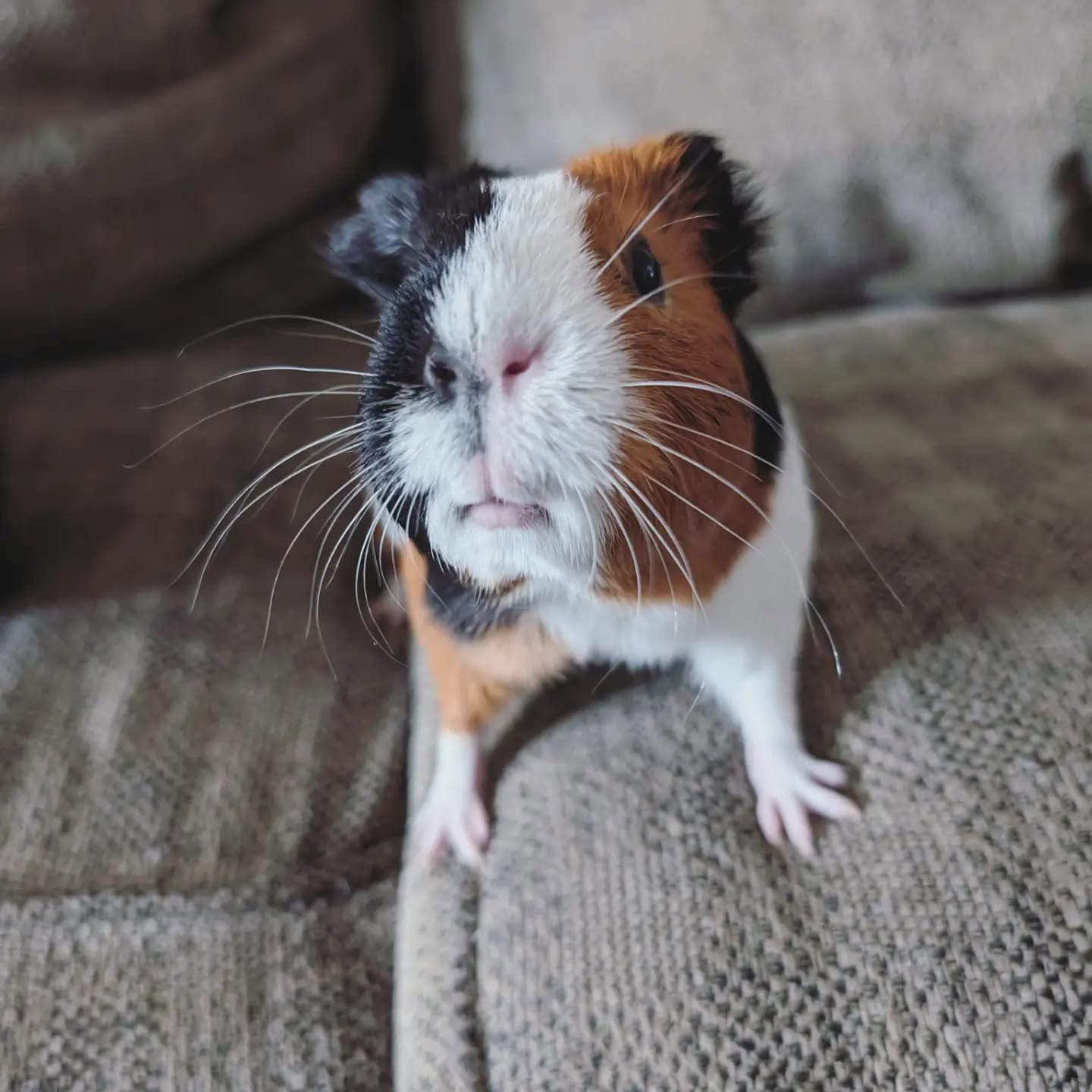
Before a guinea pig goes home from Paradise Pets, I tell the owner three things that matter most.
The first week is about settling, not bonding. Bonding comes later. Settling comes first and must not be rushed.
Guinea pigs communicate in ways that tell you exactly how they are doing — if you know the signs. Wheeking is contact-seeking and positive. Teeth chattering is a warning. Purring is contentment. Rumblestrutting is social assertion. Learning to read those sounds in the first week gives you more information about the animal’s state than anything else you can do.
And if something feels wrong — if the animal is not eating after forty-eight hours, if it seems genuinely ill rather than simply stressed, if you see any discharge from the eyes or nose, any difficulty breathing, any obvious loss of condition — come straight back to us or see a vet. Stress and illness can look similar in the first days, and while most settling behaviour is normal, genuine illness in a guinea pig progresses quickly and needs prompt attention.
We are at Manor Garden Centre, Cheney Manor Industrial Estate, Swindon, SN2 2QJ — open every day. Or call us on 01793 512400. If you are unsure about anything in the first week, call before you act. We would rather take a call than have a new owner make a mistake that sets the settling process back.
- “It hid all day so I took the hide out so it would come out more” — Removing the hide does not reduce hiding behaviour. It removes the only retreat the animal has and increases the stress of the environment significantly. A guinea pig without a hide cannot settle because it cannot feel safe. The hiding is the process of settling. The hide is what makes that process possible. Leave the hide in, always.
- “We let the children hold it on the first day to help it get used to them” — The first day is the worst possible time for the most stressful handling experience a guinea pig can have. Children handling a newly arrived guinea pig — however gently — adds exactly the kind of intense, unpredictable stimulation that makes the settling process longer, not shorter. The children will have months and years to hold the guinea pig. Give it three days first.
- “It wasn’t eating so I put it in my lap to try to feed it by hand” — A guinea pig that is not eating in front of you is not refusing food. It is eating when unobserved, because it does not yet feel safe eating in your presence. Removing it from the enclosure to feed it by hand compounds the stress rather than addressing it. Leave food in the enclosure, step back, and allow the animal to eat in its own time.
- “I cleaned the cage after two days because it was getting messy” — The first full cage clean should happen at the end of the first week at the earliest, and even then should be partial — leaving some used bedding to preserve familiar scent. A cage cleaned on day two has had all of its scent markers removed, resetting the environmental familiarity the animal spent two days establishing. Wait.
- “It bit me when I picked it up so it must be aggressive” — A guinea pig that bites during handling in the first week is not aggressive. It is frightened. Biting is the last resort of an animal that has no other way of communicating that it is overwhelmed. It is information about the handling situation — too much, too soon, too fast — not a verdict on the animal’s character. Slow down, shorten the sessions, and the biting will stop as the comfort level builds.
- Day one: arrival and first release.
Enclosure fully prepared before arrival. Release from travel box directly into cage — no hand transfer. Thirty minutes of complete quiet. Then calm presence in the room, normal sounds, no direct interaction with the animal. Food and water in place. Do not reach in. - Day two: voice establishment.
Sit near the enclosure and talk calmly. Do not handle. Do not reach into the cage except to service food and water. Check food consumption at end of day. Explain the timeline to children. The task today is your voice becoming a familiar, non-threatening sound. - Day three: first hand presence.
Open the enclosure and place a flat, still hand on the floor near the edge. Put food near your hand. Wait for the animal to approach on its own terms. Do not follow it if it retreats. One to two sessions, five minutes each. - Days four and five: building the association.
Continue hand-with-food sessions. Watch for progression — quicker approach, less hesitation. Note individual personality beginning to show. Do not clean the cage. Do not rush to handle. - Day six: first lift.
Scoop from beside, not above. Support hindquarters. Keep the lift to thirty seconds to one minute. End before distress. Return to the enclosure calmly. One session only. - Day seven: assess and continue.
The animal should be eating in your presence, approaching the door, taking food from or near your hand, and tolerating brief lifts. This is the foundation. Continue the same approach into week two, extending the handling sessions gradually.
Visit Us at Paradise Pets Swindon
We stock guinea pigs year-round alongside a full range of small animals — all UK-bred, properly socialized, and sold with the support you need for the first week and beyond. If you have a question about how the settling is going, come in or call us. We are always willing to help you work through the specific situation.
We also stock rabbits, gerbils and hamsters, and a full range of cage and aviary birds.
⭐ Customer Reviews
Amazing Bird Selection
Had a lovley visit today,staff were very friendly and very helpful,such a great petshop,their selection of birds is incredible,really impressed,thank so much to the staff at Paradise Pets

Friendly Helpful Staff
I have been coming to this place for years and they have a great stock of food for all types of pets. Have a great selection of small mammals and a lot of birds. Staff are friendly and helpful.

Great Quality Hutch
Bought a guinea pigs hutch and run combo, very happy with the service, the hutch was put in my car for me without even asking for help. The wood quality is very good, the instructions easy to follow and we are extremely happy with the fully built hutch. A good size for 2 guinea pigs

Response from Paradise Pets | Wiltshire
Thank you Melanie Latus Nice to provide services to you.
Best Bird Shop Around
It’s the best pet shop in and around Swindon. They always have an amazing selection of birds and all you need to keep them happy. I keep birds myself and the guys there are happy to answer questions and really know their stuff. I have seen budgies etc. in chain pet shops in the area looking really unhealthy and ill – I wouldn’t go anywhere else than Paradise Pets for animals.

Highly Recommended Bird Shop
I could not praise this shop enough. Really helped my Grandson buy his first bird and he’s loving it. Travelled from Somerset and was welcomed with open arms.

Great Shop with Competitive Prices
Great shop with amazing selection for small animals, hamsters, mice ect, highly recommend!
Also has a great selection for dogs & cats too & very competitive prices! 💖

