

From the counter at Paradise Pets
A retired gentleman came in last winter with a look on his face I recognise immediately. Not panic exactly — but the specific, quiet worry of someone who has noticed something wrong with an animal they care about deeply and cannot explain it.
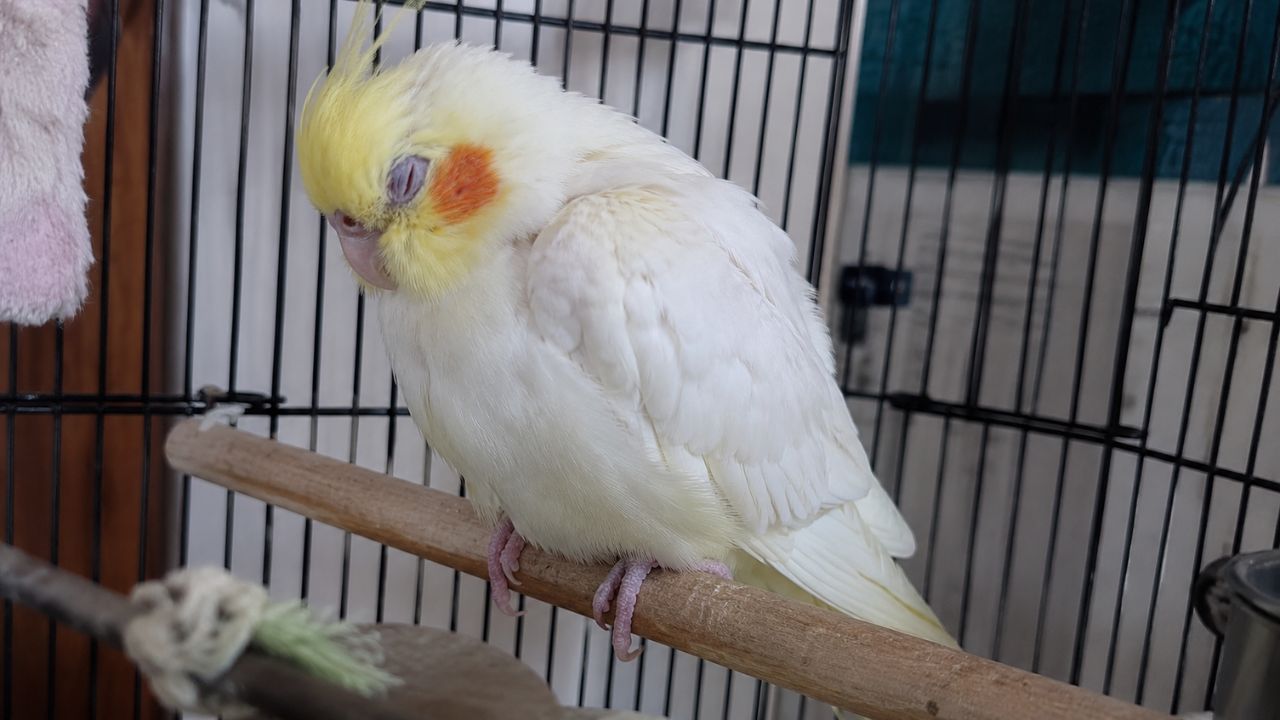
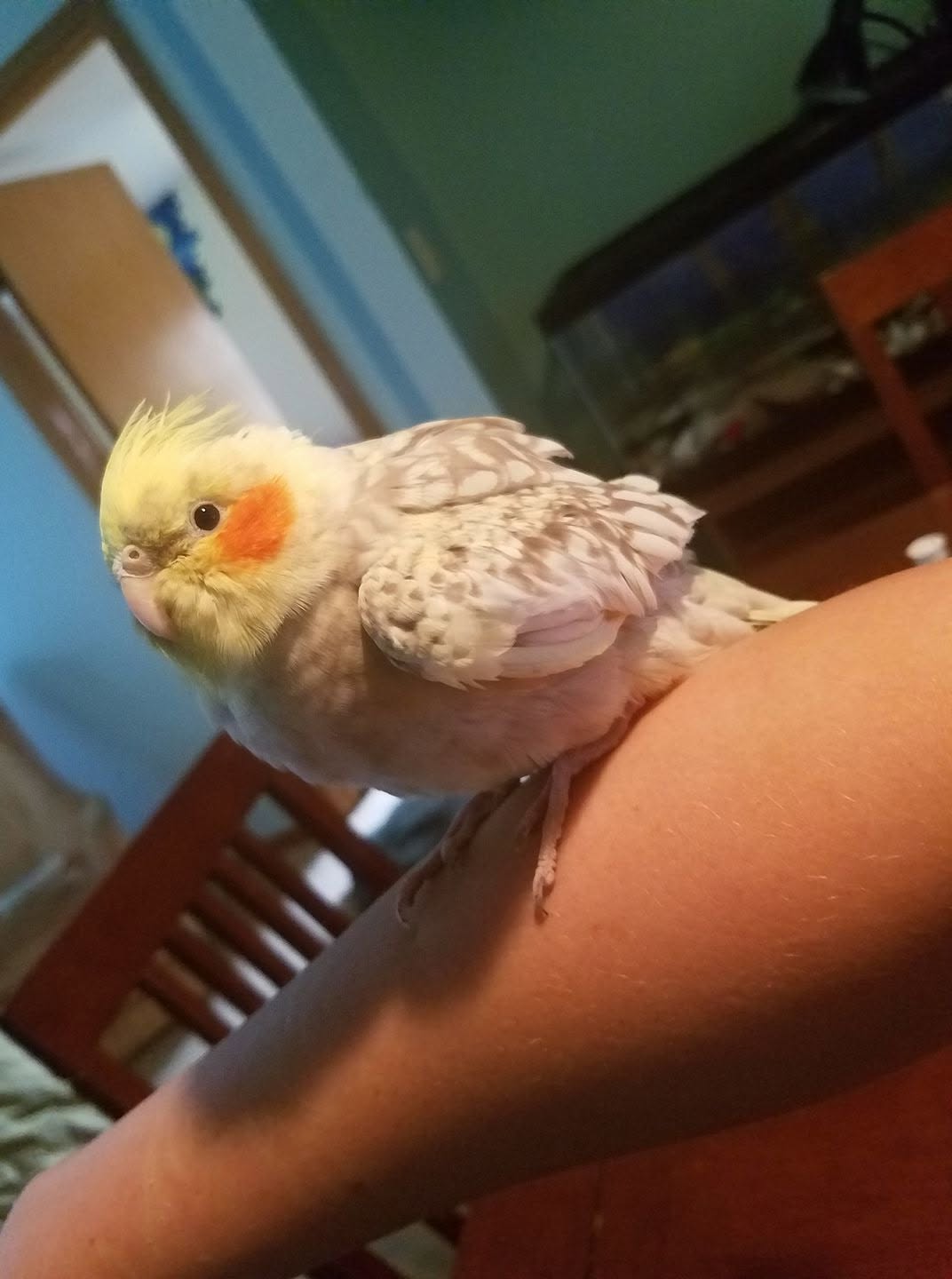
His cockatiel — a pearl female he had kept for six years — had been sleeping for most of the day for about a week. She was still eating, he said. Still on her perch. But where she used to be active and chatty through the morning, she was now sitting fluffed up with her eyes closed more often than not.
“She’s just tired,” he said. “Maybe she’s cold. Maybe I’m overthinking it.”
I told him he was not overthinking it. I asked him a series of questions. When exactly had it started? Had anything changed in the household? What did her droppings look like? Had she lost any weight?
By the end of the conversation, I had a clear picture. This was not a bird that was simply tired or cold. This was a bird that needed to see an avian vet within the next day or two.
He took her. She had a significant liver issue that had been developing quietly for some time. The sleeping was the first visible sign that something was wrong.
She recovered well with treatment. But that outcome depended entirely on him coming in when he did rather than waiting another two weeks.
First — Understand What Normal Cockatiel Sleep Looks Like
Before you can identify a problem, you need to know what normal looks like. Cockatiels do sleep a great deal — more than many owners expect — and some of what owners interpret as excessive sleeping is entirely within the normal range.
A healthy adult cockatiel needs ten to twelve hours of sleep in a twenty-four-hour period. In the wild, they sleep from dusk to dawn and are active during daylight. In a UK home through winter, when days are short and lights are often kept on into the evening, their sleep patterns can become disrupted — and owners sometimes misread a bird that is appropriately sleepy at 9pm as a bird that has been sleeping all day.
Normal sleep behaviour in a healthy cockatiel looks like this:
- Sleeping on one foot with the other tucked up — a sign of relaxation and warmth, not illness
- Head turned and tucked into the back feathers during deep sleep — again, normal and comfortable
- Napping briefly during the day, particularly in the early afternoon — this is normal in cockatiels
- Being alert and active when awake — talking, moving around the cage, responding to the owner
- Waking easily when the owner approaches or makes noise
- Feathers held normally when awake — not persistently puffed up
The concern is not a bird that naps. The concern is a bird that is sleeping during the hours it should be awake and active — that does not respond normally when disturbed, that sits fluffed up on the perch for extended periods, or that has shifted dramatically from its established pattern without explanation.
If that is what you are seeing, read on.
The 7 Most Common Reasons a Cockatiel Sleeps All Day
In 35 years, I have seen excessive daytime sleeping in cockatiels caused by all of the following. Some are environmental and easily corrected. Some are medical and need a vet. Knowing which is which — and how to tell them apart — is what this guide is for.
Cause 1: Illness — The Cause You Must Rule Out First
I am putting this first because it is the most important, not because it is the most common. When a cockatiel sleeps all day, illness has to be the first thing you consider and the first thing you rule out — not the last resort after you have tried everything else.
Cockatiels are prey animals. In the wild, a sick bird that shows weakness is a bird that gets picked off by a predator. Evolution has spent millions of years making cockatiels very good at not appearing sick. By the time a cockatiel looks obviously unwell — sitting on the cage floor, completely unresponsive, feathers completely flat or completely puffed — it has usually been ill for considerably longer than the owner realises.
Excessive sleeping is one of the earliest signs that something is medically wrong. It appears before most other symptoms. It is the bird’s way of conserving energy when its body is under stress. And because it is subtle — the bird is still on its perch, still breathing, still occasionally eating — it is easy to rationalise away.
Do not rationalise it away.
- The sleeping started suddenly — within days — in a bird that was previously active and alert
- The bird is sleeping during hours when it is normally active and talkative
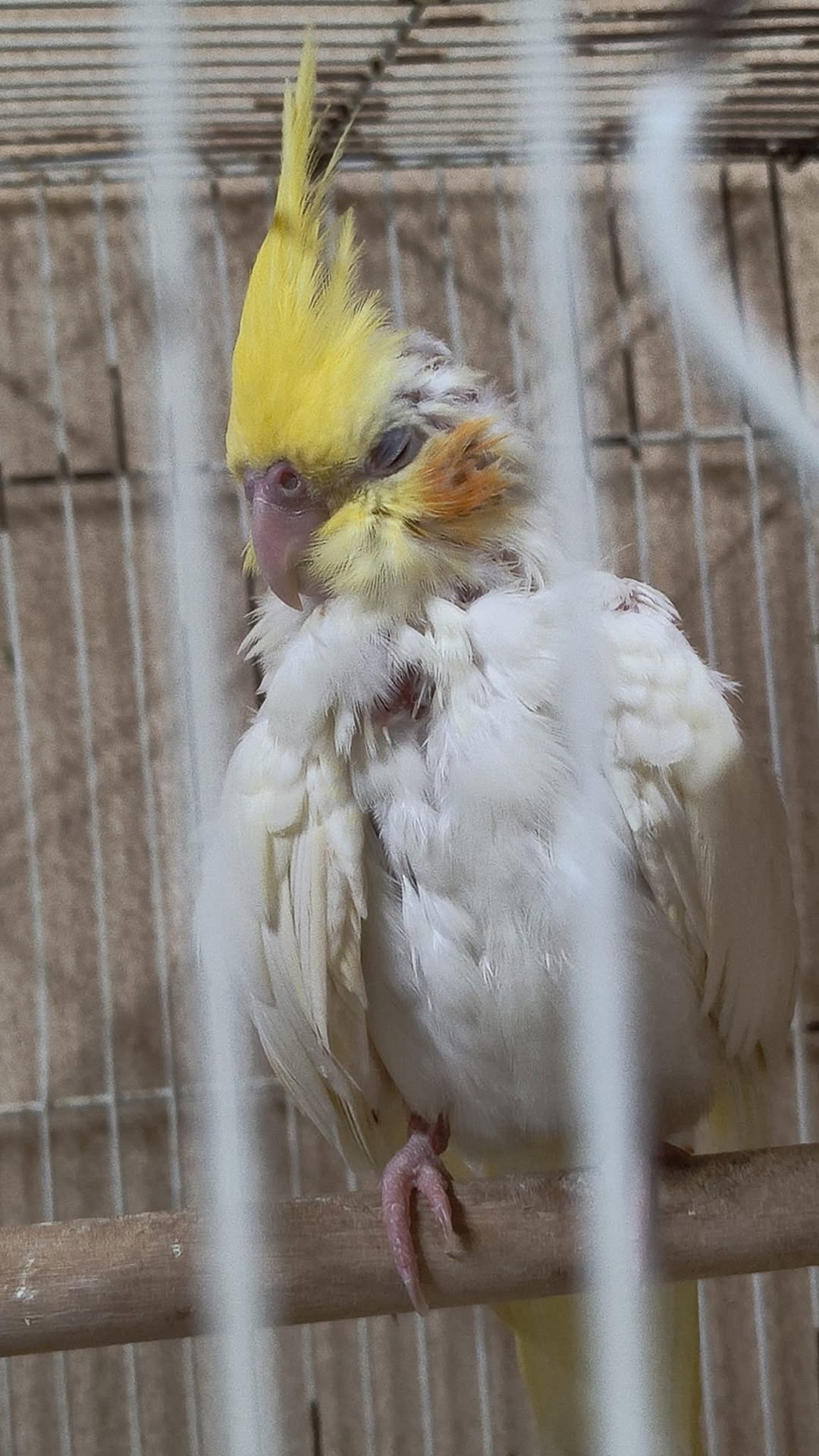
- The feathers are fluffed up when the bird is awake as well as when sleeping
- The bird is less responsive than usual — does not react normally to your voice or approach
- Droppings have changed — looser, discoloured, or the urate portion looks green or yellow rather than white
- The bird looks lighter when you hold it — weight loss alongside increased sleeping is a significant warning sign
- Any other symptom alongside the sleeping, however minor it seems
- Sudden-onset daytime sleeping in a previously active bird with no obvious environmental cause
- Sleeping combined with fluffed feathers, changed droppings, or reduced responsiveness
- Any weight loss alongside increased sleeping — pick the bird up and feel the keel bone
- A bird that does not wake and respond normally when you approach the cage
- Sleeping on the cage floor rather than on a perch — this is a late-stage warning sign requiring immediate veterinary attention
What to do
See an avian vet. Not a general small animal vet if you can help it — an avian vet. The diagnostic approach for a sick cockatiel is genuinely different from cats and dogs, and a vet with avian experience will identify things a general practitioner may miss. The Association of Avian Vets maintains a directory of UK practitioners. Find one before you need one urgently.
When you go, take a note of exactly when the sleeping started, what the droppings have looked like, whether the bird has been eating and drinking normally, and any other changes — however small — that you have noticed. This information is diagnostically valuable and saves time in the consultation.
Cause 2: Incorrect Lighting and Disrupted Sleep Cycle
This is the cause I see most often in otherwise healthy birds that are sleeping too much — and the one that is most completely within the owner’s control to fix.
Cockatiels are wired to be active in daylight and asleep in darkness. Their bodies are sensitive to light in ways that owners significantly underestimate. In a UK home through autumn and winter, a bird in a living room may be experiencing twelve to fourteen hours of artificial light — television, ceiling lights, lamps — followed by a sudden drop to darkness when the household goes to bed. The bird’s circadian rhythm is completely disrupted.
The result is a bird that is not getting proper restorative sleep at night because the light keeps it awake, and then sleeps during the day to compensate. The bird is genuinely tired — but the tiredness is being caused by the owner’s lifestyle rather than any illness.
In other cases, the opposite problem exists. A bird kept in a room that gets very little natural light in winter — a north-facing room with no south-facing windows — may not be getting enough light stimulation to maintain normal alertness and activity levels. The bird sleeps because it is not receiving the light cues that trigger wakefulness.
- The bird’s cage is in a living room where lights, television, or screens are on until late in the evening
- The bird does not have a consistent sleep schedule — lights go on and off at different times each day
- The cage is in a poorly lit room with limited natural daylight, particularly in winter
- The bird is otherwise well — eating, responsive when awake, normal droppings
- The excessive sleeping has developed gradually through the autumn and winter months
- The bird is livelier and more active during or after periods of natural daylight
What to do
Establish a consistent light routine. Cover the cage at the same time every evening — between 8 and 9pm is appropriate for most UK households — and uncover it at the same time every morning. The cage cover creates darkness regardless of what is happening in the rest of the room, and the consistency gives the bird’s body clock something to regulate against.
The bird should be getting ten to twelve hours of darkness every night. If it is currently getting six or eight, the change will be noticeable within a week or two. A bird that was sleeping all day due to disrupted lighting almost always returns to normal activity within two to three weeks of establishing a proper routine.
For birds in poorly lit rooms, consider moving the cage to a brighter position — near a window that gets natural daylight, but not in direct sunlight and not in a draughty position. A small amount of genuine natural light does more for a cockatiel’s activity level than any amount of artificial light.
Cause 3: Cold Temperature or Draughts
Cockatiels are Australian birds. Their natural range includes some of the warmer, drier parts of the continent, and while they are more cold-tolerant than many exotic birds kept in the UK, they are genuinely affected by cold temperatures — particularly draughts, which are more dangerous than simply low ambient temperature.
A cockatiel that is cold will sleep more. The body conserves energy by reducing activity, and the bird sits fluffed up — the feathers raised to trap warm air — for extended periods. This looks very similar to illness-related sleeping, and distinguishing between the two requires careful observation and attention to context.
The key distinction: a cold bird that is moved to a warmer environment will perk up relatively quickly. A sick bird will not improve simply because it is warmer.
- The cage is near a window, external door, or in a room that gets significantly colder at night
- There is a noticeable draught near the cage — even a gentle one is significant for a small bird
- The bird is visibly fluffed up, particularly in the morning before the room has warmed
- The sleeping is worse in cold weather and better in warmer periods
- The bird perks up noticeably when the room warms or when moved to a warmer location
- Other signs of illness are absent — droppings are normal, the bird eats normally when awake
What to do
Move the cage away from windows, external walls, and doors. The ideal ambient temperature for a cockatiel is between 18 and 24 degrees Celsius. If the room drops significantly below this at night, a ceramic heat emitter or low-wattage bird-safe heater near the cage can maintain a stable temperature. Do not use heat lamps that emit visible light at night — this disrupts the sleep cycle.
Check specifically for draughts rather than just general cold. A cage can be in a room that feels warm to you and still be in a cold air current from a gap under a door or an old window frame. Hold your hand at cage level and feel for movement. Move the cage if you find any.
Cause 4: Nutritional Deficiency
A cockatiel on a poor diet can appear lethargic and sleep excessively even in the absence of obvious illness. The most common nutritional problem I see in UK cockatiels is a seed-only diet — a bird eating nothing but a standard seed mix and receiving no fresh food, vegetables, or quality pellets.
Seeds are high in fat and low in many essential nutrients. A bird living on seeds alone is typically deficient in Vitamin A, calcium, and several amino acids that are critical for normal metabolic function. One of the first signs of these deficiencies is reduced energy and increased sleeping — the bird simply does not have the nutritional resources to maintain normal activity levels.
Iodine deficiency, which causes thyroid dysfunction in cockatiels, is a specific and well-documented cause of lethargy and excessive sleeping in seed-fed birds. The thyroid regulates metabolism, and a bird with an underactive thyroid will sleep far more than normal. This was a very common problem before iodine supplementation became standard in commercial seed mixes, and it still occurs in birds on old-stock seed or non-supplemented diets.
- The bird is fed primarily or exclusively on a loose seed mix with no fresh food or pellets
- The lethargy and sleeping has developed gradually rather than appearing suddenly
- The bird has never been on a varied diet — this has been the pattern for years
- The bird appears well in other respects but lacks energy and sleeps more than expected
- The bird is overweight — a common consequence of a high-fat seed diet — alongside the lethargy
- No environmental factors explain the sleeping — lighting is correct, temperature is appropriate
What to do
Improve the diet — but do it gradually. A cockatiel that has eaten seeds its entire life will not immediately accept pellets or fresh vegetables. Sudden dietary change causes stress and can produce its own health problems. The process takes weeks.
Start by introducing fresh dark leafy greens alongside the seed — kale, spinach, broccoli. Most cockatiels will try these relatively readily. Introduce a small amount of quality pellets mixed into the seed, gradually increasing the pellet proportion over several weeks. Cuttlefish bone provides calcium and iodine and should be permanently available in any cockatiel cage.
If you suspect thyroid dysfunction specifically — the bird is lethargic, the sleeping is marked, and you can feel a lump at the base of the throat — see an avian vet. This is a medical condition that may need treatment beyond dietary change.
Cause 5: Moult
Cockatiels moult once or twice a year, replacing their feathers in a gradual process that takes several weeks. A bird going through a heavy moult uses a significant amount of energy — feather production is metabolically expensive — and many cockatiels sleep more and are less active than usual during the moult period.
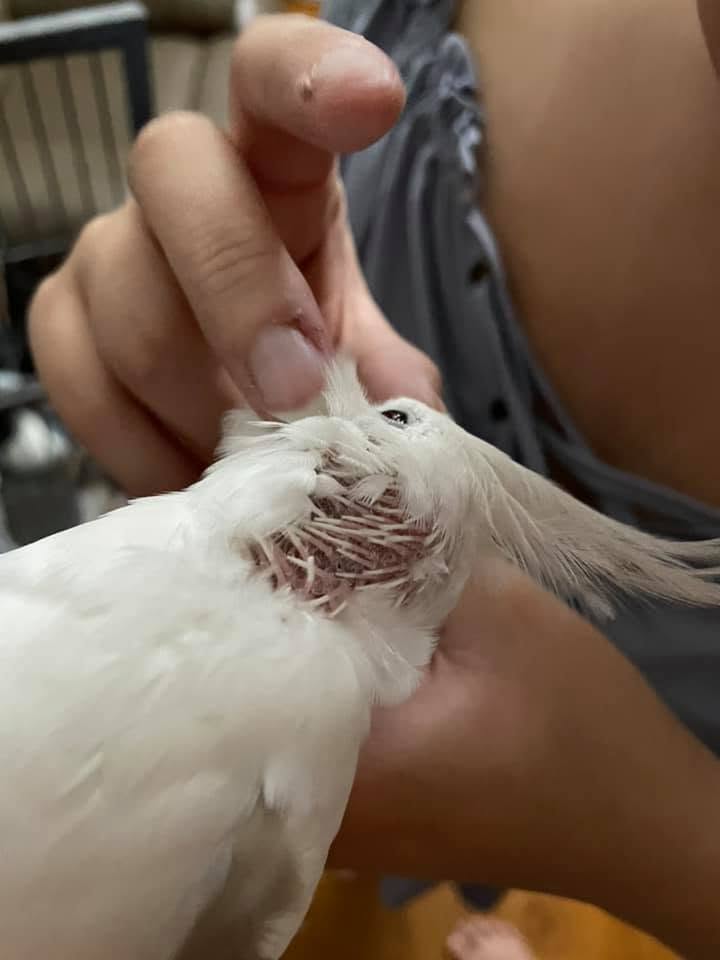
This is normal. It is not cause for concern in an otherwise well bird. But it is worth knowing about, because moulting cockatiels often look rough — patchy feathering, pin feathers visible on the head, occasional irritability from the sensitivity of growing feathers — and owners sometimes interpret this as illness.
- You can see pin feathers — small, waxy-tipped quills — on the head and neck
- There are more feathers on the cage floor than usual
- The bird is slightly more irritable than normal — does not want its head touched as much
- The bird is eating normally or slightly more than usual
- The increased sleeping is mild — the bird still responds normally and is alert when awake
- This pattern has happened before at a similar time of year
What to do
Support the moult with good nutrition — the same principles as above. Protein is particularly important during active feather growth. Egg food two or three times a week during heavy moult is something I recommend consistently. Make sure the bird has access to a bath or regular misting — moisture helps pin feathers open and reduces the itching that can make a moulting cockatiel uncomfortable.
Monitor the bird through the moult. A bird that is simply tired from moulting should be visibly recovering and becoming more active as the moult progresses. If it is getting more lethargic rather than less, something else is going on.
Cause 6: Stress or Recent Change in Environment
Cockatiels are creatures of routine. They are sensitive to change in ways that are easy to underestimate — a house move, a new pet in the household, a change in the owner’s schedule, building work nearby, a new baby, even rearranging the furniture in the room where the cage is kept. Any of these can push a cockatiel into a period of increased sleeping as the stress response suppresses normal activity.
Stress-related sleeping tends to resolve as the bird habituates to the new situation — usually within two to three weeks if the stressor is not ongoing. A bird that is persistently sleeping beyond that period, or that has other signs of chronic stress — feather destructive behaviour, persistent cage-bar biting, loss of vocalisation — may need a more sustained intervention.
- Something in the bird’s environment has changed recently — the timing correlates with the sleeping
- A new pet has been introduced, particularly a predator species such as a cat or dog that can see or smell the bird
- There has been significant noise disruption near the cage — building work, a new baby, loud music
- The bird has been moved to a new home or a different room
- The owner’s routine has changed significantly — different hours, more time away from home
- The bird is otherwise physically well — eating normally, normal droppings, no other symptoms
What to do
Identify and, where possible, reduce the stressor. If a new cat or dog has access to the room where the cage is kept and the bird can see or be approached by the predator, this is a sustained, unresolvable stress that the bird cannot habituate to. The cage needs to be in a room the predator cannot enter.
Maintain as much routine as possible around the stressor. Consistent feeding times, consistent cage covering, consistent interaction — these give the bird something predictable to anchor to when other things are changing. Most cockatiels recover from stress-related sleep disruption within a few weeks when the environment stabilises.
Cause 7: Age
An older cockatiel — one that is past ten or twelve years of age — will naturally sleep more than a younger bird. Metabolism slows, activity levels reduce, and a bird that was chatty and active through its middle years may become quieter and more inclined to rest as it ages. This is normal and not a welfare concern in a bird that is otherwise well.
The important distinction: age-related increased sleeping is gradual, consistent, and accompanied by an otherwise well bird. The droppings are normal. The bird eats normally. It is responsive when awake, simply less active overall. Sudden-onset sleeping in an older bird — a noticeable change from its recent pattern — is not age. It is a symptom. Older birds are more vulnerable to illness, not less, and sudden changes in an aged cockatiel should be taken seriously.
- The bird is over ten years of age
- The change has been gradual — over months or years, not days or weeks
- The bird is otherwise well — eating normally, normal droppings, responsive when awake
- There are no other symptoms alongside the increased rest
- The bird still has active periods during the day — it simply rests more than it used to
What to do
An annual health check with an avian vet is worthwhile for any bird over ten years of age, regardless of whether something appears wrong. Many age-related conditions in cockatiels are manageable when identified early. Do not assume that all change in an older bird is simply age — and do not skip the vet check because the bird seems fine. Baseline blood panels for older cockatiels give you something to compare against if something changes later.
How to Tell the Difference — Illness Versus Everything Else
The question I am asked most often at the counter is some version of: “How do I know if it’s serious?” Here is the most direct answer I can give.
- The speed of onset. Did the sleeping start suddenly — within a day or two — or has it developed gradually over weeks? Sudden onset is a red flag. Gradual development points toward environmental or nutritional causes.
- The droppings. Look at them every day. Normal droppings have a dark green or brown solid portion, a white urate portion, and a small amount of clear liquid. Green or yellow urates, unusually watery droppings, or droppings that are dramatically reduced in volume are all warning signs.
- The weight. Pick the bird up and feel the keel bone — the ridge running down the centre of the chest. In a well bird, you can feel it but there is muscle either side of it. If the keel feels sharp and prominent with little muscle, the bird has lost weight. Weight loss alongside sleeping is always a vet situation.
- The response to stimulation. Approach the cage and speak to the bird. A sleeping bird that wakes, responds, and appears alert is different from a bird that barely reacts or takes an unusually long time to respond. Reduced responsiveness is a significant warning sign.
- The feather posture when awake. A bird that is persistently puffed up when it is awake — not just when sleeping — is using its feathers to retain heat, which is a sign that the body is under stress. Occasional fluffing in a cold room is normal. Persistent daytime fluffing in a warm room is not.
What Not To Do
| What owners do | Why it is a problem | What to do instead |
|---|---|---|
| Wait two weeks to see if it resolves on its own | Cockatiels that are ill deteriorate faster than owners expect. Two weeks of illness in a small bird that is masking its symptoms is a long time. Conditions that are easily treated early become much harder to treat late | If you cannot identify a clear non-medical cause within two to three days, book a vet appointment |
| Assume it is moult or season without checking | Moult and seasonal changes are real but they are a diagnosis of exclusion — you can only confidently attribute the sleeping to them when illness and environmental causes have been ruled out | Go through the checklist in this guide before settling on a benign explanation |
| Disturb the bird repeatedly to check if it is responsive | A sick bird needs rest. Repeated disturbance causes additional stress that can accelerate deterioration. Check once, clearly, and then leave the bird to rest | Check responsiveness once per assessment — do not keep waking the bird to reassure yourself |
| Give human medicines or supplements without veterinary guidance | Many human supplements and medicines are toxic to cockatiels at doses that are safe for humans or even other animals. This includes many vitamin supplements, which can cause overdose in birds | Do not give anything that has not been specifically recommended by an avian vet for a bird of this species and weight |
| Assume age explains sudden changes in an older bird | Gradual change in an older bird can be age. Sudden change in an older bird is a symptom. Older cockatiels are more vulnerable to illness, not less, and sudden changes deserve more attention rather than less | Any sudden change in an older bird goes to the vet — do not attribute it to age without a professional assessment |
Frequently Asked Questions
My cockatiel sleeps all morning but is fine in the afternoon — is this normal?
It depends on the pattern and whether it is new. Some cockatiels are naturally more active in the afternoon than the morning — individual variation exists. But if a bird that was previously active in the mornings has recently started sleeping through them, that shift is worth paying attention to. Check the lighting setup first — a bird that is being kept up too late at night will often compensate by sleeping late into the morning.
My cockatiel is sleeping with its feathers fluffed up but is still eating — should I be worried?
Yes — take this seriously. A bird that is eating is better placed than one that has stopped, but persistent fluffing when awake is a sign that the body is under stress. It is not a normal resting posture during active hours. I would recommend a vet check within the next few days rather than waiting to see whether it resolves.
Is it normal for a cockatiel to sleep on the cage floor?
No. A healthy cockatiel sleeps on a perch. A bird sleeping on the floor of its cage is a bird that is too weak or too unwell to maintain a perch. This is a late-stage warning sign that requires immediate veterinary attention — not monitoring, not a wait-and-see approach. Contact an avian vet today.
My cockatiel has just come home from a breeder and is sleeping a lot — is this normal?
A newly rehomed bird sleeping more than expected for the first few days is understandable — rehoming is stressful and birds take time to settle. But a newly acquired bird that is sleeping heavily and not showing signs of settling and becoming more alert within a week deserves a vet check. Newly acquired birds sometimes arrive with low-level health issues that only become visible after the stress of rehoming. Catching these early makes a significant difference.
Where can I get cockatiel health advice in Swindon?
Come and see us at Paradise Pets, Manor Garden Centre, Cheney Manor Industrial Estate, Swindon SN2 2QJ. Or ring us on 01793 512400. We have been keeping and advising on cockatiels for over 35 years and will give you a straight, honest assessment of what is happening with your specific bird.
One Last Thing From Me
The gentleman with the pearl cockatiel came back about three months after his vet visit. She was on medication that was managing her liver condition well. She was active again in the mornings. She had started talking.
“The vet said if I’d left it another couple of weeks it would have been a very different conversation,” he told me.
I hear that a lot. Not because owners are negligent — almost none of them are. But because cockatiels are so good at appearing fine, and because we tend to find reassuring explanations for small changes in animals we love. She’s just tired. It’s the time of year. She’ll pick up.
Sometimes that is true. But cockatiels do not sleep all day without a reason. The reason is not always serious. But it is always worth finding out what it is.
If you are not sure what you are looking at — come in. That is what we are here for.

Cockatiel Sleeping Too Much? Come In and Let’s Work Out Why
We have been keeping, selling, and advising on cockatiels for over 35 years. Excessive sleeping always has a cause — and knowing which causes are urgent and which are not is exactly what 35 years of experience is for. Come in and describe what you are seeing, or bring the bird if you want us to look at it directly. Free advice, no obligation. That is how we have always done things.
⭐ Customer Reviews
Amazing Bird Selection
Had a lovley visit today,staff were very friendly and very helpful,such a great petshop,their selection of birds is incredible,really impressed,thank so much to the staff at Paradise Pets

Friendly Helpful Staff
I have been coming to this place for years and they have a great stock of food for all types of pets. Have a great selection of small mammals and a lot of birds. Staff are friendly and helpful.

Great Quality Hutch
Bought a guinea pigs hutch and run combo, very happy with the service, the hutch was put in my car for me without even asking for help. The wood quality is very good, the instructions easy to follow and we are extremely happy with the fully built hutch. A good size for 2 guinea pigs

Response from Paradise Pets | Wiltshire
Thank you Melanie Latus Nice to provide services to you.
Best Bird Shop Around
It’s the best pet shop in and around Swindon. They always have an amazing selection of birds and all you need to keep them happy. I keep birds myself and the guys there are happy to answer questions and really know their stuff. I have seen budgies etc. in chain pet shops in the area looking really unhealthy and ill – I wouldn’t go anywhere else than Paradise Pets for animals.

Highly Recommended Bird Shop
I could not praise this shop enough. Really helped my Grandson buy his first bird and he’s loving it. Travelled from Somerset and was welcomed with open arms.

Great Shop with Competitive Prices
Great shop with amazing selection for small animals, hamsters, mice ect, highly recommend!
Also has a great selection for dogs & cats too & very competitive prices! 💖

