
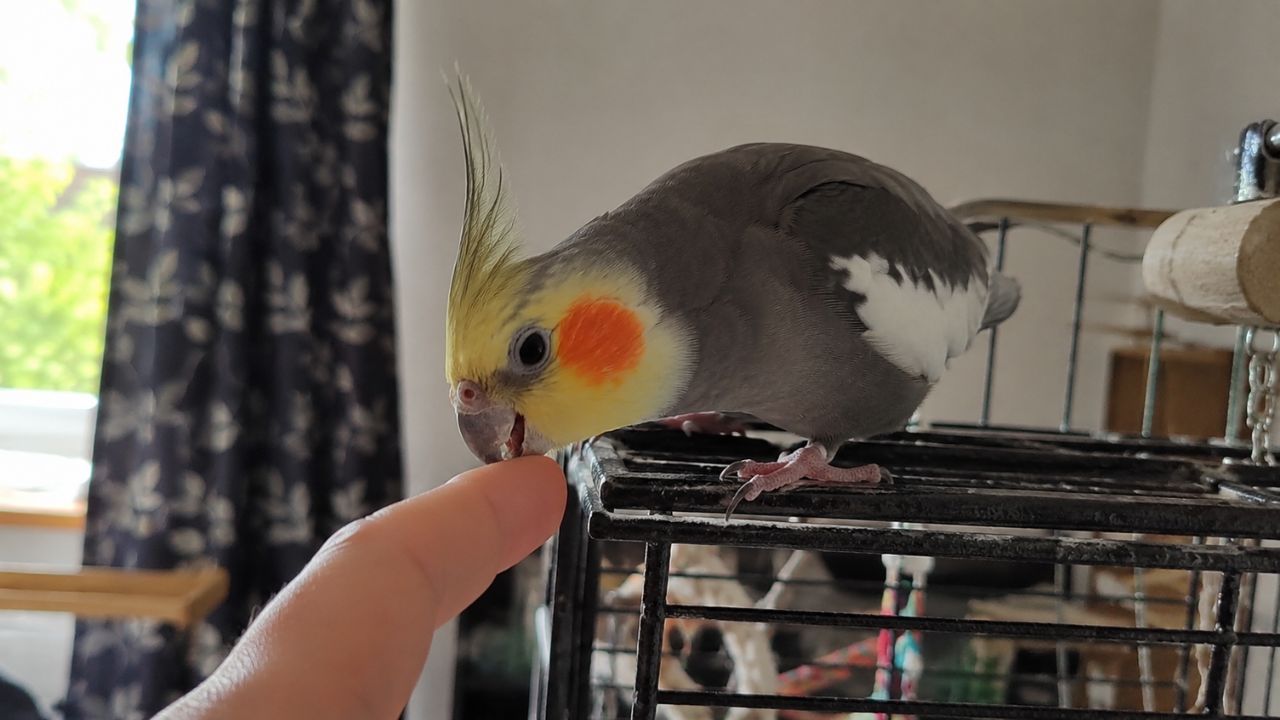

Neil has sold and kept cockatiels at Paradise Pets Swindon since 1988 — over 35 years of first-hand experience with one of the UK’s most popular cage birds. A cockatiel that bites its owner is one of the most common behaviour complaints he hears — and one of the most misunderstood. This article is his honest, complete guide on why cockatiels bite, what is driving it in each specific case, and what owners can actually do to change it.
A man came in last year, holding his hand out to show me a small but perfectly formed row of indentations across his finger. His cockatiel — a grey male he had owned for three years — had bitten him twice in the past week. Hard enough to break skin the second time.
The bird had never bitten him before. Not once in three years.
“I don’t know what I’ve done,” he said. “He used to be perfectly fine. Now every time I go near his cage he lunges at me.”
I asked him a series of questions. Had anything changed in the household recently? Had he noticed any change in the bird’s general behaviour beyond the biting? What time of year was it when the biting started — had it coincided with any particular season?
By the third question, he already knew the answer.
“Spring,” he said. “It started in spring. And we got a new cat about two weeks before.”
That conversation tells you most of what you need to know about cockatiel biting. Because in 35 years, I have never seen a cockatiel bite without a reason. Not once. The reason is not always obvious to the owner, and it is not always the reason the owner assumes. But it is always there.
First — Why This Matters More Than Most Owners Realise
Before I go through the causes, I want to make a point that changes how most owners think about this.
A cockatiel bite is not random aggression. Cockatiels are not aggressive birds by nature. They are social, gentle, communicative animals that form strong bonds with their owners and generally want to maintain those bonds.
When a cockatiel bites, it is using the only tool it has available that it knows will produce an immediate, certain response. It has almost certainly tried other signals first — body language, vocalisations, warning postures — and those signals were either not noticed or not acted upon. The bite is not the first choice. It is the last resort.
Understanding this changes the framing entirely. The question is not “how do I stop my cockatiel biting me” — it is “what is my cockatiel trying to tell me, and am I reading the signals before it gets to the bite?”
With that understanding in place, here are the causes.
Cause 1: Hormonal Aggression — The Most Common Cause I See
This is what was happening with the man’s grey male, and it is what I see behind cockatiel biting more often than any other cause. It is also the one that most surprises owners — because it comes on suddenly, in a bird that has been perfectly handleable for years.
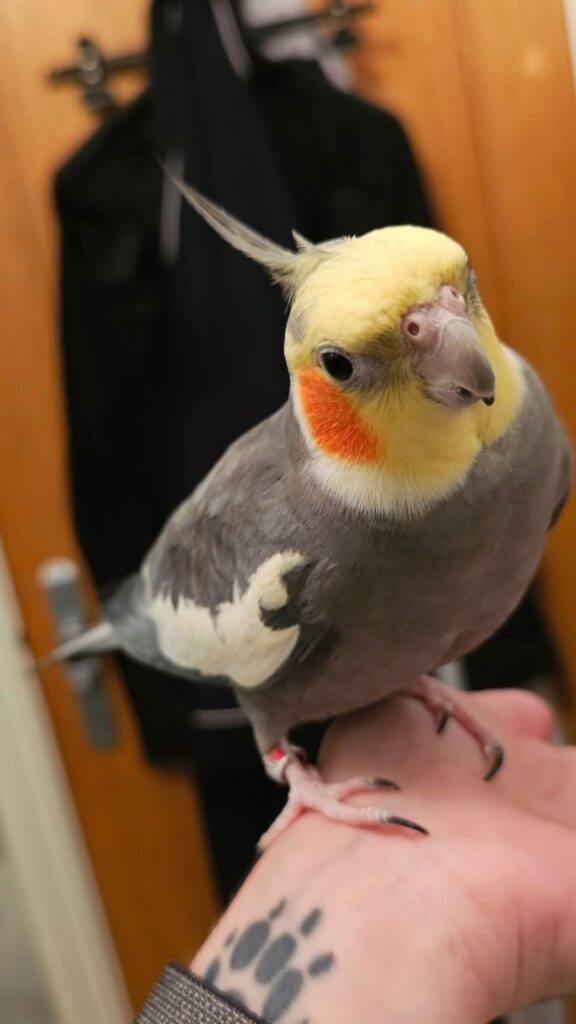
Cockatiels are seasonally reproductive animals. As day length increases in spring, hormonal changes activate breeding behaviour. In males, this includes territorial behaviour, increased vocalisation, and in many birds — a significant increase in defensive aggression around the cage and the owner.
The bird is not angry at you specifically. It is in a hormonal state where it perceives everything around its perceived territory as a potential threat. The cage becomes its nest. Reaching toward the cage, or reaching in to interact, triggers the same protective response that would drive the bird to defend a nest in the wild.
This typically comes on in late winter or spring, and in many birds reduces or resolves as the season progresses. But in some birds — particularly birds on artificial lighting that maintains long days year-round, or in homes with other hormonal triggers — it can be persistent.
- Biting started or worsened in late winter or spring
- The bird is most aggressive near or inside the cage — calmer when out
- Other hormonal behaviours are present — regurgitation for the owner or a toy, masturbatory behaviour, excessive calling
- The bird seeks out dark, enclosed spaces — inside a box, under furniture — as potential nesting sites
- The bird is male, though females in breeding condition can also bite
- Long day length in the room — lights on late, no seasonal variation in the bird’s light environment
What to do
Reduce hormonal triggers. Shorten the day length the bird experiences — put the cage cover on earlier, by 8 to 9pm, and keep it on until morning. Remove potential nesting sites. Stop interactions that stimulate breeding behaviour — stroking the back and under the wings is a particular trigger in cockatiels. Stroke the head and face only.
During the hormonal period, let the bird come to you rather than reaching in. Open the cage door and let it choose to step out. Do not reach into the cage to retrieve it — this is when most hormonal bites happen. Give it space and let the hormonal peak pass.
If hormonal behaviour is severe or persistent, an avian vet can discuss options including hormonal implants that reduce the breeding drive.
Cause 2: Fear — The Bite You Should Have Seen Coming
Fear-based biting is the second most common type I see, and the most preventable — because it is almost always preceded by warning signals that the owner missed.
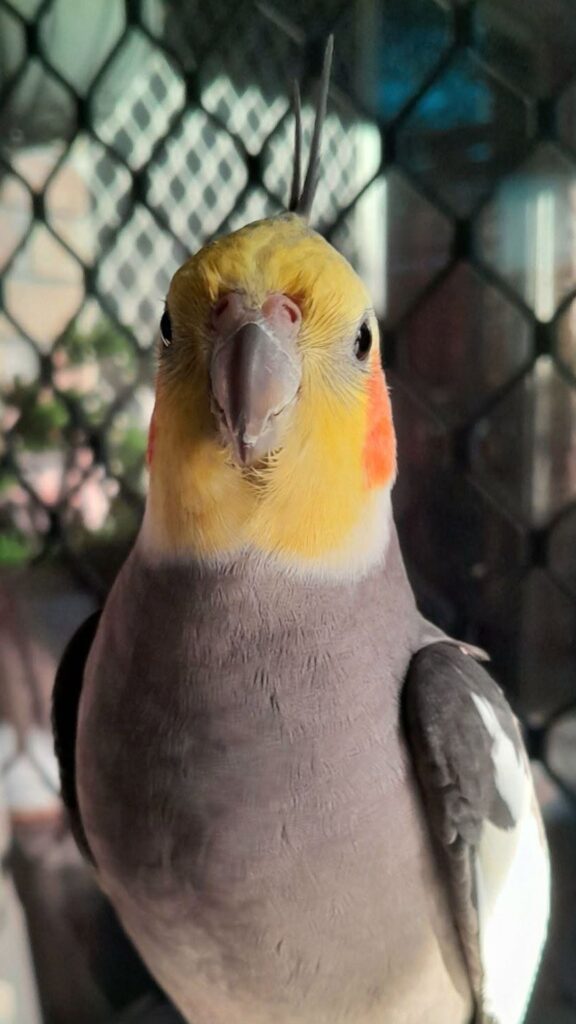
Cockatiels are very communicative about fear. Before a fear bite, the bird will almost always have shown some or all of the following: erect crest (the long head feathers raised and fanned), pinned pupils, crouched body posture, hissing, and moving away from the hand. A bird showing all of these signs and still being approached or reached for will bite. Not because it wants to, but because its options have run out.
Fear in cockatiels can be triggered by:
Unfamiliar people or handling. A bird that is accustomed to its primary owner may bite unfamiliar people — children, visitors, family members who do not handle it regularly. It has not necessarily been badly treated. It has not learned to trust those people yet.
Being reached for from above. Cockatiels, like all prey birds, are instinctively threatened by movement from above. A hand descending from above the bird’s head looks, to the bird’s nervous system, like a predator strike. Always approach from the side and below the bird’s eye level.
Being cornered. A bird that cannot move away when it feels threatened will bite. Always give the bird an escape route.
Handling when the bird is not ready. A bird that is tired, mid-moult, or simply not in the mood for handling will signal its preference. Ignoring those signals produces fear bites.
- The bite follows visible warning signals — erect crest, pinned pupils, hissing, moving away
- The bird bites when approached by unfamiliar people, not its primary owner
- Biting occurs specifically when the bird is reached for from above or from behind
- The bird tries to move away before biting — the bite happens when escape is not possible
- Biting is more frequent when the bird is cornered — in a corner of the cage or in a small enclosed space
What to do
Learn and respect the warning signs. Erect crest combined with moving away is the bird saying no. Respect it. Always approach from below the bird’s eye level and from the front or side. Never corner the bird. Allow the bird to move away if it wants to.
For unfamiliar people, build trust gradually — the same process as taming from scratch. Presence, food association, patient approach over days and weeks rather than immediate attempts to handle.
Cause 3: Pain or Illness — The Bite That Tells You Something Is Wrong
A bird that has been perfectly tame and handleable and suddenly starts biting may not be doing so for a behavioural reason at all. Pain is a consistent cause of sudden-onset biting in previously gentle birds.
A bird in pain does not want to be touched. It does not want to be picked up. When handling is attempted, the pain response triggers defensive biting — not aggression, but the instinctive protection of a body that hurts.
- The biting started suddenly in a bird that was previously gentle and handleable
- No obvious environmental or seasonal trigger
- The bird pulls away from or bites when a specific part of the body is touched — particularly the wings, back, or abdomen
- Other signs of illness may be present — fluffing, reduced appetite, changes in droppings, weight loss
- An unspayed female that has started biting — possible egg binding or reproductive issue
- An older bird with no previous biting history that has started biting — possible arthritis or internal condition
What to do
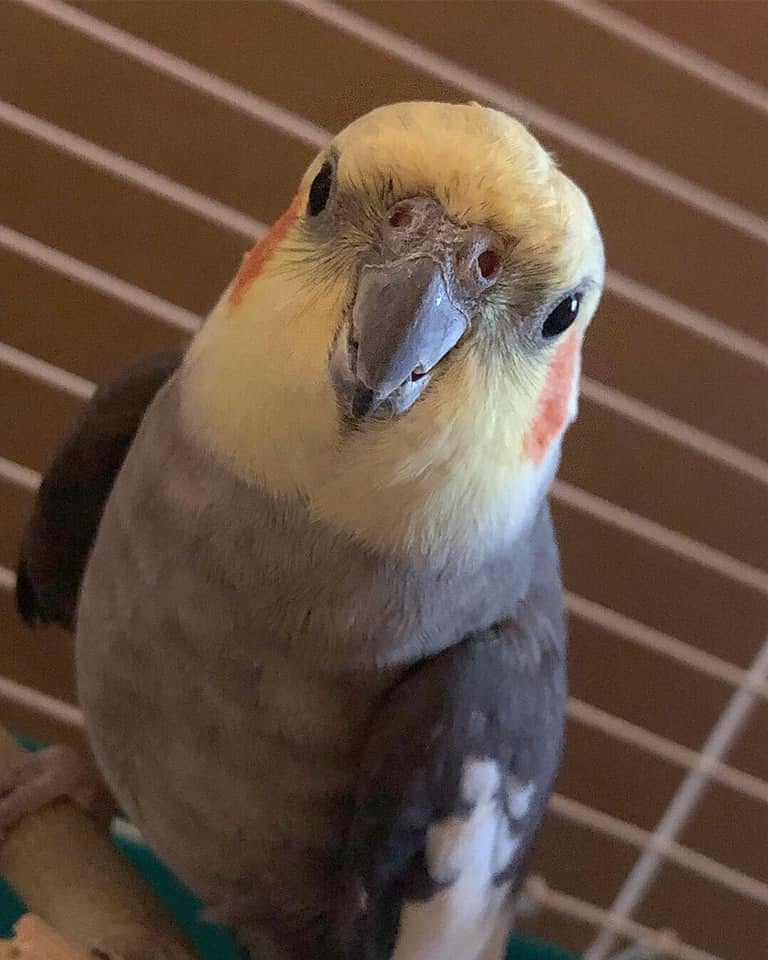
A vet visit. Sudden-onset biting in a previously gentle bird is a symptom, not a behaviour problem, until a medical cause has been ruled out. Tell the vet specifically when the biting started and what triggers it — this information is as diagnostically relevant as the physical examination.
Do not attempt to discipline or redirect a bite that is pain-driven. The bird is not being difficult. It is telling you it hurts.
- Biting started suddenly with no obvious behavioural or environmental trigger
- The bird bites when a specific body area is touched — this is localised pain
- Other signs of illness alongside the new biting behaviour
- The bird is a female and has started biting in combination with straining, a swollen abdomen, or sitting low on the perch
- An older bird with no biting history that has started biting recently
- The bird looks or feels lighter than usual — weight loss alongside new aggression
Cause 4: Overstimulation — The Bite That Ends the Interaction
This is the type of bite that most surprises owners who have had cockatiels for a while, because it happens in birds that are otherwise perfectly tame and comfortable with handling. The bird is sitting on the owner’s shoulder, being stroked, apparently enjoying itself — and then bites, apparently without warning.
It was not without warning. There were warnings. They were simply subtle enough to miss if you were not looking for them.
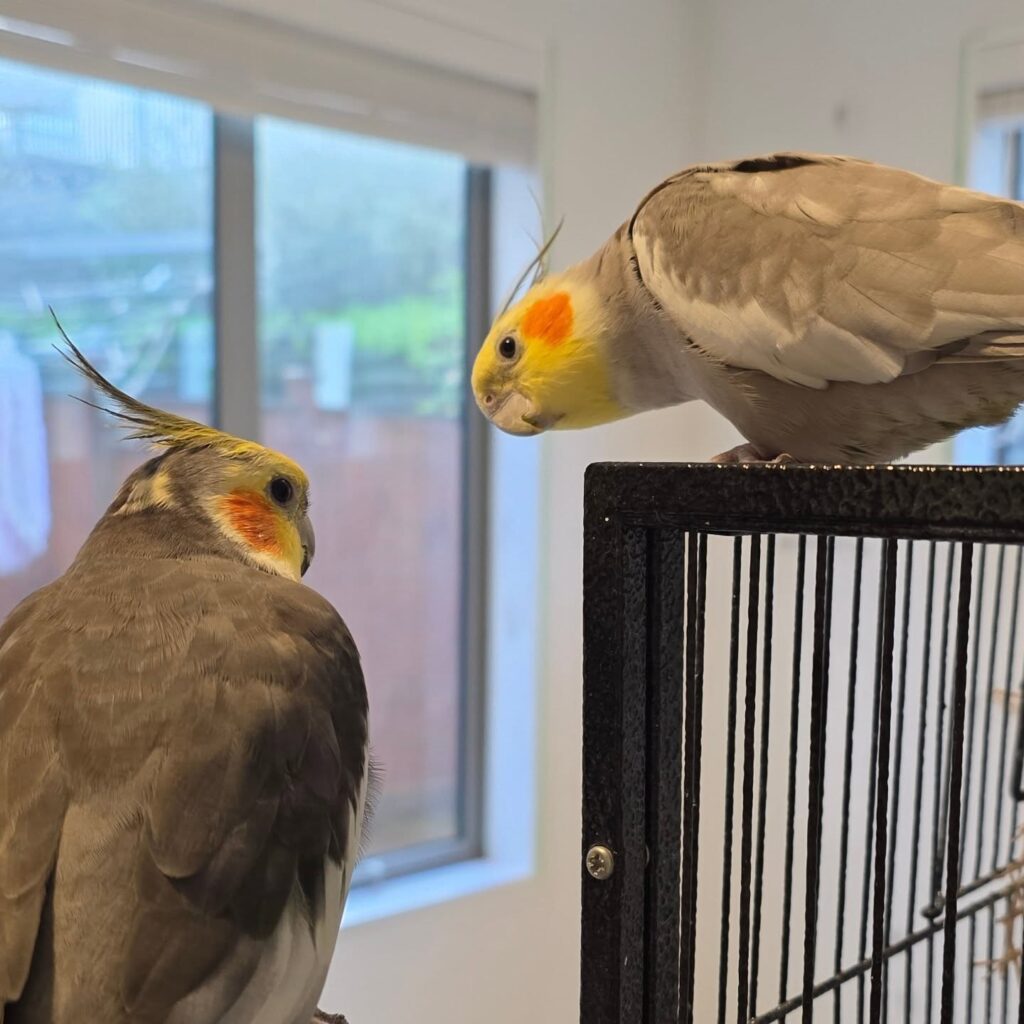
Cockatiels, like cats, have a threshold for tactile stimulation. Up to a point, being stroked feels pleasant. Beyond that point, it tips from pleasant to overwhelming and the bird needs it to stop. The warning signs before an overstimulation bite are subtle: a slight tensing of the body, a brief tail flick, the crest going slightly erect, the feathers tightening rather than fluffed. A moment after these, if the stroking continues, the bite happens.
- The bite happens during handling that seemed to be going well — the bird has been calm and relaxed for several minutes before biting
- The bird bites without the obvious fear signals of erect crest, hissing, and crouching
- The bite happens at the end of a long petting session, not at the beginning
- The bird bites and then immediately returns to normal — no sustained aggression
- The same body areas are bitten repeatedly — the area being stroked at the point of overload
What to do
Shorten handling sessions. Watch for the subtle pre-bite signals — the tensing, the tail flick, the slight crest movement — and stop the stroking before the threshold is reached. Put the bird down before it wants to get down. This is the most effective approach because it means interactions end positively rather than with a bite.
With practice, you learn to read your specific bird’s threshold. Some cockatiels have a long threshold and enjoy extended stroking. Others have a short one and are done after five minutes. Neither is wrong — they are different birds with different preferences.
Cause 5: Redirected Aggression — The Bite That Was Meant for Someone Else
This is one of the more complex types and one that genuinely puzzles owners when it happens. The bird is on the owner’s shoulder. It sees something through the window — another bird, a cat, a reflection — and cannot reach it. The nearest thing is the owner’s face. The bite happens.
This is redirected aggression — the arousal triggered by the external stimulus is discharged on whatever is closest, which is the person holding the bird. The bird is not angry at the owner. It is aroused by something else and the owner happened to be in the way.
- The bite appears to come from nowhere — the bird was calm and then suddenly bit
- The bird was on the owner’s shoulder or close to the owner’s face
- Something outside the cage or window attracted the bird’s attention immediately before the bite
- The bird’s pupils were pinned and crest was erect in response to the external stimulus — you may have missed this while not watching the bird’s face
- The bite is harder or more persistent than typical warning bites

What to do
Avoid allowing the bird to be on your shoulder near windows where it can see triggers. If the bird is visibly aroused — erect crest, pinned pupils — move it away from the shoulder to the hand or a perch before the arousal escalates. Do not put an aroused bird on your shoulder thinking it will settle.
Cause 6: Learned Behaviour — The Bite That Worked
This is the most preventable cause of persistent biting, and the most common one I see in birds that bite repeatedly rather than occasionally.
A cockatiel learns, very quickly, that biting produces results. If a bird bites and the owner immediately withdraws, puts the bird down, leaves the room, or in any way changes their behaviour in response to the bite — the bird has learned that biting works. Not maliciously. Not strategically. Simply through the most basic form of learning: this action produced this outcome.
The next time the bird wants the owner to stop what they are doing, put them down, or leave — it bites. Because it has learned that biting is the most reliably effective signal it has.
- The biting is becoming more frequent rather than less — it is a learned habit, not a one-off
- The bird bites in specific predictable contexts — always when you try to put it back in the cage, always when you have been handling it for a certain length of time
- The bite is immediately followed by the outcome the bird wanted — you withdrew, stopped what you were doing, put it down
- The biting started small and has escalated — the bird has reinforced it over time
- The bird is otherwise well, there is no obvious fear or hormonal context, and no pain-related trigger
What to do
Stop rewarding the biting. This is the counter-intuitive part — when the bird bites, do not withdraw immediately. Gentle, steady pressure on the hand or perch the bird is on, rather than withdrawal. Do not respond with alarm, shouting, or sudden movement — all of these are responses the bird finds reinforcing because they are immediate and obvious.
At the same time, start rewarding the behaviour you want. A bird that steps up calmly gets calm praise and interaction. A bird that steps off the hand to return to the cage voluntarily gets a small food reward.
This process takes weeks of consistent application. It will not change overnight. But consistent non-reward of biting, combined with consistent reward of desired behaviour, is the only reliable approach to learned biting.
Cause 7: The New Cat — And Why Predator Presence Changes Everything
I want to give this its own section because the man at the start of this article had both a hormonal bird and a new cat — and the combination is important.
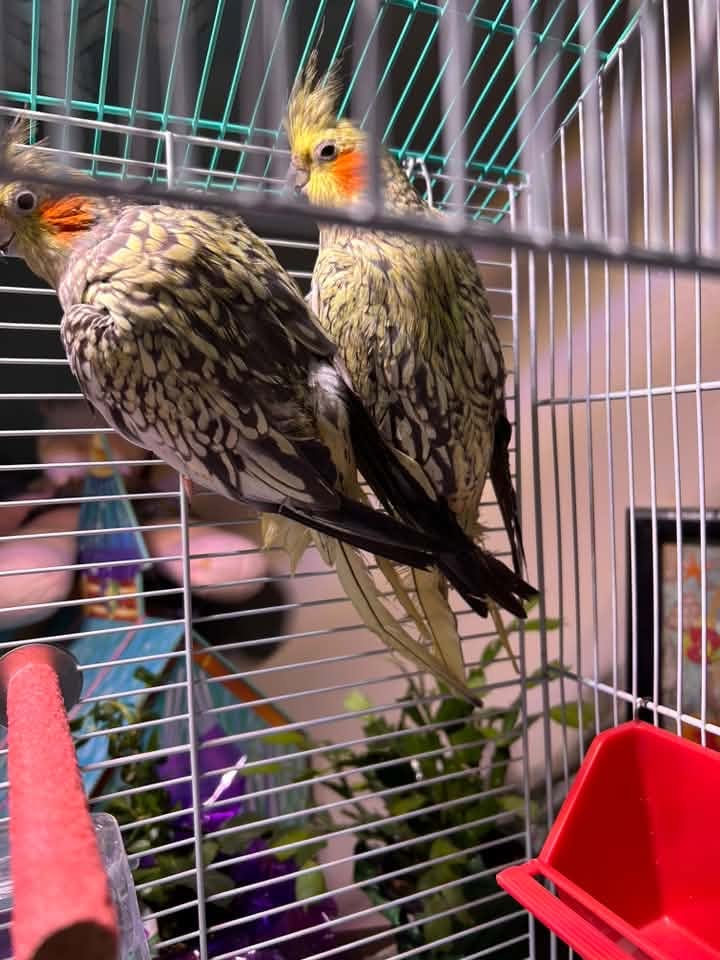
A cockatiel in a household with a cat or dog it can see, smell, or hear is a bird in a state of sustained, low-level stress. The predator presence keeps the threat response perpetually activated. A bird in this state has a much lower tolerance threshold for everything — for being approached, for being handled, for any change in its environment. The hormonal state and the predator stress were compounding each other, and together they produced biting that neither alone might have triggered.
- A cat or dog has been introduced to the household recently and the biting started around the same time
- The cat can see the cage, approach the cage, or patrol the room where the cage is
- The bird is visibly more tense and alert than before the new pet arrived
- The biting is worse when the cat is in the room or has recently been near the cage
What to do
Ensure the cat cannot approach, watch, or patrol near the cage. Move the cage to a room the cat does not access if necessary. The sustained predator stress will not resolve while the threat is consistently present. Once the cat presence is managed, the bird’s baseline stress level drops and its tolerance threshold increases. Biting typically reduces significantly when this is addressed.
Reading the Warning Signs — Before the Bite
The most effective prevention for cockatiel biting is not responding to bites — it is reading the signals that precede them. Cockatiels give clear, readable pre-bite signals. Once you know them, you rarely need to reach the bite.
- Crest position.
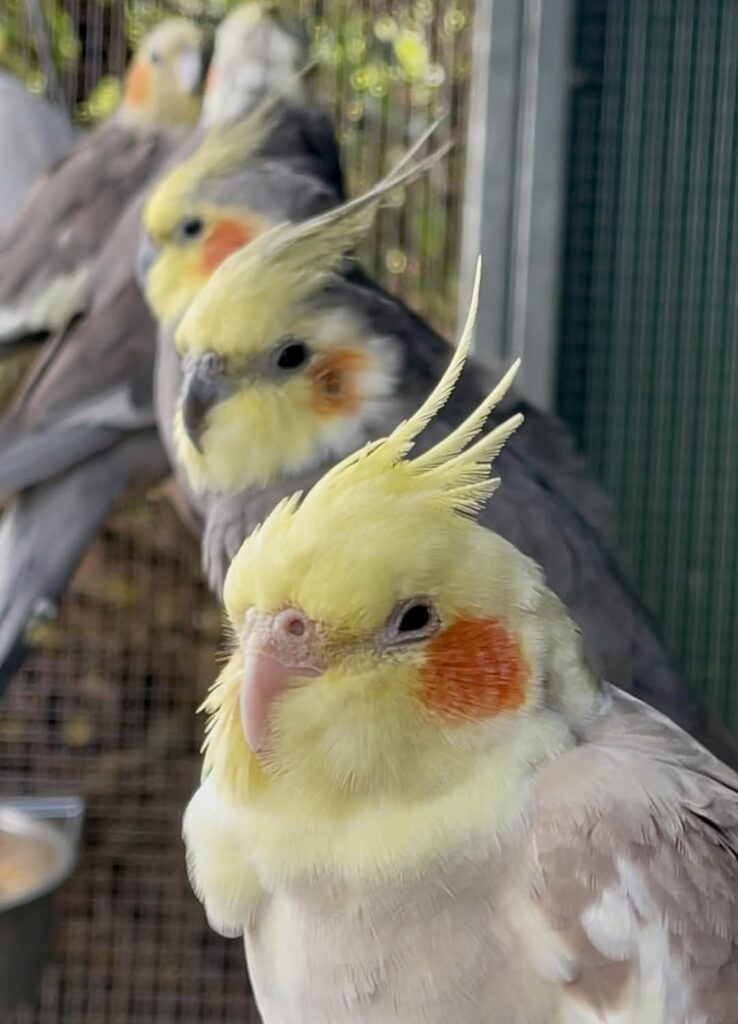
The crest is the cockatiel’s most readable emotional display. Flat against the head — relaxed or asleep. Slightly raised — alert and interested. Fully erect and fanned — alarmed, threatening, or highly aroused. A fully erect crest during an interaction is a strong warning signal. Stop what you are doing. - Pupil dilation and pinning.
A cockatiel that is about to bite often has pinned pupils — the pupils contract rapidly and repeatedly, alternating between large and small. This is a sign of high arousal. Look at the eyes when the crest is up. - Hissing.
A cockatiel that hisses is using one of its clearest communication tools. Hissing means back off. Continuing to approach a hissing cockatiel almost always produces a bite. - Body posture.
A crouched, hunched bird moving away from your hand is afraid and wants you to stop. A puffed-up bird standing tall with neck extended and crest up is threatening. Both postures precede biting. - Tail position.
A tail flicked rapidly or fanned briefly during handling is often a pre-bite signal in the overstimulation context. Watch for it when stroking and stop before the next signal arrives.
What Not To Do
| What people do | Why it is wrong | What to do instead |
|---|---|---|
| Punish the bird after a bite | The bird cannot connect the punishment to the bite — it only learns that interactions with you sometimes produce unpleasant outcomes. This increases fear and worsens biting over time | Do not react dramatically to bites — steady, calm, no reward for the bite, then redirect to a positive interaction when the bird is settled |
| Blow in the bird’s face as a deterrent | This is a stress response from the bird’s perspective — it damages trust and increases anxiety without teaching anything | Remove yourself or the bird calmly from the situation instead |
| Withdraw immediately every time the bird bites | Immediate withdrawal rewards the bite — it teaches the bird that biting achieves the desired result | For learned biting, maintain gentle steady contact briefly before placing the bird down calmly |
| Force interaction when the bird is showing warning signals | Forcing contact past warning signals guarantees a bite and damages the trust that makes future handling possible | Read the signals and back off before the bite happens — the bird is communicating clearly |
| Assume the biting is the bird’s personality and cannot change | Every cause of cockatiel biting has an approach that reduces it — some faster than others, but none is permanent or fixed | Identify the cause and apply the appropriate response consistently over weeks |
| Handle the bird without ruling out pain as a cause | If the biting is pain-driven and you continue handling, you are causing repeated pain to a suffering bird | Sudden-onset biting in a previously gentle bird always warrants a vet check before behavioural work begins |
Frequently Asked Questions
Is cockatiel biting dangerous?
A cockatiel bite can break skin and is more significant than a budgie bite — cockatiels have larger, more powerful beaks. It is not medically dangerous in the way a large parrot bite might be, but it is not trivial either. More importantly, persistent biting is a sign that something in the relationship between bird and owner needs addressing — for the bird’s wellbeing as much as the owner’s comfort.
My cockatiel bites me but not my partner — why?
This usually indicates a specific bond dynamic rather than a problem with you specifically. Cockatiels often bond most intensely with one person and may show jealousy-adjacent behaviour toward others — including biting anyone who attempts to interact with the bird or the bonded person. Alternatively, the bird may simply be more comfortable with your partner’s handling technique, voice, or approach style. Rebuilding the interaction from the bird’s perspective — slower approach, more food association, respect for warning signals — usually addresses this over time.
My cockatiel used to be tame and has started biting after years — is something wrong?
Possibly, yes — sudden-onset biting after years of gentle behaviour is the profile I always investigate rather than assume is behavioural. Rule out pain and illness first. Then look at what has changed in the environment — season, new pets, household changes, lighting. A bird that was gentle for years and has suddenly changed is almost always responding to something specific.
How long does it take to stop a cockatiel from biting?
It depends on the cause. Hormonal biting often reduces naturally as the season changes — weeks to months. Fear-based biting improves with consistent trust-building over weeks. Learned biting requires the most work and the most consistency — expect two to three months of dedicated effort before significant improvement. Pain-based biting resolves when the pain is treated.
Should I wear gloves when handling a biting cockatiel?
Gloves remove the tactile feedback that helps you read the bird and respond naturally. They can also increase the bird’s alarm because the hand looks and feels different. I generally do not recommend them. Better to work on reading the warning signals and avoiding the bite altogether.
Where can I get cockatiel behaviour advice in Swindon?
Come and see us at Paradise Pets, Manor Garden Centre, Cheney Manor Industrial Estate, Swindon SN2 2QJ. Or ring us on 01793 512400. We have been keeping and advising on cockatiels for over 35 years and will give you a straight, honest assessment of what is driving the biting in your specific bird.
One Last Thing From Me
The man with the bitten finger came back about eight weeks later. He had moved the cage away from the window where the cat had been visible. He had started putting the cover on at 8:30pm every night, reducing the day length the bird experienced. He had stopped stroking along the back entirely — head and face only.
The biting had reduced significantly within three weeks. By week six it had stopped almost completely.
He said the thing that helped most was understanding that the bird was not angry at him. It was hormonal, stressed by the cat, and being handled in a way that was triggering its breeding instincts. Once he understood that, the changes he needed to make were obvious.
That is the pattern I have seen consistently for 35 years. Once you understand why the bird is biting, the solution almost always follows. The bite is not the problem. It is the information.
Come and see us if you need help reading what yours is telling you.
Cockatiel Biting? Come In and Let’s Work Out Why
We have been keeping, selling, and advising on cockatiels for over 35 years. Biting always has a reason and that reason is almost always addressable. Come in and describe what you are seeing — or bring the bird if you want us to observe it directly. Free advice, no obligation. That is how we have always done things.