


Neil has been keeping, breeding, and selling budgies at Paradise Pets Swindon since 1988 — over 35 years of daily first-hand experience with these birds and the people who keep them. Mirror behaviour is one of the most commonly misunderstood things budgie owners observe — and one of the most frequently given the wrong advice about. This is his honest guide to why budgies sing to mirrors, what it actually means for the bird, and why the answer to whether you should have a mirror at all is more nuanced than most people expect.
A couple came into the shop wanting to buy a mirror for their budgie. They had a single bird, they were out at work during the day, and they had read that mirrors were good for budgies because they provided company. They wanted to do the right thing by their bird and this seemed like a practical solution.
I sold them the mirror. But before they left, I told them what the mirror was and was not — because understanding the difference matters for the bird’s long-term wellbeing in ways that most owners are never told.
A mirror is not a friend. It is not company in the way another budgie is company. The bird singing to its reflection is not singing to a companion — it is singing to itself, caught in a loop of social behaviour that the reflection triggers but never truly reciprocates. For a bird kept alone with a mirror as its primary social outlet, this distinction matters enormously.
That is not a reason to never use a mirror. It is a reason to understand what the mirror is doing and to use it accordingly.
They came back about six months later. The bird had been singing to the mirror daily — enthusiastic, sustained, clearly engaged. They had also started spending more time interacting with the bird directly. They were thinking about a second budgie. The mirror had been useful while they worked out what they were doing. But they had understood from the start what it was.
That is the right relationship with a mirror. And that is what this guide explains.
Why Budgies Sing To Mirrors — The Honest Explanation
Before I go through the specifics of what mirror behaviour means and how to manage it correctly, I want to explain the biology behind it — because understanding why the behaviour happens changes how you interpret what you are watching.
Budgies are flock animals. In the wild, they live in groups of hundreds or thousands. Their entire social and psychological framework is built around the presence of other birds — birds that respond to them, that call back, that groom them, that eat alongside them, that notice when they are alarmed and share in the response. Isolation from other birds is not a neutral state for a budgie. It is a state of deprivation from the thing the bird’s entire nervous system is calibrated to expect.
When a budgie encounters a mirror, it sees a bird. The reflection moves when it moves, reacts when it reacts, matches its vocalisations with perfect synchrony. To the budgie’s social brain, this looks like an extremely responsive companion — one that is always present, always attentive, never moves away. The budgie responds to this perceived companion with the full range of social behaviour: singing, chattering, regurgitating food, displaying, grooming the glass.
The problem is that the reflection never initiates. It never produces an independent response. It never does something the budgie did not do first. And at some level, the interaction never quite satisfies — because the reciprocal element that makes real social contact meaningful is absent.
- The singing is the bird’s social behaviour directed at a perceived companion — it is not random vocalisation; it is the bird doing what it would do with a real flock member
- The budgie does not know it is looking at itself — there is no evidence that budgies have the self-recognition required to understand that the reflection is themselves; they respond to it as they would respond to another bird
- The behaviour is a sign the bird wants social contact — singing to a mirror is the bird reaching out for connection; what the mirror tells you is that the bird has social needs; what it does not tell you is whether those needs are being adequately met
- Extended mirror interaction without other social contact can lead to problems — a bird that has only a mirror for social interaction may become bonded to the reflection, develop frustrated or repetitive behaviours, and be harder to bond with real companions later; the mirror is a supplement, not a substitute
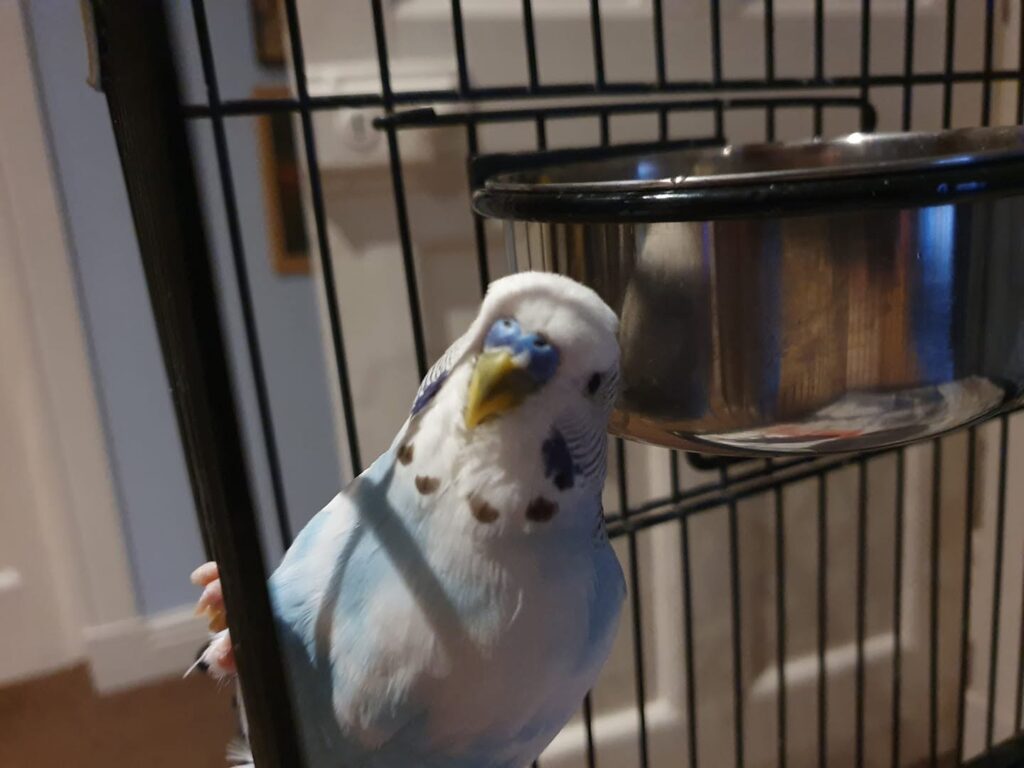
Once you understand this, the rest of the guide makes complete sense. The mirror behaviour is not a problem in itself. What matters is whether it is the bird’s only source of social stimulation — and what you do about that.
What The Singing Actually Means — Reading The Behaviour Correctly
The singing itself — and the other behaviours that typically accompany it — tells you something specific about the bird’s state. Here is how to read what you are actually seeing.
Singing and Chattering
The core behaviour. The bird vocalises toward the reflection — chirping, chattering, attempting speech sounds, producing the sustained warbling song that budgies use for social bonding. This is contact calling and bonding vocalisation directed at a perceived companion.
- The singing is a positive sign in isolation — a bird that sings is a bird that is not profoundly depressed or physically unwell; vocalisation requires energy and engagement
- The quality and variety of the singing matters — a bird that produces rich, varied vocalisation — different sounds, attempts at words, sustained song — is more mentally engaged than one that repeats a single call monotonously
- Sustained mirror singing throughout the day to the exclusion of other activity — if the bird spends the majority of its active time singing to the mirror and little time on anything else, the mirror has become the primary focus of a bird that lacks alternative stimulation
Regurgitating Food at the Mirror
This one surprises most owners but it is very common and it is worth explaining clearly because it is frequently misread as illness.
Regurgitation in budgies is a courtship and bonding behaviour. Male budgies feed their mates by regurgitating food — it is an act of pair bonding and affection. A budgie that regurgitates food at its mirror is performing courtship behaviour toward the reflection. It has, in its social framework, bonded with the image it sees and is expressing that bond in the way budgies do.
- Regurgitation at the mirror is not vomiting and is not a sign of illness — the distinction matters; regurgitation is controlled and deliberate, typically involves a small amount of food and head-bobbing motion, and the bird appears entirely normal before and after; vomiting is uncontrolled, produces more material, and the bird appears distressed
- It does tell you the bird has strongly bonded to the mirror — courtship regurgitation is a high-investment social behaviour; a bird doing this has formed a significant attachment to the reflection; this is the version of mirror behaviour I find most worth discussing with owners, because it indicates a level of social redirection that is worth addressing
- A bird that regurgitates at the mirror regularly benefits most from real companionship — the investment of social energy in the reflection indicates a bird with strong social needs and good social drive; that drive would be better served by a real companion
Head Bobbing and Display
Head bobbing toward the mirror, wing spreading, puffed feathers at the nape of the neck — these are all display behaviours that form part of the courtship and social bonding sequence.
- Head bobbing at the mirror is courtship display — the bird is performing the pre-bonding display sequence toward the reflection; again, this is a sign of strong social drive and significant mirror attachment
- Occasional display behaviours are normal and not a concern — a bird that bobs at its mirror a few times a day and then goes about its other activities is using the mirror as one element of its environment
- Exclusive, repetitive display to the mirror across most of the active day — if display behaviours dominate the bird’s active hours, the mirror has become a behavioural fixation rather than an environmental enrichment; this is the version that benefits from intervention
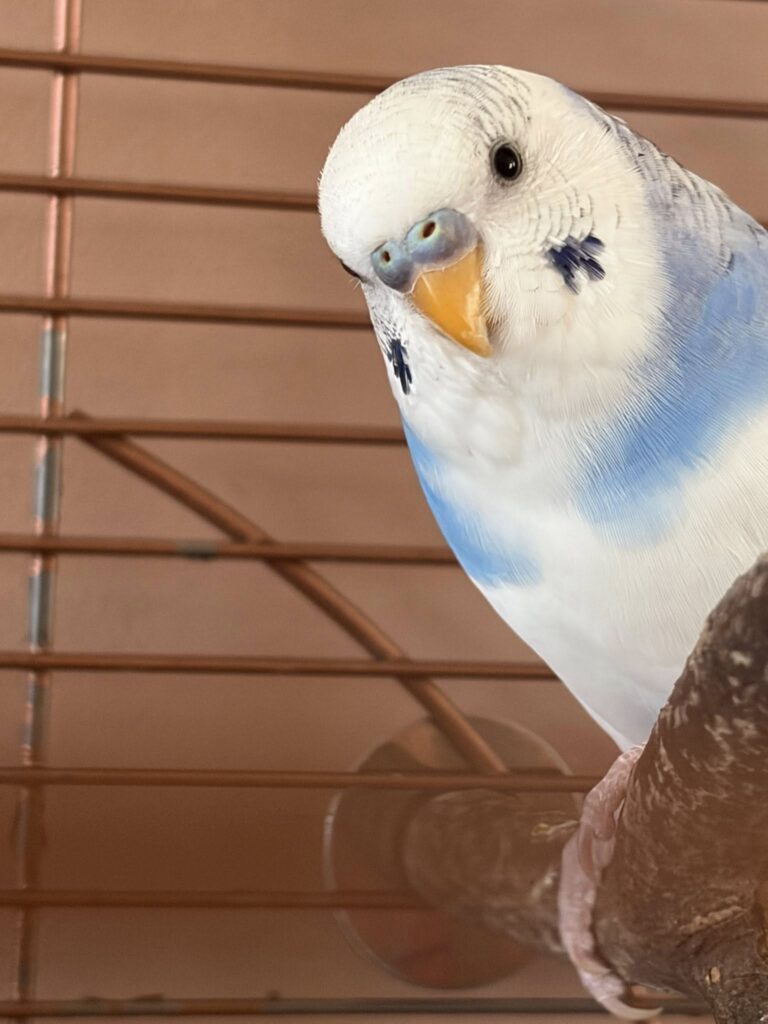
The Case For Mirrors — When They Are Genuinely Useful
Mirrors have a legitimate place in budgie keeping. The anti-mirror advice that circulates online is often stated in absolute terms that are not warranted. Here is when mirrors are genuinely useful.
- For a newly acquired single budgie still settling in — a mirror can reduce the distress of a bird that has come from an aviary or a pet shop where it had constant bird company; it provides a degree of social stimulus during the adjustment period while the bird is getting used to its new environment and owner
- As one element of a stimulating environment — alongside other toys, foraging opportunities, and regular owner interaction, a mirror contributes to environmental variety; used this way it is enrichment, not a substitute for social contact
- For owners who are present and interacting with the bird regularly — a bird that gets significant daily interaction with its owner and has the mirror as an additional element is in a different situation from a bird that is alone all day with only a mirror; context matters enormously
- As a temporary measure while working toward better provision — if you are a single-budgie owner who is not yet ready for a second bird, a mirror is better than nothing while you build toward the right long-term solution
The Case Against Over-Reliance On Mirrors — When They Become A Problem
The problem is not the mirror. The problem is the mirror as the primary or sole social provision for a bird kept alone by owners who are away for significant portions of the day. This is the situation that produces the outcomes worth avoiding.
- Mirror bonding can interfere with bonding to real companions — a bird that has spent months deeply invested in its mirror reflection may be slower to accept a real companion bird or to bond with its owner; the social behaviour has been redirected and establishing new social bonds requires more work
- It does not address loneliness — this is the central point; the bird that is singing to its mirror all day is a bird that is lonely and doing the only thing available to it; the mirror occupies the behaviour but does not meet the underlying need
- Chronic partial satisfaction is not the same as wellbeing — a bird that is perpetually seeking social contact it never quite gets is not a bird that is thriving; it is a bird that is managing; there is a meaningful difference
- Repetitive mirror behaviour can develop into stereotypy — in cases where mirror interaction becomes the dominant and almost exclusive behaviour, it can develop into a repetitive, compulsive pattern that is harder to redirect over time; this is not common but it is not rare either in birds kept in genuine social deprivation with only a mirror
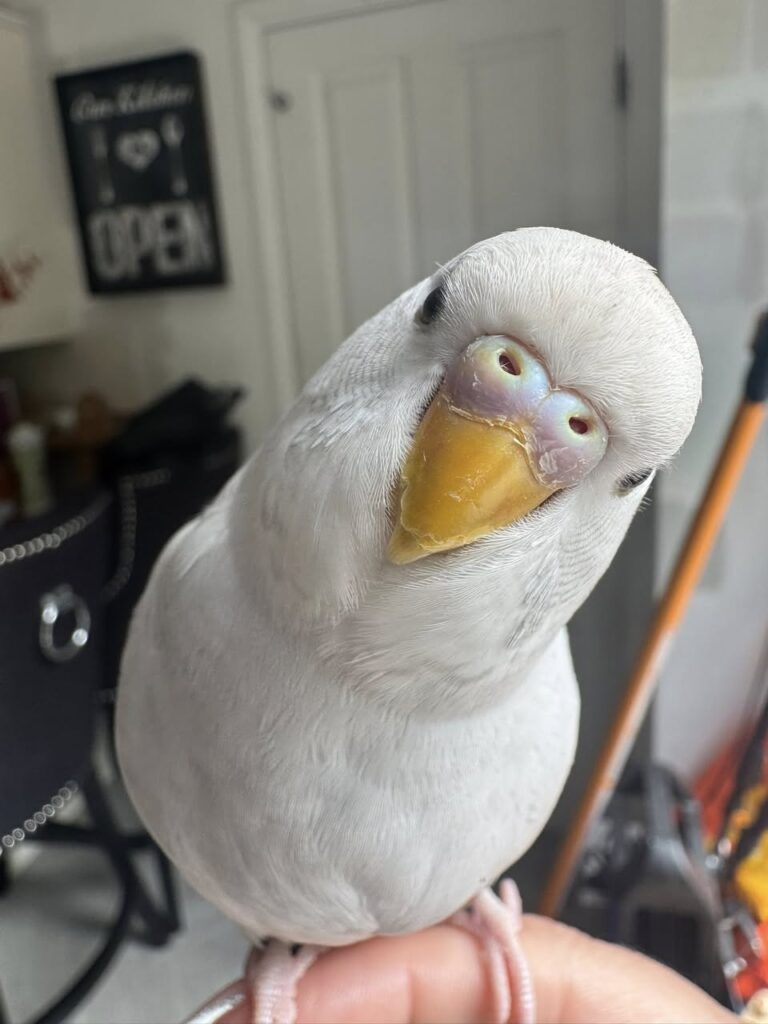
- The bird spends the majority of its active hours at the mirror to the exclusion of other activities — eating, exploring, playing, resting in other locations
- The bird regurgitates at the mirror regularly — courtship bonding to the reflection indicates a high level of social investment that real companionship would serve better
- The bird shows no interest in interacting with the owner or shows anxiety when the mirror is temporarily removed
- The mirror behaviour has become repetitive and ritualistic rather than varied and engaged
- The bird has been alone with primarily a mirror for social company for months or longer
What You Should Actually Do — The Honest Recommendation
Here is my honest position after 35 years of watching single budgies with mirrors, paired budgies without mirrors, and every variation in between.
- If you have a single budgie and are out for most of the day, the mirror is not the solution — a second budgie is — I know that is not what everyone wants to hear, and I know it represents a commitment; but it is the honest answer; a budgie with a real companion is categorically better provided for than a budgie with a mirror, and the difference in the bird’s behaviour, health, and longevity over time reflects that
- If a second budgie is not currently possible, use the mirror as one of several enrichment elements, not as the primary provision — alongside toys that are rotated regularly, foraging opportunities, time spent near the bird during the day, radio or television providing human voice in the background, and as much direct interaction as you can manage
- Limit mirror access rather than providing it all day every day — offering the mirror for part of the day and removing it for part of the day means it retains novelty and does not become the singular focus of the bird’s active hours
- If you introduce a second budgie, remove the mirror during the introduction period — you want the birds to be interested in each other, not for one of them to be fixated on a reflection while the other tries to establish contact
- Prioritise your own interaction with the bird — time spent at the cage talking to the bird, offering treats, encouraging the bird to step up, letting the bird out into the room with you — this is real social contact that the mirror cannot replicate; the mirror is most appropriate when you genuinely cannot be present, not as an alternative to interaction you could be providing
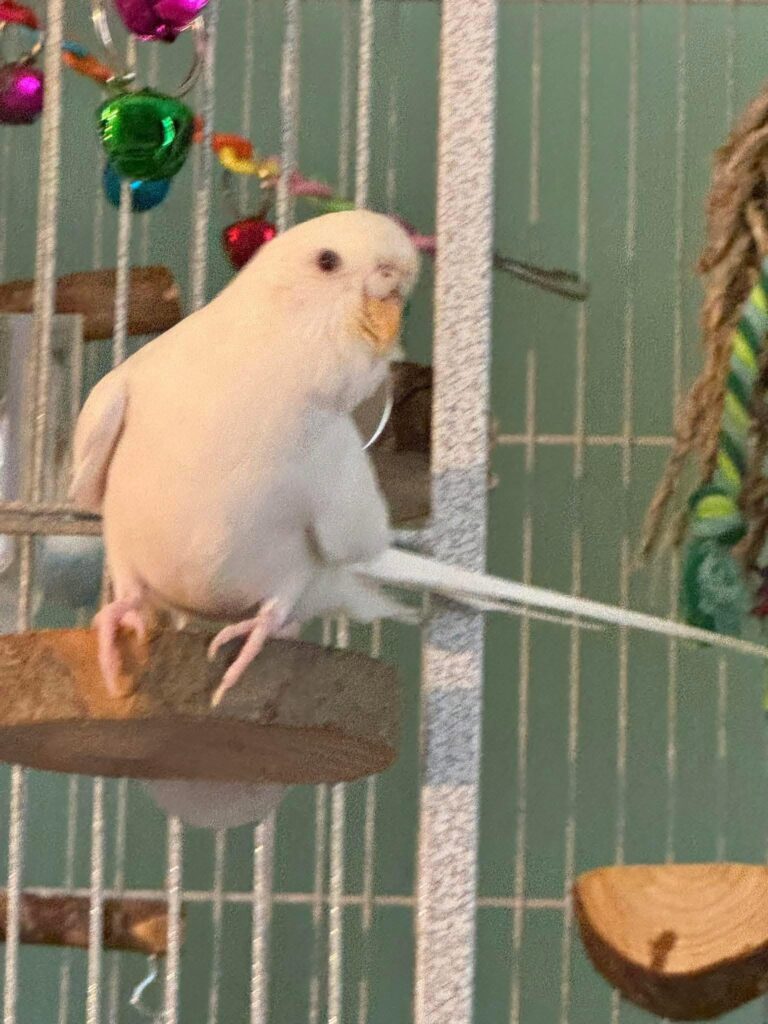
Mirrors and Talking — Does The Mirror Help Or Hinder Speech Development
This is a question I get regularly and it deserves a direct answer because there is genuinely conflicting advice about it.
The common claim is that a budgie with a mirror will not learn to talk because it is talking to its reflection rather than to humans. This is overstated but not entirely without basis.
- A budgie that is strongly mirror-bonded may be less motivated to vocalise toward humans — its social vocalisation is directed at the reflection; the incentive to develop the human-directed sounds that eventually become words is reduced
- Budgies that learn to talk well tend to be birds with strong bonds to their owners — speech development in budgies is a social behaviour; it happens as part of the bird’s attempt to communicate with its flock; a bird whose primary social focus is a mirror rather than a person is less likely to develop that human-directed communication
- This does not mean a mirror will prevent talking entirely — many budgies with mirrors do learn words; the mirror reduces the motivation but does not eliminate it
- If talking is something you want to encourage, limit mirror access and maximise direct interaction — the birds that develop the richest vocalisations and the most extensive talking are almost always birds with strong owner bonds and significant daily human interaction
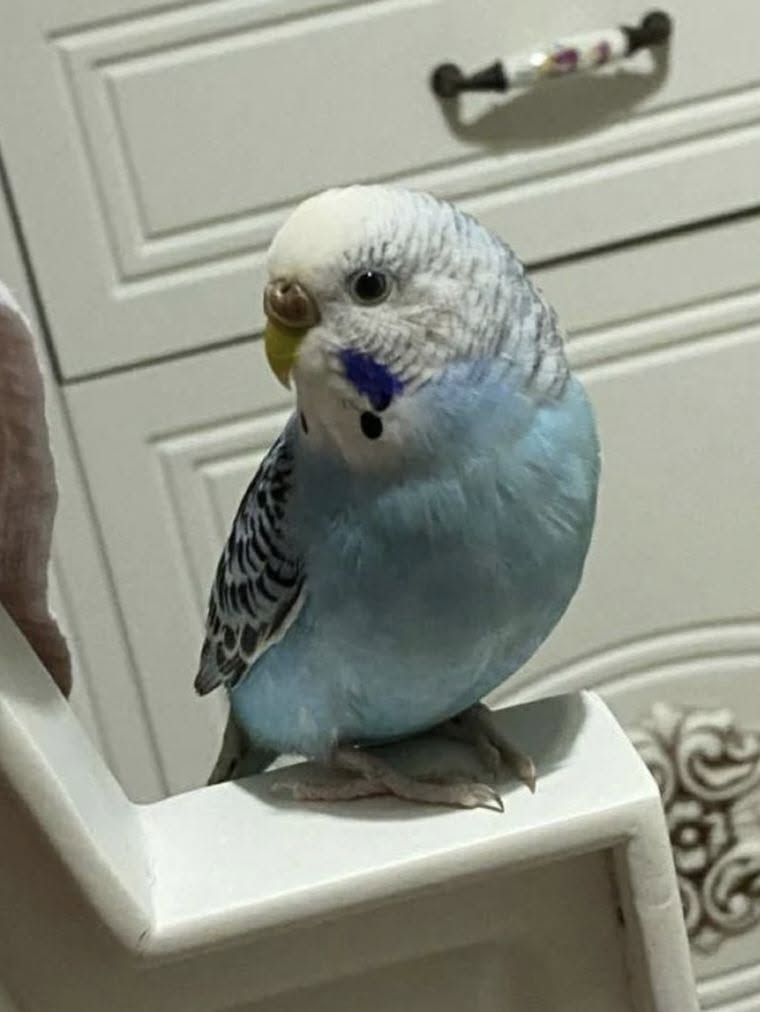
Frequently Asked Questions
Is it bad for my budgie to have a mirror?
Not in itself. The problem is not the mirror — it is sole reliance on the mirror as a social provision for a bird kept alone. A mirror used as one element of an enriched environment, alongside real interaction and a varied range of stimulation, is a reasonable and useful thing. A mirror used as the answer to a single budgie’s social needs while the owner is away all day is not adequate provision — not because the mirror causes harm directly, but because it does not meet the need the bird actually has.
My budgie sings to the mirror for hours. Should I be worried?
If the mirror singing is the dominant activity across most of the active day, yes — not because singing to a mirror is harmful in itself, but because it indicates the bird is directing a very significant amount of social energy at a reflection rather than having that need met by real social contact. A bird that sings enthusiastically for periods and then engages with toys, eats, explores, and rests normally is in a different situation from a bird that is at the mirror almost continuously. The first is using the mirror as enrichment. The second is telling you something about unmet social needs.
My budgie regurgitates at the mirror. Is this normal?
It is not unusual, but it tells you the bird has formed a courtship bond with the reflection. Regurgitation is a high-investment bonding behaviour — it is what budgies do for their mates. A bird that does this regularly has strong social drive and strong social needs that a real companion would serve significantly better than a reflection. It is not a medical concern, but it is worth taking as a signal about what the bird actually needs.
Should I remove the mirror?
Not necessarily, but consider limiting it. If the mirror has become a fixation — the dominant activity, regurgitation occurring, the bird showing little interest in anything else — reducing mirror access and introducing other enrichment elements alongside significantly more direct interaction is a better approach than simply removing it overnight. A bird that has become dependent on mirror interaction does not benefit from abrupt removal; the mirror access is reduced gradually while other social and environmental provision is increased.
Will getting a second budgie make my bird stop singing to the mirror?
Almost certainly, yes — and the singing it redirects toward the real companion will be genuinely reciprocated in a way the mirror never could. Most birds that have been mirror-focused shift their social attention to a real companion relatively quickly once the introduction period is established. The transition needs managing — introductions should happen gradually, over a period of weeks, in a neutral space — but the outcome for the bird is almost always better with real companionship than with any amount of mirror time.
My budgie ignores its mirror. Is something wrong?
No. Budgies vary enormously in their mirror engagement. Some are intensely interested; others glance at it occasionally and largely ignore it. A bird that is otherwise active, vocalising, eating normally, and engaged with its environment and its owner is fine regardless of its interest in the mirror. Mirror engagement is not a metric of wellbeing — it is simply a behaviour some birds exhibit and others do not.
Where can I get advice about my budgie’s behaviour and social needs in Swindon?
Come in to Paradise Pets at Manor Garden Centre, Cheney Manor Industrial Estate, Swindon SN2 2QJ — or call us on 01793 512400. If you are wondering whether your single budgie is adequately provided for, or whether a second bird would be appropriate, I am happy to talk it through honestly. Free advice, no obligation. That is how we have done things here for 35 years.
One Last Thing From Me
The couple I mentioned at the start — the ones who came in for a mirror — did eventually get a second budgie. They came in about eight months after the first visit. They had spent the intervening time interacting more with their bird, limiting the mirror to part of the day, and building their confidence as owners.
The second bird went in, and the transition took about three weeks of proper introduction. By the end of it, the original bird had redirected almost all of its social behaviour — the singing, the chattering, the mutual preening — toward the new companion.
The mirror was still in the cage. The bird essentially stopped using it.
“It was like the mirror had been a placeholder,” the woman said. “It was doing what the mirror was doing — but properly.”
That is exactly what it was. The mirror was a placeholder. A useful one, managed correctly. But a placeholder.
A budgie singing to its mirror is telling you something honest about what it needs. The mirror is where that need goes when there is nowhere better for it. The question is always: what can you do to give it somewhere better?
Wondering Whether Your Budgie’s Social Needs Are Being Met? Come In And Talk It Through.
Tell me about your bird — how it lives, what it does during the day, how much interaction it gets — and I will give you my honest assessment of whether the current setup is adequate and what, if anything, is worth changing. Free advice, no obligation. That is how we have done things here for 35 years.
⭐ Customer Reviews
Amazing Bird Selection
Had a lovley visit today,staff were very friendly and very helpful,such a great petshop,their selection of birds is incredible,really impressed,thank so much to the staff at Paradise Pets

Friendly Helpful Staff
I have been coming to this place for years and they have a great stock of food for all types of pets. Have a great selection of small mammals and a lot of birds. Staff are friendly and helpful.

Great Quality Hutch
Bought a guinea pigs hutch and run combo, very happy with the service, the hutch was put in my car for me without even asking for help. The wood quality is very good, the instructions easy to follow and we are extremely happy with the fully built hutch. A good size for 2 guinea pigs

Response from Paradise Pets | Wiltshire
Thank you Melanie Latus Nice to provide services to you.
Best Bird Shop Around
It’s the best pet shop in and around Swindon. They always have an amazing selection of birds and all you need to keep them happy. I keep birds myself and the guys there are happy to answer questions and really know their stuff. I have seen budgies etc. in chain pet shops in the area looking really unhealthy and ill – I wouldn’t go anywhere else than Paradise Pets for animals.

Highly Recommended Bird Shop
I could not praise this shop enough. Really helped my Grandson buy his first bird and he’s loving it. Travelled from Somerset and was welcomed with open arms.

Great Shop with Competitive Prices
Great shop with amazing selection for small animals, hamsters, mice ect, highly recommend!
Also has a great selection for dogs & cats too & very competitive prices! 💖

