
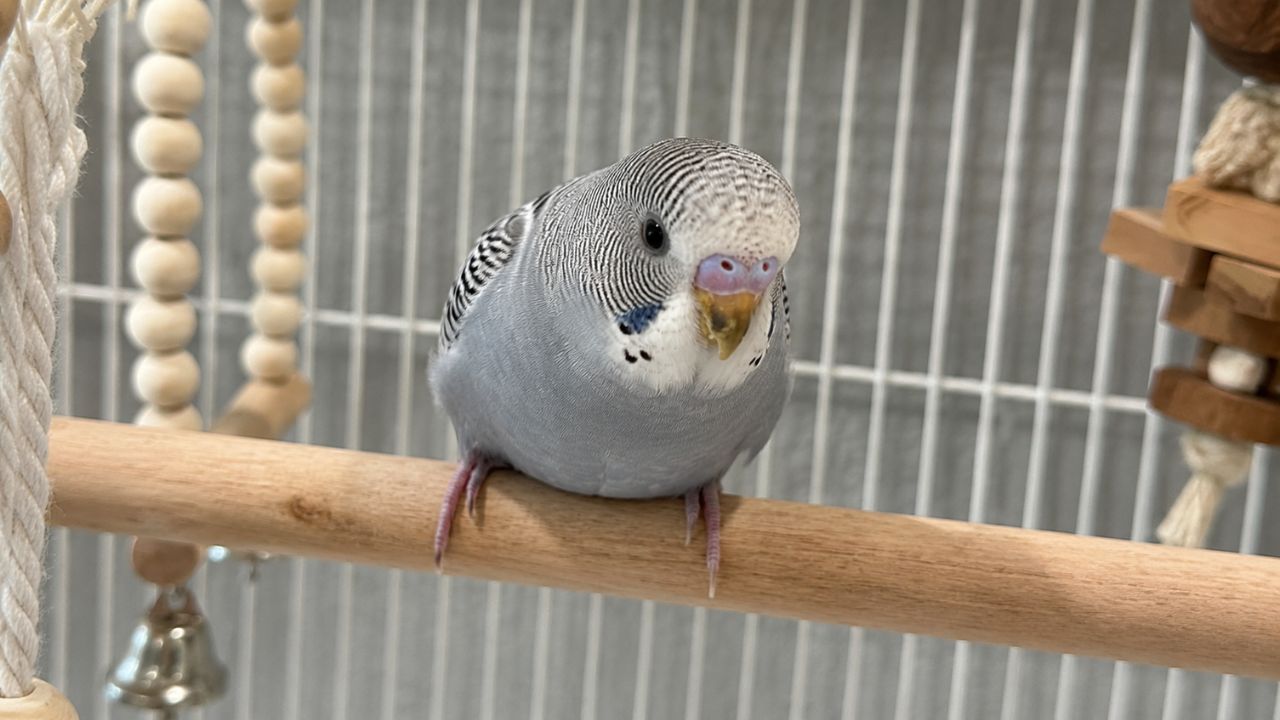

Neil has kept, bred, and sold budgies at Paradise Pets Swindon since 1988 — over 35 years of first-hand experience with these birds. Head bobbing is one of the most frequently misunderstood budgie behaviours he is asked about. Most of the time it is a compliment. Occasionally it means something different. This guide covers every version — and what each one is actually telling you.
A new budgie owner comes in looking slightly puzzled.
“My budgie keeps bobbing its head at me. Up and down, quite fast. I don’t know if it’s happy or if something is wrong with it.”
I hear some version of this question regularly — and I always enjoy answering it, because the honest answer is usually one that makes the owner smile.
In most cases, your budgie is not distressed. It is not malfunctioning. It is not performing a warning display. It is communicating — and the most common message head bobbing sends, when a budgie does it at you specifically, is one of the most positive things these birds can express.
But head bobbing is not one single thing with one single meaning. Depending on the context, the speed, who the bird is directing it at, and what else the bird is doing — it can mean several different things. And there is one version that looks very similar to the others but has a different context entirely.
This guide goes through all of them. Clearly, in order of how often I actually see them.
The Most Common Reason — It Wants to Be Fed
Before anything else — how old is your budgie, and is it newly acquired?
Head bobbing in young budgies is almost always a feeding solicitation. In the nest, chicks beg for food from their parents through rapid head bobbing — the same rhythmic up-and-down motion that continues into their early weeks and months in a new home. A young budgie that bobs its head at you is doing what it has always done when it wants food: asking to be fed by someone it trusts.
This is the most common version of head bobbing I see in newly acquired birds, and it is frequently misread as distress or illness by owners who have not seen it before. It is neither. It is a sign that the bird already regards you as a safe person — safe enough to ask for food. That is a good start.
As the bird matures and establishes its own feeding routine, this begging behaviour decreases and eventually stops. A young budgie that bobs enthusiastically at every mealtime will, by a few months old, simply go to the food bowl rather than asking you to provide it. The behaviour does not persist indefinitely — it is a phase of development.
Bonding and Affection — When It Is Directed at You Specifically
An adult budgie that bobs its head specifically at you — facing you, at close range, with a rhythmic and deliberate quality to the motion — is almost certainly in the early stages of regurgitation. It is offering you food.
I know that is not what most people expect to hear. But in budgie terms, it is one of the most meaningful gestures the bird is capable of.
Regurgitation is how budgies feed their mates. It is how parent birds feed their chicks. It is the physical expression of the deepest social bond these animals form. When a budgie does this toward a person, it has decided that person is part of its flock — significant enough to receive the same gesture it would direct toward its closest companion.
The bobbing motion is specifically the preparatory head pump that brings food up from the crop. Sometimes the regurgitation follows. Sometimes the bird bobs, makes the motion, and then does nothing — which is still the same signal, just not completed all the way.
If this is what you are seeing, understand it for what it is. The bird is not ill. It is not distressed. It is, in its own language, telling you that it trusts you completely and considers you part of its world. That takes time to earn with a budgie, and it means the relationship is genuinely working.
I have written about regurgitation specifically — including the difference between bonding regurgitation and vomiting — in our guide on why budgies regurgitate. If the head bobbing is consistently followed by food appearing, read that guide alongside this one.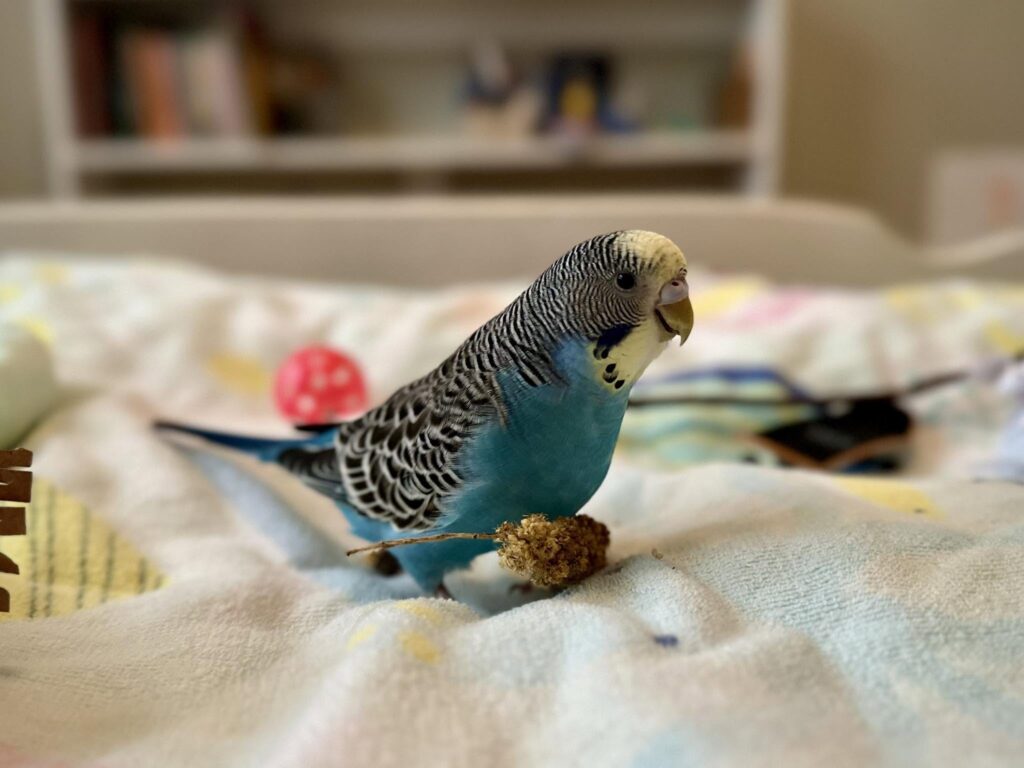
Excitement and General Happiness — The Bouncy Bob
Not all head bobbing is as loaded with meaning as the bonding version. Sometimes a budgie bobs its head simply because it is excited, happy, and stimulated.
This version is faster and bouncier than the deliberate bonding bob. It often accompanies a burst of chirping and chattering. The bird may be bobbing at you, at another bird, at something interesting in the room, or apparently at nothing at all. It is less directed and more generalised — a physical expression of the bird’s current emotional state.
A budgie that bobs enthusiastically when you enter the room, or when you start talking to it, or when its favourite music comes on — this is enjoyment. The bird’s brain is stimulated and the body expresses it. This is exactly what you want to see in a well-kept, well-socialised bird.
The context is the giveaway. If the bobbing happens spontaneously, is fast and bouncy, comes with vocalisations, and the bird does not seem focused on any specific target — this is the happy version. No action required. Enjoy it.
Courtship — When the Male Is Trying to Impress
Male budgies court females through a combination of song, movement, and head bobbing. A male who is interested in a female — or in a mirror, or in a particularly attractive toy, or occasionally in a person he has decided to direct courtship at — will bob his head with a specific rhythmic quality, often combined with singing or whistling, puffed cheek patches, and an upright, slightly elongated posture.
If you have a male budgie and it bobs its head at you with this quality — accompanied by song, a slightly show-offy posture, and what can only be described as an air of trying to impress — you have been selected as the object of courtship. This is, again, a compliment of sorts, even if not one most owners were expecting.
The courtship bob is distinguished from the bonding-regurgitation bob primarily by context. Does the bird have a companion of the opposite sex? Is it spring — when hormonal activity increases? Does the bobbing come with song and display rather than the quieter, more focused quality of the regurgitation bob? These questions usually identify it.
Courtship bobbing at a mirror is worth noting specifically. A bird that bobs intensely and persistently at its own reflection — combining head bobbing with regurgitation onto the mirror surface — has developed a fixation that can lead to weight loss from energy expenditure and emotional frustration at the reflection that never responds. I cover this in our guide on why budgies regurgitate — the mirror section is directly relevant here.
Territorial Bobbing — The Version That Is Not a Compliment
There is one version of head bobbing that has a different, less flattering meaning — and it is worth knowing about specifically because it looks similar to the others until you read the accompanying signals correctly.
A budgie that is feeling territorial — defending a food bowl, a favoured perch, or a claimed space from another bird or from a hand — may bob its head with a slightly different quality. The body posture accompanying it is different: more forward-leaning, slightly aggressive, the crest pulled flat rather than raised. The bobbing may be combined with a forward lunge rather than directed at the recipient with a soft, engaged quality.
This version says: this is mine and you are getting too close to it.
The distinction from bonding or courtship bobbing: look at the crest. A budgie that is excited or bonding has a slightly raised or relaxed crest — open, not compressed. A budgie that is in a territorial state has a flat, sleek crest, feathers tight to the head. That body language combined with head bobbing is a warning rather than an invitation.
In most household budgies this territorial bobbing is mild and manageable — a brief assertion at a food bowl that resolves quickly. If it is happening regularly toward people rather than toward cage mates or over specific resources, it is worth looking at whether something in the environment is driving the territorial response.
The Rhythmic Bob That Happens With Climbing — Not a Communication at All
One version of head movement in budgies that sometimes gets asked about is the rhythmic head bob that accompanies climbing — particularly going up and down bars or rope perches. This is not communication. It is the bird’s natural head-bobbing locomotion during climbing activity, combined with the normal coordination movement birds use to balance.
A budgie ascending cage bars with its head moving rhythmically is not sending a message to anyone. It is climbing, and the motion is part of how the bird moves. This is worth mentioning because some owners notice it and add it to a mental list of unexplained behaviours. It can be set aside.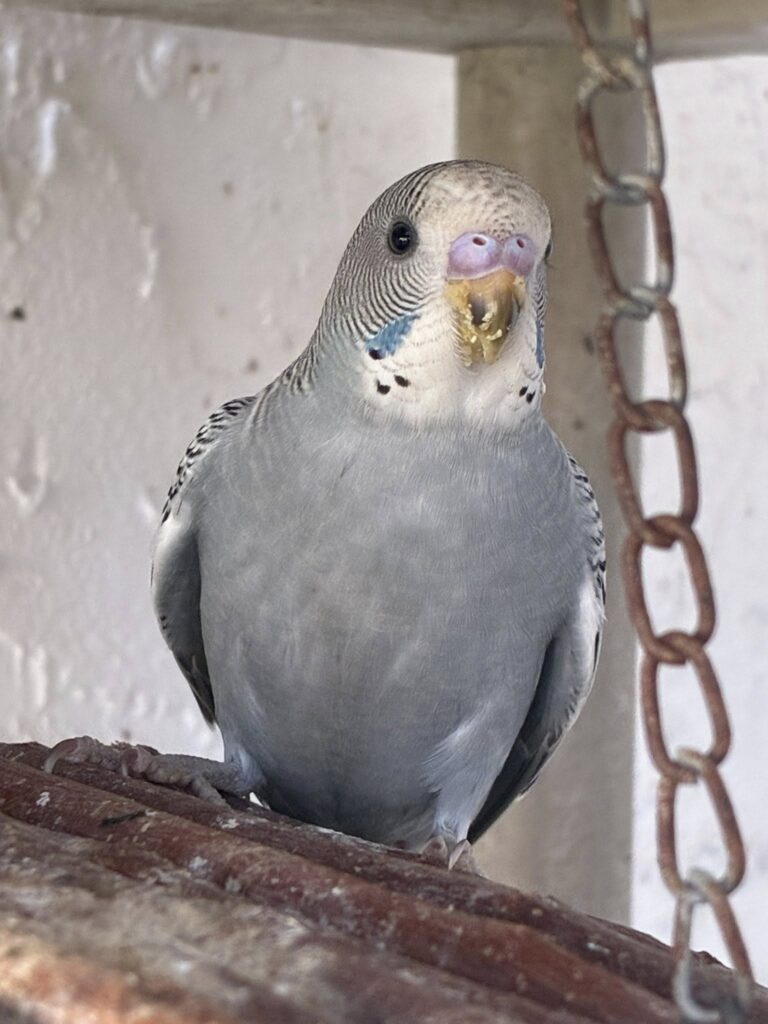
How to Tell Them Apart — The Quick Reference
I get asked to summarise the differences clearly, so here they are.
Young bird, directed at you or the food bowl, rhythmic and somewhat begging in quality. Feeding solicitation. Normal developmental behaviour that decreases with age. The bird trusts you enough to ask you for food.
Adult bird, directed specifically at you or a companion bird, deliberate and focused quality, may be followed by food appearing. Bonding regurgitation sequence. The highest expression of trust and affection in this species. You have genuinely earned this.
Fast, bouncy, generalised, accompanied by chirping and excitement. Happiness and stimulation. The bird is in a good state. Nothing to do but enjoy it.
Male bird, combined with song and slight display posture, directed at a female, mirror, or you. Courtship. The bird is trying to impress something. Usually harmless unless mirror fixation develops.
Forward-leaning posture, flat crest, slightly aggressive quality, combined with possible lunging. Territorial assertion. Note what the bird is defending and whether it is appropriate to give it space in that moment.
What Head Bobbing Tells You About the Relationship
Across thirty-five years of watching these birds, I have noticed one consistent pattern in the head bobbing directed at owners.
Birds that bob at their owners — that seek them out, that offer the bonding bob to them specifically, that chirp and bounce when they enter the room — are birds that have been given genuine daily attention. Birds that have been talked to, spent time with, handled calmly and consistently. Birds whose owners have built an actual relationship with them rather than simply feeding them and observing from a distance.
The head bob is, in this sense, a measure of the relationship. You cannot teach a budgie to bob at you. You cannot train it into existence. It arrives when the bird has decided, based on accumulated experience, that you are a safe and interesting presence in its world.
If your budgie bobs at you, it has made that decision. That did not happen by accident.
If your budgie does not bob at you yet, and you would like it to — the path there is the same as the path to any trust-based behaviour. Consistent daily presence, calm approach, food offered from the hand, time given without pressure. The head bob, when it comes, is the bird’s way of telling you that it worked.
- “It’s bobbing its head so something must be wrong with its neck” — Head bobbing in budgies is not a neurological or physical symptom in the way this question implies. It is a communication behaviour. Unless the movement looks genuinely uncontrolled, asymmetrical, or is accompanied by signs of illness — a puffed bird, reduced appetite, poor balance — head bobbing is not a neck problem. It is a bird talking to you.
- “It only bobs at my partner, not at me — it must prefer them” — Possibly true, and not a cause for concern. A budgie that has had more consistent contact with one person will direct bonding behaviours toward them more readily. The solution is not jealousy — it is more consistent calm interaction with the bird yourself. The bobbing will come.
- “It bobs at the mirror all day — that must mean it’s happy” — A budgie intensely fixated on a mirror, bobbing and regurgitating onto it repeatedly, is not expressing contentment. It is fixated on a reflection that will never actually respond to it. Obsessive mirror bobbing can lead to weight loss and psychological distress. If this is happening, consider removing the mirror and — more importantly — addressing the bird’s social needs.
- “It bobbed at me and then brought up food — I think it’s ill” — This is the bonding regurgitation sequence I described above. The bird is not ill. It is offering you food as a gesture of trust and affection. It is one of the nicest things a budgie can do. The appropriate response is to remain calm and appreciate it, even if the actual food is slightly inconvenient.
- “Young budgies bob because they’re scared” — Young budgies bob primarily because they are soliciting food — the same behaviour they performed with their parents in the nest. It is a comfort behaviour, not a fear response. A bird that bobs at you is a bird that finds you trustworthy enough to ask you for something. That is the opposite of scared.
What I Tell Owners Who Ask About Head Bobbing
- How old is the bird, and is the bobbing directed at you or the food bowl?
Young bird, food-directed bobbing — this is begging from the nest period. Completely normal, decreases with age. The bird trusts you enough to ask you for food. That is a good sign for the relationship. - Is the bird an adult and is the bobbing slow, deliberate, and specifically directed at you?
Almost certainly the bonding-regurgitation sequence. The bird has decided you are its flock. This took time to earn. It is the best thing you can see in a bonded budgie. - Is the bobbing fast and bouncy, with chirping, and does it seem generalised rather than focused?
Excitement and happiness. The bird is in a good state. Nothing needs to change. - Is the bird male, is it spring, and is the bobbing combined with song and slight display?
Courtship behaviour. If directed at a mirror obsessively — consider removing the mirror. If directed at another bird or at you without obsessive intensity — normal behaviour. - Is the bobbing accompanied by flat crest, forward lean, or occasional lunge?
Territorial assertion. Note what the bird is defending. Give it appropriate space. If it is happening regularly toward people, look at whether the environment is contributing to the territorial response.
If you want to talk through what you are seeing with your specific bird, come in. We are at Manor Garden Centre, Cheney Manor Industrial Estate, Swindon, SN2 2QJ — open every day. Or call us on 01793 512400. A short description of the context — when it happens, what the bird does before and after, whether there are other birds present — is usually enough to identify which version of head bobbing you are looking at.
You can also read our full budgie care guide for a broader picture of what healthy budgie behaviour looks like day-to-day — which makes understanding individual signals like head bobbing significantly easier.
Visit Us at Paradise Pets Swindon
We stock budgies year-round — all UK-bred, all handled from a young age. If you have a question about your budgie’s behaviour — head bobbing or anything else — come in and ask us. Thirty-five years of watching these birds means we have seen almost every behaviour they produce, and we are always happy to help owners understand what their bird is telling them.
We also stock a full range of cockatiels, canaries, and finches, alongside guinea pigs, rabbits, and gerbils and hamsters.
⭐ Customer Reviews
Amazing Bird Selection
Had a lovley visit today,staff were very friendly and very helpful,such a great petshop,their selection of birds is incredible,really impressed,thank so much to the staff at Paradise Pets

Friendly Helpful Staff
I have been coming to this place for years and they have a great stock of food for all types of pets. Have a great selection of small mammals and a lot of birds. Staff are friendly and helpful.

Great Quality Hutch
Bought a guinea pigs hutch and run combo, very happy with the service, the hutch was put in my car for me without even asking for help. The wood quality is very good, the instructions easy to follow and we are extremely happy with the fully built hutch. A good size for 2 guinea pigs

Response from Paradise Pets | Wiltshire
Thank you Melanie Latus Nice to provide services to you.
Best Bird Shop Around
It’s the best pet shop in and around Swindon. They always have an amazing selection of birds and all you need to keep them happy. I keep birds myself and the guys there are happy to answer questions and really know their stuff. I have seen budgies etc. in chain pet shops in the area looking really unhealthy and ill – I wouldn’t go anywhere else than Paradise Pets for animals.

Highly Recommended Bird Shop
I could not praise this shop enough. Really helped my Grandson buy his first bird and he’s loving it. Travelled from Somerset and was welcomed with open arms.

Great Shop with Competitive Prices
Great shop with amazing selection for small animals, hamsters, mice ect, highly recommend!
Also has a great selection for dogs & cats too & very competitive prices! 💖

