
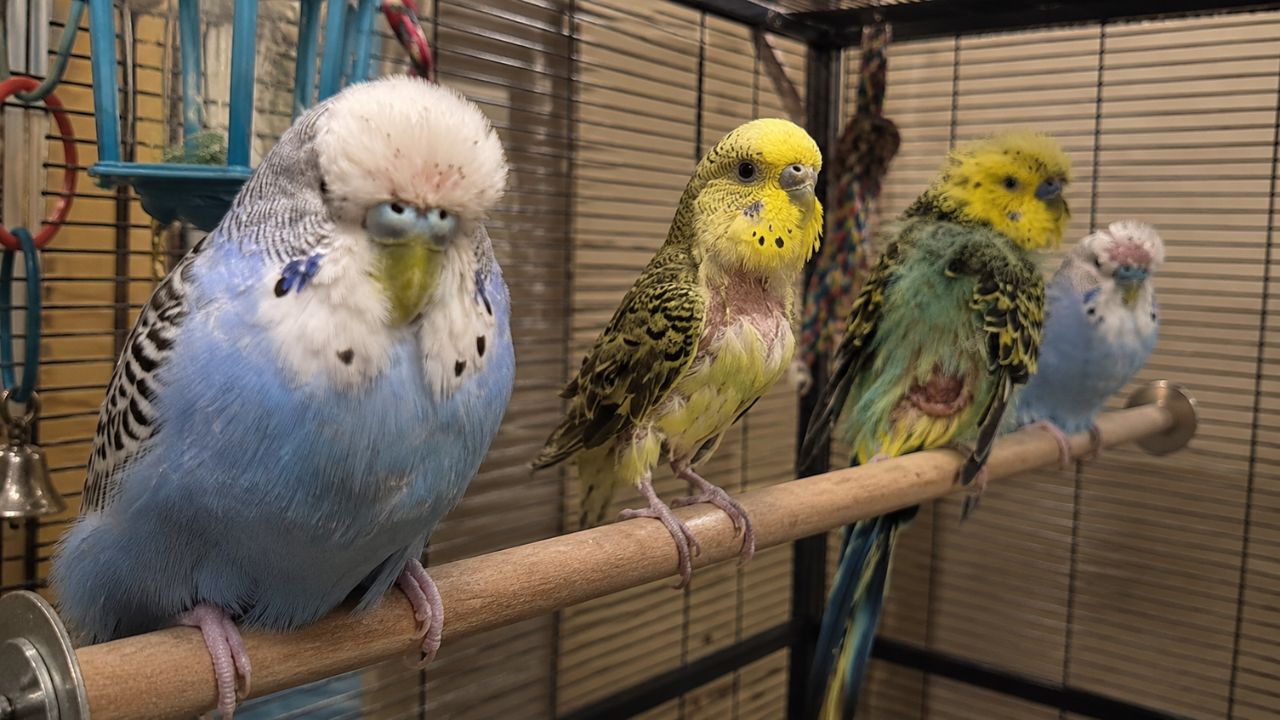

Neil has run Paradise Pets Swindon since 1988 — over 35 years of keeping, breeding, and advising on budgies. The first moult is the thing new owners contact us about more than almost anything else. Not because something is wrong — but because it looks alarming if nobody has told you what to expect. This article is what I wish every new owner received before the first moult began.
She came in on a Wednesday morning looking the way first-time budgie owners often look when something unexpected happens — not quite panicked, but close.
“He looks terrible,” she said. “There’s feathers everywhere. His head looks patchy. He’s quieter than he normally is. I don’t know what happened.”
Her budgie was three months old and going through his first moult. Completely normal. Completely healthy. Completely alarming if you have never seen it before.
I told her what he would look like for the next two to four weeks. I told her what to watch for, what to do, and what would tell her if something was actually wrong. By the time she left she looked considerably less worried.
That conversation happens in this shop more often than almost any other. New budgie owners who were not told what a moult looks like, who see their bird change almost overnight, and who assume something has gone wrong. Almost always, nothing has.
After 35 years of keeping and selling budgies at Paradise Pets, I know exactly what a normal first moult looks like — week by week, from start to finish. That is what this article is.
When Does A Budgie’s First Moult Happen?
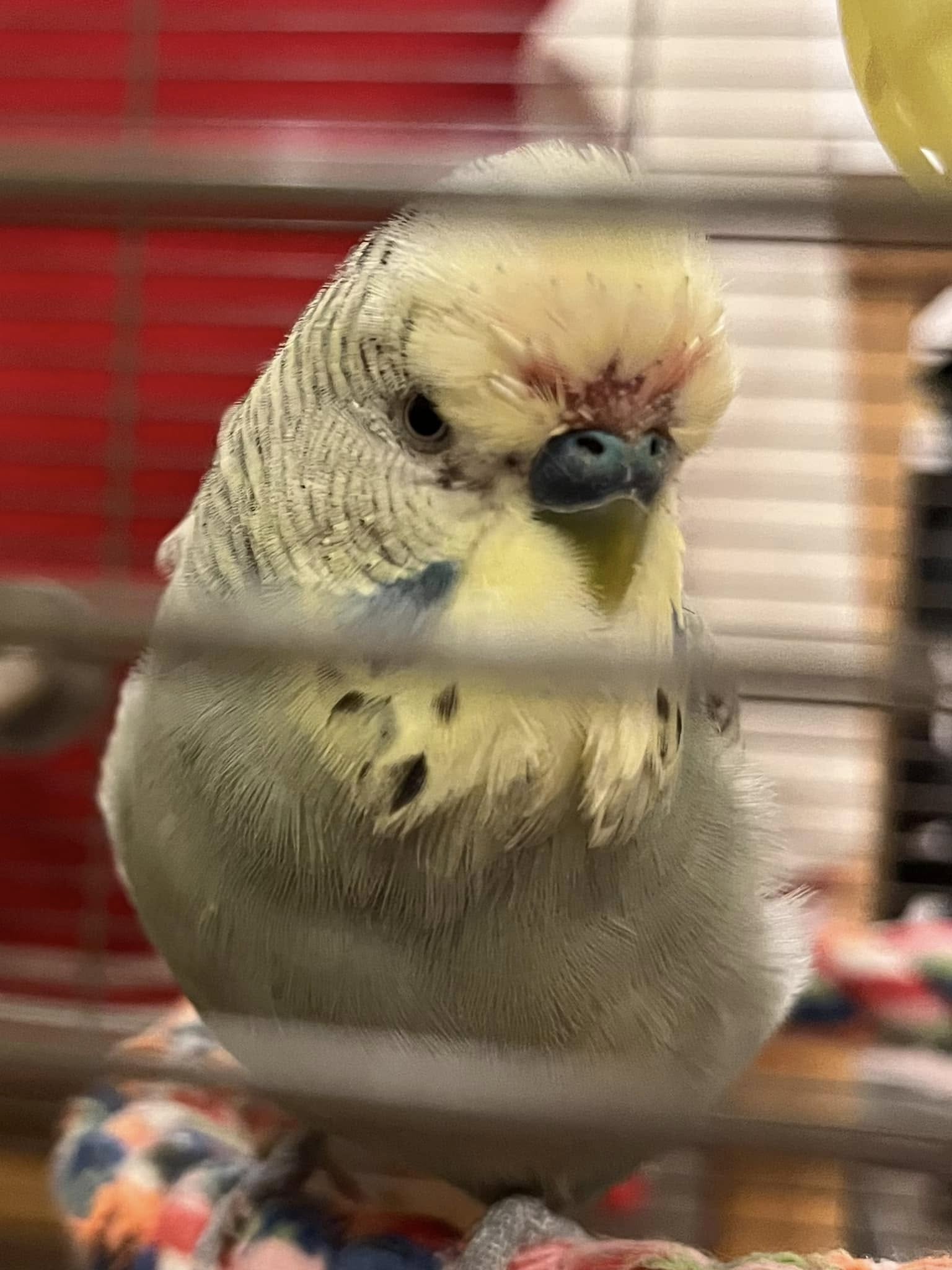
The first moult in a budgie typically begins between three and four months of age — sometimes a little earlier, sometimes a little later depending on the individual bird. It marks the transition from juvenile plumage to the first adult coat.
In young budgies, the juvenile coat is distinguishable by the barring — the wavy lines on the forehead that extend all the way down to the cere. The eyes are fully dark. During the first moult, these juvenile features are replaced: the barring on the forehead recedes, the adult face pattern emerges, and the cere develops its adult colouration — blue in males, brown or beige in females.
This first moult is often the heaviest-looking moult the bird will go through, simply because the juvenile coat is being replaced completely rather than partially refreshed. The change in appearance can be dramatic enough to make owners question whether the same bird is still in the cage.
What A Normal First Moult Actually Looks Like — Week By Week
This is the part I wish someone had shown every new owner before the moult began. A written description of what to expect, so that when it happens, it matches what you were told rather than what you feared.
The First Signs — Days 1 to 7
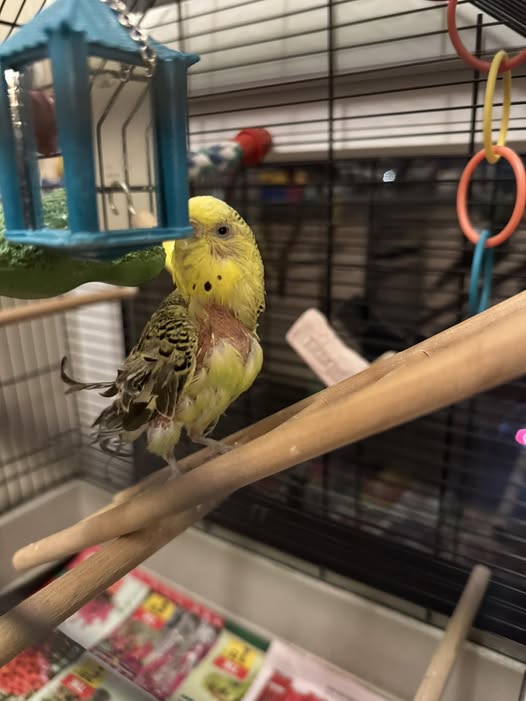
The first thing most owners notice is feathers. Loose feathers in the cage, on the cage floor, on surfaces near the cage. More than seem normal. The bird may look slightly ruffled or unkempt in specific areas — most commonly the head and face, where the juvenile barring begins to break up first.
The bird itself may be slightly quieter than usual. Less inclined to sing. Less active. Some birds eat slightly less during the early days of a moult as the energy demands of growing new feathers compete with other activity. This is normal and passes.
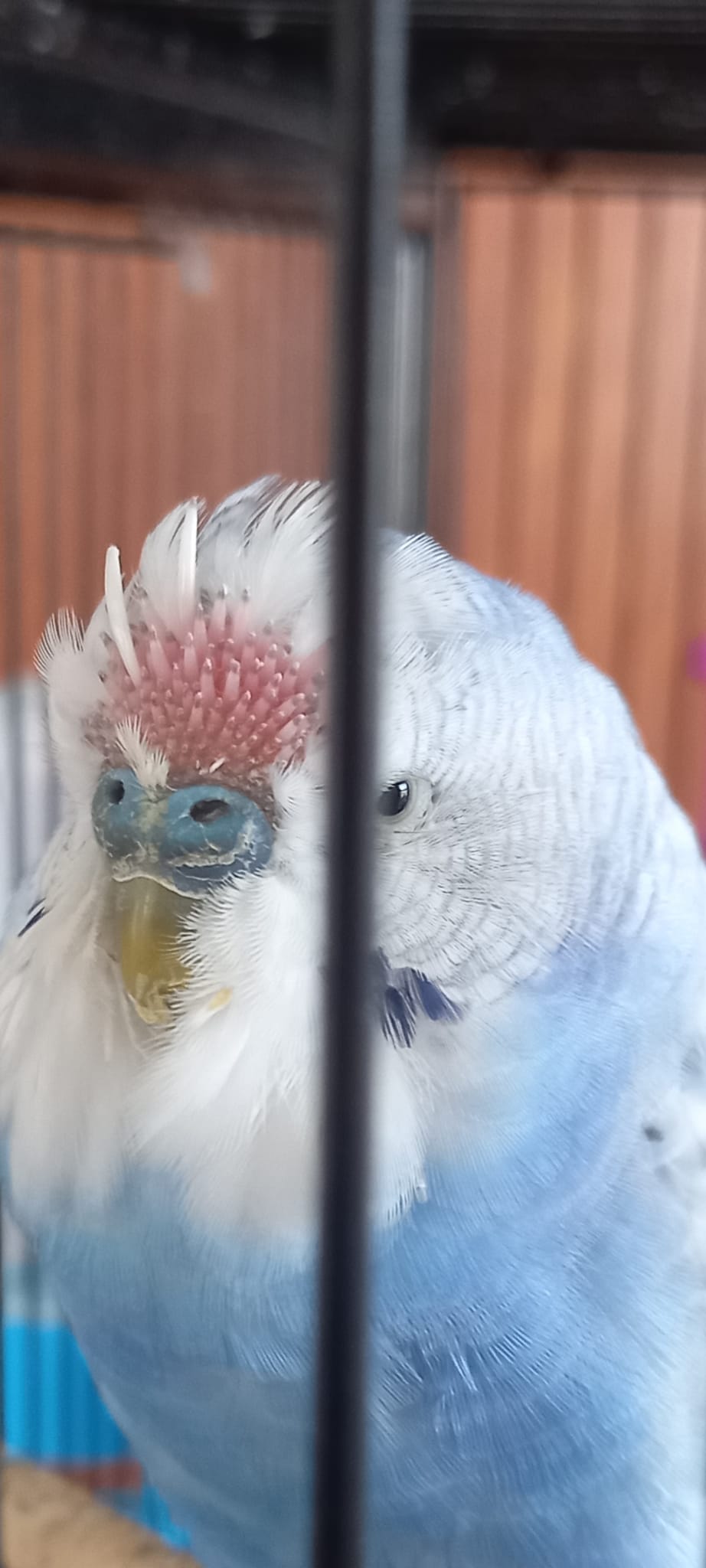
You may notice tiny, waxy-tipped structures beginning to emerge from the skin — particularly visible on the head, where new feathers emerge as what are called pin feathers or blood feathers. These look like small, dark, waxy spikes pushing through the skin. They are the new feathers, still encased in their protective sheath.
- Loose feathers appearing in the cage — normal
- Slightly unkempt appearance, particularly around the head — normal
- Quieter and less active than usual — normal
- Slightly reduced appetite — normal if mild
- Small waxy pin feathers visible emerging on the head — normal, healthy sign
The Awkward Middle — Weeks 2 and 3
This is the period that alarms owners most, and I want to describe it clearly so you are not alarmed when it arrives.
During weeks two and three, the moult is in full swing. The patchy, uneven appearance is at its worst. The head in particular can look startling — the forehead barring breaking up, the face looking irregular and asymmetrical as some areas have lost the juvenile feathers while others have not yet finished replacing them. The bird may look as though it has been roughly handled or has lost feathers in patches.
This is not what illness looks like — but it is close enough that owners who do not know what a moult looks like will come in very concerned. I see it every few weeks.
Alongside the scruffiness, the pin feathers on the head will be more visible now. The cere — the fleshy area above the beak — will be changing colour, particularly in males, where the blue adult colouration begins to show through the pale juvenile cere. The bird may be itchy as the pin feather sheaths dry and crack open, and you may see it scratching its head more than usual.
- Patchy, uneven appearance on the head — normal at this stage
- Face looks asymmetrical — one side further along than the other — normal
- Multiple visible pin feathers on the head — healthy, reassuring sign
- Increased scratching at the head — normal as pin sheaths crack open
- Cere beginning to change colour — normal first moult development
- Overall scruffiness throughout the plumage — this is peak moult and will pass
Coming Through — Week 4 Onwards
By week four, the direction of travel should be clearly positive. New feathers should be well advanced across the body, the head should be taking on its adult pattern, and the bird should be returning to its normal energy and activity level as the energetic demands of feather growth ease.
The pin feathers on the head will be opening out — the waxy sheath splits, the feather unfurls, and within a day or two it looks like a normal adult feather. The process moves across the head and body progressively, and by the end of week four to six the bird should look noticeably better than it did at the peak of the moult.
By the time the first moult is complete, you will have a bird that looks different from the one you brought home. The adult face pattern — the clear forehead without juvenile barring, the adult cere colour — will be fully established. In males, the blue cere is usually well developed by this point. The overall plumage will have a different quality from the juvenile coat — often slightly richer in colour, with better feather structure.
The Most Important Thing To Do During A Moult — Grooming
I want to address this before anything else in the care section because it is not optional — it is genuinely important, and missing it during a moult can lead to a serious health problem.
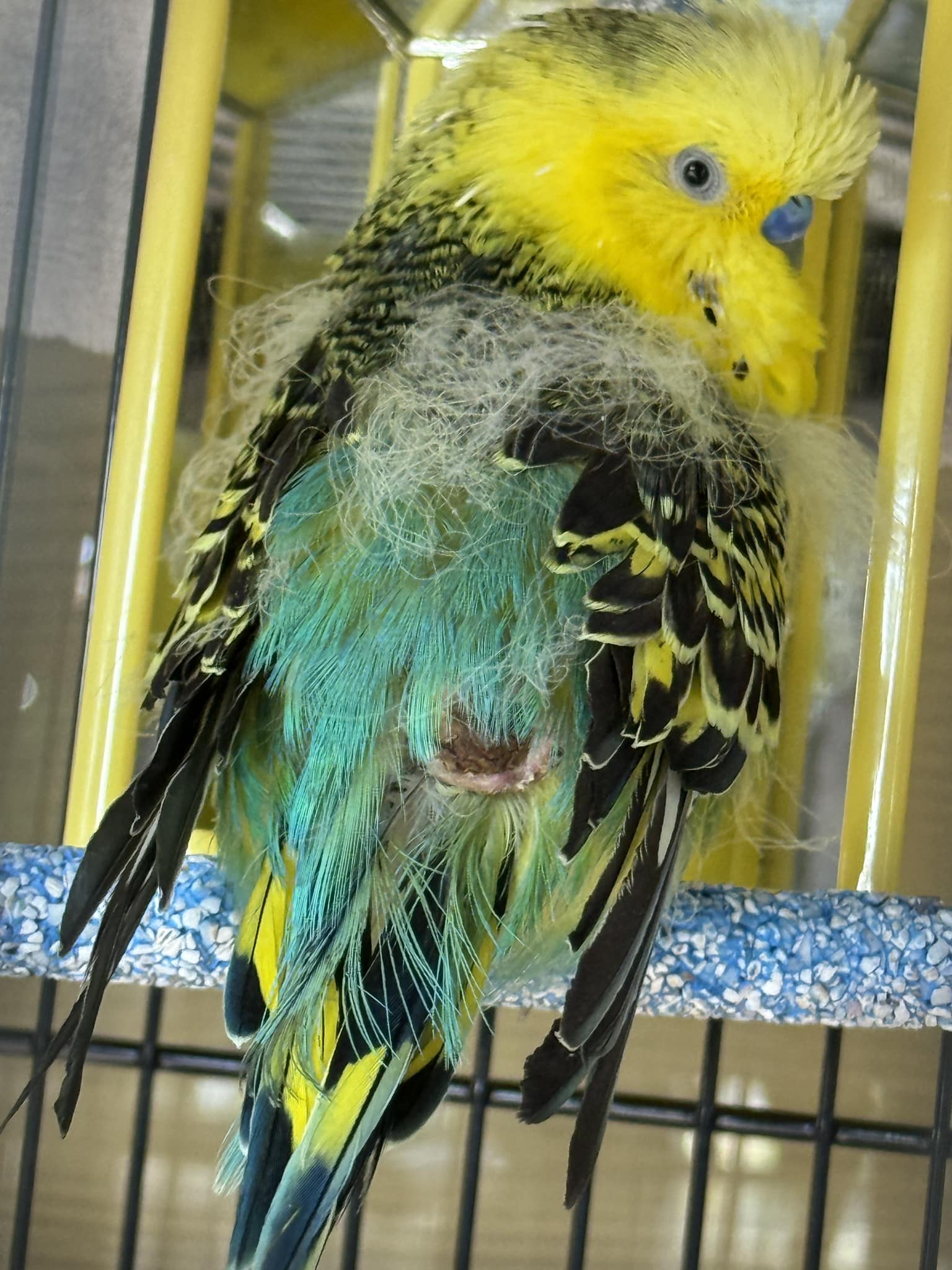
Budgies groom themselves constantly. They swallow the feathers they groom. Unlike cats, they cannot vomit them back up. During a normal moult, the amount of feather material a budgie ingests through self-grooming increases significantly. If that material accumulates in the digestive tract, it can slow the gut — a condition called wool block or feather impaction — which is potentially fatal.
- Reduced eating or complete loss of appetite — a budgie that has stopped eating during a moult needs a vet the same day
- Droppings becoming smaller, fewer, or strung together with feather material
- Bird sitting very still, hunched, less responsive than usual
- Any of the above during an active moult period — phone an avian vet, do not wait overnight
How to groom during a moult
Use a soft brush or grooming glove daily — gently stroking the feathers in the direction of growth to remove loose feathers before the bird ingests them. Most budgies accept this readily, particularly if they are already tame. Some will lean into it.
For the pin feathers on the head — which the bird cannot reach itself — a bonded companion will naturally help by preening them. If your budgie is alone, you can very gently roll a mature pin feather between your fingers to help the sheath crack open, but only if the sheath looks dry and ready — a pin feather that is still dark at the base has blood in it and must not be disturbed.
Ensure unlimited hay is available — this helps keep the gut moving and reduces the risk of feather impaction. During a moult, the importance of hay is if anything higher than usual.
4 Signs During A Moult That Mean Something Is Actually Wrong
I want to be specific about this because the whole point of this article is to help owners distinguish normal from abnormal. Here are the four things that, during an otherwise normal-looking moult, should make you call an avian vet.
- The bird has stopped eating. A moulting budgie may eat slightly less, but it should still be eating. A budgie that has stopped eating entirely during a moult may have feather impaction or another illness developing. Same-day vet call.
- New feathers are growing back abnormally. Pin feathers that emerge clubbed, twisted, or with retained blood in the shaft after the moult should have cleared it — abnormal feather development alongside a moult points to PBFD or another feather condition that needs diagnosis. Vet visit.
- Bald patches with no new growth appearing after two weeks. A normal moult always has new feathers growing in behind the loss. Bald patches where nothing is growing after two weeks are not a moult. Vet visit to investigate.
- The bird is clearly unwell beyond being quiet. Quiet and slightly less active is normal moulting behaviour. Quiet, puffed, not eating, on the cage floor — that is not a moult. That is an ill bird that may also be moulting. Vet today.
What To Feed During A Moult
Feather growth is energetically demanding. Growing a full new coat requires protein, amino acids, vitamins, and minerals — and a bird on a poor diet will produce poorer quality feathers during a moult than a well-nourished bird will.
This is not the moment to worry about this for the first time — ideally the diet was already good before the moult began. But if it was not, improvements made now will still help the current moult progress better than it otherwise would.
- Good quality seed mix — the foundation, but not the whole of it
- Fresh leafy greens daily — particularly important during a moult for the vitamins and minerals that support feather growth. Spinach, kale, watercress, broccoli.
- Egg food or a small amount of hard-boiled egg — the protein demand during a moult is higher than at other times. Egg food, available from good pet shops, provides a concentrated protein source that many budgies eat enthusiastically during a moult.
- Cuttlebone always available — calcium and mineral support for feather development
- Fresh water changed daily — hydration supports all aspects of the moult
- Millet spray as an incentive — if the bird is eating less than usual, millet spray offered during the moult often stimulates appetite. Use it as encouragement, not as a daily staple.
The Pin Feathers on The Head — What They Are and What To Do About Them
Pin feathers on the head are one of the things that alarm new owners most during a first moult, so I want to address them specifically.
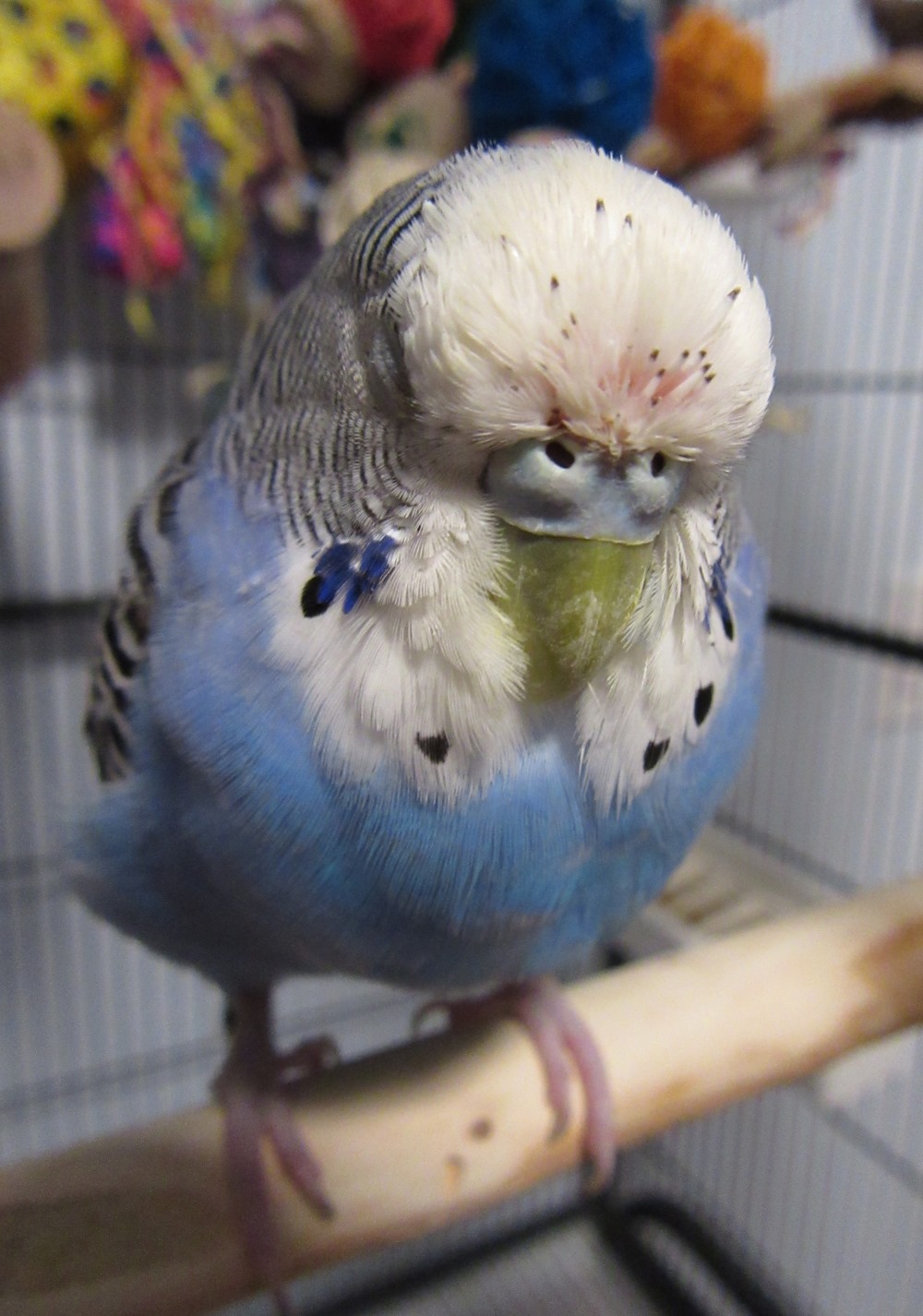
A pin feather is a new feather in the early stage of growth. It emerges from the skin encased in a waxy, protective sheath — white, grey, or dark at the base depending on the colour of the feather inside and whether there is still blood in the shaft. On the head, where the bird cannot reach to preen itself, these sheaths sometimes stay on longer than elsewhere on the body.
They are not injuries. They are not parasites. They are not a sign that anything is wrong. They are simply new feathers in progress.
- Can I remove the sheaths? Only if the sheath looks dry, white or clear, and the base of the feather is not dark — a dark base means blood is still present in the shaft. A blood feather that is disturbed or broken bleeds, sometimes seriously. If the sheath is dry and ready, gently rolling it between your fingertips will help it crack open. If in doubt, leave it.
- Is it normal for them to look itchy? Yes — as the sheaths dry and crack, they can be mildly irritating. The bird will scratch its head more than usual. This is normal and passes as each feather completes its emergence.
- Should I bathe the bird more during a moult? Light misting two to three times a week helps soften the sheaths and makes the preening process easier. Do not soak the bird — a light mist is sufficient.
- My bird has a companion — will they help? Yes — bonded pairs naturally preen each other’s head feathers, which is one of the genuine welfare benefits of keeping two budgies rather than one. A companion will clear pin sheaths from their partner’s head far more efficiently and comfortably than you can.
Will My Budgie’s Personality Change After The First Moult?
This is a question I get occasionally, and it is worth answering because some owners do notice a change after the first moult and wonder whether something has shifted in the bird.
The honest answer: yes, sometimes — and it is normal.
The first moult marks the transition from a juvenile bird to a sexually mature adult. The hormonal changes associated with that transition can affect the bird’s temperament and behaviour in subtle ways. Some birds become slightly more assertive after their first moult. Males may begin to display more. The singing often intensifies and becomes more varied as the bird develops its full adult voice.
These are not signs that the bird has become more difficult — they are signs of a healthy adult bird coming into itself. Most owners find the post-moult bird more interesting, more characterful, and more vocal than the juvenile they started with.
How Often Will My Budgie Moult After This?
After the first moult, budgies continue to moult throughout their lives — though subsequent moults are typically less dramatic than the first.
Most budgies undergo a more continuous moulting pattern, refreshing portions of the plumage gradually rather than all at once. There are usually one or two more noticeable moults per year — often one in late spring and one in early autumn — but the bird rarely looks as dramatically changed as it did during the first juvenile-to-adult transition.
Each moult follows the same principles: new feathers growing in behind the loss, gradual progression from head to body, the same care requirements of daily grooming and unlimited hay, the same warning signs of abnormality that I have described in this article.
Once you have been through one moult with your bird, you will find subsequent ones far less alarming — because you will know exactly what to expect.
Frequently Asked Questions
My budgie looks completely different after its first moult — is this normal?
Yes — the change from juvenile to adult plumage can be striking, particularly in the face and head. The juvenile barring on the forehead disappears, the face pattern becomes cleaner, and the cere develops its adult colour. The body colour may also look richer or slightly different once the adult feathers are fully in. This transformation is one of the things that makes the first moult such a milestone for owners who have not seen it before.
My budgie is three months old and its feathers look perfect — has the moult not started yet?
The first moult can begin anywhere between two and a half and five months depending on the individual bird and the time of year. Some birds begin early and get through it quickly. Others take longer to start. If your bird is alert, active, eating well, and the feathers look healthy, there is no cause for concern — the moult will begin when the bird’s body is ready for it.
Can I bathe my budgie during the moult?
Yes — light misting two to three times a week is beneficial during a moult. It softens the pin feather sheaths, makes preening easier, and supports skin health. Avoid heavy soaking. Always mist in the morning so the bird has the full day to dry in a warm room. Never mist in the evening.
My budgie is moulting and has stopped singing — is this normal?
Yes — most budgies become quieter during a moult, particularly during the most active phase. The energy that normally goes into singing and socialising is being redirected toward feather growth. The singing almost always returns, often stronger and more varied than before, once the moult is complete. If the silence is accompanied by not eating, being puffed, or sitting on the cage floor, that is something beyond moulting and warrants a vet call.
How do I know when the first moult is finished?
The moult is complete when the new coat has grown in evenly — the head pattern is clear and adult, no pin feathers are visible, and the plumage looks smooth and well-structured throughout. The bird’s energy and vocalisation will also have returned to normal or above. Most first moults are complete within four to six weeks of beginning, though some birds take longer.
Where can I get budgie moult advice in Swindon?
Come and see us at Paradise Pets, Manor Garden Centre, Cheney Manor, Swindon SN2 2QJ. Or ring us on 01793 512400. If you are unsure whether what you are seeing is a normal moult or something that needs veterinary attention, bring the bird in or describe what you are seeing — we will tell you honestly which it is.
One Last Thing From Me
The owner who came in on the Wednesday morning — the one who said her budgie looked terrible? She came back in six weeks later. Her bird had completed his first moult and was, in her words, “the most handsome budgie I have ever seen.”
She had been anxious because nobody told her what was coming. Once she knew what to expect, she found the whole process fascinating rather than frightening. She watched each day as pin feathers opened, as the adult face pattern emerged, as the barring on the forehead disappeared and the cere turned blue.
That transformation is one of the genuinely remarkable things about keeping budgies — and it is something every new owner gets to witness in the first few months of having their bird.
I hope this article means you get to enjoy it rather than worry through it.
Budgie Going Through Its First Moult? Come And See Us
If you are not sure whether what you are seeing is normal, bring the bird in or give us a ring. We have watched hundreds of first moults over 35 years and we will tell you honestly whether everything is on track — or whether something needs attention. Free advice, no obligation.
⭐ Customer Reviews
Amazing Bird Selection
Had a lovley visit today,staff were very friendly and very helpful,such a great petshop,their selection of birds is incredible,really impressed,thank so much to the staff at Paradise Pets

Friendly Helpful Staff
I have been coming to this place for years and they have a great stock of food for all types of pets. Have a great selection of small mammals and a lot of birds. Staff are friendly and helpful.

Great Quality Hutch
Bought a guinea pigs hutch and run combo, very happy with the service, the hutch was put in my car for me without even asking for help. The wood quality is very good, the instructions easy to follow and we are extremely happy with the fully built hutch. A good size for 2 guinea pigs

Response from Paradise Pets | Wiltshire
Thank you Melanie Latus Nice to provide services to you.
Best Bird Shop Around
It’s the best pet shop in and around Swindon. They always have an amazing selection of birds and all you need to keep them happy. I keep birds myself and the guys there are happy to answer questions and really know their stuff. I have seen budgies etc. in chain pet shops in the area looking really unhealthy and ill – I wouldn’t go anywhere else than Paradise Pets for animals.

Highly Recommended Bird Shop
I could not praise this shop enough. Really helped my Grandson buy his first bird and he’s loving it. Travelled from Somerset and was welcomed with open arms.

Great Shop with Competitive Prices
Great shop with amazing selection for small animals, hamsters, mice ect, highly recommend!
Also has a great selection for dogs & cats too & very competitive prices! 💖

