
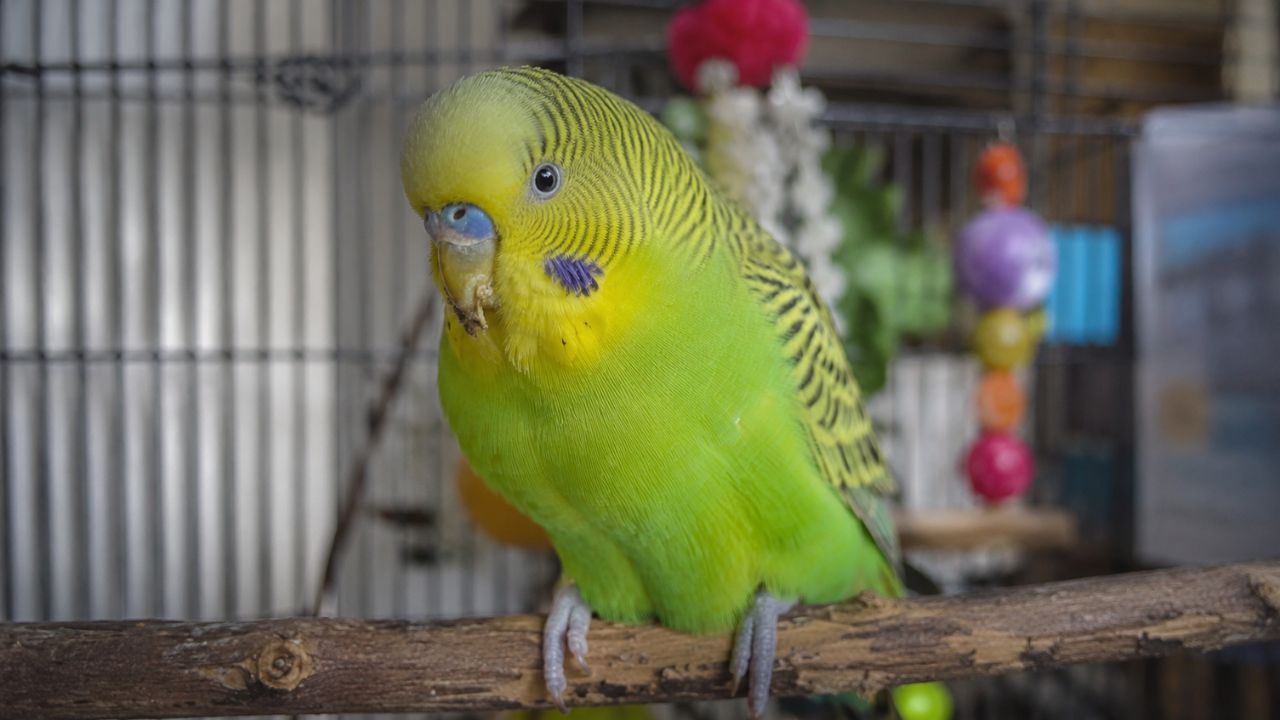

Neil has kept, bred, and sold budgies at Paradise Pets Swindon since 1988 — over 35 years of first-hand experience with these birds. Regurgitation is one of the most misunderstood budgie behaviours he is asked about. Most of the time it is completely normal. Sometimes it is not. Knowing the difference is what this guide is for.
Someone comes in looking embarrassed and says: “My budgie keeps bringing up its food. I think there might be something wrong with it.”
Half the time, nothing is wrong with it. The bird is showing affection. It is doing what budgies have always done — offering food to something it has bonded with, which in this case happens to be a mirror, or a toy, or the owner’s finger.
The other half of the time, something is worth looking at. Not always urgent, but worth understanding.
The reason this question matters is not because regurgitation is usually a crisis. It is because the thing that looks like regurgitation from across the room can sometimes be vomiting — and vomiting in a budgie is a different situation entirely. Knowing which one you are looking at is the difference between “this is normal behaviour, here is why” and “this bird needs a vet today.”
Thirty-five years of this has taught me exactly how to tell them apart. This guide covers both.
The Most Important Question — Regurgitation or Vomiting?
Before anything else, I need to explain a distinction that most budgie guides gloss over. It is the most important thing in this article.
Regurgitation and vomiting look similar from a distance. They are completely different processes, with completely different causes and completely different implications for what you should do next.
Regurgitation is controlled and deliberate. The bird chooses to do it. Before it happens, the budgie bobs its head rhythmically — a slow, pumping motion, up and down, repeated several times. Then it brings up a small amount of partially digested seed and offers it to whatever it has bonded with. The bird looks calm throughout. There is no distress. Afterwards, the bird carries on exactly as before — preening, chirping, climbing around the cage. The regurgitated material is usually a compact, slightly sticky ball of seed. There is nothing on the bird’s feathers or head.
Vomiting is uncontrolled. The bird does not choose to do it and cannot stop it. There is no rhythmic head bobbing beforehand — instead, the bird may shake its head or look uncomfortable. Seed and fluid is scattered — on the cage bars, on the perches, and often on the bird’s own head feathers and around its beak. The bird looks unwell: quiet, ruffled, possibly unsteady. It does not carry on normally afterwards. It sits still, often puffed.
If what you are seeing is regurgitation — read this guide. This is a behaviour question.
If what you are seeing is vomiting — stop reading and call a vet today. That is a health emergency.
Normal Regurgitation — When It Is Affection, Not Illness
In the wild, budgies regurgitate food to feed their mates and their chicks. It is a fundamental part of how these birds express bonding — a physical offering, a gesture of care that goes back to the deepest roots of the species. In captivity, that same behaviour gets directed at whatever the bird has decided is its companion.
For a budgie kept with another budgie, this is straightforward. The bonded pair regurgitate for each other — the male typically feeds the female during courtship and breeding, but bonded pairs of either sex will often share food this way. It is entirely healthy and normal.
For a budgie kept alone — which, as I always say, is not the ideal situation for a social flock animal — the behaviour gets directed elsewhere. The owner’s finger, a favourite toy, or most commonly the mirror. The bird has to bond with something. In the absence of another bird, it bonds with whatever is available.
The regurgitation itself, in these circumstances, is not a health concern. It is a sign the bird has bonded. A budgie that regurgitates onto your finger is, in its own terms, expressing genuine affection. Owners are sometimes alarmed by this because it looks strange if you do not know what it means. Once you understand it, it is actually rather touching — even if slightly inconvenient.
What to watch is not whether it happens, but how often and whether it seems to be affecting the bird’s weight or general condition. Occasional regurgitation as part of normal bonding behaviour is fine. Constant, obsessive regurgitation that is consuming a significant portion of the bird’s daily energy is worth addressing — particularly if the cause is a mirror.
The Mirror Problem — When Normal Becomes Obsessive
The mirror is where normal regurgitation most commonly becomes a problem, and it is something I see regularly with single budgies kept in UK homes.
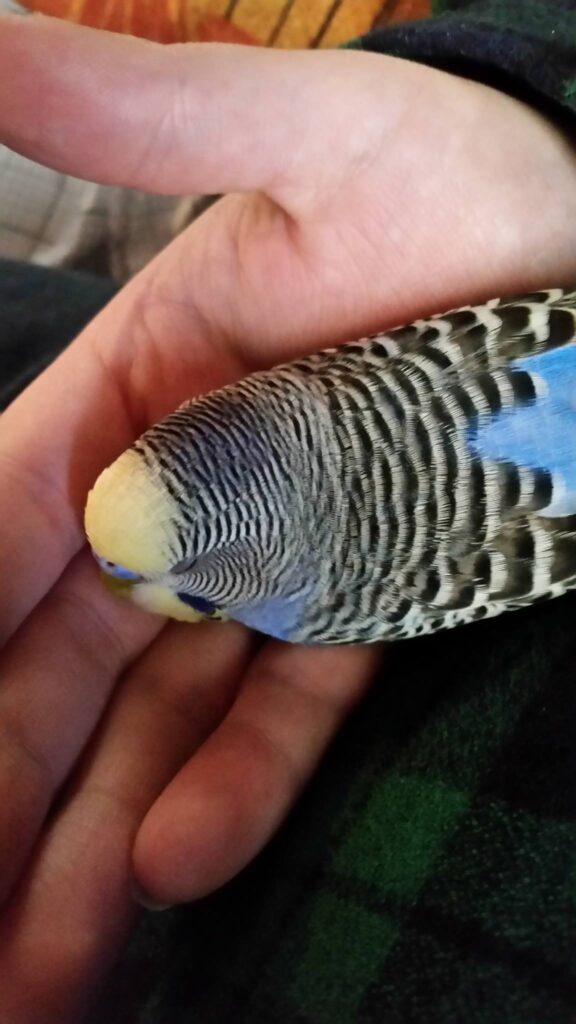
A budgie without a companion will often bond intensely with its reflection. In its perception, the bird in the mirror is another budgie — one that mirrors its every move, that is always there, that responds to every gesture. The bird does not know it is looking at itself. It courts the reflection. It regurgitates for it. Repeatedly, persistently, throughout the day.
The problem is that this is an unrewarding relationship that the bird cannot get closure from. The reflected bird never actually accepts the food being offered. So the real bird keeps trying — regurgitating again and again, onto the mirror, onto the cage bars near the mirror, bobbing and offering with genuine effort. The energy cost is real. A budgie doing this obsessively can lose meaningful body weight over weeks.
If your single budgie has a mirror and is regurgitating onto it constantly — take the mirror out. Not as a punishment. Simply because the mirror is creating a fixation that is not in the bird’s interest.
The correct solution, longer term, is a companion rather than a mirror. A real budgie that can respond, reciprocate, and actually bond with the bird in the ways a reflection cannot. The mirror is a substitute that creates the appearance of companionship without any of the substance of it.
I am not saying mirrors are always wrong for all budgies. I am saying that when a mirror is causing obsessive regurgitation in a single bird, it should be removed and the bird’s social needs should be properly addressed. Come and talk to us if you are in this situation. We can help you think through introducing a companion correctly.
When Regurgitation Is Actually Vomiting — The Signs to Know
I want to go through this carefully because the consequences of confusing the two are significant.
Come back to the distinction I drew at the beginning of this article. Regurgitation is controlled, calm, and directed. Vomiting is not.
The specific signs that tell you what you are looking at:
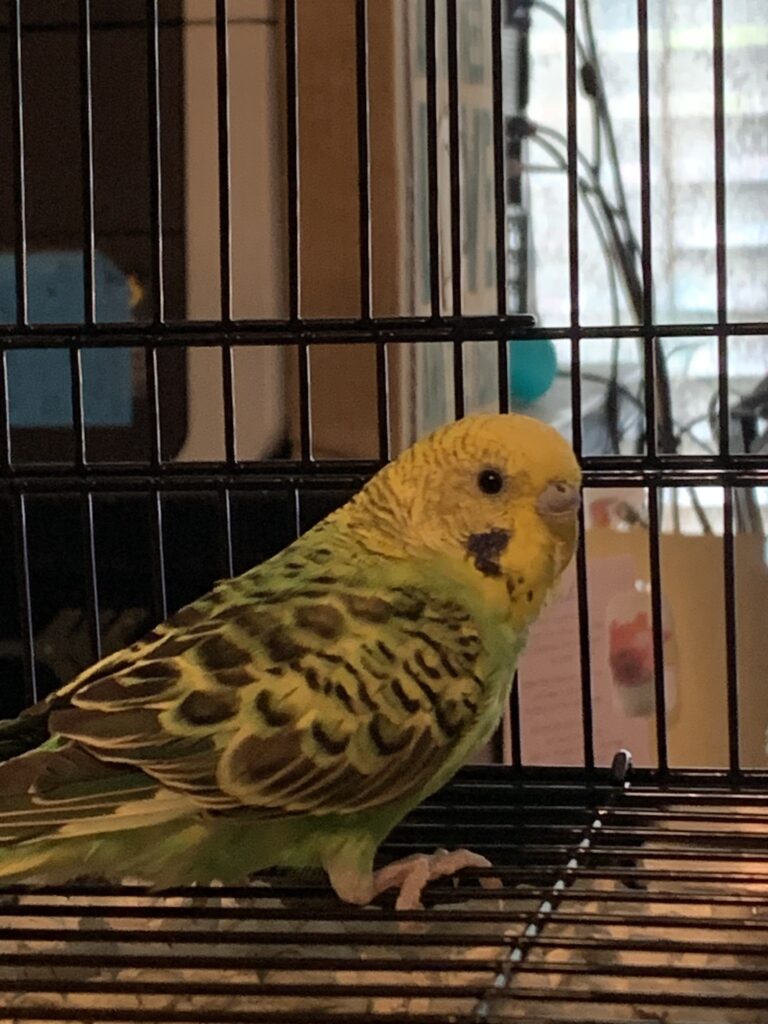
Where is the seed? Regurgitation produces a small, compact amount of semi-digested seed directed at a specific target. Vomiting scatters seed — on the cage bars, on the perches, on the bird’s own feathers. If you look at the bird and it has seed or wet debris stuck to its head feathers or around its beak and cere, that is vomiting. A bird cannot direct regurgitation onto its own head.
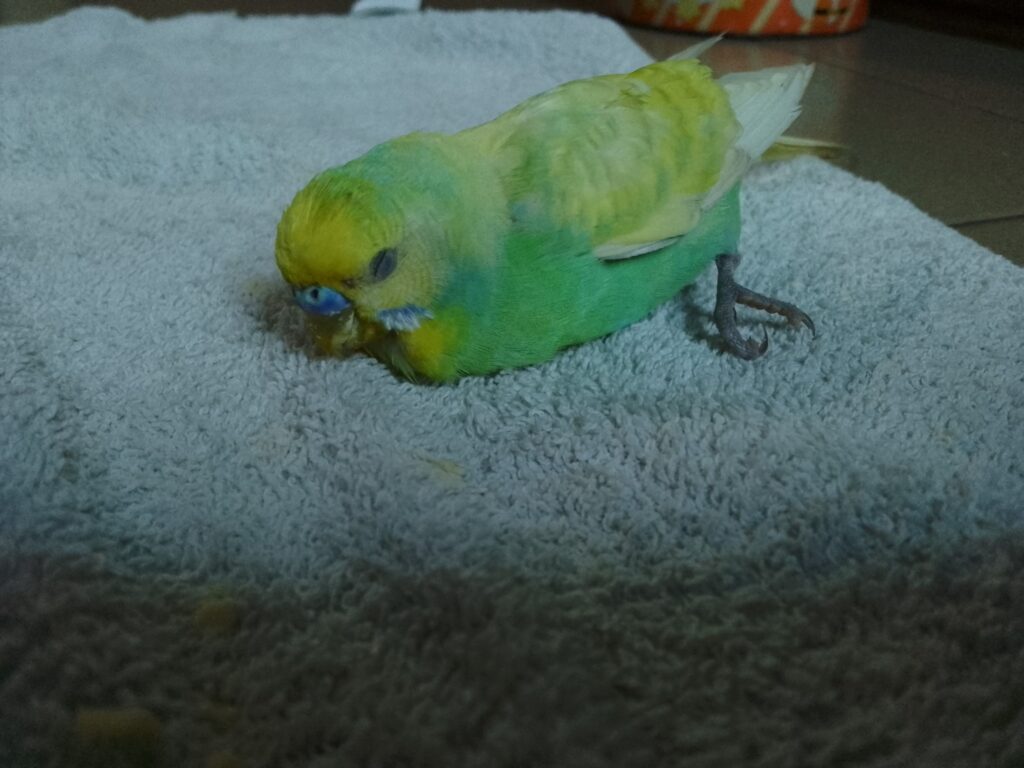
How does the bird look before and after? A bird that is regurgitating normally looks calm throughout. A bird that is vomiting often shows signs of discomfort — shaking its head, looking unsteady, appearing distressed. After a vomiting episode, the bird remains unwell: puffed up, quiet, not returning to normal activity.
How often is it happening? Bonding regurgitation happens in defined episodes, usually directed at a specific target. True vomiting tends to happen repeatedly without a clear target and without the calm head-bobbing pattern that precedes normal regurgitation.
Is the bird losing weight? A bird that is vomiting repeatedly will lose weight because it is not retaining the food it eats. Check the keel bone — the central breastbone. If it feels sharp and prominent with little flesh either side, the bird has lost weight. This needs a vet regardless of what else you observe.
If any of these signs point to vomiting rather than regurgitation, do not wait. Contact a vet with bird experience today. I have written more about the general warning signs every owner should know in our guide on why budgies sit at the bottom of their cage — the two situations often occur together.

Crop Infection and Megabacteria — The Most Common Medical Causes
When a budgie is genuinely vomiting rather than regurgitating, the most common causes in UK pet budgies are crop infection and megabacteria.
Crop infection — sour crop. The crop is the first part of a bird’s digestive system — a pouch where food is held before it passes into the stomach. Bacterial or yeast infections of the crop cause fermentation of the food held there, leading to vomiting as the bird’s body tries to expel the contents. A bird with sour crop often has a slightly swollen crop that feels soft and may have an unpleasant smell around the beak. The vomited material may have a sour or fermented odour.
This needs veterinary treatment — antifungal or antibiotic medication depending on the cause, confirmed by a vet through examination or swab. It does not resolve on its own.
Megabacteria — Macrorhabdus ornithogaster. Despite the name, megabacteria is actually a yeast-like organism that infects the proventriculus — the glandular stomach — of budgies. It is extremely common in UK pet budgies, often subclinical for long periods, and becomes active when the bird’s immune system is compromised.
Symptoms include vomiting, weight loss despite apparently normal eating, and undigested seeds visible in the droppings. A bird that seems to eat normally but is consistently losing weight should be tested for megabacteria — it is one of the most common reasons apparently normal-eating budgies decline.
Diagnosis is by faecal smear examined under a microscope — a simple test that any avian-experienced vet can perform. Treatment is antifungal medication. It is manageable when diagnosed, harder to treat when it has progressed to significant weight loss.
Other Medical Causes Worth Knowing About
Beyond crop infection and megabacteria, there are several other medical causes of true vomiting in budgies worth knowing — not to alarm owners, but because recognising the pattern matters.
Proventricular Dilation Disease (PDD). A viral disease affecting the nerves of the digestive system. Presents as chronic vomiting, weight loss, and undigested seeds in the droppings. Less common than crop infection or megabacteria, but worth knowing because the pattern — vomiting plus seed-filled droppings plus weight loss — is distinctive.
Trichomoniasis. A parasitic infection affecting the crop and upper digestive tract. More common in birds kept with other birds, particularly in mixed-species aviaries. Causes regurgitation-like symptoms but with visible lesions in the throat in advanced cases.
Ingestion of a toxic substance. A budgie that has accessed something it should not have — a toxic plant, a heavy metal like zinc from chewing cage bars, a chemical residue — may vomit acutely. If vomiting has started suddenly with no other explanation and the bird has had access to anything new or questionable, this is an emergency vet situation.
Foreign body ingestion. Less common in budgies than in dogs, but not impossible. A piece of toy, a thread from rope perching, or another object can cause obstruction and vomiting. If the bird has been interacting with something new and vomiting has started, this is worth mentioning to the vet.
- “It must be ill — birds shouldn’t bring up their food” — Birds that have bonded with something regurgitate for it. It is normal, healthy behaviour that owners frequently mistake for illness because they have not seen it before. The head-bobbing beforehand is the key sign — if you see that, you are watching a bird expressing affection, not a bird that is unwell.
- “The mirror is keeping it company so I’ll leave it” — A mirror is not company. It is a reflection that appears to respond because it always mirrors the real bird exactly. The budgie cannot get what it actually needs from a mirror — genuine reciprocal companionship. A bird obsessively regurgitating onto a mirror is not happy. It is fixated on something that cannot fulfil the bond it is trying to form.
- “It brings up food for me — that’s disgusting” — It is, admittedly, not the same as being brought flowers. But in the budgie’s terms it is the highest expression of trust and affection they are capable of. The bird is doing the thing it does for mates and chicks. Receiving it from a budgie is, in a slightly inconvenient way, quite a compliment.
- “It’s been vomiting but it’s still eating so it must be fine” — A bird that is vomiting but still attempting to eat is not fine. Megabacteria, in particular, causes a pattern where the bird appears to eat normally but is not digesting properly — weight continues to drop even though food consumption looks normal. Check the keel bone. If it is sharp and prominent, the bird is not retaining what it eats.
- “I’ll keep an eye on it for another few days” — For regurgitation, watching and waiting is entirely appropriate. For vomiting — particularly with weight loss, seed in droppings, or seed on the bird’s own feathers — a few days is too long. Small birds deteriorate faster than the waiting window most owners allow themselves.
When to See a Vet — The Honest Summary
- Head bobbing, directed at a specific target, bird is calm and healthy otherwise.
This is normal bonding regurgitation. No vet needed. If it is being directed at a mirror and seems obsessive, remove the mirror and consider whether the bird needs a companion. Come and talk to us. - Seed or debris visible on the bird’s own head feathers or scattered randomly around the cage.
This is vomiting, not regurgitation. Call a vet today. Do not wait to see if it stops on its own. - The bird is losing weight alongside bringing up food.
Vet this week regardless of whether it looks like regurgitation or vomiting. Weight loss in a budgie that is eating is one of the clearest signs of an underlying digestive issue — megabacteria in particular. Early diagnosis makes treatment significantly more effective. - Undigested seeds visible in the droppings alongside food coming up.
This combination — vomiting and undigested seed in droppings — is a distinctive pattern associated with megabacteria and proventricular disease. Vet soon, with an avian-experienced vet who can perform a faecal smear. - The vomiting started suddenly after the bird accessed something new.
Possible toxic ingestion or foreign body. Vet today. Bring the cage or note everything the bird has had access to — the vet will need this information. - Any vomiting in a bird that is also puffed up, quiet, or sitting lower than usual.
Multiple signs together always mean act faster than a single sign alone. Vet today. Call ahead and explain what you are seeing so they know the urgency when you arrive.
What I Tell Budgie Owners at the Counter
When someone comes in worried about a regurgitating budgie, the first thing I do is ask them to describe exactly what they saw. The details matter — whether the bird was bobbing its head, where the food ended up, how the bird looked afterwards.
In most cases, the description makes the answer clear within the first minute. Head bobbing, directed at the mirror, bird carried on normally — that is bonding behaviour, and the conversation becomes about whether the mirror is the right solution for the bird’s social needs. Seed on the feathers, bird sitting quietly afterwards — that is a different conversation, and it ends with a vet recommendation.
The message I always leave people with is this: know what your bird does normally so that anything different is obvious. A budgie owner who watches their bird daily, who knows what its normal behaviour looks like, will spot the difference between a healthy regurgitation episode and something that needs attention. An owner who does not watch closely will miss the early signs and only notice when the situation is advanced.
If you are not sure what you are seeing with your budgie, come in. We are at Manor Garden Centre, Cheney Manor Industrial Estate, Swindon, SN2 2QJ — open every day. Or call us on 01793 512400. Bring a short video on your phone if you have one — seeing the behaviour directly is worth more than any description.
You can also read our full budgie care guide for a broader picture of what healthy budgie behaviour looks like day-to-day.
Visit Us at Paradise Pets Swindon
We stock budgies year-round — all UK-bred, all handled from a young age. If you have a concern about your budgie’s behaviour or health, come in and talk to us. A short video on your phone of the behaviour you are seeing is always helpful. Free advice, no obligation — thirty-five years of doing this means we have seen almost everything.
We also stock a full range of cockatiels, canaries, and finches, alongside guinea pigs, rabbits, and gerbils and hamsters.
⭐ Customer Reviews
Amazing Bird Selection
Had a lovley visit today,staff were very friendly and very helpful,such a great petshop,their selection of birds is incredible,really impressed,thank so much to the staff at Paradise Pets

Friendly Helpful Staff
I have been coming to this place for years and they have a great stock of food for all types of pets. Have a great selection of small mammals and a lot of birds. Staff are friendly and helpful.

Great Quality Hutch
Bought a guinea pigs hutch and run combo, very happy with the service, the hutch was put in my car for me without even asking for help. The wood quality is very good, the instructions easy to follow and we are extremely happy with the fully built hutch. A good size for 2 guinea pigs

Response from Paradise Pets | Wiltshire
Thank you Melanie Latus Nice to provide services to you.
Best Bird Shop Around
It’s the best pet shop in and around Swindon. They always have an amazing selection of birds and all you need to keep them happy. I keep birds myself and the guys there are happy to answer questions and really know their stuff. I have seen budgies etc. in chain pet shops in the area looking really unhealthy and ill – I wouldn’t go anywhere else than Paradise Pets for animals.

Highly Recommended Bird Shop
I could not praise this shop enough. Really helped my Grandson buy his first bird and he’s loving it. Travelled from Somerset and was welcomed with open arms.

Great Shop with Competitive Prices
Great shop with amazing selection for small animals, hamsters, mice ect, highly recommend!
Also has a great selection for dogs & cats too & very competitive prices! 💖

