
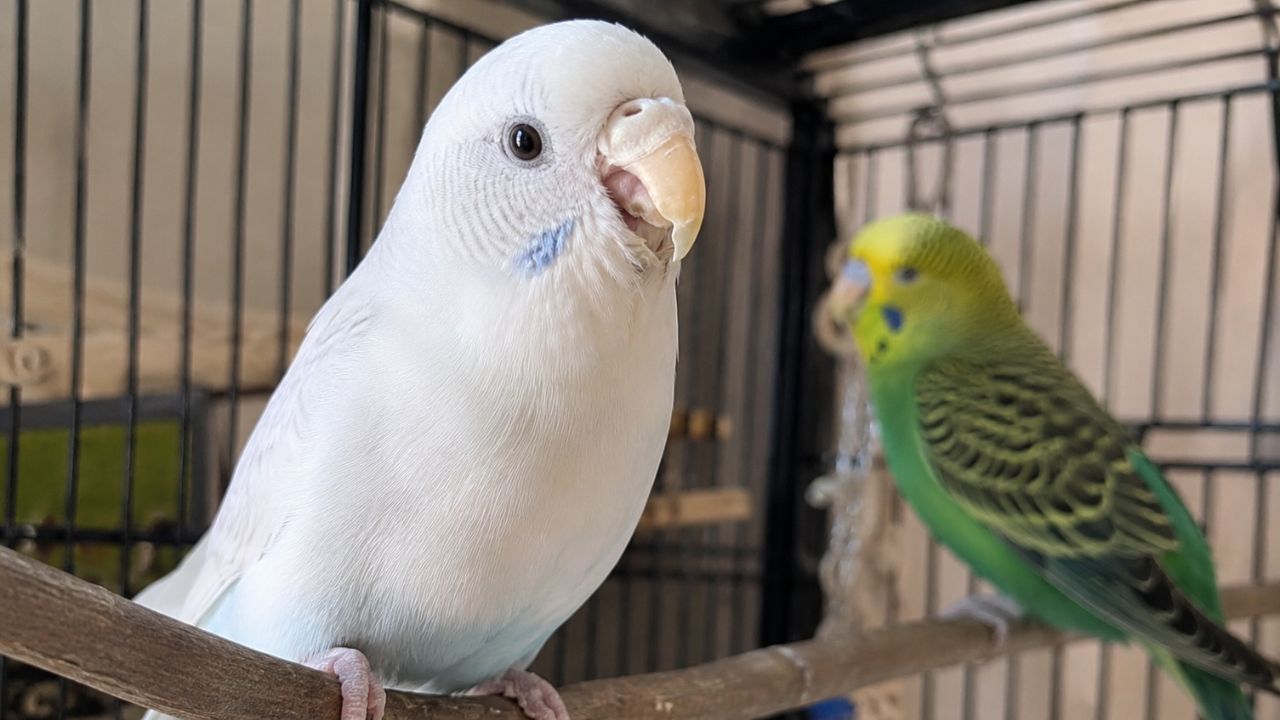

Neil has kept, bred, and sold budgies at Paradise Pets Swindon since 1988 — over 35 years of watching these birds kept well and, more times than he would like, watching problems that were easily treatable get left until they were not. An overgrown beak is one of the most visible signs that something is wrong with a budgie, and one of the most consistently mishandled by well-meaning owners. This is his honest guide to what causes it, what it means, and what needs to happen next.
I had a man come in a few months ago holding his budgie loosely in both hands, the way people carry a bird they are not quite sure how to hold.
The bird’s beak was visibly overgrown. The upper mandible had grown forward and slightly downward past the lower one, giving the bird a distinctive hooked profile that made it look almost like a small parrot. He had noticed it getting worse over the past couple of months, he said. He had been looking online at ways to trim it himself.
I told him to put the scissors away.
Then I asked him what the bird’s diet looked like. Mostly seeds, he said — a standard budgie mix from the supermarket. Had he noticed any change in the bird’s behaviour? A bit quieter lately, maybe. Less active than it used to be. He had put it down to age; the bird was about four years old.
I told him what I suspected, and I told him to get the bird to a vet that week rather than waiting. Not because of the beak alone — but because of the combination. An overgrown beak, a seed-heavy diet, a bird that had become quieter and less active over time. In a four-year-old budgie, that pattern has a common cause, and it is not one that gets better on its own.
He came back three weeks later. The vet had confirmed liver disease, early stage. The beak had been professionally trimmed. The bird was on a changed diet, a supplement, and the prognosis was reasonable because they had caught it before the damage was advanced.
An overgrown beak is not just a cosmetic problem. In most cases it is a symptom — of something happening inside the bird that needs to be identified and addressed. Understanding what that something might be is what this article is about.
What a Healthy Budgie Beak Actually Looks Like
Before getting into the causes of overgrowth, it is worth being clear about what normal looks like — because a lot of owners have never been told, and it is difficult to recognise a problem without a baseline.
A healthy budgie beak is smooth, symmetrical, and gently curved. The upper mandible extends slightly beyond the lower, but only slightly — it should not be dramatically hooked or curved. The surface should be uniform in colour — typically a light greyish-blue in most budgies, though this varies — and smooth or very slightly ridged in texture. There should be no crusty deposits, no flaking, no unusual texture, and no soft or spongy areas.
The beak should be worn down naturally through the bird’s daily activity — chewing on toys, perches, cuttlebone, and mineral blocks, and through the grinding action of eating. A bird with a varied and stimulating environment rarely develops a significantly overgrown beak from lack of wear alone.
When the beak grows beyond the normal gentle curve, grows asymmetrically, develops an unusual texture, or shows discolouration, something has changed — either in the bird’s environment, its diet, its health, or all three.
Scaly Face Mite — The Most Common Cause, and the Most Recognisable
If there is a crusty, pitted, or honeycomb-textured growth around the base of the beak, spreading onto the cere — the fleshy area above the beak where the nostrils are — and possibly also appearing around the eyes or on the legs, the cause is almost certainly scaly face mite.
Scaly face mite is caused by a microscopic mite called Cnemidocoptes pilae. It burrows into the skin around the beak and cere, creating the characteristic tunnels that produce the crumbly, coral-like or honeycomb-textured growth that is impossible to miss once you know what you are looking at. In mild early cases the growth may be slight and easy to overlook. In established cases it is very visible — a rough, crusty buildup that can distort the shape of the beak significantly if left untreated.
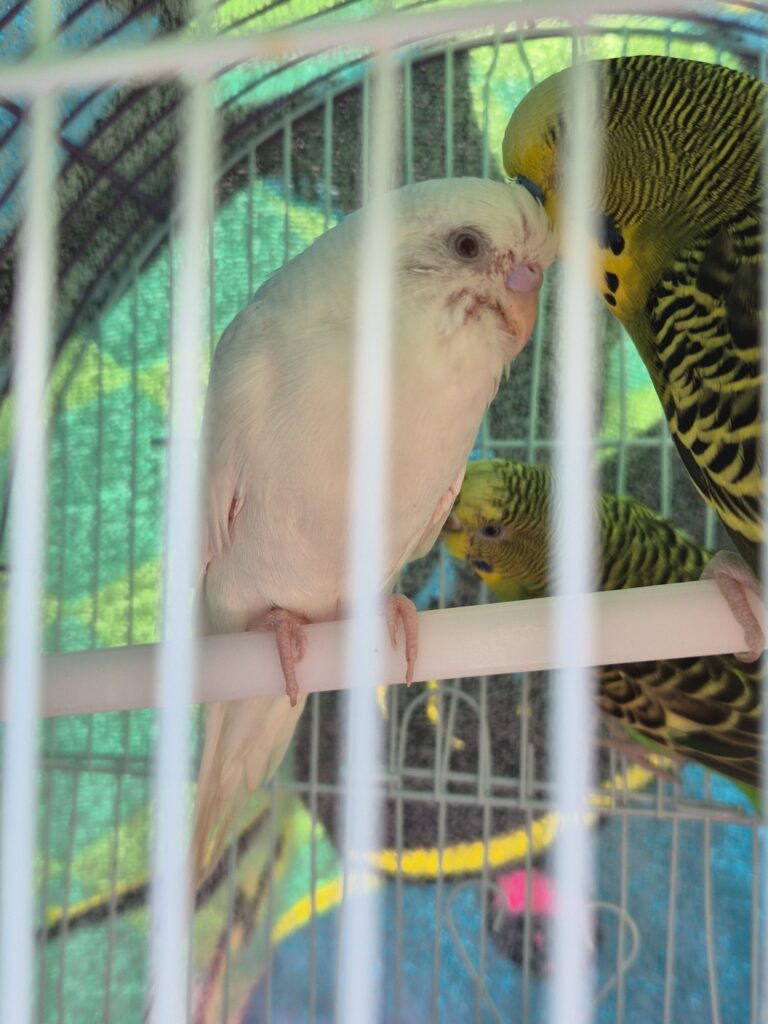
The good news about scaly face mite is that it is one of the more straightforward problems a budgie can have. It is treated with ivermectin, typically applied topically by a vet, and it responds well. The beak and cere do not always return completely to their original appearance if the growth has been significant and long-standing, but the condition stops progressing and the bird is comfortable again.
The bad news is that it is highly contagious between birds. If you have more than one budgie and one of them has scaly face, assume both need treatment and keep them separated until they have been seen.
- Crusty, pitted, or honeycomb-textured growth around the base of the beak and cere — this is the hallmark sign
- Growth extending around the eyes — the same mite causes similar deposits around the eye area in some cases
- Crusty or scaly deposits on the legs and feet — scaly leg is caused by the same mite and sometimes appears alongside scaly face
- Beak beginning to overgrow or distort — as the mite tunnels into the tissue around the beak base, it affects normal beak growth
- The bird is not showing signs of illness otherwise — scaly face mite does not make the bird systemically unwell in the way liver disease does
- What to do: Vet visit for ivermectin treatment. Do not attempt to remove the crusts yourself — this causes pain and bleeding.
Liver Disease — The Cause That Owners Most Often Miss
This is the one I want to spend the most time on, because it is serious, because it is far more common than most budgie owners realise, and because an overgrown beak is often the visible sign that alerts an observant owner to a problem that would otherwise go undetected until it was much further advanced.
Liver disease is extremely common in budgies, particularly middle-aged and older birds on a predominantly seed-based diet. Seeds are high in fat and relatively poor in the range of nutrients a budgie needs for long-term health. A bird fed almost exclusively on a standard seed mix — the most common budgie diet in UK households — is being fed a diet that, over time, places significant strain on the liver.
The connection between liver disease and beak overgrowth is not immediately obvious, but it is well established. The liver plays a central role in metabolic processes that affect keratin production — and the beak is made of keratin. When liver function is compromised, this can disrupt normal keratin metabolism, resulting in abnormal and accelerated beak growth. The beak also commonly changes colour — it may take on a brownish discolouration, or in more advanced cases a darker, almost blackish hue — which is another sign that the liver is not functioning as it should.
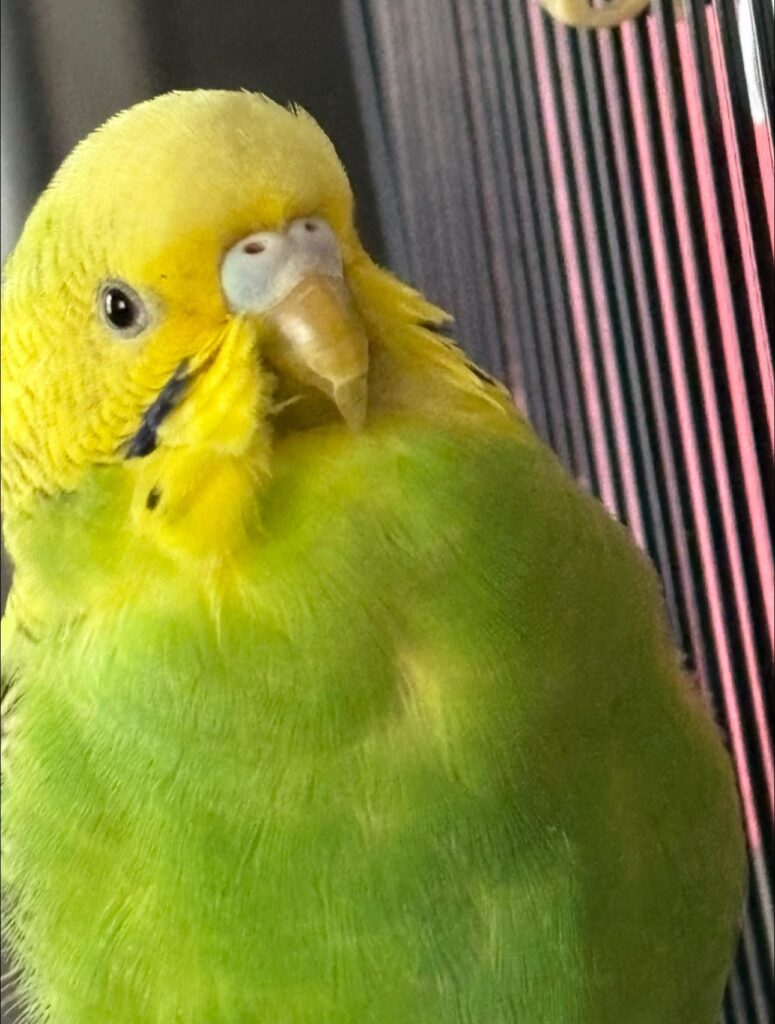
The other signs of liver disease in budgies are worth knowing because they often appear alongside or slightly before the beak changes: reduced activity and energy, fluffed feathers during waking hours, reduced vocalisation, weight loss that may not be obvious until you handle the bird and feel the breastbone, and a swollen or distended abdomen. A budgie that has become quieter and less active alongside developing an overgrown or discoloured beak should be treated as a possible liver case until proven otherwise.
- Beak overgrowth plus brown or dark discolouration of the beak: Classic liver disease presentation — vet this week
- Reduced activity, fluffed during waking hours, less vocalisation: Systemic illness signs — not just a beak problem
- Swollen or rounded abdomen: Fluid accumulation associated with advanced liver disease — urgent
- Weight loss — breastbone feels sharp or prominent when you handle the bird: Significant concern in any bird
- Bird on a seed-only diet, aged over two years: This profile is the highest risk group — diet change is essential regardless of whether symptoms are present yet
- What to do: Same-week vet visit. Blood tests can confirm liver function. Early-stage liver disease is manageable with diet change and supplementation.
Nutritional Deficiency — The Diet Problem Behind Many Beak Issues
Even without full liver disease, poor nutrition plays a significant role in abnormal beak growth in budgies, and it is worth addressing directly because the budgie diet that most UK owners provide is not as complete as the packaging suggests.
A standard seed mix covers the caloric needs of a budgie but does not provide the full range of nutrients the bird requires for long-term health. Budgies in the wild eat a much more varied diet — grasses, seeds at different stages of ripeness, plant material, and occasional insects. The manufactured seed mix sitting in a pet shop bag is a simplified, shelf-stable version of something that was never meant to be the whole story.
The nutrients most commonly deficient in seed-heavy diets — vitamin A, vitamin D, iodine, and a range of other micronutrients — all play roles in keratin production and metabolism. Deficiencies can contribute to both overgrown and abnormally textured beaks over time.
The practical solution is straightforward, even if budgies do not always make it easy: expand the diet. Fresh vegetables — particularly dark leafy greens, carrots, and peppers — provide nutrients that seeds do not. Cooked egg in small amounts provides protein and vitamin A. A high-quality pellet component, used alongside rather than instead of seeds for birds that are resistant to change, covers nutritional gaps that seeds leave. Cuttlebone provides calcium and something hard to wear the beak against.
If your budgie’s diet is currently seed-only and you are reading this because of a beak problem, changing the diet is not optional. It is the foundation of addressing whatever is happening.
Lack of Natural Wear — The Perch and Environment Problem
Not all overgrown beaks are caused by illness. Some — particularly mild cases in otherwise healthy young birds — are caused simply by insufficient opportunity to wear the beak down naturally.
A budgie in a good environment will spend significant time each day working its beak: chewing on wooden toys and perches, using cuttlebone and mineral blocks, working seeds and fresh food. All of this activity wears the beak at a rate that keeps pace with its growth. A budgie in a minimal cage with smooth plastic perches, no cuttlebone, no wooden toys, and nothing to chew on has none of these opportunities — and the beak grows without being worn.
The standard smooth wooden dowel perches that come with most cages are almost useless for beak and foot health. They are uniform in diameter, smooth in texture, and do not provide the varied grip and abrasion that a bird needs. Natural wood perches — apple, willow, hazel — in varying diameters give the bird something genuinely useful to sit on and work with. Cuttlebone mounted in the cage provides calcium and a surface to rub the beak against. Mineral blocks and lava perches do similar work.
If your budgie’s overgrown beak is mild, the bird is young, its diet is reasonable, and there is no crusty growth or discolouration, improving the cage environment — natural perches, cuttlebone, wooden toys — and reviewing again in a month is a reasonable first step. If the overgrowth is significant or does not improve, a vet visit is still the right call.
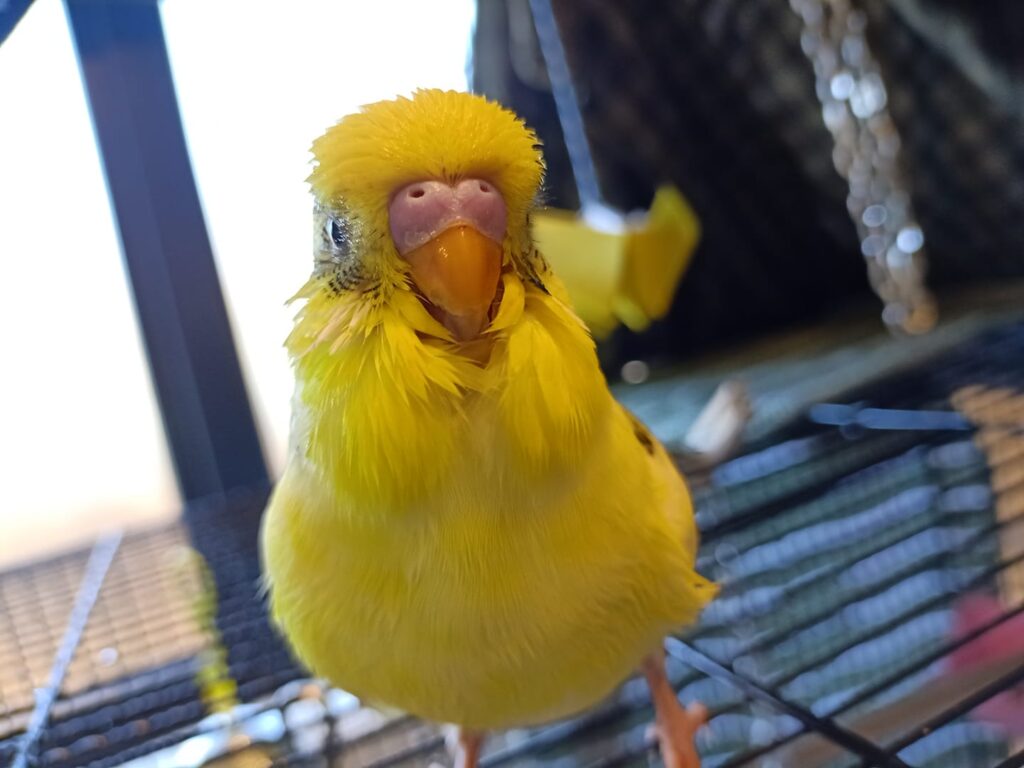
The One Thing You Must Never Do — Do Not Trim the Beak Yourself
I need to say this clearly and without softening, because the impulse to fix a visible problem is completely understandable and completely wrong in this case.
Do not attempt to trim your budgie’s beak at home.
The beak contains blood vessels and nerve endings — the blood supply runs further down into the beak than most people realise. Cutting too far causes bleeding that is difficult to stop in a small bird, and the pain and stress of the attempt can cause shock. Uneven trimming creates a beak that does not occlude properly, making eating harder rather than easier. And perhaps most importantly, trimming the beak without diagnosing why it overgrew solves nothing — the underlying cause continues, the beak overgrows again, and you are back to the same problem within weeks, having put the bird through an unnecessary ordeal.
Beak trimming, when it is needed, is a procedure for a vet. It takes the right tools, the right technique, and the ability to manage any bleeding that occurs. It is not difficult for a vet who has done it many times. It is genuinely dangerous for an owner attempting it with nail clippers on a kitchen table.
- Blood vessels run deep into the beak: Cutting too far causes bleeding that is hard to control in a small bird and can be fatal
- Stress and shock: The experience of being restrained and having its beak worked on can send a small bird into shock
- Uneven trimming causes feeding problems: If the beak does not meet correctly, the bird cannot eat properly
- It does not address the cause: The beak will simply overgrow again — sometimes faster — without the underlying issue being treated
- What to do instead: Book a vet appointment. Describe what you are seeing. A vet will trim the beak safely and, more importantly, work out why it overgrew.
What the Vet Will Do — What to Expect
A vet experienced with birds will approach an overgrown budgie beak as a diagnostic question first, not just a trimming job.
They will examine the texture and colour of the beak itself — looking for the characteristic appearance of scaly face mite versus the discolouration and pattern of liver disease versus simple overgrowth. They will look at the cere, the eyes, and the legs. They will ask about the diet and the environment. They will handle the bird and assess its weight, feel the breastbone, and look at the overall condition of the feathers and skin.
If liver disease is suspected, blood tests are the definitive way to confirm it. Most avian vets can run basic liver panels relatively quickly, and the results significantly affect what treatment is recommended. An early-stage liver case managed with diet change and appropriate supplementation has a much better prognosis than one that is only identified once the disease is advanced.
The beak trimming itself, if needed, is done with rotary tools or specialised beak files designed for the purpose. In most cases it takes minutes once the diagnosis is established. The bird goes home the same day.
Preventing Beak Overgrowth — What Every Owner Should Have in Place
The factors that prevent most cases of non-illness-related beak overgrowth are simple and inexpensive. They are also things that a significant proportion of budgies in UK households do not have access to.
A good diet is the foundation. Move away from seed-only feeding toward a mixed diet that includes fresh vegetables, leafy greens, and a high-quality pellet component. This provides the nutritional range that seed alone cannot. It also reduces the long-term risk of liver disease — which is, at its root, a dietary disease in most cases.
Natural wood perches in varying diameters give the beak and feet the abrasion and varied grip they need. Apple, willow, and hazel branches are all safe and can be used fresh — wash them first and let them dry. These perches need replacing as the bird chews through them, which is exactly the point.
Cuttlebone should be in the cage at all times. Some birds ignore it for weeks before deciding to use it. Keep it there. It provides calcium and a useful abrasive surface for beak maintenance.
Wooden toys and chewable items give the bird something to work on. Budgies are active, intelligent birds that need stimulation — and the chewing activity that stimulation produces is also the activity that keeps the beak in good condition.
Regular handling — picking the bird up, looking at the beak, checking the cere and feet — means you will notice any early changes before they become significant. The owners who catch problems early are almost always the ones who know what their bird looks like normally.
Quick Reference — Overgrown Budgie Beak at a Glance
| What You Are Seeing | Most Likely Cause | What To Do |
|---|---|---|
| Crusty, honeycomb-textured growth around beak and cere | Scaly face mite | Vet for ivermectin treatment — highly treatable. Separate from other birds. |
| Overgrown beak plus brown or dark discolouration | Liver disease | Vet this week — blood tests to confirm. Early treatment matters. |
| Overgrown beak, quiet bird, seed-only diet, aged 2+ | Liver disease — high-risk profile | Vet visit and diet change. Do not wait for symptoms to worsen. |
| Mild overgrowth, young bird, no discolouration, no crusty growth | Insufficient wear — environment issue | Add cuttlebone, natural perches, wooden toys. Review in 4 weeks. Vet if no improvement. |
| Asymmetric beak growth, one side longer than the other | Possible injury or abnormal growth | Vet visit for assessment and professional trim |
| Scaly growth on legs and feet alongside beak changes | Scaly leg and face mite — same cause | Vet for ivermectin treatment — both areas at once |
| Any overgrown beak — owner considering DIY trim | Any cause | Do not trim at home. Vet visit only. |
The Honest Answer — After 35 Years
An overgrown beak is one of those problems that tempts owners to try to fix the visible symptom — to trim it, file it, deal with the thing they can see. I understand that impulse. But in the vast majority of cases, the beak itself is not the problem. It is the signpost pointing toward the problem.
 In 35 years of selling budgies and talking to the owners who come back to see me, the cases that end badly are almost never the ones where the owner acted promptly on a visible change. They are the ones where the owner managed the visible symptom without investigating the underlying cause. The bird had its beak trimmed by a well-meaning owner, the underlying liver disease continued, and by the time the symptoms were unmistakable it was too late to do much about it.
A budgie with an overgrown beak needs a vet visit. Not next month. This week, or sooner if there are other symptoms. An honest examination, an honest diagnosis, and an honest conversation about what needs to change — in the diet, in the environment, in the care. That is what gives the bird the best possible outcome.
Frequently Asked Questions

Can I trim my budgie’s overgrown beak at home?
No — and I would ask you not to try. The beak contains blood vessels that run further into the tissue than most people expect, and cutting too far causes bleeding that is very difficult to control in a small bird. Beyond the physical risk, trimming the beak without identifying why it overgrew solves nothing — the beak will simply overgrow again within weeks. Take the bird to a vet who has experience with birds. The trimming itself is quick and straightforward for someone who knows what they are doing.
What causes a budgie’s beak to turn brown?
Discolouration of the beak — particularly a brownish or darkening hue — is commonly associated with liver disease in budgies. The liver plays a role in keratin metabolism, and when liver function is compromised it can affect both the growth rate and the appearance of the beak. A beak that is overgrown and also changing colour should be treated as a possible liver case and seen by a vet this week. Blood tests can confirm whether the liver is involved.
What is the crusty growth around my budgie’s beak and cere?
The crusty, pitted, or honeycomb-textured growth around the beak base and cere is almost certainly scaly face mite — a microscopic mite called Cnemidocoptes pilae that burrows into the skin and creates characteristic tunnels. It looks alarming but is one of the more treatable conditions in budgies. A vet will prescribe ivermectin, typically applied topically, and the condition responds well. Do not attempt to remove the crusts yourself — this is painful for the bird and can cause bleeding. If you have more than one budgie, separate them and get both examined.
Is an overgrown beak always a sign of illness?
Not always — mild overgrowth in an otherwise healthy young bird with insufficient wear opportunities can occur without underlying illness. Adding cuttlebone, natural wood perches, and wooden toys, alongside improving the diet, can resolve this. However, significant overgrowth, overgrowth alongside discolouration, or overgrowth in a bird that is also quieter or less active than usual is much more likely to indicate an underlying health problem — usually liver disease or scaly face mite — and needs a vet visit rather than a wait-and-see approach.
How do I prevent my budgie’s beak from overgrowing?
The most effective prevention is a combination of good nutrition and a stimulating environment. Move away from seed-only feeding — introduce fresh vegetables, leafy greens, and a quality pellet component. Make sure cuttlebone is always available in the cage. Use natural wood perches in varying diameters rather than smooth plastic or uniform wooden dowels. Provide wooden toys and chewable items. And handle your bird regularly enough that you will notice any early change in the beak’s appearance before it becomes a significant problem.
My budgie’s beak looks slightly longer than usual — when should I see a vet?
If the beak is only mildly overgrown, the bird is young and otherwise healthy, the diet and environment are reasonable, and there is no discolouration or crusty growth around the beak or cere — improving the environment and reviewing in four weeks is a reasonable first step. If the overgrowth is significant, if there is any discolouration or crusty texture, if the bird is also quieter or less active than usual, or if the beak has grown asymmetrically — book a vet appointment this week rather than waiting.
Where can I buy a budgie in Swindon?
We always have budgies in stock at Paradise Pets — young, healthy birds from good UK stock. Come and see us at Manor Garden Centre, Cheney Manor, Swindon SN2 2QJ, or call us on 01793 512400. We are happy to talk through diet, environment, and care before you buy, so you have a solid foundation from the start.
Worried About Your Budgie’s Beak? Come and Talk to Us
If your budgie’s beak looks overgrown and you are not sure what you are dealing with — come in. Bring the bird or a short video on your phone. I will give you my honest opinion from 35 years of keeping these birds, and I will tell you straight what I think it means and what needs to happen next.