
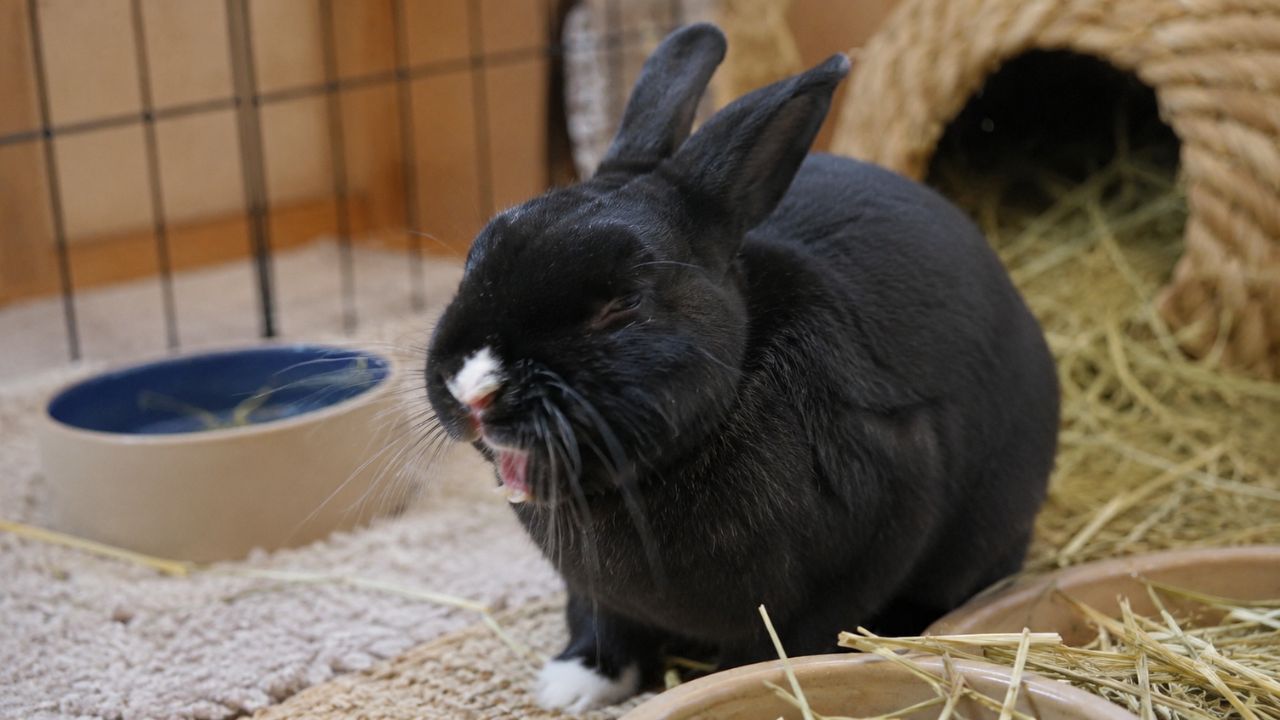

Neil has kept, bred, and sold rabbits at Paradise Pets Swindon since 1988 — over 35 years of watching these animals thrive with the right care and decline when problems are caught too late. A sneezing rabbit is one of the more common concerns he hears from owners. Sometimes the cause is simple. Sometimes it is not. This is his honest guide to telling the difference — and knowing when to act fast.
A couple came in about eighteen months ago, asking about their rabbit.
He had been sneezing on and off for about a week, they said. Not constantly — maybe a few times an hour. They had noticed something around his nose too, a slight whitish crust that had appeared in the last couple of days. They had searched online and found a range of possibilities from hay dust to something called snuffles, and they were not sure which one they were dealing with. They had decided to come in before booking a vet appointment, partly to get a second opinion and partly because they were not sure whether it warranted one.
I asked them a few questions. Was the discharge clear or coloured? Whitish, they said — not clear. Had they changed anything in his environment recently? Not that they could think of. Were his eyes weepy at all? One of them, yes, a little.
I told them to book the vet appointment on their way home. Not because I was certain what they were dealing with, but because the combination they were describing — coloured nasal discharge, slightly weepy eye, sneezing for more than a week — is a combination that does not get better on its own, and that becomes significantly harder to treat the longer it is left.
The vet confirmed a bacterial respiratory infection. The rabbit was put on a course of antibiotics. He recovered well because they caught it early.
If they had waited another week — if the discharge had been clear and they had assumed it was dust, or if they had decided to see whether it resolved itself — the outcome might have been different.
That is what I want to explain in this article. A sneezing rabbit is not always a medical emergency. But a sneezing rabbit that you do not know how to read is a risk you cannot afford to take, because rabbits do not give you as much time as you might think.
Start Here — One Sneeze or a Pattern?
The very first thing to establish is whether what you are seeing is an isolated sneeze or a repeated pattern of sneezing over hours or days.
A rabbit that sneezes once or twice — particularly after moving around its hay, after cleaning has happened nearby, or after some other brief environmental trigger — and then stops, is almost certainly reacting to a momentary irritant. A single sneeze, with no discharge and no other symptoms, in a rabbit that is otherwise eating, behaving, and moving normally, is not a cause for concern. Rabbits sneeze occasionally. So does everything else.
What changes the picture completely is repetition. A rabbit that is sneezing multiple times per hour, or sneezing consistently over the course of a day or more, is not reacting to a passing irritant. Something is causing sustained irritation or infection, and identifying what that is — promptly — matters.
The rest of this guide assumes you are dealing with the second situation. If your rabbit sneezed twice and stopped, go about your day. If it has been sneezing repeatedly and you are reading this to try to understand why, keep reading carefully.
Check This First — Environmental Irritants Are the Most Overlooked Cause
Before you assume illness, rule out the simplest cause. A significant proportion of the sneezing rabbits I hear about turn out to be reacting to something in their environment — something that can be changed without a vet visit, and that will resolve the sneezing quickly once removed.
Hay Dust — The Most Common Culprit in UK Rabbit Keeping
Rabbits need hay. A lot of it — it should make up the bulk of their diet, and the average indoor UK rabbit goes through a substantial quantity every week. What many owners do not fully appreciate is that even good-quality hay produces dust. And rabbit respiratory systems are sensitive enough that consistent exposure to hay dust, particularly in an enclosed indoor space, can cause chronic sneezing that has nothing to do with infection.
The signs that hay dust is your problem: the sneezing tends to happen most during or after the rabbit has been in or near its hay, the hay rack or bed area has visible fine particles when disturbed, and the rabbit has no nasal discharge and no other symptoms.
The solution is to switch to a dust-extracted hay — specifically sold as dust-free or low-dust — and to shake the hay out somewhere away from the rabbit before putting it in the enclosure. It is a minor adjustment that makes a meaningful difference for sensitive animals.
Bedding and Litter
Wood shavings — particularly pine and cedar — are known respiratory irritants for small animals, including rabbits. If your rabbit is housed on shavings, this is worth changing regardless of the sneezing, but particularly if sneezing is present. Switch to a dust-extracted paper-based bedding and see whether the sneezing reduces over the following week. If it does, you have found your cause. If it does not, keep investigating.
Household Products
This one catches people out because the connection is not obvious. Rabbits kept indoors are exposed to whatever is in the air of the home — cleaning sprays, air fresheners, scented candles, plug-in diffusers, cigarette or vape smoke, perfume, hairspray. Any of these can cause sneezing in a rabbit with a sensitive respiratory system. If the sneezing is worse after cleaning, after someone has been in the room with a strong scent, or at specific times that correlate with household activity, this is worth investigating.
- Hay: Switch to dust-extracted hay and shake it out before use. Review in 5–7 days.
- Bedding: If using wood shavings or sawdust, switch to dust-free paper bedding immediately.
- Cleaning products: Do not spray or use strongly scented products in the room where the rabbit is kept.
- Air fresheners and candles: Remove all scented products from the rabbit’s room — plug-ins, sprays, and candles.
- Smoke: Cigarette and vape smoke are serious respiratory irritants for rabbits. The room should be smoke-free.
- Timeline: If the sneezing is caused by environment and you remove the cause, it should improve within 3–5 days. If it does not improve, or if any discharge is present, move on to the vet.
Snuffles — What It Is and Why It Matters
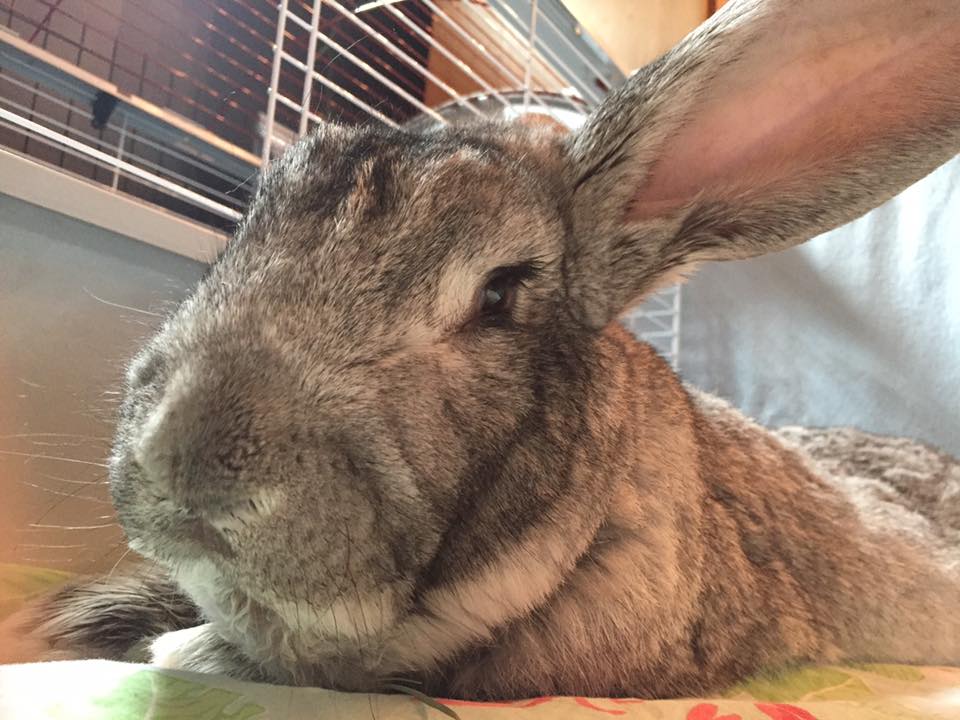
This is the cause that every rabbit owner should know about before they need to, because snuffles is the most common serious respiratory condition in domestic rabbits in the UK, and it is the one most commonly missed or delayed in its treatment.
Snuffles is the common name for a respiratory infection caused primarily by the bacterium Pasteurella multocida, though other bacteria including Bordetella and Staphylococcus can produce similar symptoms. It affects the upper respiratory tract — the nasal passages, sinuses, and sometimes the eyes and inner ears — and in its early stages can look remarkably like a simple irritant reaction.
The distinguishing features of snuffles, compared to environmental irritation, are these: the discharge from the nose is not clear but white, yellow, or greenish in colour. The sneezing is persistent and does not improve when the environment is cleaned up. The rabbit may have weepy or sticky eyes on one or both sides. And — the sign that owners most commonly miss — the fur on the inside of the front paws may be matted and crusty, because the rabbit has been repeatedly wiping its nose on its paws.
That last one is worth checking right now if you are reading this with a sneezing rabbit nearby. Pick up the front paws and look at the inner surface of the wrists. Clean, dry fur means the rabbit has not been wiping a runny nose. Matted, damp, or crusted fur means it has been doing so for longer than you probably realise.
Why Snuffles Needs Prompt Treatment
Snuffles is not always curable — I want to be honest about that, because I think owners are sometimes given reassurance that is not fully warranted. Pasteurella in particular can establish a chronic infection in the nasal passages and sinuses that responds to antibiotics while the course is ongoing and then resurfaces when treatment stops. Some rabbits manage this with repeated or long-term antibiotic courses. Some do not fully clear it.
What is clearly true is that early treatment produces better outcomes than late treatment. A rabbit that has been sneezing with clear early-stage symptoms for a week and is treated promptly stands a much better chance of full resolution than one that has been sneezing for three weeks, has developed a significant infection of the sinuses, and is showing systemic signs of illness.
The window between early-stage snuffles and a well-established infection is short. Do not wait for the symptoms to become unmistakable before acting.
- White, yellow, or green nasal discharge: Not clear — coloured discharge is almost always bacterial infection
- Persistent sneezing that does not improve after environment is cleaned up: Infection, not dust
- Matted, crusty fur on inner front paws: Rabbit has been wiping its nose — chronic issue that has been developing longer than you realised
- Weepy, sticky, or half-closed eyes alongside sneezing: Infection has spread to ocular area — same-day vet
- Head tilt, loss of balance alongside sneezing: Infection may have reached inner ear — urgent
- Reduced appetite alongside sneezing: A rabbit that stops eating is always urgent — do not wait
The Dental Connection — The Cause That Surprises Most Owners
This is the one that catches people off guard most often, and it is worth spending time on because it is genuinely not obvious.
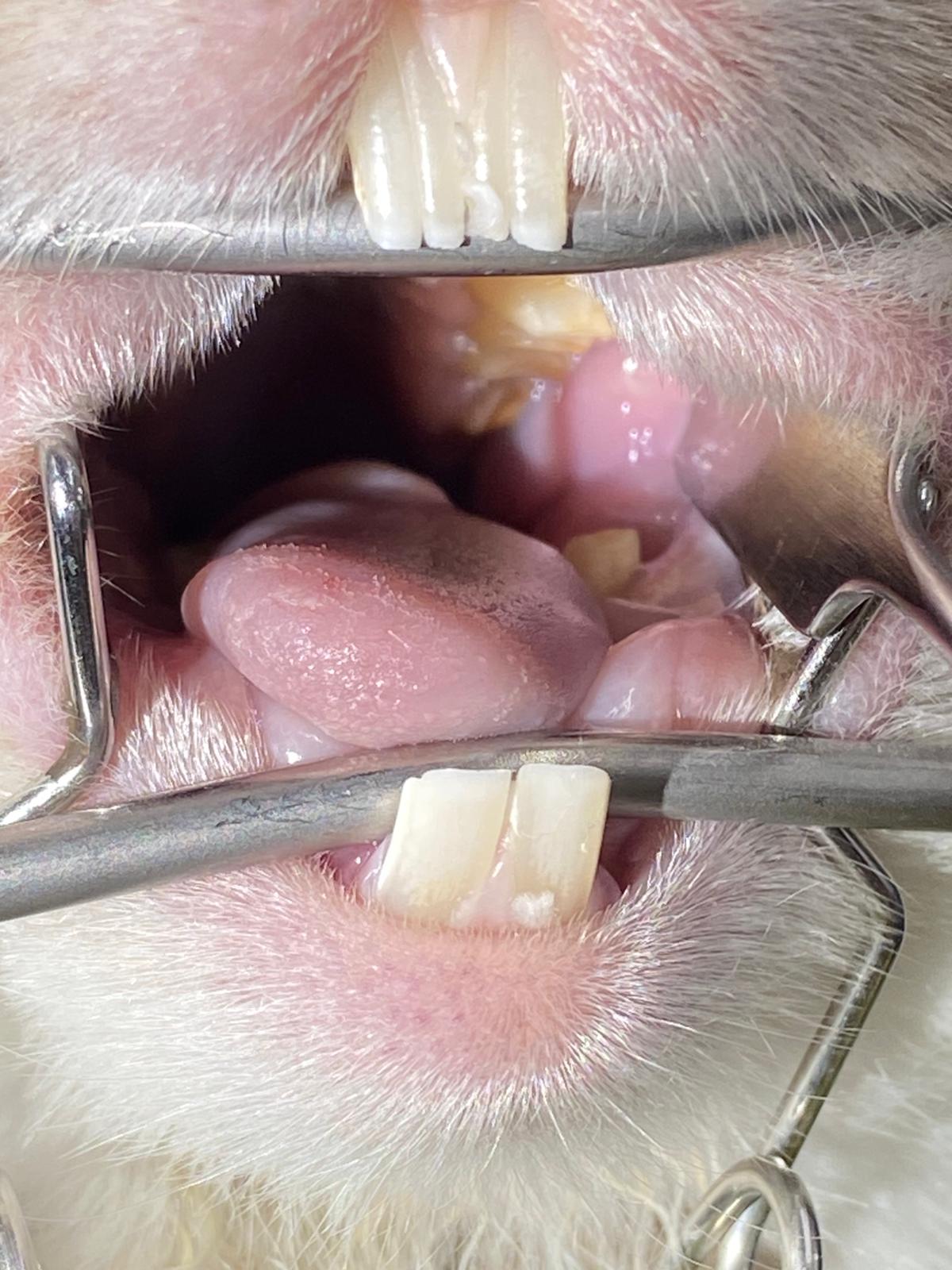
Rabbits have continuously growing teeth — not just the incisors at the front that you can see, but a full set of cheek teeth that do most of the actual grinding work of processing hay and vegetables. These cheek teeth are long, and their roots extend deep into the jaw. In rabbits with dental problems — overgrown molars, spurs on the cheek teeth, or tooth root abscesses — those roots can impinge on the nasal passages and sinuses, causing sneezing and nasal discharge that has nothing directly to do with a respiratory infection.
A rabbit sneezing persistently with nasal discharge but not responding to antibiotic treatment — or a rabbit that has repeated bouts of apparent snuffles that always come back — may actually have a dental problem driving the symptoms. This is not rare. It is one of the most common reasons a sneezing rabbit does not respond to the expected treatment.
The signs that dental disease may be involved: the rabbit has been eating less hay than usual or is reluctant to eat harder foods, there is drooling or wet fur around the chin, the rabbit has lost weight, or there is a swelling along the lower jaw. Any of these alongside persistent sneezing should prompt a specific dental examination from the vet — not just a general check, but an examination of the cheek teeth under sedation, which is the only way to properly assess them.
Why Rabbits Are Particularly Vulnerable — The Obligate Nasal Breather Problem
Something that is important to understand about rabbits, and that changes how urgently you should treat respiratory symptoms compared to some other animals, is that rabbits are obligate nasal breathers.
Unlike dogs or cats, a rabbit cannot simply switch to breathing through its mouth if its nasal passages become congested or obstructed. The anatomy does not allow it easily. A rabbit with a significantly blocked nose is a rabbit that is struggling to breathe, even if it does not look it from the outside. This is why a respiratory infection that might be a manageable inconvenience in a larger animal is a genuine medical problem in a rabbit, and why the progression from mild sneezing to serious respiratory distress can happen considerably faster.
It is also why fumes and airborne irritants are more dangerous to rabbits than many owners realise. Non-stick cookware overheating, aerosol products, scented candles — the same things that are serious respiratory hazards for birds are genuinely hazardous for rabbits too, even though rabbits are not usually included in the warnings.
If your rabbit is sneezing and also showing any sign of laboured breathing — rapid shallow breaths, nostrils flaring noticeably, sitting with elbows out and neck extended — this is an emergency, not a wait-and-see situation. Get to a vet as quickly as you can.
Discharge Colour — What It Is Telling You
The colour and nature of nasal discharge is one of the most useful pieces of information you have when trying to work out how serious a sneezing rabbit’s situation is. It is not the only piece of information — no single sign tells the whole story — but it is a meaningful one.
Clear, watery discharge that appears briefly and then stops — particularly in a rabbit that has just been near fresh hay or in a dusty environment — is most likely a mechanical irritation. Worth noting, worth cleaning up the environment, but not immediately alarming on its own.
Clear discharge that persists — that is present day after day without improving — can be the early stage of an infection before it has fully established. Do not assume that clear means safe if it is continuous. Monitor closely, clean the environment, and if there is no improvement within three to five days, get it seen.
White, yellow, or green discharge is almost always bacterial infection. There is very little innocent explanation for coloured nasal discharge in a rabbit. This needs a vet visit the same day, not at the end of the week.
Thick, dried discharge crusting around the nostrils — the kind that has accumulated over time — tells you the sneezing has been going on longer than you may have noticed, and that the infection is not new. This needs prompt attention.
The Paws Check — How to Spot Sneezing You Have Not Been Seeing
I mentioned this briefly when discussing snuffles, but it is worth its own section because it is so consistently useful and so consistently overlooked.
Rabbits groom themselves constantly. When a rabbit has a runny nose — whether from infection or persistent irritation — it wipes its nose with the inner surface of its front wrists, exactly as a person might wipe their nose on a sleeve. Over time, this leaves a characteristic trail of matted, sometimes yellowish, sometimes crusty fur on the inner wrist area just above the paw.
If your rabbit is sneezing, check the inner wrists right now. Clean dry fur at the wrists tells you this is a recent problem. Matted, stiff, or crusty fur at the wrists tells you there has been a nasal discharge for a significant period — long enough for repeated wiping to affect the fur quality. That is important information. It tells you this is not a new problem, even if you have only recently noticed the sneezing, and it tells you a vet visit cannot be left for another week.
Quick Reference — Why Your Rabbit Is Sneezing
| What You Are Seeing | Most Likely Cause | What To Do |
|---|---|---|
| One or two sneezes, no discharge, no other symptoms | Passing irritant — dust, hay, brief environmental trigger | Nothing — monitor. Normal if it stops. |
| Repeated sneezing, clear discharge, no other symptoms | Environmental irritant or early-stage infection | Clean up the environment — dust-free hay, remove scented products. No improvement in 3–5 days: vet. |
| Repeated sneezing, white/yellow/green discharge | Bacterial infection — likely snuffles | Same-day vet. Do not wait. |
| Sneezing plus weepy or sticky eyes | Infection spreading to ocular area | Same-day vet. |
| Matted crusty fur on inner front paws | Chronic nasal discharge — longer-standing infection than you realised | Vet visit — this has been developing for a while |
| Sneezing plus not eating normally | Illness — may be respiratory or dental-related | Same-day vet. A rabbit not eating is always urgent. |
| Sneezing plus head tilt or balance problems | Infection reached inner ear | Urgent — vet immediately |
| Persistent sneezing not responding to antibiotics | Dental disease driving nasal symptoms | Return to vet — request specific dental examination under sedation |
| Rapid breathing, flared nostrils, elbows out | Respiratory distress — emergency | Emergency vet — now, not later |
The Rule I Give Every Rabbit Owner
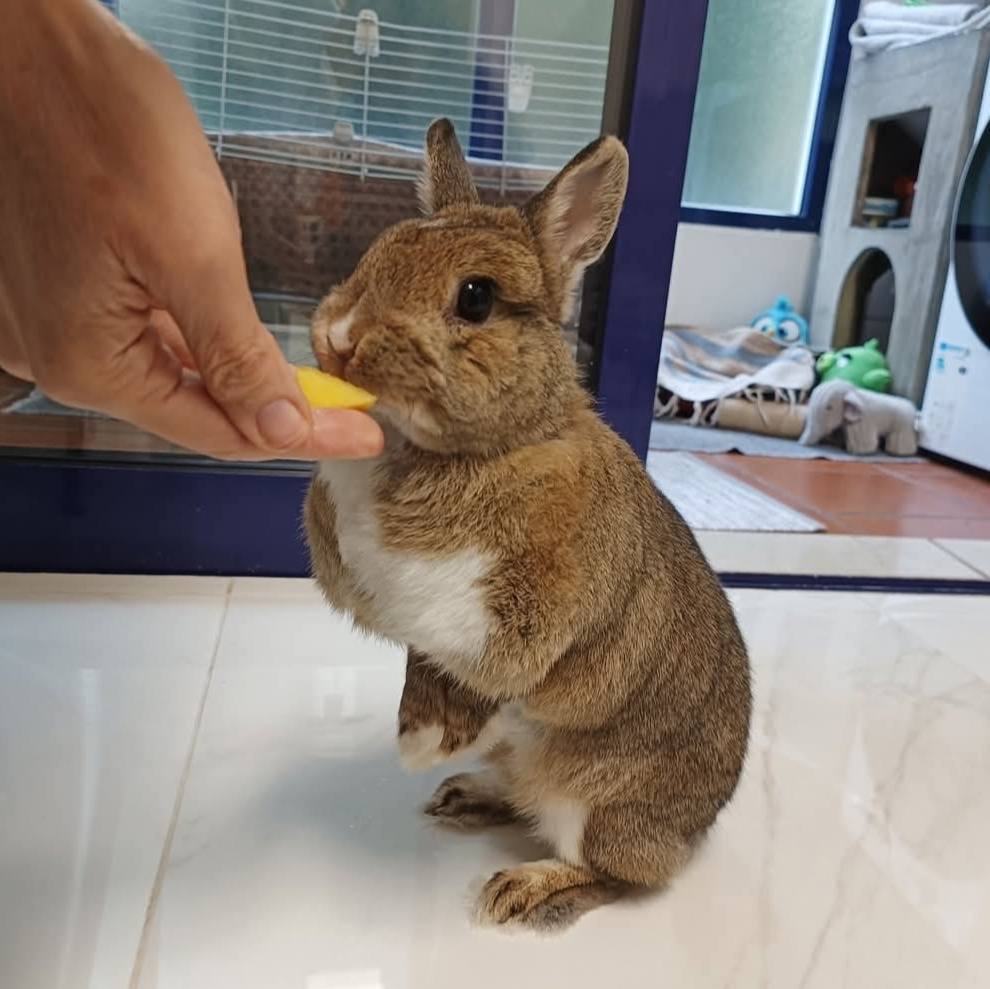 Rabbits hide illness. It is not a choice — it is evolutionary. A rabbit in the wild that shows obvious signs of being unwell is a rabbit that gets targeted. So they mask symptoms for as long as their bodies will allow, and by the time the symptoms are undeniable, the condition is often well established.
What this means in practice is that by the time a rabbit is obviously, unmistakably unwell — not eating, not moving, clearly distressed — it has usually been ill for longer than the owner realises. The quiet, easy-to-dismiss early signals — a bit quieter than usual, a slightly runny nose, not finishing the food bowl — were the window. The time when treatment would have been straightforward.
So the rule I give every rabbit owner is this: do not wait for certainty before you act. A rabbit with persistent sneezing and any nasal discharge is not a wait-and-see situation — it is a call-the-vet-and-describe-what-you-are-seeing situation, the same day. The vet may tell you it is dust and to change the bedding. That is a two-minute phone call that cost you nothing. Or the vet may confirm an early-stage infection and start treatment that makes the difference between a good outcome and a difficult one.
In 35 years of this, the owners whose rabbits do best are not the ones who waited until they were certain something was wrong. They are the ones who acted on the early signal, while the window was still open.
Frequently Asked Questions
My rabbit has been sneezing for a few days but seems otherwise fine — should I see a vet?
Yes, if there is any nasal discharge alongside the sneezing — even clear discharge. A rabbit that is sneezing persistently for several days has moved past the territory of a passing irritant, even if it is still eating and behaving normally. Check the inner wrists for matted fur, which can tell you the problem has been going on longer than the sneezing you noticed. Call a vet and describe what you are seeing — most will give you a clear steer on whether a visit is needed without you having to guess.
Can hay dust make a rabbit sneeze?
Yes, and it is probably the most common non-medical cause of sneezing in UK pet rabbits. Hay is essential — rabbits need it — but even good-quality hay produces dust, and rabbits that spend a lot of time foraging through hay in an enclosed indoor space can develop chronic sneezing from the dust alone. Switch to a specifically dust-extracted hay, shake it out before putting it in the enclosure, and see whether the sneezing reduces over a week. If it does not improve or if there is any nasal discharge, treat it as possible infection and get it seen.
What is snuffles in rabbits?
Snuffles is the common name for an upper respiratory infection in rabbits, caused primarily by a bacterium called Pasteurella multocida, though other bacteria can produce similar symptoms. The classic signs are persistent sneezing, white or yellow nasal discharge, weepy eyes, and — the often-missed sign — matted crusty fur on the inner front paws where the rabbit has been wiping its nose. Snuffles needs antibiotic treatment from a vet and should not be left to resolve on its own. Early treatment gives the best chance of full resolution; established infections can be harder to clear completely.
Could my rabbit’s sneezing be caused by a dental problem?
Yes, and this is more common than most owners expect. The roots of a rabbit’s cheek teeth sit very close to the nasal passages and sinuses. Dental disease — overgrown molars, tooth root abscesses — can press on these passages and cause sneezing and nasal discharge that looks exactly like a respiratory infection. If your rabbit has been treated for snuffles more than once and the symptoms keep returning, or if it is also showing signs of dental problems — reluctance to eat hay, weight loss, wet chin, jaw swelling — ask your vet specifically to examine the cheek teeth under sedation.
My rabbit is sneezing and also not eating — how urgent is this?
This combination is urgent. A rabbit that has stopped eating for any reason deteriorates quickly — their digestive systems require constant movement, and a rabbit that stops eating for more than a few hours is at risk of GI stasis, which is a life-threatening condition in its own right. Sneezing plus not eating is a same-day vet visit — do not wait overnight or until the next convenient appointment.
Are air fresheners and scented candles dangerous for rabbits?
Yes. Rabbits have sensitive respiratory systems, and exposure to strong airborne irritants — including plug-in air fresheners, aerosol sprays, scented candles, and cigarette or vape smoke — can cause chronic respiratory irritation. This is more commonly known as a risk for birds, but it applies equally to rabbits kept indoors. If your rabbit is sneezing and you have any of these products in the room, remove them and see whether the sneezing improves over several days.
Where can I get a rabbit in Swindon?
We breed and raise our own rabbits at Paradise Pets — Netherland Dwarfs, Mini Lops, Dwarf Lops, Mini Rex, and Dutch, all UK-bred and raised with care. Come and see us at Manor Garden Centre, Cheney Manor, Swindon SN2 2QJ, or call us on 01793 512400 to ask what we currently have available.
Worried About Your Sneezing Rabbit? Come and Talk to Us
If your rabbit has been sneezing and you are not sure what you are dealing with — come in. Bring a short video on your phone if you can. I will give you my honest opinion from 35 years of keeping and selling rabbits, and I will tell you straight if I think it needs a vet.
⭐ Customer Reviews
Amazing Bird Selection
Had a lovley visit today,staff were very friendly and very helpful,such a great petshop,their selection of birds is incredible,really impressed,thank so much to the staff at Paradise Pets

Friendly Helpful Staff
I have been coming to this place for years and they have a great stock of food for all types of pets. Have a great selection of small mammals and a lot of birds. Staff are friendly and helpful.

Great Quality Hutch
Bought a guinea pigs hutch and run combo, very happy with the service, the hutch was put in my car for me without even asking for help. The wood quality is very good, the instructions easy to follow and we are extremely happy with the fully built hutch. A good size for 2 guinea pigs

Response from Paradise Pets | Wiltshire
Thank you Melanie Latus Nice to provide services to you.
Best Bird Shop Around
It’s the best pet shop in and around Swindon. They always have an amazing selection of birds and all you need to keep them happy. I keep birds myself and the guys there are happy to answer questions and really know their stuff. I have seen budgies etc. in chain pet shops in the area looking really unhealthy and ill – I wouldn’t go anywhere else than Paradise Pets for animals.

Highly Recommended Bird Shop
I could not praise this shop enough. Really helped my Grandson buy his first bird and he’s loving it. Travelled from Somerset and was welcomed with open arms.

Great Shop with Competitive Prices
Great shop with amazing selection for small animals, hamsters, mice ect, highly recommend!
Also has a great selection for dogs & cats too & very competitive prices! 💖

