
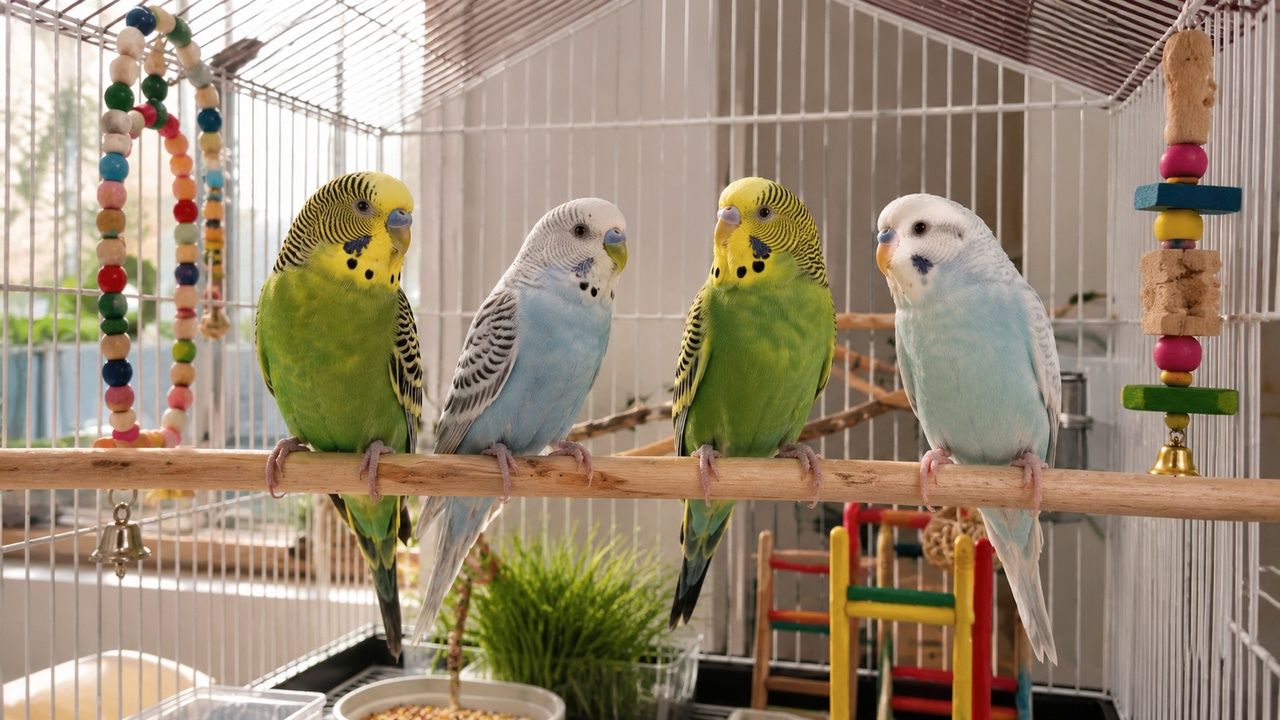

Neil has kept, bred, and sold budgies at Paradise Pets Swindon since 1988 — over 35 years of first-hand experience with these birds. In that time, he has helped hundreds of UK families pick the right budgie for their children. This article is his honest guide on which budgie breeds genuinely suit family life — and which ones do not.
A family came into the shop last Saturday with their two children — a girl about nine, a boy about six. The mum had done her research. She had a list of questions. “Neil,” she said, “we want to get the kids a budgie, but I’ve been reading online and I’m confused. Some sites say English budgies are best for families, others say wild-type. I just want to know — for our kids, what is genuinely the right one?”
It is one of the most important questions a UK family can ask before buying a budgie, and I really appreciate when parents take it seriously enough to actually ask. Because the honest truth is — not every budgie breed is equally suited to family life with children. Some are calmer, friendlier, and more tolerant of busy households. Others are nervier, more delicate, or more prone to stress when life around them is loud and unpredictable.
In 35 years of selling budgies to UK families, I have watched the same patterns play out hundreds of times. Some breeds settle into a family home brilliantly and become genuine companions for the children. Others struggle, never quite bond properly, and end up as the “pet in the corner” that nobody pays attention to within a few months.
The difference between those two outcomes usually comes down to choosing the right type of budgie at the start. Get that decision right, and you give your family the best possible chance of a long, happy relationship with the bird. Get it wrong, and you are setting up disappointment for everyone — children included.
This article is the conversation I have at the counter most weekends, written down for every UK parent trying to make the right choice for their family. By the end of it, you will know which budgie breeds genuinely suit households with children and which ones are better suited to quieter, more experienced owners.
First — Let Me Set Realistic Expectations
Before I talk about specific breeds, I need to be honest about something most pet shops do not say out loud. Budgies are not the easy beginner pet they are often sold as. They are intelligent, social, sensitive birds that need genuine daily interaction, proper housing, varied diet, and patience to bond properly. A budgie in a small cage in the corner of a child’s bedroom, given a few minutes of attention a day, will not thrive.
That said, the right budgie in the right family can be one of the best first pets a child can have. They are interactive, vocal, intelligent, and capable of forming genuine bonds with patient handlers. Children who learn to look after a budgie properly often develop real empathy and responsibility. The relationship can last 8 to 12 years if done well — that is potentially most of a child’s childhood.
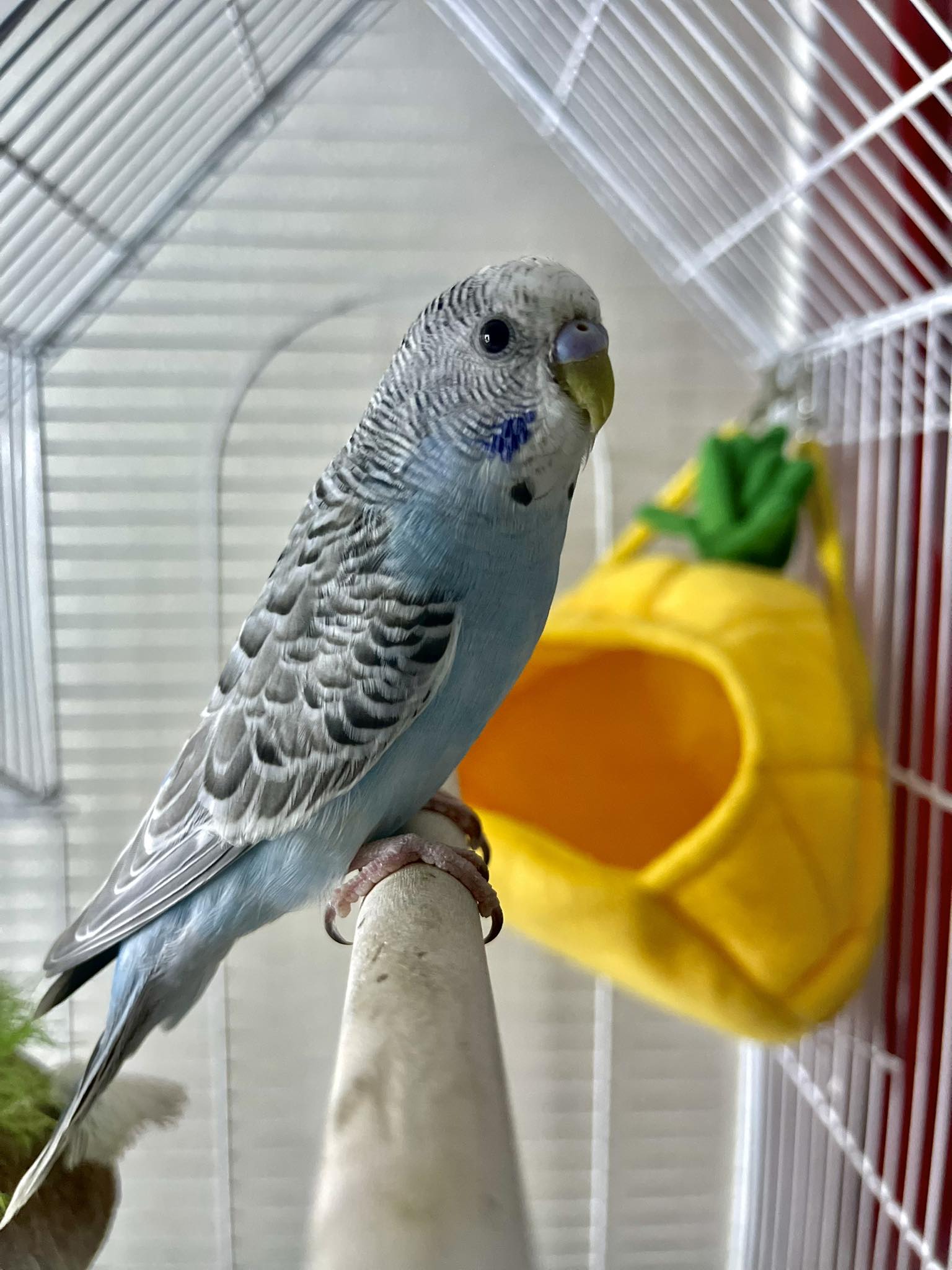 So this article is not about picking the easiest budgie. It is about picking the budgie most likely to bond with a family that is genuinely committed to looking after it.
The Three Main Budgie Types You Will Encounter
Before we get to which ones suit families, let me explain the three main types of budgie you will see at UK pet shops. This terminology gets used loosely, and that confuses a lot of parents.
1. Wild-Type Budgies (Sometimes Called “Standard” Or “Pet Type”)
These are the budgies most people picture when they think of budgies. Smaller in size, slimmer build, brighter colouring, alert and active. They are closer in body type to the wild Australian budgie. They are what most UK pet shops stock as their main budgie type — including us at Paradise Pets.
2. English Budgies (Sometimes Called “Show Budgies” Or “Exhibition Budgies”)
Bred selectively for size and feathering for showing. Significantly larger than wild-type budgies — sometimes nearly double the size. Fluffier, broader head, often with elaborate feather patterns. Slower-moving, generally calmer in temperament, but also more fragile and shorter-lived than the wild-type.
3. Colour Mutations And Specific Varieties
Both wild-type and English budgies come in many colour variations — blue, green, yellow, white, pied, lutino, albino, spangle, opaline, and dozens of others. Colour itself does not affect temperament much — a blue wild-type behaves much like a green wild-type. What matters is the underlying type (wild-type vs English), not the colour.
So the real question for families is: wild-type or English?

The Honest Answer — Wild-Type Budgies Are Usually Best For Families
After 35 years, the honest answer to “which budgie should we get for the kids” is almost always: a young wild-type budgie. Let me explain why.
Wild-type budgies are:
- Hardier and healthier — less prone to health problems, longer-lived, more tolerant of less-than-perfect conditions
- More active and engaging — children find them more entertaining to watch and interact with
- Easier to tame — particularly if bought young, they bond well with patient handlers
- Cheaper to buy — typically around half the price of English budgies
- More widely available — most UK pet shops stock them
- Live longer — 8 to 12 years versus 5 to 7 for English budgies
- Better at vocalising — wild-types are more likely to learn to whistle or “talk”
For most UK families with children, these characteristics line up almost perfectly with what you actually want. A bird that is robust enough to handle a busy household, active and interesting enough to keep the children engaged, and likely to be around for years rather than months.
English budgies have their place — they are wonderful birds for experienced keepers who appreciate their calmer, gentler nature. But for first-time family ownership with children, the smaller wild-type is genuinely the better choice in most cases.
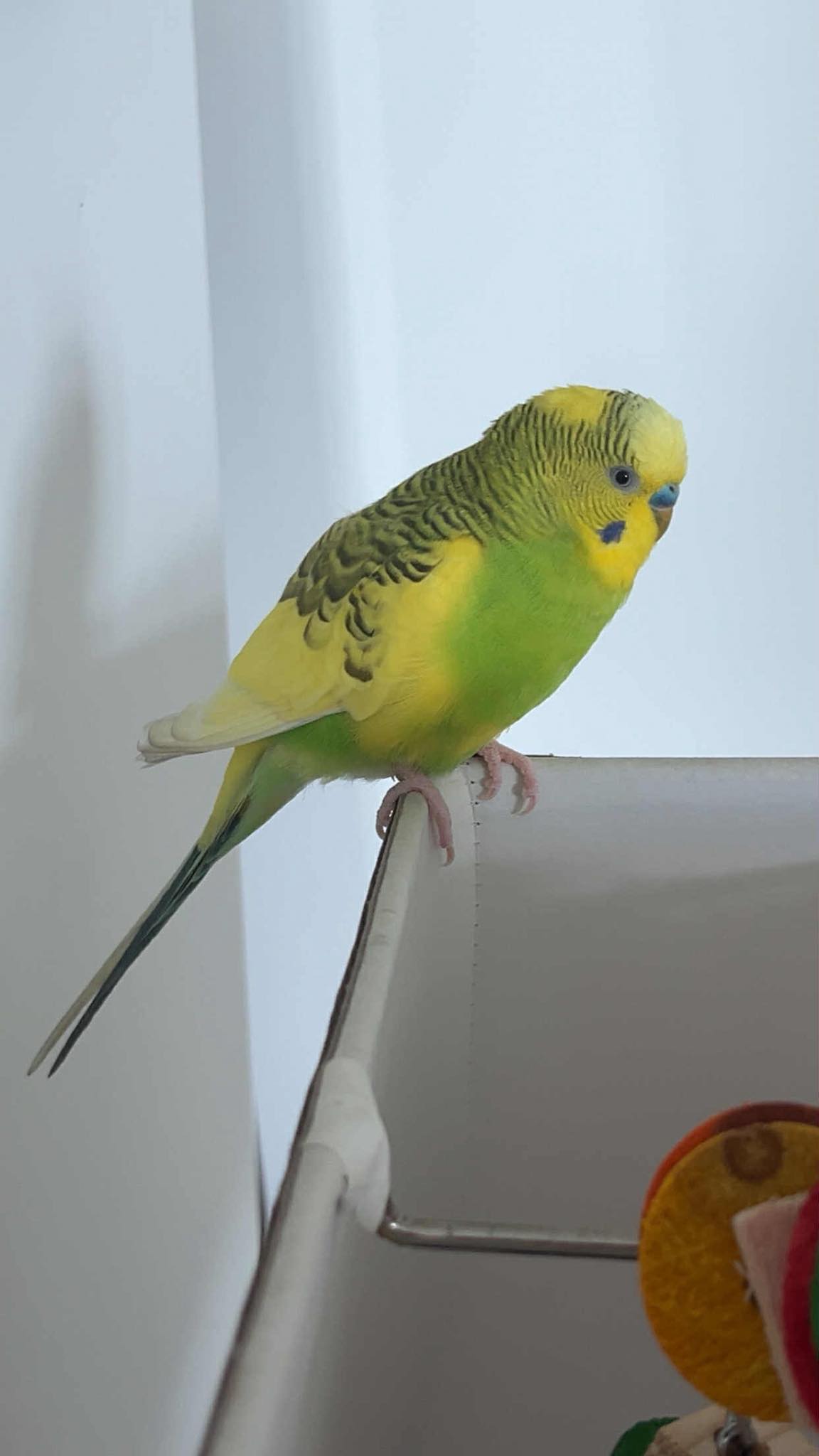
Choosing The Right Wild-Type Budgie For Your Family
Right — so if wild-type is the answer, the next question is which individual bird. Because even within wild-types, there are real differences between individuals, and choosing well at the shop matters a lot.
Here is what I tell families to look for when picking out their bird.
1. Age — Buy Young
This is the single most important factor. A budgie bought at 6 to 12 weeks old will bond with your family in a way an older bird usually never will. Adult budgies that have not been hand-tamed are often nervous around humans for life, no matter how patient you are.
How can you tell a young budgie? Look at the forehead and beak:
- Bar markings on the forehead — young budgies have horizontal stripes running down their forehead almost to the beak. These are gone by about 4 months old.
- Dark eyes (no white iris ring) — young budgies have completely dark eyes. Adults develop a white ring around the pupil.
- Black-tipped beak — in very young birds, the beak has a black tip. This fades by about 8 weeks.
- Smaller head and beak proportions — young birds look slightly less developed
If the budgies at the shop do not show these signs of youth, the birds may already be too old to bond reliably with children. A good shop will not sell you an older bird as a “first family pet” — they will tell you honestly.
2. Temperament — Pick The Calm One
Even within a clutch of young budgies, you will see different personalities. Some are bold and curious, some are nervous and flighty, some are calm and steady. For a family with children, you want the calm one in the middle.
When you visit the shop, spend 10 to 15 minutes watching the birds. Look for:
- A budgie that does not panic when you approach the cage
- One that watches you with curiosity rather than fear
- One that is active but not frantically flying around
- One that is eating, drinking, and engaging normally
- One that handles being approached without screaming or thrashing
The boldest, most chaotic-looking budgie often looks appealing to children, but is usually the most challenging to settle in a family home. The calm-but-engaged bird is the one you want.
3. Health — Obvious But Critical
A healthy young budgie should look:
- Bright, alert eyes — fully open and clear
- Sleek, well-groomed feathers — not fluffed up
- Clean vent area — no soiling or matted feathers
- Active and balanced — perching properly on both feet
- Breathing quietly — no tail-bobbing or open-mouth breathing
- Eating and drinking normally
- Bright, clean nostrils — no discharge
- Smooth beak with no overgrowth or damage
Any of these signs missing? Walk away. There is no shortage of healthy young budgies in the UK if you know where to look.
For more on the early warning signs of an unwell budgie, our guide on hidden health signs in budgies covers what to watch for once the bird is home.

Should You Get One Budgie Or Two?
This question comes up almost every time a family stands at the budgie pens. And the honest answer often surprises parents.
Two budgies are usually better for the budgies, but not always better for family bonding. Let me explain the trade-off.
Two budgies together
- Keep each other company when the family is out
- Less likely to scream from loneliness
- Less reliant on humans for social needs
- But significantly less likely to bond closely with the children
- Often more interested in each other than in human interaction
One budgie alone
- Much more likely to bond closely with the family
- More likely to learn to whistle or say words
- More likely to come out of the cage and interact
- But needs significantly more daily attention — minimum 2 to 3 hours
- Will be lonely if left alone for long periods
The right answer depends on your family. If you have at least one person home most of the day who will give the bird genuine daily attention, a single budgie often makes the better family pet. If the bird will be alone for long stretches while everyone is at school and work, two budgies are kinder.
Whatever you decide, do not get one budgie and then add a second a year later — adult budgies introduced to each other often do not bond well, and the original bird’s relationship with the family usually weakens once a companion arrives.
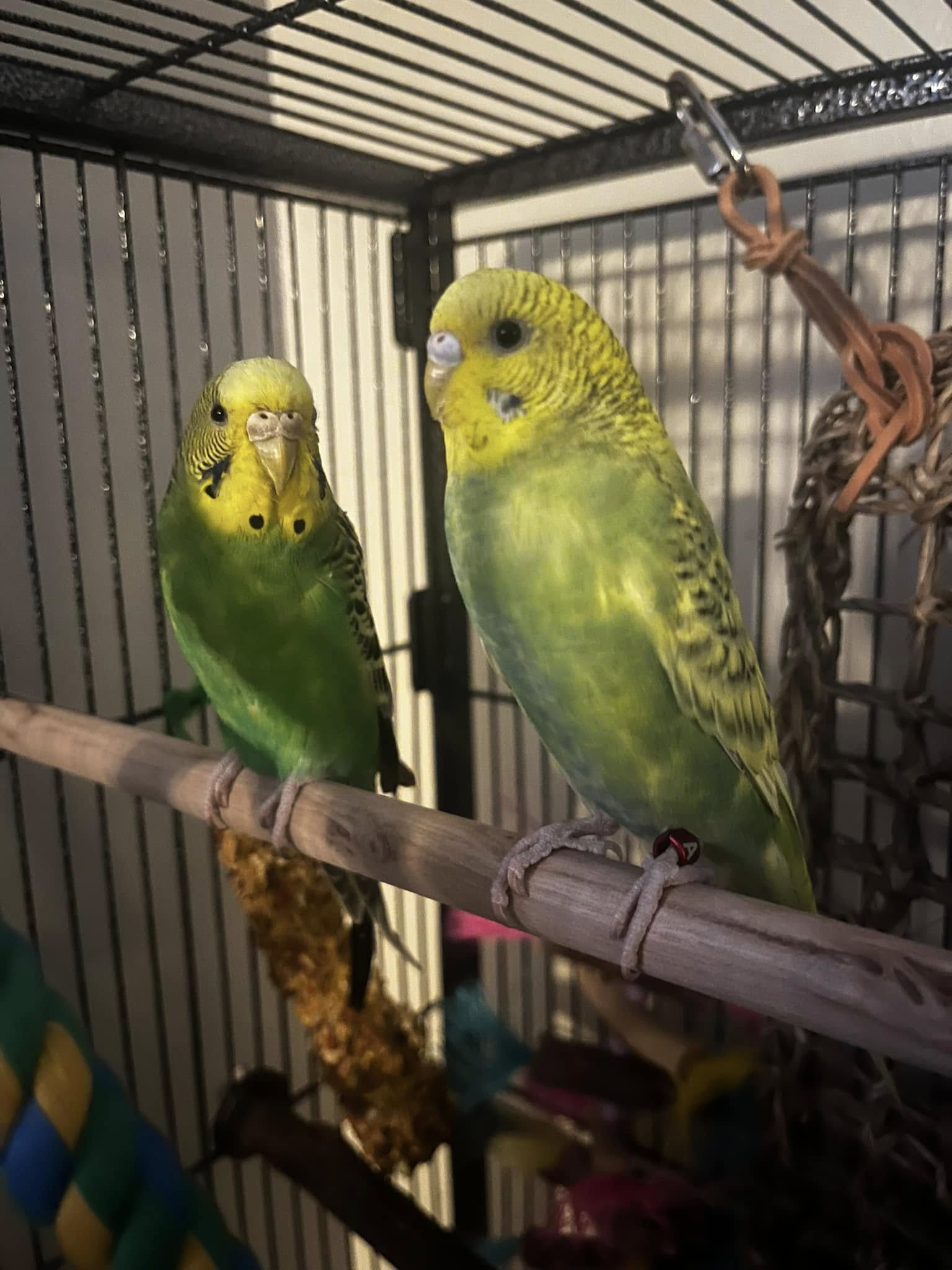
Male Or Female For Family Life?
This is the next question parents always ask, and the honest answer is — both can work, but males tend to be slightly easier for families.
| Aspect | Male Budgies | Female Budgies |
|---|---|---|
| Temperament | Generally calmer and more sociable | Often more independent and territorial |
| Vocalisation | More likely to whistle, sing, and “talk” | Less vocal, occasional chirping |
| Handling | Usually accept handling more readily | May be more nippy, especially when hormonal |
| Bonding with children | Tend to bond more easily with patient handlers | Can bond strongly but takes more time |
| Hormonal behaviour | Mostly mild seasonal vocalisation | Can become broody, may lay eggs |
| Best for families with children? | ✅ Generally yes — first-choice recommendation | ⚠️ Workable but slightly more challenging |
For a first family budgie, particularly with younger children, I usually recommend a male wild-type. They are typically friendlier, more vocal, and more tolerant of the busyness of family life.
For more on telling male and female budgies apart at the shop, our guide on how to tell male from female budgies walks you through the differences.
What About English Budgies For Families?
I have already said that wild-types are usually better for families, but let me address English budgies properly because some parents specifically come in asking about them.
English budgies are gentle, calm, and often very patient with handling. In that sense, they can suit families who handle their birds quietly and gently. But there are real downsides families need to know about.
- Shorter lifespan — typically 5 to 7 years vs 8 to 12 for wild-types
- More health problems — particularly fatty liver disease, tumours, and respiratory issues
- More fragile — less tolerant of rough handling by young children
- More expensive — typically £40-80 versus £20-30 for wild-types
- Less interactive — calmer can also mean less engaging for children
- Less likely to vocalise — fewer English budgies learn to talk or whistle complex tunes
- Harder to find — fewer UK shops stock them, less choice of healthy young birds
For families with older children (10+) who are gentle and patient, English budgies can work well. For households with younger children, the combination of fragility, expense, and shorter lifespan makes them a less practical choice. The wild-type is genuinely the better family bird in most cases.
What I Ask Families Before They Choose A Budgie
When a family comes into the shop interested in a budgie, before I show them the pens, I have a conversation. It takes five minutes and it makes the difference between picking the right bird and picking the wrong one.
- How old are the children?
Under 6 — supervised handling only, the parents will be the primary carers. Over 10 — the child can take more responsibility. Helps narrow down which bird suits. - How busy is the household?
Constant comings and goings? Calmer wild-type or paired birds. Quieter home? Single bird can bond closely. - How long will the bird be alone each day?
More than 6 hours regularly? Get two. Less? One can be the better choice for bonding. - Where will the cage live?
Living room is ideal. Bedroom is workable. Kitchen and conservatory are not. - Have the children handled small animals before?
Inexperienced children need a calm, robust bird. Confident handlers can work with more sensitive birds. - What is your budget for the bird AND its setup?
The bird is the cheap part. A proper cage, toys, and food are where the real cost is. - Are you prepared for an 8 to 12 year commitment?
Many UK families do not realise budgies live this long.
Five minutes of these questions usually tells me which bird is right for which family.
Setting Up Your Family’s First Budgie For Success
Once you have chosen the right budgie, the setup matters as much as the bird itself. Here is what I tell every family before they take a budgie home.
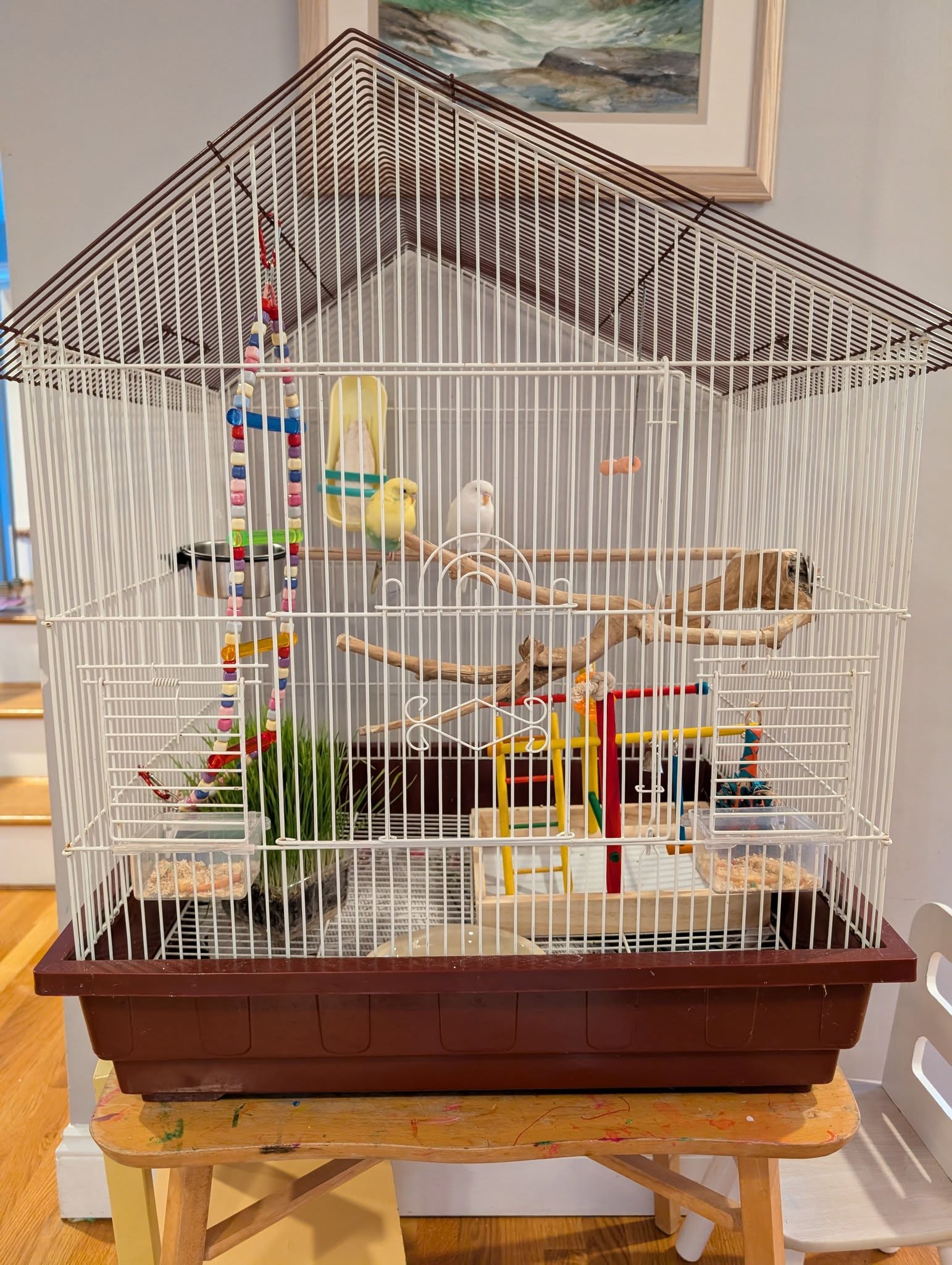
- Proper cage size — minimum 60cm wide for one budgie, 80cm for two. Most “starter cages” sold in UK pet shops are too small.
- Multiple perches at different heights — natural wood perches are best, varied diameters
- Toys, rotated weekly — foraging toys, mirrors (singly housed only), shreddable cardboard, swings
- Proper diet from day one — quality seed mix plus pellets, plus fresh vegetables daily
- Cuttlefish bone available — for calcium, important especially for females
- Cage location — living room corner, against one wall, away from kitchen fumes, draughts, and direct sun
- Quiet first week — let the bird settle before extensive handling
- Patient daily interaction — talking, hand near cage, treats from your hand
- Annual vet check — find an avian vet before you need one in an emergency
Teaching Children To Handle The Budgie Properly
This is the part that often gets overlooked, and it matters enormously for the bond between child and bird. Children need to learn how to interact with a budgie properly — and the parents need to teach them.
- No grabbing — the bird should always come to the child, never the other way round
- Quiet voices around the cage — shouting and squealing stress budgies severely
- No fast movements — slow hand movements only
- Always supervised under 8 years old — younger children cannot consistently handle a bird safely
- Wash hands before and after — protects both the child and the bird
- Recognise when the bird wants to be left alone — fluffed up, sleeping, eating
- Out-of-cage time only when doors and windows are closed — and no other pets in the room
Children who learn these rules become genuinely good budgie owners. Children who do not often have stressed birds that bite, and the relationship breaks down within a few months.
What I Tell Families To Avoid
After 35 years, I have seen plenty of family budgie purchases go wrong. Here are the most common mistakes I would tell every UK parent to avoid.
| Mistake | Why it goes wrong | What to do instead |
|---|---|---|
| Buying an adult untamed budgie | Will not bond with children, often fearful for life | Always buy young — 6 to 12 weeks old |
| Choosing on colour alone | Wrong temperament for family, may not suit kids | Choose on personality, then colour |
| Putting cage in child’s bedroom | Bird disturbs sleep, child cannot see daily activity | Living room corner is much better |
| Expecting the child to do all care | Care lapses, bird suffers, child loses interest | Parents must be primary carers, child helps |
| Buying the smallest cheapest cage | Bird is stressed, behaviour problems develop | Spend on proper-sized cage with good features |
| Adding second budgie later | Original bird loses family bond, may not accept new bird | Buy bonded pair together if you want two |
| Expecting instant tame bird | Family loses interest when bird is shy at first | Plan for 4 to 8 weeks of patient bonding |
The Best Family Budgies We Stock At Paradise Pets
We breed and source our budgies carefully — all UK-bred, never imported, properly socialised before they go to new homes. Our wild-type budgies come in all the standard colour variations, and we focus on healthy young birds suited to family life.
Stock varies through the year. The best time to come and choose is typically late spring through summer, when we have the most young birds available from our breeding pairs. Always worth ringing ahead on 01793 512400 to check what we have, particularly if you have a specific colour or sex in mind.
Most family budgies we sell are healthy young wild-types in a range of colours — blue, green, yellow, white, and various pied or opaline varieties. All come with our full advice and ongoing support, and we are always happy to have families come back in for help with any issues that come up.
For more on our broader budgie advice, our complete guide to budgie breeds for beginners covers the wider picture of which budgie types suit different UK owners.
Frequently Asked Questions
What is the best budgie for a child?
A young (6 to 12 weeks old) male wild-type budgie, hand-reared if possible. Wild-types are hardier, more interactive, and longer-lived than English budgies, and males tend to be slightly easier to handle and more vocal — both qualities that suit family life.
Are budgies good pets for 5-year-olds?
Only with significant parental involvement. Children under 6 cannot reliably handle a budgie safely on their own. With proper parental supervision and the right bird (calm young wild-type), budgies can work for families with young children — but the parents must take primary responsibility for daily care.
Should I get one budgie or two for my children?
Depends on your family. One budgie bonds more closely with the family but needs more daily attention. Two budgies provide each other with company but are less likely to bond as strongly with the children. If your household is out for long periods, get two. If someone is home most days, one can be the better choice for bonding.
How long do family budgies live?
Wild-type pet budgies typically live 8 to 12 years in UK family homes with good care. English budgies tend to live shorter lives, around 5 to 7 years. Lifespan depends heavily on diet, housing, vet care, and stress levels.
How much does a family budgie cost to buy and set up?
The bird itself is usually £20 to £30 for a wild-type, or £40 to £80 for an English budgie. A proper cage with accessories is £80 to £150. Initial food, toys, and basics another £30 to £50. So budget around £150 to £250 for a proper first family budgie setup.
Can budgies live in a child’s bedroom?
It is not ideal. Budgies are active from sunrise to sunset and make noise that can disturb a child’s sleep. They are also more sensitive to dust, perfumes, and temperature changes than is typical in a bedroom. A living room corner is usually a much better location.
Where can I get honest budgie advice in Swindon?
Come and see us at Paradise Pets, Manor Garden Centre, Cheney Manor, Swindon SN2 2QJ. Or give us a ring on 01793 512400. The advice is free and we have been doing this for 35 years.
One Last Thing From Me
“What is the best budgie for the kids?” is the question. The honest answer, after 35 years of selling these birds to UK families, is: a young wild-type male, chosen carefully for temperament, from a shop that knows what it is selling.
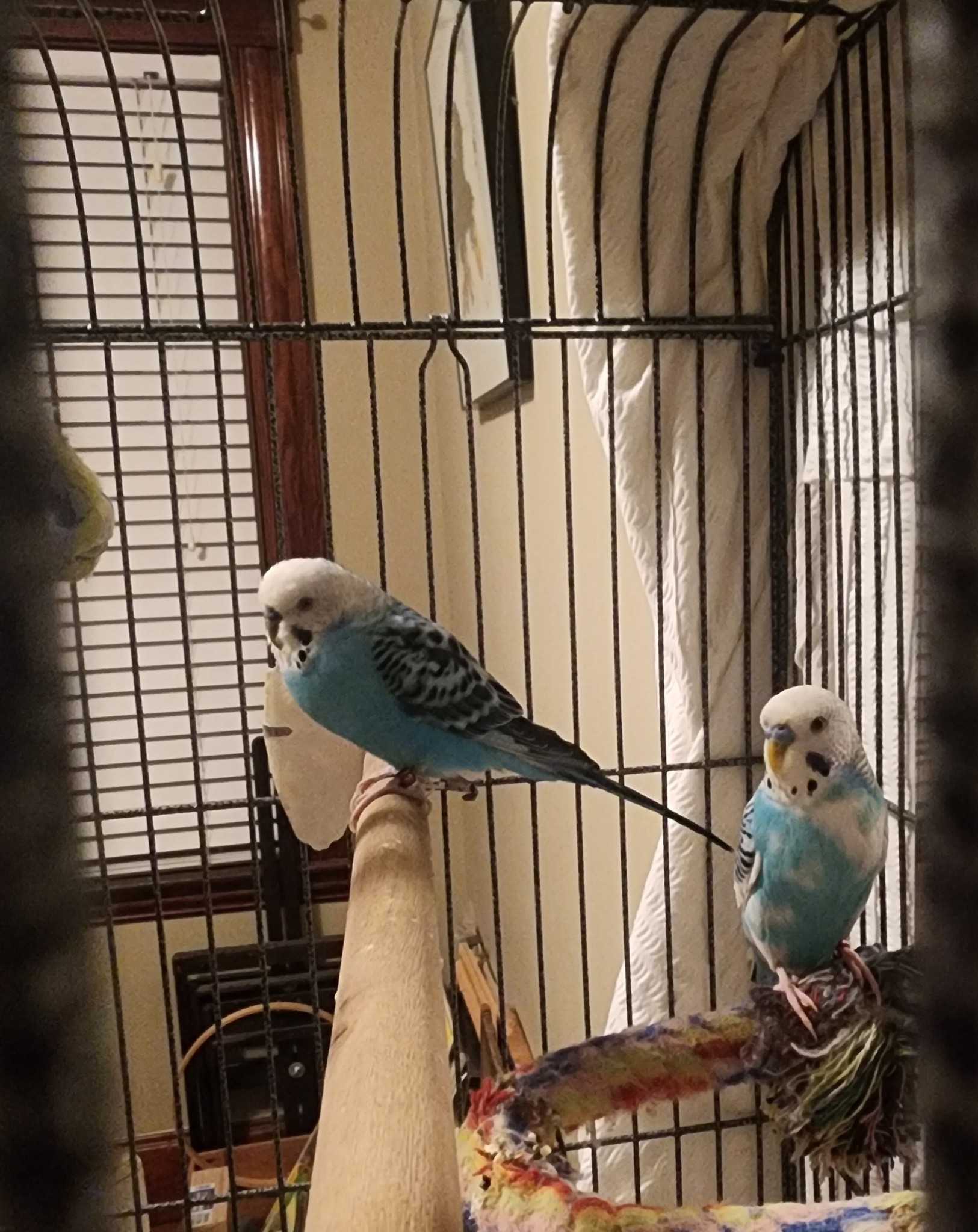
The family I mentioned at the start of this article? They went home that day with a young male sky-blue wild-type. The little girl named him Bluey. The little boy started by being too excited and grabby, but the parents helped him learn the right way to behave around the cage. Within a month, Bluey was hopping onto the children’s hands. Within three months, he was whistling along when they played their music. That was nearly a year ago — and they came back last week to tell me Bluey is still happily part of the family.
That is the outcome you want. A family budgie that becomes genuinely part of the household for years. Not a stressed bird that nobody handles, not a forgotten pet in a cage in the corner, but a real little companion that brings something to family life.
If you are trying to decide on a budgie for your family, come and see us. We will work through your situation, show you what we have, and help you pick the right bird for your home. That is what we have been doing for 35 years, and we would much rather help you make the right choice than see you back here in six months wondering what went wrong.
Thinking About A Family Budgie? Come And See Me First
Bring the kids, bring your questions, and we will help you choose the right bird for your family. Free advice, no obligation. That is how we have done things for 35 years.
⭐ Customer Reviews
Amazing Bird Selection
Had a lovley visit today,staff were very friendly and very helpful,such a great petshop,their selection of birds is incredible,really impressed,thank so much to the staff at Paradise Pets

Friendly Helpful Staff
I have been coming to this place for years and they have a great stock of food for all types of pets. Have a great selection of small mammals and a lot of birds. Staff are friendly and helpful.

Great Quality Hutch
Bought a guinea pigs hutch and run combo, very happy with the service, the hutch was put in my car for me without even asking for help. The wood quality is very good, the instructions easy to follow and we are extremely happy with the fully built hutch. A good size for 2 guinea pigs

Response from Paradise Pets | Wiltshire
Thank you Melanie Latus Nice to provide services to you.
Best Bird Shop Around
It’s the best pet shop in and around Swindon. They always have an amazing selection of birds and all you need to keep them happy. I keep birds myself and the guys there are happy to answer questions and really know their stuff. I have seen budgies etc. in chain pet shops in the area looking really unhealthy and ill – I wouldn’t go anywhere else than Paradise Pets for animals.

Highly Recommended Bird Shop
I could not praise this shop enough. Really helped my Grandson buy his first bird and he’s loving it. Travelled from Somerset and was welcomed with open arms.

Great Shop with Competitive Prices
Great shop with amazing selection for small animals, hamsters, mice ect, highly recommend!
Also has a great selection for dogs & cats too & very competitive prices! 💖

