
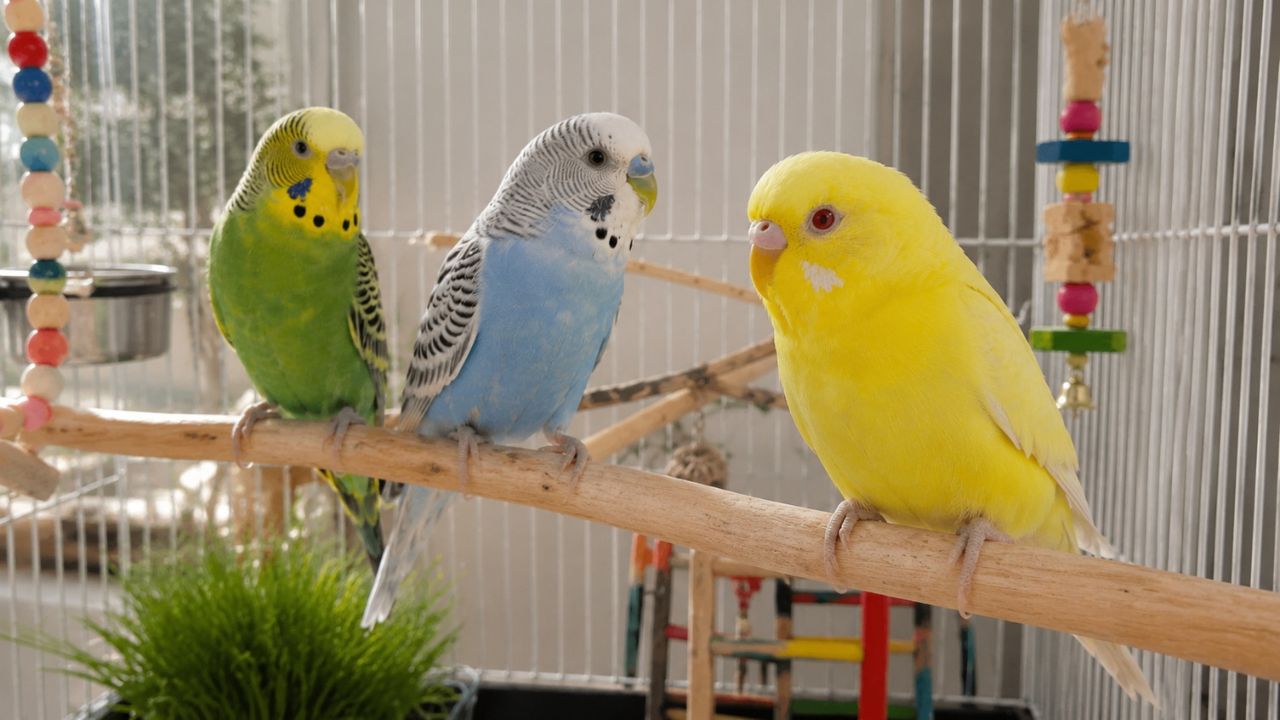

Neil has kept, bred, and sold budgies at Paradise Pets Swindon since 1988 — over 35 years of first-hand experience with these birds. In that time, he has had countless worried owners walk through the door asking why their budgie’s eyes look red. This article is his honest, practical guide on what red eyes in budgies actually mean and what you should do about it.
A lady came into the shop on Tuesday morning with her young budgie in a small travel cage, properly worried. She lifted the cover and pointed at the bird’s eyes. “Neil,” she said, “look at this. His eyes are red. They have been like this for a few days. Is he sick? Is he going to be okay?”
I had a proper look. The bird’s eyes were indeed showing a pink-red colour around the pupils — quite striking against the rest of the bird. The owner was clearly upset. She had been reading online late at night, found articles about everything from infections to blindness, and convinced herself her bird was seriously ill.
It is one of the most common worried-owner questions I get at the counter, and I am genuinely glad when people ask it — because the honest answer surprises most owners, and getting it right matters a great deal.
The short answer is: red eyes in a budgie can mean several different things, and most of them are not what people fear. Sometimes it is genetics — your bird just naturally has red eyes and always will. Sometimes it is a young bird’s eyes developing normally. Sometimes it is a sign of irritation or infection that needs attention. Very occasionally, it is a sign of something more serious.
The skill is knowing which kind of “red eyes” you are looking at — and that is what 35 years of working with budgies has taught me to recognise quickly.
This article is the conversation I have at the counter properly, written down for every UK budgie owner staring at their bird’s eyes and worrying. By the end of it, you will know exactly what you are looking at, what to do about it, and when to actually worry.
First — What Do You Actually Mean By “Red Eyes”?
Before we go any further, I need to ask a question. Because “red eyes” can mean several different things, and the answer depends entirely on which one you are seeing.
When owners say “red eyes” to me at the counter, they usually mean one of these:
- The pupil itself is red or pink — visible when the bird looks at you
- The iris (ring around the pupil) is pinkish-red — instead of the usual white or pale colour
- The skin around the eyes is red and inflamed — the cere area or eyelids
- The eyes look generally bloodshot or watery — with visible redness across the surface
- One eye is red but the other is not — asymmetric appearance

Each of these is a different situation, with different causes and different responses. Let me walk you through them properly.
Cause 1: It Is Genetics — The Most Common Reason
This is by far the most common explanation I see at the counter, and it is the one that catches most new owners off guard. Some budgies just naturally have red or pink eyes — and they always will.
This happens in specific colour mutations. The most common ones in the UK are:
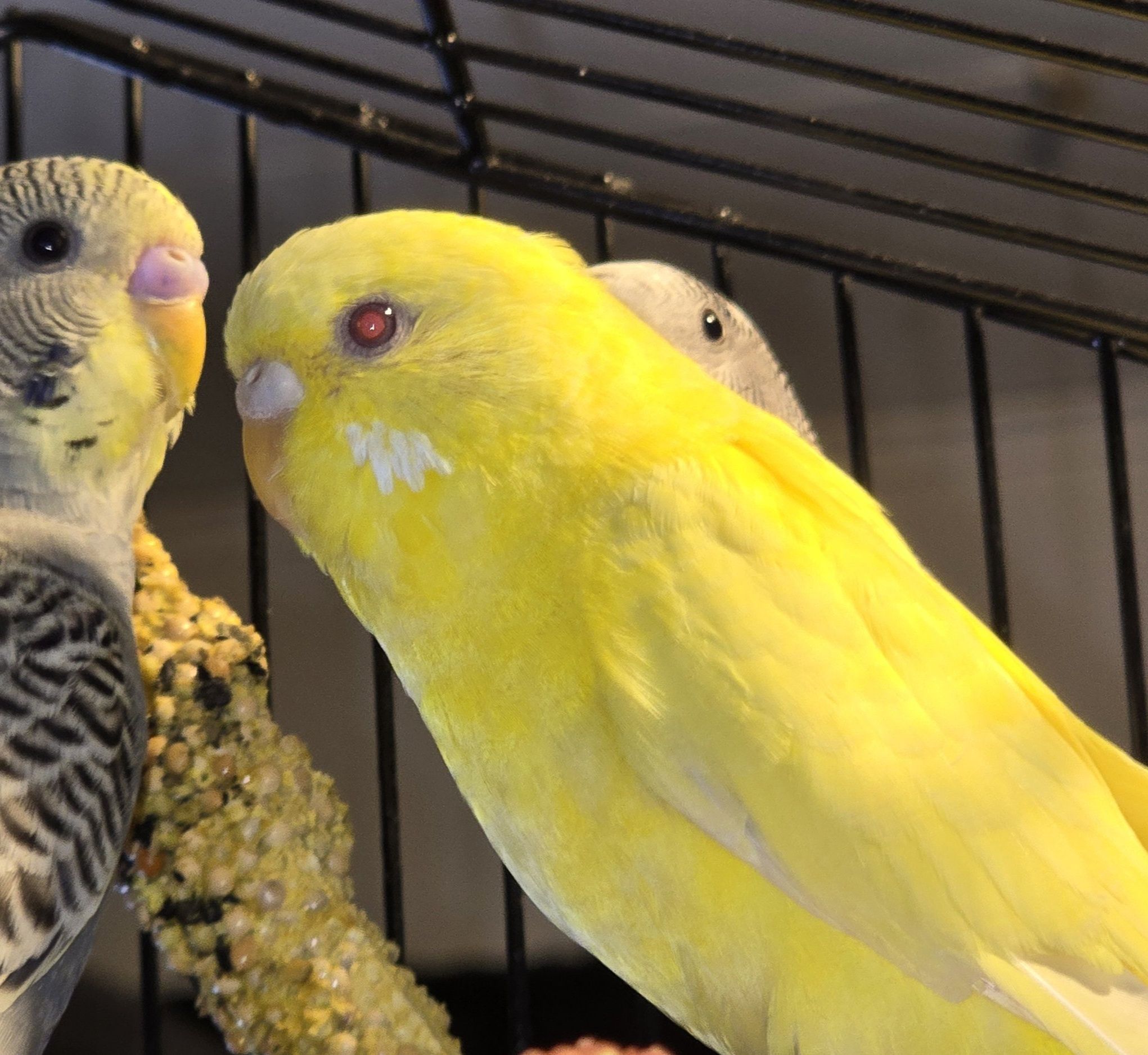
- Lutino budgies — bright yellow body, white wings, and naturally red or pink eyes. This is normal and permanent.
- Albino budgies — pure white body and naturally red or pink eyes. Also normal and permanent.
- Some cinnamon mutations — particularly when crossed with other genes, can produce reddish eye colour
- Some pied varieties — depending on the pied gene involved, may show partial red eye colour
If your budgie has been red-eyed since the day you brought it home, and it is one of the colour mutations above, the answer is almost certainly genetics. Lutino and albino budgies have red eyes because they lack the pigment that gives other birds their dark eye colour. It is not a sign of illness, it is not a sign of poor breeding, and it is not going to change.
The way to spot genetic red eyes is consistency. They have been there since the bird was very young. They are the same colour in both eyes. There is no discharge, no swelling, no behavioural change. The bird is otherwise completely normal.
- Bird is a lutino, albino, or related colour mutation
- Both eyes are equally red — perfectly symmetric
- Red colour has been present since you bought the bird
- No discharge, swelling, or crusting around the eyes
- Bird is alert, eating, drinking, and behaving normally
- Red appearance does not change from day to day
What to do
Nothing — enjoy your bird. Genetic red eyes are completely normal in the right mutations. The bird’s vision is fine (though lutinos and albinos can be slightly more sensitive to bright light), and the eye health is no different to any other budgie. Just provide normal good care and the bird will be perfectly happy.
One small thing — light-eyed budgies are slightly more sensitive to bright direct sunlight. Make sure the cage is not in a position where the bird gets direct sun for long periods.
Cause 2: Young Budgie Eye Development
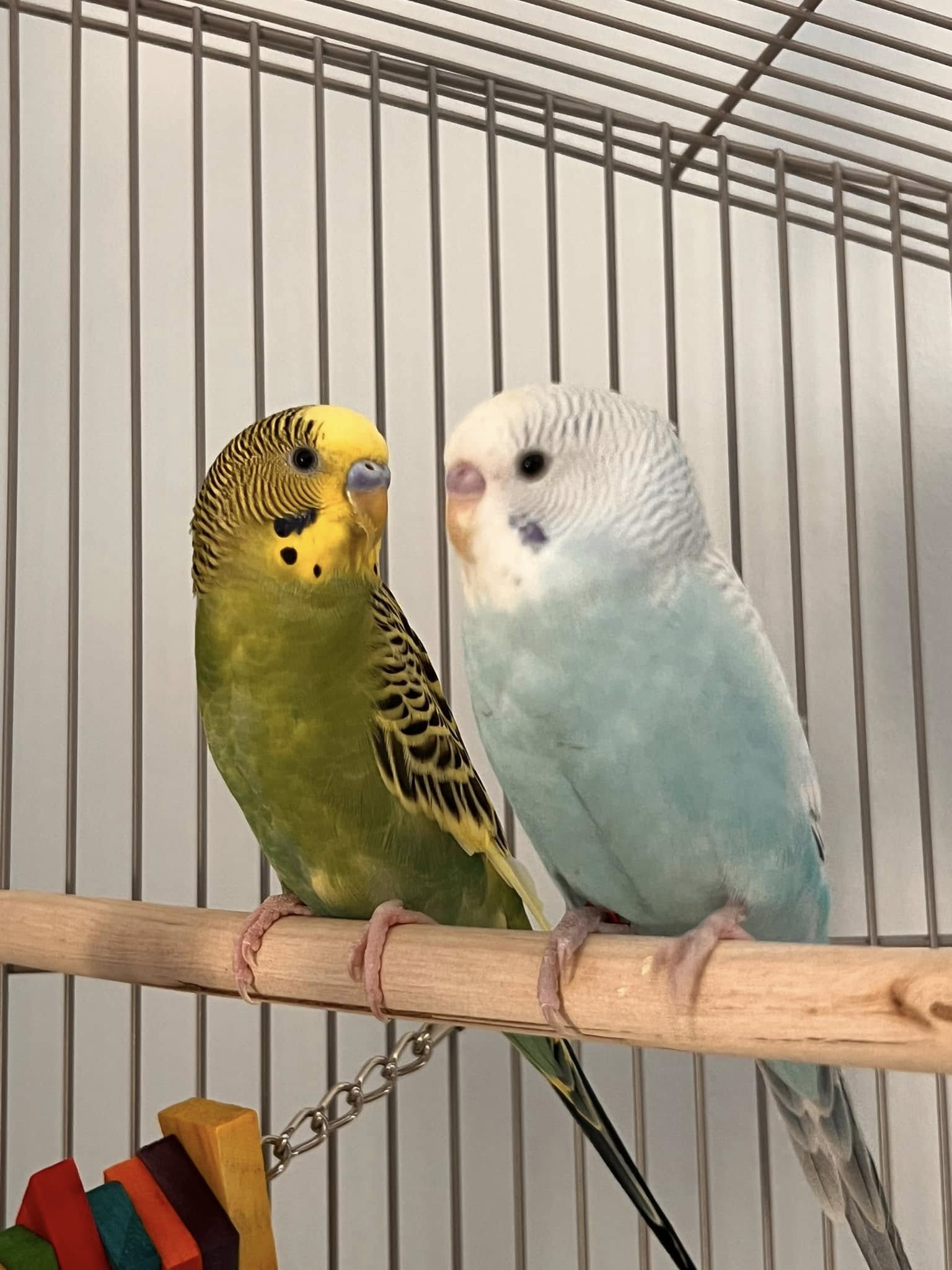
This is another common cause that catches owners off guard. Young budgies — particularly those under about 4 months old — have eyes that look different from adult budgies. The iris (the ring around the pupil) develops its final colour gradually as the bird matures.
In very young budgies (under 8 weeks), the eye looks almost entirely dark — the iris is the same dark colour as the pupil, with no visible ring. As the bird grows, the iris gradually develops a pale ring around the pupil, usually whitish or pale blue depending on the colour mutation.
During this transition — typically between 3 and 6 months old — some young budgies go through a phase where the iris looks pinkish or reddish before settling into its final colour. This is a normal developmental stage.
What to do
If your budgie is under 6 months old and the slight pink-red iris colour is the only change you can see, give it time. The eye will usually develop its proper adult colour by 6 to 8 months. If the bird is otherwise healthy — eating, active, alert — there is no need to worry.
For more on identifying young budgies and their development, our guide on telling male from female budgies covers some of the visual development changes to look for.
Cause 3: Eye Irritation Or Foreign Body
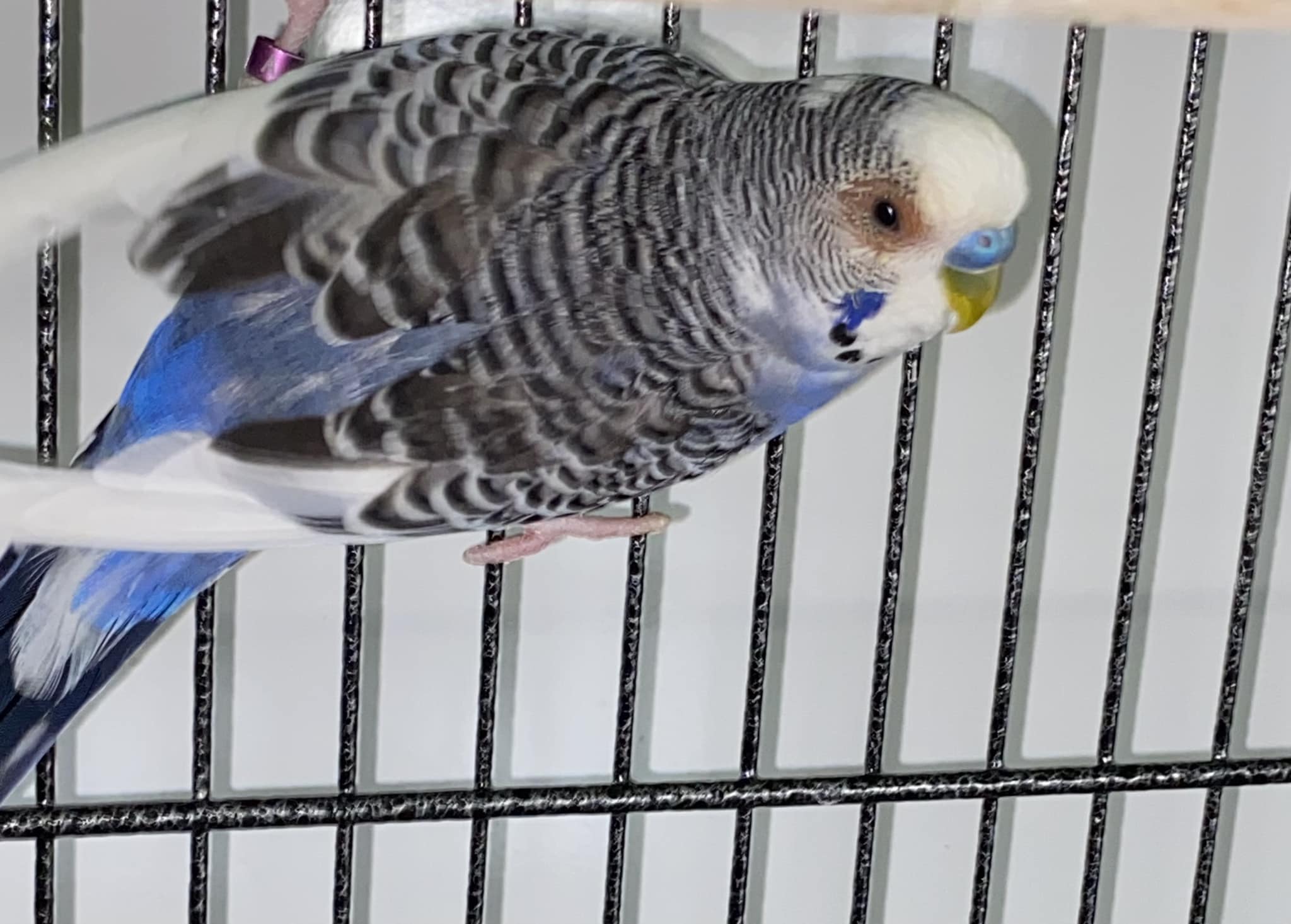
This is where we start moving into causes that need attention. A budgie whose eye is suddenly red — particularly if only one eye is affected — may have something irritating it.
Common causes of eye irritation in UK budgies include:
- Dust from cheap bedding — sawdust, low-quality wood shavings, dusty seed mixes
- Aerosols and cleaning products — bleach fumes, scented candles, air fresheners, hairsprays
- Cigarette smoke — particularly damaging to birds
- Cooking fumes — non-stick pan fumes are particularly toxic to budgies
- Seed husks or dust in the eye — physically irritating the surface
- A small feather or piece of bedding caught in the eye
- Bright direct sunlight or heat lamp — particularly affects light-eyed birds
Irritation-based redness usually:
- Comes on suddenly rather than gradually
- May affect just one eye if a specific irritant is involved
- Is often combined with the bird rubbing its eye on a perch or scratching at the eye with its foot
- May include some watery discharge
- Improves quickly once the irritant is removed
What to do
Detective work. What has changed in the bird’s environment recently? New bedding? Recent cleaning with a strong product? New scented candle? Someone smoking nearby? Once you find and remove the irritant, the eye usually clears up within a day or two.
If you can clearly see a foreign body (a small piece of bedding, a seed husk) on the eye surface, you can gently try to rinse it with a small amount of saline solution from a chemist. If you cannot see anything but the eye is clearly irritated, just remove the likely causes and watch closely.
If the redness does not improve within 2 to 3 days, or if it gets worse, see an avian vet.
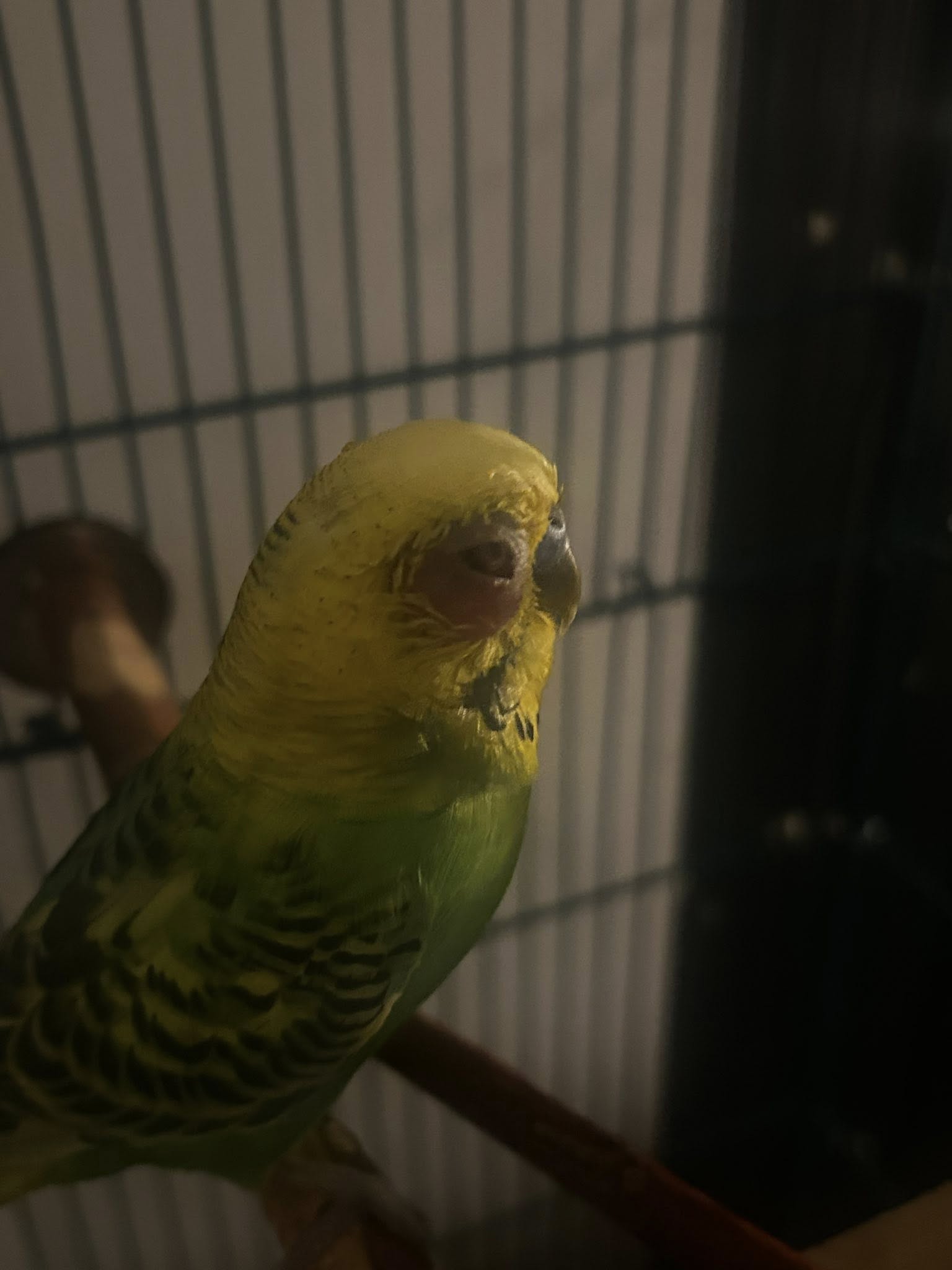
Cause 4: Eye Infection (Conjunctivitis)
This is one of the most important causes to recognise because it needs proper treatment to resolve. Bacterial or viral infections of the eye area — what humans call conjunctivitis — happen in budgies too, and they can spread to other birds in the household if you have more than one.
Conjunctivitis in budgies typically shows:
- One or both eyes red and inflamed-looking
- Visible discharge — watery at first, becoming thick and yellowish over time
- Crusting around the eye, especially after sleep
- Eye partially or fully closed, especially when resting
- Bird rubbing its face on perches more than usual
- Sometimes accompanied by sneezing or nasal discharge
- Bird may be slightly subdued, less active, less interested in food
Infections rarely resolve on their own in budgies. They need to be diagnosed and treated properly by a vet — usually with antibiotic eye drops, and sometimes with broader treatment if the infection is part of a wider respiratory illness.
What to do
This is an avian vet visit, ideally within a day or two of noticing the symptoms. The earlier infections are caught, the easier they are to treat and the less likely they are to spread or cause permanent damage to the eye.
While arranging the vet, isolate the affected bird if you have multiple budgies (eye infections can spread). Keep the cage scrupulously clean. Do not attempt to treat with human eye drops — most human medications are not appropriate for birds and can cause serious harm.
For more on the broader signs that your budgie is unwell, our guide on hidden health signs in budgies covers what to watch for alongside eye changes.
Cause 5: Injury Or Trauma
This is a less common cause but worth knowing about because it usually needs urgent attention. A budgie that has injured its eye — from a fall, a fight with a cage mate, or a collision with the cage bars or a window — may show redness, swelling, and visible damage to the eye area.
Trauma-related eye redness typically:
- Comes on suddenly, often within hours
- Usually affects only one eye
- May include visible swelling, bruising, or bleeding
- Bird may keep the affected eye closed
- You may be able to identify the incident — the bird flew into something, was bullied by a cage mate
- Often combined with general distress or shock
What to do
Vet visit, often same-day if possible. Eye injuries in budgies can heal well if treated promptly, but they can also lead to permanent damage or even loss of the eye if neglected. Keep the bird in a quiet, dim environment until you can get to the vet. Do not attempt to clean or treat the eye yourself — improper handling can make injuries worse.
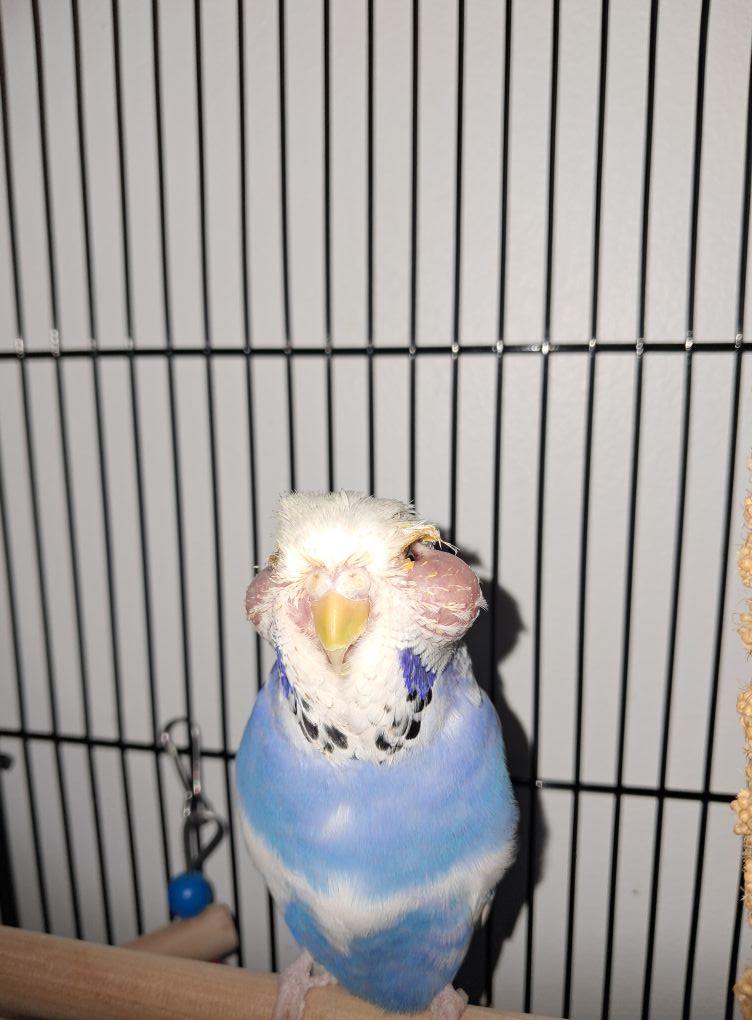
Cause 6: Internal Illness Showing In The Eyes
This is the cause I list last because it is less common, but it is important not to dismiss. Some internal illnesses in budgies show up in the eyes before they show anywhere else — and recognising this can save a bird’s life.
The most relevant ones:
- Liver disease — particularly in budgies kept on poor diets. Can affect eye colour, brightness, and clarity. Often accompanied by other signs like overgrown beak, scaly cere, and dull plumage.
- Vitamin A deficiency — extremely common in seed-only budgies. Affects mucous membranes including around the eyes. Can cause swelling, irritation, and redness.
- Respiratory infections — often spread to involve the eyes (sinusitis). The bird may also be sneezing, breathing heavily, or showing nasal discharge.
- Tumours — rarely, growths around the eye area cause redness or swelling. More common in older budgies.
- Systemic infections — bacterial or fungal infections affecting the whole body may show ocular signs as part of broader illness.
The way to recognise illness-related red eyes is that the eyes are usually not the only sign. The bird looks unwell overall — fluffed up, less active, eating less, sleeping during the day, showing other symptoms. If you are seeing red eyes alongside any other concerning signs, take it seriously.
What to do
Avian vet visit — preferably within a day or two. These conditions often need diagnostic workup (blood tests, examination, sometimes imaging) to identify properly. The earlier they are diagnosed, the better the prognosis. Diet correction is often a major part of treatment, but specific medical issues need specific treatments.
What I Check When A Red-Eyed Budgie Comes Into The Shop
When an owner walks in with a worried question about their bird’s red eyes, I do not just guess. There is a process I work through. Here is what it looks like.
- What colour is the bird?
Lutino, albino, or related mutation? Often the answer is simply genetics. - Are both eyes affected equally, or just one?
Both equally = often normal genetics. One only = nearly always needs investigation. - How old is the bird and when did the redness start?
Long-standing in a young bird = often development. Sudden onset = something new is happening. - Is there discharge, swelling, or crusting?
Yes = infection or irritation. No = possibly genetic or developmental. - Is the bird otherwise well?
Eating, active, alert = less concerning. Fluffed up, quiet = more serious. - Has anything changed in the environment?
New bedding, cleaning products, recent house changes, new pet, etc. - What is the bird’s diet?
Seed-only diets are linked to nutritional eye problems. - Is there any visible injury?
Recent fight, fall, collision?
Five minutes of these questions usually narrows things down enough to know whether it is something to monitor, something to address at home, or something that needs a vet visit promptly.
When Red Eyes Need A Same-Day Vet Visit
Most red eye cases I see can wait a day or two for proper assessment, but there are situations where I would tell you straight — go to an avian vet today. These include:
- Red eye combined with the bird being clearly unwell — fluffed up, not eating, sleeping during the day
- Visible injury, swelling, or bleeding around the eye
- Eye fully closed for more than a few hours
- Thick yellow or green discharge from the eye
- Sudden severe redness that came on within hours
- Red eye combined with breathing problems (open-mouth breathing, tail bobbing)
- The bird seems unable to see properly — bumping into things, missing perches
- Bird is showing signs of shock or distress alongside the eye problem
For everything else — the long-standing genetic red eyes, the developmental phase in young birds, mild irritation with no other symptoms — bring the bird in to us or send a photo and we will help you work out what you are looking at.
How To Prevent Eye Problems In Your Budgie
Most non-genetic eye problems are preventable with good husbandry. Here is what I tell every UK budgie owner to maximise the chances of a healthy lifetime.
- Use dust-extracted bedding — paper-based or aspen, not sawdust or low-quality wood shavings
- Keep the cage location clean — but use bird-safe cleaning products, never bleach or strong chemicals near the cage
- No smoking in the home — second-hand smoke is genuinely toxic to birds
- No aerosols or scented candles near the bird — air fresheners, hairsprays, perfumes, candles
- No non-stick cookware fumes — overheated Teflon releases fumes that are fatal to birds
- Proper varied diet — including vitamin A sources (dark leafy greens, carrots, sweet potato)
- Cage away from direct sunlight and draughts — particularly for light-eyed varieties
- Quiet environment with minimal collision hazards — clear windows when bird is out, no ceiling fans running
- Daily observation — spotting small changes in the eyes early makes treatment much easier
What About Budgies That Suddenly Get Red Eyes In Old Age?
This is a more difficult question, and one that comes up with older budgies. A budgie that has had normal-coloured eyes its whole life, and then starts to show redness in old age, deserves proper investigation.
In older budgies (8+ years), eye changes can sometimes indicate:
- Cataracts developing — the eye may look cloudy as well as discoloured
- Chronic infections that have been smouldering
- Tumours pressing on the eye area
- Systemic illness affecting eye health
- Vision loss, with associated changes in eye appearance
For older birds, even subtle eye changes are worth checking with a vet. Older budgies generally hide problems well until they cannot any more, and eye changes are sometimes the first visible sign of something that has been going on internally.
Frequently Asked Questions
Is it normal for budgies to have red eyes?
Yes, in specific colour mutations. Lutino budgies (yellow with white wings) and albino budgies (pure white) have naturally red or pink eyes due to a lack of dark pigment. This is completely normal and the bird’s vision and eye health are fine.
Why does my lutino budgie have red eyes?
Because of the lutino genetic mutation. Lutino budgies cannot produce melanin, the pigment that gives other budgies their dark eye colour. The result is the natural red appearance you can see in their eyes — and this is normal for the variety.
Can a budgie’s eye colour change with illness?
Yes. Sudden or progressive changes in eye colour, brightness, or clarity can indicate illness — particularly liver disease, vitamin A deficiency, or infections. Any sudden change in a previously normal-looking eye is worth investigating with a vet.
My budgie’s eye is red and watery — what should I do?
This usually indicates irritation or early infection. First, check for environmental causes (dusty bedding, aerosols, smoke). Remove suspected irritants. If the watering and redness do not improve within 2 to 3 days, see an avian vet — early treatment of eye infections is significantly more effective than late treatment.
Only one of my budgie’s eyes is red — is this serious?
Usually yes, this needs investigation. Genetic red eyes are always symmetric (both eyes the same). Red colour in only one eye almost always indicates injury, infection, or local irritation — and these need to be addressed properly. See a vet if you cannot identify and fix an obvious environmental cause within a day or two.
Can budgies go blind from eye infections?
Yes, in serious or untreated cases. Eye infections that are caught early and treated properly almost always resolve without long-term effects. Eye infections that are ignored or treated late can cause permanent damage to the eye, including partial or complete loss of vision in the affected eye.
Where can I get honest budgie advice in Swindon?
Come and see us at Paradise Pets, Manor Garden Centre, Cheney Manor, Swindon SN2 2QJ. Or give us a ring on 01793 512400. The advice is free and we have been doing this for 35 years.
One Last Thing From Me
A budgie with red eyes is not always a sick budgie. In 35 years of selling these birds, the most common explanation for “red eyes” I see at the counter turns out to be genetics — a lutino or albino budgie that has had naturally red eyes since the day it was born. The owner just had not realised it was normal for that variety.
But “most common” is not “always.” And the situations where red eyes do indicate a problem are situations you genuinely want to catch early, because eye problems in budgies escalate quickly if they are not addressed.
The lady I mentioned at the start of this article? Her budgie turned out to be a young lutino, and the red eyes she had been panicking about were completely normal for the variety. The bird was healthy in every other way. I talked her through it, showed her photos of other lutinos for comparison, and she went home reassured. The bird is still doing well — eyes still red, still completely healthy.
That is the conversation I want every UK budgie owner to be able to have. The ability to look at your bird, recognise what kind of “red eyes” you are seeing, and decide whether it is something normal to live with or something serious to act on. Both outcomes are good — peace of mind for the normal cases, early action for the serious ones.
If you are reading this with a worried bird at home, work through the checks in this article first. Most cases turn out to be normal. If yours does not, please do not delay — get to a vet, or come and see us if you are local and unsure. We will help you work out what you are looking at, and that is what we have been doing for 35 years.
Worried About Your Budgie’s Eyes? Come And See Me
Bring the bird, bring a clear photo, or just bring your questions. I will take a proper look and tell you honestly what I think. Free advice, no obligation. That is how we have done things for 35 years.