
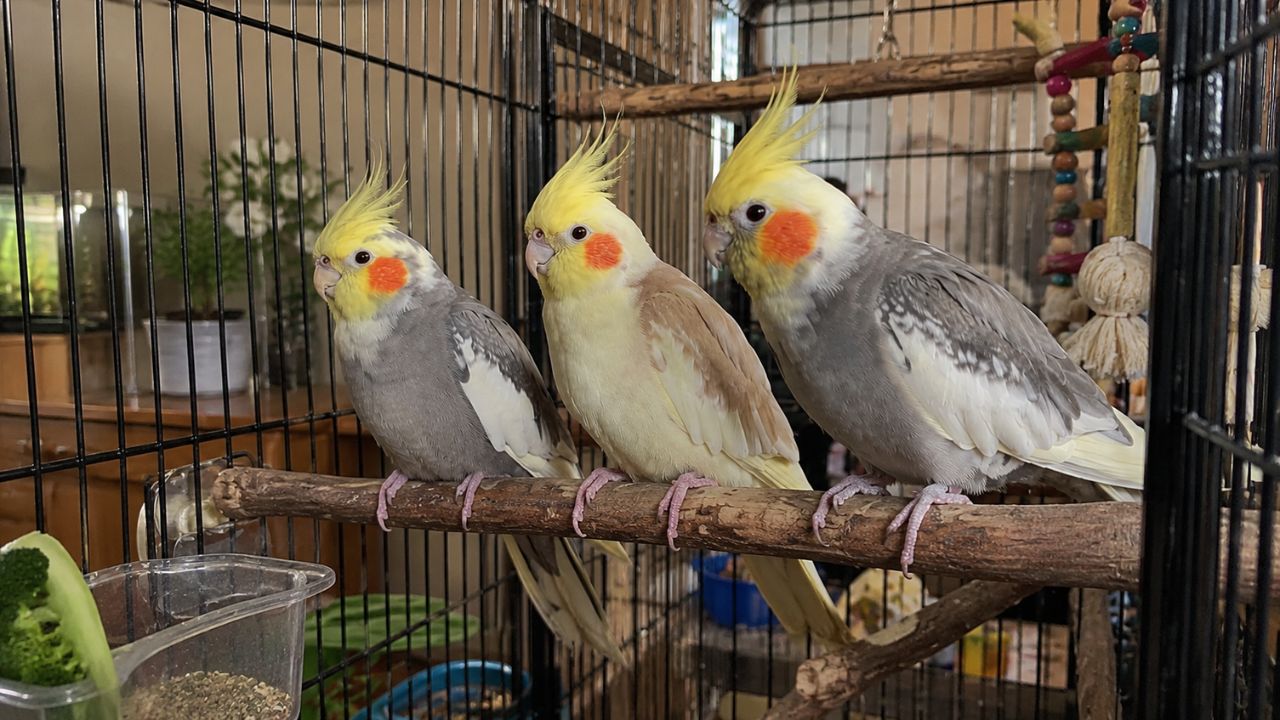

Neil has kept, bred, and sold cockatiels at Paradise Pets Swindon since 1988 — nearly 35 years of first-hand experience with these birds. In that time, he has had more worried calls about cockatiels that have stopped eating than he cares to remember. This article is his honest guide to what is actually going on — and what to do about it before it becomes serious.
A man rang me on a Monday morning, properly worried. His cockatiel — a grey male called Oscar he had owned for four years — had barely touched his food since Saturday. Two full days. The owner had noticed it on Sunday but had convinced himself Oscar was just being fussy. By Monday morning, with Oscar sitting hunched on the lowest perch, he knew something was wrong.
I asked him three questions. Was Oscar fluffed up? Yes. Was he quieter than usual in the mornings? Definitely. Had anything changed in the house recently — new pet, moved the cage, changed the food, any decorating or cleaning products used nearby? The owner thought about it. Actually, yes — his partner had been using a new scented plug-in air freshener in the same room as the cage for the past week.
We had our answer. Or at least, a very strong lead.
I told him to remove the air freshener immediately, move the cage to a different room, and get to an avian vet that afternoon. Oscar had likely been experiencing low-level respiratory irritation from the diffuser for days, which had suppressed his appetite and left him lethargic. With fresh air, a vet check, and supportive care, he recovered fully within a week.
I tell this story because it captures something I want every cockatiel owner to understand. A cockatiel that stops eating is not being awkward. It is not going through a phase. It is telling you something is wrong — and cockatiels, like all parrots, are remarkably good at hiding how wrong things have become by the time you notice.
First — Has Your Cockatiel Actually Stopped Eating?
Before anything else, I want to make sure we are reading the situation correctly — because cockatiels can be selective and dramatic about food in ways that worry owners unnecessarily.
Cockatiels have food preferences. A bird that has decided it does not want pellets today, or that is holding out for its favourite treat, or that is eating seed but ignoring vegetables — that is not a cockatiel that has stopped eating. That is a cockatiel being a cockatiel.
What we are talking about is a bird that has genuwinely stopped consuming food — that is not touching seed, pellets, fresh food, or anything else. A bird that would normally empty its dish by midday and has barely made a dent by evening. A bird whose behaviour alongside the food refusal has changed — quieter, more withdrawn, less engaged, spending more time sitting low or fluffed.
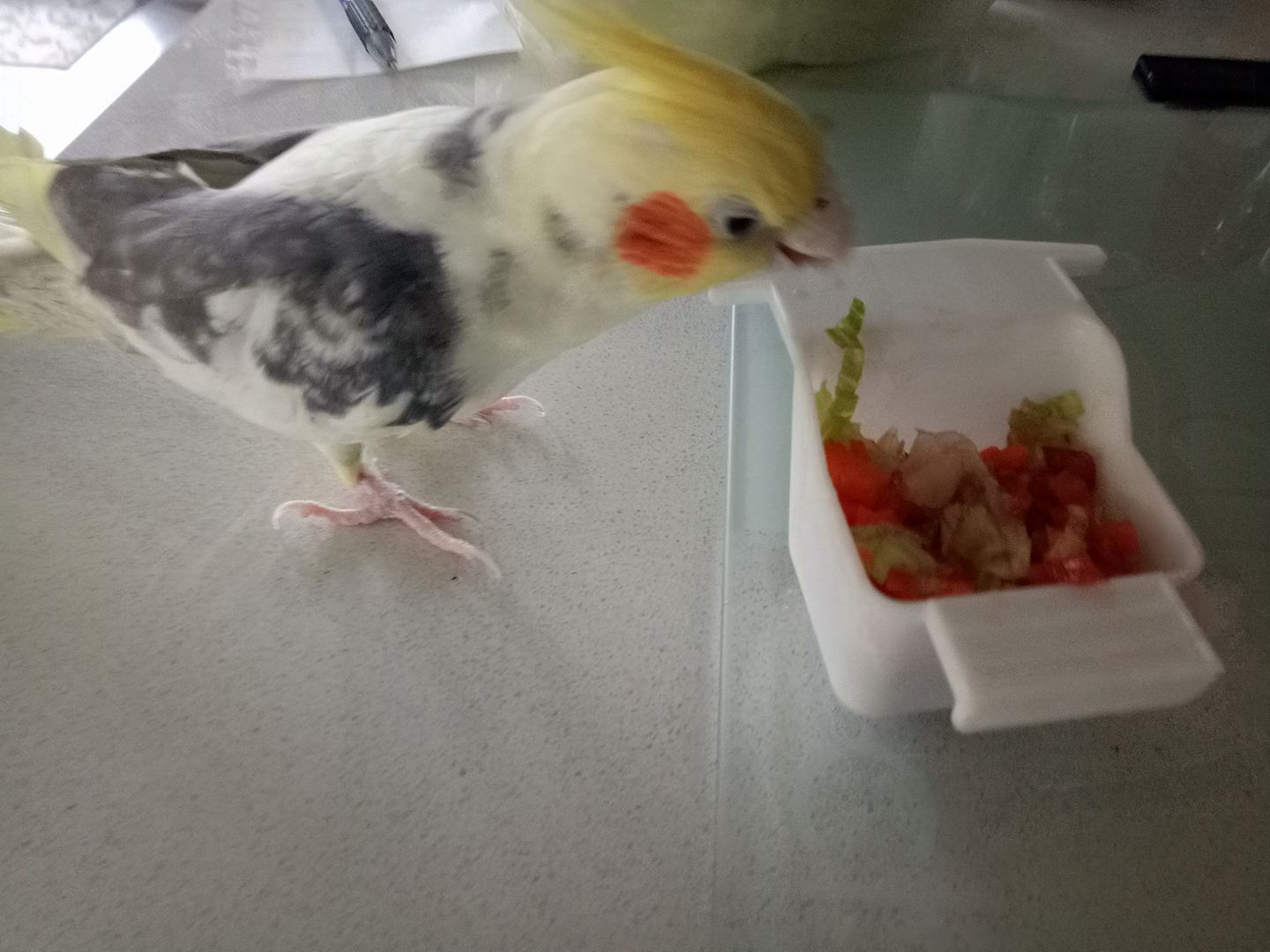
The simplest check is to weigh the bird. Cockatiels should be weighed regularly — a kitchen scale accurate to one gram is enough. A cockatiel that has lost more than ten percent of its body weight is already in a medically significant situation. If you have not been weighing your bird, start now — it is the most reliable early warning system available to a cockatiel owner.
- Food dish is as full at the end of the day as it was at the start — confirmed after checking properly
- Droppings have reduced significantly — fewer, smaller, or the urate portion looks different
- The bird has lost visible condition — less weight on the keel bone when you hold it
- Behaviour has changed alongside the food refusal — quieter, less active, lower on the perch
- The bird approaches food, looks at it, and walks away — it wants to eat but something is making it difficult or painful
Once you have confirmed the bird genuinely is not eating — act the same day. Do not wait overnight. Do not wait to see if it improves tomorrow. A cockatiel that has not eaten for twenty-four hours needs veterinary attention today.
Reason 1: Illness — Always Rule This Out First
When a cockatiel stops eating, illness is the possibility I always address first — because it is the one that moves fastest and where delay is most costly.
Cockatiels are prey animals. Like budgies, they are hardwired to hide illness. A bird that appears only slightly off may have been genuinely unwell for several days already. The food refusal is often one of the later signs to appear — by which point, the underlying problem has usually been developing for some time.
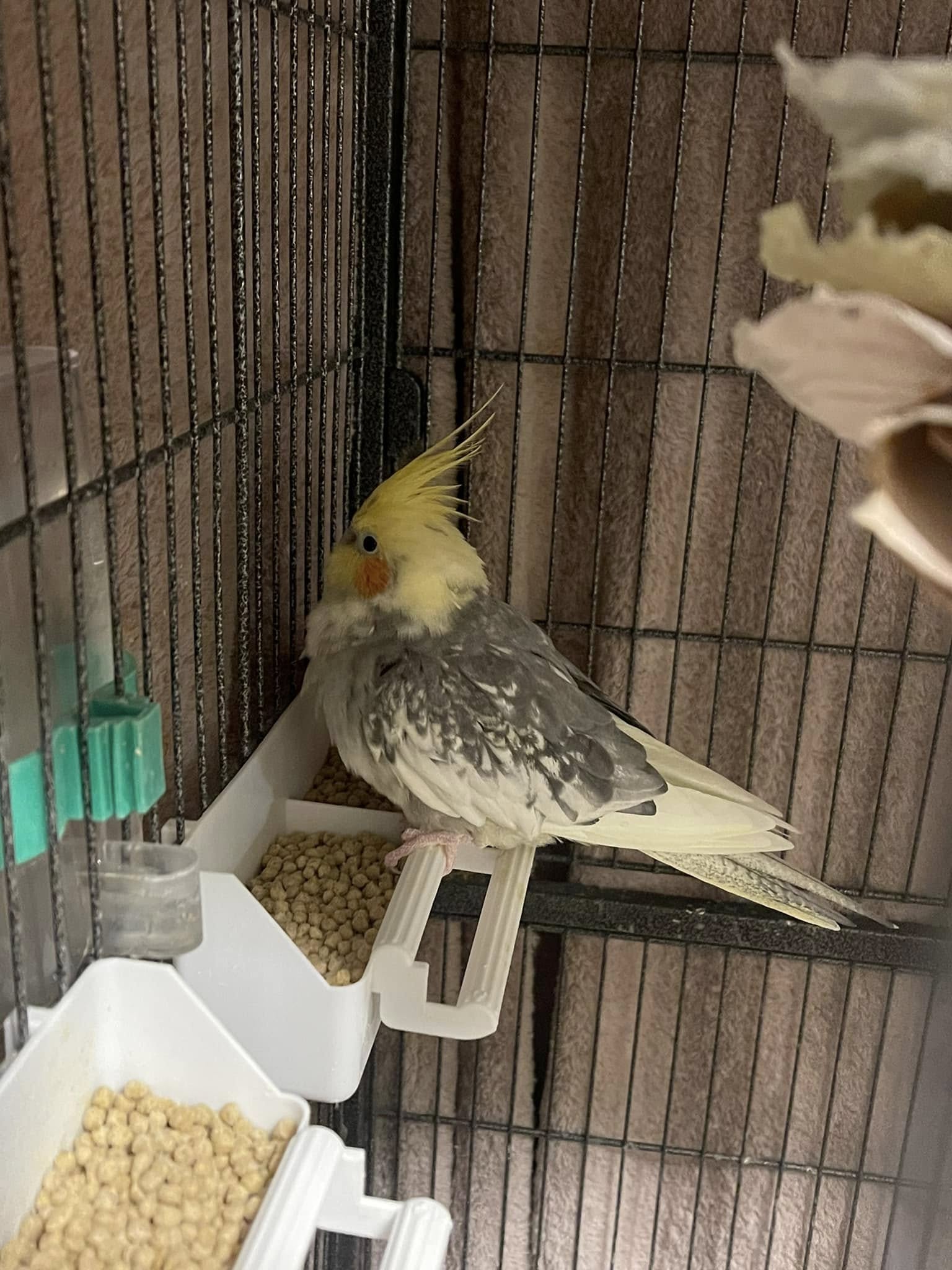
- Fluffed feathers for extended periods — a healthy cockatiel keeps its feathers sleek when awake and active
- Sitting very low on the perch, or on the cage floor
- Eyes closing during the day — a healthy cockatiel is alert during daylight hours
- Tail bobbing rhythmically at rest — this indicates the bird is working harder than it should to breathe
- Any discharge from the nostrils or eyes
- Clicking, wheezing, or any audible sound when breathing
- Droppings that have changed — very watery, very dark, greenish, or almost absent
- The crest is consistently flat against the head — cockatiels with flat crests are often in pain or distress
If you are seeing any of the above alongside food refusal, please do not wait. Get to an avian vet the same day. The illnesses I most commonly see behind food refusal in cockatiels are respiratory infections, bacterial infections, liver disease from long-term poor diet, and kidney problems. All of these are treatable when caught early. All of them become significantly harder to treat with delay.
Reason 2: Toxic Exposure — More Common Than Owners Realise
This is the cause I always ask about when a cockatiel owner rings me, because it is one of the most common reasons I see for a bird that has gone quiet, stopped eating, and seems generally unwell — and because the owner almost never connects the two things themselves.
Cockatiels have extraordinarily sensitive respiratory systems. Substances that are completely harmless to humans can be genuinely toxic to a bird, and the effects — chronic low-level respiratory damage, appetite suppression, lethargy — can look exactly like a vague illness.
- Scented candles, plug-in diffusers, and reed diffusers — chronic exposure is one of the most common causes I see. The bird does not die dramatically — it just slowly becomes quieter, less active, and less interested in food over days or weeks
- Aerosol sprays — cleaning products, air fresheners, deodorants, hairspray, furniture polish. Never use these in a room where a cockatiel is present
- Overheated non-stick cookware — the fumes released when PTFE non-stick surfaces overheat are odourless to humans and can be lethal to birds
- Cigarette and vape smoke — chronic exposure causes respiratory damage and appetite suppression over time
- New paint, varnish, or cleaning products — a recently redecorated room or new furniture with off-gassing can affect a bird for days or weeks
- Self-cleaning oven cycles — release fumes that are highly toxic to birds. Always move the bird out of the house during a self-cleaning cycle
If your cockatiel has started eating less and nothing else obvious explains it — think carefully about what has changed in the environment in the last two to four weeks. A new cleaning product. A plug-in that has been running. A candle that has been lit regularly. The connection is often there once you look for it.
The fix is to remove the source, ventilate the room thoroughly, and move the bird to a clean air environment. A vet check is still advisable — birds that have had sustained exposure to airborne toxins sometimes need supportive care to recover fully.
Reason 3: Dietary Boredom and Food Refusal
This one is less urgent than illness or toxic exposure, but it is genuinely common and worth understanding — because it can be hard to distinguish from early illness if you do not know what to look for.
Cockatiels are intelligent, curious birds. A bird that has been eating exactly the same food from exactly the same bowl in exactly the same position for months or years can develop what I can only describe as dietary boredom. It loses interest. It picks at food rather than eating properly. It starts holding out for variety it is not being given.
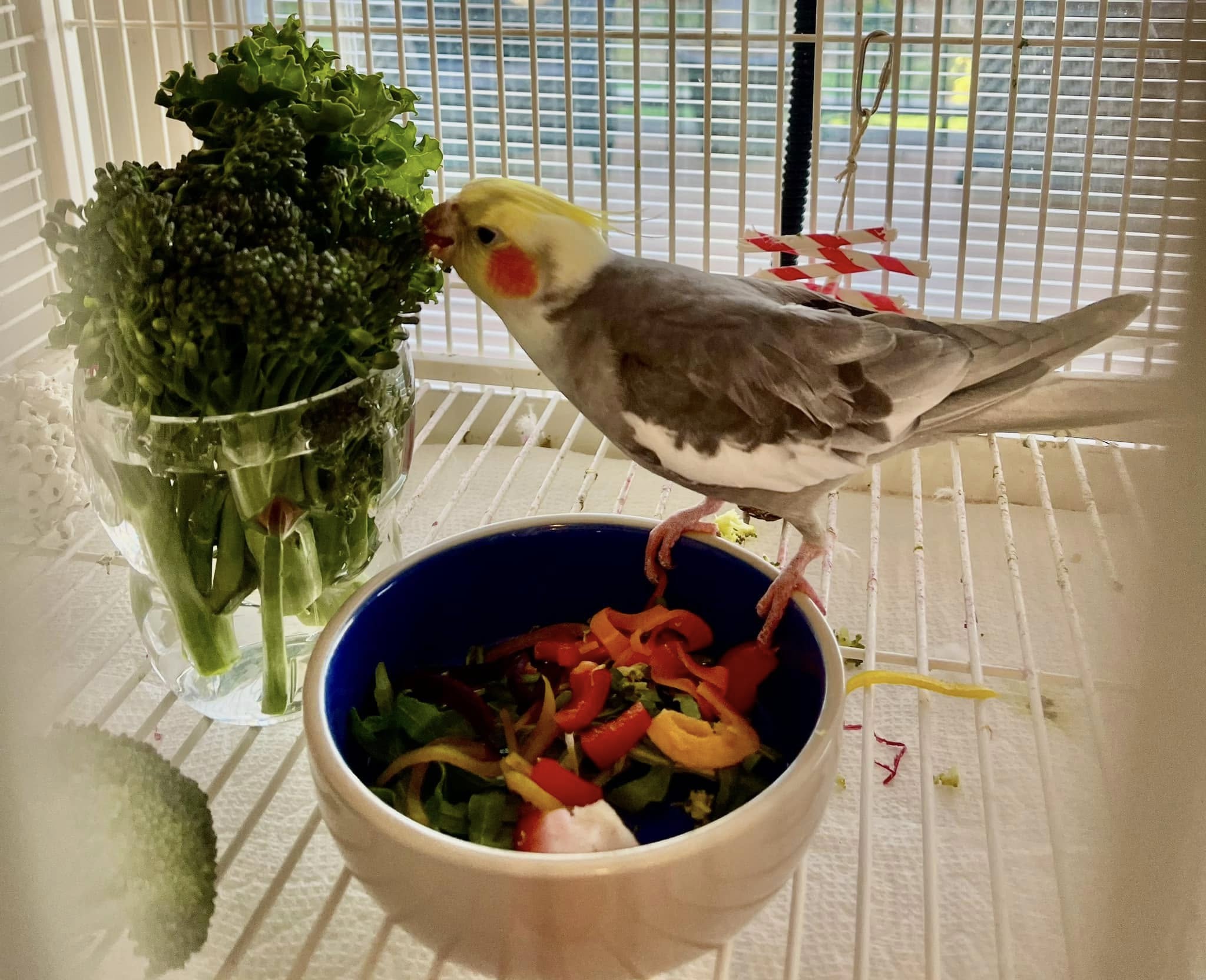
The difference between dietary boredom and illness is that a bored bird is otherwise well — it is active, alert, responds to you normally, and will often eat when you offer something different from what is in the bowl. An ill bird is quiet, withdrawn, and often not interested in food regardless of what you offer.
- Vary the presentation. Cockatiels are often more interested in food that is offered differently — a piece of broccoli clipped to the cage bars, a piece of carrot held in your hand, millet sprays hung rather than placed in a dish.
- Introduce new foods gradually. A cockatiel that has never seen kale will often be suspicious of it at first. Put it in the cage and leave it. After a few days, curiosity usually wins.
- Eat in front of the bird. Cockatiels are flock animals — they take cues from their flock about what is safe to eat. If they see you eating something, they are far more likely to try it themselves.
- Rotate what is in the dish. Different vegetables on different days keeps things interesting. Bell pepper, cooked sweet potato, leafy greens, cucumber — variety makes a real difference.
- Never starve a cockatiel into eating new food. This is dangerous advice that I occasionally hear repeated — a cockatiel that goes without food for more than twenty-four hours is at serious health risk.
Reason 4: Stress and Environmental Change
Cockatiels are sensitive, observant birds. They notice changes in their environment and they remember them. A change that seems trivial to us — rearranged furniture, a new pet in the house, a different routine, a new person visiting regularly, construction noise nearby — can genuinely suppress a cockatiel’s appetite for days.
Stress-related food refusal usually has a clear trigger that the owner can identify once they think about it. The bird was eating normally, then something changed, then the eating dropped off. It is rarely subtle once you know to look for it.
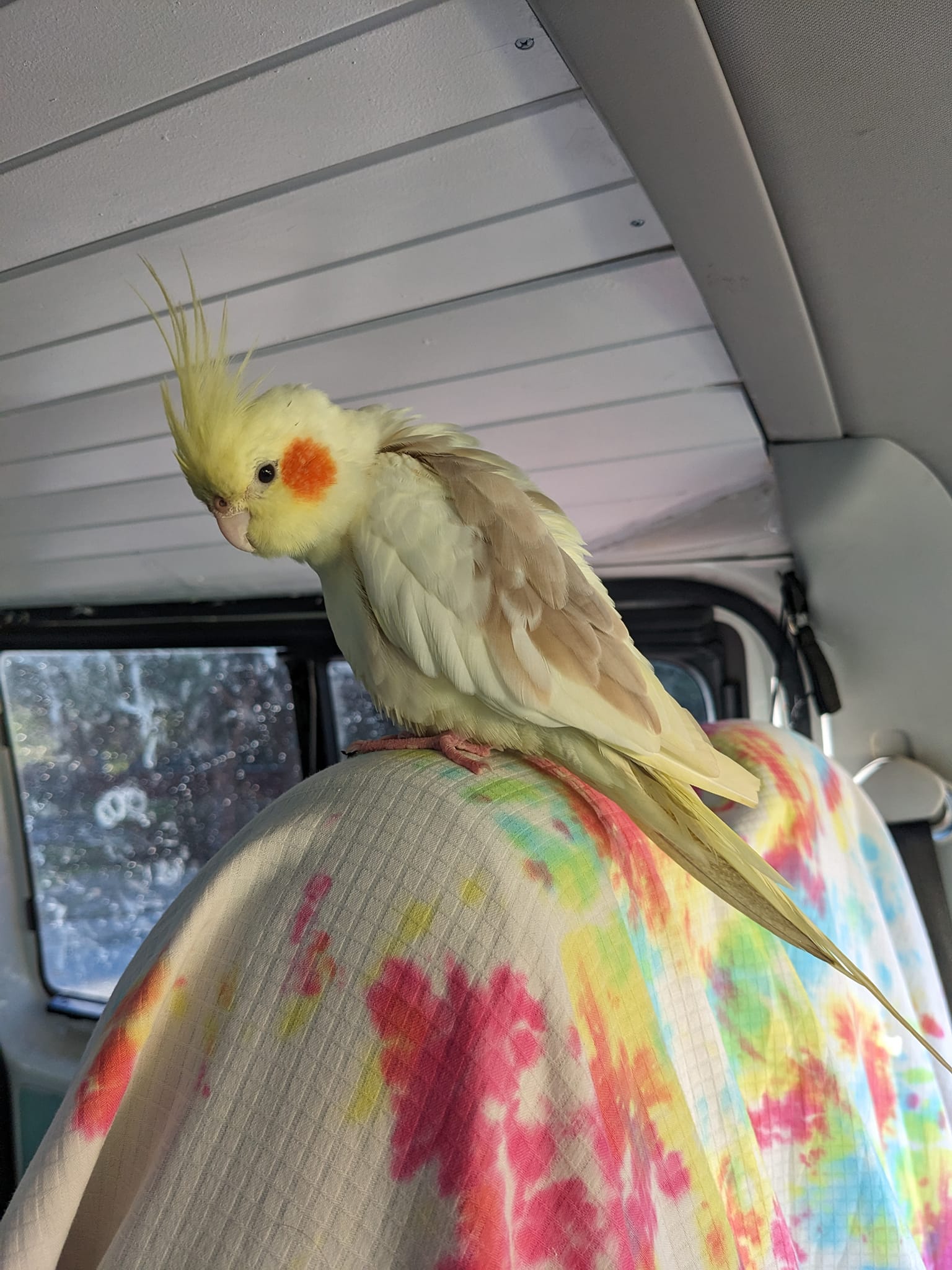
- New pet in the home — a cat, dog, or new bird that the cockatiel can see or hear. Even if the other animal is behind a closed door, a cockatiel can often smell or hear it.
- Cage moved to a new position — even a small change in cage location can unsettle a cockatiel for several days.
- Loss of a bonded companion — cockatiels form strong pair bonds. The loss of a bonded partner, human or bird, can cause genuine grief-like responses including loss of appetite.
- Change in the owner’s routine — back to the office after working from home, a new job with different hours, a long holiday. Cockatiels notice when their person is absent more than usual.
- Loud or unpredictable noise — building work, new neighbours, fireworks. Cockatiels with sensitive hearing find sustained loud noise genuinely stressful.
Stress-related not eating usually resolves once the stressor is removed or the bird has had time to adjust. The concern is that prolonged stress suppresses the immune system and makes the bird more vulnerable to illness. If the bird has been off its food for more than a day alongside stress signs, a vet check is still worthwhile.
Reason 5: Hormonal Changes
This one catches owners off guard regularly — particularly in spring and autumn when the days are changing length.
Cockatiels go through hormonal cycles triggered by light hours and temperature changes. During these phases — which can last several weeks — both males and females can show reduced appetite, changed behaviour, and increased lethargy. Females particularly may go off their food if they are developing an egg, and a female that is egg-bound — unable to pass an egg — is a same-day veterinary emergency.
- Reduced eating in spring or autumn — the most common timing
- Female sitting low or on the cage floor, straining — possible egg binding, get to a vet immediately
- Male becoming territorial, regurgitating food obsessively, or over-vocalising
- Either bird becoming broody — sitting in corners, seeking dark enclosed spaces
- Feather condition changes alongside appetite reduction
For hormonal appetite suppression that is not egg-binding, the management is to reduce light hours — no more than ten to twelve hours of light per day — remove any nesting material or dark hiding spots, and avoid stroking the back or under the wings, which triggers mating responses. Most birds settle within two to three weeks once the hormonal peak passes.
For any female that is straining, sitting on the cage floor, or showing a distended abdomen — get to an avian vet the same day. Egg binding is life-threatening.
What I Check When a Cockatiel Owner Comes Into the Shop
When someone comes in or rings about a cockatiel that has stopped eating, here is the conversation I have — every time, because the right questions get to the answer quickly.
- How long has the bird not been eating? Under twelve hours — monitor carefully. Twelve to twenty-four hours — get to a vet today. Over twenty-four hours — this is urgent.
- What does the bird look like right now? Upright and alert, or fluffed and low? The posture tells me immediately whether this is urgent or not.
- Is there any sound to the breathing? Even a faint click or wheeze is a respiratory flag — vet today.
- What has changed in the last two to four weeks? New cleaning product, new diffuser, moved cage, new pet, changed routine. The cause is often right there in the answer to this question.
- What is the diet like? Seed only — likely liver disease developing. Varied diet — less likely to be diet-related. This helps narrow the possibilities quickly.
- What time of year is it? Spring and autumn appetite dips in a otherwise well bird often point to hormonal causes.
What To Do Right Now — Step By Step
Here is the practical version — exactly what I would tell you if you were standing at my counter today.
| What You Are Seeing | What To Do | How Urgently |
|---|---|---|
| Fluffed, low on perch, not eating | Avian vet — same day | Today, urgently |
| Any breathing sound alongside not eating | Avian vet — same day | Today, urgently |
| Female sitting on floor, straining | Avian vet — immediately, possible egg binding | Right now |
| Not eating for over 24 hours | Avian vet — same day regardless of other signs | Today |
| New diffuser or spray used recently | Remove source, ventilate, vet check same day | Today |
| Spring or autumn, otherwise well bird | Reduce light hours, monitor closely, vet if no improvement in 24 hours | Watch carefully |
| Eating less but still alert and active | Vary food presentation, monitor daily weight if possible | Monitor — vet if worsens |
The One Thing I Want Every Cockatiel Owner To Remember
After nearly 35 years of watching cockatiels, I can tell you with certainty what separates the owners whose birds recover quickly from those who lose them to something that was entirely treatable.
It is not the quality of their vet. It is not luck. It is how quickly they acted when something felt wrong.
Cockatiels hide illness. They are extraordinarily good at it. By the time a bird looks visibly unwell — fluffed up, sitting on the floor, barely responsive — it has usually been quietly declining for days. The owners who notice the subtler signs — slightly less food eaten, slightly quieter in the morning, spending a little more time lower on the perch — and act on those signs the same day, are the owners whose birds come back from the vet on antibiotics and recover fully.
The owners who wait three days to see if it improves are the ones who call me on the fourth day in tears.
You know your bird. You know what normal looks like. Trust that knowledge. If something feels even slightly off — act on it.
Related Reading
Our guide on whether cockatiels are the right pet for you covers the full picture of cockatiel care — the time commitment, the noise, the household hazard sensitivity, and the lifespan — everything you need to understand before and during ownership.
Our article on why cockatiels are not beginner birds covers the care requirements in detail — including diet, environment, and the household toxin sensitivity that makes cockatiels particularly vulnerable to the kinds of airborne substances covered in this article.
Our guide on the warning signs owners miss before a bird dies suddenly covers the same principle that applies to all parrots — by the time a bird looks visibly unwell, it has often been unwell for some time. The early signs are everything.
Frequently Asked Questions
How long can a cockatiel go without eating?
Not as long as most owners expect. A cockatiel that has genuinely not eaten for twenty-four hours is already under significant physiological stress. After forty-eight hours without food, a cockatiel is in serious danger. Cockatiels have fast metabolisms and cannot go without food the way larger animals can. If your bird has not eaten for a full day — confirmed, not suspected — get to a vet today.
My cockatiel stopped eating overnight — should I be worried?
Yes, take it seriously. Check the bird’s posture — is it upright and alert, or fluffed and low? Listen for any sound when it breathes. Check the droppings. If anything else alongside the not eating seems off, get to an avian vet today. If the bird seems otherwise well, monitor very closely and act if there is no improvement by mid-morning.
Could a plug-in air freshener make my cockatiel stop eating?
Yes — absolutely. This is one of the most commonly missed causes I see. Plug-in diffusers, scented candles, and reed diffusers release compounds that cockatiels’ sensitive respiratory systems cannot handle. Chronic low-level exposure causes respiratory irritation, lethargy, and appetite suppression. Remove all scented products from any room the cockatiel uses and see whether the bird improves. A vet check is still advisable.
My cockatiel is eating seed but refusing pellets and vegetables — is this normal?
Selective eating is common in cockatiels, particularly birds that were raised on seed only. A bird that is eating seed but refusing other foods is not in the same category as a bird that has stopped eating entirely — but the selective eating is still worth addressing. Seed-only diets lead to liver disease over time. Introduce pellets and fresh food gradually alongside seed — it takes patience, sometimes weeks, but it is important.
Is it normal for cockatiels to eat less in spring?
Some appetite reduction during hormonal phases in spring and autumn is not unusual in otherwise healthy cockatiels. The key is that the bird should still be eating something, should still be alert and active, and should not be showing any other signs of illness. A bird that is eating less but is otherwise completely normal in spring is worth monitoring closely. A bird that is eating less and also seems quiet, withdrawn, or unwell needs a vet check regardless of the season.
Where can I get honest cockatiel advice in Swindon?
Come and see us at Paradise Pets, Manor Garden Centre, Cheney Manor, Swindon SN2 2QJ. Or give us a ring on 01793 512400. The advice is free and I have been doing this for nearly 35 years.
Worried About Your Cockatiel? Come And See Me
Bring your bird, bring a video, or just bring your questions. I will have a proper look and tell you honestly what I think. Free advice, no obligation. That is how we have done things for nearly 35 years.
⭐ Customer Reviews
Amazing Bird Selection
Had a lovley visit today,staff were very friendly and very helpful,such a great petshop,their selection of birds is incredible,really impressed,thank so much to the staff at Paradise Pets

Friendly Helpful Staff
I have been coming to this place for years and they have a great stock of food for all types of pets. Have a great selection of small mammals and a lot of birds. Staff are friendly and helpful.

Great Quality Hutch
Bought a guinea pigs hutch and run combo, very happy with the service, the hutch was put in my car for me without even asking for help. The wood quality is very good, the instructions easy to follow and we are extremely happy with the fully built hutch. A good size for 2 guinea pigs

Response from Paradise Pets | Wiltshire
Thank you Melanie Latus Nice to provide services to you.
Best Bird Shop Around
It’s the best pet shop in and around Swindon. They always have an amazing selection of birds and all you need to keep them happy. I keep birds myself and the guys there are happy to answer questions and really know their stuff. I have seen budgies etc. in chain pet shops in the area looking really unhealthy and ill – I wouldn’t go anywhere else than Paradise Pets for animals.

Highly Recommended Bird Shop
I could not praise this shop enough. Really helped my Grandson buy his first bird and he’s loving it. Travelled from Somerset and was welcomed with open arms.

Great Shop with Competitive Prices
Great shop with amazing selection for small animals, hamsters, mice ect, highly recommend!
Also has a great selection for dogs & cats too & very competitive prices! 💖

