
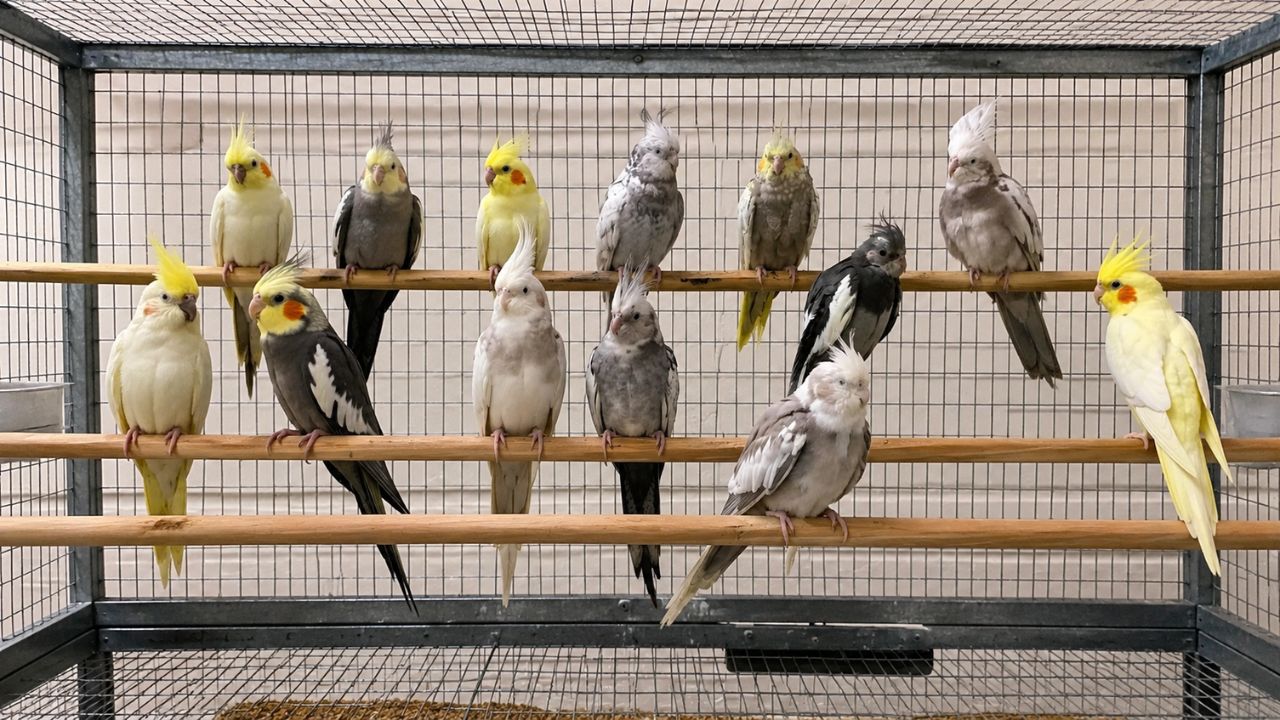

Neil has kept, bred, and sold cockatiels at Paradise Pets Swindon since 1988 — over 35 years of first-hand experience with these birds. In that time, he has seen the same misunderstanding play out hundreds of times. This article is his attempt to set the record straight.
I have lost count of how many times this has happened. Someone comes in, looks at the cockatiels, watches them for a few minutes, and then says something along the lines of: “They’re basically like a bigger budgie, aren’t they? Probably about the same level of care?”
And I take a breath. And I explain, as I have been explaining for 35 years, that no — they are not basically like a bigger budgie. They are a fundamentally different animal with fundamentally different needs. And if you go into cockatiel ownership expecting budgie-level demands, you are going to struggle. More importantly, your bird is going to suffer.
I am not saying cockatiels are difficult. They are not. But they are not beginners’ birds in the way that people assume — and the assumption costs birds dearly every single year in this country.
So let me tell you what cockatiels actually are. What they actually need. And how to know whether one is genuinely right for you.
What Most People Think a Cockatiel Is
The image people tend to have of cockatiels is based on the ones they have seen in pet shops — sitting on perches, looking calm, occasionally whistling something tuneful. They are undeniably beautiful birds. The crest, the orange cheek patches, the general air of dignified composure. They look manageable. They look, frankly, like a bird that would be happy to sit in a cage and look decorative while the family gets on with their lives.
That image is not accurate. And buying a cockatiel based on that image is one of the most common mistakes I see.
Cockatiels are native to Australia. In the wild, they live in large flocks across open grasslands — constantly moving, foraging, communicating, and interacting with each other. They form strong pair bonds. They are vocal and expressive. They are intelligent enough to become bored, lonely, and genuinely distressed when their needs are not met. These are not traits that disappear in captivity. They are the bird.
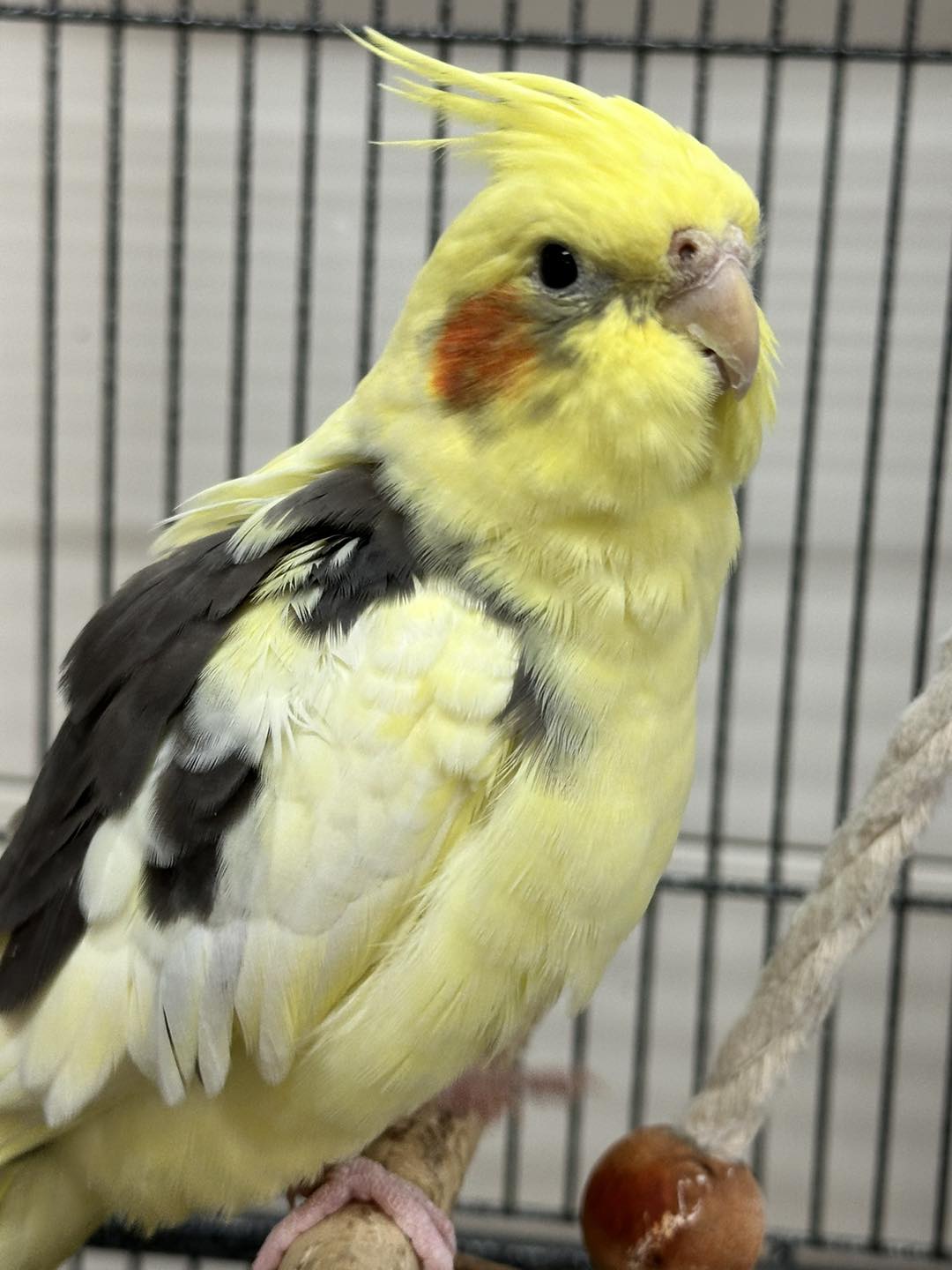
The lifespan is the one that stops people most often. Twenty years. That is longer than most dogs. A cockatiel bought today could still be with you when your children have left home. It is a commitment that deserves serious thought — and almost never gets it, because the bird looks so unassuming on a perch.
The Noise — Let Us Be Honest About This
I am going to talk about noise before anything else, because it is the issue that catches people most off guard and causes the most rehoming. People hear cockatiels in pet shops and think: pleasant. Melodic. Manageable. And cockatiels can be all of those things.
But cockatiels are also flock birds with contact calls. In the wild, these calls carry across open grassland to keep the flock connected. In your living room, they carry through walls, into adjacent rooms, and — if you live in a semi-detached house — to your neighbours.
The contact call happens most reliably at dawn and at dusk. It also happens when the bird cannot see you and wants to know where you are. You leave the room, the bird calls. You do not respond — because you did not know you were supposed to — and the bird calls louder and more urgently. This is not misbehaviour. It is a bird doing what birds do. But it is something you need to be prepared for.
The way to manage it is simple: when your cockatiel calls, whistle back, or call back, or go and show yourself briefly. The bird knows you are there, relaxes, and stops. Owners who understand this find it charming. Owners who did not know about it find it maddening. I always explain this at the counter before anyone buys a cockatiel from us.
- “They’re basically like budgies but bigger” — No. Cockatiels are significantly more intelligent, more socially complex, and more demanding in terms of interaction and stimulation.
- “You can keep one on its own with no problem” — You can, but only if you are genuinely home for much of the day and providing hours of active interaction. A lone cockatiel left alone all day will develop problems.
- “The noise is fine, they just whistle nicely” — The contact calls at dawn and dusk are not optional. They are part of the bird. If you live in a flat or a terrace with thin walls, this needs serious consideration.
- “They don’t need much space” — They need a large cage — minimum 60cm wide, ideally 90cm or more — and several hours outside it daily. A small cage with no out-of-cage time is not appropriate.
- “They’ll be fine if I get two — they’ll keep each other company” — Two cockatiels will bond to each other, which is wonderful for the birds, but means they will be significantly less interested in human interaction. Neither approach is wrong, but you need to decide what you want before you buy.
What Cockatiels Actually Need — Every Single Day
This is the section I go through with every serious buyer. Not to put them off — to make sure they go home with a bird that is going to have a good life.
Time — More Than You Probably Think
A cockatiel needs to be out of its cage for a minimum of two hours every day. Not sitting in a room where the television is on while you are in another room. Actually out, in your presence, interacting with you or at least aware of you. Ideally, more than two hours. Many cockatiel owners let their birds have free run of a bird-proofed room for much of the day.
A cockatiel that spends all day in a cage, every day, will become frustrated. Frustrated cockatiels feather pluck. They scream. They become aggressive. These are not personality flaws — they are symptoms of an environment that is not meeting the bird’s needs. I have seen it happen, and it is entirely preventable.
Interaction — Not Just Proximity
There is a difference between a cockatiel that is in the same room as you and a cockatiel that is interacting with you. Cockatiels want genuine engagement — to be talked to, whistled at, to sit on a shoulder, to investigate what you are doing. Some will learn to mimic words. Many will learn complex whistled tunes. All of them want to be part of what is happening rather than observers of it.
This does not mean you need to spend every minute of every day entertaining your bird. It means that when you are home, your bird should be part of your life — not shut away in a cage in the corner.
Diet — Not Just Seeds
Seed-only diets are one of the most common causes of health problems in cockatiels. Seeds are high in fat and low in the nutrients cockatiels need long-term. A proper cockatiel diet includes a quality seed mix as a base, supplemented daily with fresh vegetables — leafy greens, carrot, broccoli, courgette — and ideally some pellets formulated for cockatiels.
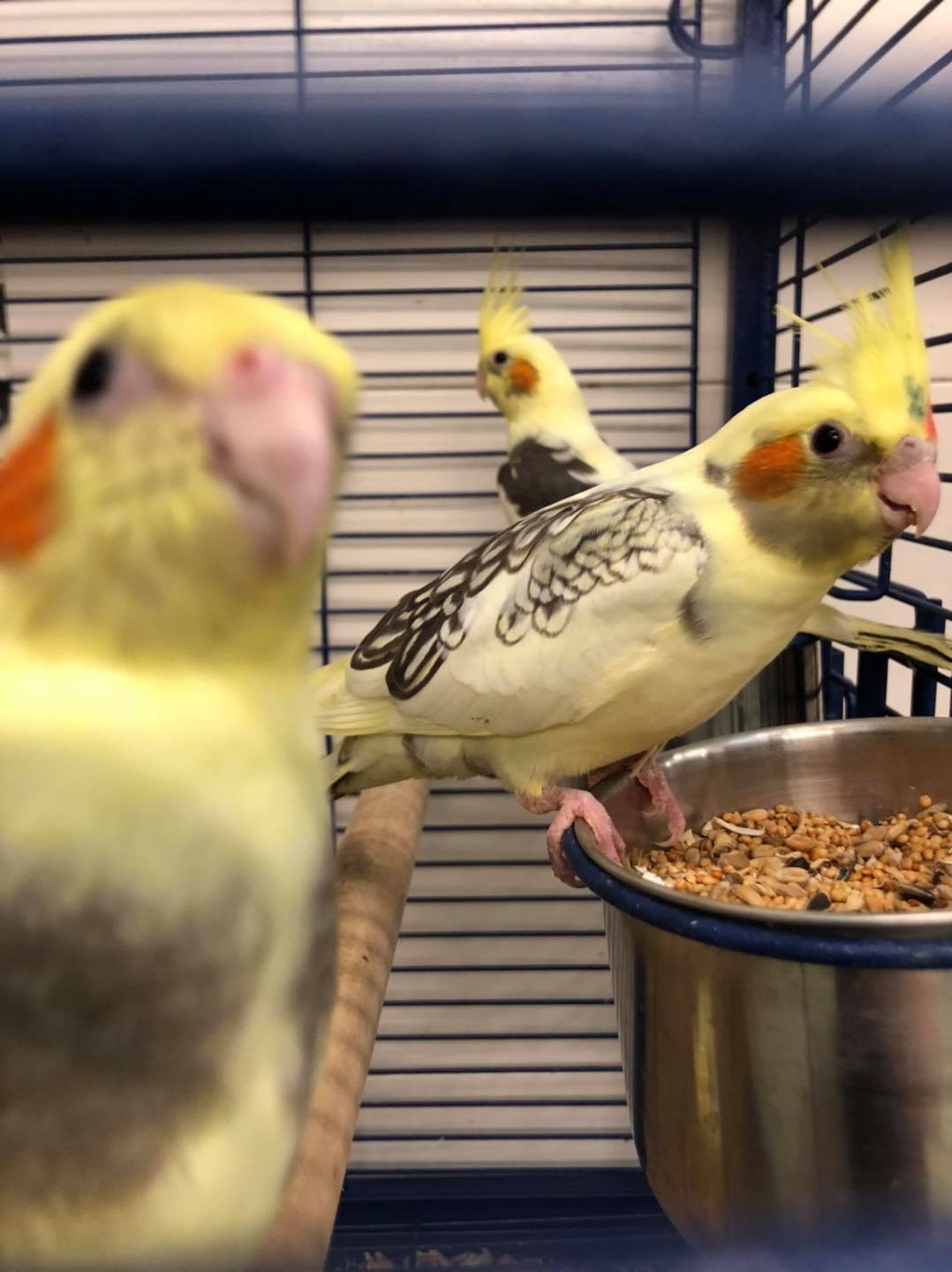
Cockatiels also need cuttlefish bone for calcium, and access to clean fresh water changed daily. The diet question is one of the first things I ask when a sick cockatiel comes into the shop. In my experience, seed-only diets are behind a significant proportion of the health problems I see.
Cage Size — Bigger Than You Think
The minimum cage size I recommend for a single cockatiel is 60cm wide, 45cm deep, and 90cm tall — and that is a minimum, not an ideal. Cockatiels need width to move laterally, and they need height for climbing. The bar spacing should be no more than 1.5cm — wider bars risk head entrapment. Avoid round cages entirely — they disorient birds and provide no corners for the bird to feel secure.
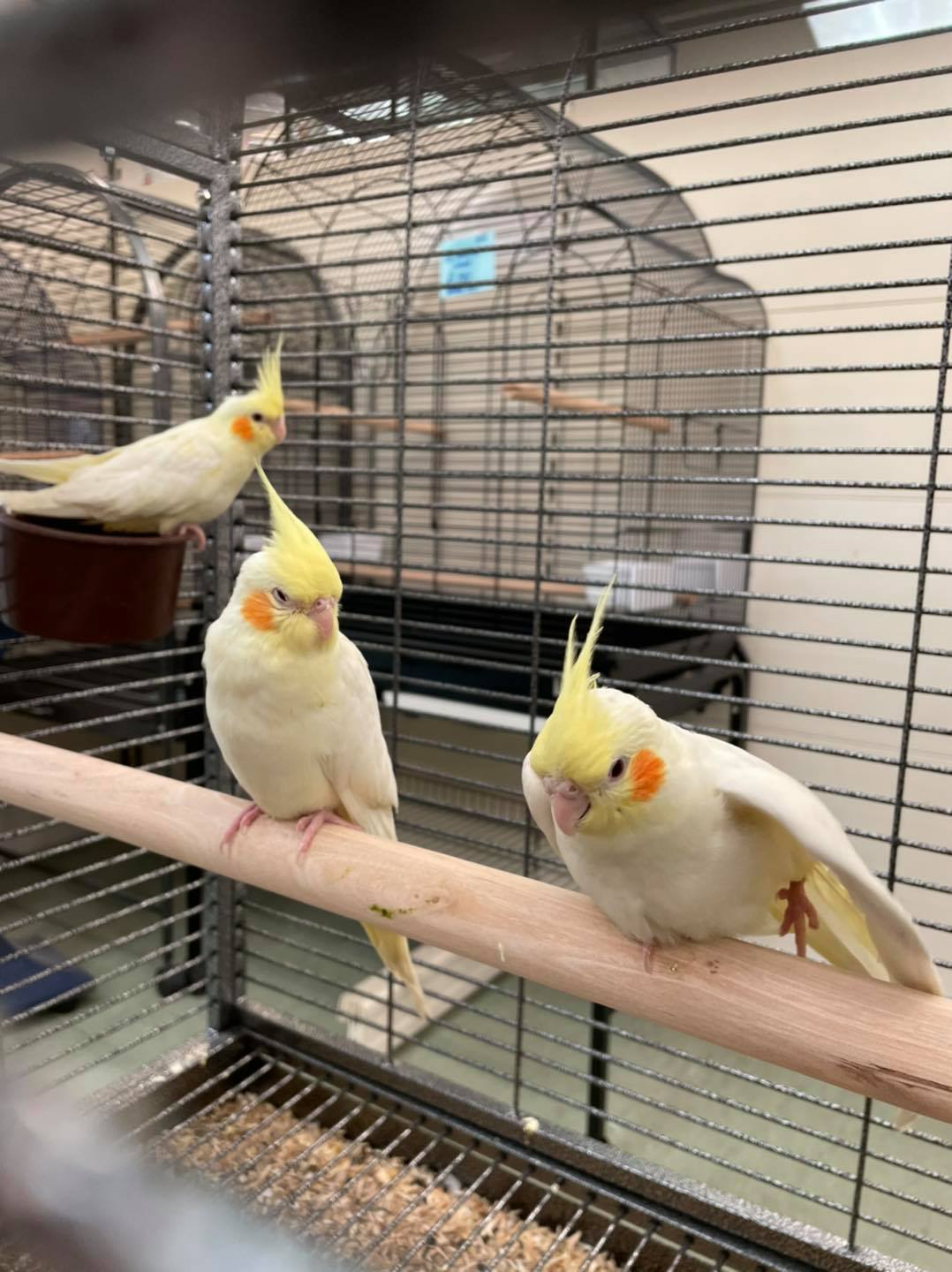
Inside the cage: a variety of perch sizes and textures, to keep feet healthy. Toys that can be rotated regularly — cockatiels get bored of the same objects quickly. A cuttlefish bone. A foraging toy or two, so the bird has to work for some of its food. This stimulation matters.
The Health Issues Every Cockatiel Owner Should Know
Cockatiels are generally hardy birds when kept correctly. But there are a few health issues that are specific to the species and worth knowing about before you buy.
Psittacosis
This is a bacterial infection that cockatiels can carry — sometimes without showing obvious symptoms — and that can, in rare cases, be transmitted to humans. It is treatable in both birds and people, but it is worth being aware of, particularly if anyone in the household is immunocompromised. Buying from a reputable source — which at Paradise Pets means trusted UK breeders we have worked with for decades — significantly reduces this risk.
Feather Dusting
Cockatiels produce a fine powder from specialised feathers called powder down. This is completely normal — it helps condition the feathers and is a sign of a healthy bird. But it does mean cockatiel ownership involves a certain amount of fine dust on surfaces near the cage. For anyone with respiratory sensitivities or allergies, this is worth considering seriously before buying.
Female Cockatiels and Egg Laying
As with budgies, female cockatiels can lay eggs without a male present. Chronic egg laying depletes calcium and can lead to serious health problems. If you have a female cockatiel, it is worth being aware of the signs and understanding how to manage this if it becomes an issue. We are always happy to talk this through at the shop.
Night Frights
Cockatiels are prone to what keepers call “night frights” — sudden panic in the dark, usually triggered by a sound or shadow, that causes the bird to thrash around the cage. This can result in injury. A low-level night light near the cage reduces this significantly. It is a simple fix, but one that many first-time owners do not know about.
- Sitting on the cage floor — this is serious, act the same day
- Fluffed feathers combined with closed eyes during daytime
- Tail bobbing in time with breathing — respiratory emergency
- Discharge from nostrils or eyes
- Feather plucking or self-mutilation — environmental or health issue needing investigation
- Sudden personality change — becoming aggressive or withdrawn
What Cockatiels Are Like When Everything Is Right
I have spent a lot of this article on what cockatiels need and what can go wrong. I want to be equally honest about what they give — because a well-kept cockatiel, in the right home, is one of the most rewarding companion animals I have ever encountered in 35 years of keeping birds.
Cockatiels communicate. Not just with noise — with their crests, their posture, their eyes. Once you learn to read a cockatiel, you know exactly how it is feeling at any given moment. A crest held flat and slightly backwards means uncertain or slightly threatened. A crest fully raised means excited or alarmed. A crest at half-mast, relaxed — the bird is content and comfortable. You learn to read this within weeks of owning one, and it makes for a relationship with a depth that genuinely surprises most new owners.
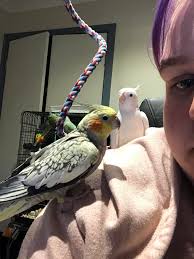
Male cockatiels in particular often become remarkable whistlers. I have had customers come back years after buying a bird from us, genuinely astonished at the repertoire their cockatiel has developed — full tunes, mimicked sounds from around the house, fragments of speech. One customer’s cockatiel learned to perfectly imitate the sound of her phone’s notification tone, which caused considerable confusion for some months.
A cockatiel that has been handled from a young age and treated with patience will sit on your shoulder for hours. It will preen your hair, investigate your ears, fall asleep pressed against your neck making a soft, contented chattering sound. That relationship — once established — is genuinely something special.
When a Cockatiel IS the Right Choice
Given everything above, here is my honest assessment of who cockatiels work best for.
- People who are home for a significant part of the day — not necessarily all day, but enough to provide meaningful interaction regularly
- Households without very young children — cockatiels startle easily, and a toddler’s unpredictable movements can make a bird permanently nervous
- Anyone who genuinely finds birds interesting and wants to learn about them — cockatiels reward curiosity and patience enormously
- People who have considered the noise question honestly and are comfortable with it — particularly important in flats or semi-detached houses
- Anyone who has thought about a fifteen to twenty year commitment and is genuinely comfortable with what that means
- People who have owned birds before, or who are prepared to do proper research before buying rather than relying on assumptions
If most of those apply to you, come and talk to us. A cockatiel in the right home is an extraordinary bird. We want every one we sell to go to a home that is actually ready for it.
What I Ask Before I Recommend a Cockatiel
When someone comes in seriously interested, I ask a few things before we discuss which birds might suit them. The questions are not designed to put people off — they are designed to make sure the match is right.
- How many hours a day is the house actually occupied?
Not in theory — in practice. If everyone is out from eight until six, a single cockatiel alone for ten hours every day is going to develop problems. I need to know this before I make a recommendation. - Have you thought about the noise honestly?
Not “will it be noisy” — specifically, have you considered what the contact calls at dawn sound like in a house like yours, with neighbours like yours? I always describe exactly what to expect rather than letting people find out after they have bought. - Do you have other pets?
Cats and cockatiels require extremely careful management — a cat that merely bats at a bird can cause fatal internal injuries even without breaking the skin. Dogs vary. I need to know before making a recommendation. - Are you thinking of one bird or two?
This changes everything. One bird bonds to the owner and needs enormous human interaction. Two birds bond to each other and need less human interaction but are more independent. Neither is wrong — but the choice should be conscious. - Have you thought about the lifespan?
I ask this gently but I always ask it. A twenty-year commitment is not the same as a five-year commitment. People’s lives change. I want them to have genuinely thought about what that means.
These conversations sometimes take twenty minutes. They are, in my experience, twenty minutes very well spent — both for the person buying and for the bird going home with them.
The Cockatiels We Stock at Paradise Pets
We source our cockatiels from trusted UK breeders only — people we have worked with for many years and whose birds we know. We do not import birds. Every cockatiel we sell has been born and raised in this country, handled from a young age, and checked carefully before going to a new home.
We typically stock a range of colour mutations alongside the classic grey — lutinos, pieds, pearls, cinnamons, and whitefaces depending on availability. Each mutation has slightly different visual characteristics but the same care needs and the same general temperament.
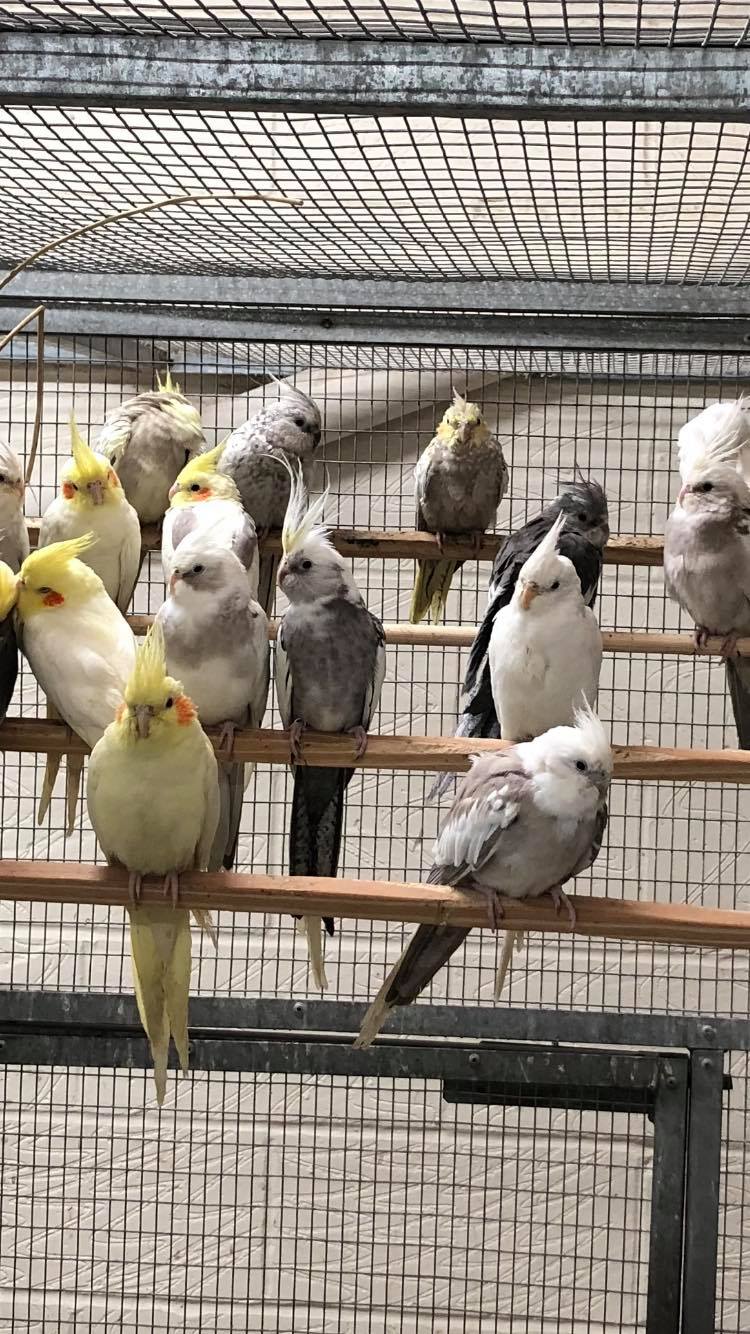
| Mutation | Appearance | Notes |
|---|---|---|
| Normal Grey | Grey body, orange cheek patches, yellow face (male) | The classic cockatiel. Hardy, well-established. Males tend to be more vocal and colourful. |
| Lutino | Yellow-white body, bright orange cheek patches, red eyes | Very popular. Striking appearance. Some lutinos have a bald patch behind the crest — normal for the mutation. |
| Pied | Patches of grey and yellow in variable patterns | No two pieds look alike. Personality varies by individual bird. |
| Pearl | Scalloped feather pattern of yellow and grey | Females retain the pearl pattern throughout life. Males often moult out of it after the first adult moult. |
| Cinnamon | Warm brown-grey rather than cool grey | Softer colouring. Same temperament as normal grey. Popular with experienced keepers. |
| Whiteface | Grey body, no orange cheek patches, white face | Striking and unusual. Males are particularly handsome. Less commonly available. |
Availability changes regularly — the best way to see what we currently have is to come in, or give us a call on 01793 512400 before making the trip. You can also see what else we stock on our cage and aviary birds page.
One Last Thing — And I Mean It
If you come into Paradise Pets seriously interested in a cockatiel and I think your situation is not quite right — you are out all day, the house is too noisy, you have not thought about the lifespan — I will tell you. Kindly, and without making you feel bad. But honestly.
And I will suggest alternatives. Perhaps a pair of budgies would suit your household better right now. Perhaps the timing is not right and you should come back in a year. Perhaps a cockatiel is exactly right but you need to make some changes to your setup first. I would rather have that conversation than sell you a bird that is going to struggle.
We have been doing this since 1988. We have seen cockatiels go to homes that were ready for them — and thrive for fifteen, eighteen, twenty years, becoming genuine members of the family. We have also seen what happens when that conversation did not happen at the start. The first outcome is what we are aiming for, every single time.
Come and see us. We stock a full range of cage and aviary birds, and we are always happy to spend as long as you need talking through the right choice. There is no pressure and no rush. The right bird, in the right home, is worth getting right.
Visit Us at Paradise Pets Swindon
We stock cockatiels year-round — normal greys, lutinos, pieds, pearls, cinnamons, and whitefaces depending on availability. All UK-bred, all from breeders we have worked with for years. Come in and spend some time with the birds before you decide.
We also stock a full range of budgerigars, rabbits, guinea pigs, and hamsters and gerbils — all UK-bred and ready to go to good homes.