


Neil has kept, bred, and sold rabbits at Paradise Pets Swindon since 1988 — over 35 years of helping UK families understand and care for these often-misunderstood animals. In that time, the single most common disappointment he hears from owners is that their rabbit “does not like being held.” This is his honest, practical guide on why rabbits genuinely hate being picked up, what they actually want from you instead, and how to build the kind of relationship that works for both of you.
A young woman came into the shop one Wednesday afternoon, clearly upset. She had got her first rabbit four months earlier — a beautiful young Mini Lop she had named Marshmallow. She had imagined the kind of relationship she had seen in films and on social media — a rabbit that nestled into her arms, was carried around the house, sat happily on her lap, accepted being held and cuddled like a small affectionate cat.
What she actually had was a rabbit that fled whenever she approached, struggled and kicked the moment she tried to pick him up, and sometimes nipped her in protest. She had started to think Marshmallow simply did not like her. She wondered if she had made a mistake getting a rabbit at all. She was, when she came in, on the verge of considering rehoming him.
I asked her to sit down for a moment, because what she was describing was not a problem with Marshmallow. It was not a problem with her either. It was a fundamental misunderstanding about what rabbits actually are as animals — one that almost every first-time UK rabbit owner shares, because the cultural picture of rabbits is so completely at odds with the biological reality.
I told her what I am about to tell you in this article. Marshmallow was not broken. Their relationship was not broken. She just needed to understand what rabbits genuinely are, and what they actually want from a human relationship. Six months later, she came back into the shop to show me a photo of Marshmallow lying flat next to her on the carpet, eyes half-closed, completely relaxed. They were not the same kind of pair she had originally imagined. They were something genuinely better — a rabbit who trusted her completely, on his own terms.
This article is the conversation I have at the counter with disappointed UK rabbit owners. By the end of it, you will understand exactly why rabbits hate being picked up, what they actually want from you, how to build genuine trust and bonding without forced handling, when picking up is necessary and how to do it as safely as possible, and what kind of relationship is realistic to expect with a pet rabbit.
First — Why Rabbits Hate Being Picked Up
To understand why rabbits respond the way they do to being lifted, you need to understand what kind of animal a rabbit actually is at a biological level. They are not small dogs. They are not large guinea pigs. They are not cats with longer ears. They are a fundamentally different category of animal, and their behaviour follows different rules.
Rabbits are prey animals. Their entire evolutionary history has been about avoiding being eaten — by foxes, by birds of prey, by larger mammals. Every instinct in a rabbit is shaped by this. They are vigilant, fast, easily startled, and intensely attuned to threats from above and behind.
When a rabbit is picked up, several things happen at once from the rabbit’s perspective:
- It is being lifted into the air — exactly what a bird of prey would do if it caught the rabbit
- Its feet leave the ground — removing its primary defence mechanism (running away)
- It is being grasped from above — the direction of attack for most rabbit predators
- It is being constrained by something larger than itself — triggering deep predator-prey responses
- It cannot see what is happening behind or above it — vulnerability to attack
- Its body is in an unnatural position — possibly held against ribs, possibly partially upside down

The rabbit’s response to all of this is not learned. It is not personal. It is not about trust or relationship. It is hard-wired survival behaviour that has kept rabbits alive as a species for millions of years. Asking a rabbit to accept being picked up calmly is asking it to override its deepest survival instinct — and most rabbits cannot do it fully, no matter how patient and gentle you are.
After 35 years at the counter, I can confirm — even the most well-bonded, hand-reared, lovingly cared-for rabbit will usually still struggle against being lifted. Some learn to tolerate it. Almost none enjoy it. That tolerance is not the same as enjoyment, and pretending otherwise sets up a relationship that does not work properly for either party.
The Real Damage Of Forced Handling
For UK owners who think this might be a minor issue — that the struggling is just a phase the rabbit will grow out of, or that they should persist until the rabbit accepts it — here is the honest picture of what forced handling actually does.
Damage that repeated forced handling causes:
- Physical injuries — rabbits can break their own backs kicking against being held; the spinal injury risk is genuinely serious
- Chronic stress — rabbits in regular forced-handling situations develop measurable stress-related health problems
- Damaged trust — every forced handling sets back the relationship, sometimes by weeks
- Avoidance behaviour — the rabbit learns to flee from human approach entirely, even friendly approach
- Aggression — what starts as protective struggling can develop into biting and serious aggression
- Reduced lifespan — chronic stress in rabbits has been linked to shorter lives in welfare research
- Failure to bond — the relationship never reaches the trust level it could have
- Family disappointment — children especially come to feel the rabbit “does not like them”
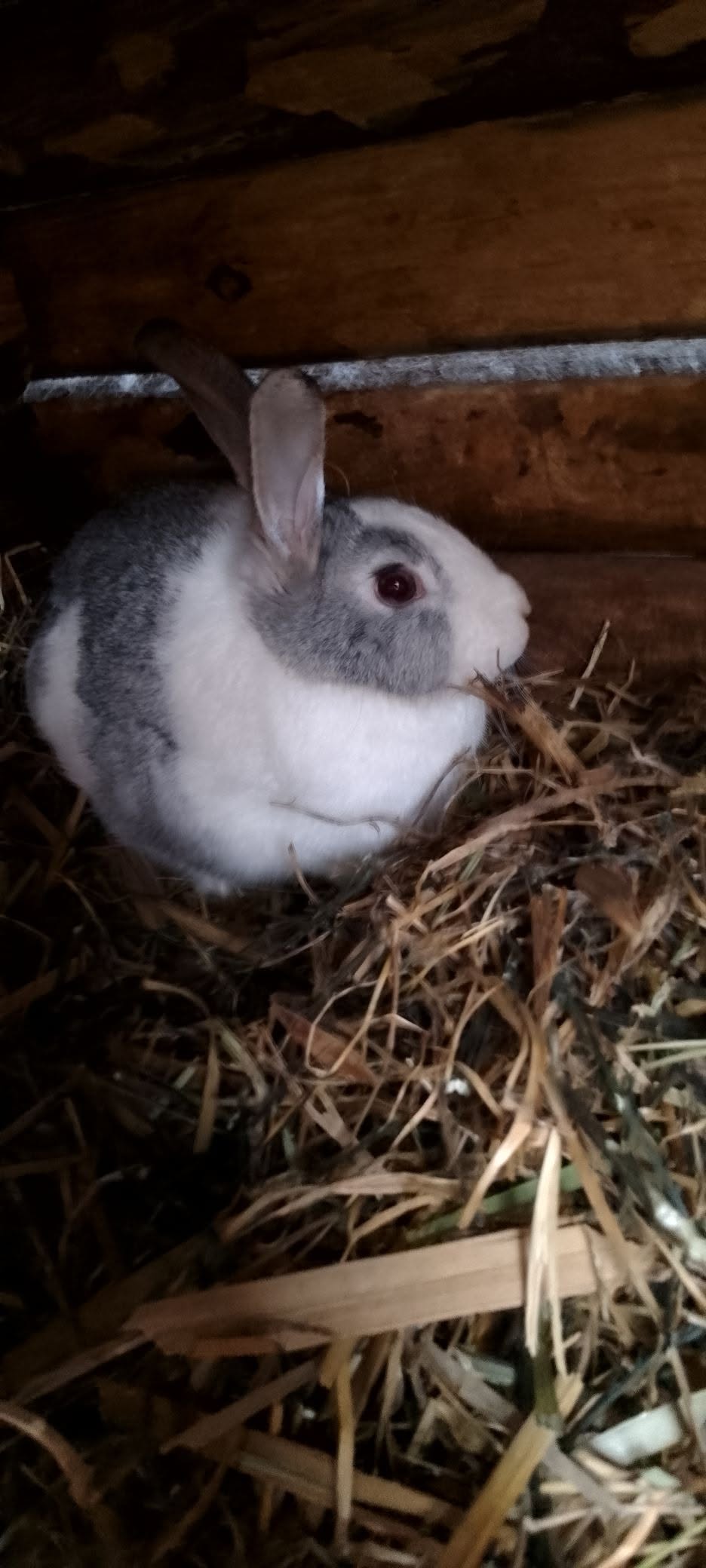
The spinal injury risk deserves particular emphasis. A rabbit struggling violently against being held can twist its body with such force that it fractures its own back. This is a documented welfare issue that veterinary surgeons across the UK see regularly. The rabbit is not trying to injure itself — it is responding to what its instincts read as a life-threatening predator attack. But the consequences can be catastrophic.
After 35 years, I have unfortunately seen the aftermath of this several times. A young rabbit, picked up by a child, struggles, twists, and the family ends up in an emergency veterinary visit with a rabbit that may need to be put to sleep. None of it was malicious. The family loved the rabbit. They simply did not understand what they were asking the rabbit to do.
- Rabbits can fracture their own spines kicking against being held — this is a real and documented risk
- Chronic stress shortens rabbit lives — repeated handling stress affects health long-term
- Children are particularly at risk of being scratched or bitten by a frightened struggling rabbit
- Trust damage is cumulative — each bad handling sets back the relationship
- Some rabbits never recover their trust after repeated forced handling experiences
- Pet rabbit welfare guidance in the UK now strongly discourages routine lifting
- Most veterinary handling injuries to rabbits come from inexperienced lifting attempts
What Rabbits Actually Want From You
For UK owners ready to abandon the forced-handling approach, the good news is that what rabbits actually want from a human relationship is genuinely wonderful — it is just different from what most first-time owners expect. After 35 years of watching rabbit-human relationships develop, here is what builds genuine trust and connection.
1. Floor Time — The Foundation Of Everything
This is the single most important shift UK owners need to make. Instead of bringing the rabbit up to you, you get down to the rabbit. You sit on the floor, in the rabbit’s space, and let the rabbit choose to come to you on its own terms.
What floor time looks like:
- You sit calmly on the floor in a rabbit-safe area
- You bring a book, your phone, or a coffee — something for you to do
- You do not try to interact with the rabbit at all initially
- You let the rabbit decide when to approach
- You let the rabbit explore you, sniff you, possibly climb on you
- You move slowly when you do move
- You let the rabbit retreat when it wants to
- You stay for at least 20-30 minutes

This is how rabbits genuinely choose to interact with humans. Once they realise you are not pursuing them, lifting them, or being a threat, they become extraordinarily curious about you. Many bonded rabbits will end up lying next to their owners during floor time, sometimes flopping onto their side completely, eyes half-closed — a sign of total relaxation and trust that is genuinely one of the most rewarding things any UK pet owner can experience.
2. Quiet Presence In Their Space
Rabbits are intensely aware of who is sharing their space. A human who spends time in the room with them — reading, working, watching TV — gradually becomes part of the rabbit’s accepted environment. The rabbit relaxes, behaves naturally, and starts to include the human in its mental map of safety.
This is one reason why house rabbits, who share family living space, often bond far more strongly with their humans than outdoor hutch rabbits. The shared presence over hours and days builds trust in a way that brief intense interactions cannot.

3. Hand-Feeding On Their Terms
A piece of fresh herb, a small slice of vegetable, or a favourite treat offered from your hand at ground level — and only if the rabbit comes to you to take it — is one of the most powerful trust-building activities available. The rabbit learns that good things come from you without any pressure, and starts to associate your presence with positive experiences.
What works well for UK rabbits:
- Fresh parsley, coriander, basil (small amounts, fresh)
- Small slices of apple (occasional, not daily — high sugar)
- Banana slices (very occasional treat)
- Carrot tops (better than the carrot itself — lower sugar)
- Dandelion leaves from chemical-free gardens
- Small pieces of dried apple from rabbit-safe sources
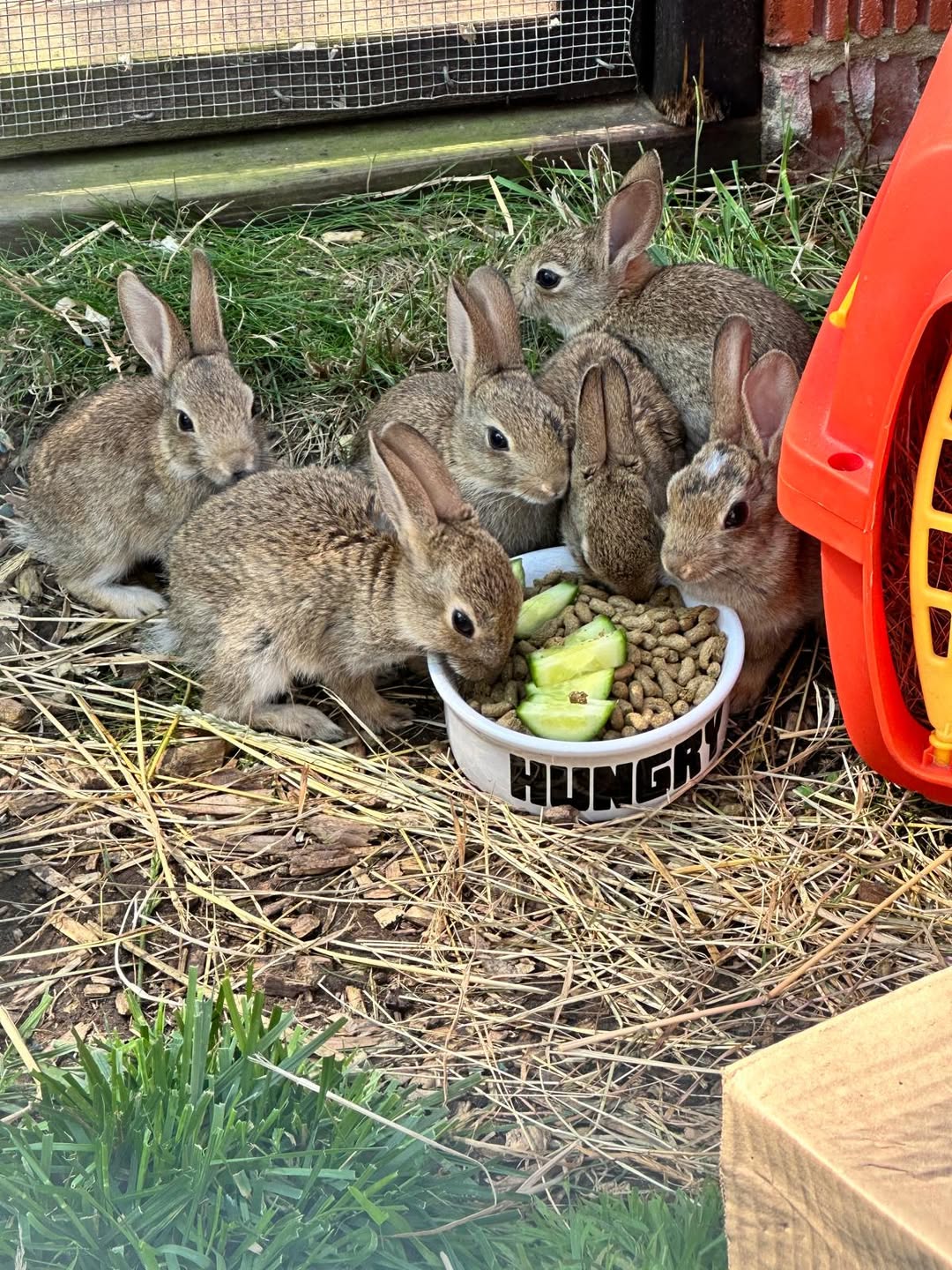
The key is small amounts, offered gently, and only if the rabbit chooses to come. Never chase the rabbit with food. Never push food at them. Let them set the pace entirely.
4. Gentle Stroking On The Ground
Once a rabbit trusts you enough to come close, sit near you, or lie next to you, gentle stroking is usually welcomed — particularly between the ears, along the back, and on the cheeks. Many rabbits will close their eyes, grind their teeth softly (a sign of contentment in rabbits, similar to a cat purring), and relax completely.
The key elements:
- The rabbit must be on the ground, in its own space
- The rabbit must have approached you or stayed near you voluntarily
- Strokes should be slow, gentle, and predictable
- Avoid the belly, hindquarters, and feet — sensitive areas most rabbits dislike
- Stop if the rabbit moves away — respect the choice
- Build duration gradually over weeks
5. Talking And Quiet Time Together
Rabbits recognise individual voices and learn to associate them with their humans. Quiet, calm talking to your rabbit while you are in the room — even if you are doing other things — gradually builds the rabbit’s familiarity with you as a safe presence.
When You Genuinely Have To Pick Your Rabbit Up
For UK owners who want to abandon routine lifting but recognise that sometimes picking up is unavoidable — vet visits, health checks, grooming, emergency situations — here is the safest approach. The goal is to minimise the stress and the risk of injury, both to the rabbit and to you.
- Approach calmly from the front or side, never from above
Predators attack from above. Coming from the side or front is less threatening to the rabbit. - Talk gently as you approach
The rabbit should not be startled by your touch. - Place one hand under the chest, behind the front legs
This is the supportive grip — your dominant hand goes here. - Place the other hand firmly under the hindquarters
Critical — the rabbit’s hindquarters MUST be supported. Their powerful hind legs need to be held safely. - Lift in one smooth motion, keeping the rabbit close to your body
Hold the rabbit against your chest, with its head facing inward toward you. - Keep the rabbit close and secure
The rabbit should feel fully supported, not dangling. - Move to where you need to be quickly and calmly
This is not a moment for socialising — get to the destination promptly. - Place the rabbit down gently, releasing the hindquarter support last
Allow the rabbit to feel ground under its feet before you let go fully.
The most common UK owner mistake during necessary lifting is failing to support the hindquarters. A rabbit whose back legs are unsupported instinctively kicks — and that is exactly the movement that causes spinal injury. The hindquarter support is not optional. It is the single most important element of safe rabbit handling.
- NEVER pick a rabbit up by the ears — extremely painful, can cause permanent damage
- NEVER pick up by the scruff alone — does not support body weight, causes injury
- NEVER lift without supporting the hindquarters — primary cause of spinal injury in pet rabbits
- NEVER turn a rabbit onto its back (“trancing”) — once thought to be calming, now known to be a fear response
- NEVER let children under 8 pick up rabbits unsupervised — too risky for both child and rabbit
- NEVER pick up a rabbit you have not approached calmly first — startle response causes injuries
- NEVER hold a struggling rabbit tightly — put them down gently and try again later
- NEVER carry a rabbit upstairs or down without securing them in a carrier — fall risk is significant
How To Build A Real Bond With Your Rabbit
For UK owners ready to invest in the kind of relationship that genuinely works with a rabbit, here is the practical timeline based on what I have seen work across 35 years at the counter.
| Timeline | What To Focus On |
|---|---|
| Week 1-2 — Settling in | Quiet space, minimal handling, let the rabbit explore its environment. Spend time in the room without interacting directly. |
| Week 2-4 — Presence and food | Daily floor time of 20-30 minutes. Offer treats from your hand at ground level. Talk gently. No lifting unless absolutely necessary. |
| Week 4-8 — Approach acceptance | Rabbit becomes comfortable approaching you for treats. May allow brief gentle stroking on the head. Continues to choose proximity voluntarily. |
| Month 2-3 — Genuine trust development | Rabbit chooses to spend time near you during floor sessions. May groom themselves while close to you (sign of relaxation). Stroking becomes welcomed. |
| Month 3-6 — Deep bonding | Rabbit may flop next to you, lie on its side fully relaxed, groom you, or seek out your presence. This is the established bonded relationship. |
| Month 6+ — Long-term partnership | Rabbit reliably responds to your voice, seeks out interaction, and has clear preferences about how it likes to be approached. Genuine mutual trust. |
The timeline is approximate — some rabbits bond faster, others slower, and individual personality plays a significant role. But the pattern is consistent. Rabbits that have not been forced into handling develop deeper, more stable bonds with their humans than rabbits that have been routinely picked up against their will.
For more on rabbit welfare and care, our guide on why rabbits are not the low-maintenance pets people think they are covers the broader commitment picture, and our article on the hutch size mistake first-time UK owners make covers another fundamental rabbit welfare issue.
What About Children And Rabbits?
This is one of the most difficult conversations I have at the counter, because so many UK families buy rabbits specifically as children’s pets — imagining the child carrying the rabbit around, holding it, cuddling it. The honest reality is genuinely different, and worth understanding before getting a rabbit.
Rabbits and children — what actually works:
- Children under 8 should not pick up rabbits at all — risk to both is too high
- Children 8-12 can learn safe handling under supervision — but should never lift unsupervised
- Teenagers can usually handle rabbits safely — with proper training and respect for the rabbit’s preferences
- Floor time is the main mode of interaction for children — works at any age
- Hand-feeding teaches gentle interaction — children love it, rabbits accept it
- Brushing and grooming are good supervised activities — rabbit stays on the ground
- Talking and reading to the rabbit builds bonds — even very young children can do this
- Setting realistic expectations is the parent’s job — explain to children what rabbits actually are
The children who develop the best relationships with rabbits are the ones whose parents have helped them understand what rabbits actually are, and what the rabbit actually wants. Children are often more accepting of this than parents expect — once they understand that the rabbit chooses to come to them, the relationship becomes far more rewarding than the forced-handling version ever could be.
The Cultural Picture Versus The Reality
For UK families considering a rabbit, it is worth being honest about the gap between cultural representations of rabbits and biological reality. This gap is the source of more disappointment in UK pet rabbit households than any other single factor.
What films, social media, and marketing show:
- Rabbits being carried around in arms, looking content
- Rabbits being held by children, accepting cuddles
- Rabbits sleeping on laps
- Rabbits responding to being lifted with affection
- Rabbits behaving like small soft cats or kittens
What rabbits actually are:
- Ground-dwelling prey animals with strong individual personalities
- Intelligent, social animals with sophisticated communication
- Capable of deep bonds but on their own terms
- Resistant to being lifted but capable of profound trust at ground level
- Companions for owners who meet them on their terms, not pets for handling
After 35 years, I genuinely believe the cultural picture of rabbits has done more damage to UK pet rabbit welfare than almost any other factor. Families buy rabbits expecting one kind of animal, get a different kind, feel disappointed, and the rabbit ends up neglected, rehomed, or in welfare difficulty. Understanding what rabbits actually are — before you bring one home — is the kindest thing any UK family can do.
Common Mistakes UK Owners Make
For balance, here are the genuine mistakes I see at the counter when UK owners describe their handling challenges. Avoiding these helps you build the right kind of relationship.
- Picking up the rabbit every day to “show affection” — counterproductive, damages trust
- Persisting when the rabbit struggles, hoping it will “get used to it” — it will not, and you risk injury
- Letting young children pick up the rabbit unsupervised — significant risk for both
- Comparing the rabbit to other pets unfavourably — rabbits are not dogs or cats
- Believing the rabbit “does not like” you when it actually just does not like being picked up
- Holding a struggling rabbit tightly — increases injury risk significantly
- Picking the rabbit up by the scruff — outdated and harmful technique
- Trancing (turning the rabbit onto its back) — now known to be a fear response, not relaxation
- Skipping floor time because it “isn’t real interaction” — it is the most real interaction available
- Giving up on the relationship after a few weeks — bonding with rabbits takes months, not weeks
The single most common mistake I see is owners who interpret the rabbit’s resistance to being picked up as a sign that the rabbit does not like them, when it is actually just biology playing out. Once that misinterpretation is corrected, the whole approach to the relationship can change for the better.
Frequently Asked Questions
Why does my rabbit hate being picked up?
Rabbits are prey animals whose entire evolutionary history has been about avoiding being lifted by predators. Being picked up triggers deep survival instincts that override any individual training or relationship. After 35 years, I can confirm that almost no rabbit genuinely enjoys being lifted — the most owners can hope for is tolerance, not acceptance. The good news is that you can build a deep trusting relationship with your rabbit without ever needing to pick it up routinely.
Will my rabbit eventually learn to like being held?
Realistically, no — not in the sense of genuinely enjoying it. Some rabbits learn to tolerate being held for short periods if it is done very carefully and the rabbit feels secure. But this is tolerance, not enjoyment. Persistent attempts to make a rabbit enjoy being lifted typically damage the relationship and risk injury. Acceptance of this biological reality is the foundation of a better relationship.
Is my rabbit unhappy if I never pick it up?
Genuinely the opposite — your rabbit is more likely to be happy and bonded with you if you do not routinely pick it up. The relationship that develops through floor time, hand-feeding, and ground-level interaction is far deeper than any forced-handling relationship can be. Rabbits that are not subjected to routine lifting develop more confident, trusting personalities and bond more reliably with their humans.
How do I pick up my rabbit safely when I need to?
Approach calmly from the side or front, never from above. Place one hand firmly under the chest behind the front legs, and the other hand under the hindquarters. The hindquarter support is essential — without it, the rabbit can kick and injure its own spine. Lift in one smooth motion, hold the rabbit close to your body, and place it down gently with the hindquarter support released last. Save lifting for genuinely necessary situations only.
Can children build relationships with rabbits without picking them up?
Absolutely — and the relationships children build through floor time, hand-feeding, talking, and gentle grooming are usually stronger and more rewarding than any forced-handling relationship. Children often adapt to this approach more readily than their parents expect, particularly when they understand that the rabbit is choosing to come to them voluntarily.
What does it mean when my rabbit lies on its side near me?
This is one of the most positive rabbit behaviours you can witness. A rabbit “flopping” — lying on its side with eyes half-closed, legs stretched out — indicates complete relaxation and trust. The rabbit is showing you that it feels completely safe in your presence. After 35 years, I genuinely consider this to be the gold standard sign of a well-bonded rabbit. It is not the same as being held, but it is something genuinely better.
Where can I get advice on rabbit care in Swindon?
Come and see us at Paradise Pets, Manor Garden Centre, Cheney Manor, Swindon SN2 2QJ. We are always happy to talk about rabbit behaviour and what it means, and we can help you build realistic expectations and approaches for your specific situation. Ring us on 01793 512400. The advice is free and we have been doing this for 35 years.
One Last Thing From Me
“Why does my rabbit hate me when I pick it up?” is one of the most common heartbroken questions I get from UK owners, and one that I am always genuinely glad to answer — because the answer is good news, even when it does not initially sound that way. The honest answer, after 35 years of selling rabbits, is — your rabbit does not hate you. Your rabbit hates being picked up. Those are completely different things, and once you understand the difference, the entire relationship transforms.
The young woman with Marshmallow that Wednesday afternoon? She went home, abandoned her attempts to pick him up, and started doing 30 minutes of floor time every evening — sitting quietly in his pen, reading a book, eating a snack, letting him come to her on his terms. The first week, he watched her warily from a corner. By the second week, he was coming to investigate her, sniffing her, hopping past. By the fourth week, he was lying down next to her while she read. By the third month, he was flopping completely relaxed by her side, getting gentle strokes between his ears, occasionally grooming her hand.
When she came back six months later with the photo of Marshmallow flopped beside her, she told me she now had a relationship with him that was deeper than anything she had originally imagined. They had built something real — built on his terms, with her respecting his nature — and it had become one of the most rewarding pet relationships she had ever had. He still did not enjoy being picked up. But he also did not need to be picked up, because the relationship they had built did not depend on it.
That is what I want every UK rabbit owner to experience. Not the disappointment of trying to force a rabbit to be something it is not, but the genuine joy of building a relationship with a rabbit on the terms that actually work. The pets you choose to know on their own terms tend to surprise you with how much they have to offer. Rabbits in particular reward this kind of respect richly, once you give them the chance.
If you are reading this with a rabbit at home that you have been struggling to handle, please consider abandoning the lifting attempts for a few weeks. Try floor time instead. Try hand-feeding at ground level. Try simply sharing space with your rabbit without any agenda. Give the relationship a chance to develop the way the rabbit needs it to develop. Most UK owners are genuinely amazed by what happens within 4-8 weeks of this approach.
If you are still considering whether a rabbit is right for your family, please come and have a chat. We will give you the honest picture — what rabbits actually are, what they want from you, and whether the kind of relationship they can offer matches what you are hoping for. Better to find out before bringing a rabbit home than to be disappointed afterward. After 35 years, I have come to see this honesty as one of the most important things we can do at the counter.

Want To Understand Your Rabbit Better? Come And See Me
We stock proper rabbit supplies and we give honest welfare-led advice on what your rabbit actually needs — including the behavioural realities most pet shops never mention. Free advice based on 35 years of selling and bonding with these animals. That is how we have done things since 1988.