
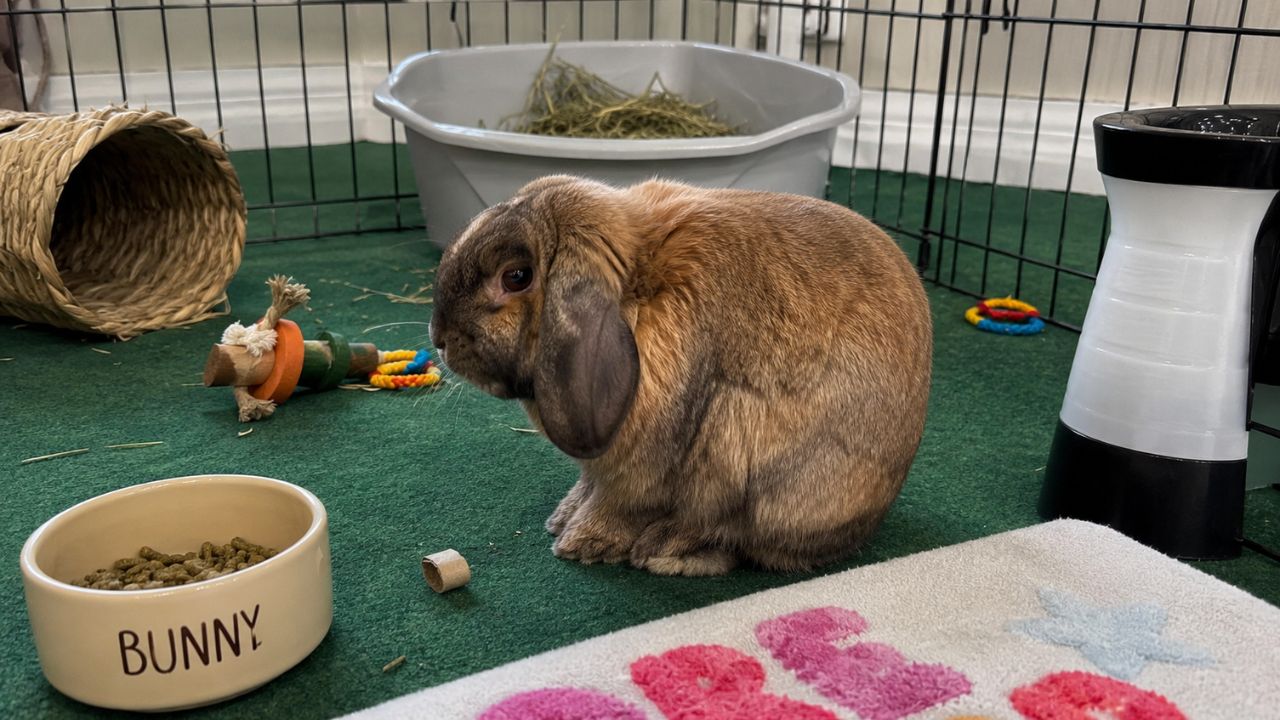

Neil has sold, kept, and bred rabbits at Paradise Pets Swindon since 1988 — including mini lops, dwarf lops, Netherland dwarfs, lionheads, and more. In over 35 years, he has had more conversations about rabbit health than he can count. This article covers the pain signs he wishes every owner knew from day one — because in rabbits, the window between early signs and a serious crisis is shorter than most people realise.
Rabbits are one of the most misunderstood pets in the UK.
Not because people do not care about them — in my experience, rabbit owners are often deeply attached to their animals. But because rabbits are extraordinarily good at hiding how they feel. They have had thousands of years of evolution telling them to do exactly that. A rabbit that looks ill in the wild is a rabbit that gets eaten. So they hide it. They carry on. They look normal right up until they cannot.
The result is that owners miss the signs. Not because they are not paying attention — but because the signs are subtle, and nobody told them what to look for.
This article is my attempt to change that.
Why Rabbits Hide Pain So Effectively
Before I go through the eight signs, I want to explain why this happens — because understanding it changes how you watch your rabbit.
Rabbits are prey animals. In the wild, any sign of weakness attracts predators. So over thousands of years, rabbits have developed a strong instinct to suppress visible signs of illness or pain. They keep eating when they can. They keep moving when they can. They maintain their normal routines as long as their body allows them to.
By the time a rabbit shows obvious signs — sitting hunched in a corner, grinding its teeth audibly, refusing all food — it has usually been in pain or distress for hours, sometimes longer. The apparent suddenness is almost always the final stage of something that started quietly.
This is the most important thing I tell new rabbit owners: the absence of obvious signs does not mean the absence of a problem. You have to learn the subtle signs, because those are the ones that give you a window to act.
Sign 1: The Hunched Posture
This is the single most reliable early indicator of pain in a rabbit, and it is the one I tell every owner to learn first.
A rabbit in pain will often sit with its body pulled in — elbows tucked under, back slightly rounded, weight shifted forward. It looks like the rabbit is trying to make itself smaller. The eyes may be partially closed or have a slightly glazed quality. The rabbit is not moving around, not exploring, not interacting. It is just sitting.
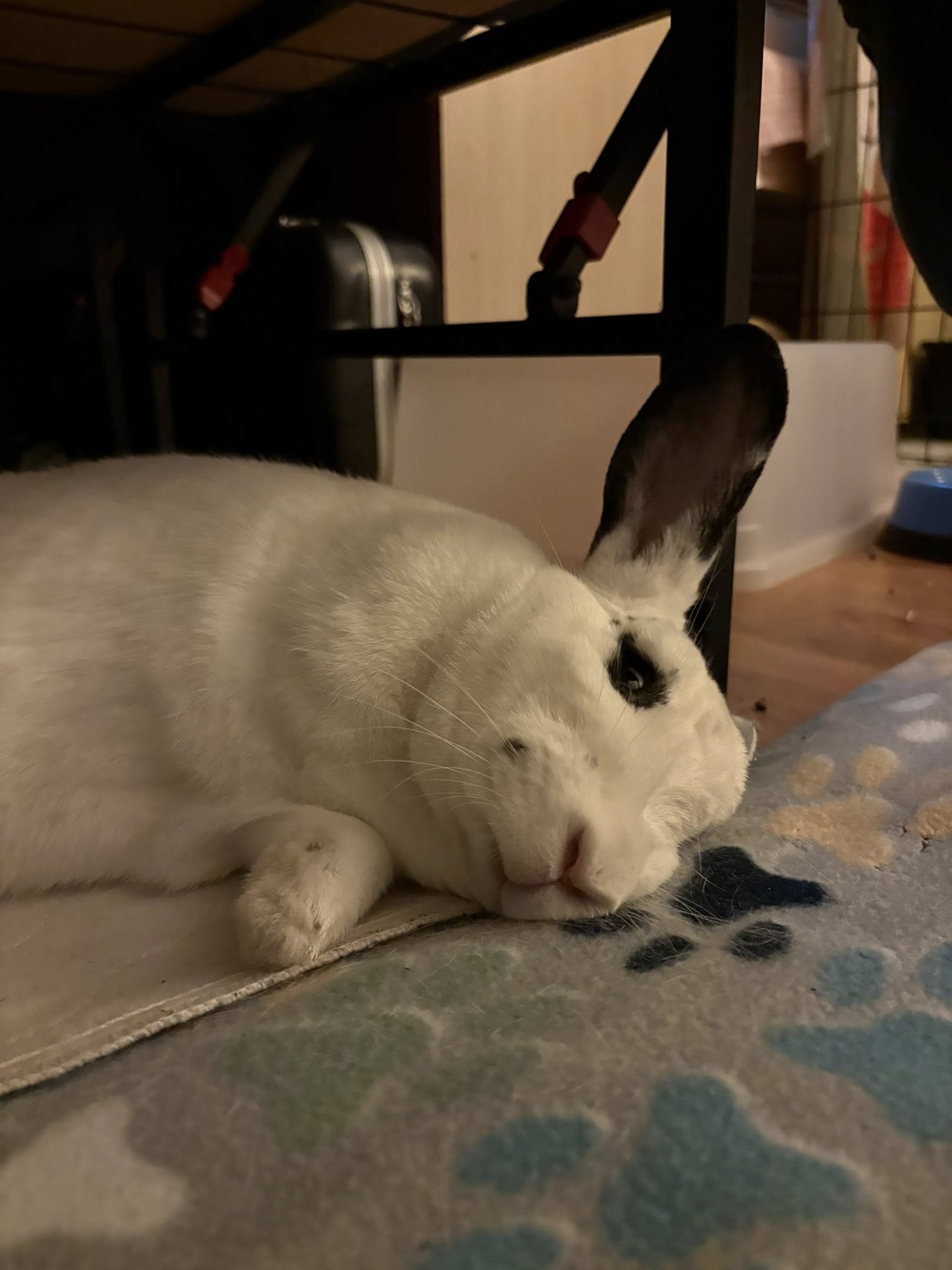
This is different from a rabbit that is resting. A relaxed rabbit lies flat, or in a loaf position with its body weight distributed evenly and its expression genuinely calm. A rabbit in the hunched position has a tension to it — a stillness that is not contentment.
Once you know what this looks like, you will not confuse the two. But you have to learn the difference before you need it.
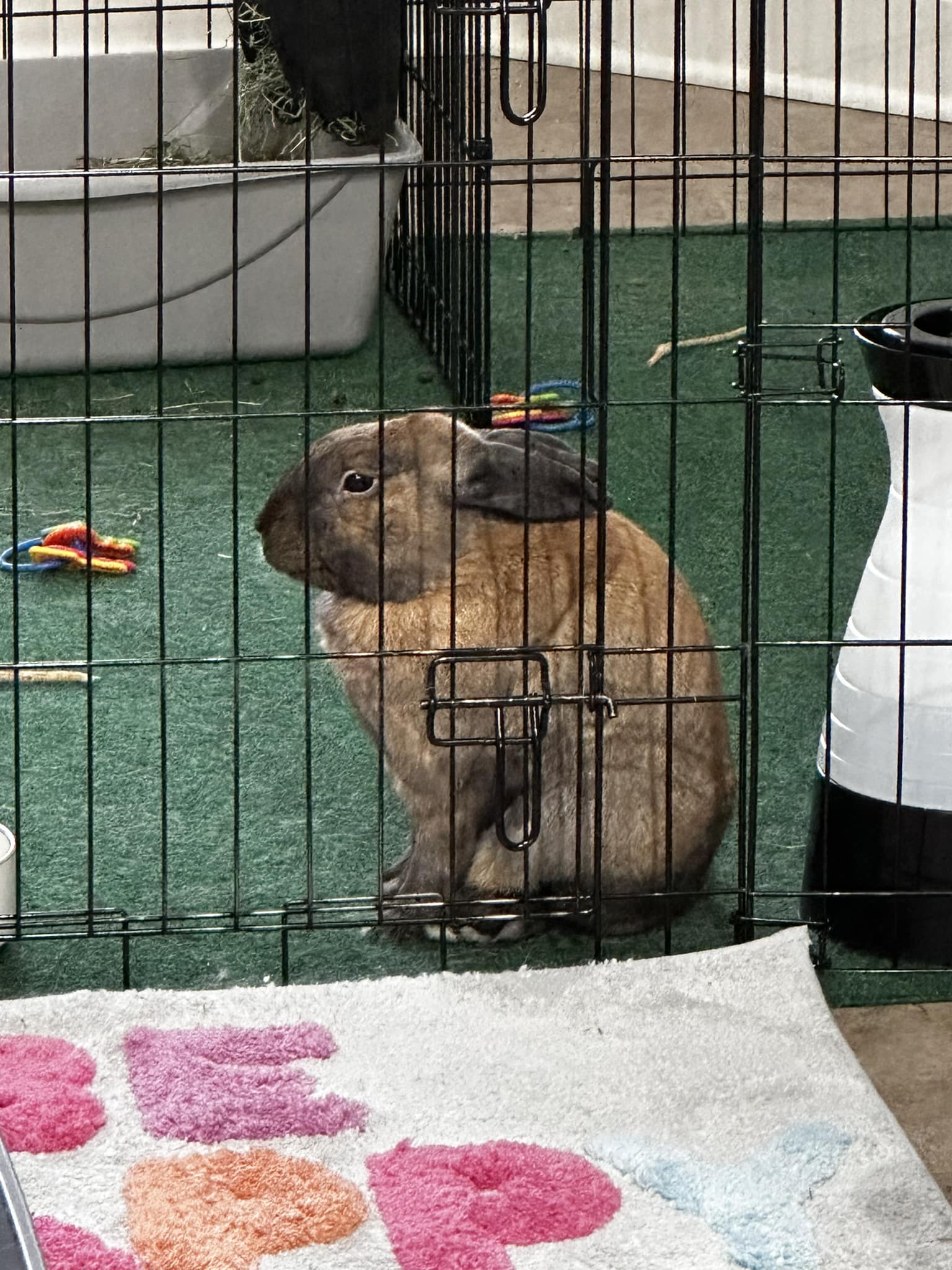
- Body pulled inward, elbows tucked under the chest
- Back slightly rounded rather than flat
- Eyes partially closed or lacking their usual alertness
- Weight shifted forward, reluctance to move
- The overall impression is of a rabbit that is enduring something
Any rabbit sitting like this for more than an hour or two is a same-day vet visit. Do not wait to see if it improves. In rabbits, waiting costs you the window.
Sign 2: Changes in Droppings — The One Owners Most Often Overlook
I mention this early because it is the sign owners most consistently miss — either because they are not checking, or because they do not know what normal looks like.
A healthy rabbit produces a large quantity of small, round, firm droppings consistently throughout the day. If you clean your rabbit’s enclosure every day, you have an automatic daily record of what is normal for your specific rabbit. That is enormously valuable.
Pain — particularly gut pain, which is common in rabbits — almost always changes the droppings before it changes anything else you can easily see. Fewer droppings than usual. Smaller droppings. Droppings that are misshapen, strung together, or have a mushy quality. Or, most urgently, no droppings at all.
- Significantly fewer droppings than usual over a 6–8 hour period
- Droppings that are much smaller than normal
- Droppings strung together with fur or mucus
- Soft, mushy, or misshapen droppings consistently
- No droppings at all — this is an emergency. Get to a vet immediately
No droppings in a rabbit is not a wait-and-see situation. It means the gut has slowed or stopped — a condition known as GI stasis — which can become life-threatening within hours. If your rabbit has produced no droppings for more than a few hours and is also not eating, treat it as an emergency.
Sign 3: Reduced or Absent Appetite
Rabbits eat constantly. That is not an exaggeration — a healthy rabbit grazes almost continuously throughout the day, and its digestive system is designed to keep moving at all times. When a rabbit stops eating, or eats significantly less than usual, something is wrong.
The difficulty is that a rabbit in early-stage pain will often still eat a little — enough to fool an owner into thinking things are probably fine. What you are looking for is not a complete refusal, but a change. Less enthusiasm at feeding time. Food left that would normally be gone. Hay that is not being touched when it would usually be eaten steadily through the day.
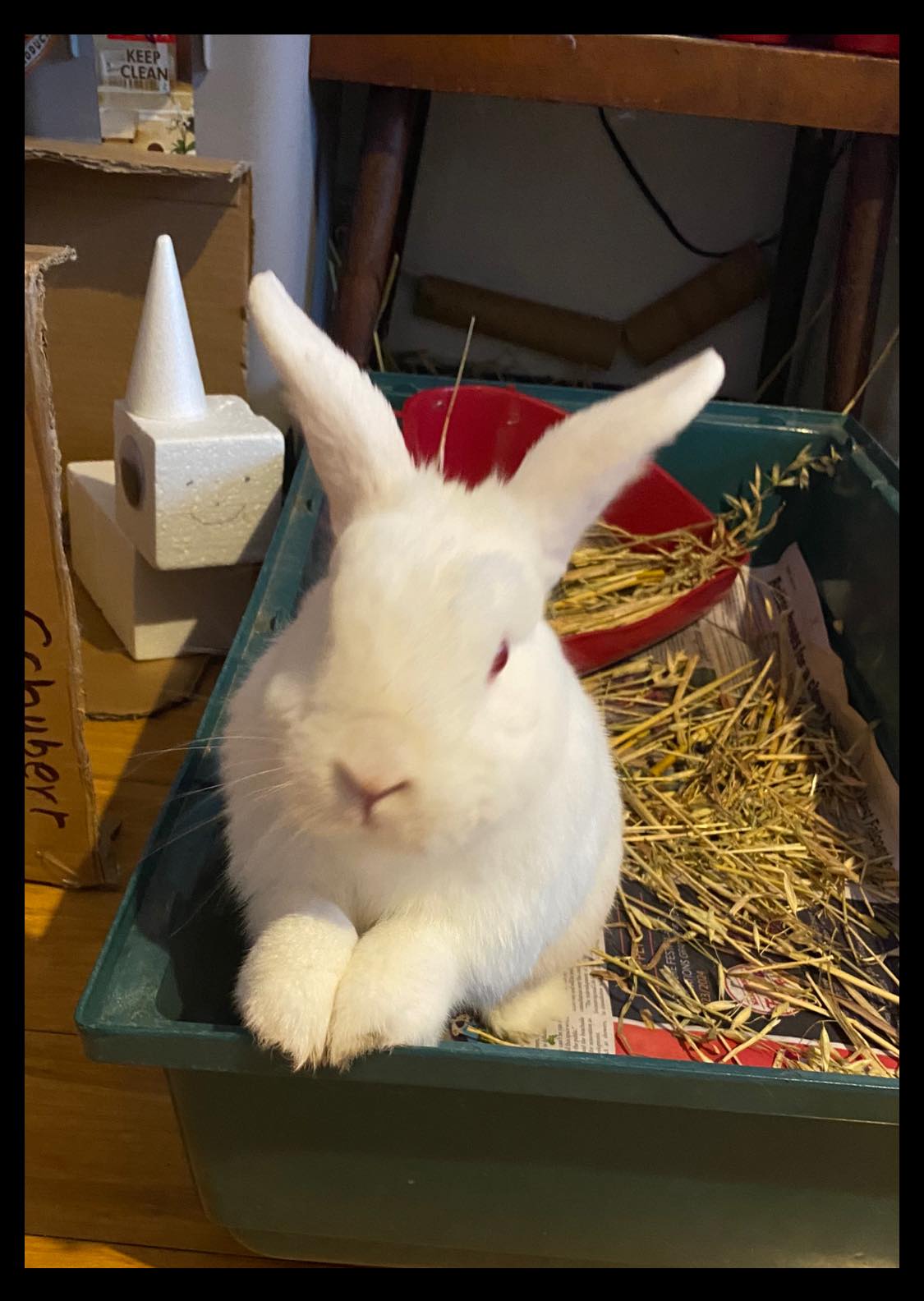
Rabbits that stop eating hay specifically are a particular concern. Hay should make up the majority of a rabbit’s diet. A rabbit that is ignoring hay but still eating pellets or treats is telling you something is not right — the discomfort of eating the rougher fibre may be what it is avoiding.
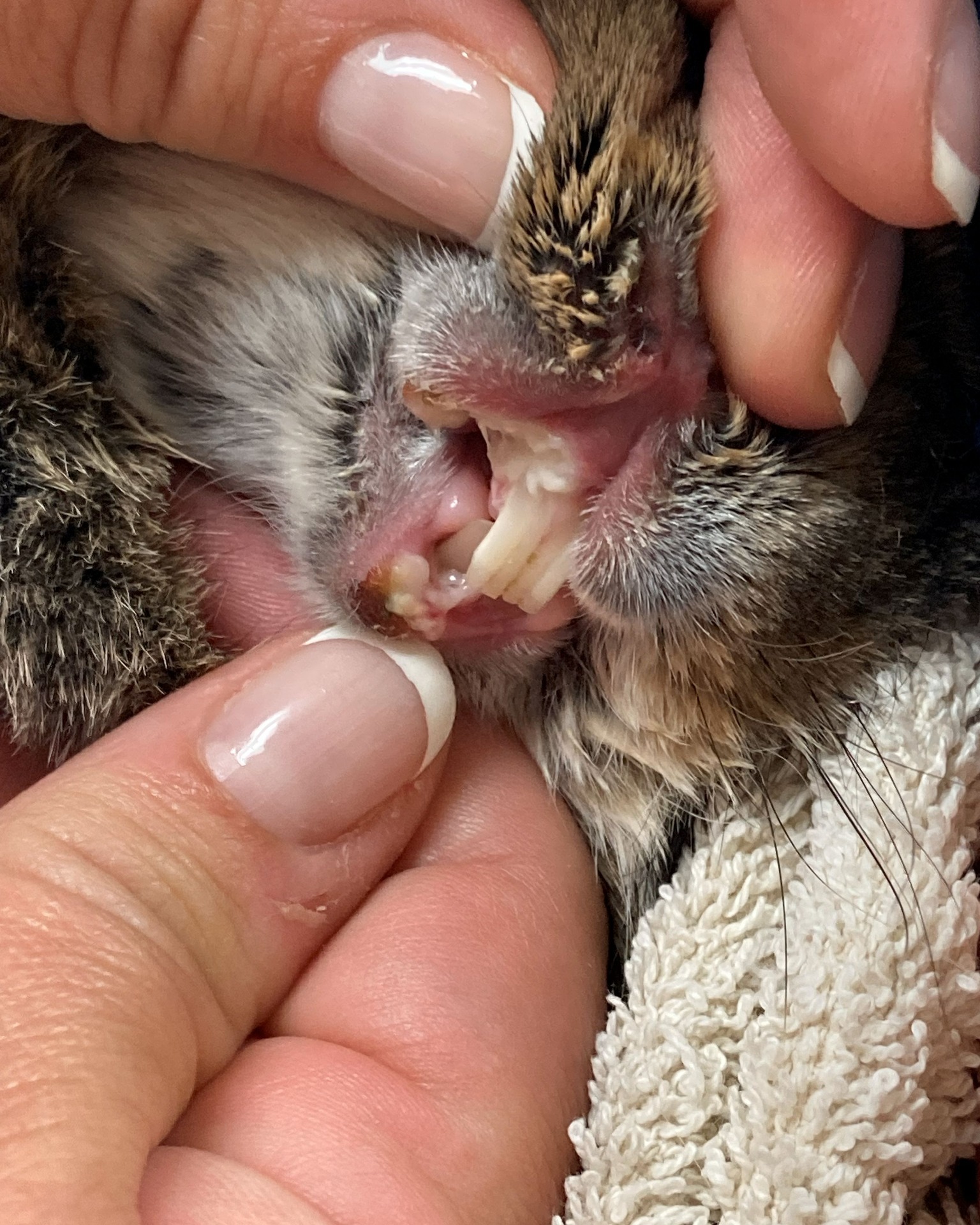
Sign 4: Tooth Grinding — And the Difference Between the Two Types
This is one that genuinely surprises people when I explain it, because most owners do not know that rabbits make two entirely different tooth sounds — and confusing them can lead to a serious missed sign.
Rabbits make a gentle tooth-clicking sound, sometimes called tooth purring, when they are content — being stroked, settling into a comfortable position, relaxed. It is quiet, rhythmic, and usually accompanied by obvious relaxation in the body.
Tooth grinding — bruxism — is different. It is louder, more pronounced, and sounds like the rabbit is working its jaw. It often occurs alongside the hunched posture. It is a pain response.
- Tooth purring: Soft, gentle clicking. Rabbit is relaxed, body is loose, often happening while being handled or resting comfortably. This is normal and positive.
- Tooth grinding: Louder, more deliberate. Rabbit may be hunched, still, or tense. Eyes may be partially closed. This is a pain sign — take it seriously.
If you are not sure which one you are hearing, look at the body. A rabbit that is relaxed and grinding gently is probably fine. A rabbit that is tense, hunched, and grinding is telling you it hurts.
Sign 5: Unusual Stillness or a Reluctance to Move
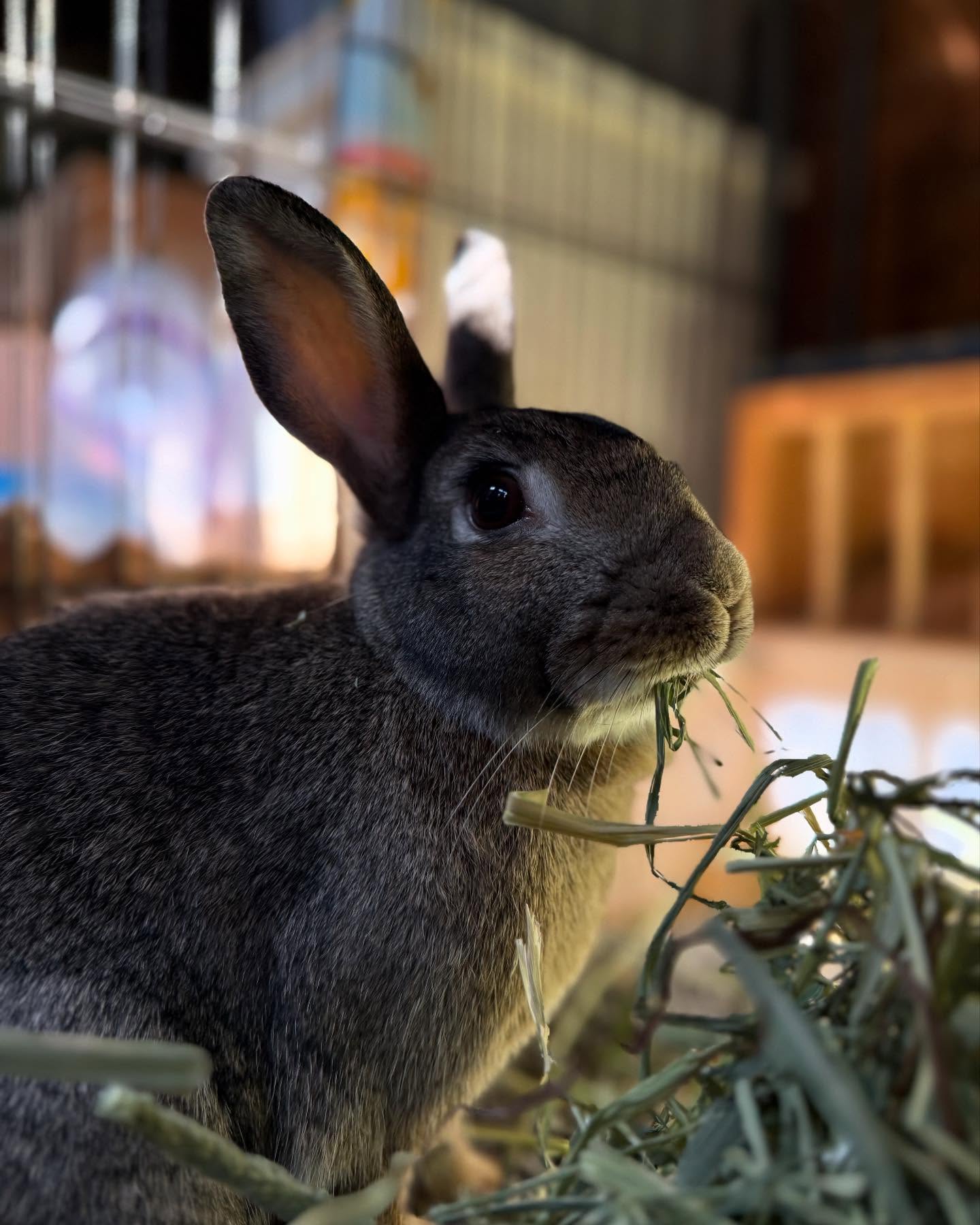
Rabbits, when they feel well, move. They explore. They thump. They rearrange things. They come to investigate whatever you are doing. A healthy rabbit has a quality of restless curiosity that is one of the things that makes them such engaging animals to keep.
A rabbit that is sitting in one spot for unusually long periods — not sleeping, just sitting — is one of the subtler early signs of pain that owners frequently explain away. They assume the rabbit is just having a quiet day. Sometimes that is true. But a rabbit that is doing this consistently, across more than one day, is worth paying attention to.
The same applies to a rabbit that is reluctant to move when it normally would — not coming to the front of the enclosure at feeding time, not moving away from a spot it has been in for hours, not reacting to things it would usually investigate.
Sign 6: Changes in Grooming — Both Too Much and Too Little
Rabbits are fastidious groomers. A healthy rabbit spends a significant portion of its day keeping itself clean — and the coat of a well rabbit reflects that. Sleek, even, no matting, no patches.
When a rabbit is in pain, grooming often changes in one of two ways.
The first is reduced grooming. The coat starts to look slightly unkempt — not dramatically matted, but less smooth than usual. The rabbit is not maintaining itself the way it normally would, because the energy and movement required is uncomfortable.
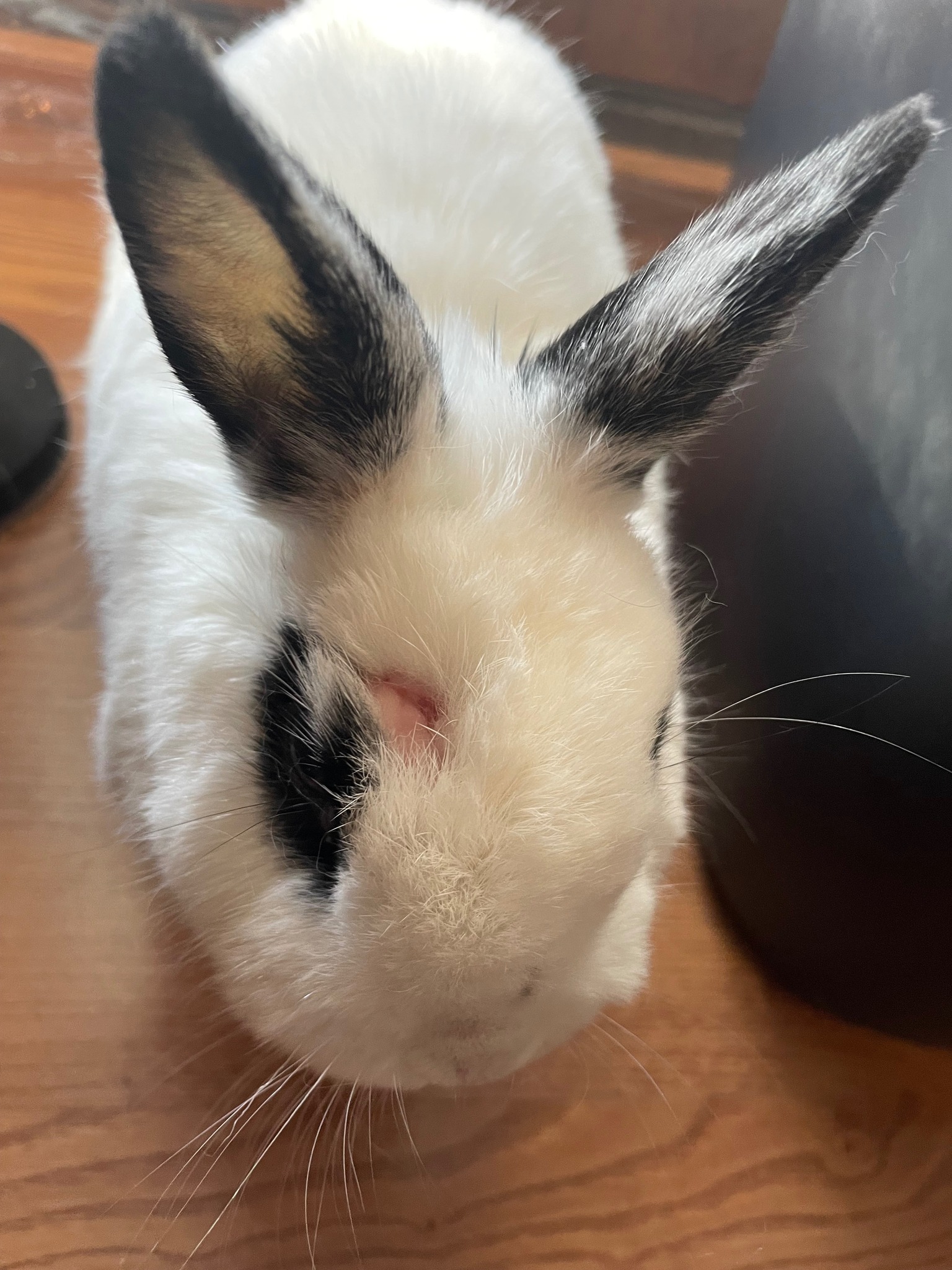 The second is over-grooming of a specific area. A rabbit that is repeatedly licking, chewing, or pulling fur from one location is almost always responding to localised pain or discomfort in that area. This can indicate an underlying skin problem, an injury, or internal pain that the rabbit is trying to locate and address.
Either change, sustained over more than a day or two, is worth investigating.
Sign 7: Aggression or Personality Change in a Normally Calm Rabbit
This is one of the most commonly misread signs I see, and I want to explain it clearly because owners often respond to it in exactly the wrong way.
A rabbit that suddenly becomes aggressive — lunging, biting, thumping, scratching when handled — is very often a rabbit that is in pain. The aggression is not a behaviour problem. It is a communication. The rabbit has learned that being touched or moved hurts, and it is doing the only thing it can to stop that from happening.
Owners frequently respond to this by handling the rabbit less, giving it space, assuming it is going through a phase. The underlying pain goes unaddressed.
- A normally friendly rabbit that suddenly reacts badly to being picked up or handled
- Thumping more than usual — particularly when approached or touched
- Hiding more than usual, reluctance to come out of a favourite spot
- A rabbit that used to seek attention suddenly wanting to be left alone
- Flinching when touched in a specific area of the body
Any significant personality change in a rabbit that previously had a consistent, established character is worth taking seriously. Rabbits do not change personality without a reason.
Sign 8: Rapid or Laboured Breathing at Rest
This is the sign that most urgently requires immediate veterinary attention, so I have saved it for last because I want it to be fresh in your mind.
A healthy rabbit at rest breathes slowly and quietly — the breathing is barely visible if you are not looking for it. If your rabbit is breathing rapidly while sitting still, or if you can see visible effort in each breath — the sides moving more than they should, the nostrils flaring — this is a serious sign.
Rapid breathing in a resting rabbit can indicate pain, respiratory illness, heart problems, or in the worst case, GI stasis that has progressed to a point of systemic distress. It is not a tomorrow problem or a weekend problem. It is a same-day emergency call to a vet.
- Rapid breathing at rest — more than 60 breaths per minute in a calm rabbit is abnormal
- Visible effort with each breath — sides heaving, nostrils flaring
- Breathing through the mouth — rabbits are obligate nasal breathers, mouth breathing is always serious
- Any breathing difficulty combined with the hunched posture or no droppings
Putting It Together — What To Actually Do
Reading a list of signs is useful. Knowing what to do when you see one is more useful.
The principle I give every rabbit owner is simple: two or more of these signs together, or any single sign that is getting worse across a day, is a same-day vet visit. Not tomorrow. Not the weekend. The same day.
Rabbits deteriorate quickly. The window between early signs and a crisis is shorter in a small animal than most owners expect. Vets who see rabbits regularly know this — they will not think you are overreacting for bringing a rabbit in promptly. They would rather see it early. So would I.
| Sign | What It May Indicate | How Urgently To Act |
|---|---|---|
| Hunched posture | Pain — source unknown without examination | Same day if lasting more than 1–2 hours |
| No droppings | GI stasis — potentially life-threatening | Emergency — act immediately |
| Reduced appetite / ignoring hay | Gut pain, dental pain, general illness | Same day if lasting more than a few hours |
| Loud tooth grinding | Active pain response | Same day — especially with other signs |
| Unusual stillness | Pain, lethargy, early illness | Same day if consistent over several hours |
| Grooming changes | Localised pain or discomfort, skin issues | Within 24–48 hours if persistent |
| Aggression / personality change | Pain when touched, underlying discomfort | Within 24–48 hours if new and unexplained |
| Rapid or laboured breathing at rest | Serious pain, respiratory illness, systemic distress | Emergency — same-day vet call immediately |
What I Tell Owners After They Miss These Signs
People come into the shop after something has gone wrong with their rabbit. It happens — not every week, but regularly enough over 35 years that I have had this conversation many times.
There is almost always a moment where they say: “I noticed it was a bit quiet, but I thought it was just having a quiet day.” Or: “The food was a bit low, but I assumed it had eaten it earlier.” Or: “It seemed a bit off, but I didn’t want to overreact.”
And I always tell them the same thing. You were not wrong to think those things. Nobody told you that a quiet day or a slightly lower food dish in a rabbit was different from the same thing in a cat or a dog. The information was not there when you needed it.
Rabbits are not cats. They are not dogs. Their instinct to hide illness is much stronger, their tolerance for pain visibly expressed is much lower, and the speed at which a serious problem develops is much faster. The same cautious approach that would be fine for a dog — wait and see, give it a day — can cost a rabbit its life.
If you are reading this after losing a rabbit, or after a difficult experience at the vet — I am sorry. Please do not carry more guilt than is fair. Use what you know now for the next one.
Frequently Asked Questions
How do I know if my rabbit is in pain or just tired?
The posture tells you most of what you need to know. A tired rabbit is relaxed — it lies flat, flops onto its side, its body is loose and its expression is calm. A rabbit in pain sits hunched: body pulled in, back rounded, weight shifted forward, eyes partially closed but not genuinely resting. The tension in the body is the thing to look for. A tired rabbit looks like it is choosing to rest. A rabbit in pain looks like it is enduring something.
Can rabbits die from pain or stress alone?
Yes — and this is more common than most owners realise. A rabbit in severe pain or acute stress can go into shock, and shock in rabbits can be fatal. GI stasis triggered by pain or stress is also potentially life-threatening if it goes untreated. This is not something that happens slowly. It can develop over hours. This is why prompt action on pain signs matters so much.
My rabbit is eating and drinking but seems hunched — should I be worried?
Yes, I would still take it seriously. A rabbit that is eating and drinking but consistently sitting in the hunched posture is in discomfort. Eating a little does not mean nothing is wrong — rabbits often continue eating through early-stage pain because their gut instinct to keep the digestive system moving is very strong. If the hunched posture is there consistently over several hours, get it checked.
What causes GI stasis in rabbits and how do I recognise it?
GI stasis is when the rabbit’s digestive system slows or stops moving. It can be triggered by pain, stress, a low-fibre diet, dehydration, or an intestinal blockage. The signs are reduced or absent droppings, reduced appetite — particularly a reluctance to eat hay — a bloated or hard abdomen, and the hunched posture. A rabbit with no droppings for several hours and not eating is a same-day veterinary emergency. Do not wait.
Is it normal for rabbits to thump a lot?
Occasional thumping is normal — rabbits thump to communicate alarm or displeasure. A rabbit that is thumping repeatedly and unusually, particularly when you approach or touch it, may be in pain and communicating that being handled hurts. If the thumping is new behaviour or significantly more frequent than usual, and is accompanied by any of the other signs in this article, treat it as a potential pain sign.
Where can I buy a healthy rabbit in Swindon?
We sell a range of pure-bred rabbits at Paradise Pets — including mini lops, dwarf lops, Netherland dwarfs, dutch, lionheads, and mini lion lops. All bred from UK breeders we know personally. Come and visit us at Manor Garden Centre, Cheney Manor, Swindon SN2 2QJ, or call us on 01793 512400 to find out what we have available.
Concerned About Your Rabbit? Come and See Us
If something does not seem right with your rabbit and you want an honest, experienced opinion — come in. Bring the rabbit, bring a video of the behaviour you are seeing, or just describe what you have noticed. We have been keeping and selling rabbits for over 35 years. The advice is free and we will tell you honestly what we think.