
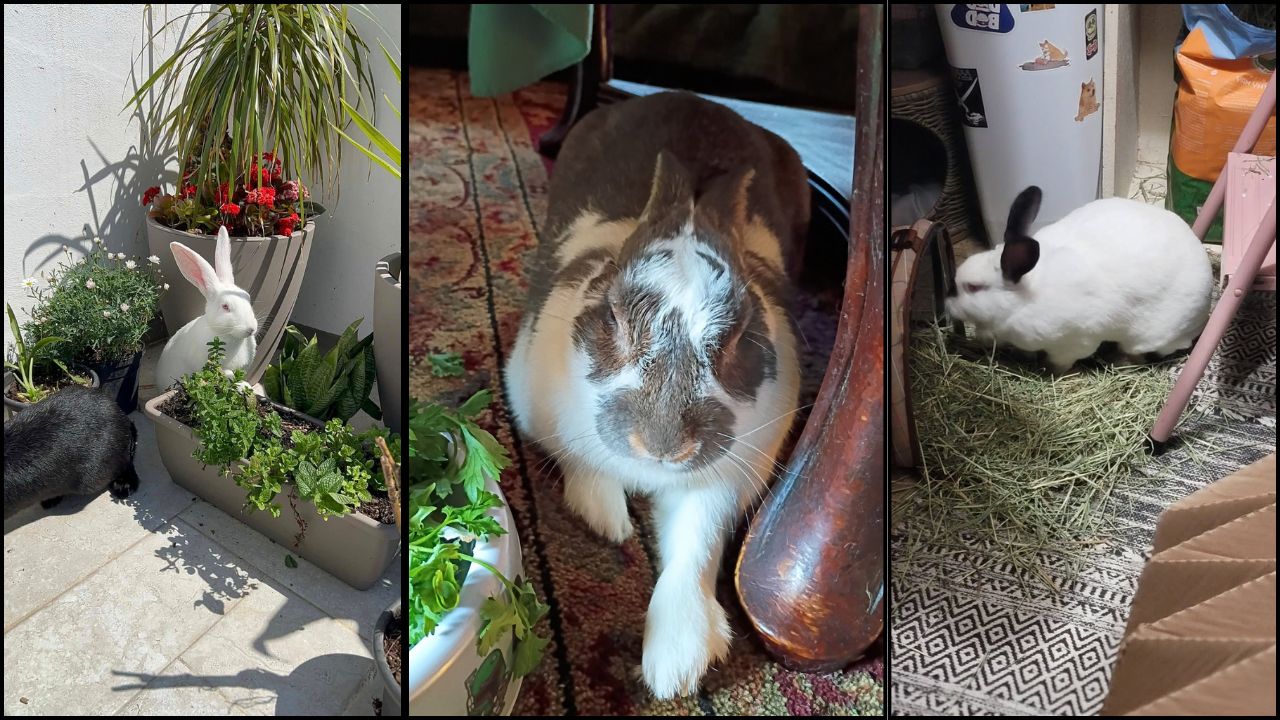

From the counter at Paradise Pets
A man came in a few summers ago looking worried. His rabbit — a three-year-old Lionhead he had kept since she was eight weeks old — had been off her food for two days. Reduced droppings. Sitting hunched in the corner of the hutch. Not herself.
I asked him what she had eaten recently. He went through her usual diet — hay, pellets, some leafy greens. And then, almost as an afterthought: “Oh, and I gave her a bit of iceberg lettuce. And a piece of banana. My kids wanted to give her a treat at the weekend.”
There it was.
Not the banana on its own. Not the lettuce on its own. But a combination of foods that a rabbit’s digestive system is simply not built to handle in any meaningful quantity — given by people who were being kind, who had no idea they were doing anything wrong, and who had seen similar things recommended in well-meaning places online.
The rabbit recovered after veterinary treatment. But it was an expensive and frightening few days that started with a treat and ended with a vet bill.
That is the pattern behind every entry on this list. Not malice. Not neglect. Just a gap between what owners assume is fine and what a rabbit’s digestive system actually tolerates.
Why Rabbit Digestion Is So Easily Disrupted
Before the list, it is worth understanding why rabbits are so vulnerable to dietary mistakes — because once you understand the mechanism, the individual food warnings make much more sense.
Rabbits are hindgut fermenters. Their digestive system relies on a complex population of bacteria and microorganisms in the caecum — a large fermentation chamber — to break down fibrous plant material. This system is finely tuned and highly sensitive. Introduce the wrong foods and the bacterial balance shifts. Gas-producing bacteria proliferate. The gut motility slows or stops entirely.
The result is GI stasis — a condition where the rabbit’s gut stops moving. It is life-threatening. It develops faster than most owners expect. And it is almost always caused, directly or indirectly, by diet.
Rabbits also cannot vomit. Unlike dogs and cats, which can expel something harmful by vomiting, a rabbit that ingests something problematic has no mechanism for removing it. It must pass through. Everything that goes in has to come out the other end — which means that something that disrupts the gut cannot be expelled quickly if the gut stops moving.
- Rabbits are hindgut fermenters — their digestion depends on a specific bacterial population that is easily disrupted
- They cannot vomit — anything ingested must pass through the entire digestive system
- GI stasis — where the gut stops moving — is the most common serious consequence of dietary disruption and is life-threatening
- High sugar foods disrupt the gut bacteria most rapidly — even small amounts can cause significant bacterial imbalance
- High starch foods cause similar bacterial disruption and excess gas production
- A rabbit that stops eating, stops producing droppings, or sits hunched and uncomfortable after a dietary change needs a vet — not a wait-and-see approach

Food 1: Iceberg Lettuce
This is the one that surprises owners most — because lettuce seems like exactly the kind of thing a rabbit should eat. It is green. It is a plant. Rabbits eat plants. What could be wrong with it?
Iceberg lettuce specifically is the problem. Not all lettuce is equal, and iceberg is the worst of the common varieties for rabbits by a significant margin.
Iceberg lettuce contains very little nutritional value — it is mostly water with negligible fibre, vitamins, or minerals. But more significantly, it contains lactucarium — a milky chemical compound that in larger quantities acts as a mild sedative and can cause diarrhoea. The high water content alone is enough to cause loose stools in a rabbit, which disrupts the gut environment and can trigger a cascade of digestive problems.
The irony is that iceberg lettuce is often the lettuce owners reach for because it is the most available and the most familiar. It is in every supermarket. It is cheap. It seems like the obvious choice. And it is the one variety most likely to cause a problem.
- Iceberg lettuce contains lactucarium — harmful to rabbits in any meaningful quantity
- The very high water content causes loose stools and disrupts gut bacteria
- It provides almost no nutritional value — there is nothing in iceberg lettuce that a rabbit needs
- The problem compounds when given regularly — owners who give iceberg lettuce as a daily green are creating chronic low-level gut disruption
- Light-coloured lettuces generally are lower in nutrients and higher in water than dark-leafed varieties — the paler the lettuce, the less suitable it is for rabbits
What to give instead
Dark leafy greens are what a rabbit’s gut is designed for. Romaine lettuce is significantly better than iceberg — darker, more nutritious, lower in the problematic compounds. Better still: kale, spring greens, curly kale, watercress, fresh herbs such as parsley, coriander, and basil. These provide genuine nutritional value, appropriate fibre, and do not disrupt the gut.
Introduce any new leafy green gradually — a small amount alongside the usual diet, increasing slowly over a week or two. Even appropriate foods cause disruption when introduced too quickly to a gut that is not accustomed to them.

Food 2: Fruit — Including the Pieces Owners Think Are Treats
This one requires some nuance, because fruit is not universally off the table for rabbits — but the quantities in which owners typically give it, and the assumptions they make about it, make it one of the most common causes of digestive problems I see.
Fruit is high in sugar. Fructose — the sugar in fruit — is not well tolerated by rabbits in any significant quantity. It disrupts the bacterial balance in the caecum, promoting the growth of harmful bacteria at the expense of the beneficial ones. The result is gas, loose stools, and in worse cases the beginning of GI stasis.
The specific fruits I see most often causing problems are bananas, grapes, and apples with seeds left in. Bananas are particularly problematic — they are very high in sugar and starch, and owners give them generously because rabbits typically love them. A rabbit enthusiastically eating something is not evidence that it is good for them. It is often evidence of the opposite — high-sugar foods are palatable for the same reason they are problematic.
Grapes are worth a specific mention because in some animals — dogs in particular — they are actively toxic. The evidence in rabbits is less definitive, but the high sugar content alone makes them inappropriate, and some cases suggest a more specific sensitivity. I do not recommend grapes for rabbits at all.
- Fruit is high in fructose which disrupts the gut bacterial balance in rabbits
- Bananas are particularly problematic — very high in both sugar and starch
- Grapes should be avoided entirely — high sugar content and possible specific sensitivity
- Apple seeds contain cyanogenic compounds and must be removed before any apple is offered
- The fact that a rabbit enthusiastically eats fruit is not evidence it is safe — it is evidence that high-sugar foods are palatable
- Citrus fruits are too acidic for rabbits and should not be given
What to give instead
If you want to give a rabbit something it will enjoy as a treat, small amounts of appropriate fruit — a blueberry, a thin slice of strawberry, a small piece of apple with no seeds — once or twice a week at most is tolerable for most healthy adult rabbits. The quantity matters enormously. A piece of banana the size of a fingernail once a week is different from half a banana given daily. Fresh herbs, a small piece of carrot top, or a sprig of parsley are better daily treats than fruit of any kind.
Food 3: Muesli-Style Rabbit Mix
This one sits differently from the others on this list because it is sold specifically as rabbit food — which is precisely why it needs to be here. Muesli-style rabbit mixes are one of the most damaging things routinely given to rabbits in the UK, and the damage is caused by the mix being marketed as complete nutrition when it is anything but.
Muesli mixes — the colourful, mixed pellet and seed mixes sold in most UK pet shops — allow selective feeding. Rabbits pick out the high-sugar, high-starch components they prefer and leave the rest. The result is a rabbit that eats a diet high in the ingredients most likely to disrupt its gut and deficient in the fibre it actually needs.
The evidence on this is not ambiguous. The Rabbit Welfare Association and Fund, the RSPCA, and most avian and exotic vets in the UK have consistently recommended against muesli mixes for over a decade. The research shows clearly that rabbits fed muesli mixes have higher rates of obesity, dental disease, GI problems, and shorter lifespans than rabbits fed uniform pellets and hay.
I still sell muesli mixes at Paradise Pets — because owners ask for them and some will buy them elsewhere if I do not stock them. But I tell every owner who picks one up exactly what I am telling you now.
- Muesli mixes allow selective feeding — rabbits eat the sugary, starchy components and leave the rest
- The result is a diet that is high in sugar and starch and low in the fibre that rabbit digestion requires
- Consistently linked to higher rates of obesity, dental disease, and GI problems in rabbits
- Marketed as complete nutrition — this is misleading and has been a source of significant rabbit welfare problems in the UK
- The colourful appearance appeals to owners but provides no benefit to the rabbit
What to give instead
A uniform extruded pellet — where the rabbit cannot pick and choose — ensures that what the rabbit eats is nutritionally balanced. Good quality pellets such as Excel or Supreme Science Selective are widely available and provide appropriate nutrition without the selective feeding problem. The bulk of the diet should always be hay — unlimited, always available. Pellets are a supplement to hay, not a replacement for it. Fresh greens complete the picture.

Food 4: Onions, Garlic, and Alliums
This is the entry on this list that moves from digestive disruption into genuine toxicity. Onions, garlic, leeks, chives, and all other members of the allium family are toxic to rabbits. Not inconvenient. Not disruptive. Toxic.
Alliums contain compounds — n-propyl disulphide and related organosulphur compounds — that damage the red blood cells of rabbits, causing a condition called haemolytic anaemia. The red blood cells are broken down faster than they can be replaced, oxygen delivery to the tissues is compromised, and the rabbit deteriorates rapidly. In sufficient quantities, allium toxicity is fatal.
The amount required to cause harm is small relative to the rabbit’s body weight. A piece of onion that would be trivial for a human to eat is potentially lethal to a rabbit. And the problem is cumulative — small amounts given repeatedly are dangerous even if no single dose appears to cause an immediate reaction.
Owners give these foods for several reasons. They are preparing food in the kitchen and the rabbit is nearby. The children feed the rabbit something from a vegetable patch that includes chives. A well-meaning relative thinks the rabbit might like a bit of whatever is being prepared for dinner. None of these is a malicious act. All of them can cause serious harm.
- All alliums — onion, garlic, leek, chives, spring onion, shallot — are toxic to rabbits
- The toxicity causes haemolytic anaemia — destruction of red blood cells — which can be fatal
- The toxic dose is small relative to a rabbit’s body weight
- Toxicity is cumulative — repeated small amounts are dangerous even without immediate visible reaction
- Wild garlic, which grows in UK gardens and woodland, is equally toxic — rabbits should not have access to areas where it grows
- A rabbit that has ingested any allium needs immediate veterinary attention — do not wait for symptoms to develop
What to do if your rabbit has eaten an allium
Contact a vet immediately. Do not wait to see whether symptoms develop — by the time haemolytic anaemia is visibly symptomatic, significant red blood cell damage has already occurred. Tell the vet what was eaten, approximately how much, and when. This is a situation where acting quickly changes the outcome.
Food 5: Bread, Crackers, Pasta, and Cooked Foods
I group these together because they share the same fundamental problem — they are high-starch, low-fibre foods that a rabbit’s digestive system is completely unprepared for, and they are given by owners who see them as harmless scraps rather than as the dietary problem they are.
Bread is the one I see most often. A piece of toast, a bit of bread roll, a cracker offered as a treat. It seems harmless. It is food that humans eat safely. The rabbit usually takes it enthusiastically. None of this makes it appropriate.
High-starch foods cause rapid fermentation in the rabbit’s caecum — the fermentation chamber of the digestive system. This produces excess gas. Gas in a rabbit’s digestive system is painful and dangerous — rabbits cannot pass gas the way humans do, and accumulation causes a condition called bloat that is acutely painful and potentially fatal. The same mechanism applies to pasta, rice, crackers, biscuits, and any cooked or processed human food.
The enthusiastic response of the rabbit to bread or crackers is not a sign of appropriateness. It is a sign of high palatability — starchy foods are calorically dense and appealing in the same way that fruit sugar is appealing. Palatability and suitability are not the same thing in rabbits.
- Bread, pasta, crackers, rice, and all starchy human foods cause rapid fermentation and excess gas in the rabbit gut
- Rabbits cannot pass gas effectively — accumulation causes bloat, which is painful and potentially fatal
- Cooked foods of any kind are not appropriate for rabbits — cooking changes the structure of plant material in ways that the rabbit gut is not designed for
- Biscuits, cakes, and sweet human foods combine the starch problem with the sugar problem and should never be given
- Processed foods contain additives, preservatives, and salt that are harmful to rabbits at the concentrations found in human food
- A rabbit that has eaten a significant amount of starchy food and shows signs of discomfort, bloating, or reduced gut sounds needs a vet
What to give instead
If the impulse is to include the rabbit in shared food moments — which is a kind instinct — give a piece of appropriate fresh vegetable instead. A small piece of carrot, a leaf of romaine, a sprig of fresh herbs. The rabbit gets the social inclusion and the treat experience without the digestive consequence. That is the outcome worth aiming for.

The Signs That Something Has Gone Wrong — Act Quickly
Knowing the foods to avoid is one part of this. Knowing what to watch for if something has already been given — and when to act — is the other part.
- Reduced or absent droppings. This is the earliest and most reliable indicator of gut disruption in a rabbit. Check the hutch floor daily. A significant reduction in droppings, or droppings that are very small, misshapen, or strung together with hair, is a warning sign that the gut is not moving normally.
- Reduced appetite or complete refusal to eat. A rabbit that is not eating — particularly one that is not eating hay — has a gut problem until proven otherwise. A rabbit that loved its food yesterday and is ignoring it today needs to be seen by a vet today, not tomorrow.
- Hunched posture. A rabbit sitting hunched with its back rounded and its eyes half-closed is in pain. This is a specific posture associated with gut pain in rabbits and should be taken seriously.
- A distended or hard abdomen. Gently feel the rabbit’s belly — it should feel soft and slightly yielding. A hard, taut, or visibly distended abdomen indicates gas accumulation and is an urgent situation.
- Teeth grinding. Loud teeth grinding — as opposed to the quiet tooth purring of a contented rabbit — indicates pain. Combined with any of the above, it is an immediate vet call.
- Lethargy and unresponsiveness. A rabbit that is not moving around normally, not reacting to your presence, and sitting still in an unusual position is unwell. This is a late sign — act before you see this if possible.
- A rabbit that has not eaten for twelve hours needs a vet call — not monitoring until tomorrow
- A rabbit that has not produced droppings for twelve hours needs the same
- GI stasis can become fatal within twenty-four to forty-eight hours in a rabbit — the timeline is short
- Do not attempt home treatment with simethicone, massage, or fluid without veterinary guidance — these approaches can help in mild cases but can cause harm in others and are not a substitute for professional assessment
What a Rabbit Should Actually Eat — The Simple Version
After five foods to avoid, it is worth being clear about what a rabbit’s diet should look like — because the simplest summary is often more useful than a long list of dos and don’ts.
- Hay — unlimited, always available, making up approximately 80 to 90 percent of the total diet. This is not optional. A rabbit without constant access to hay is a rabbit with a compromised digestive system
- Fresh leafy greens — a generous daily serving of dark, leafy vegetables. Romaine lettuce, kale, spring greens, watercress, fresh herbs. Variety is good. Introduction should be gradual
- Quality uniform pellets — a small daily amount. Pellets are a supplement, not the main course. An egg cup full per kilogram of body weight per day is a reasonable guide for most adult rabbits
- Fresh water — always available, always clean. Check it daily and replace it, not just top it up
- Occasional appropriate treats — a small piece of suitable fruit, a piece of carrot, a herb sprig. Occasional means once or twice a week, not daily
That is it. The diet that a rabbit thrives on is genuinely simple. The problems arise when owners add things to it — with the best intentions — that the gut was never designed to handle.
Frequently Asked Questions
My rabbit has been eating iceberg lettuce for a year and seems fine — does it really matter?
The fact that a rabbit has tolerated something for a period of time is not evidence that it is safe or without consequence. Chronic low-level gut disruption in rabbits can persist for a long time before it produces a visible crisis — and when the crisis comes, it often appears sudden even though the underlying problem has been building. Switch to appropriate leafy greens, do it gradually, and accept that the previous tolerance does not mean the previous diet was good.
Can rabbits eat carrots?
Yes, in small amounts as an occasional treat — but not in the quantities that most people assume. Carrots are high in sugar relative to the leafy greens that make up a rabbit’s appropriate diet. The popular image of a rabbit eating a whole carrot is not a nutritional recommendation. A small piece of carrot a few times a week is fine. Carrot tops — the leafy green part — are better than the root and can be given more freely.
What about wild plants from the garden — are these safe?
Some are, some are not. Dandelion leaves and flowers are excellent for rabbits and can be given freely if picked from areas not treated with pesticides or herbicides. Plantain, clover, and chickweed are also appropriate. However, gardens also contain plants that are toxic to rabbits — foxglove, lily of the valley, buttercup, wild garlic, and many others. If you are not certain of the identification, do not give it. The variety of safe garden plants is wide enough that there is no need to take risks with uncertain ones.
My rabbit ate something on this list — what do I do?
A very small amount of most things on this list — a crumb of bread, a leaf of iceberg lettuce — in an otherwise healthy rabbit is unlikely to cause an immediate crisis. Monitor the rabbit closely for the next twenty-four hours. Check for droppings. Check that it is eating hay and drinking. Any sign of the warning symptoms described above — reduced droppings, refusal to eat, hunched posture, distended abdomen — is a vet call. For alliums specifically, contact a vet immediately regardless of the quantity involved.
Where can I get rabbit diet advice in Swindon?
Come and see us at Paradise Pets, Manor Garden Centre, Cheney Manor Industrial Estate, Swindon SN2 2QJ. Or ring us on 01793 512400. We stock appropriate rabbit foods, hay in various types and quantities, and quality pellets — and we are happy to talk through the specific diet of your rabbit and what it needs.
One Last Thing From Me
The man whose Lionhead was unwell came back about three weeks later. She had recovered fully — hay, fluids, gut motility treatment from the vet, and a strict return to her correct diet. He looked considerably less worried than the last time I had seen him.
“I had no idea,” he said. “I thought I was being kind.”
That is the sentence I hear most often after a rabbit dietary emergency. Not carelessness. Not indifference. Kindness that was based on incomplete information.
The foods on this list are not on it because rabbit owners are irresponsible. They are on it because they look harmless, because the rabbit accepts them enthusiastically, because similar-looking foods are given to other animals without consequence, and because the information that makes these foods problematic is not widely known.
Now you know. And that is the whole point.

Questions About What to Feed Your Rabbit? Come In and Ask
We have been selling and advising on rabbits for over 35 years. Rabbit diet is one of the areas where we see the most preventable harm — and the easiest to avoid with the right information. Come in, bring your questions, and let us help you get the diet right. Free advice, no obligation. That is how we have always done things.
⭐ Customer Reviews
Amazing Bird Selection
Had a lovley visit today,staff were very friendly and very helpful,such a great petshop,their selection of birds is incredible,really impressed,thank so much to the staff at Paradise Pets

Friendly Helpful Staff
I have been coming to this place for years and they have a great stock of food for all types of pets. Have a great selection of small mammals and a lot of birds. Staff are friendly and helpful.

Great Quality Hutch
Bought a guinea pigs hutch and run combo, very happy with the service, the hutch was put in my car for me without even asking for help. The wood quality is very good, the instructions easy to follow and we are extremely happy with the fully built hutch. A good size for 2 guinea pigs

Response from Paradise Pets | Wiltshire
Thank you Melanie Latus Nice to provide services to you.
Best Bird Shop Around
It’s the best pet shop in and around Swindon. They always have an amazing selection of birds and all you need to keep them happy. I keep birds myself and the guys there are happy to answer questions and really know their stuff. I have seen budgies etc. in chain pet shops in the area looking really unhealthy and ill – I wouldn’t go anywhere else than Paradise Pets for animals.

Highly Recommended Bird Shop
I could not praise this shop enough. Really helped my Grandson buy his first bird and he’s loving it. Travelled from Somerset and was welcomed with open arms.

Great Shop with Competitive Prices
Great shop with amazing selection for small animals, hamsters, mice ect, highly recommend!
Also has a great selection for dogs & cats too & very competitive prices! 💖

