

Neil has kept, bred, and sold budgies at Paradise Pets Swindon since 1988 — nearly 40 years of first-hand experience with these birds. In that time, he has heard “my budgie bit me” more times than he can count. This article is his honest explanation of what is actually going on — and what to do about it.
It was a Friday afternoon, and a teenage girl came into the shop with her mum. She had a small plaster on her finger and a look on her face that I have seen hundreds of times over the years. Half upset, half embarrassed. “He bit me,” she said. “Properly bit me. Drew blood. I don’t understand — he was fine yesterday.”
Her budgie was called Mango. She had hand-raised him from eight weeks old. He had sat on her shoulder every evening for six months. And then, apparently out of nowhere, he had bitten her finger hard enough to leave a mark.
I asked her a few questions. Had anything changed at home recently? Yes — her older brother had come back from university two weeks ago. Had Mango’s routine changed? Yes — she had been spending less time with him because her brother was home. Had she noticed any other changes in Mango’s behaviour? She thought about it. He had been a bit fluffed up in the mornings. A bit quieter.
Within five minutes, we had a pretty clear picture of what was going on. And it had nothing to do with Mango suddenly deciding he did not like her.
I tell this story because it captures something I want every budgie owner to understand — a budgie that bites is not a bad budgie. It is a budgie that is telling you something. And once you understand what it is telling you, the biting almost always stops.
First — Is It Actually Biting, or Something Else?
Before we go any further, I want to make sure we are talking about the same thing. Because in my experience, owners use the word “biting” for several different behaviours that mean quite different things.
- Biting — a deliberate, hard clamp of the beak, often with pressure held. Usually leaves a mark. This is what we are talking about in this article.
- Beaking — gentle mouthing or exploring with the beak. No real pressure. This is completely normal budgie behaviour — they use their beaks the way we use our hands to investigate things.
- Regurgitating on you — bringing up food and offering it to your finger or ear. This is a sign of affection, not aggression. The bird thinks you are its mate.
- Beak wiping — rubbing the beak on your finger or clothing. Normal grooming behaviour, not aggression.
- Nipping — a quick, light pinch. Often a warning. Less serious than a full bite but worth paying attention to.
If your bird is beaking you gently — exploring your finger, testing the texture of your ring, nibbling your nail — that is not biting. That is curiosity. Do not pull away sharply, do not react dramatically, and do not punish it. You will confuse the bird and potentially make things worse.
If your bird is clamping down hard, holding on, and it hurts — that is a bite. And that is what we need to understand and address.
Reason 1: Fear — The Most Common Cause By Far
In my experience, the majority of budgie bites come down to one thing — fear. The bird is frightened, it feels cornered, and biting is its last available defence.
This surprises owners because the fear is often not obvious. The budgie does not look frightened. It was sitting calmly on your finger a moment ago. But something in that moment — a sudden movement, a loud noise from outside, a shadow passing overhead, someone else entering the room — triggered the bird’s alarm response. And when a prey animal feels it cannot escape, it bites.
- It happened suddenly — the bird was calm, then bit without obvious warning.
- Something changed in the environment at that exact moment — a noise, a movement, a new person entering the room.
- The bird flew away immediately after biting — it was trying to escape, not attack.
- The bird looks alarmed afterwards — feathers flat against the body, eyes wide, rapid breathing.
- It has not bitten before — a bird that suddenly bites after months of being calm has usually been startled.
The fix for fear-based biting is patience and consistency. Keep the bird’s environment calm and predictable. Move slowly around it. Do not force interaction when the bird is showing signs of stress — flattened feathers, wide eyes, rapid breathing. Give it time to settle, and try again when the bird is visibly relaxed.
Reason 2: Hormonal Biting — Happens Every Spring
This is the one that catches owners off guard every year, usually around February or March when the days start getting longer.
Budgies go through hormonal cycles triggered by increased light hours. During these phases, a bird that has been perfectly tame and gentle for months can become nippy, territorial, and difficult to handle. Males particularly can become possessive about their cage, their perch, or even their owner — biting anyone who comes near what they have decided is “theirs.”
- Started in late winter or spring — February to April is the most common window
- The bird is territorial about its cage — biting when you reach in to change food or water
- Males may regurgitate food more, bob their heads constantly, and be generally overexcited
- Females may sit in corners, be broody, and bite if disturbed
- The bird is otherwise healthy — eating, active, alert
The good news about hormonal biting is that it passes. Most birds settle down within a few weeks as the hormonal peak subsides. In the meantime, reduce light hours — cover the cage earlier in the evening so the bird gets no more than ten to twelve hours of light per day. Avoid stroking the back or under the wings, which can trigger mating behaviour. And do not take it personally — the bird is not behaving this way because something has gone wrong between you. It is biology.
Reason 3: The Bite As a Warning — You Missed the Earlier Signs
This is the one I have to be honest about, because it is the one owners find hardest to hear.
Budgies almost never bite without warning. Before a bite, there are almost always earlier signals — smaller, subtler communications that the bird is uncomfortable. The problem is that most owners do not know what those signals look like, so they miss them. And when the bird realises that the subtle signals are being ignored, it escalates to the one thing that definitely gets a response — it bites.
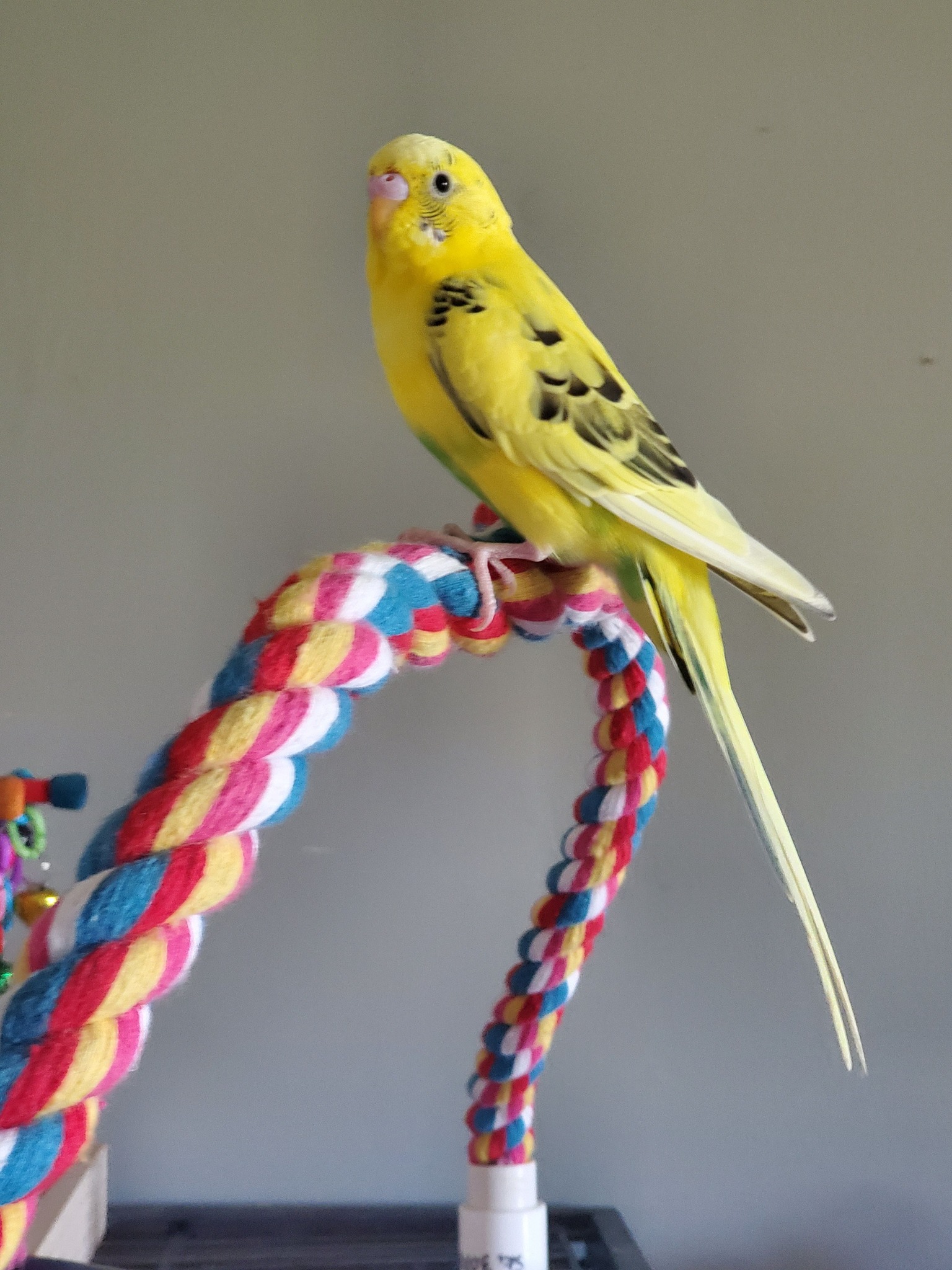
- Feathers slicked flat against the body — this is tension, not relaxation. A relaxed budgie has slightly fluffy, loose feathers. A tense one looks sleek and tight.
- Eyes pinning — the pupils rapidly expanding and contracting. In a calm bird this is excitement. Combined with tense body posture, it is a warning.
- Beak slightly open — a budgie holding its beak slightly open while you approach is telling you it is considering using it.
- Leaning away — if the bird is leaning its body away from your hand while gripping the perch, it does not want to be picked up right now.
- A small nip first — many bites are preceded by a lighter nip that the owner ignores or misreads as playfulness.
Learn to read these signals and you will almost never be bitten. When you see them, stop what you are doing, give the bird space, and try again later. The bird is telling you — clearly, in its own language — that now is not the right moment.
Reason 4: Biting Because of Overhandling
This one is particularly common with new owners who love their bird very much — which makes it a difficult one to raise without sounding critical.
Budgies need interaction, but they also need time to themselves. A bird that is being picked up, handled, and engaged with for hours every day — especially if it has not had time to choose that interaction itself — will eventually start to bite as a way of saying enough. It is not rejecting you. It is setting a boundary.
The signs are usually gradual. The bird that used to step up eagerly starts hesitating. Then it starts nipping lightly when you go to pick it up. Then, if those lighter signals are ignored, it bites properly.
- The biting happens specifically when you try to pick the bird up — not at other times.
- The bird used to be more willing and has gradually become less so — this is a pattern of escalating reluctance, not a sudden change.
- You handle the bird for long periods every day — more than an hour or two of direct handling is a lot for a small bird.
- The bird is fine once out and about but bites when you try to return it to the cage — this is actually the opposite problem, and means the bird does not want the out-of-cage time to end.
The fix is to let the bird lead the interaction more. Put your hand in the cage and let the bird choose to step up, rather than scooping it up. Give it time to decide. If it steps up willingly, great. If it moves away, respect that and try again later. Birds that are allowed some control over their own interactions almost always become calmer and more willing over time.
Reason 5: Pain or Illness
This is the one I always check for when a bird that has never bitten before suddenly starts biting — particularly if the change has been rapid and there are other signs alongside it.
A bird in pain bites. It is a defensive response — the bird is uncomfortable, feels vulnerable, and bites to protect itself from being touched. If your budgie has suddenly become aggressive and is also showing other signs — sleeping more, fluffed up, eating less, changed droppings — please do not assume it is a behavioural problem. It may be a medical one.
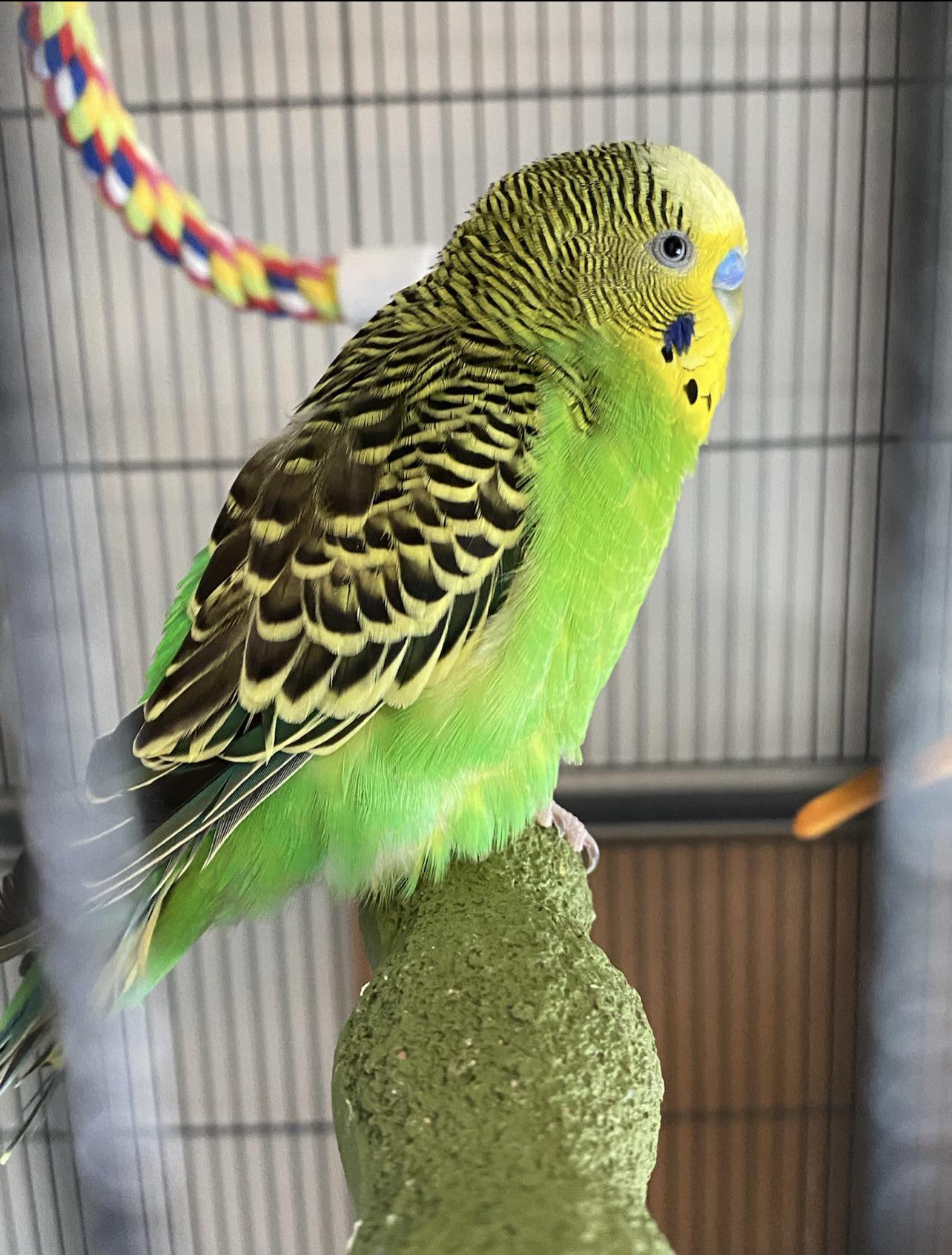
For more on the health signs that sit alongside sudden behaviour changes, our article on the warning signs UK owners miss and our guide on budgie sleeping too much cover what to look for in detail.
If you are in any doubt, come into the shop or get to an avian vet. A sudden personality change in a previously calm bird is worth investigating properly.
What I Tell Owners at the Counter
When someone comes in because their budgie has started biting, here is the conversation I have with them — usually takes about five minutes and gets us most of the way to an answer.
- When did the biting start? Sudden onset versus gradual — these point to very different causes. Sudden usually means fear, illness, or a specific trigger. Gradual usually means overhandling or a slow hormonal build.
- What time of year is it? Spring biting is almost always hormonal. Winter biting is more likely behavioural or medical.
- Where on the body does the bird bite? Finger biting when trying to pick up — often overhandling or reluctance. Biting anyone who approaches the cage — territorial or hormonal. Biting in a specific spot unpredictably — possibly pain-related.
- What changed around the time the biting started? New person in the house, changed routine, moved cage, new pet, anything at all. The cause is often sitting right there in the answer to this question.
- Is the bird showing any other signs? Sleeping more, eating less, fluffed feathers — if yes, this is a potential medical issue and needs a vet, not a training approach.
- Is the bird alone or paired? A single bird that has bonded intensely with one person can become possessive and bite others. A paired bird that suddenly bites may be protecting its mate.
What Actually Works — And What Does Not
After nearly 40 years, I have a very clear picture of which approaches to biting actually help and which make things worse. Let me be direct about both.
| Approach | Does It Work? | Notes |
|---|---|---|
| Learn to read warning signals | ✅ Most effective thing you can do | Stops most bites before they happen. Takes a week or two to learn. |
| Stay calm when bitten | ✅ Essential | Reacting dramatically rewards the biting. A calm, quiet response teaches the bird that biting does not work. |
| Reduce light hours in spring | ✅ Very effective for hormonal biting | Ten to twelve hours maximum. Cover the cage earlier in the evening. |
| Let the bird choose interactions | ✅ Works well for overhandling cases | Offer the hand, let the bird decide. Respect a refusal. |
| Shouting or tapping the beak | ❌ Never works | Frightens the bird, damages trust, and usually makes biting worse. |
| Pulling away dramatically when bitten | ❌ Makes it worse | Teaches the bird that biting = exciting reaction. Reinforces the behaviour. |
| Ignoring it and hoping it stops | ❌ Does not work | Without understanding the cause, nothing changes. The biting continues or escalates. |
| Wearing gloves | ❌ Not recommended | Removes the feedback the bird gets from interacting with skin. Slows trust-building significantly. |
The One Thing That Helps More Than Anything Else
If I had to give you one piece of advice — just one — it would be this.
When your budgie bites you, do not react.
I know that sounds simple. I know it is harder than it sounds, especially when it hurts. But the moment you flinch, shout, pull away dramatically, or make a big noise — you have taught the bird something. You have taught it that biting produces a response. And budgies, like all intelligent animals, repeat behaviours that get a response.
The owners who solve biting fastest are the ones who learn to absorb a bite — grit their teeth, keep their hand absolutely still, say nothing, and then calmly move on. Within a few weeks, the bird has learned that biting does not produce anything interesting. And it stops.
This is not the whole answer. You still need to understand the cause. But it is the foundation. Without it, nothing else works properly.
When To Come and See Us
Most biting is something you can address yourself once you understand the cause. But there are times when it helps to have someone look at the bird in person.
Come into Paradise Pets if you want to talk through what is happening and work out which cause fits your situation. Bring a short video if you can — even thirty seconds of the bird on its perch tells me a great deal. The advice is free, no obligation, and it usually takes about five minutes to get to the bottom of it.
See an avian vet if the biting started suddenly alongside any other signs of illness — sleeping more, eating less, fluffed feathers, changed droppings. A sudden personality change in a previously calm bird deserves a medical check before anything else.
Frequently Asked Questions
Why has my budgie suddenly started biting me after months of being friendly?
Sudden biting after a period of calm almost always has a specific trigger — a change in routine, a new person or pet in the house, the arrival of spring hormones, or an underlying health issue. Think about what changed in the two weeks before the biting started. The answer is usually there. Our guide on warning signs and our budgie sleeping article cover the health signs worth ruling out first.
My budgie bites everyone except me — why?
Your budgie has bonded with you and is being protective. It sees you as its flock mate and views others as potential threats to that bond. This is very common in single budgies that have bonded intensely with one person. It is a sign of strong attachment — but it does need managing. Gradual, calm exposure to other people, always on the bird’s terms, usually helps over time.
My budgie bites me but nobody else — why?
This often happens when the bird has bonded more strongly with another person in the household, or when it associates you specifically with something it does not enjoy — being returned to the cage, nail clipping, or a previous fright. It can also be hormonal — some birds become possessive about a chosen person and bite that person specifically during hormonal phases.
Does biting mean my budgie hates me?
No. Biting is communication, not rejection. A budgie that bites is telling you something — that it is frightened, uncomfortable, overstimulated, or unwell. Once you understand what it is telling you and address the cause, the biting almost always stops. The bird does not dislike you. It is trying to communicate in the only language it has.
How do I stop my budgie biting when I put my hand in the cage?
This is usually territorial behaviour — the bird sees the cage as its space and your hand as an intrusion. Move slowly, avoid reaching directly for the bird, and let your hand sit still in the cage for a moment before doing anything. Over time, the bird will learn that your hand in the cage is not a threat. If the biting is severe, try putting a treat on your palm and letting the bird come to you rather than reaching for the bird.
Where can I get honest budgie advice in Swindon?
Come and see us at Paradise Pets, Manor Garden Centre, Cheney Manor, Swindon SN2 2QJ. Or give us a ring on 01793 512400. The advice is free and I have been doing this for nearly 40 years.
Worried About Your Budgie? Come And See Me
Bring your bird, bring a video, or just bring your questions. I will have a proper look and tell you honestly what I think. Free advice, no obligation. That is how we have done things for nearly 40 years.