
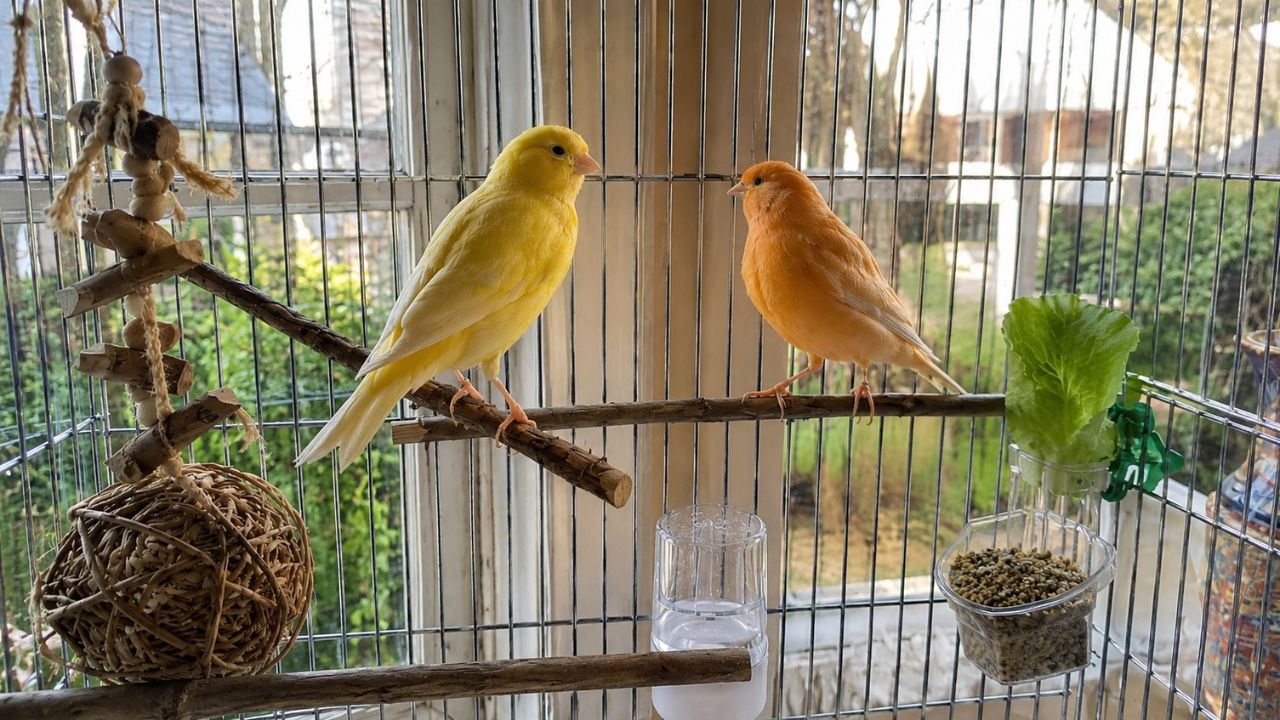

Neil has been keeping, breeding, and selling canaries at Paradise Pets Swindon since 1988 — over 35 years of daily experience with these birds and the UK owners who keep them. In that time, he has watched canaries thrive for fifteen years in the right hands, and die quietly at four or five in the wrong conditions — usually through no fault of the owner, but through a set of avoidable mistakes that most people never knew they were making. This is his honest guide to canary lifespan, and what genuinely makes the difference.
A retired gentleman came in about two years ago, not long after losing his canary. He had kept it for six years. It had sung beautifully for most of that time. Then it went quiet, and within a few weeks it was gone. He was not dramatic about it — he was the sort of man who kept his feelings fairly close — but he sat at the counter for a while before saying: “I thought they lived longer than that. I must have done something wrong.”
I asked him a few questions. What had he fed it? Seed, he said — a good quality mix, changed regularly. Fresh water every day. The cage was in the sitting room, away from draughts. He had never had cause to take it to a vet because it had never looked ill.
That last point was the key one. The bird had never looked ill — until it did, and by then it was too late. The seed-only diet had been quietly doing its work for six years. He had not done anything dramatic wrong. He had just done what most UK canary owners do, following the advice that came with the bird, and it had not been enough.
The honest truth about canary lifespan is this — a well-kept canary in the right conditions can live 10 to 15 years. Some go beyond that. Most UK canaries live 6 to 8. The gap between those numbers is almost never genetics or bad luck. It is almost always care — specifically, a small number of avoidable mistakes that owners make consistently because nobody told them otherwise.
In 35 years of selling canaries and watching their owners keep them, I have learned exactly what separates the birds that reach double figures from the ones that are gone before their time. This article is that knowledge, written down honestly for every UK canary owner who wants to give their bird the best possible chance.
The Honest Answer — How Long Do Canaries Actually Live?
Let me give you the straightforward numbers first, because most owners I speak to are genuinely surprised by them.
In good captive conditions — the right diet, the right environment, appropriate vet care — canaries regularly live 10 to 15 years. This is not exceptional. This is what the species is capable of when kept well. The oldest documented canaries in genuinely good captive conditions have reached their late teens, though this is uncommon.
In practice, most UK pet canaries live somewhere between 6 and 8 years. Some less. The retired gentleman I mentioned at the start got 6 years from a bird that could have given him 12 or more with the same level of attention and care — just redirected in the right places.
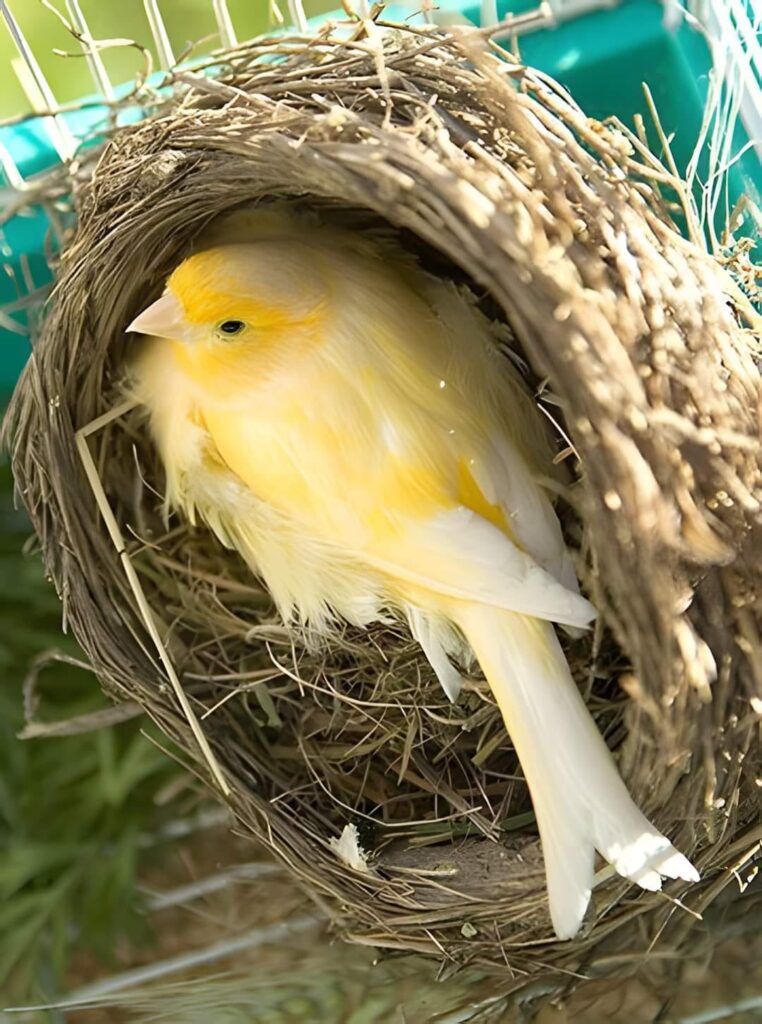
The reason the gap exists is the same reason I see with budgies and other small birds — canaries are forgiving enough to survive on substandard care for years without showing obvious signs of distress. They eat, they drink, they sing. Everything looks fine. And then, often without much warning, it is not fine, because the things that were quietly wrong have accumulated to a point where the bird cannot compensate any further.
Understanding what those things are — and changing them before they matter — is what this article is about.
Why UK Canaries Die Earlier Than They Should
Before I go through the specifics, I want to explain the underlying reason this happens so consistently in UK households.
Canaries have a reputation as simple, undemanding birds. That reputation is not entirely wrong. Compared to parrots or cockatiels, canaries ask relatively little of their owners. They do not need handling. They do not need out-of-cage time. They do not require the same level of daily interaction as a budgie kept singly. The bar for keeping a canary alive is genuinely lower than for many other species.
But alive is not the same as thriving. And thriving for six years is not the same as thriving for fourteen.
The mistake most UK canary owners make is treating “alive and singing” as the benchmark. It is not. A canary can be alive and singing on a seed-only diet, in a cage that is too small, with undetected early-stage liver disease, for years — right up until it cannot any more. The bird’s stoicism is not evidence that everything is fine. It is evidence that birds are extraordinarily good at compensating for what is wrong until the point that they cannot.
This is the honest reality of canary keeping that most sources do not tell you plainly enough.
The 5 Things That Shorten A Canary’s Life
These are the most consistent causes of shortened lifespan in UK pet canaries. They are in order of how frequently I see them — and how significant their effect tends to be.
1. A Seed-Only Diet
This is the most common cause of early death in UK canaries, as it is with budgies. It is also the most preventable, and the one that surprises owners most when I raise it.
Seed is what comes with most cages. It is what is sold in most shops. It is what the packaging describes as a complete diet. It is not. A canary fed on seed alone — even a quality mix — is missing essential nutrients that the body needs to function properly over a long life. The most common consequence is fatty liver disease, which develops slowly and silently over years of seed-heavy feeding, and which dramatically shortens lifespan without obvious warning signs until the bird is seriously ill.
Canaries in the wild eat a varied diet — seeds at different stages of ripeness, green plant material, insects for protein during breeding season. The captive canary cannot replicate that variety on its own. You have to provide it.
What actually works:
- Seed as a base, not the whole diet — a quality canary seed mix is fine as part of the daily food, not the entirety of it
- Fresh greens regularly — spinach, kale, broccoli, chickweed, dandelion leaves; most canaries take to fresh greens readily, particularly if introduced when young
- Egg food — a good quality egg food provides protein that seed cannot; particularly important during moult when the body’s demands are higher
- Softfood or soaked seed occasionally — adds variety and moisture; useful during moult and breeding season
- Fresh water, changed daily — not every two or three days; daily; water containers harbour bacteria quickly in warm conditions
- Cuttlefish bone — calcium source; also keeps the beak in good condition
- Avoid avocado, onion, and caffeine — toxic to canaries as to most birds

The canaries that reach 12 and 14 years at Paradise Pets customers’ homes are almost universally on varied diets. I have been saying this for 35 years. It is the single most impactful change most UK canary owners can make.
2. A Cage That Is Too Small Or Poorly Furnished
The second most common factor, and another one that catches owners out because the bird does not immediately show signs of distress.
Most cages sold as canary cages in UK pet shops are too small. They allow the bird to hop between two or three perches but not to fly properly — and flight is what keeps a canary’s cardiovascular system and musculature in the condition they need to be in over a long life. A canary that cannot fly freely is a canary whose physical health declines gradually over years.
The right setup:
- Length matters more than height — canaries fly horizontally; a cage should be long enough for the bird to take several wing-beats from one end to the other
- Minimum useful length is around 60 to 80cm for a single bird — more is always better
- Two or three perches at different heights — varying diameter keeps feet healthy; natural wood perches are preferable to the smooth dowel rods that come with most cages
- No overcrowding with accessories — toys and swings that take up flight space are counterproductive; keep the cage relatively uncluttered
- Regular out-of-cage supervised flight time adds significant benefit — even 20 to 30 minutes in a bird-proofed room several times a week

3. A Poorly-Positioned Cage
This is the one most owners have never thought about, and it is consistently significant.
Canaries are sensitive to their environment. The wrong cage position causes chronic low-level stress that accumulates over months and years, affecting both physical health and the quality and frequency of song.
The most common positioning mistakes I see:
- Near a window with direct sun — overheating risk; temperature fluctuation between sunny and cool periods creates chronic stress; cold draughts from window frames are a serious respiratory risk
- Near external doors — every opening in cold weather delivers a cold blast directly to the bird; repeated over months, this causes chronic respiratory stress
- In the kitchen — cooking fumes, and in particular the fumes from overheated non-stick cookware containing PTFE, are acutely toxic to birds; even brief exposure can be fatal; low-level repeated exposure causes gradual respiratory damage
- In isolation — canaries are not demanding of interaction, but they are aware of their environment; a cage in a rarely-used room where the bird sees almost nothing is a source of understimulation and low-level stress
- At floor level — birds feel most secure at height; a cage at floor level, where foot traffic, other pets, and ground disturbances are constant, creates ongoing stress
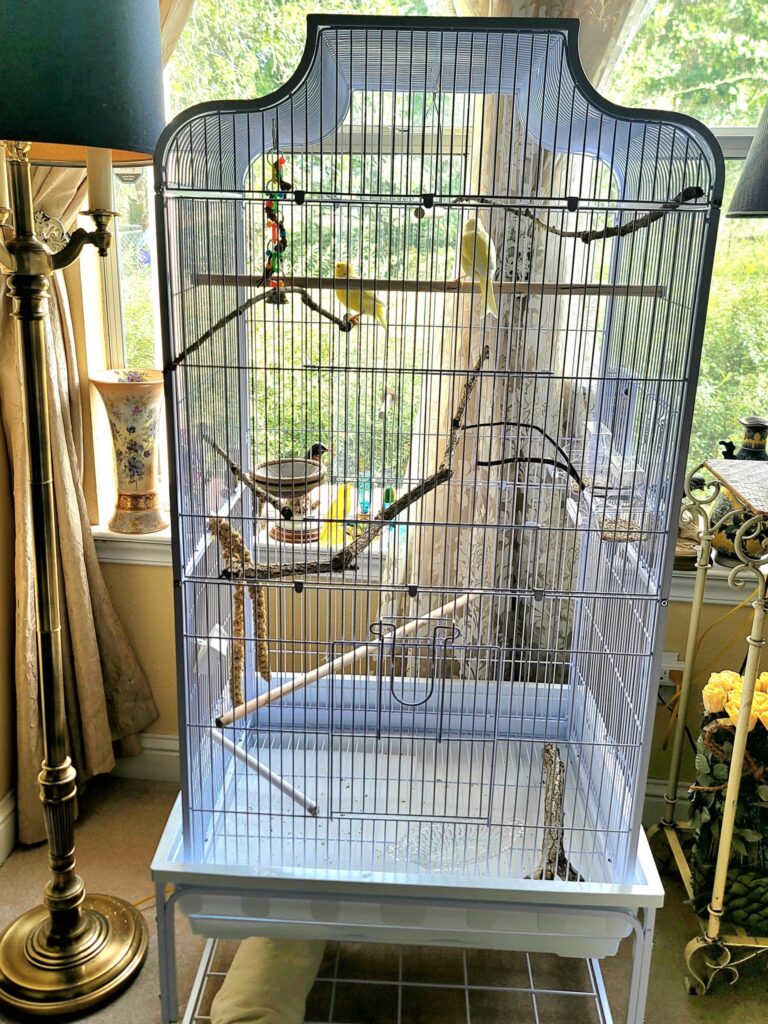
The right position is a stable, draught-free wall in a room the household uses regularly — ideally somewhere with natural light for part of the day but not direct sun. Consistent temperature, away from the kitchen, at a height that puts the bird roughly at eye level or above.
4. Ignoring The Moult
This is the one that separates experienced canary keepers from new ones, and it has a more significant effect on long-term health than most owners expect.
Canaries moult once a year — typically in late summer, after the breeding season. During moult, the bird sheds and replaces its feathers, which places enormous demands on the body. Protein requirements increase significantly. Energy demands increase. The bird is often quieter, less active, and more vulnerable to stress and illness during this period.
Most UK canary owners do nothing different during the moult. The diet stays the same, the environment stays the same, the routine stays the same. This is a missed opportunity that, over many moult cycles, takes a real toll on long-term health.
What the moult actually requires:
- Increased protein — egg food daily or every other day during the moult period; feathers are almost entirely protein and the body needs the raw materials to produce them
- Reduced stress — avoid handling, repositioning the cage, or introducing new birds or animals during this period
- Consistent temperature — temperature fluctuations during moult are particularly hard on the bird; avoid draughts especially carefully during this period
- Patience with silence — most canaries stop singing during moult; this is normal; trying to stimulate song during moult puts additional stress on a system that is already under significant demand
- Watch for abnormal moult — a moult that drags on for many months, or feathers that do not come back fully, can indicate nutritional deficiency or underlying health issues; vet check if concerned

A canary that is supported properly through ten or twelve moult cycles will be in significantly better physical condition at the end of them than one that was not. Over a lifespan, this adds up to real years.
5. Never Seeing A Vet
The fifth factor is the one I have the most honest conversations about at the counter, because the logic of not taking a canary to a vet when it seems fine is entirely understandable — and consistently costly.
Canaries are inexpensive birds. Vet visits are not. The economics of taking a £30 bird to a vet who charges £50 for a consultation is not comfortable for most people, and I understand that. But I also understand what I have seen over 35 years — which is that canaries kept without any veterinary care almost always die significantly earlier than those whose owners catch problems early.
The reason is the same one I give for every small bird. They hide illness. A canary does not show obvious signs of being unwell until it is seriously unwell. By then, treatable conditions have often progressed beyond treatment. Annual vet checks by a vet with avian or exotic species experience allow early identification of the things that do not show on the outside — liver condition, early respiratory problems, nutritional deficiencies, early tumour growth, which is unfortunately common in canaries.
What actually works:
- An avian vet check once a year — not when the bird looks ill; annually as prevention
- Find a vet with genuine avian experience — not all small animal vets have strong bird knowledge; it is worth asking before you register
- Know the early warning signs — see the section below
- Act quickly when something seems wrong — with small birds, a 24-hour wait when something seems off is often 24 hours too long
Early Warning Signs Every UK Canary Owner Should Know
As I have said, canaries hide illness well. These are the signs that come before the obvious ones — the ones that give you a chance to act in time.
| Sign | What It May Indicate | What To Do |
|---|---|---|
| Sitting at the bottom of the cage | Serious weakness or illness — always significant | Vet same day if possible |
| Fluffed feathers outside of sleep | Attempting to retain body heat — a sign the bird is unwell | Vet within 24 hours |
| Stopping song outside of moult | Illness, stress, or environmental problem | Review environment first; vet if persists more than a week |
| Tail bobbing with breathing | Respiratory effort — a serious sign | Vet urgently |
| Change in droppings | Digestive or systemic illness | Monitor 24 hours; vet if persists or worsens |
| Discharge around nostrils | Respiratory infection | Vet within 24 hours |
| Change in eating or drinking | Either increase or decrease may indicate illness | Monitor closely; vet if persists 24–48 hours |
| Prolonged or abnormal moult | Nutritional deficiency or underlying health issue | Review diet first; vet if feathering does not normalise |
| Weight loss visible in breast area | Chronic illness, often internal; often late-stage | Vet urgently |
The rule I give to every canary owner is the same one I give for every small bird. If your bird’s behaviour changes noticeably and you cannot account for the reason, do not wait more than 24 to 48 hours before speaking to a vet. With birds this size, things move quickly. Early action almost always produces better outcomes than waiting to see if it improves.
What A Long-Lived Canary Actually Looks Like Day To Day
I want to give you the honest, practical picture of what the canaries that reach 12, 13, 14 years are actually living like. Because it is not complicated, and it does not require unusual expense or effort. It requires the right knowledge applied consistently over years.
- Varied diet from the start — seed, egg food, fresh greens; not seed-only
- An adequately-sized cage with room for real flight, positioned correctly in the home
- Consistent daily routine — same time for uncovering, feeding, and covering; canaries thrive on predictability
- Active moult support — diet adjusted, stress reduced, patience with silence during the annual moult
- Annual vet check with a vet who knows birds
- An owner who knows the early warning signs and acts on them quickly
- A calm, stable environment — away from the kitchen, away from draughts, at a reasonable height in a room that is regularly occupied
None of this is exceptional. None of it requires significant expense. It requires knowledge and consistency — which is why I keep saying that the difference between a canary that lives seven years and one that lives fourteen is almost never the bird. It is almost always the owner’s knowledge.
A Note On Male And Female Canaries
I want to add one thing that is worth knowing before you buy, because it affects expectations around lifespan and care.
Male canaries sing — fully, beautifully, and regularly in good health. This is what most people buy a canary for. Female canaries produce a much simpler call and rarely sing in the way males do.
Both sexes are capable of the same lifespan. Both require the same care. But the male’s singing is one of your most valuable health indicators — when a male canary that normally sings well goes quiet outside of the moult period, something is wrong. The song is a signal. Learning what that signal normally sounds like, and recognising when it changes, gives you information that you simply do not have with a female.
I am not saying you should only keep males. I am saying that if you do keep a male, pay attention to the song. It is telling you more about the bird’s health than almost anything else you can observe.
Frequently Asked Questions
How long do canaries live on average in the UK?
In practice, most UK pet canaries live 6 to 8 years. This is considerably shorter than what a well-kept canary is capable of — 10 to 15 years in good conditions. The gap is explained in almost every case by avoidable care factors, most commonly a seed-only diet, a cage that is too small, poor positioning, and the absence of any veterinary care.
What is the longest a canary can live?
Well-kept canaries reaching their mid-teens have been documented. The realistic and achievable target for a canary in genuinely good captive conditions is 12 to 15 years. Reaching this consistently requires varied diet, adequate space, good environmental positioning, moult support, and regular vet care.
Why did my canary only live 5 or 6 years?
The most common causes of early death in UK canaries are: seed-only diet leading to fatty liver disease, a cage that did not allow proper flight, poor cage positioning — near draughts, windows, or in a kitchen — inadequate support during annual moult, and the absence of veterinary care that would have caught treatable conditions early. If your canary lived only a few years, one or more of these is almost certainly the explanation.
Do canaries need a companion to live longer?
Unlike guinea pigs or budgies, canaries do not require the company of their own kind to be healthy. They can and often should be kept singly — particularly males, who may fight. A canary that is given a good environment, the right diet, and a consistent routine will live well alone. Companionship is not the factor it is for more socially-dependent species.
What food makes canaries live longest?
Variety. The most impactful dietary change you can make is moving from seed-only to a varied diet — seed mix as a base, fresh greens regularly, egg food especially during and after moult, fresh water daily. This single change, made consistently over years, has a greater effect on lifespan than almost anything else. Cuttlefish bone for calcium. Avoid avocado, onion, and caffeine.
When do canaries stop singing and is it normal?
A male canary stops singing during the annual moult — typically late summer — and this is entirely normal. Singing usually resumes once the moult is complete. A male that stops singing outside of the moult period is often signalling that something is wrong — illness, environmental stress, or a problem with the diet or living conditions. Investigate promptly rather than waiting.
How can I tell how old my canary is?
If you bought the bird from us or another reputable UK breeder, you should have an approximate date of birth or year of hatch. Beyond this, accurate age assessment without records is difficult. Young birds have less defined markings around the eye ring and beak in some varieties. An avian vet can give a rough indication based on physical condition, but precise ageing without records is not reliably possible.
Where can I get honest canary advice in Swindon?
Come in to Paradise Pets at Manor Garden Centre, Cheney Manor Industrial Estate, Swindon SN2 2QJ — or call us on 01793 512400. We have been keeping and selling canaries for 35 years and we are happy to talk through your specific bird, its diet, its environment, or anything that is concerning you. The advice is free and there is no obligation.
One Last Thing From Me
The retired gentleman I mentioned at the start came back in about three months after that conversation. He had decided he wanted another canary — a young male, he said, and this time he wanted to do it properly.
We went through everything. Diet, cage size, position in the house, moult support, what to watch for. He had clearly been thinking about it carefully. He bought a young bird and left with a clear picture of what it actually needed.
That was three years ago. He came in recently — not to buy anything, just to let me know. The bird is still going strong. Singing every morning. He mentioned, almost in passing, that he had changed the cage position, started giving fresh greens twice a week, and had taken the bird for one vet check last autumn. Nothing dramatic found, which was the point.
“I think I’ll have this one for a while,” he said.
That is the honest outcome this article is trying to help you reach. A bird that is with you for a decade or more, singing well, kept correctly from the start, by an owner who understood from early on what the bird actually needed rather than what was simply easiest to provide.
The difference between six years and fourteen is almost always knowledge. If you have read this far, you now have the knowledge. If you want to talk through your specific situation — your bird, your setup, anything you are uncertain about — come in and see us. That conversation has been free and honest for 35 years. It still is.
Questions About Your Canary’s Health Or Lifespan? Come And See Me
Bring your questions — diet, environment, the moult, something in the bird’s behaviour that concerns you. I will give you a straight answer based on 35 years of keeping and selling canaries. No obligation, no sales pressure. Just honest advice.