

Neil has kept, bred, and sold budgerigars at Paradise Pets Swindon since 1988 — over 35 years of first-hand experience with these birds. A budgie that was once tame and has become less so is one of the situations owners find most confusing — and most disheartening. The tameness did not simply disappear. It was displaced by something specific. This guide explains what that something usually is, and how to get the relationship back.
There is a particular kind of concern that comes with this question. Not the fresh alarm of something going wrong for the first time — something more deflating than that. The owner had something good. The bird stepped up. It came out willingly. It sat on a shoulder. It took food from the hand. And then, over weeks or months, that stopped. The bird retreats when the hand approaches. It bites when it used to tolerate. It flies away from contact it used to accept.
They want to know what they did wrong. Or whether the bird has changed in some fundamental way. Or whether it is ever going to go back to what it was.
The honest answer is that tameness in budgies is not a fixed state. It is a relationship between the bird and the handling conditions it experiences — and when those conditions change, the relationship changes with them. A bird that has become less tame is almost always a bird whose handling conditions have shifted in a specific way that the tameness could not survive unchanged.
Understanding what shifted is what allows you to address it. And in most cases, the original tameness can be rebuilt — not instantly, but reliably, with the right approach applied consistently.
Here is what I know about this after thirty-five years.
Why Tameness Is Not Permanent — The Biology
Before getting into specific causes, it is worth understanding why tameness in birds is different from tameness in mammals in a way that matters practically.
A dog that is well-socialised and trained retains that socialisation robustly even through extended periods without reinforcement. The social bond is deep, the memory is long, and the foundation is largely stable.
A budgie is a prey animal with a nervous system calibrated to update its threat assessments continuously based on current experience. This is not a flaw in the bird’s character. It is exactly what a small prey animal needs to survive — the ability to register that conditions have changed and adjust its threat response accordingly. A budgie that experienced a predator scare three weeks ago should be more alert than one that has not. That adaptability is the feature, not the bug.
The implication for tameness is that a budgie’s comfort with handling is not stored as a permanent baseline. It is maintained by the ongoing experience of handling that is predictable, non-threatening, and positive. When that experience changes — when handling becomes less frequent, or less consistent, or involves something that frightened the bird — the bird’s assessment of handling as safe begins to shift, and the behaviour that was built on that assessment shifts with it.
This is why tameness can erode. Not because the bird forgot the owner. But because the current evidence available to the bird no longer strongly supports the conclusion that handling is safe.

The Most Common Cause — A Gap in Regular Handling
This accounts for more cases of tameness erosion than any other single factor, and it is the one most owners do not initially identify because the gap happened gradually rather than all at once.
Life intervenes. A period of work pressure, a family change, a holiday, an illness — and the daily or near-daily handling sessions that were maintaining the bird’s comfort with contact reduce to twice a week, then once a week, then whenever there is time. The sessions become shorter, or less engaged, or less consistent in their quality. The bird notices — not in a conscious, deliberate way, but in the way its nervous system notices any shift in the reliable pattern of a stimulus it has been calibrated to.
The association between hands and positive, predictable interaction weakens. The behaviour built on that association weakens with it. The bird begins to assess the approaching hand with more caution than it used to, because the hand no longer arrives with the same frequency and quality of interaction that it used to carry.
This is not the bird being difficult. It is the bird accurately reflecting the change in the handling relationship that has occurred.
The practical implication is that tameness in a budgie requires maintenance. Not elaborate, time-consuming maintenance — but consistent, regular, quality contact. Ten minutes of genuine engagement each day is more valuable to the tameness relationship than an hour once a week. Frequency and consistency matter more than duration.
If a gap has caused the erosion, the rebuild begins by restoring consistency. Not immediately jumping back to the level of handling that existed before, because the bird’s current threshold is lower than it was — but returning to regular, daily contact at whatever level the bird will accept, and rebuilding incrementally from there.

A Frightening Event — When Something Specific Changed Everything
Sometimes the erosion of tameness is not gradual. It happened on a specific day, in response to a specific event, and the owner can usually identify it if they think back.
The bird fell during handling and hit the floor. It had a collision during out-of-cage time — with a window, with a wall, with a ceiling fan that was running. It was grabbed to be returned to the cage because time was short. It was handled by someone unfamiliar who was too firm or too fast. A predator — a cat, a dog — came very close to the cage and the bird saw it. A sudden loud noise happened while the bird was on the owner’s hand.
Any of these — and many others — can constitute the kind of event that a budgie’s threat-assessment system registers as significant. The bird was in a handling situation and something frightening happened. The association that has been built between handling and safety has now been updated to include: handling was associated with something frightening. The bird responds to subsequent handling with the caution appropriate to that updated assessment.
In these cases, the tameness erosion is often quite sudden rather than gradual. The owner can usually identify a before and after. Before the event, the bird was tame. After it, the bird was less so.
The rebuild in this situation requires understanding that the bird has specifically updated its assessment of handling as potentially unsafe, and that the task is to provide enough subsequent positive handling experiences to update that assessment back. This takes longer than the gradual-erosion rebuild, because the event was salient — memorable and significant — in a way that gradual reduction was not. But it is achievable with consistent patience.
A Second Bird — The Cause Owners Rarely See Coming
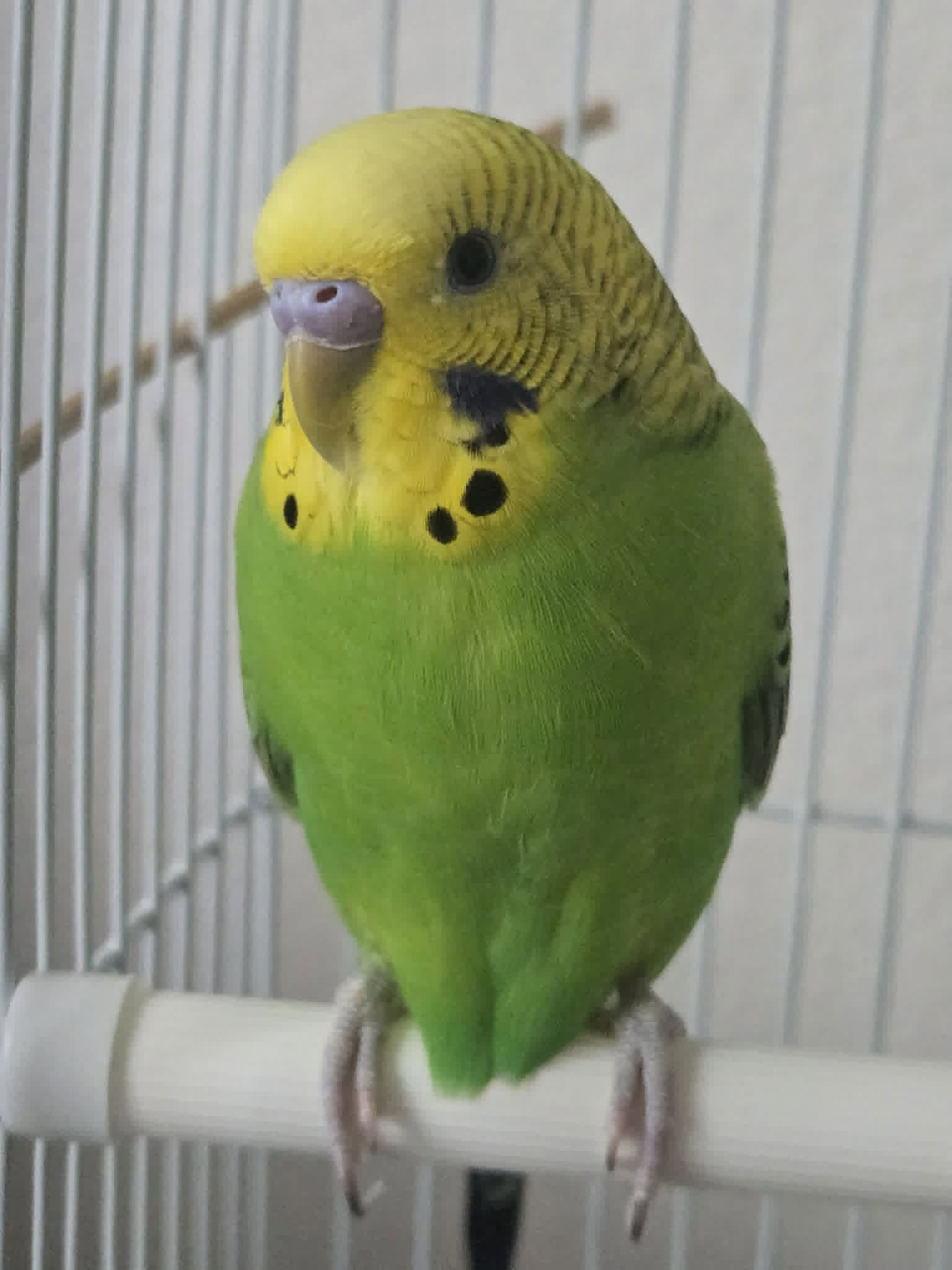
This is the cause that produces the most genuine surprise at the counter, because it seems counterintuitive. The owner got a second bird to keep the first one company. The first bird now has a companion. But the first bird is less interested in human contact than before. How is that possible?
It is entirely predictable once you understand what drove the tameness in the first place.
A solo budgie’s primary social relationship is with its owner. The social need that the bird has — the need for flock contact, for interaction, for the engagement that its biology is built around — has only one available outlet, which is the human in its life. The bird is motivated toward that human contact because it is the only social contact available.
When a second bird is introduced, the original bird now has a source of social contact from its own species. That contact meets its social needs in a way that is more natural, more continuous, and more instinctively satisfying than human contact can be — because the other bird speaks the same language, responds in the same ways, offers grooming and proximity and communication in the form the original bird’s biology is built to receive.
The owner has not been replaced in any meaningful sense. The owner is still there, still liked, still associated with positive things. But the social motivation that used to push the bird toward the owner as its primary social outlet has been redirected. The bird wants to be near the other bird. Contact with the owner is still acceptable — but it is no longer driven by the same unmet social need that made the original bird seek it out so actively.
This is not a problem with the second bird. It is the second bird doing exactly what a companion bird should do — meeting the first bird’s social needs. But it does mean that maintaining tameness in a bird that has a companion requires more active, consistent effort from the owner than maintaining tameness in a solo bird. The motivation has to be supplied by the quality and consistency of the human contact rather than by the absence of alternatives.
Hormonal Changes — The Seasonal Factor
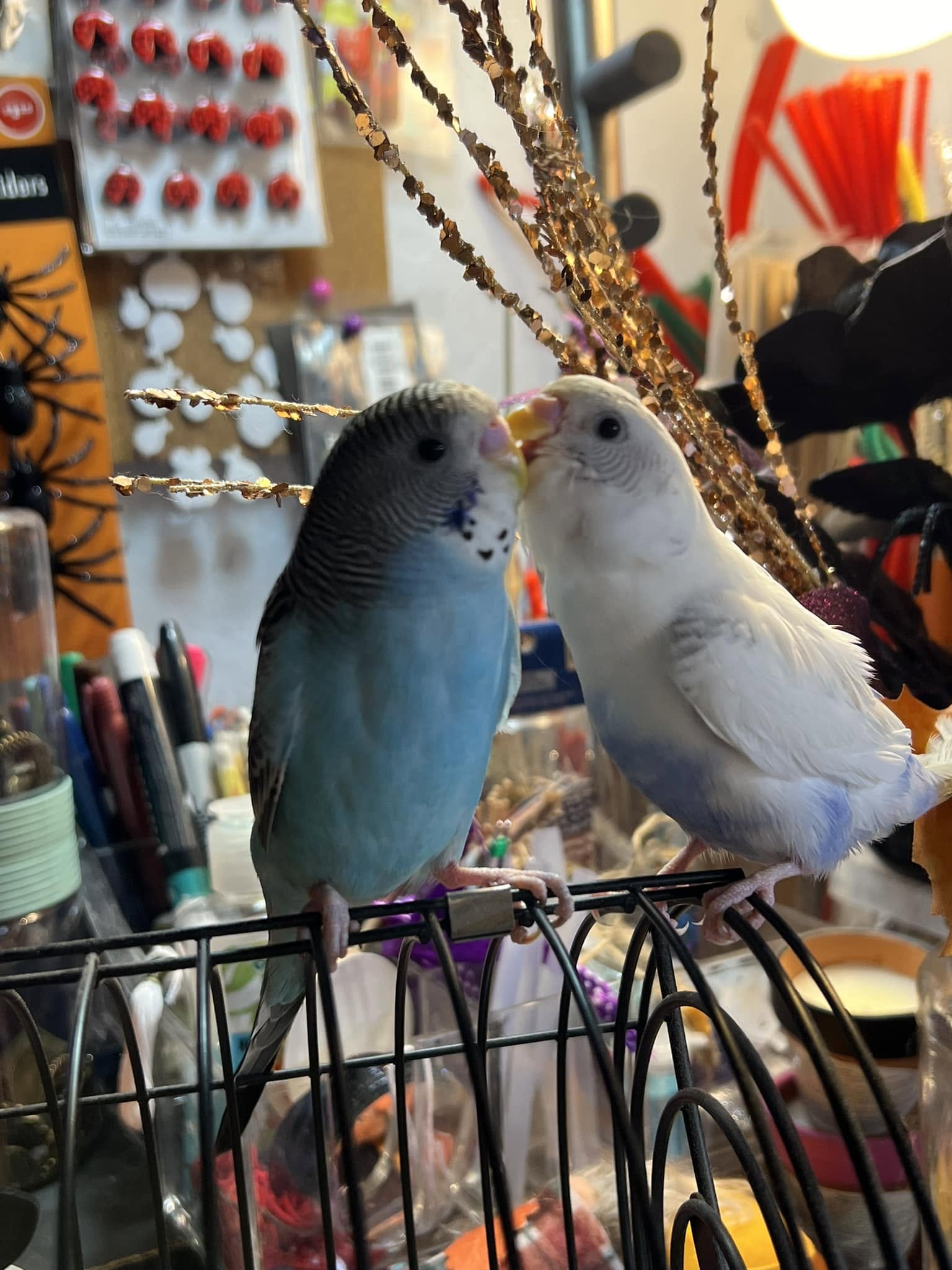
Budgies are strongly seasonal animals and their behaviour shifts significantly with changes in day length. As days lengthen in spring and early summer, the hormonal changes associated with the breeding season produce a predictable set of behavioural changes — increased vocalisation, territorial behaviour, courtship displays, and often a temporary increase in reactivity and a decrease in tolerance for handling.
A bird that is pleasant and manageable in autumn and winter may become noticeably more defensive and difficult to handle in spring. This is not the bird changing permanently. It is the bird going through a hormonal phase that affects its behaviour predictably and temporarily.
Owners who do not know about this pattern sometimes interpret the spring behaviour change as the beginning of a permanent deterioration in tameness. They reduce handling in response to the increased resistance, which removes the consistent contact that might carry the relationship through the hormonal phase, and the bird emerges from the phase with less handling experience behind it than it went in with.
The correct approach to hormonal phases is to maintain handling contact — adjusted in intensity and duration to what the bird will accept during the phase — rather than suspending it entirely until the phase passes. Shorter, calmer sessions during a difficult hormonal period keep the handling relationship alive in a way that complete cessation does not.
Stabilising the bird’s light cycle — using a cage cover to maintain a consistent twelve-hour day-night cycle regardless of actual sunrise and sunset — reduces the intensity of the seasonal hormonal response and makes the handling relationship easier to maintain year-round.
Illness or Pain — When the Behaviour Change Is a Physical Sign
A budgie that has become less tolerant of handling than it previously was — particularly if the change was relatively sudden and is accompanied by any other change in the bird’s behaviour or condition — may be in pain or unwell.
Pain makes any animal less tolerant of contact. A bird that is experiencing joint discomfort, internal illness, respiratory difficulty, or any other source of physical distress will naturally resist handling that puts pressure on or near a painful area, or simply handling as an additional source of stress when the bird is already physically taxed.
The pattern that distinguishes pain-related tameness changes from other causes: a previously tolerant bird becoming suddenly and specifically intolerant of certain types of contact, or intolerant of contact in a way that seems disproportionate to the handling itself. A bird that was previously fine being held but now struggles intensely when the abdomen or a specific area is touched. A bird that has become less tame alongside visible signs of being unwell — fluffing, reduced appetite, changes in droppings, reduced vocalisation.
If the tameness change is accompanied by any of these signs, the response is a vet visit before any attempt at taming work. Attempting to rebuild tameness with an animal that is in pain is both ineffective and unkind — the pain will produce the defensive responses that make the training work impossible, and the handling itself adds distress to an animal that is already under physical stress.
How to Rebuild Tameness — The Practical Approach
The rebuild process follows the same principles as initial taming, applied with the understanding that this is a bird that has existing experience of being handled — including the experience of handling being positive — and that the task is to reactivate the association that has weakened, not to build it from scratch.
Start further back than you think you need to. Not at the level the bird used to be comfortable with — at the level the bird is comfortable with now, however basic that is. If the bird is retreating from a hand placed flat on the perch, start there. Flat hand, no movement, no pursuit, let the bird decide. The starting point is wherever the bird’s current threshold is, not where you want it to be.
Bring treats back into the process. Whatever food the bird is most motivated by — a piece of millet, a specific vegetable, a sunflower heart — use it as the anchor for every handling session. The treat is offered from the hand, and the hand is the thing the bird is being asked to associate with positive experience. Keep the treat out of the food dish for the period of the rebuild and use it exclusively as a handling incentive.
Shorten sessions significantly from what they were before. Five minutes of quality, positive contact with a good ending is worth far more to the rebuild than twenty minutes that ends with the bird stressed or the owner frustrated. End before the bird signals discomfort. End on a positive note — the bird eating from the hand, sitting willingly on the finger for a moment, making contact on its own terms. That positive ending is the last thing the bird registers from the session and is what it carries into the next one.
Be consistent across days. One session a day, every day, is more effective than multiple sessions one day and nothing the next three. The bird is building a pattern of expectation about these interactions — that they happen regularly, that they are predictable, that they end well. Consistency builds that pattern. Irregularity undermines it.
Do not express frustration during sessions. This is harder than it sounds, particularly for owners who remember how the bird used to be and are comparing the current regression against it. Frustration changes the quality of the handling — the hands move differently, the voice changes — and birds read those signals directly. A session conducted with evident frustration produces a different outcome than a session conducted with calm patience, even if the physical actions are the same.
What I Tell Owners at the Counter
When someone comes in about a budgie that used to be tame and is not anymore, the first thing I ask is: what changed around the time the tameness started to decline? Not what the bird did — what changed in its environment, its routine, the handling pattern, or anything else that might be relevant.
In most cases, something changed. The owner can identify it when they think back. A gap in sessions because of something that came up. A new bird. A fright they might have forgotten. The start of spring. Any of these can be the explanation, and identifying the explanation is the starting point for the right approach to the rebuild.
The thing I want to leave every owner with is this: the bird has not decided to stop being tame. It has responded to a change in the conditions that maintained its tameness. The conditions can be changed back. The tameness can be rebuilt. It takes patience and consistency — the same patience and consistency that built it the first time — but the bird you had is not gone. It has simply updated its assessment based on current evidence. Your job is to change the evidence.
Most owners who commit to that process get their bird back. Not immediately — in weeks, sometimes months, depending on the severity and cause of the erosion. But consistently, if the work is done consistently.
Come in if you want to talk through a specific situation. We are at Manor Garden Centre, Cheney Manor Industrial Estate, Swindon, SN2 2QJ — open every day. Or call us on 01793 512400.
- “It was tame before so it should still be tame now — it’s just being difficult” — Tameness in a budgie is not a permanent state that persists without maintenance. It is a relationship that reflects the current handling conditions the bird is experiencing. A bird that is being difficult is a bird whose current conditions are not supporting the tameness it previously showed. Address the conditions rather than the behaviour.
- “It bit me once so now I’m scared to handle it — I’ll just leave it in the cage” — Withdrawing from handling entirely after a bite removes any opportunity to rebuild the positive association. It also confirms to the bird that biting produces the outcome of being left alone — which is, from the bird’s perspective, exactly what it was seeking. Reducing session intensity and duration, not eliminating sessions, is the right response to a bite during the rebuild period.
- “The new bird made it wild — I should rehome the new bird” — Rehoming the companion bird is rarely the right solution. The original bird now has a social bond with the companion and removing that bond is a welfare step backward. The solution is to invest more consistent effort in maintaining the human-bird relationship alongside the bird-bird one — not to remove the companion.
- “It’s been too long — it won’t go back to how it was” — The length of the erosion period does not determine whether the tameness can be rebuilt. A bird that has been less tame for a year can still be brought back to its previous level of tameness with the right approach. The starting point is further back and the process takes longer, but the goal is achievable. Duration of erosion is not a barrier.
- “I’ll force it to get used to being handled again — it just needs to learn” — Forced handling does not rebuild tameness. It reinforces the association between handling and something unpleasant. A bird that is regularly handled against its will becomes more defensive over time, not less. The rebuild requires the bird’s voluntary engagement at each stage — not compliance achieved through force.
- Bird was tame, handling became less frequent over weeks or months, now less tame.
Gradual erosion from handling gap — restore daily consistent sessions, starting at whatever level the bird currently accepts. Bring treats back as the primary incentive. Rebuild incrementally over weeks. - Bird was tame, something specific frightened it, became noticeably less tame immediately after.
Event-based erosion — identify and eliminate the trigger if possible. Return to basics of taming from a lower threshold than before. This rebuild takes longer than gradual erosion but follows the same process. - Bird was tame, second bird was introduced, original bird now less interested in human contact.
Social redirection — the original bird’s social motivation is now being met by the companion. Maintaining tameness requires more active effort from the owner. Daily dedicated sessions with the original bird, separate from the companion if possible, using high-value treats. - Bird was tame in autumn and winter, becomes notably harder to handle in spring.
Hormonal seasonal response — maintain handling through the phase with shorter, lower-intensity sessions. Stabilise the light cycle using a cage cover. The bird will return to its previous baseline as the hormonal phase passes. - Bird has become less tame alongside other signs — fluffing, reduced appetite, changes in condition.
Possible illness or pain — vet before any taming work. Do not attempt to rebuild tameness with a bird that may be in physical distress. Address the health issue first. - No progress after four to six weeks of consistent correct approach.
Come in and describe the specific situation. There may be something in the approach or the environment that needs adjusting. We would rather help you work through it than have the situation remain stuck.
Visit Us at Paradise Pets Swindon
We stock budgerigars year-round alongside a full range of cage and aviary birds — all UK-sourced, handled regularly from a young age before going to a new home. If you are working on rebuilding tameness with a bird, or you want advice on maintaining it in the first place, come in and talk to us.
We also stock gerbils and hamsters, guinea pigs, and rabbits.