
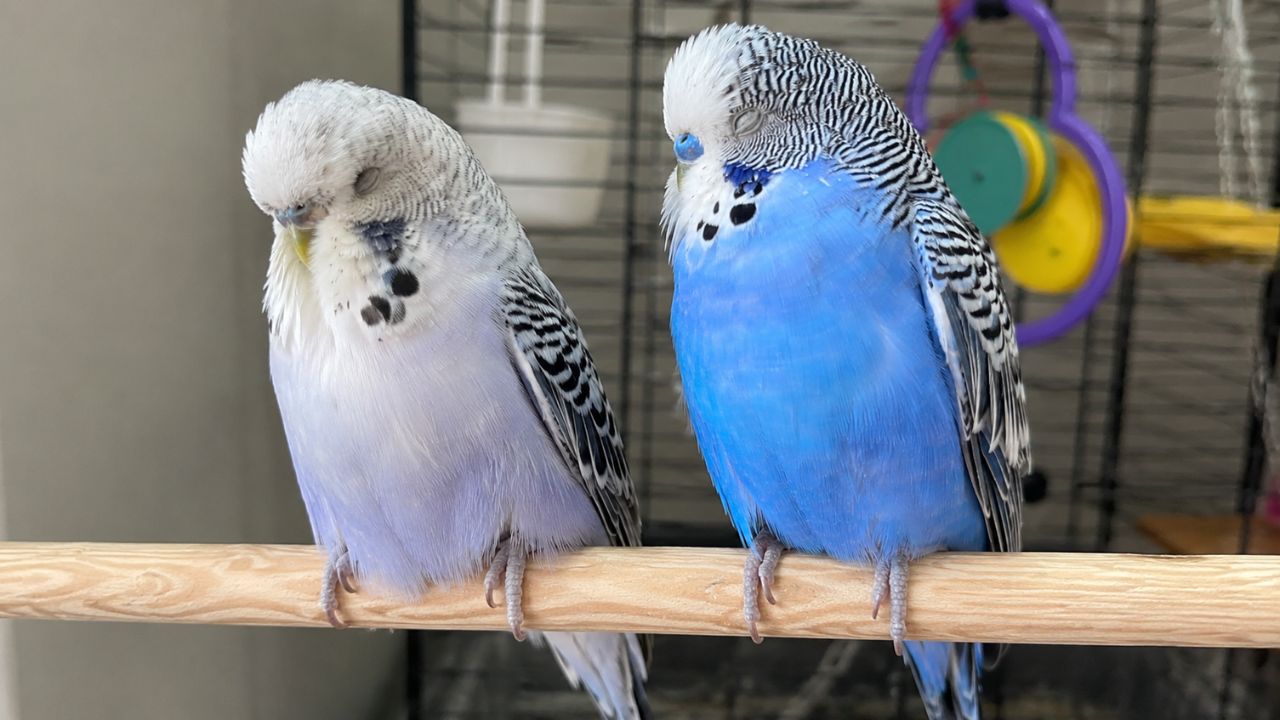

Last Tuesday, a lady came into the shop holding a little carrier, properly worried. Her budgie Charlie had been sleeping nearly all day for nearly a week. I’ve seen this exact scene play out hundreds of times in 35 years of running Paradise Pets — and I want to share what I’ve learned, so you don’t have to find out the hard way.
Look, I’ll be straight with you. If your budgie is sleeping more than usual, please don’t just shrug it off. Budgies are remarkable little birds, but they’re absolute masters at hiding pain. In the wild, a bird that shows weakness gets picked off — so they’ve evolved to pretend everything’s fine until they genuinely can’t anymore. By the time most owners realise something is wrong, the bird has been unwell for days. If you’re new to keeping these birds, our complete budgie care guide for UK owners covers the basics you need to know first.
That’s why I wrote this guide. After a quarter of a century watching budgies, talking to owners, and yes, sadly losing some birds before we could help them, I’ve narrowed it down to 7 hidden signs that I want every UK budgie owner to know. Spot these early, and you give your bird a real fighting chance.
First Things First — How Much Sleep Is Actually Normal?
Before we panic about a snoozy budgie, let’s get the basics right. I get asked this question more than almost anything else in the shop.
A healthy adult budgie should be sleeping for around 10 to 12 hours a night, ideally in proper darkness and quiet. On top of that, they’ll usually take a short nap during the day — generally early afternoon, lasting maybe 10 to 20 minutes. That’s perfectly normal. My own birds at home do exactly this.
Now, here’s what’s NOT normal — and what I want you to watch for:
- Sleeping for hours during proper daytime — between 8am and 6pm
- Sleeping with both feet down flat on the perch
- Sleeping at the bottom of the cage (this one’s serious)
- Sleeping while other birds in the cage are chattering away
- Not properly waking up when you walk over to the cage
If any of these ring a bell, keep reading. I’ll explain each warning sign properly, and tell you what I’d do if you brought that bird into my shop today.
Sign 1: Sleeping During Peak Daylight Hours
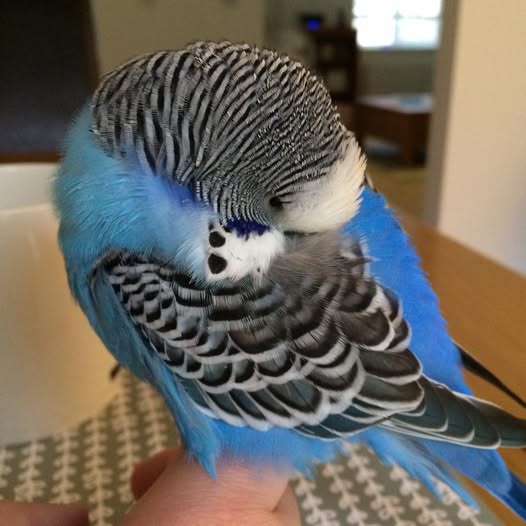
Budgies are what we call diurnal — fancy word, simple meaning: they’re awake when it’s light. A healthy budgie should be chirping, eating, climbing about, and generally making a happy nuisance of itself between roughly 8am and 6pm.
If you’ve noticed your bird is snoozing through these peak active hours — and it’s been happening for a few days, not just one off day — that’s your first red flag. In my experience, this usually points to one of three things: an infection brewing quietly, a poor diet catching up with the bird, or something stressful in its environment.
- What’s the room temperature? UK homes drop colder than people realise, especially overnight in winter.
- Is the cage near a draught or a hot radiator? Both cause problems — birds need stable temperatures.
- Have you changed the diet recently? Even small changes can throw a budgie off.
- Has anything in the room changed? New TV, new pet, new baby — budgies notice everything.
Sign 2: Sleeping on the Cage Floor — Don’t Wait on This One
Right, I’m going to be blunt here because I have to be. If your budgie is sleeping on the floor of the cage, you need to act today. Not tomorrow, not “let’s see how it goes” — today.
A healthy budgie sleeps on a perch, usually with one foot tucked up into its belly feathers. When a bird ends up on the cage floor for sleep, it almost always means one of three things, and none of them are good:
- It’s too weak to grip the perch properly
- It’s seriously unwell and trying to conserve every bit of energy
- It’s in the late stages of an illness that’s been hiding for a while
Please don’t wait this one out. Get on the phone to an avian vet, or pop down to see us if you’re local to Swindon and we’ll have a look together. I’ve seen birds recover from this — but only when their owners moved quickly.
Sign 3: Fluffed-Up Feathers (And No, It’s Not Cute)
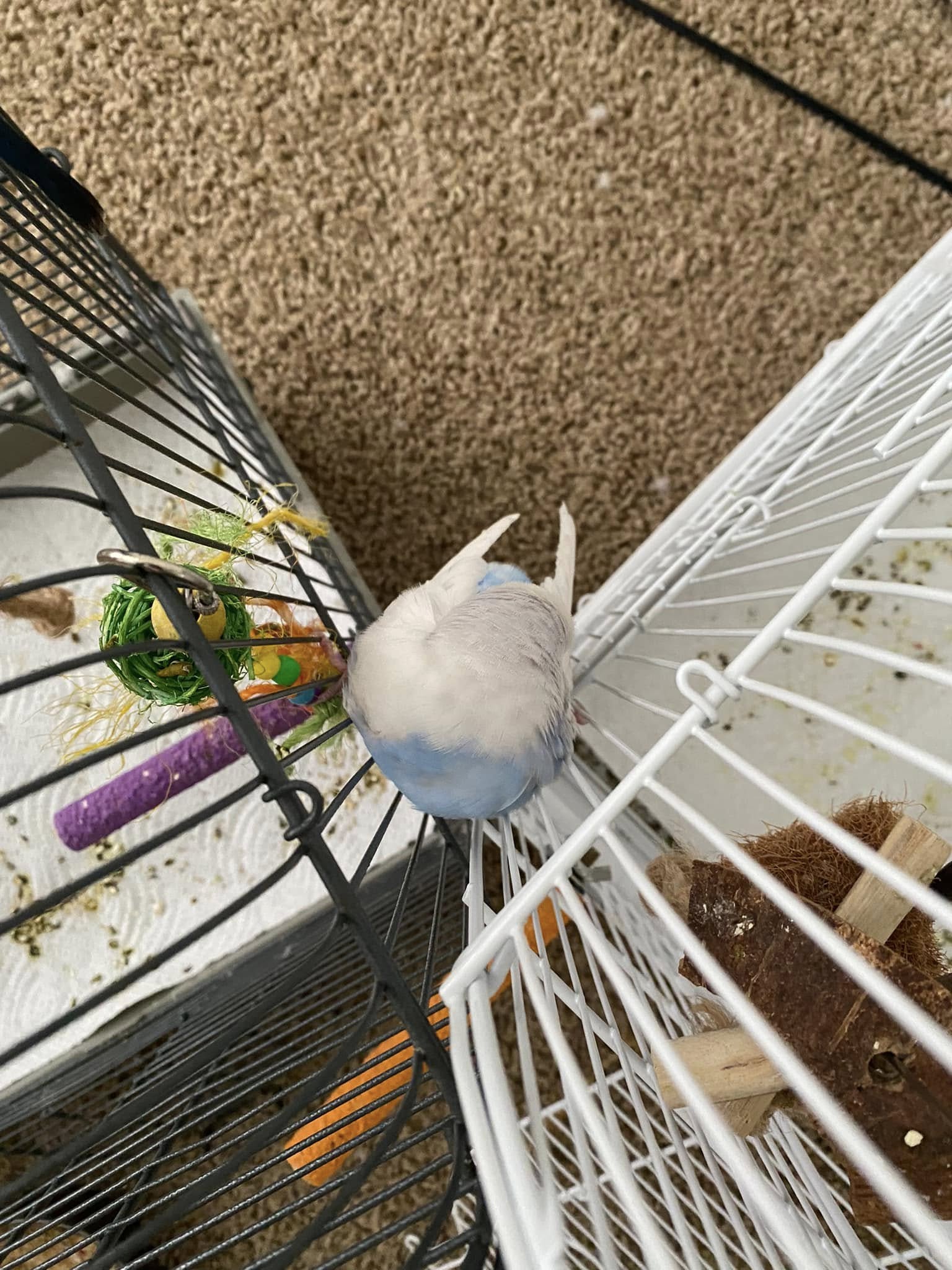
I’ll be honest — this is the one that breaks my heart most often, because people come in and tell me how “fluffy and adorable” their bird has been looking lately. And I have to gently explain that a constantly puffed-up budgie isn’t being cute. It’s cold, or it’s poorly, or both.
Birds fluff up their feathers to trap warm air close to the body. It’s a survival response when they can’t keep their temperature steady. A bit of fluffing first thing in the morning, or when they’re settling down for the night — that’s fine, totally normal. I see my own birds do it.
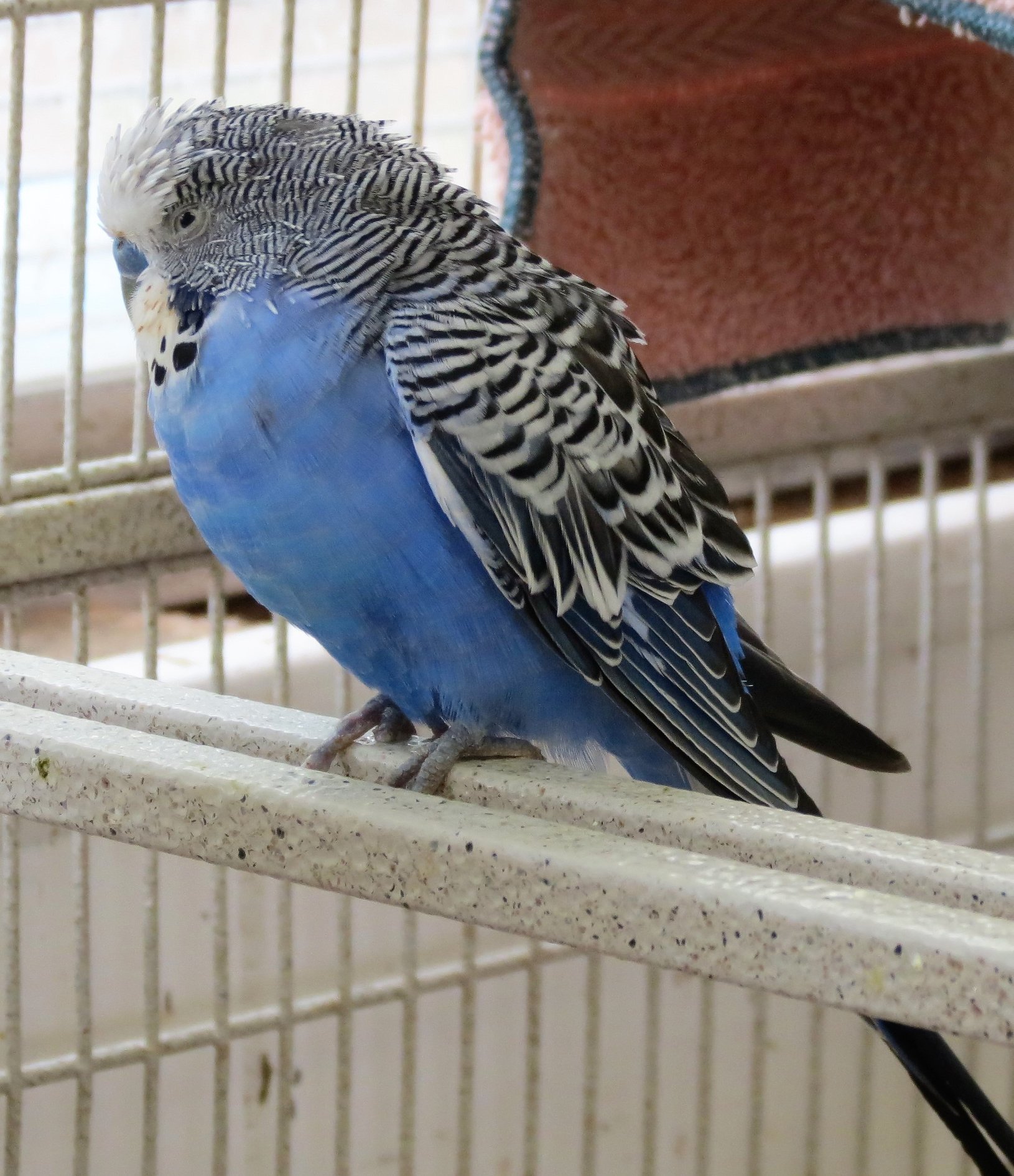
What’s not fine is a bird that stays fluffed up for hours, with its eyes closed, barely moving. That usually points to:
- A respiratory infection — incredibly common in the UK climate
- Egg binding, if you’ve got a female — not sure how to tell? Here’s our guide on identifying male and female budgies
- A crop infection
- Simple cold exposure from a draughty room
Every winter without fail, we get worried owners walking into Paradise Pets with fluffed-up budgies. UK homes with patchy heating are a real problem for these birds. If you’re seeing this, come and have a chat with us, or get to a vet quickly.
Sign 4: Both Feet Down While Sleeping
This one most people miss completely, and it’s one of the most useful signs I can teach you. So please, read this section carefully.
A healthy, relaxed budgie sleeps standing on one foot. The other foot gets tucked up into its belly feathers to keep warm. This posture is a budgie telling you “I feel safe, I’m warm, all is well in my world.”
When a budgie sleeps with both feet flat down on the perch — gripping tightly — it usually means the opposite. Something like:
- It’s too unwell to properly relax
- It’s saving energy because its body is fighting something
- It’s in pain
Tonight, just have a quick look at your bird before bed. One foot tucked up? Brilliant, you’re doing well. Both feet down regularly over several nights? Something’s not right — start checking the other signs in this guide.
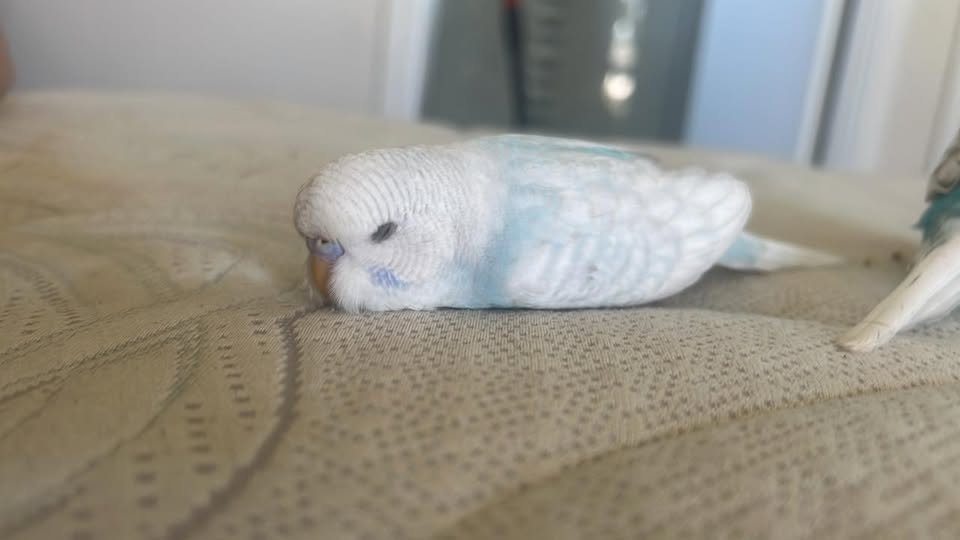
Sign 5: Closed Eyes During the Day, No Reaction
Here’s a quick test I use when worried owners bring birds into the shop. I gently walk towards the cage. A healthy budgie — even a snoozing one — will perk up sharpish. Eyes open, head cocks, “who are you and what are you doing here.” That’s the budgie I want to see.
A budgie that just sits there with closed eyes, barely reacting to you approaching? That bird is telling us something is wrong. In 35 years, this symptom — especially combined with the bird not eating much — has been one of the strongest signs of a bacterial or viral infection brewing.
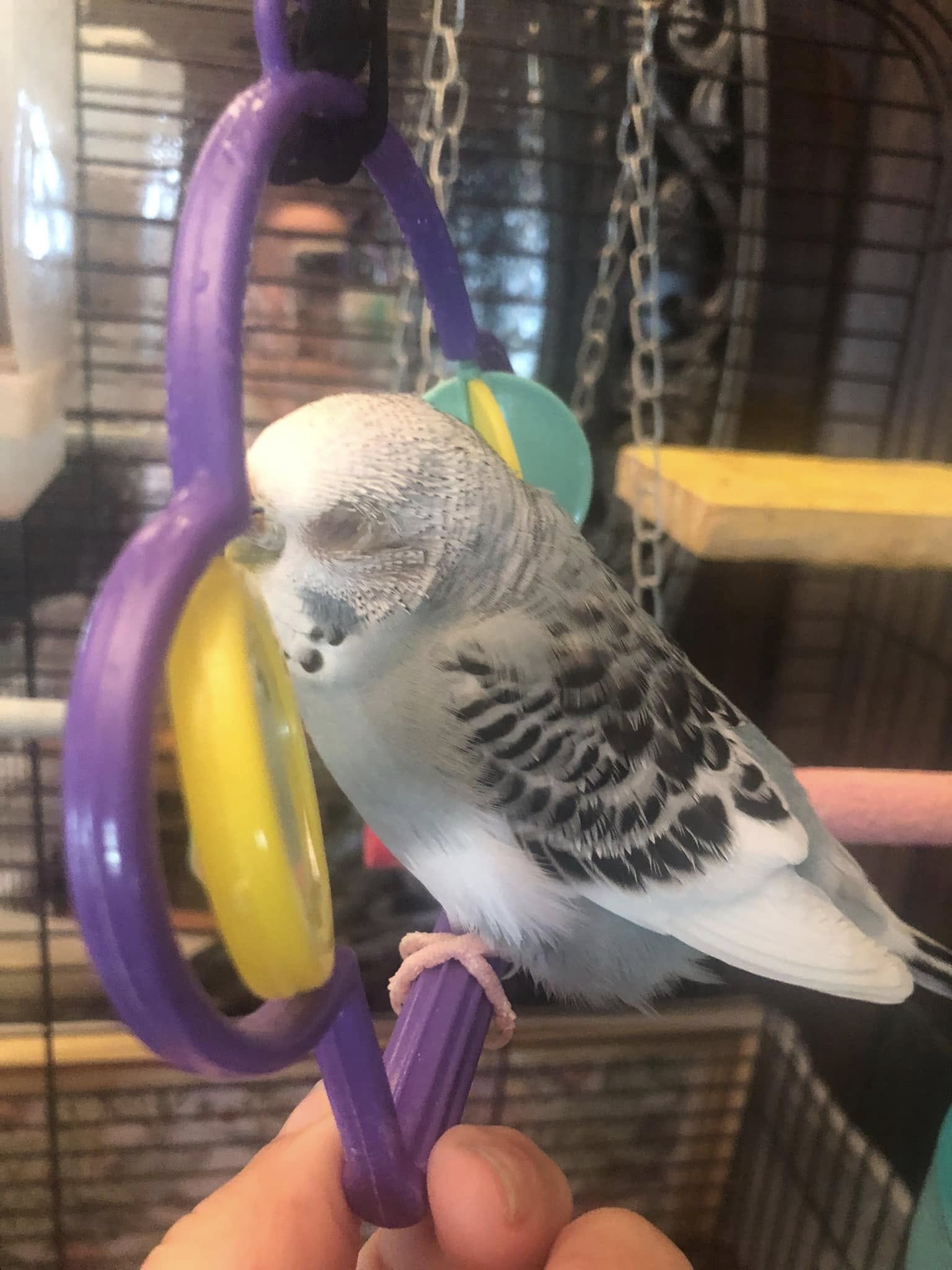
Healthy budgies are curious. They want to know what you’re up to. If yours has lost that curiosity, please don’t ignore it.
Sign 6: Listen to How Your Bird Breathes at Night
This is something I want you to do tonight. Wait until the room is properly quiet, then sit near the cage and just listen for a minute. Healthy budgie breathing is completely silent and steady — you shouldn’t really hear anything.
If you hear any of these, please don’t ignore it:
- Clicking or wheezing sounds with each breath
- Open-mouth breathing — this is very serious
- Tail bobbing in rhythm with breaths (we’ll cover this next)
- Sneezing, or any discharge from the nostrils
Respiratory problems in budgies can go from “a bit off” to “critical” in 48 to 72 hours. I cannot tell you how many times I’ve wished an owner had come in two days earlier. Don’t sit on this one.
Sign 7: Tail Bobbing While the Bird Is Just Sitting There
This is the subtle one. The one most owners miss because it looks like nothing. But it tells you a lot.
Tail bobbing means the bird’s tail is moving up and down in time with its breathing. In a healthy budgie, breathing is so effortless that the tail barely moves at all. When you see that tail going up and down noticeably while the bird is just resting, it means it’s having to work hard to breathe.
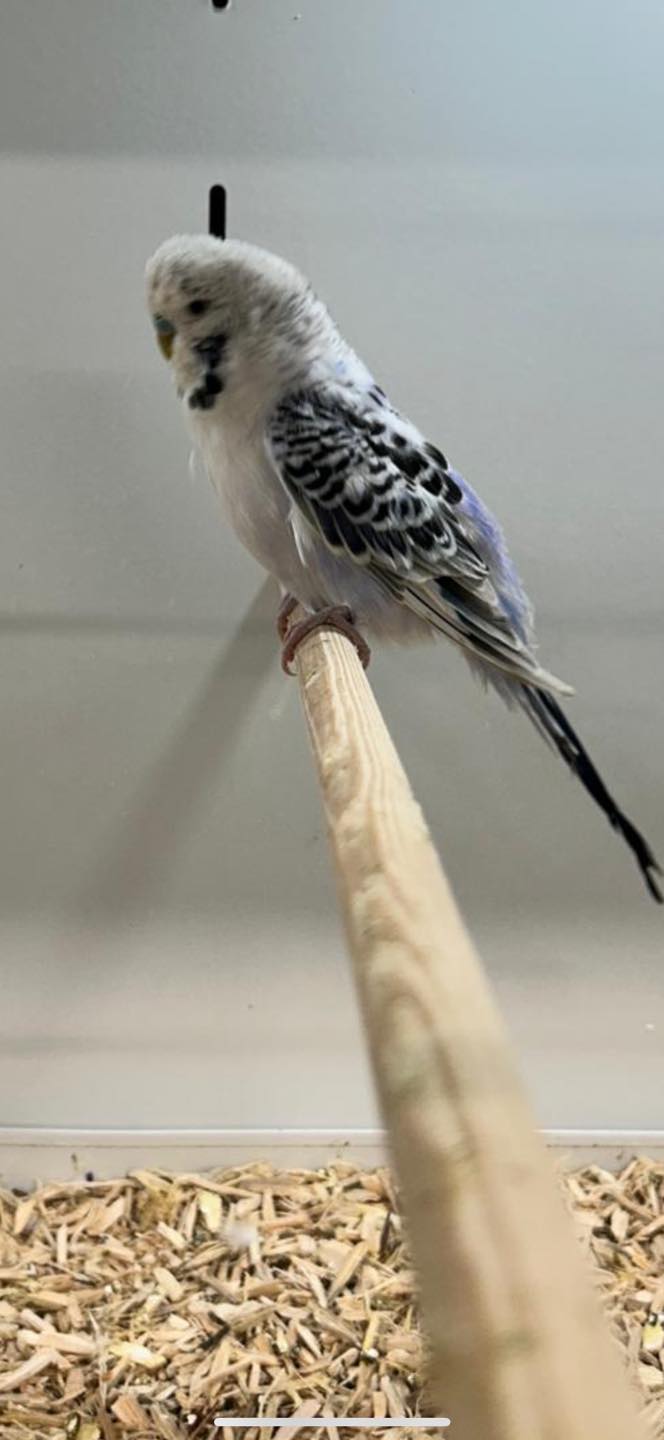
That’s a veterinary emergency. Please get help the same day.
So When Should You Actually See a Vet?
I get this question constantly, so let me give you the simple version I tell customers in the shop.
| Urgency | Signs to Watch For | What to Do |
|---|---|---|
| 🚨 Today | Sleeping on cage floor, open-mouth breathing, tail bobbing at rest, discharge from eyes or nose, no food for 24+ hours | Call an avian vet immediately |
| ⚠️ Within 2–3 days | Fluffed feathers for hours, sleeping during peak daylight, both feet down regularly, much less chirping | Book a vet appointment, monitor closely |
| ✅ Likely environmental | Occasional daytime naps, sleeping a bit more in winter, brief fluffing in cooler rooms | Adjust setup, keep watching |
Why Is My Budgie Sleeping Too Much? Common Causes I See in UK Homes
Once you’ve spotted the warning signs, the next thing is figuring out why. Here are the causes I run into most often at Paradise Pets — and honestly, most of them are completely fixable.
Poor Lighting
Budgies need consistent daylight cycles. UK winters with their short, dim days throw their internal rhythm right off. A decent full-spectrum bird lamp on a timer makes a massive difference. Honestly, this fixes a surprising number of “sleepy bird” problems.
Cold or Inconsistent Temperatures
UK homes are draughtier than we like to admit. Keep the cage in a room that stays between 18 and 24°C all year, away from windows, away from radiators, away from outside doors. Consistency matters more than the exact temperature.
Poor Diet
This is one of my biggest frustrations. A seed-only diet is one of the most common reasons I see sick budgies. Your bird needs pellets, fresh veg, occasional fruit — not just seed in a bowl. We stock proper budgie nutrition at our cage and aviary bird section, and I’ll happily talk you through it in the shop if you’re unsure.
Boredom and Loneliness
Budgies are properly social creatures. A single bird in a cage with no toys, no stimulation, no company — that bird will get depressed. Yes, depressed. They sleep more, chirp less, and slowly fade. Get them a companion if you can, and give them things to do. We’ve got healthy young budgies available regularly from trusted UK breeders.
Hidden Infections
Bacterial, fungal, and viral infections are unfortunately common, especially in birds from sources we wouldn’t trust. This is exactly why at Paradise Pets we only stock budgies from reputable UK breeders we’ve worked with for years. You should always know where your bird came from.
Just Getting Older
I’ll be straight — older budgies, 7 years and up, do naturally slow down a bit. They sleep more, play less. But this should be a gradual change over months, not a sudden shift over a week or two. If it’s sudden, it’s not age.
If You’re in Swindon — Come and See Us
Look, I know vet bills can be scary, and sometimes you’re just not sure if what you’re seeing is serious or not. That’s exactly why we offer free in-store advice at Paradise Pets. If you’re in Swindon, Wiltshire, or anywhere nearby, bring a photo or a quick video of your bird’s behaviour, and I or one of the team will sit down with you and have a proper look.
We’ve been running this shop for over 35 years. We’ve helped thousands of budgie owners — some who bought from us, plenty who didn’t — and we’d rather you popped in for a free chat than wait until things got worse.
Worried About Your Budgie? Come and See Me
Bring your bird or just a video of its behaviour — I’ll have a proper look and tell you honestly what I think. No charge, no obligation. That’s how we’ve done things for 35 years.
Manor Garden Centre, Cheney Manor, Swindon SN2 2QJ
Frequently Asked Questions
Is it normal for my budgie to sleep during the day?
A short nap of 10 to 20 minutes is completely normal, usually in the early afternoon. Sleeping for hours during peak daylight is a warning sign and needs investigating.
My budgie sleeps with both feet down — should I worry?
Once or twice, no. But if it’s happening regularly over several nights, it can mean your bird isn’t feeling well or is in pain. Watch closely and get advice if it continues for more than 2 to 3 days.
How do I tell the difference between a sick budgie and a tired one?
Look for the combination — fluffed feathers, closed eyes during daytime, reduced eating, changes in droppings, and less chirping. Any one of these on its own might mean nothing. Two or three together? That’s a vet visit.
What temperature should I keep my UK home for a budgie?
Between 18 and 24°C, kept consistent. Avoid putting the cage near windows, radiators, or doors that get opened to the outside. Stability matters more than the exact temperature.
Where can I get reliable budgie advice in Swindon?
Come and see us at Paradise Pets, Manor Garden Centre, Cheney Manor, Swindon SN2 2QJ. Or give us a ring on 01793 512400. The advice is free, and we’ve been doing this for 35 years.
One Last Thing From Me
If you take just one thing away from this article, please let it be this: trust your instincts. You know your bird better than anyone. If something feels off about your budgie’s sleep, behaviour, or general manner — even if you can’t quite put your finger on what — please don’t wait for things to get worse.
Budgies are tougher than they look in some ways, but they’re also incredibly good at hiding pain. The owners who catch problems early are the ones whose birds recover. That’s the truth of it.
If you’re worried, get in touch. Pop down to the shop, give us a ring, send a photo. We’re here, and we’d much rather help you sort a small issue today than see you back here in a month wishing you’d come sooner.
Take care of those little birds — they’re worth it.
⭐ Customer Reviews
Amazing Bird Selection
Had a lovley visit today,staff were very friendly and very helpful,such a great petshop,their selection of birds is incredible,really impressed,thank so much to the staff at Paradise Pets

Friendly Helpful Staff
I have been coming to this place for years and they have a great stock of food for all types of pets. Have a great selection of small mammals and a lot of birds. Staff are friendly and helpful.

Great Quality Hutch
Bought a guinea pigs hutch and run combo, very happy with the service, the hutch was put in my car for me without even asking for help. The wood quality is very good, the instructions easy to follow and we are extremely happy with the fully built hutch. A good size for 2 guinea pigs

Response from Paradise Pets | Wiltshire
Thank you Melanie Latus Nice to provide services to you.
Best Bird Shop Around
It’s the best pet shop in and around Swindon. They always have an amazing selection of birds and all you need to keep them happy. I keep birds myself and the guys there are happy to answer questions and really know their stuff. I have seen budgies etc. in chain pet shops in the area looking really unhealthy and ill – I wouldn’t go anywhere else than Paradise Pets for animals.

Highly Recommended Bird Shop
I could not praise this shop enough. Really helped my Grandson buy his first bird and he’s loving it. Travelled from Somerset and was welcomed with open arms.

Great Shop with Competitive Prices
Great shop with amazing selection for small animals, hamsters, mice ect, highly recommend!
Also has a great selection for dogs & cats too & very competitive prices! 💖

