
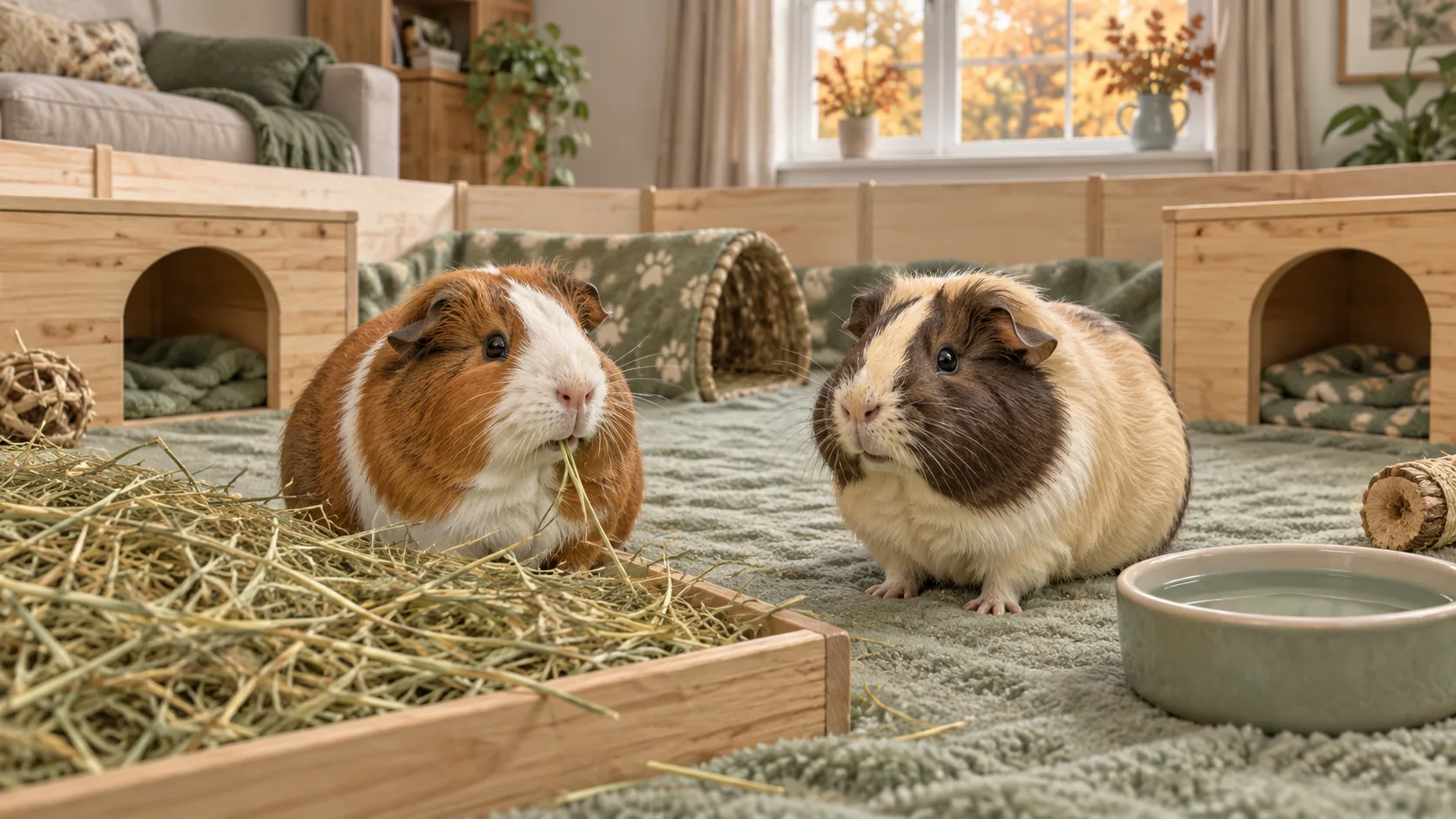

Featured image: AI-generated illustration of an indoor guinea-pig setup; enclosure dimensions are not shown.
Moving guinea pigs indoors for winter works best when their new home is ready before the weather turns. Finding a corner for the enclosure is only part of the job. You also need space for exercise, somewhere to store bedding, and a routine that works when the household is busy.
If your guinea pigs currently live outdoors, use this plan to work through those decisions. Start with a tape measure, a room thermometer and a notebook. A few useful observations now can prevent a rushed move on a cold evening.
1. Decide before the overnight forecast becomes a problem
The RSPCA advises moving guinea pigs indoors when temperatures fall below 15°C. It describes 17–20°C as ideal indoor room temperatures, with dry, ventilated accommodation away from draughts and direct heat. These are housing recommendations, not a guarantee that a particular animal or enclosure is safe. See the RSPCA’s guinea-pig housing guidance.
Check the overnight forecast as well as the afternoon temperature. Do not wait for frost before choosing a winter location. If conditions are already unsuitable, arrange appropriate accommodation promptly; do not delay while collecting a perfect set of readings.
Write down your preferred room and an alternative. Add any jobs needed before the space is usable, such as moving furniture or assembling an enclosure. Give each job an owner and a completion date.
2. Assess the place where they will actually live
Take readings near the proposed enclosure, with the thermometer safely out of reach. Check what happens before the heating comes on, during normal daytime use and in the evening. A thermostat in the hallway cannot tell you the conditions beside a patio door.
Use this table to compare possible locations. A room’s name is not enough to decide whether it is suitable.
| Check | What to record before choosing |
|---|---|
| Temperature | Readings near the enclosure at different times, including overnight lows if your thermometer records them. |
| Air and damp | Draughts from doors, condensation, damp surfaces and how the room is ventilated. |
| Heat and sunlight | Nearby radiators and where direct sunshine reaches during the day. |
| Household activity | Passing feet, noisy appliances, visiting children and access by other pets. |
| Practical access | Whether you can open, clean and inspect the whole enclosure without shifting it. |
An unused outbuilding still needs assessment. Do not house guinea pigs in a garage used for vehicles: Blue Cross warns that vehicle fumes can be fatal. Its care guide also stresses protection from cold and damp. A conservatory can present a very different environment at midday and overnight.
3. Measure the whole winter setup
Mark out the proposed enclosure on the floor before ordering equipment. Then include the exercise area, storage and enough room for a person to clean it. Check that doors and drawers still open. A layout that blocks the route through a room is likely to become a daily frustration.
Blue Cross distinguishes the main living area from exercise space. Where there is a separate run, its guidance gives at least 5ft × 2ft for the living area. For permanent indoor housing without a separate run, it gives at least 6ft × 4ft. Read the full housing guidance in context when planning your arrangement.
Draw in shelters, hay and water points rather than treating the empty enclosure’s measurements as the whole plan. Every guinea pig needs access to resources and somewhere to retreat from companions. The RSPCA’s companionship guidance explains why those choices matter.
For the wider housing and daily-care requirements, use our guinea-pig care guide. This winter move should preserve a suitable living arrangement, including the established compatible group.
4. Get everything ready before moving day
Assemble the accommodation first, so the animals are not waiting in a carrier while you search for missing parts. Work through this checklist:
- Fit the bedding and place the shelters, food and water equipment.
- Check that each water bottle or bowl is accessible and working.
- Put normal supplies within easy reach of the person providing care.
- Prepare suitable transport and clear the route to the new room.
- Save the vet’s normal and out-of-hours contact details where carers can find them.
The RSPCA recommends travelling with companions and familiar-smelling items to help guinea pigs feel at ease. Its transport advice also highlights the value of familiar routines.
Keep their established feeding arrangements consistent through the move, unless your vet has advised otherwise. Our guinea-pig feeding guide covers hay, vegetables, pellets and water without adding an unnecessary diet change to moving day.
5. Observe each guinea pig, not just the food bowl
Once they are indoors, make a brief record of what you actually notice: who is eating, whether water is accessible, droppings, activity and interactions. “Both came out for their usual food” is more useful than “seem fine”. A shared bowl being emptied does not tell you how much each animal has eaten.
Contact your vet immediately if eating or drinking changes, or droppings reduce or stop. The RSPCA’s health guidance warns that these changes can indicate serious illness. Do not dismiss reduced eating as a normal settling-in phase or wait for a fixed number of hours.
The record can help you explain a change to the vet. It cannot diagnose the cause, and completing it should never delay that call.
6. Agree on a winter routine the household can sustain
Decide who checks the guinea pigs in the morning and evening, who cleans, and who takes over when that person is away. Avoid an arrangement in which everyone assumes someone else has checked the water.
Keep a simple care sheet beside the supplies. Include the usual food routine, cleaning jobs, where replacement bedding is kept and the emergency contacts. Add a place to record anything unusual so the next carer sees it.
Check bedding for damp rather than judging cleanliness from a distance. Blue Cross’s winter advice stresses keeping bedding dry and maintaining opportunities for exercise. Plan both into the indoor arrangement from the beginning.
Review the layout after using it. If cleaning requires dismantling half the enclosure, or supplies are awkward to reach, improve the arrangement while keeping the animals’ needs central.
7. Leave the spring return date open
Once guinea pigs have moved indoors for winter, do not plan repeated journeys between a heated room and cold outdoor accommodation. They cope poorly with large temperature changes. Blue Cross advises waiting for consistently warm weather before returning them outdoors.
A sunny afternoon or a date on the calendar is not enough. Before any move back, reassess the outdoor accommodation and conditions, and seek individual advice if you are unsure.
For now, finish your autumn plan by checking five things: a suitable location, enough space, an assembled setup, a named carer and accessible veterinary contacts. Put any unfinished job on the household calendar so it is dealt with before the next cold night.
