

Neil has kept, bred, and sold cage and aviary birds at Paradise Pets Swindon since 1988 — over 35 years watching the world of birds from every angle. The story of the Javan green magpie is, in my view, one of the most urgent and most instructive conservation stories in the world right now. It is also one that connects directly to choices UK pet bird owners make every day, in ways that most people have never been shown. This is why it matters — and what you can actually do about it.
I want to tell you about a bird you have almost certainly never seen, probably never heard of, and may never have the chance to see in the wild at all — because there may not be any left in the wild to see.
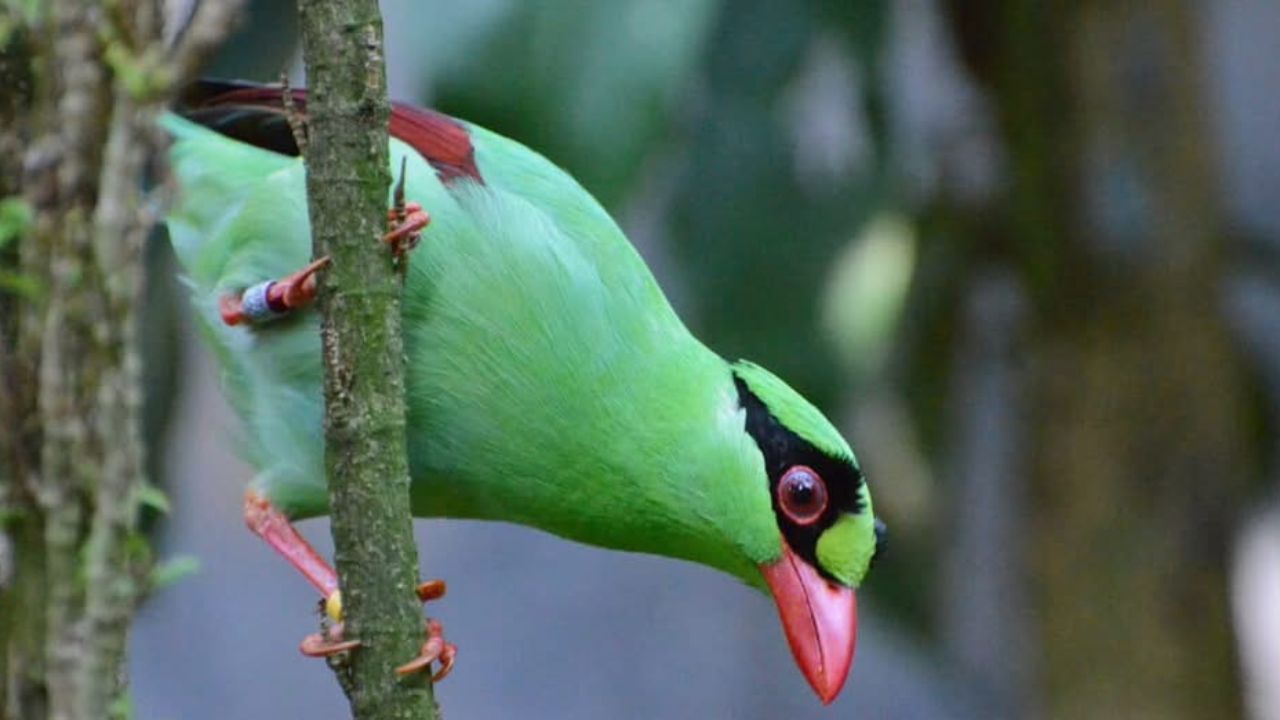
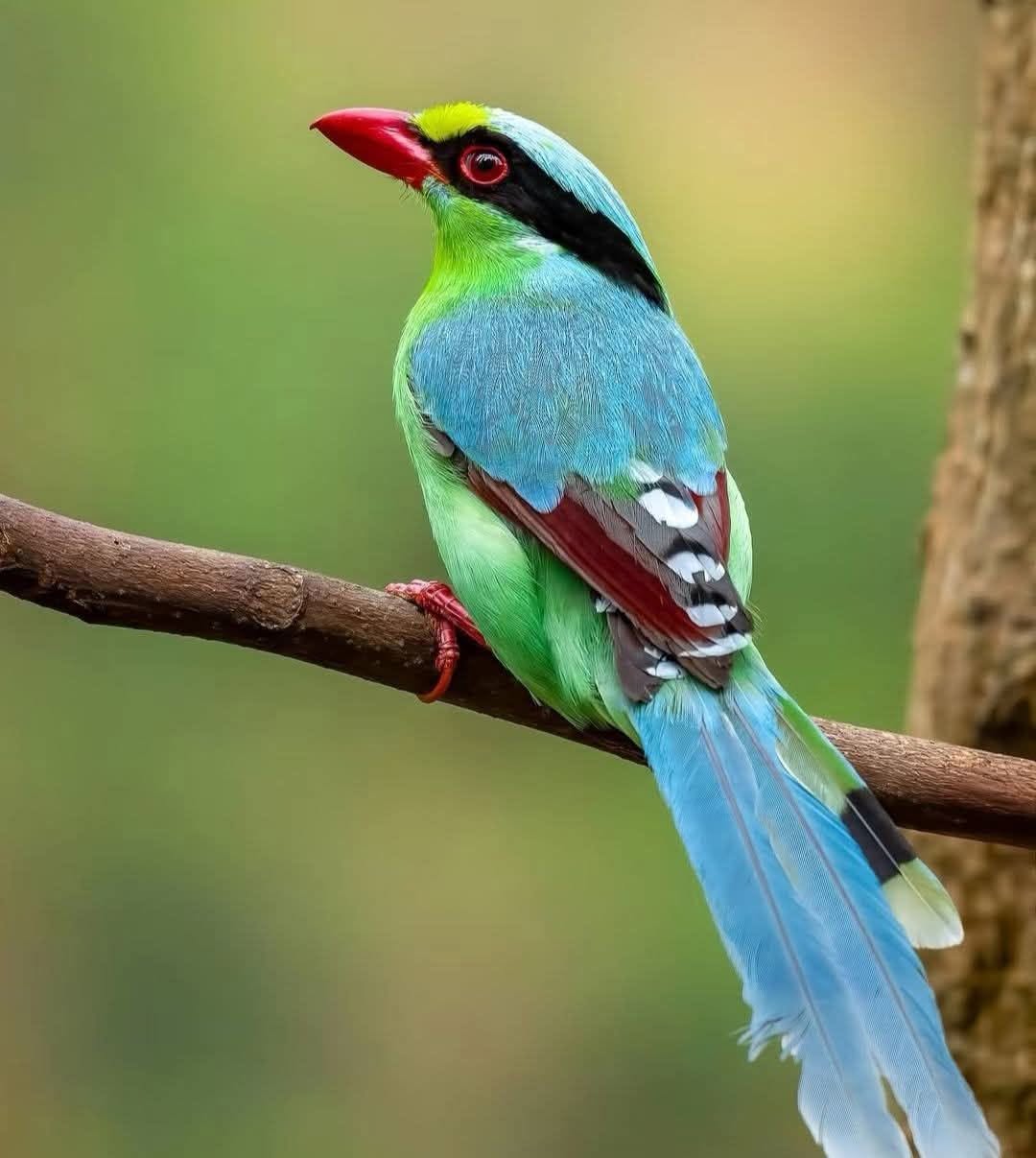
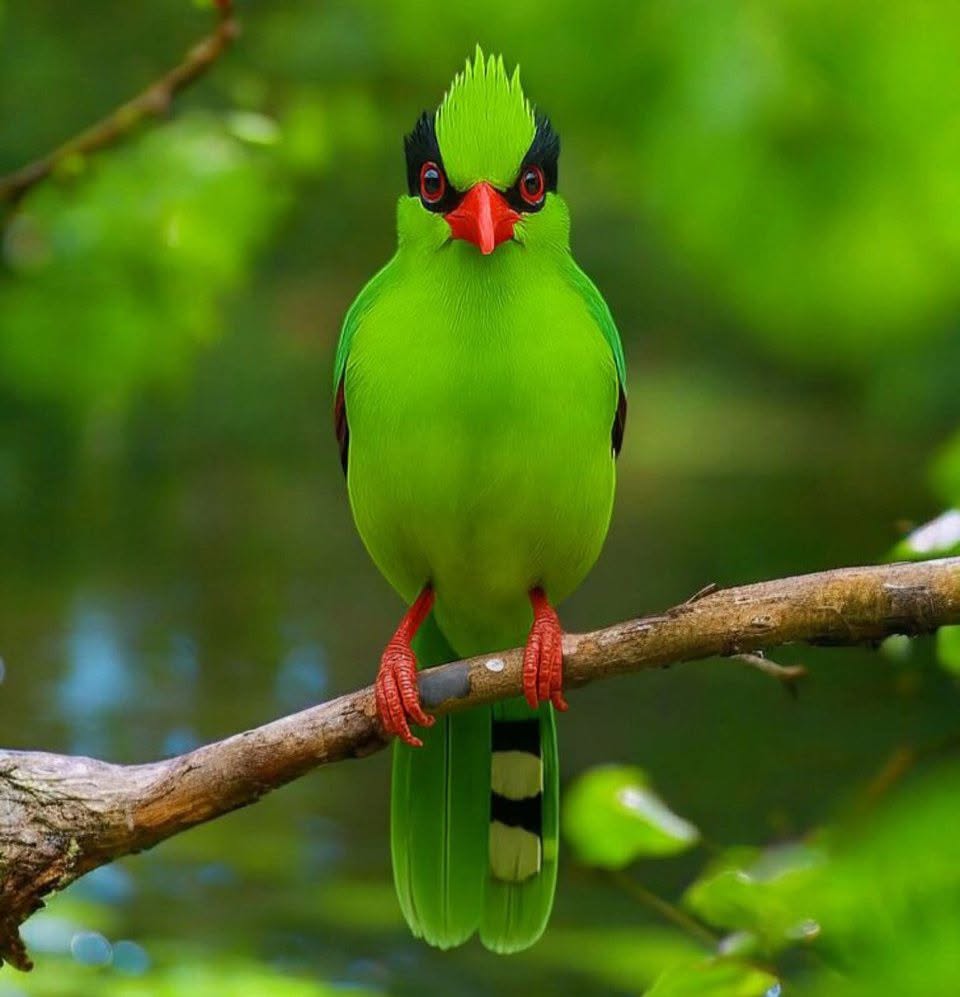
The Javan green magpie. Thirty-one centimetres of striking, iridescent apple green plumage, russet-brown wings, a vivid red beak, and a glossy black mask that makes it look, depending on your angle, somewhere between extraordinary and slightly theatrical. Endemic to the montane forests of western Java, Indonesia. Never common. Now, by the most recent estimates, reduced to perhaps fifty individuals remaining in the wild — with some experts unwilling to rule out the possibility that it is already functionally extinct there and that the remaining population is simply too scattered and too cryptic to have confirmed the worst yet.
As few as fifty. In the entire world.
I have been selling birds for thirty-five years. I have watched the trade in wild-caught birds damage species that have never recovered. And I want to be direct about what has happened to this particular bird and why, because the honest version of that story has something important to say to every UK pet bird owner — not as guilt or accusation, but as information that changes how the choices we make here are connected to what is happening there.
What Happened to This Bird — And Why
The Javan green magpie was once found across the upland forests of western Java. It was never abundant in the way that common species are abundant — the mountain forests it preferred have always been a specific and finite habitat — but it was present, breeding, and holding its own against the background pressures that forest birds everywhere face.
What changed was not primarily habitat loss, though that is a significant secondary factor as Java’s forests have continued to shrink under agricultural expansion. The primary driver of the collapse is the cage-bird trade, and specifically a cultural practice of bird-singing competitions that has been enormously popular across Indonesia and much of Southeast Asia. The Javan green magpie is not trapped as a competition bird itself. It is trapped as a “master bird” — used to train other competition species by exposing them to its extraordinary vocal range and mimicry ability. Owners of competition birds pay significant money for access to a master bird whose calls their own birds can learn from.
Surveys carried out between 2018 and 2021 across twelve previously inhabited sites recorded no birds at all. Not reduced numbers — no birds. The habitat was still there. The birds were not.
The species received official protected status in Indonesia in 2019. But as Chester Zoo’s head of birds, Andrew Owen, observed: “The fact that the Javan green magpie is now so rare is also a reason why some people want to catch them and keep them.” Rarity, in the cage-bird trade, often increases rather than decreases demand.
The One Thing That Could Still Save It
A new ten-year conservation action plan for the Javan green magpie was developed and agreed upon by forty-eight songbird experts and conservation organisations, published in 2026. The plan aims to protect remaining habitat, engage with local communities to address trapping, strengthen enforcement against illegal trade, and support future conservation translocations using birds bred in captivity.
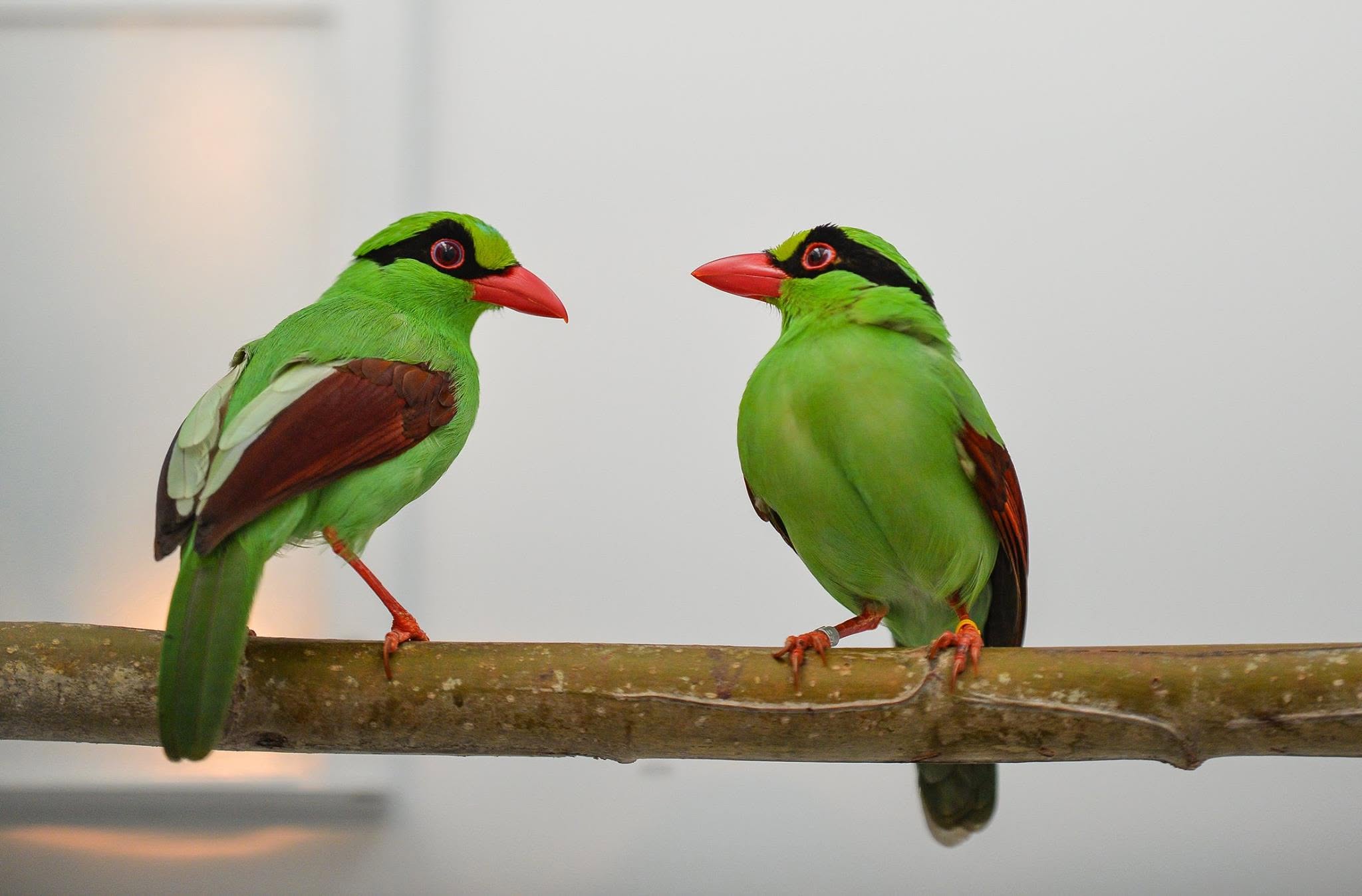
The captive breeding programme, running since 2011 at the Cikananga Conservation Breeding Centre in Java with a European population established across several zoos including Chester Zoo from 2015, has now produced over 130 birds. The plan is to use captive-bred birds in future translocations, reintroducing them to protected wild habitat once sufficient numbers and appropriate conditions can be established.
This is not a straightforward process. The Javan green magpie is difficult to breed in captivity, with very specific requirements regarding diet, environment, and pairings. After several initial years without successful breeding, the programme has now achieved consistent results, with Cikananga’s population holding important genetics that represent a significant proportion of the international studbook.
The challenge of reintroduction is complicated further by the need to ensure captive-bred birds do not become humanised in ways that would compromise their survival in the wild. Prague Zoo and other facilities have addressed this by using green magpie puppets to feed juvenile birds — a technique proven with the California condor — so that young birds imprint on their own species rather than on human carers.
The honest answer to what could still save this bird is the same answer it almost always is in these situations: sustained funding and institutional commitment to the captive programme, serious enforcement of the trade ban within Indonesia, genuine engagement with local communities to address the economic incentives behind trapping, and enough time before the wild population drops below any realistic threshold for successful reintroduction.
None of those things is certain. All of them are still within reach. But the window, measured in years rather than decades, is genuinely narrow.
Why UK Pet Bird Owners Are Part of This Story
This is the connection I want every UK pet bird owner to understand clearly, because it is not obvious unless someone draws the line for you — and once drawn, it is very hard to unsee.
The cage-bird trade that has driven the Javan green magpie to the edge of extinction operates on demand. Demand for spectacular, vocal, mimicking birds. Demand that, in the Javan green magpie’s case, comes almost entirely from within Indonesia and the wider Southeast Asian bird-singing competition culture — but which reflects a universal human appetite for keeping birds that is as present in a living room in Swindon as it is at a market in Jakarta.
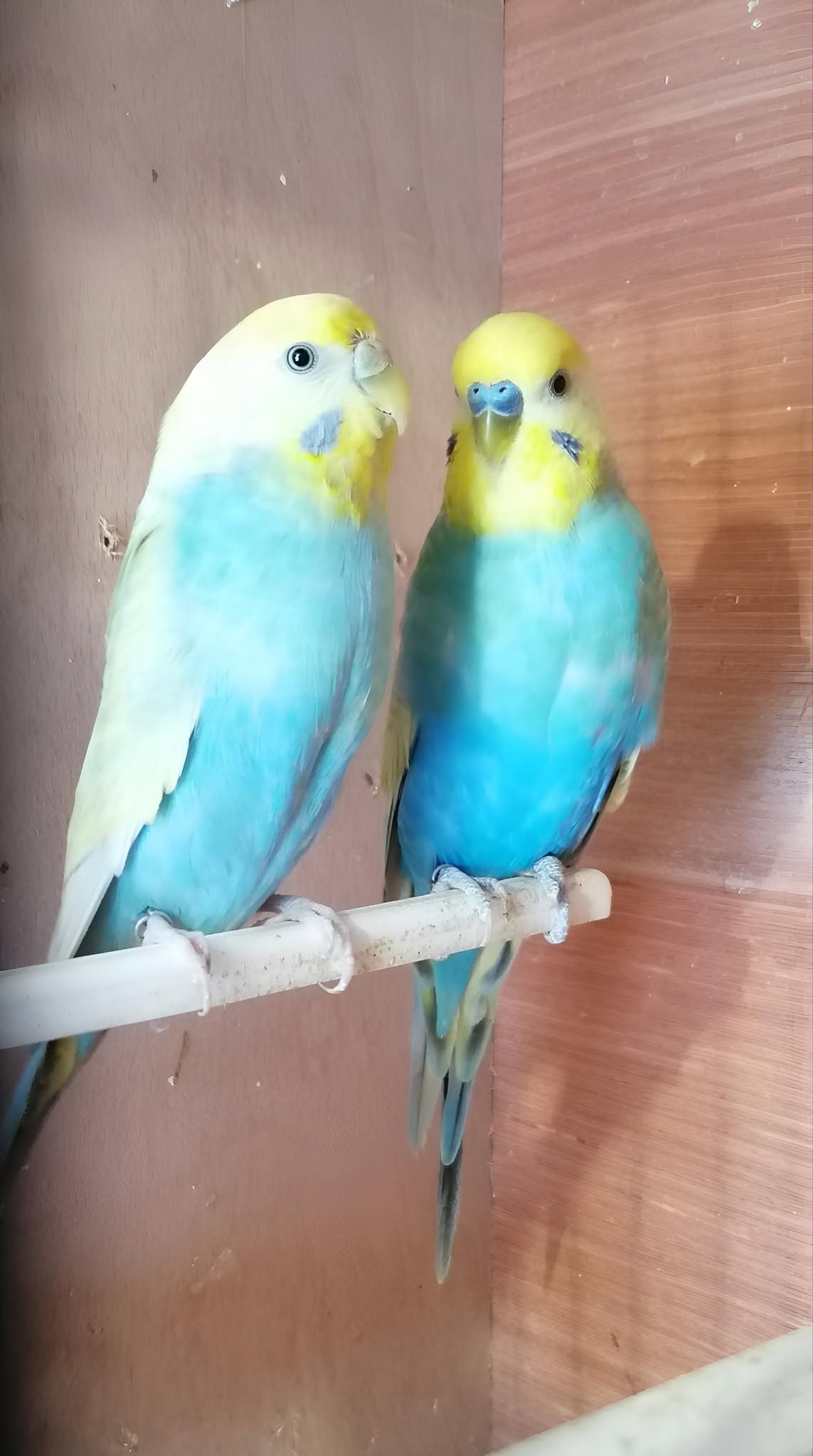
I am not suggesting that buying a budgie from a UK pet shop directly threatens the Javan green magpie. It does not. The birds we sell at Paradise Pets are UK-bred, and I have written at length elsewhere on this site about why we have never imported an animal in thirty-five years of trading. There is no direct supply chain connecting a bird purchased here to the illegal trade in Java.
What there is, instead, is something more diffuse and more important: UK pet bird owners who understand how this industry works, who choose their birds accordingly, and who support the institutions doing the most important conservation work on species like this one, are part of a global culture of bird-keeping that is either part of the problem or part of the solution — and which side of that line any individual owner sits on depends almost entirely on how informed they are about what is happening beyond their own living room.
Chester Zoo, one of the UK’s leading institutions in this field, is a core part of the Javan green magpie’s European conservation programme, alongside Manchester Metropolitan University’s research into how the songbird trade operates and how it can be disrupted. Supporting UK zoos and conservation organisations working in this space is one of the most direct things a UK bird lover can do to contribute to the outcome for this species — and doing so with an understanding of why it matters is the beginning of being genuinely part of the answer rather than simply an observer.
What This Bird Looks Like, and Why That Matters
I want to spend a moment on this, because I think the Javan green magpie’s appearance is part of why its story is worth knowing and sharing.
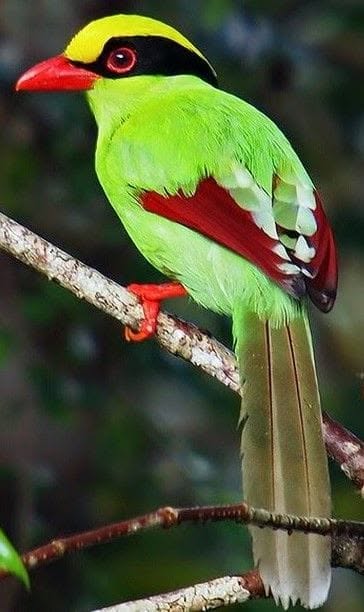
Bright apple green feathers along the full length of the body, contrasting russet-brown wings, a bright red beak and legs, and a charismatic black “bandit’s mask” — a layer of glossy black feathers surrounding the eye. This is a bird of extraordinary visual impact, thirty-one centimetres long, with an equally extraordinary vocal range that allows it to mimic the calls of other species with accuracy that makes it genuinely useful to trainers of competition birds — which is precisely what has driven people to catch and trade it to the point of near-extinction.
The bitter irony is that what makes the Javan green magpie so remarkable is exactly what made it so valuable to the trade, and exactly what may cause it to disappear before most of the world has ever had a chance to see it.
This is not an abstract statistic about a species in a faraway place. There are perhaps fifty of them left. They live in four protected areas in the mountains of western Java. A team of people at Cikananga and at Chester Zoo and at Prague Zoo are working, right now, to make sure there will still be some to return to those mountains in the years ahead. Whether they succeed depends on whether the support for that work, in funding and public awareness and institutional commitment, lasts long enough to give the captive programme time to do what it needs to do.
What I Tell People at the Counter
When I talk about the Javan green magpie at the counter — and I do talk about it, because it is precisely the kind of story that every person who loves birds deserves to know — the reaction is almost always the same. Genuine surprise that something this striking and this extraordinary could be reduced to fifty individuals without most people having heard of it. A question about what they can do. And sometimes, a different quality of attention to the question of where the bird in front of them came from and what the practices behind it look like.
That last thing — the shift in attention, the willingness to think about the supply chain behind a bird purchase — is the most useful thing any individual conversation about a species like this one can produce. I do not need everyone who buys a budgie from us to become a conservation activist. I do need them to understand that the global trade in birds exists, that it has effects like the one I have described here, and that choosing birds that come from responsible UK breeders rather than from wild-caught or obscure-origin sources is a choice that matters in aggregate, even if no single purchase feels significant on its own.
The Javan green magpie may still make it. There are fifty birds in the wild, a hundred and thirty in captivity, a ten-year plan, and a small number of dedicated people at institutions including a zoo in Cheshire who have committed years of their professional lives to this cause. That is not nothing. It might be enough, if everything goes reasonably well from here.
I hope it is. Come in if you want to talk about this or about responsible bird sourcing. We are at Manor Garden Centre, Cheney Manor Industrial Estate, Swindon, SN2 2QJ — open every day. Or call us on 01793 512400.
- Species: Javan green magpie (Cissa thalassina). A passerine bird in the crow family, endemic to the montane forests of western Java, Indonesia. Critically Endangered on the IUCN Red List.
- Wild population: Estimated at perhaps fifty individuals. Surveys between 2018 and 2021 across twelve previously inhabited sites found no birds at several locations. Some experts consider functional extinction in the wild a real possibility.
- Primary threat: Trapping for the cage-bird trade, specifically for use as a “master bird” in Indonesian bird-singing competition culture — used to train competition species through its mimicry ability.
- Legal status: Protected in Indonesia since 2019. Despite this, targeted trapping for the trade has continued.
- Captive population: Over 130 birds bred across the Cikananga Conservation Breeding Centre in Java and European facilities, including Chester Zoo and Prague Zoo, managed under the EAZA international studbook.
- Current plan: A ten-year conservation action plan, agreed by forty-eight experts in 2026, aims to protect remaining habitat, reduce trapping, enforce trade bans, and support future reintroduction of captive-bred birds.
- UK involvement: Chester Zoo, in partnership with Manchester Metropolitan University and Cikananga, leads the UK contribution to the European captive breeding programme and the research into trade dynamics.
Visit Us at Paradise Pets Swindon
We stock a full range of cage and aviary birds — all UK-bred, all from responsible sources, and all sold with an honest conversation about what responsible bird-keeping looks like in 2026. If you want to talk about this or any other bird conservation story, come in.
We also stock gerbils and hamsters, guinea pigs, and rabbits.
⭐ Customer Reviews
Amazing Bird Selection
Had a lovley visit today,staff were very friendly and very helpful,such a great petshop,their selection of birds is incredible,really impressed,thank so much to the staff at Paradise Pets

Friendly Helpful Staff
I have been coming to this place for years and they have a great stock of food for all types of pets. Have a great selection of small mammals and a lot of birds. Staff are friendly and helpful.

Great Quality Hutch
Bought a guinea pigs hutch and run combo, very happy with the service, the hutch was put in my car for me without even asking for help. The wood quality is very good, the instructions easy to follow and we are extremely happy with the fully built hutch. A good size for 2 guinea pigs

Response from Paradise Pets | Wiltshire
Thank you Melanie Latus Nice to provide services to you.
Best Bird Shop Around
It’s the best pet shop in and around Swindon. They always have an amazing selection of birds and all you need to keep them happy. I keep birds myself and the guys there are happy to answer questions and really know their stuff. I have seen budgies etc. in chain pet shops in the area looking really unhealthy and ill – I wouldn’t go anywhere else than Paradise Pets for animals.

Highly Recommended Bird Shop
I could not praise this shop enough. Really helped my Grandson buy his first bird and he’s loving it. Travelled from Somerset and was welcomed with open arms.

Great Shop with Competitive Prices
Great shop with amazing selection for small animals, hamsters, mice ect, highly recommend!
Also has a great selection for dogs & cats too & very competitive prices! 💖

