


Neil has run Paradise Pets Swindon since 1988 — over 35 years of watching what happens to pet birds during the school summer holidays. England’s summer break begins around 20 July 2026. Scotland’s started in late June. There are approximately three million pet birds in UK homes. A significant proportion of them are about to be left alone — some for a day, some for a week, some for longer — while their households go on holiday. This is Neil’s honest account of what actually happens when that goes wrong, and exactly how to make sure it does not.
A customer rang me from a service station on the M4 on a Tuesday morning in August. She and her family were two hours into a drive to Cornwall. She had left her two budgerigars at home with a large seed hopper, an automatic water dispenser, and a note on the cage asking her neighbour to look in if she happened to think of it.
She had rung because she had just remembered something she had read — I think it was on this site — about seed hoppers and hull accumulation. She wanted to know whether what she had done was all right.
I asked her three questions. How long were they away for. Had she shown the neighbour specifically what to do and left written instructions. And had she confirmed the automatic water dispenser was working correctly before they left that morning.
The answer to the first question was nine days. The answer to the second was that the note said to look in “if you happen to think of it.” The answer to the third was that she was not entirely sure.
I told her gently but directly that she needed to ring the neighbour — not ask her to look in if she thought of it, but ring her, specifically, that morning, and ask her to check on the birds daily, confirm the water was running, and call her if anything seemed different. I told her what different looked like. I told her what to tell the neighbour to do if she could not reach her. And I told her that when she got home, we needed to talk about what a better arrangement looked like for next year.
The birds were fine. The neighbour, once properly briefed, went in every day and sent a photograph of the cage each morning. But the nine days those birds spent with an inadequate water arrangement and an unbriefed carer was nine days where the outcome depended entirely on luck rather than preparation. And in 35 years at this counter, I have seen enough of what happens when the luck runs out that I do not want to rely on it.
The Scale Of What Is About To Happen
I want to put the headline figure into context, because three million pet birds is an abstract number and abstract numbers do not prompt action.
There are approximately three million pet birds in UK homes. The school summer holidays in England run for roughly six weeks from around 20 July to early September 2026. Scotland’s summer holiday began in late June — those households have already been navigating this for several weeks. A significant proportion of the families who keep birds will take at least one holiday during those six weeks. Some will be away for a weekend. Some will be away for a fortnight. Some will have family members coming and going throughout the summer in patterns that leave gaps in care that nobody has quite tracked.
In the weeks running up to and during the school holidays, the calls and enquiries I receive about holiday bird care increase substantially. Many of them are made at the last minute — the evening before departure, the morning of, or, like the customer on the M4, from somewhere en route. The arrangements described in those calls range from genuinely well-prepared to arrangements that I find, when I ask the specific questions, to be considerably less adequate than the owner believes them to be.
This article is not aimed at the family that leaves their bird with a properly briefed, bird-experienced carer who will visit twice daily, has the vet’s number, and knows what early illness signs look like. That family has done it right and they can read something else. This article is for everyone else — the family that has “sorted something out” and is not entirely sure the something is sufficient, the family that has not yet thought about it because the holiday is still three weeks away, and the family that genuinely does not know what adequate holiday bird care looks like because nobody has told them.
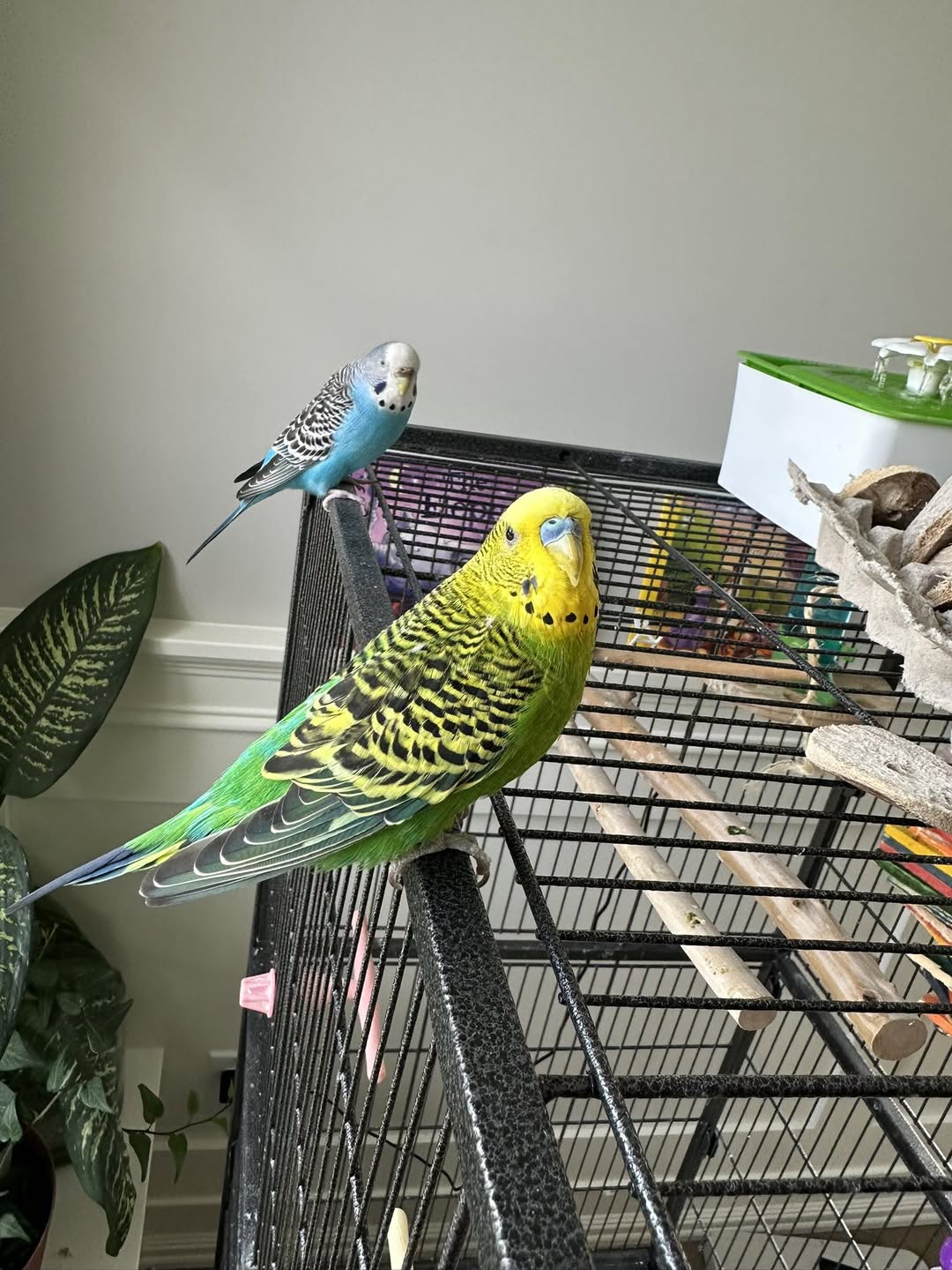
Mistake One — The Seed Hopper Assumption
This is the most common mistake I see, and it is the one that catches the most well-intentioned owners because it looks, on the surface, like a perfectly reasonable solution.
A seed hopper — the gravity-fed container that dispenses seed as the bird eats — appears to solve the food problem for an extended absence. It holds several days’ worth of seed, it refills the tray automatically as the bird feeds, and it allows an owner to leave for a week without worrying about whether there is food in the bowl.
The problem is hull accumulation, and it is a problem that is almost universally underestimated. A budgerigar does not eat a seed whole. It dehulls it — removes the outer casing — and eats the kernel inside. The empty hulls fall back into the food container and accumulate there. From above, the container looks full. The bird, reaching into it, finds a container of husks with very little actual food remaining. A bird that appears to have a full hopper may, in practice, have been eating progressively less for two or three days before an owner returning from holiday realises what has happened.
This has killed birds. Not dramatically, not in a single event, but through the gradual accumulation of nutritional deprivation combined with the stress of an empty and unchanging environment, it has produced outcomes in birds left with apparently full hoppers that owners did not anticipate and did not understand when they came home.
The solution is not to abandon the hopper entirely — it is a useful supplement to a properly briefed human carer. The solution is to understand that a human being who visits the cage daily and actually looks at and refreshes the food is not optional for an absence of more than twenty-four hours, regardless of what automatic equipment is in place. The hopper buys time. It does not replace the person.
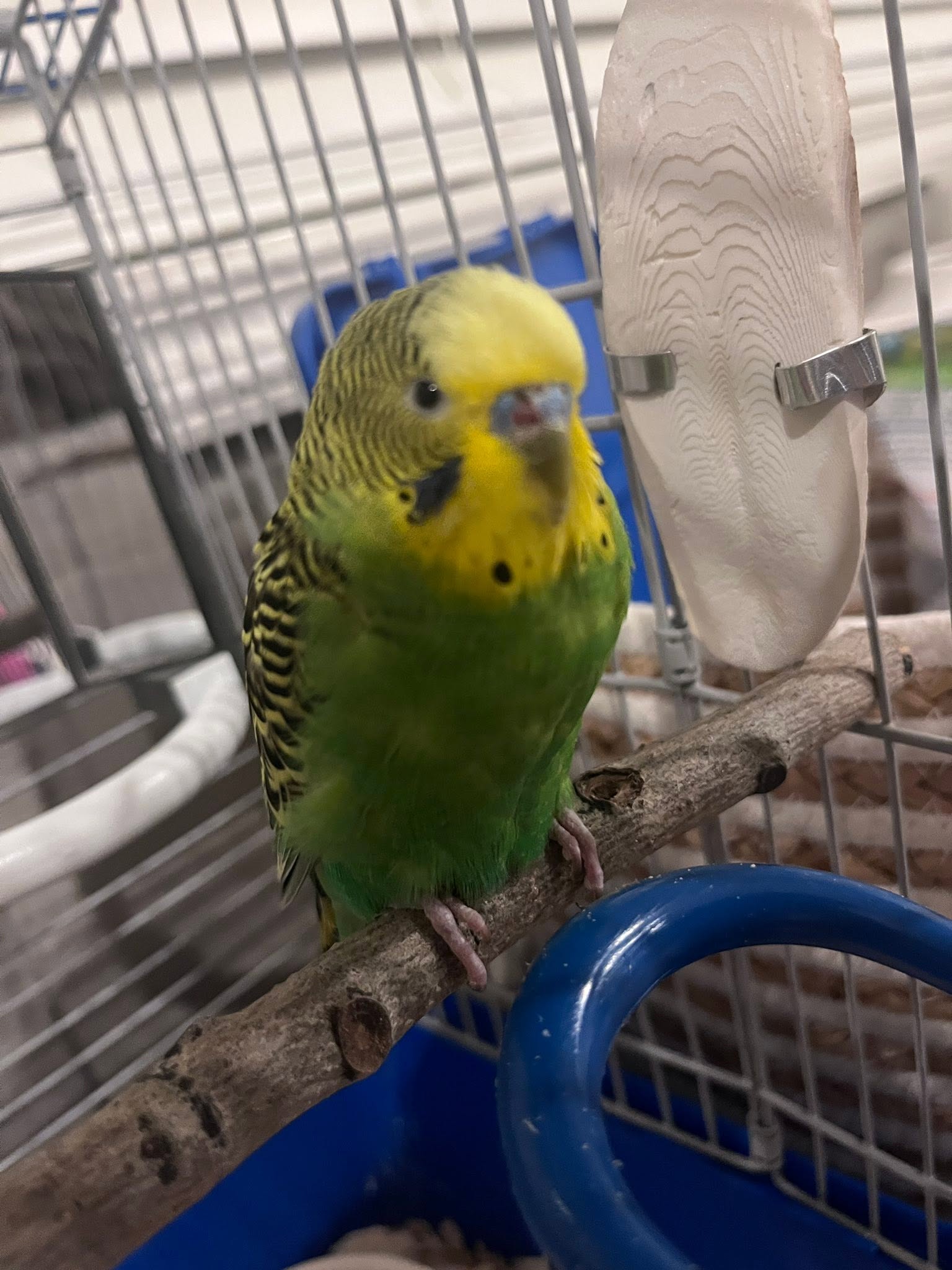
Mistake Two — The Water That Becomes A Problem
Water is the second most common area where holiday arrangements fail, and it fails in two distinct ways that are worth understanding separately.
The first is automatic dispensers. An automatic water dispenser — a bottle or reservoir that feeds water into a tray by gravity — appears to solve the water problem for an extended absence in the same way a hopper appears to solve the food problem. It holds more water than a bowl, it is less likely to run dry in a single day, and it reduces the daily top-up requirement. The problem is contamination. A water dispenser that is not cleaned before the owner leaves, that sits in a warm room for several days, and that the bird is drinking from and occasionally bathing around, accumulates bacterial growth inside the reservoir where it cannot be seen and cannot be cleaned without emptying and dismantling the unit. The water at the tray level may look clear. The water in the body of the dispenser, after several days of summer temperatures, is not.
The second failure mode is a bowl that is too small and not topped up frequently enough. A single water bowl, adequate for a household where someone fills it every morning, is not adequate for an absence of several days even if the bird is not ill. A bird that bathes in its water bowl — and many do, particularly in summer — contaminates its drinking water significantly faster than one that drinks only from it. In hot weather, the rate of contamination accelerates further.
Expert avian guidance is consistent and clear on this point: birds should not be left without a daily water change by a responsible person. Not every other day. Not checked when the carer has a moment. Daily, with the container cleaned and refilled with fresh water, not topped up over what remains. A dispenser can supplement this but cannot replace it.
The arrangement that fails is the one where the owner has put in an automatic system and told themselves the water is handled, without confirming that a person will still be visiting daily to clean and refill it. The automatic system and the daily human visit are not alternatives. They work together or they do not work adequately.
Mistake Three — The Unbriefed Carer
This is the one that costs birds their lives most often, and I want to be direct about it because it is also the most preventable.
A neighbour, a friend, a family member who has agreed to “pop in and check on the birds” is not, without specific briefing, a bird carer. They are a person who has agreed to perform a task they have not been trained for, with no clear specification of what the task actually involves, and no framework for identifying whether what they observe when they pop in is normal or cause for concern.
The unbriefed carer who pops in, sees the bird on a perch, and concludes that everything is fine has done what they were asked to do. The problem is that a bird on a perch who appears to be fine may have been sitting puffed at the bottom of the cage the previous morning — a sign of illness that resolved to perch level by the afternoon, or a sign of illness that is progressing and will be at perch level for another day before it becomes unmistakable. The unbriefed carer does not know what the bird looks like when it is well. They do not know what to compare against. They cannot identify the subtle signs that, to an owner who knows their bird well, would have been obvious two days earlier.
The briefed carer is different. The briefed carer has been shown, before the owner leaves, what normal looks like for this specific bird. They have a written description of the bird’s usual behaviour — where it sits, when it is active, how vocal it normally is, what its droppings normally look like. They have specific instructions about what to do if anything differs from that description. They have the owner’s phone number, the avian vet’s phone number, and authorisation to act on both if needed. They know not to rely on a bird looking “fine” — they know what fine specifically looks like for this bird, and they have the tools to identify when it does not.
The difference between those two arrangements is not the level of the carer’s commitment. It is the quality of the briefing they received before the owner left. And the briefing is entirely in the owner’s control.
What A Properly Briefed Carer Looks Like — The Specific Instructions
I want to give you the actual content of the briefing, because “leave instructions” is advice that is easy to give and easy to interpret too loosely. These are the specific things a carer needs to know and have in writing before an owner leaves for any absence longer than overnight.
The bird’s normal. Where it sits in the cage at different times of day. How active it normally is in the morning versus the afternoon. How vocal it is — what sounds it normally makes and when. What its droppings normally look like in terms of colour, consistency, and volume. Any individual quirks — a bird that always sits on the left perch, a bird that always comes to the front of the cage when someone enters the room, a bird that has a particular sound it makes when it wants attention. These specifics are what allow a carer to notice when something has changed, rather than simply observing that a bird exists in a cage.
The daily tasks, in order. Remove and clean the water container. Refill with fresh tap water. Check the food — not just whether there appears to be food present, but whether there is actually accessible food beneath any accumulated hulls. Remove hulls if needed and top up with fresh seed. Check the cage floor for anything unusual in the droppings. Note the bird’s position and behaviour for thirty seconds. If anything in that observation differs from the description of the bird’s normal provided in writing, ring the owner immediately.
The emergency contacts, in writing, in a visible location. The owner’s mobile number. A backup contact if the owner cannot be reached. The avian vet’s number — and confirmation that the carer has authorisation to take the bird to the vet if the owner cannot be reached and the bird’s condition requires it. This last point matters more than most owners appreciate. A carer who cannot reach the owner, who is looking at a bird that appears seriously unwell, and who does not know whether they are authorised to seek veterinary help is in an impossible position. Removing that uncertainty before you leave is a five-minute conversation that can make the difference between a bird that is seen in time and one that is not.
The specific hazards in your home that the carer needs to know about. Do not use the non-stick cookware. Do not spray aerosols in the room with the cage. Do not open the window in that room without checking the cage is away from direct sun. If your home has specific hazards that your daily habits have made second nature to you, make them explicit to someone who does not share those habits.

What If There Is Nobody To Brief — The Honest Options
I want to address this directly, because the honest answer to “who will look after my birds?” is, for some households, genuinely difficult. Not everyone has a neighbour they trust, a friend who is available, or a family member who is willing and able. This is not a failure — it is a reality of modern life, and pretending otherwise does not help anyone.
The options, in order of what I consider most to least ideal, are these.
A trusted person who is specifically briefed, visits daily, and has all the information I have described above. This remains the gold standard, and if this option is available to you, it should be used. The person does not need to be a bird expert. They need to be reliable, observant, and willing to follow specific written instructions and to make contact if anything seems different.
A professional pet sitter with experience of birds. Pet sitting services exist in most UK towns and cities, and some have staff with specific avian experience. The cost is not negligible — a daily visit for a week will run to a figure that some owners find significant — but it is a known and reliable arrangement. When using any pet sitting service for birds, ask specifically about the sitter’s experience with birds, confirm that the visit will include the daily water change and food check I have described, and ask whether they have a protocol for veterinary emergencies.
A bird boarding arrangement. Some avian veterinary practices, specialist bird shops, and experienced bird breeders offer boarding for pet birds. The advantages are professional oversight, immediate access to veterinary care if needed, and an environment where the staff know what they are looking at. The disadvantages are the stress of the unfamiliar environment for the bird and the risk — genuinely small but not zero — of disease exposure from other birds. For birds with known health vulnerabilities, boarding requires careful thought. For otherwise healthy birds in a well-run boarding arrangement, it is a legitimate option.
Taking the birds with you. For shorter trips, to accommodation where birds are permitted, this is worth considering. The stress of travel is real — birds find novel environments unsettling, and a car journey of any length requires careful temperature management, no food in the carrier to reduce mess and aspiration risk, and a quiet, covered carrier to reduce visual stress. But for a weekend away in the UK, a well-managed journey with the birds is preferable to six days of inadequate care at home. This is not an option for most international travel, and it is not an option for longer UK trips where the logistics make it impractical.
What is not on this list, because it is not adequate, is leaving the birds alone with a full hopper, an automatic dispenser, and a neighbour who might look in. I understand the appeal of that arrangement. I also know what I have seen happen when it fails.
Frequently Asked Questions
How long can I safely leave my budgerigars alone without a carer visiting?
The maximum I would be comfortable with, in a confirmed-safe environment with confirmed food and water, is overnight — a single night. For any absence longer than approximately twenty-four hours, a daily human visit is not optional. That visit needs to include an actual check of food and water, a visual assessment of the bird’s condition and behaviour, and the ability to identify and respond to anything that falls outside the bird’s normal. A full hopper and automatic water dispenser can reduce the urgency of that visit but cannot replace it.
My neighbour has agreed to pop in but she does not know anything about birds. Is that sufficient?
It is sufficient if — and only if — you brief her specifically before you leave. A person who does not know anything about birds but who has a written description of your bird’s normal, a clear list of the daily tasks in order, and your phone number and the vet’s number in writing, is a meaningful carer. A person who agrees to pop in and has none of those things is not adequate cover for an absence of more than a night. The briefing is what makes the difference. It takes twenty minutes before you leave and it is the most important preparation you can make.
Can I use a webcam to check on my birds while I am away?
A webcam is a useful supplement and I would encourage its use — the ability to see your birds at any point, to notice if something appears wrong, and to contact the carer immediately is genuinely valuable. But a webcam cannot change the water. It cannot clean the food bowl. It cannot assess whether the bird on the perch it can see is behaving exactly as normal or slightly differently. It cannot take a bird to a vet. Use it alongside a properly briefed daily carer, not instead of one.
What should I do if my carer contacts me to say the bird seems different?
Ask them to describe specifically what they are seeing. If the description matches any of the early illness signs I have described in other articles on this site — puffed feathers during the day, reduced activity, changed droppings, open-beak panting — ask the carer to ring an avian vet immediately while you remain available by phone. Give the carer clear authorisation to proceed with veterinary assessment without needing to reach you first if they cannot do so quickly. A bird that is showing early illness signs during a period when you are away needs veterinary contact that day, not when you return. The window between early signs and serious deterioration in a bird is narrow, and it does not pause while you finish your holiday.
Should I warn my carer about any specific hazards in my home?
Yes, explicitly and in writing. Non-stick cookware should not be used. Aerosols should not be sprayed in the room containing the cage. The cage should not be placed in direct sunlight. If your home has a conservatory, the carer needs to know not to move the cage there. If you have other pets, the carer needs to know what access protocols apply. Do not assume that hazards that are second nature to you will occur to someone who is unfamiliar with your home and its routines. Write them down.
Before You Leave This Summer
The customer from the M4 rang me when she got back to tell me the birds were absolutely fine. Her neighbour had been brilliant once she had a clear brief — had gone in every morning without fail, had taken a photograph and sent it each day, and had rung her twice when she thought one of the birds was sitting slightly lower than usual in the cage. Both times it had turned out to be nothing, but the fact that the neighbour knew to notice it and knew to ring was what mattered.
She also told me something that I think is worth repeating. She said that making the arrangement properly — the written instructions, the vet number, the authorisation, the daily photographs — had actually allowed her to enjoy the holiday in a way she would not have done otherwise. The anxiety of knowing the arrangement was inadequate would have been present throughout. The confidence of knowing it was properly handled was not something she had anticipated, but it was real and it mattered.
That is the outcome I want for every bird owner heading away this summer. Not anxiety managed down to a tolerable level. Genuine confidence, built on a genuine arrangement, that allows you to be away without the birds being at risk and without you being worried about them the whole time.
If you are not sure whether your arrangement is adequate, ring us before you leave. Describe it to us. We will tell you honestly whether it covers what it needs to cover, and if it does not, we will tell you specifically what to add or change. That call takes ten minutes and it is exactly the kind of thing this number exists for.
Not Sure Whether Your Holiday Bird Care Arrangement Is Adequate? Ring Us Before You Leave.
Tell us what you have arranged and we will tell you honestly whether it is sufficient. If it is not, we will tell you what needs to change. That conversation takes ten minutes and costs nothing — and it is the most useful thing you can do for your birds before you go.
⭐ Customer Reviews
Amazing Bird Selection
Had a lovley visit today,staff were very friendly and very helpful,such a great petshop,their selection of birds is incredible,really impressed,thank so much to the staff at Paradise Pets

Friendly Helpful Staff
I have been coming to this place for years and they have a great stock of food for all types of pets. Have a great selection of small mammals and a lot of birds. Staff are friendly and helpful.

Great Quality Hutch
Bought a guinea pigs hutch and run combo, very happy with the service, the hutch was put in my car for me without even asking for help. The wood quality is very good, the instructions easy to follow and we are extremely happy with the fully built hutch. A good size for 2 guinea pigs

Response from Paradise Pets | Wiltshire
Thank you Melanie Latus Nice to provide services to you.
Best Bird Shop Around
It’s the best pet shop in and around Swindon. They always have an amazing selection of birds and all you need to keep them happy. I keep birds myself and the guys there are happy to answer questions and really know their stuff. I have seen budgies etc. in chain pet shops in the area looking really unhealthy and ill – I wouldn’t go anywhere else than Paradise Pets for animals.

Highly Recommended Bird Shop
I could not praise this shop enough. Really helped my Grandson buy his first bird and he’s loving it. Travelled from Somerset and was welcomed with open arms.

Great Shop with Competitive Prices
Great shop with amazing selection for small animals, hamsters, mice ect, highly recommend!
Also has a great selection for dogs & cats too & very competitive prices! 💖

