

Neil has been keeping, breeding, and selling cage birds at Paradise Pets Swindon since 1988 — over 35 years of watching what happens to UK pet bird purchases made in summer, and what the particular combination of school holidays, family excitement, and reduced household routine does to the birds bought during this period. July and August produce a specific and consistent pattern of both purchase and outcome. This article is his honest account of that pattern, what causes it, and what every new bird owner — or anyone thinking of becoming one this summer — genuinely needs to know before they buy.
Three families came through this shop in the past two weeks. All three had children off school. All three had decided, in the preceding few days and with minimal prior planning, that this summer was the right time to get a budgie. All three were pleasant, well-intentioned families who genuinely wanted to do right by the animal they were about to bring home.
Of the three conversations, one went well from start to finish. One required significant course-correction about the setup they had already bought before coming in. And one — the third family, who came back four days after buying a bird — had a bird that was not settling, children who were handling it too frequently and too soon, a cage positioned directly beside a television that ran most of the day, and a household routine that was, by their own description, entirely different from what it would be in September when school restarted.
The third family’s situation was not unusual. It is, in July and August, close to typical.
Why Summer Creates The Impulse Purchase Spike
Understanding why the summer pattern happens the way it does makes the warning in this article considerably more useful than simply knowing that summer bird purchases are more likely to go wrong.
- School holidays create extended family time that feels conducive to new responsibilities — families are home together, children have time that needs filling, and a pet feels like exactly the right kind of meaningful, engaging project for a long summer break; this instinct is not wrong — it is the timing and sequencing that creates the problem
- Reduced routine during holidays makes the household feel more available — without school runs, homework, and the structured week that term-time imposes, families genuinely have more time, and that time feels unlimited in early July in a way that feels considerably less unlimited by early September
- Summer social activity creates exposure to other people’s birds — barbecues, visits, family gatherings; someone else’s tame, friendly budgie encountered at a relative’s house can produce a “we should get one” decision within days; the bird encountered was almost certainly tame because it was appropriately settled over time, not because it was bought in summer and handled immediately
- Pet shops are busier in summer, which creates a visible context of purchase — more families in the shop, more visible interest in the birds, a general atmosphere of activity and acquisition that makes the decision to buy feel natural rather than impulsive
The Specific Problem — Why Summer Household Conditions Work Against A New Bird
A newly arrived bird, during its first four to six weeks in a new home, is learning one fundamental thing about its new environment: whether it is safe. Every input the bird receives during this period — the noise level, the number of people it encounters, the consistency of daily routine, the amount of direct interaction, the predictability of uncovering and covering — contributes to or detracts from the conclusion that this is a safe, predictable place where a small prey animal can relax its vigilance.
Summer household conditions during school holidays are, almost systematically, the opposite of what supports this learning.
- More people in the house more of the time — a newly arrived bird needs to learn the household gradually; a term-time household might have two adults and one or two children with a structured, predictable daily pattern; a school holiday household might have the same family plus visiting friends, cousins staying, a different configuration of people present at different times each day — every new face, every unusual gathering, every change in the noise level is an additional input the settling bird has to process
- Children wanting to interact immediately and frequently — this is the most consistent specific problem I see at the counter in summer; a child who has been told they are getting a bird and who then has six weeks of unstructured time will naturally want to interact with the bird as much as possible; this is entirely understandable and entirely wrong for the bird’s settling process; a newly arrived bird that is approached, handled, spoken to, and interacted with enthusiastically from the first days is a bird that is being stressed rather than settled, regardless of how gentle the child is being
- Disrupted daily routine — school holidays involve later mornings, irregular mealtimes, varied daily patterns; a new bird needs a consistent routine — same uncovering time, same feeding time, same covering time — as the primary environmental signal that this is a stable, predictable place; a household in school holiday mode is unlikely to provide this consistency without specific, deliberate effort
- Higher ambient noise and activity — televisions running through the day, music, louder household activity, visitors arriving and departing; a bird settling into a new home needs a baseline of relative calm to establish what “normal” feels like in this environment; a school holiday baseline of higher-than-normal activity means the bird is learning a “normal” that will not be its actual normal from September onwards
- The September cliff — the most structurally underappreciated problem in summer bird purchases; a bird bought in late July, settled over four to six weeks of school holiday conditions, and then left alone in a quiet house from 8am to 4pm when September arrives has not been prepared for that change; the abrupt transition from a busy, populated household to an empty one five days a week is a significant environmental shift for an animal that has been learning, during the most important weeks of its settling period, what its environment is like
What Goes Wrong — The Specific Outcomes I See
- A bird that will not settle at all during the holiday period — constant alarm calls, persistent retreat to the back of the cage, no sign of eating normally with people in the room; the household’s energy level during school holidays is keeping the bird in a sustained state of alert that prevents the settling process from beginning at all
- A bird that appears settled during the holidays and then deteriorates badly in September — the reverse problem; the bird has settled into a busy, populated household, learned to associate human presence with normality, and then faces sudden isolation in September when the household empties; this can produce feather destructive behaviour, excessive vocalisation, and genuine psychological distress
- Handling-averse birds that bit a child — the child handled the bird too soon, the bird responded as any unsettled prey animal would, the bite hurt, the child is now frightened of the bird, and the trust that should have been built slowly and patiently over weeks has been replaced by a negative association in both directions; this is fixable but it takes considerably longer to address than it would have taken to prevent
- A bird that tamed well to one family member and nobody else — typically the child who spent the most time with it during the holidays; a bird that is tame only to one person and alarmed by everyone else in the household has not been properly socialised, and the September change in who is home and when exposes this limitation immediately
This Is Not An Argument Against Buying A Bird In Summer
I want to be explicit about this, because the warning in this article is not “do not buy a bird in summer.” It is “buy a bird in summer with clear awareness of the specific challenges the season creates, and with a specific plan for managing them.”
Plenty of summer bird purchases go well. The family from the three I described at the start of this article whose situation went well from the beginning had done one thing differently from the others — they had read our settling-in guidance before coming in, had established the cage in its permanent position two days before the bird arrived, had had a specific family conversation about not handling the bird for the first week, and had a clear plan for how the routine would be managed through the holidays and what would change in September. They had thought about it before they bought, not after.
That preparation is entirely achievable and entirely available to anyone buying a bird this summer. What it requires is knowing what to prepare for.
The Summer Bird Purchase Checklist — What To Do Before, During, And After
Before You Buy
- Have the September conversation explicitly — who will be home, when, how many hours will the bird be alone on a weekday; if the answer is “substantially alone from 8am to 4pm on school days,” plan for this before you buy, not after; consider whether a single bird is appropriate for this level of alone time or whether a pair is the better welfare choice
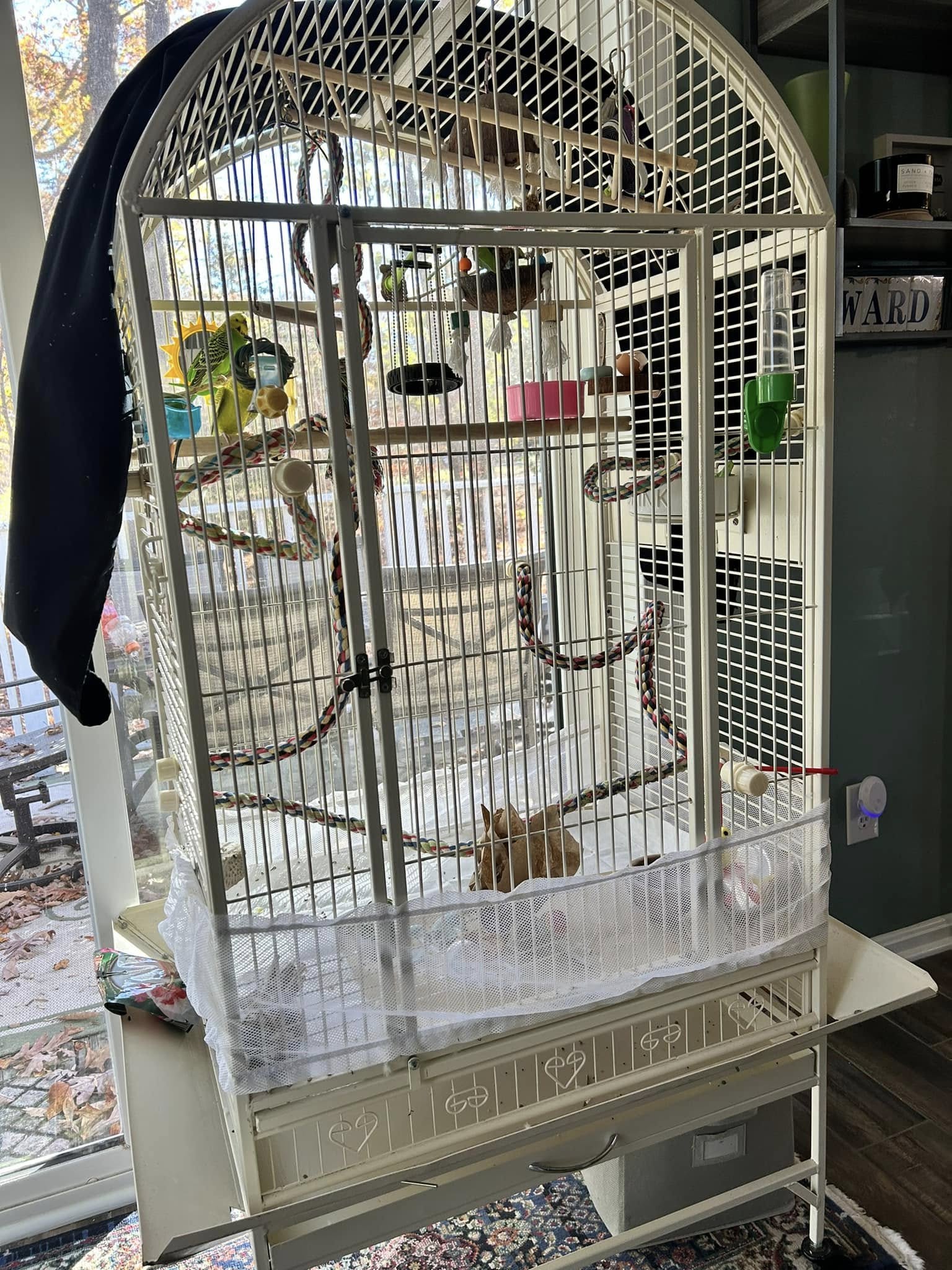
- Set up the cage in its permanent position before the bird arrives — not on the day, not in the excitement of returning from the shop; the cage should be in the position it will occupy for the foreseeable future, with perches in the right places, food and water installed and tested; the bird’s first experience of its new home should be a ready environment, not an environment being assembled around it
- Have the first-week conversation with children before the bird comes home — not on the day, when excitement makes it impossible to absorb; a calm, in-advance explanation of why the bird needs quiet time to settle, what interaction is and is not appropriate in the first week, and why this approach produces a tamer, more interactive bird later will be heard considerably more clearly than the same explanation given while a child is vibrating with the excitement of a new pet
- Establish what the daily routine will be and commit to it — what time the cover comes off in the morning, when fresh food goes in, when the cover goes back at night; this routine should be one you can maintain through the school holidays and, more importantly, one that will be maintained in September; establish September’s routine now, not July’s
During The First Two Weeks
- No hand in the cage at all for the first week — this is not excessive caution; it is the most important single rule of settling a new bird, and it is the rule most likely to be broken during school holidays when children are home all day with nothing to do but want to interact with the new pet
- Presence without pressure — the right kind of interaction — sitting near the cage doing other things, speaking at normal volume in normal conversation, allowing the bird to observe the household at its own pace; this is how a bird learns that the household is safe; it is not dramatic or exciting, which is why it needs explaining to children before the bird arrives
- Keep the cage environment consistent — do not move the cage to different rooms for different activities, do not rearrange perches and accessories, do not introduce new items to the cage in rapid succession; the bird needs to learn one stable environment, not a succession of changed ones
- Manage visitor exposure deliberately — if friends or extended family are visiting during the holidays, the bird does not need to be shown to every visitor as a novelty; a newly arrived bird being approached by a series of unfamiliar faces is not having a positive social experience, it is being stressed repeatedly
Planning For September Before It Arrives
- Simulate September conditions before September — two to three weeks before school restarts, begin leaving the bird alone for gradually increasing periods during the day; start with an hour, build toward the actual September pattern; a bird that has never been alone for more than thirty minutes during six weeks of school holidays will find a sudden six-hour daily solitude in September genuinely distressing
- If the bird will be alone for long periods, seriously consider a second bird — a social species like a budgie or cockatiel left alone for six or more hours daily without a companion is not in an adequate welfare situation; if this is the September reality, the time to make the decision about a companion bird is in advance, not after the welfare impact of September becomes visible
- Ensure the September routine is established before September — whoever will be home at what times, who feeds the bird in the morning, who covers it at night; these should be habitual before term starts, not improvised when the household suddenly becomes busier and more tired
- Keep the first day back at school as normal as possible for the bird — do not add other changes — a cage move, a new toy, a diet change — to the already significant change of suddenly being alone; isolate the September transition as a single change, not one of several
The Quick Reference — Summer Bird Purchase Common Mistakes And What To Do Instead
| What Typically Happens | Why It Causes Problems | What To Do Instead |
|---|---|---|
| Bird bought on impulse, cage assembled on the day | Bird arrives to an environment being put together around it; first experience is chaos rather than calm | Set cage up in final position 2–3 days before bird arrives |
| Children handle the bird immediately and frequently | Settling process cannot begin; bird is stressed rather than settling; biting likely | No hands in cage for first week; have this conversation before the bird arrives |
| Bird settles into busy holiday routine | September transition is a sudden, major environmental change the bird was not prepared for | Simulate September conditions starting 2–3 weeks before term restarts |
| Bird shown to every visitor as a novelty | Repeated unfamiliar faces extend the period before the bird feels safe | Minimise additional people in the bird’s space during the first two weeks |
| Single bird bought without thinking about September alone time | Six or more hours alone daily in September after six weeks of constant company is a welfare problem | Make the companion bird decision before September, not after |
| September routine different from holiday routine — later coverage, irregular feeding | Bird adjusting to a new routine on top of adjusting to an empty house | Establish September’s routine in August; change one thing at a time |
Frequently Asked Questions
Is summer a bad time to buy a pet bird?
Not inherently, but it requires more specific preparation than other times of year because of the specific conditions school holidays create. The challenges — disrupted routine, children wanting immediate interaction, a September environmental shift — are all manageable with awareness and planning. They are consistently difficult for families who buy without that awareness. The difference between a summer purchase that goes well and one that causes problems is almost always planning done before the bird arrives, not good intentions applied after it has already gone wrong.
My children have been asking for a budgie all year. Why is summer the wrong time?
Summer is not necessarily the wrong time — it is specifically challenging in the ways described in this article. If your household can provide a consistent, relatively calm environment, maintain the settling-in discipline of no handling for the first week despite children who want to interact, and plan explicitly for September before it arrives, summer can work well. The question is not whether to buy in summer but whether you have the plan to manage the specific challenges summer creates. If you have that plan, come in — we are happy to help you implement it correctly from the start.
How long should I wait before letting my children handle the new bird?
A minimum of one week with no hands in the cage at all, followed by a gradual, patient approach to interaction that is guided by the bird’s behaviour rather than a fixed timeline. A bird that is eating normally with people in the room, that approaches the front of the cage with curiosity rather than retreating, and that shows no alarm when you are nearby is a bird that may be ready for very gentle initial interaction. A bird still retreating, still showing alarm, or still not eating normally with people present needs more settling time regardless of how many days have passed. The bird’s behaviour is the guide, not the calendar.
Should I wait until September to buy a bird so the routine is already established?
This is a reasonable approach and genuinely solves the September problem by ensuring the bird’s settling period happens when the household is already in its normal term-time pattern. However, it is not necessary if the summer purchase is managed well. For many families, buying in August with a few weeks of managed settling before September produces a good outcome — particularly if the September simulation steps described in this article are followed. For families who know honestly that managing summer holiday conditions appropriately will be difficult, September is a genuinely sensible alternative.
My child handled our new budgie on the first day and it bit them. What do we do now?
This is very common and entirely fixable, though it takes patience to address. The most important immediate step is to stop all handling attempts for at least a week and allow the bird to settle without the association between human hands and the alarm it experienced during that first interaction. Return to the settling basics — presence without pressure, consistent routine, voice without expectation. Once the bird shows genuine settling signs, approach the hand-taming process from the very beginning, more slowly than if it had not happened. The negative association can be replaced with positive ones over time, but it takes longer and more patience than building the positive association from the start would have.
We are going on holiday in August. What happens to the bird while we are away?
This is a question that should have been answered before the bird was bought, not the week before departure. A newly purchased bird ideally should not be left with a house-sitter who does not know its routine during the critical settling period of the first six to eight weeks — this is among the most significant routine disruptions possible during the most important window. The options are: do not buy the bird until after the holiday; arrange for someone who understands bird care and knows the specific routine to stay in the house rather than visiting once a day; or postpone the holiday timing of the purchase to ensure it does not land in the first settling weeks. Coming in and discussing the specific timing is the most useful thing you can do if this situation applies to you.
Where can I get advice about buying and settling a bird this summer in Swindon?
Come in to Paradise Pets at Manor Garden Centre, Cheney Manor Industrial Estate, Swindon SN2 2QJ before you buy, not after. We can talk through your household’s specific summer and September situation and help you plan for the transition from the beginning. The advice is free, the conversation takes twenty minutes, and it is considerably more useful than the same conversation held after something has already gone wrong.
One Last Thing From Me
The third family — the one that came back four days after buying their bird with a struggling situation — is not a failure. They were not doing anything wrong in intent. They had simply done what most people do: bought first, planned second, and discovered the challenges when they were already facing them rather than before.
They left the second conversation with a clear, specific plan. Cover the cage when household activity gets very high. Remove the cage from beside the television and move it to a quieter position. Establish the September routine now, in July, and maintain it through the holidays. Have the family conversation about the first-week handling rule — late, but better late than not at all. And book a follow-up conversation in three weeks to check whether things were improving.
They did come back, three weeks later. The bird was settling. The children had learned — partly through patience and partly through the second conversation — what the bird needed from them. The household had found a version of the routine that worked for both the bird and the family’s summer.
It was a fixable situation. It would have been a considerably simpler one if the planning had happened before the bird arrived rather than four days after.
That is the whole argument of this article. Summer bird purchases can work well. They require specific, deliberate preparation that accounts for the specific challenges the season creates. That preparation is available to anyone willing to have the conversation before they buy, and it is the conversation this shop has been having with summer families for 35 years.
Thinking About A Bird This Summer? Come And Have The Conversation First
Tell us about your household, your summer, and your September, and we will help you plan a purchase that works for the bird and your family — before you buy, not after you have already encountered the problem. Free advice, no obligation.
⭐ Customer Reviews
Amazing Bird Selection
Had a lovley visit today,staff were very friendly and very helpful,such a great petshop,their selection of birds is incredible,really impressed,thank so much to the staff at Paradise Pets

Friendly Helpful Staff
I have been coming to this place for years and they have a great stock of food for all types of pets. Have a great selection of small mammals and a lot of birds. Staff are friendly and helpful.

Great Quality Hutch
Bought a guinea pigs hutch and run combo, very happy with the service, the hutch was put in my car for me without even asking for help. The wood quality is very good, the instructions easy to follow and we are extremely happy with the fully built hutch. A good size for 2 guinea pigs

Response from Paradise Pets | Wiltshire
Thank you Melanie Latus Nice to provide services to you.
Best Bird Shop Around
It’s the best pet shop in and around Swindon. They always have an amazing selection of birds and all you need to keep them happy. I keep birds myself and the guys there are happy to answer questions and really know their stuff. I have seen budgies etc. in chain pet shops in the area looking really unhealthy and ill – I wouldn’t go anywhere else than Paradise Pets for animals.

Highly Recommended Bird Shop
I could not praise this shop enough. Really helped my Grandson buy his first bird and he’s loving it. Travelled from Somerset and was welcomed with open arms.

Great Shop with Competitive Prices
Great shop with amazing selection for small animals, hamsters, mice ect, highly recommend!
Also has a great selection for dogs & cats too & very competitive prices! 💖

