

Neil has kept, bred, and sold cage and aviary birds at Paradise Pets Swindon since 1988 — over 35 years of first-hand experience with budgerigars, cockatiels, canaries, finches, and dozens of other species. Every year without exception, the week UK school holidays begin is the week enquiries about pet birds spike sharply. Every year, a proportion of those enquiries lead to families acquiring birds before they are ready, in circumstances that do not serve the bird or the family well. This is what Neil tells every family before they buy — and what most of them wish they had heard sooner.
I have been standing behind this counter since 1988 and I can tell you the exact week it happens every year without looking at a calendar. The school holidays start, and within two or three days the questions change. Not the usual steady flow of existing bird owners with specific questions, but families — often with children in tow, sometimes with a clearly stated conversation that has already happened in the car on the way over — asking about birds.
Can we get a budgie? How much are they? What do they need? Can a seven-year-old look after one?
I love these conversations. I do not love the ones that follow them six weeks later, when the holiday is over, the novelty has worn off, the adults are back at work and the children are back at school, and someone comes in looking for advice about a bird that has been neglected or is unwell or is biting everyone who approaches it. Those conversations happen too. Every year, reliably, in September.
What separates the families who are still happy with their bird in September from the ones who are not is almost entirely determined by the conversation they had before they bought it. Whether they had that conversation at all. Whether what they were told was complete and honest rather than pitched at making a sale.
This article is that conversation. All of it.
Why School Holidays and Pet Birds Are a Specific Combination Worth Thinking About
The school holiday timing is not accidental, and understanding why it happens helps families think about whether their specific circumstances actually suit getting a bird right now.
During school holidays, children have unstructured time. They are at home. They are bored in the productive way that generates ideas, including the idea that a pet would be wonderful. Parents, also with more flexible time than usual, are more receptive to that conversation than they would be mid-term. The whole family is together, the household is warm, and the conditions feel right.
Here is the challenge with that timing. A bird acquired during the school holidays is acquired into conditions that are fundamentally different from the conditions that will be permanent. Children are home all day for six weeks. The family is together. There is time and attention. And then the holidays end, school resumes, work resumes, and the bird that was acquired into a busy, attentive, full-house environment is now in a house that is empty from eight until four, with significantly less daily interaction than it received in its first six weeks of life with you.
This is not a reason not to get a bird. It is a reason to think explicitly about what the bird’s life will look like in October, not just what it looks like in August. The families who think about this in advance and prepare for it do well. The families who acquire during the holiday warmth and wake up to the September reality unprepared do not.
The Questions I Ask Every Family Before We Talk About Birds
When a family comes in asking about birds during the school holidays, I do not immediately take them to the cages. I ask some questions first. These are the questions that determine whether this family is ready, and — crucially — which bird, if any, is right for them.
Who Is Actually Going to Be Responsible for the Daily Care?
This is the most important question, and the answer is almost never the one the children in the shop give. The realistic answer, in most families, is the adult — specifically the primary at-home parent or the person most present in the house during the day. Children can participate meaningfully in bird care and should be encouraged to. But a child as the sole responsible party for a bird that is alive for ten to fifteen years is not a realistic plan, and families that set it up that way end up with a bird whose daily welfare depends on the consistency of a child’s commitment, which fluctuates in ways that are developmentally normal and entirely incompatible with the needs of a living animal.
If the adult who asks this question pauses before answering, that is useful information. The families where an adult says clearly “I will be primarily responsible, the children will be involved” tend to have much better outcomes than those where the answer is “the kids wanted it, so they’re in charge.”
What Happens When the Holidays End?
Specifically — who is home, when, for how long, and what does the bird’s social contact look like on a typical school-term Tuesday? A budgie that has bonded to a household of five over six weeks of holidays needs something to replace that company when the house empties. Radio or television on during the day. An owner who makes time in the evening. Ideally, a second bird so that the first is not alone through the school and work hours. These are solvable problems but they need to be thought through before the bird arrives, not after.
Where Is the Cage Going to Go?
Permanently, not just initially. The cage position is one of the most consequential decisions in bird keeping, and families often place the cage wherever seems convenient at the point of setup without thinking about the implications. The kitchen — too many airborne hazards, particularly from non-stick cookware. The conservatory — potentially a glass oven in summer, not appropriate without careful temperature management. The child’s bedroom — potentially fine, but consider the child’s sleep schedule and the bird’s noise at dawn. The living room — usually the best option, at a stable wall position away from direct sunlight and draughts, at roughly adult chest height.
What Are the Ages of the Children?
This matters more than most families expect. A very young child — under five or six — and a pet bird is a combination that requires constant adult supervision. Young children handle things in ways that are dangerous to small animals without understanding that they are being dangerous. A bird that is grabbed, squeezed, dropped, or simply held in a way that restricts its breathing by a well-intentioned small child is a bird at risk. This is not a reason a family with very young children should not have a bird — it is a reason to be clear-eyed about what supervision looks like and whether it is realistic.
Children from around seven upward can, with proper guidance and adult oversight in the early stages, be genuinely good bird companions. They are patient enough to sit and talk to a bird, consistent enough to build a routine, and curious enough to engage with the animal in ways that benefit both the child and the bird. Many of the best bird-keeping relationships I have seen develop over 35 years started with a child in the eight-to-twelve range whose genuine interest was supported by a parent who was also involved.
Which Bird — The Honest Answer for Families
Once I have a clear picture of the family’s situation, the next question is which bird. And this is where I diverge from what I think is the reflexive recommendation most families expect.
A Budgie Is the Right First Bird for Most Families — But Not All
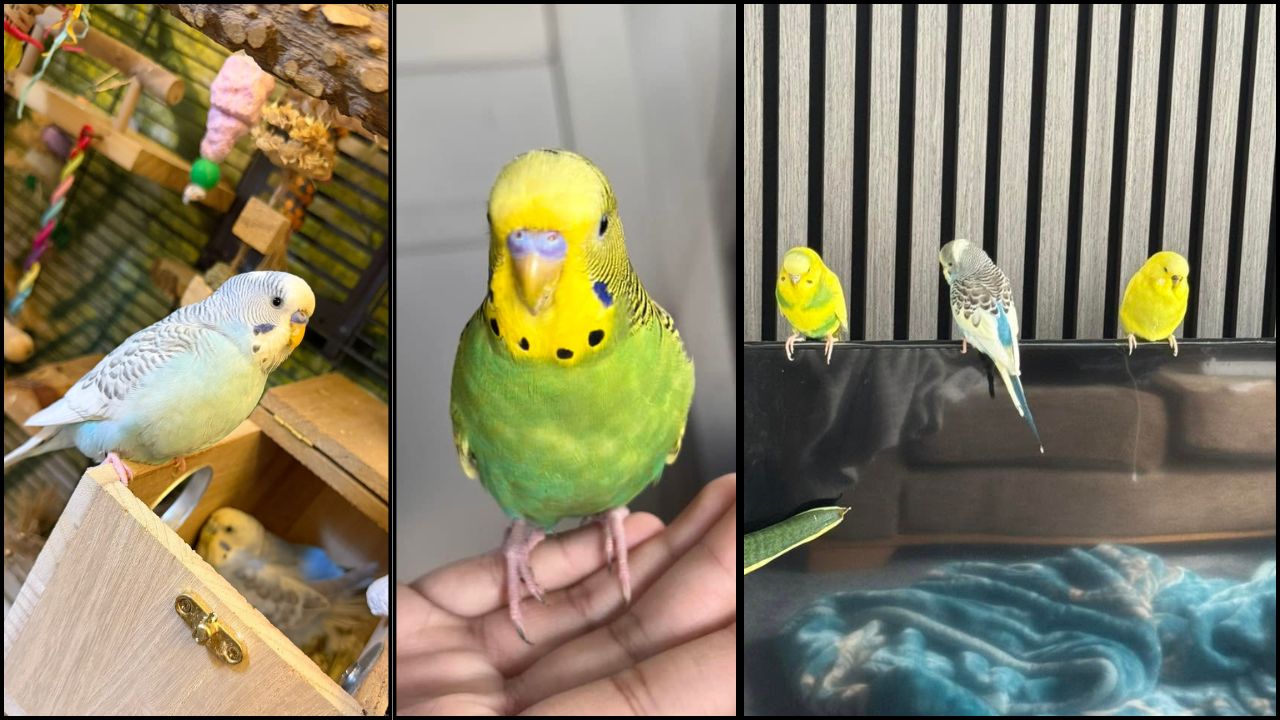
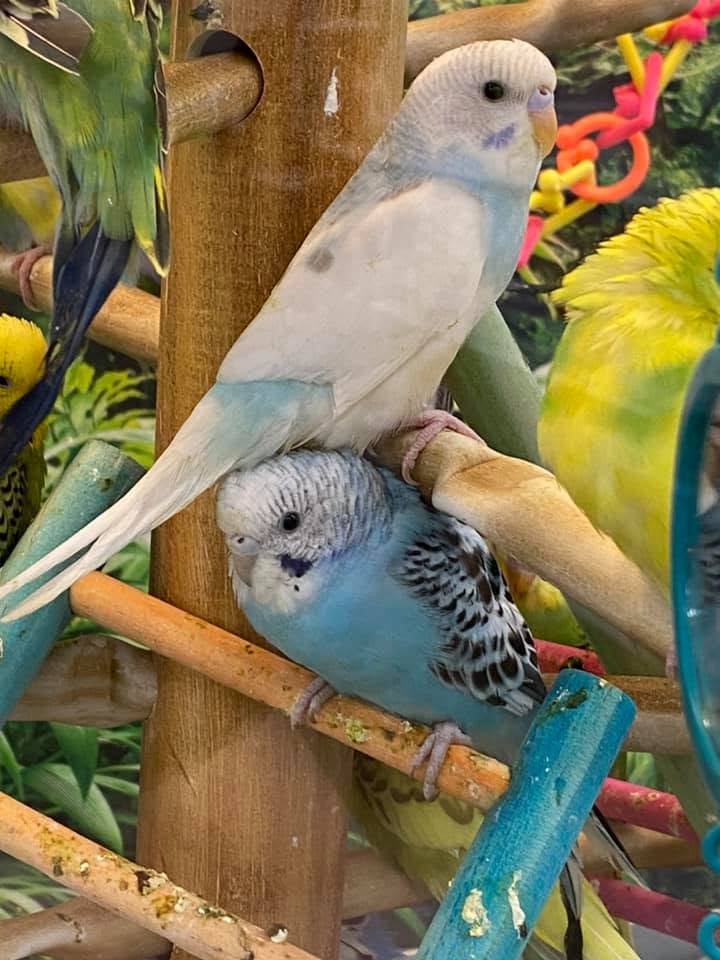
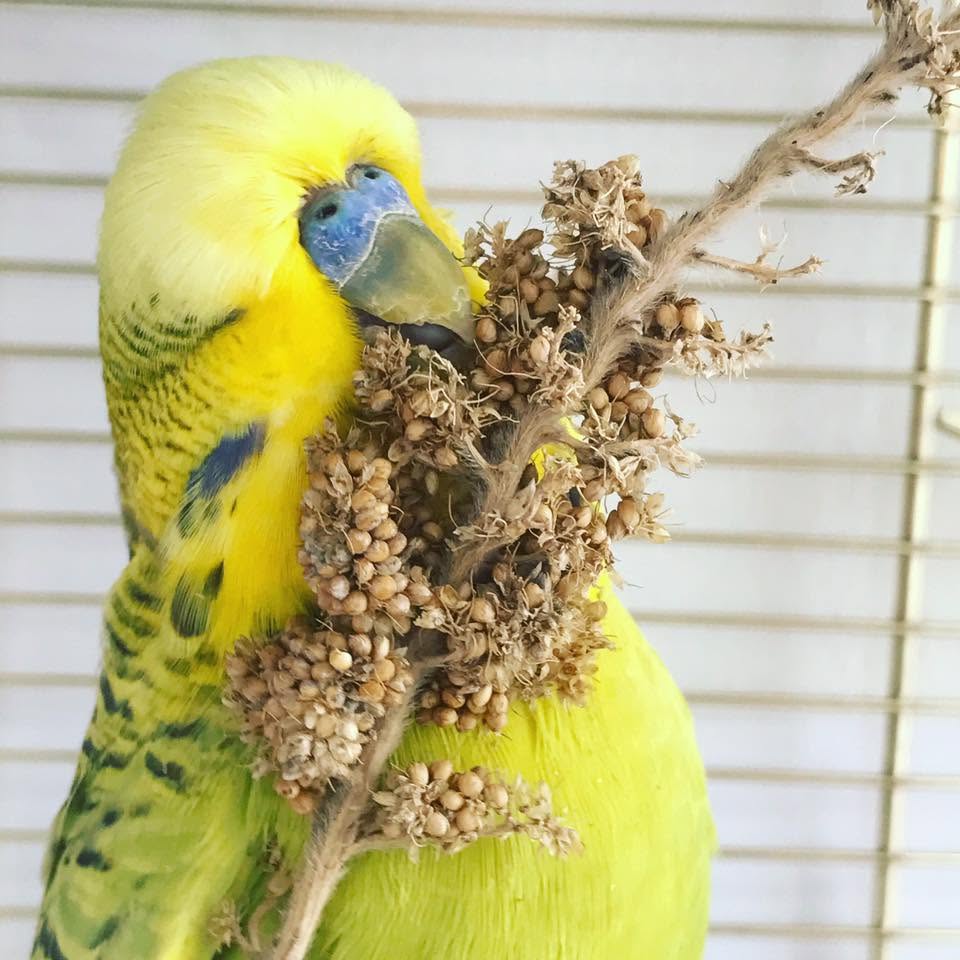
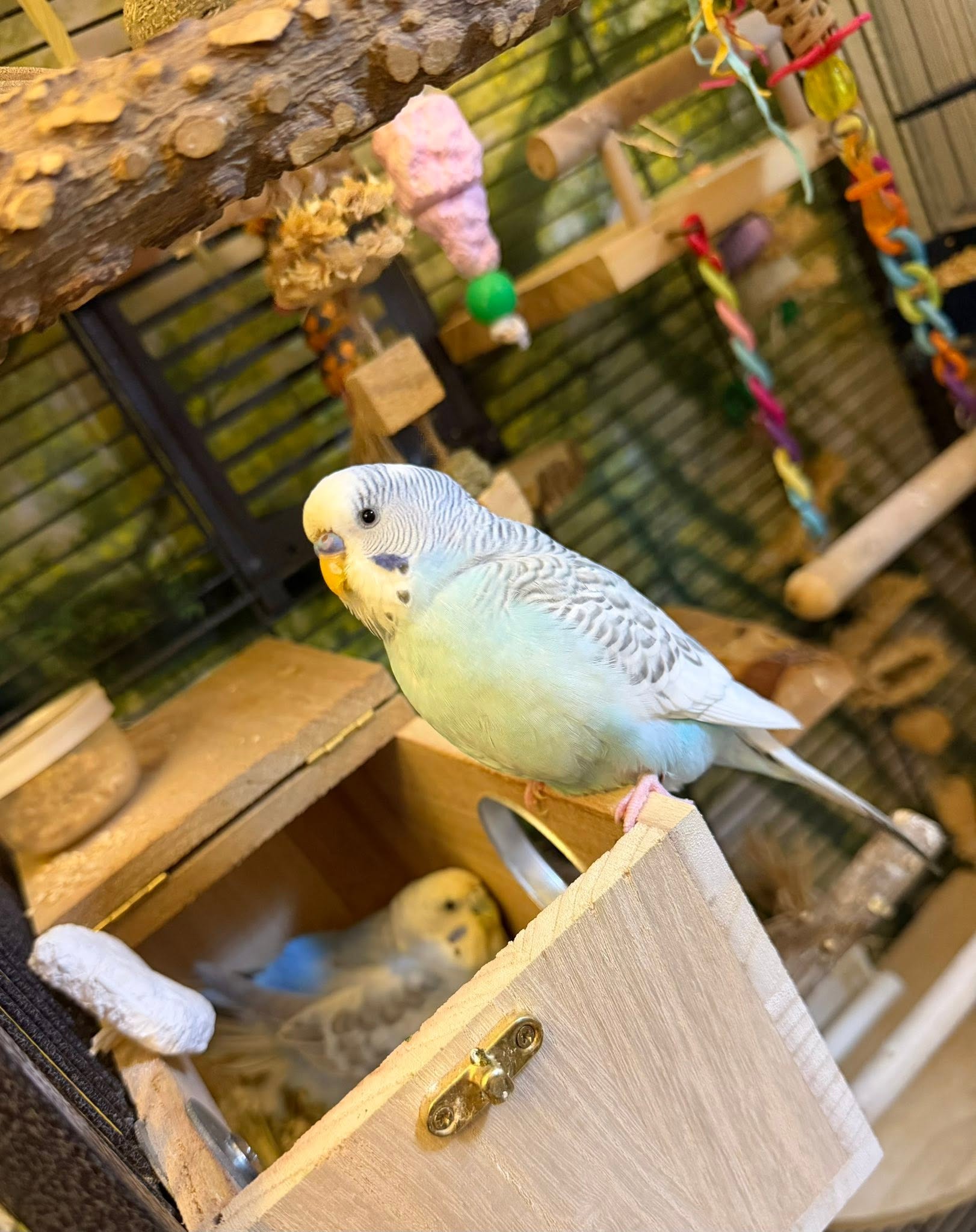
A budgie is the most commonly recommended first bird for families, and in most cases that recommendation is correct. The reasons are real: manageable size, manageable cost, manageable daily care requirements, genuine interactive potential when properly kept, and a lifespan that is long enough to be meaningful without being so long that it outlasts all realistic planning.
But the “manageable” framing comes with important caveats that are often omitted. Manageable does not mean no daily commitment. Manageable does not mean a bird that can be ignored for days without consequence. A budgie needs daily fresh food and water, daily interaction and attention, and an environment that is actively maintained. For a family that cannot realistically provide this on school-term weekdays, manageable is still a commitment.
A Cockatiel for Families That Want More
Families who have had birds before, or who have done genuine research and understand what they are taking on, sometimes ask about cockatiels. Cockatiels are wonderful family birds in the right circumstances — more interactive than budgies in some respects, more expressive, and with a personality that develops visibly over years. They are also more demanding — they bond deeply and need significant daily social contact, they are louder, and their fifteen-to-twenty-year lifespan means children who are eight when the bird arrives may have left home and returned and had children of their own before the bird’s life is over.
A first-bird family asking about cockatiels during the school holidays is a family I talk carefully with rather than simply selling to. Not because cockatiels are wrong for families — they can be wonderful — but because the commitment difference between a budgie and a cockatiel is significant, and it deserves to be stated plainly before the decision is made.
What Not to Get as a First Family Bird
I want to be direct about this because it comes up. Larger parrots — African greys, amazons, macaws, even some of the mid-sized conures — are not appropriate first birds for families with children who are new to bird keeping, regardless of how charming they look or how much a child asks for one. These species are cognitively complex, emotionally demanding, extraordinarily loud, capable of inflicting serious injury, and typically outlive their owners. They require a level of knowledge, commitment, and experience that a family acquiring their first bird during the school holidays simply does not yet have. I will not sell one to a family in that situation, and I would encourage any other responsible source not to either.
The Setup — What to Have Ready Before the Bird Comes Home
One of the most consistent patterns I see with holiday bird purchases is acquisition before setup. The family comes in, falls in love with a bird, buys it and a cage and takes both home on the same day — and the bird arrives in a house where nothing is ready, the cage is being assembled while the bird sits in a carrier, and the first hours in a new environment are chaotic rather than calm.
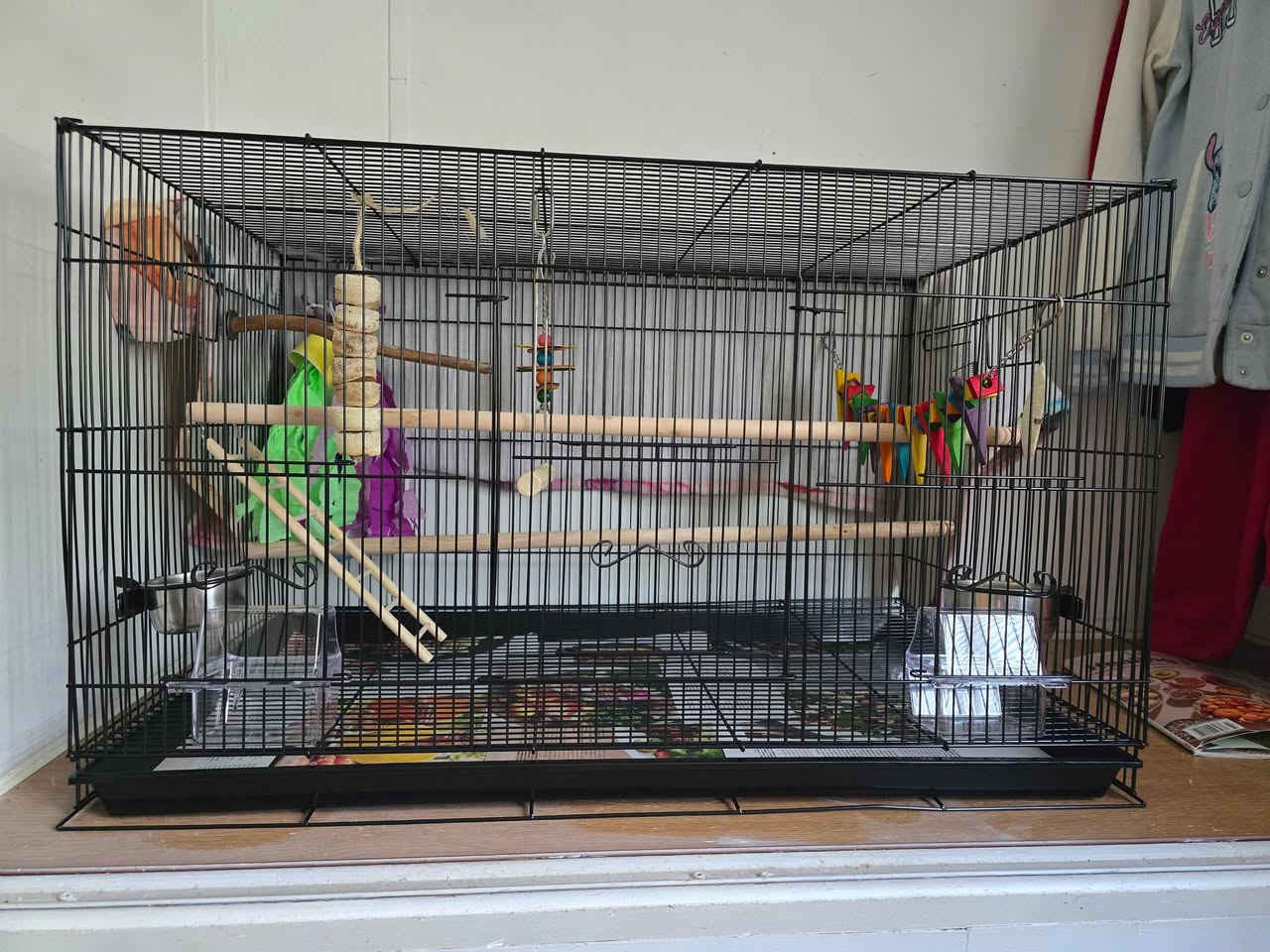
The right sequence is setup first, bird second — ideally by at least a day or two. Here is what ready looks like:
- Cage assembled and in its permanent position. Not the position that seems convenient this week but the permanent position — away from direct sunlight, away from the kitchen, away from draughts, at chest height against a wall that provides security. The cage should be stable, positioned, and filled with perches, food, and water before the bird goes in.
- Quality seed in the dish, fresh water in the dispenser. Find out what the bird has been eating and match it initially. Do not make a sudden diet change on top of the stress of a new home.
- Natural wood perches installed. Remove the plastic dowel perches the cage comes with and replace them with natural wood branches of varying diameter — apple, willow, hazel. This is better for the bird’s feet and should be in place before arrival, not added later.
- A quiet two days planned. The first 48 hours should be as calm as possible. This means having a conversation with the children in advance about what that looks like — not hovering over the cage, not inviting friends round to look at it, not waking it up to handle it. The bird needs time to map its new environment as safe before interaction begins.
- An avian vet identified. Know which local practice has avian experience and has their number saved before you need it. This is not something to search for in a crisis.
- A family conversation about who does what, daily. Who fills the water in the morning. Who checks the food. Who cleans the cage floor each day. Who is responsible for the weekly full clean. Having this explicit before the bird arrives means it does not fall entirely on the most responsible adult by default and resentment.
The Holiday Period Itself — How to Start Right
The holiday period, properly used, is actually a significant advantage for bird acquisition. Having the whole family home for six weeks means the bird can be introduced gradually, handled consistently from the start, and given the daily attention that builds the kind of relationship everyone was hoping for. The risk is squandering that advantage through impatience or inconsistency.
First Two Days — Settle, Do Not Handle
The temptation to handle the new bird immediately is enormous, particularly with excited children involved. Resist it. A bird that has just moved to a new environment needs at least 48 hours to begin mapping that environment as safe before any handling begins. This means the cage in its position, food and water available, and the family going about their life nearby without actively interacting with the bird beyond quiet presence. Talk near the cage. Let it hear your voices. Let it begin associating your presence with the absence of threat. That is the work of the first two days.
First Week — Presence and Treats, Not Handling
From around day three, begin offering a treat from your hand — a small piece of millet, a sunflower seed — through the cage bars or from an open cage door, without reaching in to take the bird. The goal at this stage is the association between your hand and something good happening. The bird may not approach for several sessions. Consistency and patience are the tools here, not persistence that overrides the bird’s comfort level.
Second Week — First Handling
With a bird that is taking treats reliably and not showing defensive behaviour at your approach, the second week is the appropriate time for first handling — scooping rather than grabbing, low to the ground initially, brief sessions of five minutes or less. The children who have been briefed on what this looks like and what it does not look like are better equipped for it than those who have simply been told to be gentle without being shown what gentle actually means with a bird.
The September Reality — Planning for It Now
I said at the start that the conversations I do not enjoy are the September ones. I want to help every family reading this avoid being in one of those conversations, and that means thinking about September in July.
When school resumes and the house empties during the day, the bird needs several things to have been thought through and provided for:
Social sound during the day — radio or television on at a level the bird can hear. Not loud, not the news specifically (the sound of human voices is the goal, not specific content), but ambient human sound that prevents the bird from spending eight hours in silence. This is a simple provision that makes a measurable difference to how birds that are otherwise alone during school hours manage their day.
A dedicated evening routine that replaces the constant holiday presence with consistent, predictable daily interaction. Twenty minutes of genuine engagement — out of cage time, talking to the bird, the bird being part of the household activity in the evening — is more valuable than sporadic long sessions on weekends. Consistency is the mechanism through which birds build and maintain their sense of security and their bond with their owners. It does not take much time. It takes reliable time.
Consideration of a second bird for families where the bird will regularly be alone for significant periods. Two birds together — bought at the same time, or with a careful introduction process if one bird is already established — are company for each other through the school day in a way that a radio cannot quite replicate. The tradeoff is that two birds bonded to each other become somewhat more independent of their human keepers than a single bird does. For families where the primary goal is an interactive, handleable pet, a single well-socialised bird with good daily contact is often the better choice. For families where welfare during the school day is the primary concern, a pair is worth considering.
Frequently Asked Questions From Families
What is the best bird for a family with young children?
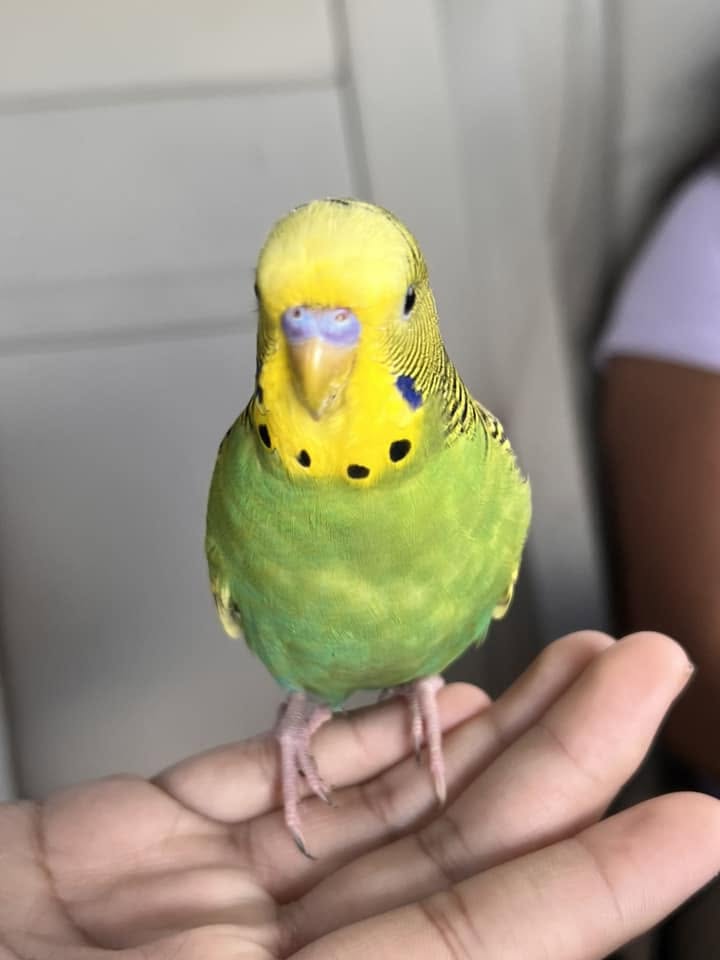
For most families, a young budgie from a reputable source is the right answer — manageable size, genuinely interactive when properly kept, and forgiving enough of the learning curve that comes with a first bird. The age of the children matters — under five or six, a bird requires constant adult supervision during handling. From seven upward, children can be genuine participants in the bird’s care with appropriate guidance.
How much does a family budgie cost to set up and keep?
Setup costs — bird, cage, initial equipment — realistically run to £100 to £200 for a proper quality setup. Monthly ongoing costs for a single budgie kept well are £15 to £35, including a monthly contribution toward veterinary costs. These are manageable numbers for most families, but they should be known in advance rather than discovered after the bird is already home.
My child has asked for a parrot. Should we get one?
Not as a first bird, and I say this without qualification. The species of parrot matters — there is a significant difference between a budgie (which is technically a parrot), a cockatiel, and a large parrot like an African grey or macaw. Large parrots are not appropriate first birds for families, regardless of how much the child wants one. If the family does well with a budgie or cockatiel and develops genuine knowledge and experience, the larger species can be revisited in the future from a position of informed readiness.
What if we go on holiday during the summer? Who looks after the bird?
This needs to be answered before the bird is acquired, not after. A trusted friend or family member who is willing to provide daily care — fresh food, fresh water, cage floor clean, some interaction — is the standard solution. A commercial bird boarding service is an option if no suitable person is available. The bird should not be left with an automated feeder and no daily human contact for more than 24 hours. Having the holiday plan sorted before the bird comes home is part of responsible preparation.
Where can we come to see birds and get honest advice in Swindon?
Come and see us at Paradise Pets, Manor Garden Centre, Cheney Manor, Swindon SN2 2QJ, or call us on 01793 512400. Bring the children, bring your questions, and we will go through everything honestly — including whether we think you are ready, which bird would suit you, and what the setup needs to look like. We would rather have that conversation thoroughly now than a difficult one in September.
One Last Thing
The families I enjoy most are the ones who come back in September and tell me the bird is doing brilliantly. Sometimes it is a child who barely says hello to me but goes straight to the bird section to look at what is in. Sometimes it is a parent who says the bird has become genuinely part of the family in a way they did not expect. Sometimes it is a child who tells me the bird has learned to say their name, with the kind of gravity that tells you they understand this is significant.
These outcomes are not luck. They are the result of families who had the honest conversation first, who set things up properly, who thought about September in July, and who gave the bird the consistent attention it needed rather than the intensive-holiday-followed-by-nothing that produces the other kind of September conversation.
The school holidays are a wonderful time to get a bird. They are also a time when the conditions that make it feel easy are temporarily better than the conditions that will be permanent. Think about both. Prepare for both. And come and talk to us before you decide.
Thinking About Getting a Bird During the School Holidays? Come In and Have the Honest Conversation First
Bring the family. We will tell you which bird suits your situation, what setup looks like, and what you need to think about for September — before you buy, not after. Free advice, no obligation. That is how we have done things since 1988.
⭐ Customer Reviews
Amazing Bird Selection
Had a lovley visit today,staff were very friendly and very helpful,such a great petshop,their selection of birds is incredible,really impressed,thank so much to the staff at Paradise Pets

Friendly Helpful Staff
I have been coming to this place for years and they have a great stock of food for all types of pets. Have a great selection of small mammals and a lot of birds. Staff are friendly and helpful.

Great Quality Hutch
Bought a guinea pigs hutch and run combo, very happy with the service, the hutch was put in my car for me without even asking for help. The wood quality is very good, the instructions easy to follow and we are extremely happy with the fully built hutch. A good size for 2 guinea pigs

Response from Paradise Pets | Wiltshire
Thank you Melanie Latus Nice to provide services to you.
Best Bird Shop Around
It’s the best pet shop in and around Swindon. They always have an amazing selection of birds and all you need to keep them happy. I keep birds myself and the guys there are happy to answer questions and really know their stuff. I have seen budgies etc. in chain pet shops in the area looking really unhealthy and ill – I wouldn’t go anywhere else than Paradise Pets for animals.

Highly Recommended Bird Shop
I could not praise this shop enough. Really helped my Grandson buy his first bird and he’s loving it. Travelled from Somerset and was welcomed with open arms.

Great Shop with Competitive Prices
Great shop with amazing selection for small animals, hamsters, mice ect, highly recommend!
Also has a great selection for dogs & cats too & very competitive prices! 💖

