
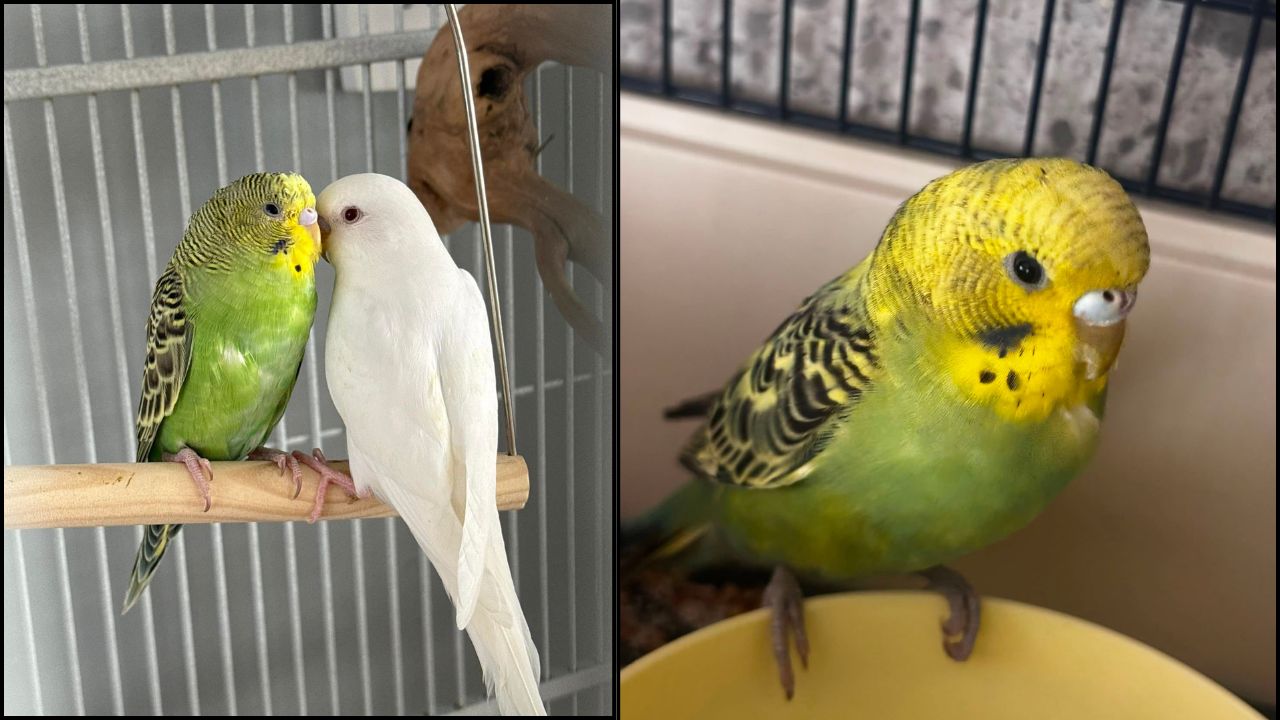

Neil has sold budgies at Paradise Pets Swindon since 1988 — over 35 years of conversations with people who want to buy a bird, and over 35 years of gradually understanding that most of those conversations needed to begin with the same question. This article is about that question, what different answers reveal, and why it has become the most important thing he asks.
I have been selling budgies at this counter since 1988. Not occasionally. Not as a sideline to something else. Since 1988, through every change in the town around this garden centre, through thirty-five years of watching budgie keeping in Swindon households and learning from what I have seen.
In those 35 years I have developed opinions. About cage sizes. About diet. About the social needs of these birds and the welfare consequences when those needs are not met. About the conditions that produce a budgie that reaches twelve years versus one that reaches five. About how much is preventable and how much is just the nature of keeping animals.
But if I had to identify the single most useful thing I have learned — the question that, when answered honestly, tells me more about whether a prospective budgie purchase is likely to go well than anything else the person could tell me — it would not be a question about cage size or diet or experience with birds.
It is simpler than that.
And I ask it at the start of almost every budgie conversation now.
Why I Landed on This Question
It was not the question I started with. For years, my first question was some version of “have you kept a bird before?” — the experience question. It told me something. An owner with previous experience could be assumed to understand certain basics. A complete beginner needed more guidance.
But I noticed, over time, that experience was not the reliable predictor I had assumed. The person who had kept budgies for twenty years and was getting another one was sometimes doing exactly what they had always done — which was sometimes not right. Experience had embedded the habits, not the information that would have improved them. Previous ownership was not a guarantee of good ownership.
I tried the question about cages — what size were they thinking of, where would it go. This told me something practical and was worth knowing. But it was responsive. The customer was telling me what they had already decided, and my job was either to confirm or redirect. It did not give me the underlying picture I was looking for.
I tried questions about children, about other pets, about whether they had done research. All of these were useful. None of them was the key.
The key, when I finally understood it clearly, was not about what the owner knew or owned. It was about the fundamental shape of their daily life. About whether the conditions existed for a budgie to thrive in that household, regardless of everything else.
And the condition that mattered most was time. Specifically: the daily hours when someone was home.
The Question — And Why It Matters So Much
“How many hours a day will the bird be alone in the house?”
I have asked this question, in various forms, hundreds of times now. The answers fall into recognisable categories, and each category tells me something specific about what this person needs.
It matters because budgies are social animals in a way that is not metaphorical or sentimental. Their nervous systems were built for the continuous social presence of a flock. The presence of other birds — the sounds, the movements, the calls — is the input that regulates a budgie’s baseline stress level. Without it, the animal is in a state of chronic mild alarm.
The number of hours a day the bird is alone is the most direct measure of how much social deprivation it will experience. And social deprivation is the background condition that makes almost every other welfare problem worse. The diet deficiency that suppresses the immune system. The space limitation that reduces physical health. The absence of veterinary detection. All of these sit on top of the stress baseline. When the stress baseline is already elevated because the bird is alone for eight hours a day, the margin for everything else narrows.
So when someone tells me their budgie will be alone from eight in the morning until six in the evening, five days a week — that answer changes everything about what I tell them next.
What the Different Answers Tell Me
Let me go through the answers I hear and what each one produces in terms of my response.
Answer One — “Someone’s Home Most of the Day”
This is the answer I am most glad to hear. The retired person. The person who works from home. The household where at least one person is present through most of the working day.
For this person, the range of options is widest. A single budgie that receives consistent daily human interaction can have a reasonable life in this household — not the richest social life available, which would involve a companion bird, but an adequate one. The chronic hours-alone problem is not present in the same way.
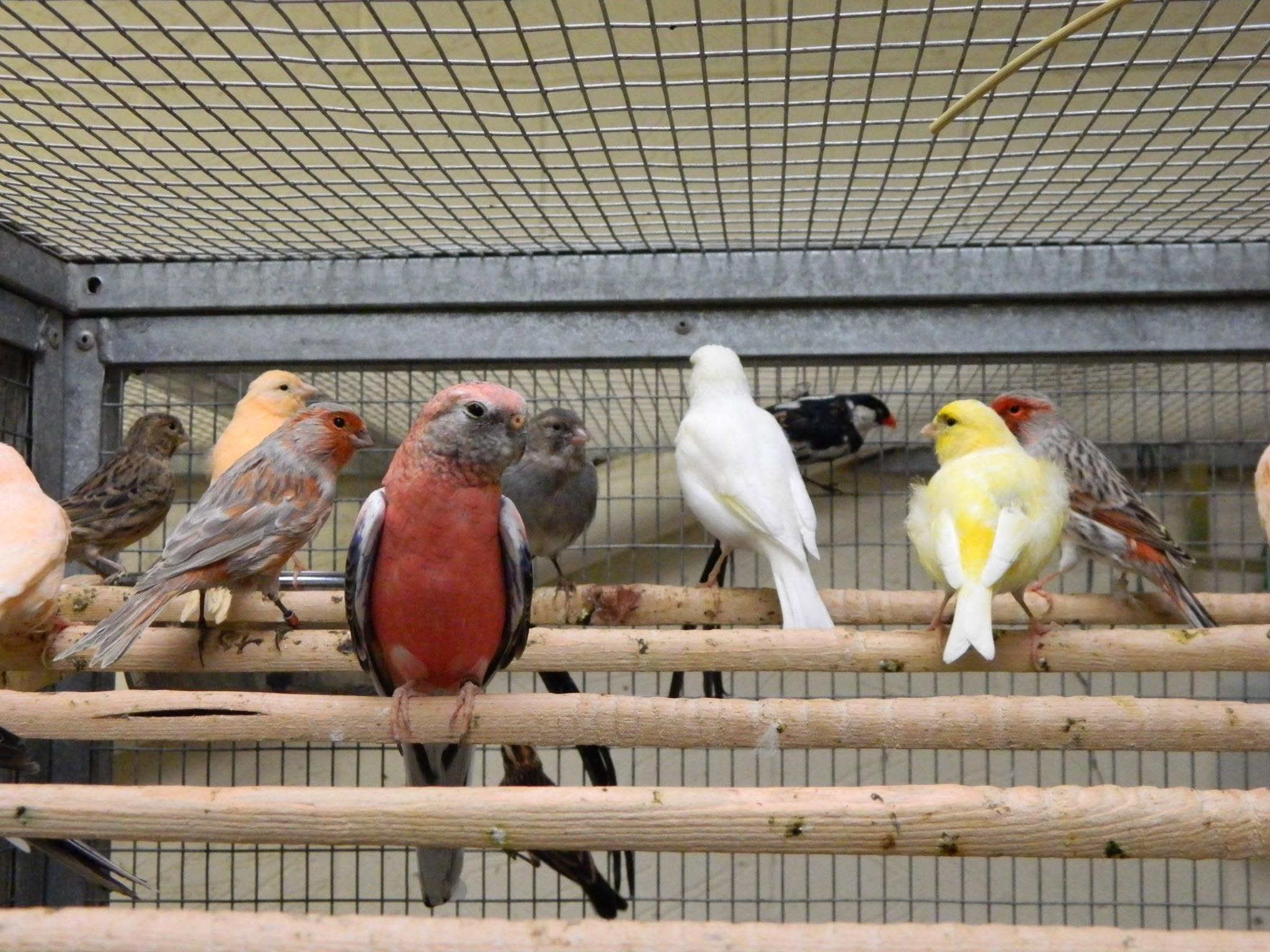
For this person, a cockatiel may also be appropriate — a bird that needs more human engagement than a budgie but can give more back in return. A canary is an option if they want something lower-maintenance. The household’s basic structure can support most of the cage bird options I sell.
What I tell this person: your household works for a budgie. Here is what else to consider — diet, cage size, the welfare benefits of a pair. The time question does not restrict you. These other questions do.
Answer Two — “We’re Out Eight or Nine Hours on Weekdays”
This is the most common answer I hear, and the one that most directly shapes my recommendation.
A standard working household — adults leaving at eight or nine, returning at five or six, five days a week — is a household where a single budgie will be alone for a significant portion of every weekday. Ten hours is not unusual. That is ten hours of silence, of no flock sound, of no social cue telling the bird that the situation is normal and safe. Five days a week, fifty-two weeks a year.
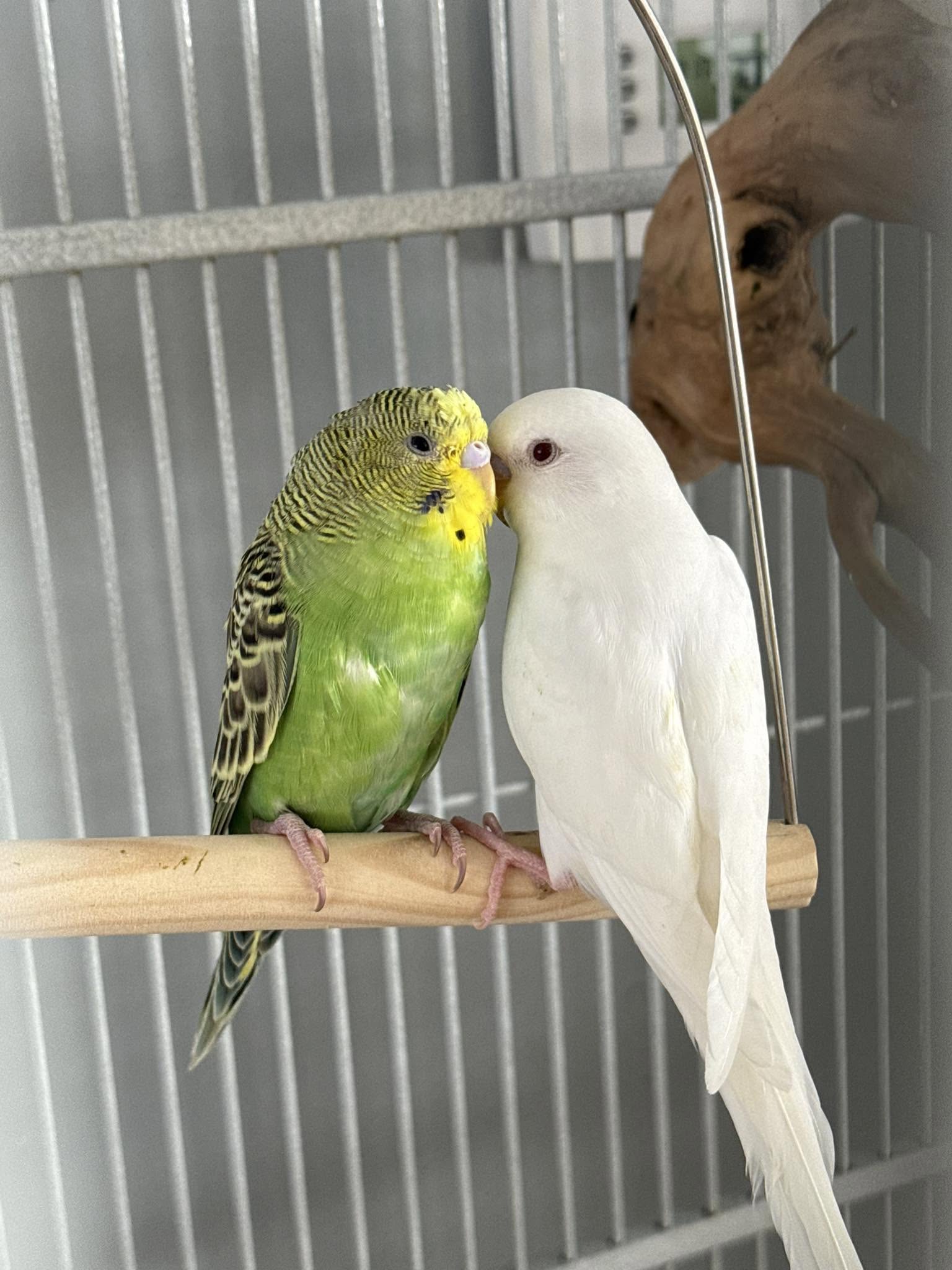
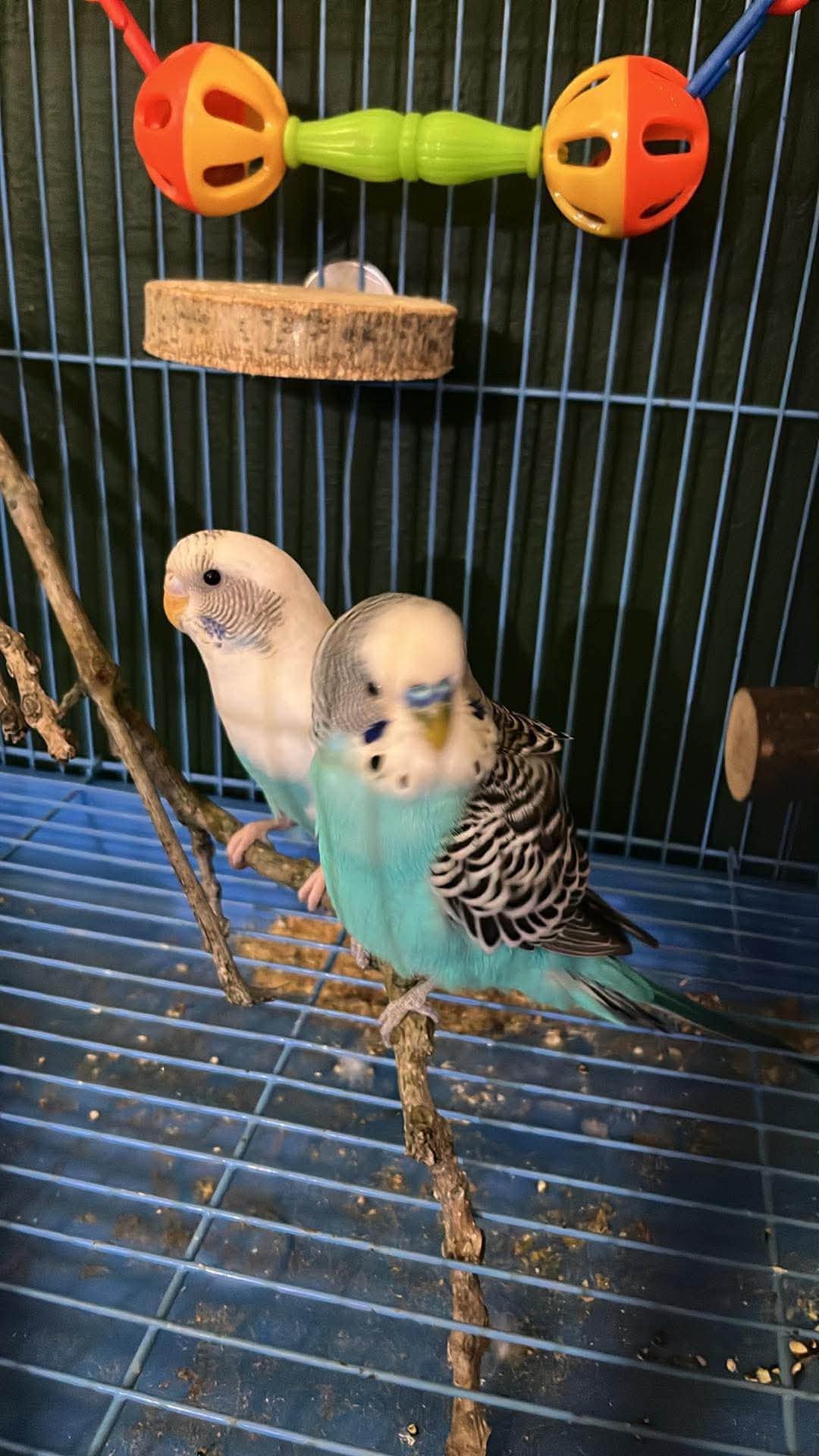
I do not tell this person not to get a budgie. I tell this person that if they get a budgie, they should get two. Two budgies together in this household are not experiencing the same situation as one budgie alone. They have each other. The flock, in its minimum viable form, is intact. They call to each other, sit together, groom each other, move in the loose coordination of a very small social group. The hours when the human is absent are still adequately populated socially.
A single budgie in this household is a welfare problem. A pair is not.
What I tell this person: you should get two birds. Not one bird and a mirror. Two birds. Here is how a proper introduction works and what that looks like in practice.
Answer Three — “It’s Just Me and I Work Shifts — Some Days I’m Home, Some Days I’m Not”
This is the answer that requires the most honest conversation, because the instability of the pattern is as much of an issue as the average hours alone.
Budgies are creatures of routine. They calibrate their daily expectations to patterns that are consistent. An owner who is home reliably in the morning and away reliably in the afternoon gives the bird a predictable social structure. An owner whose schedule is unpredictable — three days on, two days off, irregular nights — is providing a social environment that the bird cannot predict or regulate around.
This is not a reason to refuse to sell the person a bird. But it is a reason to be very direct about what that household needs. Two birds becomes even more important, not less. The companion bird becomes the reliable social constant when the human schedule is not. And the choice of species matters — a cockatiel with a very unpredictable owner schedule, without a companion, is a welfare problem waiting to happen. A pair of budgies in the same household has the resources within itself to manage the variability.
What I tell this person: two birds is not optional in your situation, it is the welfare minimum. Here is why, and here is how to make it work.
Answer Four — “We’re All Home — House Full of Children, Always Someone Around”
This sounds like the ideal answer and in many ways it is — the bird will rarely be alone, there is plenty of human activity and sound, and the household is lively in a way that a social bird often engages with positively.
But this answer has its own complications, and it is worth asking the follow-up: how old are the children?
A household with children under five presents specific challenges I have written about elsewhere on this site. The combination of unpredictable sudden movements, loud noises, and the difficulty of keeping young children from interacting with the cage in ways that stress the bird is real. The bird will rarely be alone in the technical sense, but it may be in a state of chronic low-level alarm from the unpredictability of the young-child environment rather than chronic loneliness.
For this household I think carefully about species choice. A pair of budgies in a well-positioned cage, with ground rules for how children interact with it, often works well — the birds have each other as a social buffer against the unpredictability of the household. A single bird in this household may find the constant unpredictable activity more stressful than beneficial.
What I tell this person: tell me about the children. And here is what a well-positioned, appropriately protected cage setup looks like in a busy family home.
Why This Question Produces Better Outcomes Than Any Other
I have tried other first questions. None of them work as reliably.
The experience question tells me what the person has done before, not what their current life looks like. Someone with thirty years of budgie keeping may have always kept lone birds in inadequate conditions — experience entrenches habits, it does not automatically improve them.
The knowledge question — what do you know about budgies? — tells me what the person has read or been told, but not how it applies to their actual daily routine. Knowing that budgies need companionship and living alone in a working household with one bird are not mutually exclusive.
The budget question tells me what they are prepared to spend, which is useful practically but does not address the structural conditions that will determine the bird’s welfare.
The time question is the only one that gets directly at the daily reality the bird will actually live in. Not what the owner knows or intends or has always done. What their day looks like. That reality is the container that everything else fits into or does not.
The Customers Who Have Changed How I Ask It
Across 35 years, a few specific customers have sharpened the question and my understanding of why it matters.
There was the man in his late sixties, recently widowed, who came in within a month of losing his wife. He wanted a bird for the house. He was home all day. By the time question, this was easy — home all day, obviously the right household for a bird. But something else in the conversation gave me pause, and I added a question I do not always ask: is there anyone who could care for the bird if you were in hospital for a week?
He was quiet for a moment. He said he had not thought about that.
We talked about it. He identified a neighbour who would be willing. We made sure he had the right setup to make it easy for someone else to maintain. And I felt, when he left, that I had given him something more useful than I would have if the time question had been where I stopped.
There was the young woman who told me the bird would be alone for six hours on weekdays. I recommended two birds. She said she only wanted one because she was worried two birds would not bond with her. I explained — as I have in other articles — that two birds still bond with their owner, and that the pair’s bond with each other does not reduce their relationship with the human. She bought two. She came back a year later and said the pair was the best decision she had made.
There was the father who told me his ten-year-old son wanted a budgie. I asked the time question. He said the boy would be at school from eight to four, and he and his wife both worked full-time. Four adults in the household, none of them home during the day. Two birds, clearly. But the father looked uncertain — he had imagined one bird that his son would tame and have a relationship with. I explained why two birds was the welfare answer and also, I said, how to ensure the taming relationship with his son developed alongside the pair bond. He bought two. His son did tame one of them. He called it his bird. The pair bond did not prevent that.
What the Question Does Not Cover — And What I Ask Next
The time question is first, but it is not the only one. Once I know the household’s daily structure, several other questions follow.
The noise question: budgies are active and vocal during their waking hours. In a house where someone works from home in a quiet environment, that is a relevant consideration. In a busy household it is irrelevant.
The handling question: does the person want to tame the bird, to have a hands-on relationship? Or do they want something they can watch and listen to without necessarily picking up? The answer to this points toward budgie versus canary, and shapes what I say about species choice.
The experience question: not as the first question but as a follow-up. Someone who has never kept a bird before needs different information from someone who has. Both can succeed, but the beginner needs more explicit guidance about what the early weeks look like.
The health question: does anyone in the household have respiratory conditions that might be affected by bird dander? Not a common problem, but relevant to know before purchase.
And finally, always: the companion question — whether they are willing to consider two birds rather than one. If the time question has not already made the case for two, I make it at this point. I have bought from this counter for 35 years, and the birds I have sold that I am most confident went well are almost all birds I sold in pairs.
What 35 Years of Asking This Question Has Taught Me
The honest answer to the question in the title of this article — what is the one question — took me longer to arrive at than it should have. For years I was asking good questions but not quite the right one first. The time question, when I settled on it, felt like finding the correct key for a lock I had been working on for a while.
What it has taught me is something about the nature of the welfare problems I see most consistently. Almost all of them are problems of structure rather than intention. The owners who come to me with birds that are not thriving are not, in most cases, people who have neglected the bird or treated it badly. They are people whose daily lives created conditions that were hard for the bird, without those people fully understanding what they had created.
The person who leaves at eight and returns at six, who has one bird, who has never thought of this as a welfare problem because the bird is alive and appears fine — they had good intentions and they created a situation that is genuinely suboptimal for the bird. The situation is not fixed by good intentions. It is fixed by knowing what the bird needs and whether the structure of your life can provide it.
The time question gets to that structural reality faster than anything else I have tried. It is not a criticism of the person’s lifestyle. It is a request for information that allows me to make a recommendation that actually fits the life they are living.
That is what I am trying to do at this counter. Not sell the bird. Match the bird to the life. The sale follows from the match. The match is what matters.
Frequently Asked Questions
What is the most important thing to consider before getting a budgie?
In my experience, the most important single factor is how many hours a day the bird will be alone. This shapes everything else about what kind of bird purchase is appropriate: whether to get one or two birds, whether a budgie is the right species at all, and what welfare provisions need to be in place to make the arrangement work. A pair of budgies in a working household that is empty for eight hours a day is a viable welfare arrangement. A single budgie in the same household is genuinely problematic, regardless of how attentive the owner is during the hours they are home.
Should I get one budgie or two?
Two is almost always the better welfare answer, and in working households it is the welfare minimum. Two budgies together can meet each other’s social needs during the hours the owner is absent. A single budgie relies entirely on the human for all social contact — in a household where that human is absent for most of the day, the single bird is chronically under-socialised. Two birds still bond with their owner. The pair bond between the birds does not prevent individual human relationships. It supports the welfare foundation from which everything else develops.
Do budgies bond with their owner if you have two?
Yes — and in many cases the relationship with the owner is better in a pair than in a lone bird, because the paired bird is emotionally more stable and less anxiously dependent on the human. A lone bird’s relationship with its owner often has a quality of desperate dependency — the owner is the only social outlet. A paired bird’s relationship with its owner is chosen from a position of greater security. The bonds I have seen that most resemble genuine, warm, affectionate companionship are almost always between an owner and paired birds, not an owner and a lone bird.
Is a budgie right for a busy working household?
A pair of budgies is appropriate for most working households. A single budgie is not the right choice if the household is regularly empty for six or more hours a day. The species choice matters too — cockatiels require more human engagement than budgies and are a harder welfare call in a household with limited daily human presence. A canary is the lowest-maintenance cage bird and can be appropriate in any household where the owner wants the presence and song of a bird without the social demands of a parrot or budgie. If you are unsure, come in and we will talk through what your specific household and schedule suggest.
What should I do if I already have a single budgie in a working household?
Consider getting a companion as soon as is practical. The introduction requires care — neutral territory, multiple food points, observation for the first several days — but most introductions succeed and the behavioural change in the original bird is typically visible within days. If you are not in a position to get a companion immediately, provide as much enrichment as possible during your absence — a radio or television providing human voices, varied toys changed regularly, the largest possible cage, and maximised human interaction during the hours you are home. But the companion bird is the real solution.
Where can I buy budgies and get honest advice in Swindon?
We have been at Manor Garden Centre, Cheney Manor, Swindon SN2 2QJ since 1988. Come in and I will ask you the time question, and several others, before I recommend anything. Call us on 01793 512400 to find out what we have in stock.
Thinking About Getting a Budgie? Come in and Let Me Ask the Question First
The most useful thing I can do for you before you buy is ask the right questions and give you honest answers. Come in and let’s have that conversation. I will tell you what your household actually needs and what species and number of birds suits it. The sale will follow from the honest conversation, not the other way around.