
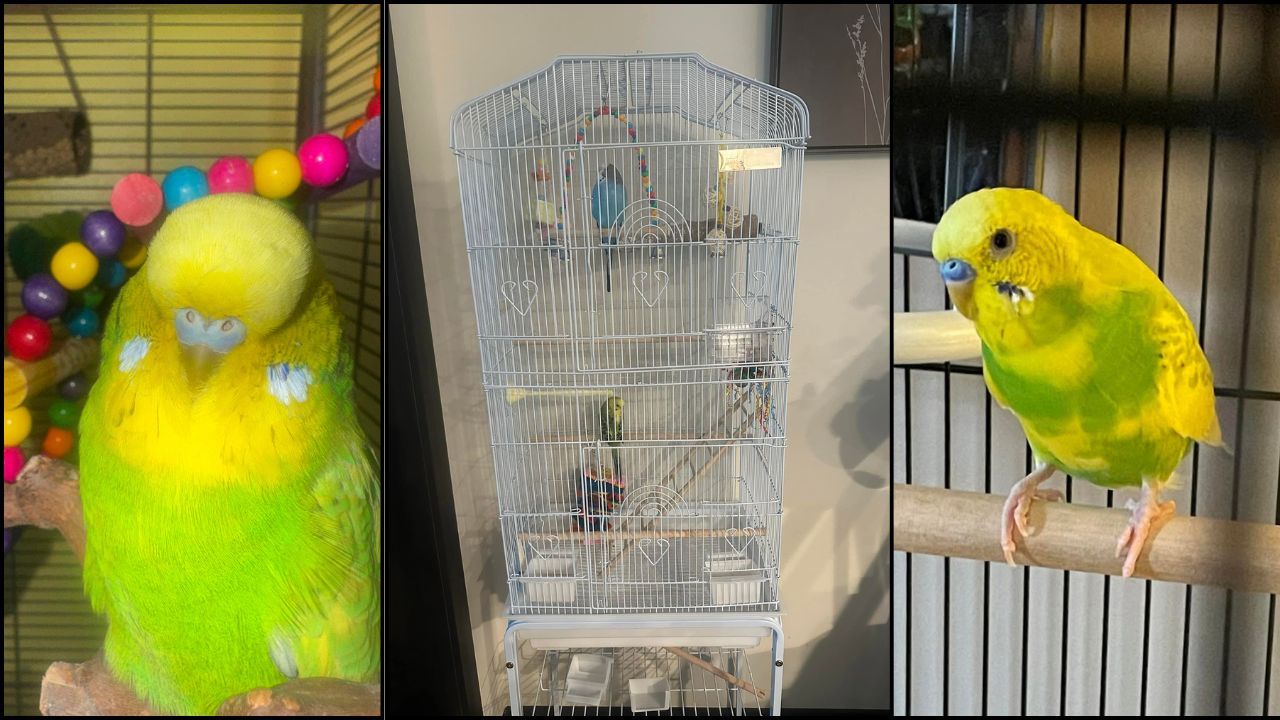

Neil has been keeping, breeding, and selling budgies — and the cages they live in — at Paradise Pets Swindon since 1988. Over 35 years he has watched cage design change, watched manufacturers cut corners that matter and add features that do not, and watched the same handful of mistakes get made by well-meaning new owners again and again. This is not a list of branded products. It is his honest guide to what actually matters when you are standing in front of a wall of cages trying to work out which one is genuinely right for your budgie.
A young couple came in a few weeks ago, standing in front of our cage display looking slightly overwhelmed. There were perhaps a dozen different cages on the wall, in different shapes, different colours, different price points, and they had no real way of telling which ones were genuinely suitable and which ones simply looked nice on a shelf.
“Is the more expensive one just better?” the man asked, gesturing at two cages of similar size but noticeably different prices.
It was a fair question, and the honest answer is no — not necessarily, and not always for the reasons you would expect. Price in the cage market often reflects styling, brand, and finish more than it reflects the things that genuinely matter to a budgie’s welfare. I have seen expensive cages with poor bar spacing and cheap cages with excellent proportions. The price tag tells you very little on its own.
What I want to do in this article is give you the criteria I actually use — the ones I have built up over 35 years of watching which cages produce settled, active, healthy birds and which ones quietly produce birds that hop rather than fly. None of this requires you to know a specific brand name. It requires you to know what to look for and what to walk past, regardless of what is currently on the shelf when you go shopping.
The First Question — Width And Depth Before Anything Else
I covered the RSPCA’s specific size guidance in detail in another article, but I want to restate the principle here because it is the single most important thing to get right when buying a cage, and it is the thing the retail market gets wrong most consistently.
- Width is the most important dimension — budgies fly horizontally, and the horizontal flight distance available inside the cage is what allows genuine wing-use rather than simple hopping between perches; prioritise the widest cage your space and budget genuinely allow
- Depth matters almost as much as width — a cage that is wide but very shallow restricts the bird to essentially a single flight line; reasonable depth allows more natural movement patterns
- Height matters least of the three dimensions — a tall, narrow cage looks impressive on a shop floor but provides comparatively little genuine welfare benefit; do not be persuaded by height at the expense of width and depth
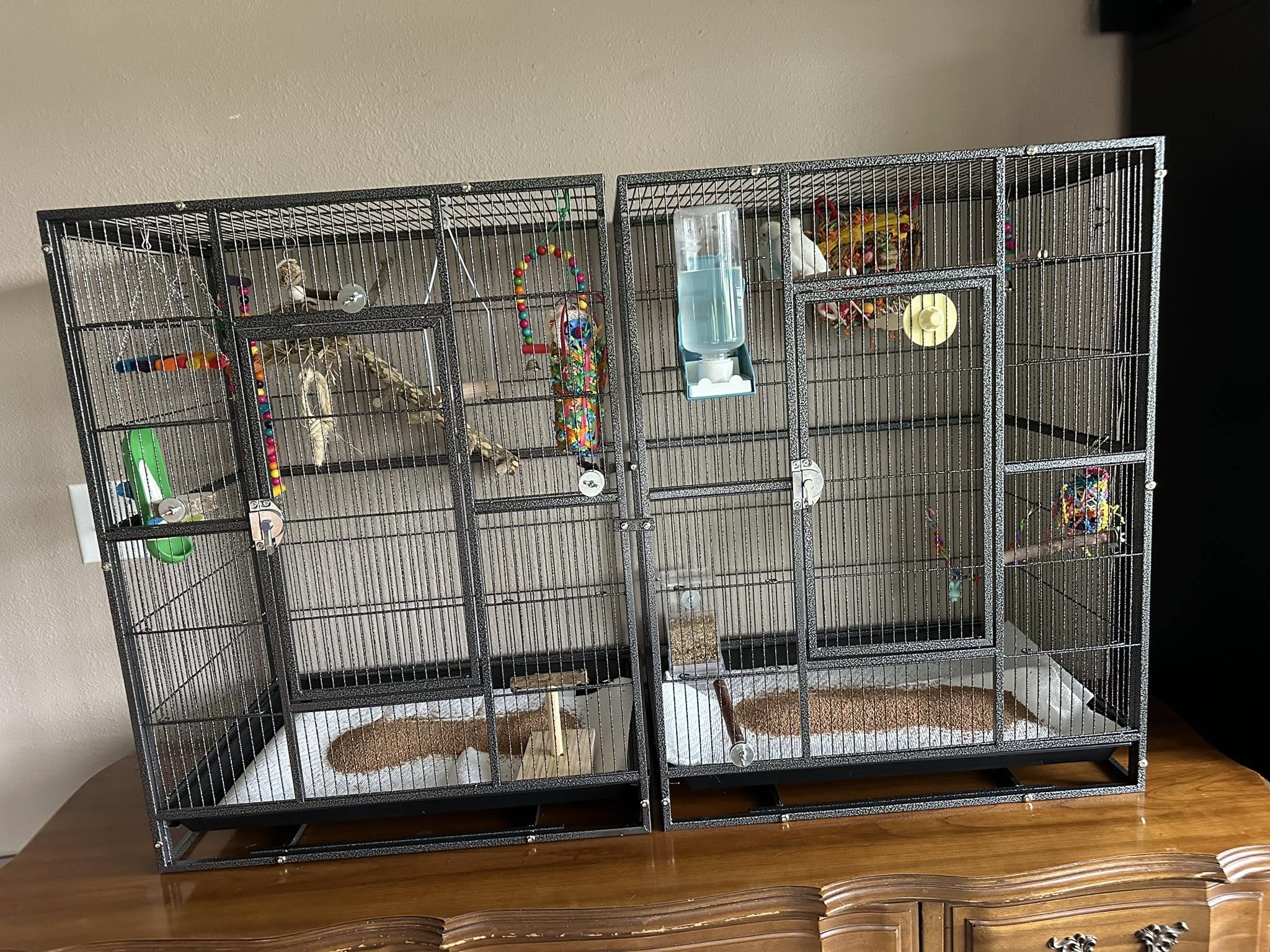
- For a single budgie spending significant time caged, look for cages in the region of 60cm or more in width and depth as a genuine minimum — this rules out a large proportion of what gets marketed specifically as “budgie cages” in mainstream pet retail, and points you toward what is often labelled as a flight cage instead
- For a pair, go significantly larger again — width in the region of 80–100cm or more is a meaningfully better starting point than the smaller end of what gets sold as adequate for two birds
Bar Spacing — Check This Before Anything Else About The Design
This is the specification I check first, every time, before I look at anything about a cage’s shape, colour, or features — because getting it wrong is a genuine safety issue, not simply a welfare-optimisation question.
- Look for bar spacing no wider than approximately 12–13mm — wider spacing risks a budgie’s head or body becoming trapped between bars, which is a genuine and serious safety hazard, not a minor design quibble
- Do not estimate by eye — check the manufacturer’s specification directly, or measure it yourself with a ruler if the specification is not clearly stated; bar spacing is consistently underspecified or omitted from product listings, which is itself worth treating with some suspicion
- Be particularly careful with cages marketed for “small to medium birds” rather than specifically for budgerigars — this broader marketing category sometimes includes spacing appropriate for larger small-to-medium species like cockatiels but unsafe for the smaller-bodied budgie
- Horizontal bars, at least on some sides, are a genuine advantage — budgies enjoy climbing, and horizontal bar orientation gives them more opportunity to do this safely than an all-vertical bar design
Material — What Holds Up And What Does Not
- Powder-coated steel is the standard, reliable choice — durable, easy to clean, resistant to the corrosive effects of droppings over time, and widely available across a genuinely wide price range; this is what the overwhelming majority of well-designed cages are made from, and there is little reason to look beyond it for a typical home setup
- Avoid cages with painted or coated bars that show signs of chipping or peeling, even in the shop — a budgie that chews at flaking paint or coating can ingest material that should not be ingested; check the bars closely, particularly at the joints and welds, before buying
- Stainless steel is a genuine upgrade if budget allows, particularly for households with more than one bird — more resistant to wear over the long term, though the welfare difference compared to good-quality powder-coated steel is marginal for most households; this is more a longevity and maintenance consideration than a core welfare one
- Avoid wooden cage components for the main structure — wood absorbs moisture and droppings in a way metal does not, becomes difficult to clean and disinfect properly over time, and is more likely to harbour bacteria or parasites; wooden perches and accessories within a metal cage are a different matter and are genuinely beneficial
- Plastic base trays are standard and perfectly adequate provided they are robust enough not to crack or warp under regular cleaning; check the plastic does not feel thin or flimsy when you examine it in person
The Base And Tray System — Why This Matters More Than It Sounds Like It Should
This is a feature most new owners do not think to evaluate carefully before buying, and it is one I consistently flag because it has a direct, practical effect on whether a cage actually gets cleaned as often as it should.
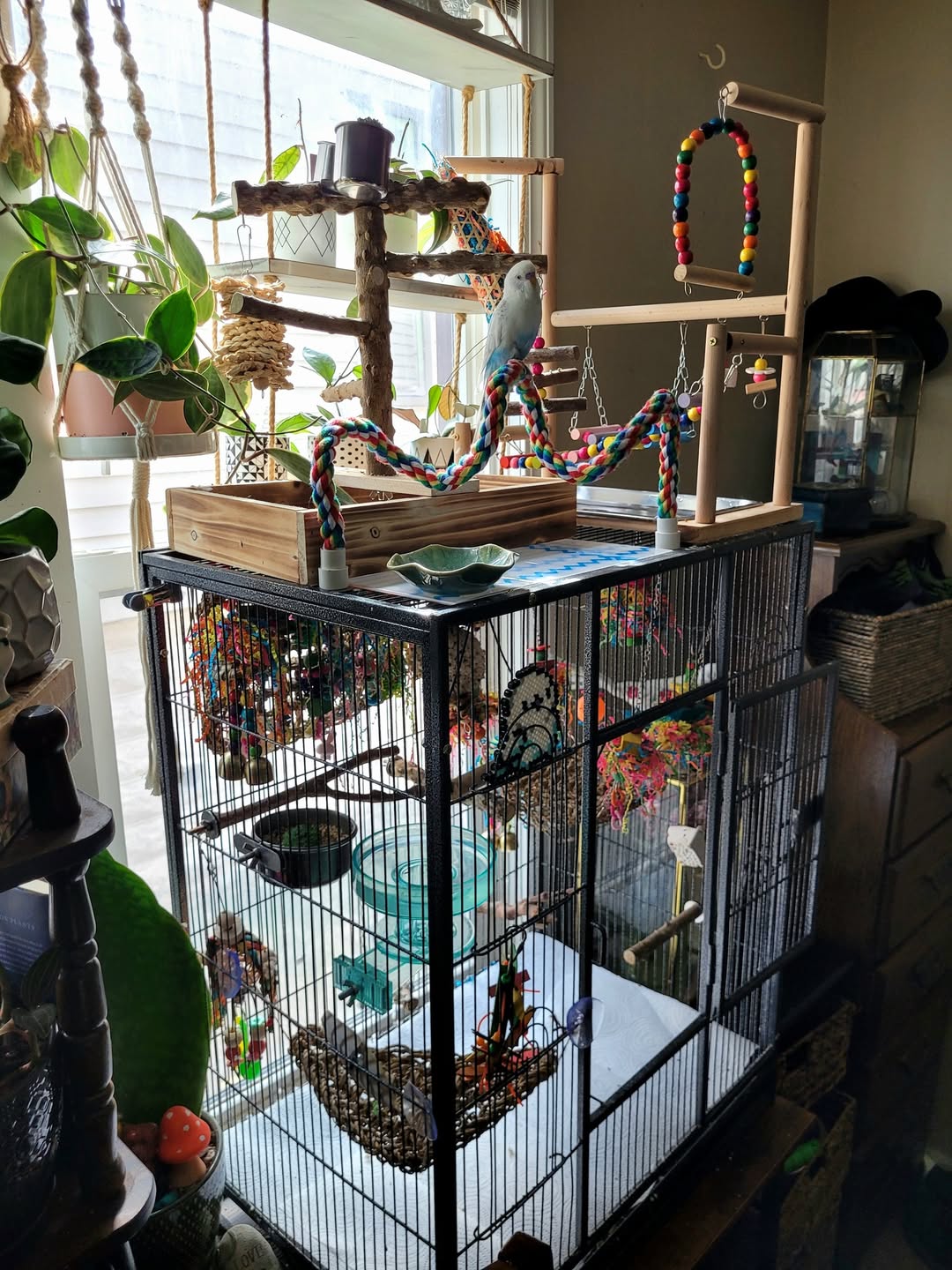
- Look for a fully removable base tray that slides out without needing to lift or dismantle the main cage structure — a tray system that is awkward to access gets cleaned less often than one that is genuinely quick and easy, which has a real effect on hygiene over time
- A grille or mesh floor above the tray, which prevents the bird walking directly in droppings, is a genuine welfare benefit — though check that grille spacing is also appropriately small to avoid trapping toes or feet
- Deep enough sides on the tray to contain seed husks and debris during normal activity — a shallow tray results in significant mess outside the cage, which sounds like a minor inconvenience but in practice often leads to less frequent, less thorough cleaning as the owner becomes resigned to mess regardless
- Avoid trays with awkward catches or fittings that require tools or significant force to access — test this in the shop if you can; a tray you dread accessing is a tray that gets cleaned less than it should
Door Design And Access — Practical But Often Overlooked
- A door large enough to comfortably fit your hand through, and ideally large enough to pass a millet spray or larger accessory through without difficulty — a door that is too small makes routine handling and feeding genuinely more cumbersome on a daily basis
- A secure locking mechanism that the bird cannot open from inside — budgies are intelligent and some individuals are genuinely capable of working out simple latches; a mechanism requiring a deliberate human action to release is worth checking for, particularly if your bird is a confident, exploratory individual
- A door that opens to provide a stable platform or perch point, rather than simply swinging open into empty space — this makes it easier for the bird to step in and out confidently during taming and handling, and is a genuinely underrated feature in many designs
Perch Placement — Why The Cage Itself Is Only Half The Story
A genuinely excellent cage can still produce poor outcomes if the perches inside it are positioned badly, and this is something within your control regardless of which cage you buy.
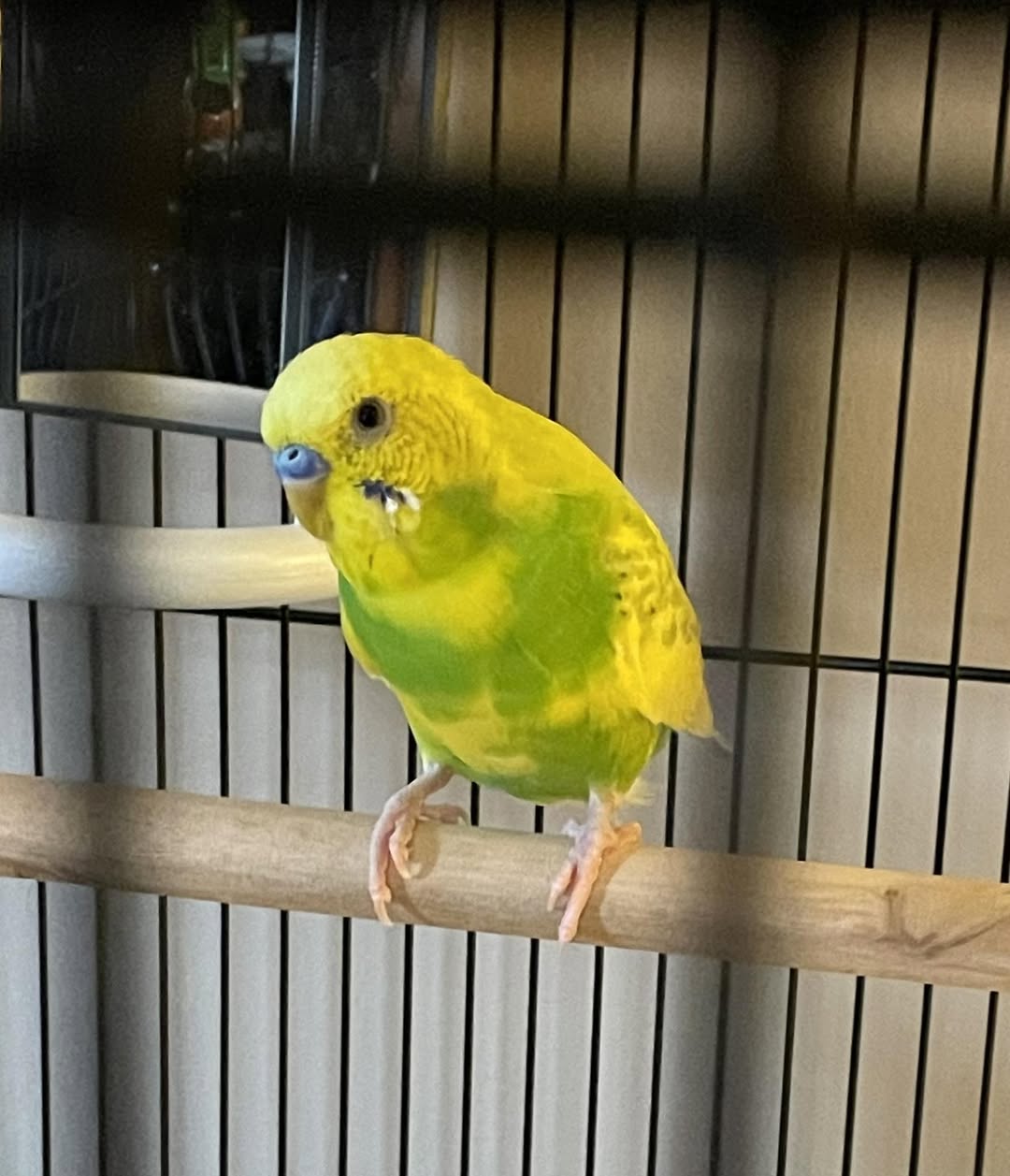
- Position perches at opposite ends of the cage to maximise the usable horizontal flight distance between them — clustering perches close together, which is how many cages arrive set up by default, significantly reduces the genuine flight opportunity even in an appropriately large cage
- Avoid placing perches directly above food or water dishes — droppings falling into food and water is both unpleasant and a genuine hygiene concern
- Use perches of varying diameter rather than uniform dowel perches throughout — natural wood branches of varying thickness exercise the foot muscles in a way that uniform plastic or dowel perches do not, and most cages do not come with this variety as standard; this is worth adding yourself regardless of what the cage ships with
- Ensure perches do not obstruct the door or food access points — sounds obvious but is a common default-setup mistake that is worth checking and adjusting after purchase
What To Genuinely Ignore When Choosing
I want to be equally clear about the things that get marketed heavily and matter very little to the bird, because a significant amount of cage price difference in the retail market comes down to exactly these features.
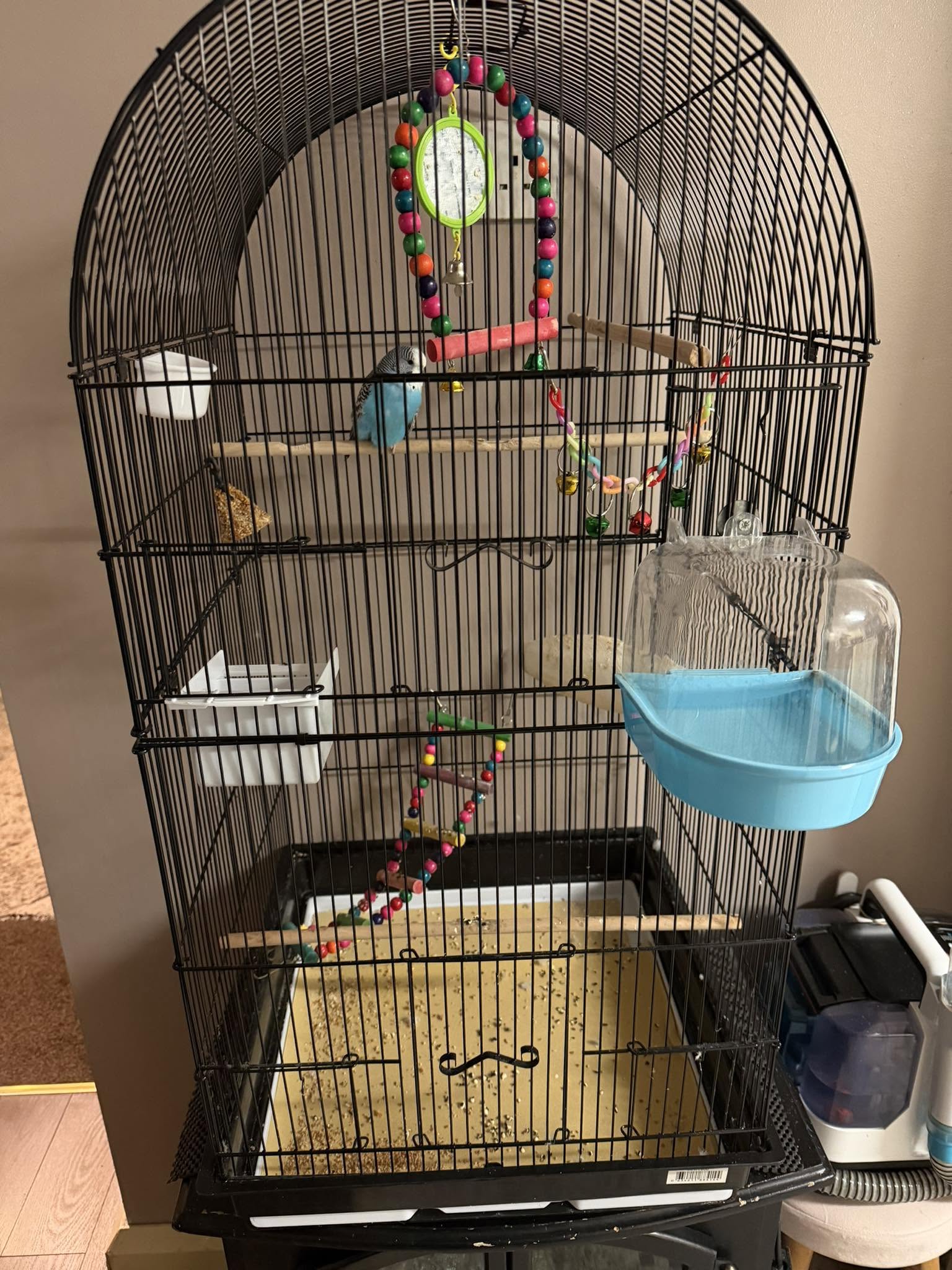
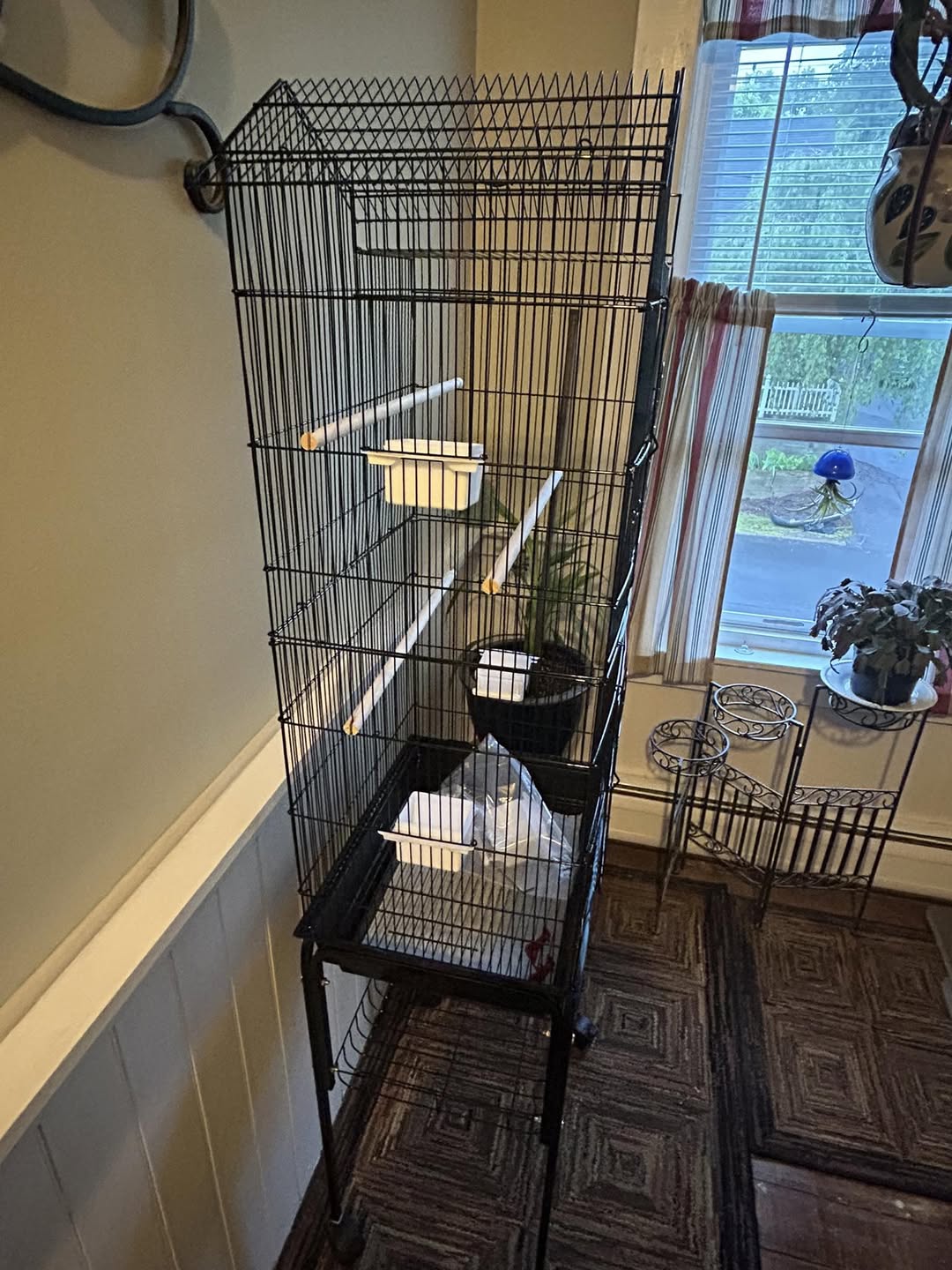
- Decorative shape — ornate, architecturally distinctive cage designs (domed tops, unusual silhouettes) look appealing on a shop floor but frequently sacrifice genuine usable interior space for visual flourish; a plain rectangular cage with good dimensions consistently outperforms an attractive but oddly-shaped one
- Colour — has no welfare relevance whatsoever; choose whatever fits your home, with the only practical consideration being that very dark colours can make it slightly harder to spot droppings and mess during cleaning
- Brand name and price premium alone — as discussed at the start of this article, price does not reliably correlate with the dimensions, bar spacing, and material quality that actually matter; always verify the specific specifications rather than assuming a higher price guarantees better welfare features
- Included accessories of dubious value — some cages are bundled with mirrors, bells, or plastic toys of limited genuine enrichment value, used as a marketing point to justify price; these are not harmful in themselves, but their presence should not factor into your assessment of the cage’s core suitability
The Decision Framework — Putting It Together
| What To Check | What You Are Looking For | Why It Matters |
|---|---|---|
| Width and depth | Widest your space and budget allow; minimum 60cm region for a single bird spending significant time caged | Determines genuine flight capability — the single biggest welfare factor |
| Bar spacing | No wider than 12–13mm, checked against manufacturer specification | Genuine safety issue — risk of head or body entrapment |
| Material | Powder-coated or stainless steel, no flaking paint or coating | Durability, hygiene, and prevents ingestion of unsuitable material |
| Base tray | Fully removable, easy to access without tools or force | Directly affects how consistently the cage actually gets cleaned |
| Door | Large enough for comfortable hand access; secure locking mechanism | Daily practical usability and security against an intelligent escape artist |
| Perch setup | Variable diameter, positioned at opposite ends for maximum flight distance | Determines whether good cage dimensions actually translate into genuine flight use |
| Shape, colour, brand premium | Ignore as primary decision factors | Largely irrelevant to welfare; verify substance over styling |
Frequently Asked Questions
Is a more expensive budgie cage always better?
No. Price in the cage market frequently reflects styling, branding, and finish more than it reflects the dimensions, bar spacing, and material quality that genuinely matter to a budgie’s welfare. Some lower-priced cages have excellent proportions and appropriate bar spacing, while some expensive, attractively designed cages fall short on genuine usable interior space. Always check the specific measurements and specifications rather than assuming price is a reliable indicator of quality for your bird’s purposes.
What size cage should I buy for one budgie?
For a budgie spending most of its time in the cage, look for dimensions in the region of 60cm or more in width, depth, and height, based on RSPCA welfare guidance calculated from a budgie’s wingspan. If your bird genuinely receives six or more hours of supervised free-flight time outside the cage daily, a somewhat smaller cage — in the region of 45cm — can be acceptable. Prioritise width and depth over height in either case, as horizontal flight space matters more than vertical space.
Does the shape of the cage matter?
Genuinely usable interior space matters considerably more than the external shape or silhouette. Ornate or unusually shaped cages frequently sacrifice usable flight space for visual appeal. A plain rectangular cage with good width and depth consistently provides better welfare value than a decoratively shaped cage of similar overall footprint. Do not let an attractive design distract from checking the actual interior dimensions.
Is wood or metal better for a budgie cage?
Metal, specifically powder-coated or stainless steel, is the appropriate choice for the main cage structure. Wood absorbs moisture and droppings, becomes difficult to clean and disinfect thoroughly over time, and is more likely to harbour bacteria or parasites. Wooden perches and accessories within a metal-framed cage are a different matter entirely and are genuinely beneficial for foot health and natural behaviour.
What bar spacing should I look for?
No wider than approximately 12–13mm. This is a genuine safety specification, not a minor preference — wider spacing risks a budgie’s head, neck, or body becoming trapped between bars. Always verify this against the manufacturer’s specification rather than estimating by eye, and be particularly cautious with cages marketed more broadly for “small to medium birds” rather than specifically for budgerigars, as spacing appropriate for slightly larger species can be unsafe for a budgie.
How do I know if the base tray design is good?
Test it in person if possible. A good tray slides fully out without needing tools, force, or partial dismantling of the cage. It should have sides deep enough to contain seed husks and debris during normal activity. A tray that is awkward or time-consuming to access tends to get cleaned less frequently in practice, regardless of the owner’s good intentions, simply because of the friction involved in the task.
Should I buy accessories that come bundled with the cage?
Bundled accessories such as mirrors, bells, and basic plastic toys are not harmful but are also not a reliable indicator of a cage’s core quality, and should not factor significantly into your purchasing decision. Focus your assessment on the dimensions, bar spacing, material, tray system, and door design. Genuinely valuable enrichment — varied natural perches, foraging toys, appropriate chew items — is usually better selected separately based on your specific bird’s preferences rather than accepted as a default bundle.
Where can I see and compare budgie cages in Swindon?
Come in to Paradise Pets at Manor Garden Centre, Cheney Manor Industrial Estate, Swindon SN2 2QJ — or call us on 01793 512400. We can show you what is currently in stock, talk through the specific dimensions and features against what your bird needs, and give you an honest comparison rather than a sales pitch. The advice is always free.
One Last Thing From Me
The young couple who stood in front of our cage display ended up buying the wider, plainer cage rather than the more decorative, narrower one they had initially been drawn to. It was, as it happens, the cheaper of the two. They seemed slightly surprised that the more practical choice was also the more affordable one, which is not always how it works out, but happens more often than people expect once you stop letting appearance lead the decision.
“We’d genuinely have bought the other one if you hadn’t explained the dimensions,” the woman said on her way out. “It just looked nicer on the shelf.”
That is, honestly, the whole problem with how budgie cages get bought in most of the UK. The shop floor rewards visual appeal, and visual appeal correlates poorly with what a budgie’s body and welfare actually require. Once you know what to measure and what to check — width and depth before height, bar spacing checked rather than assumed, material that will hold up, a tray you will actually use, perches positioned to maximise flight — the decision becomes considerably more straightforward, and considerably less likely to be swayed by whatever happens to look best under shop lighting.
Choosing A Cage For Your Budgie? Come And Talk It Through With Us
Bring your space measurements, tell us how many birds and how much daily free-flight time you can offer, and we will help you find something that genuinely fits — not just whatever looks best on the shelf. Free advice, no obligation. That is how we have done things here for 35 years.