
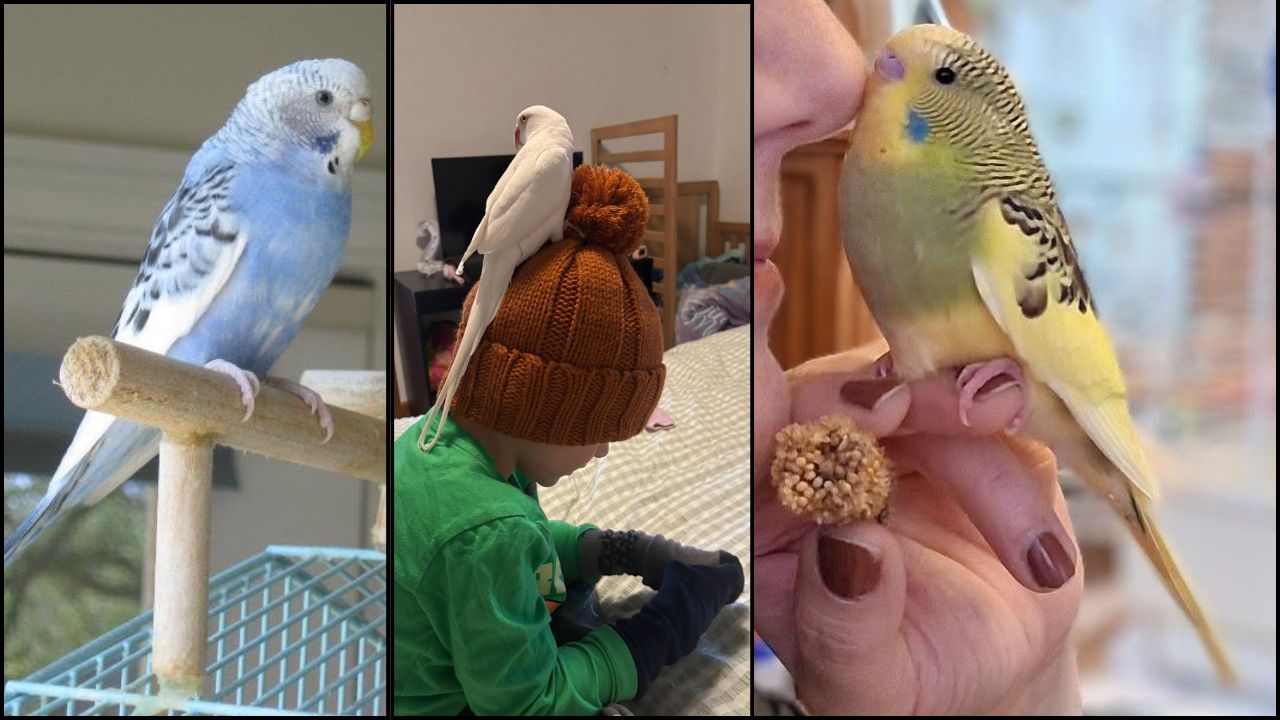

Neil has run Paradise Pets Swindon since 1988 — over 35 years of selling birds to families and watching what happens next. He has now sold to parents who came in as children themselves, and occasionally to grandchildren of his earliest customers. What he has watched across those three generations — the specific ways that a bird in the home changes a child’s development, behaviour, and emotional life — is what this article is about. Not the generic “pets are good for children” claim that appears in every lifestyle piece. The specific things he has seen, from the specific animal, across the specific span of three decades.
A woman came in about two years ago with a girl of about eight — her daughter. They were there to buy a budgie. The woman had grown up, she told me, with a budgie her parents had bought when she was exactly the age her daughter was now. That bird had lived until she was nineteen. She had learned to read partly by reading to it, she said. She was not sure she had ever told anyone that before.
Her daughter stood at the cage of young budgies with her nose almost touching the wire and watched them with an intensity that I recognise immediately. Not the excited, distracted attention of a child in a toy shop. The quiet, held attention of a child who has found something genuinely worth watching.
I have seen that look in children at this counter for thirty-five years. It does not appear with every animal. It appears, with a specific quality, with birds.
The woman chose two birds — a pair of young males, as I advised. Her daughter named them before they left the shop. By the time they reached the door she was already talking to them through the bars of the carry cage in a quiet, serious voice, telling them what their new home would be like.
I thought: that child has already begun to change. She does not know it yet. But she has.
First — Why Birds Specifically, Not Pets in General
There is a general body of evidence — and a great deal of popular writing — about the benefits of pet ownership for children. Most of it focuses on dogs and cats. The benefits cited are real, but they are not specific to any one animal. They are the benefits of caring for a living creature, of having something that responds to you, of responsibility and routine.
Birds produce some of these same benefits. They also produce specific ones that dogs and cats do not — and in my observation, those specific benefits are the ones most worth talking about.
A bird cannot be picked up whenever the child wants to hold it. It must be approached correctly, at the right time, in the right way, with the right quality of patience. A child who wants a physical relationship with a bird has to earn it — not through performance, not through persistence, but through the gradual, consistent building of trust that the bird controls, not the child.
A dog will be picked up by a determined child. A cat will eventually submit or escape. A bird does not submit and cannot be cornered effectively. The interaction happens on the bird’s terms or it does not happen at all. This is not a limitation. It is one of the most significant developmental experiences a bird offers a child.
- Birds require patience and approach that the child cannot shortcut — the relationship develops on the bird’s terms
- Birds communicate clearly when they are not comfortable — and children learn to read that communication or the relationship does not progress
- Birds are vocal and interactive in ways that are specifically engaging for children — the responsiveness to voice, the mimicry, the contact calls produce a kind of conversation
- The bird’s dependence on the owner for care is total and visible — a missed feeding is not abstract. The bird shows it. This concreteness makes responsibility real in ways that abstract obligation does not
- Birds live long enough — many budgies live ten to fifteen years in good conditions — to accompany a child through a significant portion of their development
What I Have Watched — The Things That Actually Change
Here is what I have observed, across three decades and three generations of families, in children who grow up with birds. These are not claims about every child or about guaranteed outcomes. They are patterns I have seen consistently enough to trust.
1. Patience Develops — Not Taught, Developed
There is a difference between a child who has been told to be patient and a child who has learned patience because they wanted something enough to wait for it. The first is compliance. The second is a capability.
A new budgie will not step up onto a hand the day it arrives. It will not do it the second day. It may not do it for two or three weeks. A child who wants that bird to step onto their finger has to come to the cage every day, speak quietly, offer the hand, wait, accept whatever the bird does, come back tomorrow and try again. There is no shortcut. No amount of wanting it more produces it faster. Only consistent, calm, patient presence over time.
I have watched children learn this — watched the shift from the first frustrated week to the morning when they come in to tell me the bird stepped up — and what they have learned is not a fact about birds. It is a direct experience of the relationship between patience and outcome that they will carry into every interaction that requires similar qualities for the rest of their lives.
The mother who told me her daughter had learned to read by reading to the budgie was describing something adjacent to this. Reading is hard for some children. It requires sustained effort through frustration and slow progress. The bird was the audience that made the sustained effort worthwhile — and the reading improved not because of any instruction but because the child had a reason to practise that mattered to her more than the frustration of difficulty.
- Taming a bird is a patience exercise that cannot be faked or rushed — the outcome depends entirely on the quality and consistency of the approach over time
- Children who experience the bird stepping up for the first time after weeks of patient work have learned something about patience that no instruction could have produced
- The experience transfers — children who have learned to wait for a bird are better equipped to wait for other things that require similar sustained effort
- The frustration of early failure is part of the learning — a child who wants to give up and is encouraged to try again tomorrow, and succeeds eventually, has a specific memory of what persistence produced
2. Emotional Regulation Improves — Through a Specific Mechanism
This is the observation that surprised me most when I first noticed it, and that has been most consistently confirmed across the families I have watched over the years.
Children who keep birds — particularly children who have reached the stage of having a bird that will interact with them — often become better at managing their own emotional state. Not because they have been taught to. Because the bird teaches them the direct consequence of their emotional state more clearly and immediately than most other feedback they receive.
A child who comes to the cage in an agitated, excited, or upset state will find that the bird retreats, becomes flighty, refuses to interact. The child’s emotional state has a direct, visible consequence on the relationship they want. The feedback is immediate and unambiguous. Calm down and the bird comes closer. Stay agitated and it will not.
No adult has told the child to calm down in this situation. No reward or punishment has been applied. The bird has simply responded honestly to what the child is bringing to the interaction. The child learns — through direct experience, not instruction — that their emotional state has consequences for outcomes they care about.
I have heard parents describe this process without knowing that is what they are describing. “She goes to the bird when she is upset and comes back calmer,” several parents have said to me over the years, in various forms. What is happening is not just that the bird is comforting. It is that the bird requires her to be calmer in order to engage with it — and she is motivated to be calmer because she wants the engagement.
- Birds respond immediately and honestly to the emotional state the child brings to the cage — this feedback is more direct than most the child receives
- A calm approach produces interaction; an agitated approach produces retreat — the child experiences this as a direct consequence of their own state
- No adult instruction is required — the bird teaches this through its own responses
- Children who have learned to regulate around the bird often carry this skill into other contexts — teachers and parents report improvements in emotional management that began around the time of bird ownership
- The bird also provides genuine comfort in upset states — sitting near the cage when distressed produces a calming effect that operates independently of the interaction dynamic described above
3. Responsibility Becomes Real — Not Abstract
Most children are given responsibilities. The household chore, the homework deadline, the expectation to be somewhere at a specific time. These responsibilities are real but their consequences, for most children in comfortable circumstances, are cushioned. A forgotten chore will be done by someone else. A missed homework assignment will produce a conversation but rarely an immediate, visible consequence for another living creature.
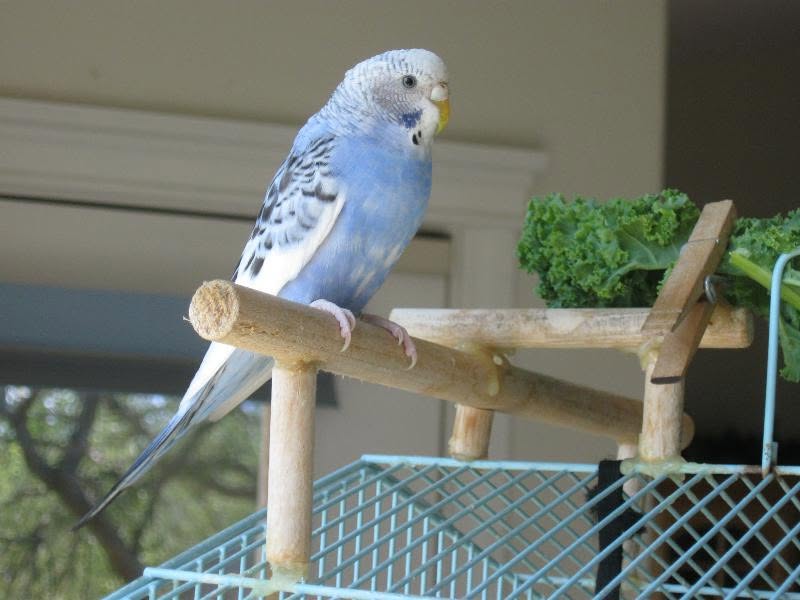
A bird’s food dish that is not filled produces a hungry bird. The bird’s water that is not changed produces a bird drinking stale or contaminated water. The bird that is not checked in hot weather — as this summer has made urgently clear — can deteriorate rapidly in conditions that a child who had been taught to check would have caught. The consequence of the responsibility is not abstract. It is the bird, visible in its cage, showing what the care or lack of it has produced.
This is different from every other kind of responsibility most children are given. The feedback is immediate, visible, and cared about — because the child cares about the bird in a way that they may not care about the abstract obligation to tidy their room.
The families I have watched over thirty-five years where this has worked best are the ones who have given the responsibility genuinely — not supervising so closely that the child never experiences the feedback of their own choices, but also not abandoning the child to care they are not equipped for. The right calibration is: the child does it, the parent is aware of whether it is being done, and the bird shows the result.
- Bird care responsibilities have immediate, visible consequences — the bird shows whether the care has been adequate
- The motivation to meet the responsibility is intrinsic — the child cares about the bird, so they care about the care
- The feedback of responsibility is more honest and more direct than most other obligations children are given
- Age-appropriate calibration matters — a five-year-old can help with feeding and observation, not primary care. A ten-year-old can carry primary responsibility with parental oversight. A teenager can manage fully with light supervision
- The experience of responsibility well-discharged — the bird well and active because the child cared for it — produces a specific kind of pride that abstract obligation cannot
4. Empathy Develops — Through Learning to Read Another’s Experience
Empathy is not just feeling what another feels. It is the ability to read another’s experience accurately enough to respond appropriately. It requires learning to look outward, at signals and behaviours that are not your own internal experience, and to interpret them correctly.
A child learning to read a bird’s body language is practising exactly this skill. The crest position tells you the bird’s emotional state. The feather posture tells you whether it is warm or unwell. The eye quality tells you whether it is alert or depleted. The response to your approach tells you whether the trust is there yet or whether you have moved too fast. Reading all of this requires sustained, attentive observation directed outward — at the other, not at the self.
Children who become good at reading their bird become good at reading non-verbal communication generally. This is not a claim I make lightly. It is something I have heard from parents of bird-owning children more times than I can count — that their child has become more perceptive about other people, more attentive to how others are feeling, more able to pick up on unspoken signals. The bird has been the training ground for a social skill that extends far beyond birds.
- Reading a bird’s body language requires sustained outward attention — the child learns to look at the other rather than the self
- The signals are clear and consistent — crest position, feather posture, eye quality, response to approach — making them good material for learning to read non-verbal communication
- Children who become fluent in bird body language often become more perceptive generally — the skill of attentive outward observation transfers
- The empathy developed through bird reading is not just emotional — it is observational. The child learns that the other’s experience is readable if you look carefully enough
- Understanding that the bird’s distress is caused by something — that it has reasons for its behaviour — is an early form of the theory of mind that human empathy requires
5. Loss Is Encountered With Support — In a Way That Is Appropriate to Development
I want to address this because it is the aspect of child and bird relationships that families approach me about most anxiously — and the one where I most consistently find that their anxiety, while understandable, misses what the experience actually provides.
Birds die. Most cage birds have lifespans shorter than the span of a human childhood. A budgie bought when a child is six may be gone by the time they are sixteen or eighteen, or sooner if the animal is unwell. Parents worry about this. They wonder whether to shield the child from the loss, or whether the attachment they are allowing to form will produce a grief that will damage more than it develops.
What I have watched across thirty-five years is the opposite of what these parents fear. The loss of a bird — particularly a bird that has been well kept and has lived a good life, however short — is often the first experience of death a child has that is held within the family at an appropriate scale. Not the catastrophic loss of a parent or grandparent. Not the abstract knowledge that people die. A specific small creature, loved and known, whose loss is real and felt — and which the family can grieve together in a way that acknowledges the grief without being overwhelmed by it.
Children who have been through this, with parents who have allowed the grief to be genuine and have supported it without dismissing it — who have not said “it was just a bird” — emerge with something important. An experience of loss survived. A knowledge that grief can be felt and moved through. A memory that they loved something and lost it and did not break.
- The loss of a bird is often a child’s first encounter with death at an appropriate scale — significant enough to feel real, not so catastrophic as to be overwhelming
- Parents who allow the grief to be genuine — who do not dismiss it as “just a bird” — give the child an experience of loss that can be survived and processed
- The memory of loving something and losing it, survived, is a developmental resource that will be drawn on when larger losses come later
- Replacing a bird quickly, without allowing the grief to be felt, removes the developmental opportunity that the loss provides
- Children who have been through bird loss with parental support are often observed to be better equipped for subsequent loss — not because they feel it less, but because they have the prior experience of feeling it and surviving it
6. Language Development — The Connection Most Families Do Not Notice
The mother who told me her daughter had learned to read by reading to the budgie was describing something that came up for the first time in my experience in the early 2000s and has come up in various forms since.
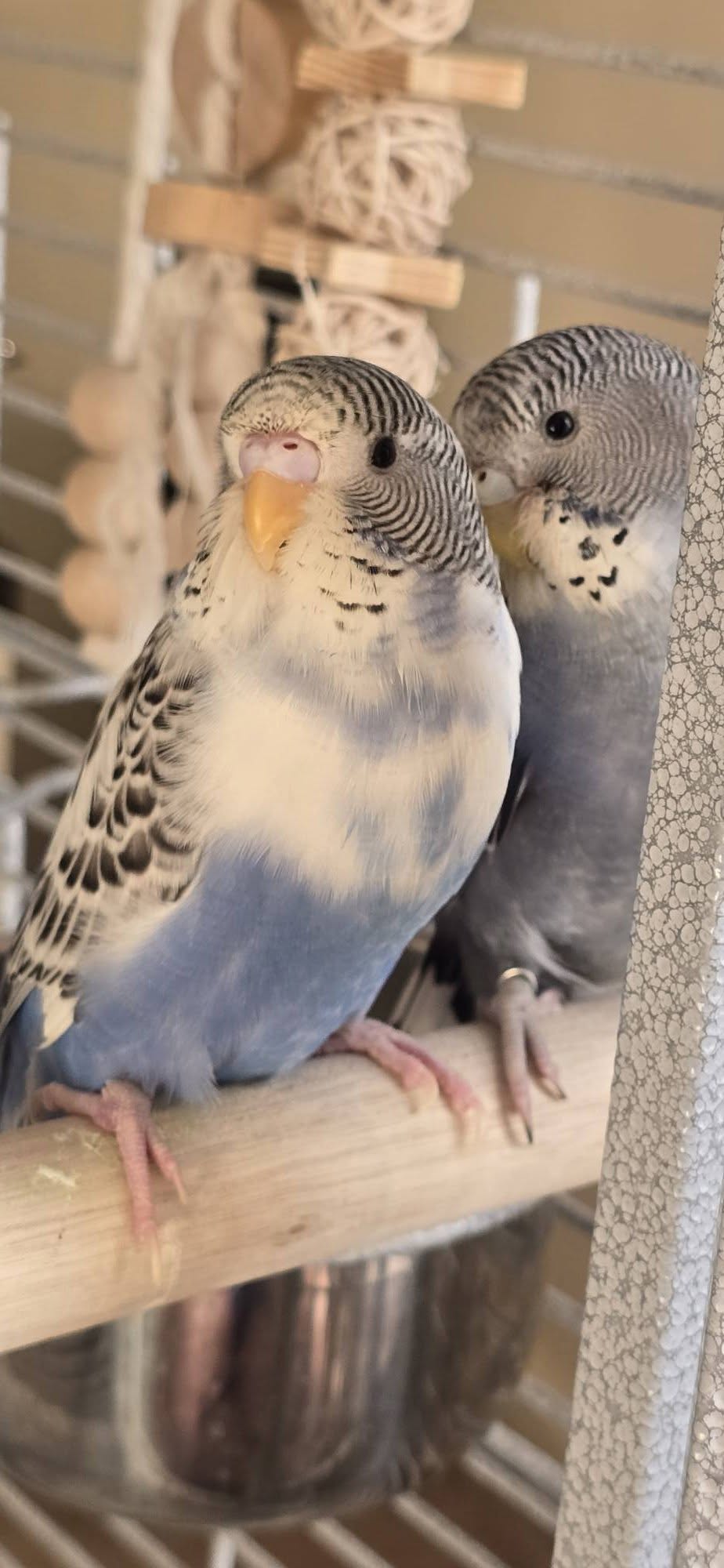
Birds respond to voice. A budgie that is bonded to its owner responds to the specific sound of that owner’s voice — turns toward it, vocalises in return, changes its behaviour when the owner speaks. For a child whose voice produces that response, speaking becomes something different from the speaking that produces no visible result. Speaking to the bird is communication that works. The bird listens. The bird responds. The speaking is reciprocated.
For children who are reluctant speakers, anxious speakers, or children who struggle with reading aloud — the bird is an audience that does not judge, does not compare, does not mark errors. It responds to the voice regardless of the accuracy of the content. Reading to a bird is reading without evaluation. Practising language with a bird is practising without performance anxiety.
I am not the first person to notice this. Reading programmes using dogs and cats as non-evaluative audiences exist across the UK. The principle is the same. The specific quality of bird responsiveness — the turning, the vocalising, the contact calls produced in response to speech — makes it particularly effective as an audience for children who need a kind one.
- Birds respond visibly to voice — the child’s speech produces a result that reinforces the speaking
- The bird as audience is non-evaluative — it responds to the voice regardless of content accuracy, reducing performance anxiety
- Reading aloud to a bird provides low-stakes practice for children who find reading to adults anxiety-inducing
- The bird’s contact call responses to speech create something that feels like conversation — reinforcing the child’s sense that their voice has communicative value
- Several families have reported to me over the years that speech therapy and reading progress accelerated alongside bird ownership — a correlation I cannot claim as causation but have heard often enough to believe is real
7. The Specific Benefit for Children Who Find Social Interaction Difficult
I include this last because it is the observation I am most careful about how I describe — careful not to overstate, careful not to make claims that the evidence does not support, but also unwilling to omit something I have seen clearly enough across enough children to believe it is worth saying.
Some children find human social interaction genuinely difficult. Not shyness that resolves with confidence. Not anxiety that responds to reassurance. The specific, structural difficulty with social reciprocity and non-verbal communication that characterises children on the autistic spectrum, or children with social anxiety disorders, or simply children who are wired in ways that make the complexity of human interaction overwhelming.
For some of these children — not all, and I would not claim all — a bird has provided something that human social interaction has not. A relationship that is reciprocal without being unpredictable. That responds to approach in consistent, readable ways. That communicates through clear signals that can be learned rather than intuited. That rewards attentiveness without the complexity of human emotional unpredictability.
I have watched several children in this category across my thirty-five years — watched them in the shop, watched what their parents came back to tell me over subsequent years. In several cases, the bond with the bird preceded and possibly enabled subsequent social progress with humans. Not because the bird replaced human connection. Because it provided a safe space to practise the attentive, responsive, careful approach to another being that human connection also requires — but without the complexity that makes human connection overwhelming for some children.
- A bird’s social signals are consistent and learnable — the same crest position means the same thing every time, unlike human expression which is variable and context-dependent
- The reciprocity of bird interaction is real without being overwhelming — the bird responds, but its responses follow learnable patterns
- For children who find human social complexity overwhelming, a bird can provide a space to practise attentive, responsive engagement with another being
- Several parents of children with autism spectrum conditions have described to me over the years a sequence: bond with bird, then gradual social progress more broadly — I report this as observation, not clinical claim
- The non-judgmental quality of bird interaction — it does not care whether the child is meeting any external standard — is specifically valuable for children whose social anxiety is driven by performance evaluation
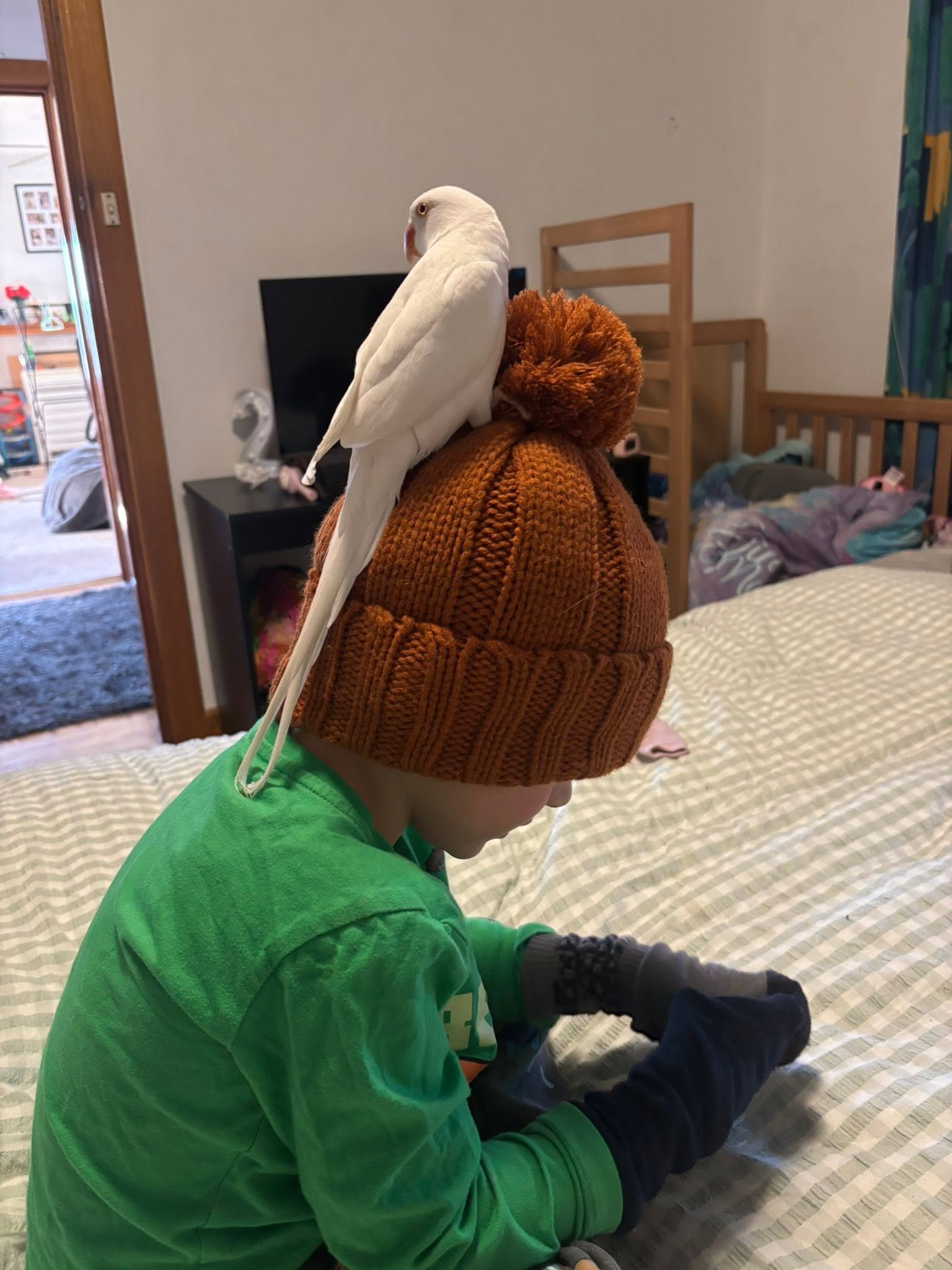
What Parents Need to Know Before They Buy
After thirty-five years of selling birds to families and watching what happens next, I want to be honest about the things that determine whether the outcomes I have described above actually occur — because they are not guaranteed, and the conditions that produce them are specific.
- Get two birds, not one. A single budgie dependent on a child as its only social contact is a bird in a welfare situation that is not good for the bird — and the welfare problem will eventually become visible to the child in ways that cause distress. Two birds together are happier birds. Happier birds are better companions for children. This is the first thing I say to every parent who comes in to buy their child a bird.
- The child is not the primary carer. Not initially. The child shares responsibility with a parent who is providing genuine oversight — not performing oversight, actually checking. The bird’s welfare is not at risk from the child’s learning curve if a parent is genuinely engaged. It is at risk if the parent has stepped back entirely in the name of teaching the child responsibility.
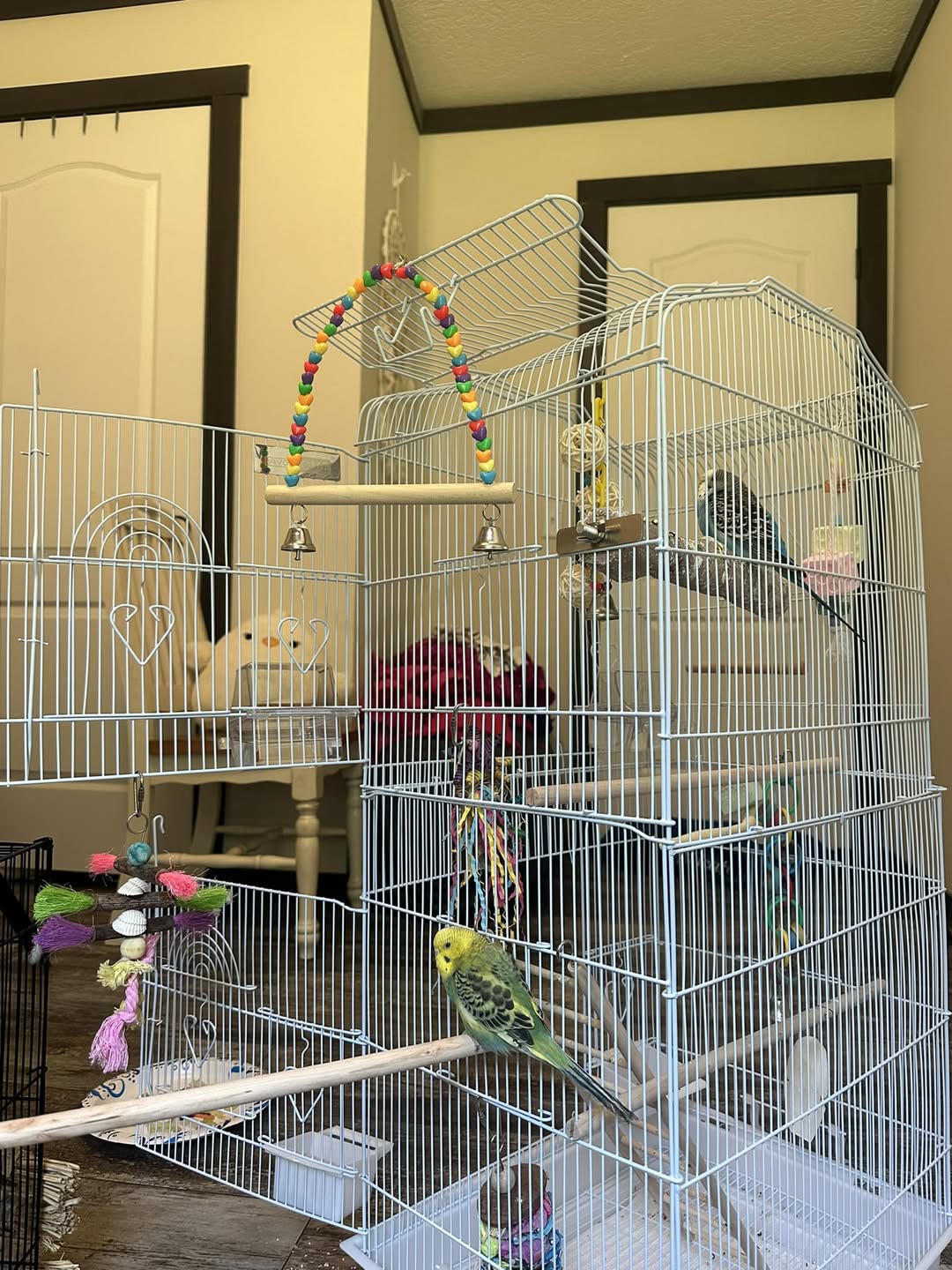
- The cage needs to be adequate. A bird in a cage too small to fly, on a diet of seed only, with no enrichment, will not produce the interactive, responsive, healthy bird that provides the developmental benefits I have described. The bird’s welfare and the child’s experience of the bird are directly connected. The investment in an appropriate cage is an investment in the relationship the child will have.
- The commitment is long. A budgie in good conditions can live twelve to fifteen years. The child who is eight when the bird arrives may be twenty-three when it dies. Parents who present bird ownership as a short-term or child-specific responsibility are setting up a situation that will require renegotiation — usually when the teenager loses interest and the parent has become the primary carer of an animal they never signed up for.
- The developmental benefits take time. The patience, the emotional regulation, the empathy — these do not appear in the first month. They are the accumulation of months and years of interaction. The family that gives up because the bird “doesn’t do much” in the first few weeks has not given the relationship enough time to become what it can be.
Frequently Asked Questions
At what age is a child old enough to have a bird?
There is no single answer — it depends on the child and on how the responsibility is structured. I have seen five-year-olds who are ready for bird ownership with close parental involvement, and I have seen ten-year-olds who are not. The minimum I look for is a child who can move quietly around a cage, who responds to being told “slower, quieter” without argument, and who is genuinely interested rather than excited-and-likely-to-move-on. The parental involvement question is at least as important as the child’s age — a seven-year-old with an engaged parent is a better setup than a twelve-year-old whose parents are entirely absent from the responsibility.
My child wants a parrot, not a budgie — is that appropriate?
Larger parrots are more demanding, longer-lived, louder, and require more experience than most children — or most adults — bring to the first bird they keep. A budgie or cockatiel is a genuinely appropriate first bird for a child. A large parrot is not. If the child grows through years of budgie or cockatiel ownership and develops the knowledge, patience, and skill that larger birds require, the conversation about a larger bird becomes more appropriate. Starting with a parrot because it seems more interesting than a budgie is a decision that very often produces a bird that is not adequately cared for and a family that is overwhelmed.
How do I explain it to the child when the bird dies?
Honestly. A child who is told the bird “went to sleep” or “flew away” is a child who has been given a false account of something real that they will eventually have to reconcile. The honest account — the bird died, it was well-loved, it had a good life, we are sad and that is appropriate — is the one that produces the developmental benefit I described earlier. Grief that is denied does not disappear. It surfaces in other ways. Grief that is acknowledged, felt, and moved through produces the experience of loss survived that is one of the most significant things a bird can give a child.
My child has lost interest in the bird after six months — what do I do?
Two things. First, do not panic — interest in a bird fluctuates through a child’s development, and a period of reduced engagement does not mean the relationship is over. Second, do not let the bird suffer because the child’s interest has reduced. This is where parental involvement becomes essential — the parent maintains the care that the child is not currently providing, and the relationship with the bird may well revive when the child’s capacity for engagement increases. Many of the most significant bird-child bonds I have seen developed after a period of reduced interest — the child grew into a different relationship with the bird rather than growing out of the relationship entirely.
Where can I buy a bird for my child in Swindon?
Come and see us at Paradise Pets, Manor Garden Centre, Cheney Manor Industrial Estate, Swindon SN2 2QJ. Or ring us on 01793 512400. We have been selling birds to families for over 35 years and will give you an honest assessment of what is and is not appropriate for your child’s age and your family’s situation — before any bird changes hands. We would rather spend thirty minutes with you getting the decision right than sell you something quickly that does not work.
One Last Thing From Me
The woman and her eight-year-old daughter came back about three months after their visit. The daughter walked in first, ahead of her mother, and came directly to the counter.
“One of them stepped up,” she said. “On my finger. Just for a second. But he did it.”
She was not excited in the way children are excited about a toy or a game. She was something quieter than that — a child who had worked for something, patiently, over weeks, and had just experienced the result.
I told her that was excellent. That it meant the bird trusted her. That it had taken time and patience and it had worked.
She nodded as if she had known this would be the assessment, and went to look at the bird supplies while her mother spoke to me.
“She talks to them every morning before school,” the mother said. “She’s calmer. I don’t know how else to describe it. She’s just calmer.”
That is the thing I have watched for thirty-five years and across three generations of owners. The bird does not teach anything explicitly. It does not explain patience or emotional regulation or empathy or responsibility. It simply responds to the child — honestly, consistently, without evaluation — and the child changes in response to being responded to.
The change is not always dramatic. It is not always immediate. But it is, in my experience, reliably real.
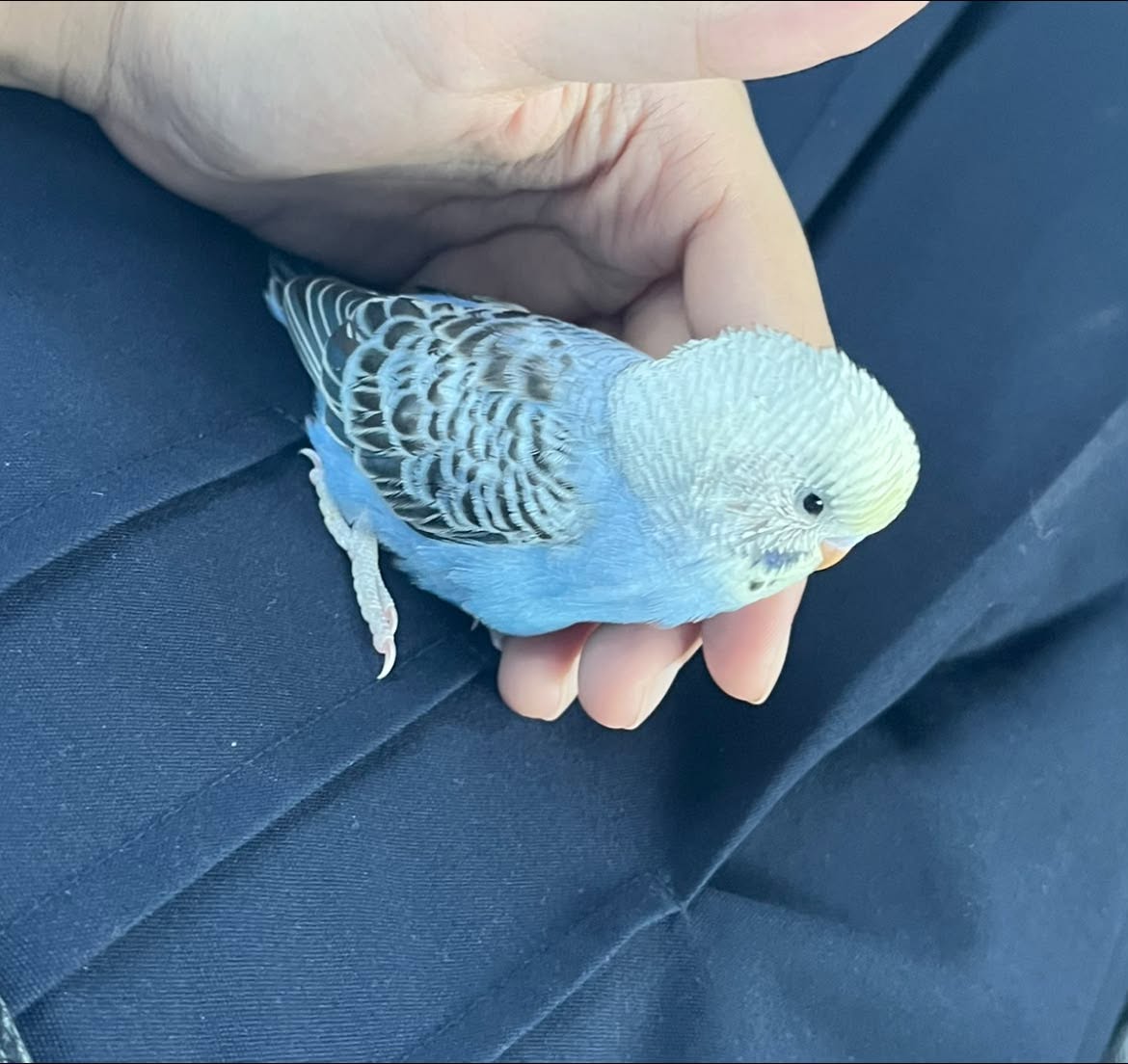
Thinking About a Bird for Your Child? Come In and Let’s Get It Right
We have been selling birds to families for over 35 years and have watched what happens in those families over time. If you are considering a bird for a child, come and talk to us before you buy anything. We will tell you honestly what is appropriate, what is not, and what the setup needs to look like for it to work. Free advice, no obligation. That is how we have always done things.