
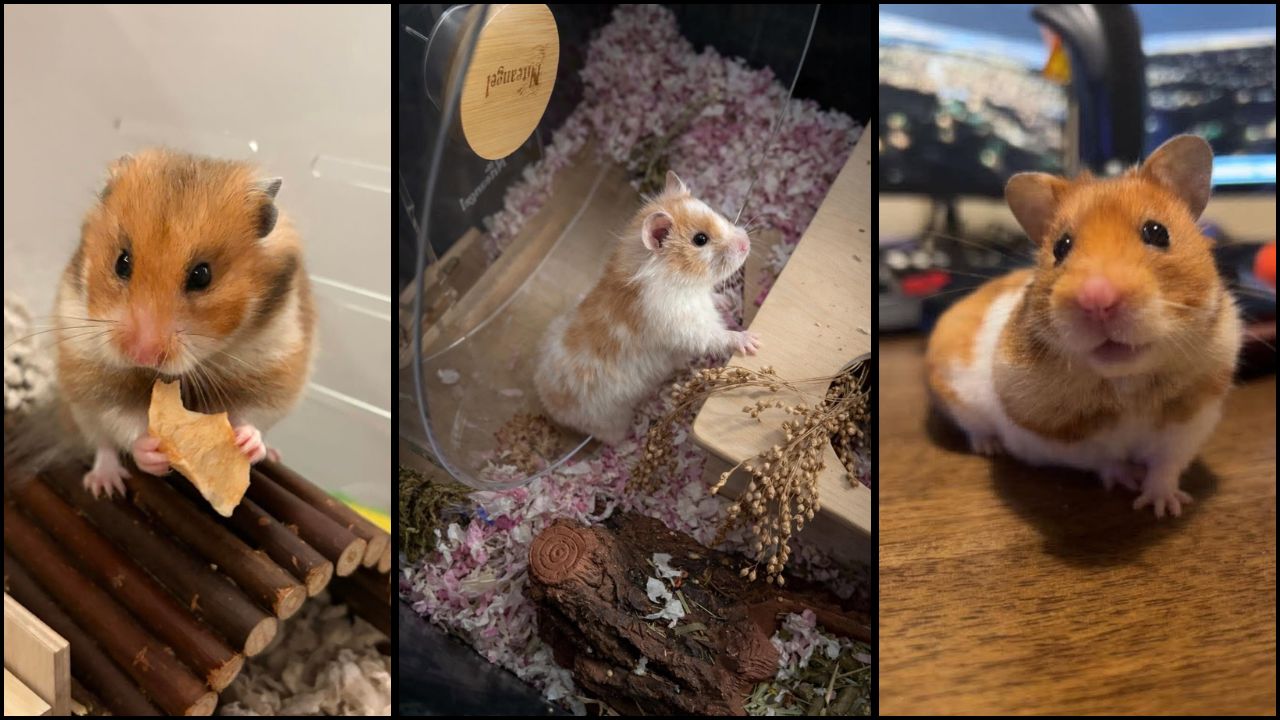

Neil has sold and kept small animals at Paradise Pets Swindon since 1988 — over 35 years of experience with hamsters and the owners who love them. “Why is my hamster squeaking?” is one of the most common questions he hears from new hamster owners — and one of the most interesting to answer, because hamster vocalisations are not random. They are communication. This article is his honest, complete guide to what your hamster’s squeaking actually means, in every context it occurs, and what you should and should not do in response.
A young woman came in last spring — mid-twenties, clearly worried — holding her phone out to show me a video.
In the video, her Syrian hamster was in his cage, wheel spinning, and making a sound she described as a rapid, high-pitched squeaking. Not constantly. In bursts. She had been watching him for three days, she said, and she could not work out whether he was happy or in pain or frightened or something else entirely.
“Is something wrong with him?” she asked.
I watched the video twice. Then I asked her a series of questions. Was the squeaking happening during the wheel running specifically, or at other times too? Was it new behaviour or had he always done it? Was it getting more frequent? Was there anything else different — eating, drinking, posture, droppings?
By the third question, I was fairly confident I knew what I was looking at. But the process of asking the questions is the whole point — because hamster squeaking is not one sound with one meaning. It is a range of vocalisations that mean different things in different contexts, and the context is everything.
First — Understanding How Hamsters Actually Communicate
Before decoding specific squeaks, it helps to understand the broader communication picture — because squeaking is only one layer of what hamsters are telling you, and it is rarely the first layer.
Hamsters communicate primarily through scent, body language, and ultrasound — the last of which humans cannot hear at all. The squeaks and vocalisations that owners notice are the sounds within human hearing range, which is actually a minority of what hamsters produce. Much of hamster communication happens at frequencies above 20kHz that we are simply not equipped to detect.
This means two things for owners. First, your hamster is communicating with you and its environment far more than you are aware of. Second, when a hamster produces a sound in the frequency range you can hear, it is often because the situation has escalated beyond the subtler communication channels — the scent marking, the ultrasound, the body language — that would normally be sufficient.
The audible squeak is, in many cases, the hamster reaching for a louder tool because the quieter ones did not produce the result it needed.
- Hamsters communicate primarily through scent, body language, and ultrasound — audible squeaks are one part of a larger communication system
- Most hamster ultrasound communication is inaudible to humans — you are missing most of what your hamster says
- Audible vocalisations often indicate escalation — the situation has moved beyond subtler communication channels
- Body language accompanies and contextualises squeaking — a squeaking hamster with flattened ears and a hunched posture is different from one squeaking while actively exploring
- Syrian hamsters are more solitary vocalisers than dwarf species — a Syrian squeak has different typical meanings from a dwarf hamster squeak in the same situation
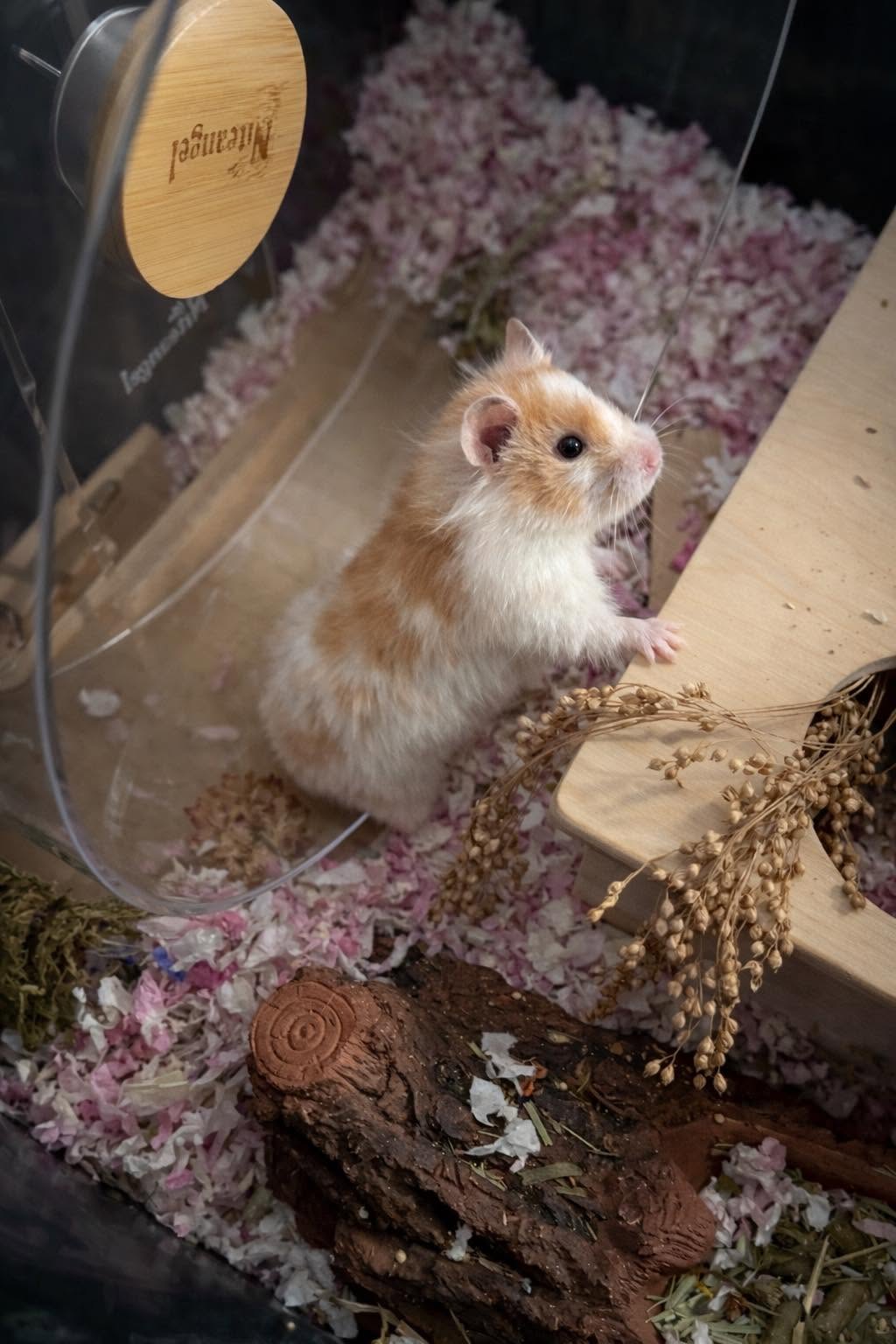
The 7 Reasons Your Hamster Is Squeaking
In thirty-five years of hamsters and hamster owners, I have heard descriptions of hamster squeaking in every context imaginable. Here are the seven categories that cover almost all of what owners encounter — with the context clues that distinguish one from another.
Reason 1: Fear or Alarm — The Most Common Cause
This is the squeak that most owners hear first — often early in ownership, when the hamster has not yet established trust with the person handling it. It is a sharp, short vocalisation, sometimes repeated rapidly, and it is produced when the hamster perceives threat.
What constitutes threat from a hamster’s perspective is worth understanding, because it is broader than most owners expect. A hand approaching from above mimics a predator strike. A sudden loud noise near the cage mimics a predator disturbance. Being picked up when the hamster has not been given warning — reaching into a sleeping nest and picking up a hamster that has not had time to wake and orient — is experienced as exactly the kind of sudden, unexpected contact that a predator would make.
A fear squeak is short, sharp, and often accompanied by freeze behaviour — the hamster stops moving immediately after the sound. It may also be accompanied by scent marking — rubbing the flank glands against the substrate — as the hamster signals alarm to any nearby hamsters through chemical means.
- Short, sharp, often repeated rapidly in bursts — the rhythm is urgent rather than sustained
- Accompanies a specific trigger — sudden movement, unexpected handling, loud noise near the cage
- Often followed immediately by freeze behaviour or retreat to the nest
- Flank gland rubbing may occur alongside the squeak as a chemical alarm signal
- More common in new or insufficiently tamed hamsters — reduces significantly as trust is established
- Approaching from below and speaking quietly before touching reduces this squeak most reliably
What to do
Slow down. If the hamster is fear-squeaking when you try to handle it, the taming process has moved faster than the hamster’s confidence. Return to an earlier stage — presence near the cage without handling, offering food from the hand inside the cage, letting the hamster come to you rather than you going to it. The fear squeak during handling is the hamster telling you that trust has not been established to the level required for comfortable handling. Listen to it.
Reason 2: Pain or Physical Discomfort — The Squeak That Cannot Wait
A hamster that is squeaking due to pain or physical discomfort sounds different from a frightened hamster — and experienced owners learn to hear the difference. The pain squeak tends to be higher pitched, more sustained, and produced in contexts where no obvious environmental trigger is present. It may occur when the hamster is touched in a specific area, when it moves in a particular way, or spontaneously when it appears to be in no immediate situation that would explain distress.
The specific contexts that produce pain-related squeaking in hamsters include: wounds or injuries from cage equipment or cage mates in the case of dwarf species that have been incorrectly housed together; dental problems, which are common in hamsters — particularly elderly animals with overgrown or misaligned teeth; internal conditions including tumours, which are unfortunately prevalent in Syrian hamsters particularly, and which produce pain as they grow and press on surrounding structures; and wet tail — a bacterial condition affecting the gastrointestinal tract that is acutely uncomfortable and rapidly serious.
- Higher pitched and more sustained than a fear squeak — the quality is distress rather than alarm
- Occurs without obvious environmental trigger — the hamster is squeaking in its cage, alone, with nothing happening around it
- Squeak is produced when a specific body area is touched — localised pain
- Accompanied by reduced activity, hunched posture, reluctance to move, reduced food intake
- Wet tail produces a distinctive hunched, shuffling posture alongside vocalisation — and a characteristic wet, soiled rear end that identifies it
- Dental pain in older hamsters may produce squeaking specifically around feeding — the hamster approaches food and vocalises, or leaves food untouched despite apparent hunger
- Wet tail is a veterinary emergency — it can kill a hamster within 24 to 48 hours of visible symptoms appearing. Do not wait to see if it improves
- Spontaneous squeaking in a hamster that appears otherwise unwell — fluffed fur, hunched posture, reduced movement — is a same-day vet situation
- Any squeak produced when touching a specific body area is localised pain that requires professional assessment

Reason 3: Territorial Aggression — The Squeak That Means Back Off
Syrian hamsters are solitary animals. This is not a preference — it is a species characteristic that is so fundamental that housing two Syrian hamsters together will almost always result in fighting, injury, and potentially death. The territorial squeak is produced when a hamster’s personal space is being violated — by another hamster, by a hand that has entered the cage without sufficient warning, or by an object that the hamster has decided is an intrusion into its territory.
The territorial squeak is different from the fear squeak in one important way: it is accompanied by threat posture rather than retreat. A frightened hamster squeaks and runs. A territorially aggressive hamster squeaks and stands its ground — or advances. It will often rear up on its hind legs, flatten its ears, and bare its teeth. The body language says: I am not leaving, and I am prepared to make contact if you do not.
In dwarf species — Russian dwarfs, Chinese hamsters, Roborovski hamsters — territorial squeaking can occur between cage mates even in species that are sometimes housed together. If you have two dwarf hamsters who appeared compatible initially and one or both have started squeaking when the other approaches, the compatibility has broken down and separation may be needed.
- Accompanied by threat posture — rearing up, ears flattened, teeth visible — rather than retreat
- Produced when personal space is entered — by another hamster, a hand, or an object
- Syrian hamsters squeaking when approached in their cage are almost always producing a territorial response, not a fear response
- Dwarf hamsters that were compatible and have started squeaking at each other have passed the threshold where cohabitation is safe — separate them
- The territorial squeak during handling often means the hamster was woken suddenly — give a resting hamster time to wake and orient before attempting to pick it up
What to do
Respect the squeak. Do not force the interaction when a hamster is producing a territorial warning. Back away, allow the hamster to return to a settled state, and approach again more slowly and with more warning. For hamsters that are consistently territorial when handled, the taming process needs to restart from the beginning — establishing trust rather than attempting to override the defensive behaviour with persistence.
Reason 4: Excitement or Contentment — The Good Squeak
This is the squeak that most owners do not expect to hear — because hamsters are so associated with silence and solitary behaviour that the idea of a hamster making a sound because it is content seems counterintuitive.
But some hamsters, in some circumstances, produce soft, brief vocalisations during positive experiences — while eating a particularly enjoyed food, during gentle handling from a trusted person, or during exploration of a novel and interesting environment. These vocalisations are quieter than alarm or pain squeaks. They are less frequent. And they are accompanied by body language that is entirely different from fear or aggression — relaxed posture, normal exploratory behaviour, no freezing, no threat display.
The young woman’s hamster in the video — squeaking during wheel running — turned out to be in this category. The sound he was making was a soft, rhythmic vocalisation produced during energetic activity, accompanied by enthusiastic wheel running and no sign of distress. Once I had confirmed that the other signs were absent — no change in eating, no change in posture, no change in other behaviour — the diagnosis was simple. He was making a sound while he ran. Some hamsters do this. It is fine.
- Quieter and softer than alarm or pain squeaks — more of a murmur or a chirp than a sharp cry
- Accompanies positive activity — eating a treat, running the wheel, exploring a new toy
- No accompanying distress signals — posture is relaxed, behaviour is normal, the hamster does not interrupt the activity to respond to the sound
- More commonly heard in younger hamsters and in individuals that have developed strong bonds with their owners
- Some hamsters never produce this sound — it is individual variation, not evidence of a problem in its absence

Reason 5: Sleep Sounds — The Squeak That Owners Find Most Alarming
Hamsters dream. Not in a metaphorical sense — in the literal, neurological sense. Hamsters experience REM sleep, and during REM sleep they produce the same twitching, vocalising, and small movements that dreaming mammals of all sizes produce during sleep. A hamster that is squeaking, twitching, and making small running movements while clearly asleep in its nest is almost certainly dreaming.
I mention this specifically because it is the scenario that most reliably causes owners to contact me in a panic. They have gone to check on their hamster, found it apparently asleep, and then heard a squeak from the nest. They have assumed something terrible is happening — the hamster is ill, is dying, is suffering. In most cases, the hamster is dreaming.
The test: a hamster that is squeaking in its sleep will stop when it wakes. If you gently disturb the area near the nest — not reaching in, just making a small sound nearby — and the squeaking stops as the hamster stirs, it was asleep. A hamster that is squeaking due to illness or pain will continue to vocalise when awake.
- Occurs during obvious sleep — the hamster is in its nest and not moving in an awake, purposeful way
- Accompanied by twitching, small running movements, or whisker trembling — the hallmarks of REM sleep in small mammals
- Stops when the hamster wakes — the vocalisation is part of the dream state, not a response to the waking environment
- More commonly noticed in deeply sleeping hamsters — light sleepers may not produce audible dream sounds
- No cause for concern unless the hamster continues to vocalise after fully waking — if so, investigate other causes
Reason 6: Stress From Environment — The Chronic Squeak
A hamster that squeaks frequently, without obvious immediate trigger, and that seems generally unsettled is often responding to chronic environmental stress. This is different from the acute alarm squeak that a specific event produces. It is a lower-level, more persistent vocalisation pattern that reflects a baseline of discomfort rather than a specific moment of threat.
Check your hamster’s housing as part of reviewing repeated squeaking or other behaviour changes. PDSA’s hamster guide cites a minimum floor area of 100cm by 50cm and recommends more space where possible. Provide suitable bedding, hiding places and a correctly sized wheel. A sound or behaviour alone cannot confirm stress or its cause; seek veterinary advice if it is new, persistent or accompanied by signs of illness.
A wheel that is too small — causing the hamster to arch its spine as it runs, which produces spinal stress over time — is another chronic stressor. The standard wheel size sold with most hamster cages is too small for a Syrian hamster. A Syrian hamster needs a wheel of at least 28cm diameter. A dwarf hamster needs at least 20cm. A smaller wheel does not just limit activity — it causes physical discomfort during the activity the hamster most needs to perform.
- Frequent, low-level vocalisation without obvious immediate trigger — a pattern rather than an event
- Accompanied by other stress indicators — bar chewing, stereotypic repetitive behaviours, excessive digging at cage corners
- Cage below the floor-area guidance cited above — plan for at least 100cm by 50cm, with more space where possible
- Wheel too small for the hamster’s body — check for spinal arching during running, which indicates the wheel diameter is insufficient
- Insufficient substrate depth — hamsters need a minimum of 15 to 20cm of burrowing substrate. A hamster that cannot burrow adequately is chronically stressed
- Environmental improvements — larger cage, correct wheel size, deeper substrate — produce rapid improvements in vocalisation frequency and general behaviour
Reason 7: Two Hamsters That Should Not Be Together — The Conflict Squeak
I include this as a separate entry from territorial aggression because it is worth being specific about the dwarf hamster situation — which is where most multi-hamster squeaking problems arise.
Syrian hamsters should never be housed together beyond the very early weeks of life. This is not opinion — it is species biology. After approximately four to five weeks of age, Syrian hamsters become solitary and territorial, and housing them together produces fighting that can be severe and occasionally fatal. If you have two Syrian hamsters in a cage and one or both are squeaking when the other approaches, the situation is dangerous. Separate them immediately.
PDSA’s hamster guide and Woodgreen’s care guide recommend housing pet hamsters separately, including dwarf species. Chinese hamsters should live alone. Do not wait for fighting before choosing separate accommodation, and contact a vet if a hamster has been injured.
- Syrian hamsters must never be housed together after approximately five weeks of age — any squeaking between housed Syrian hamsters is a crisis requiring immediate separation
- Dwarf hamsters that have been compatible and are now squeaking at each other have passed the threshold of safe cohabitation
- Conflict squeaking between housed hamsters is typically accompanied by chasing, wrestling, and — if ignored — biting and wounds
- Check the hamsters for wounds after any audible conflict — small bites in the fur are easy to miss and can become infected
- Separation, once needed, should be permanent — reintroduction after fighting is almost always unsuccessful and risks repeat injury
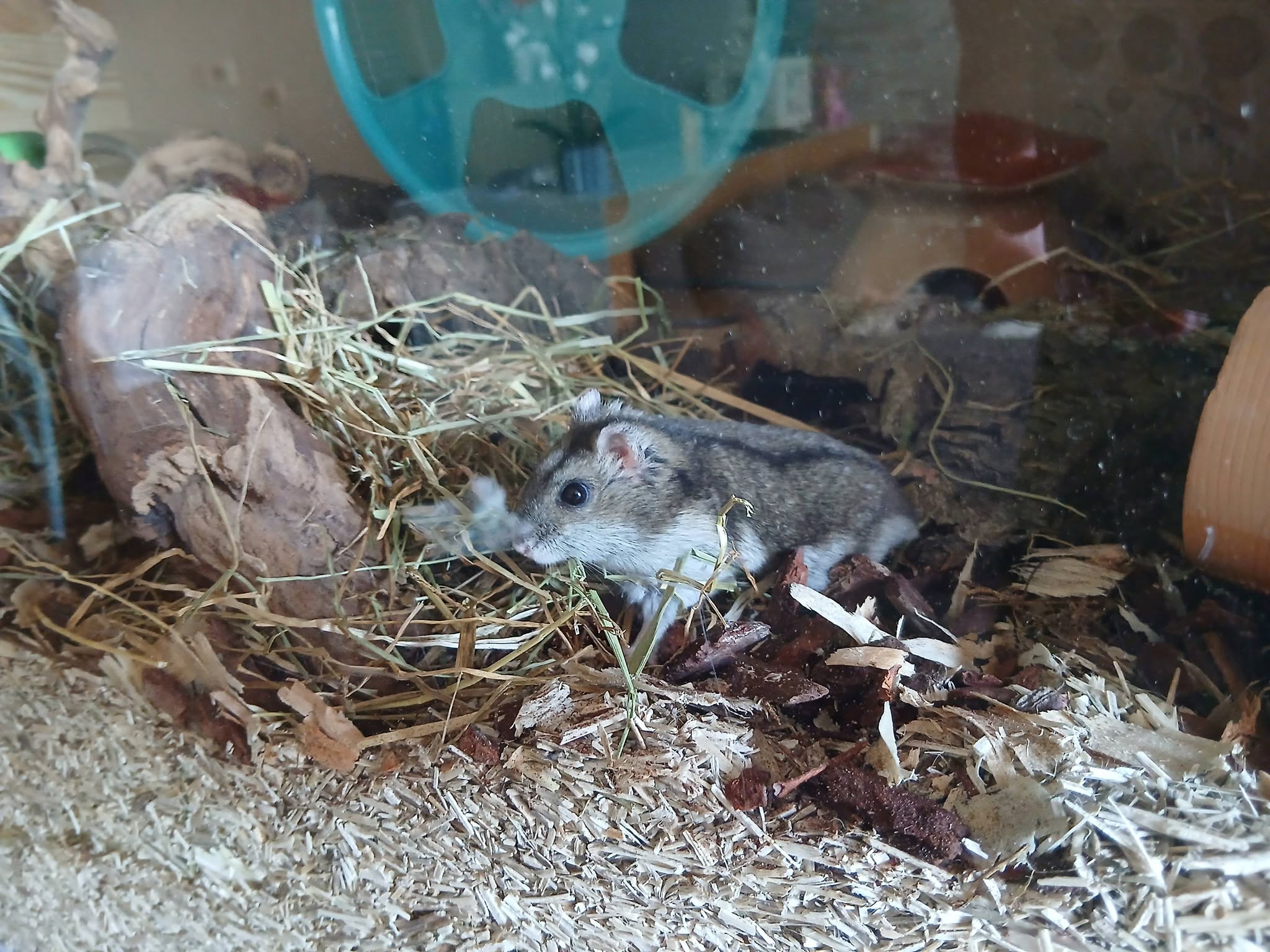
How to Tell Which Squeak You Are Hearing — The Practical Guide
After thirty-five years of decoding hamster sounds for owners at this counter, here is the fastest and most reliable way to identify which type of squeak you are dealing with.
- When exactly does the squeak occur? During handling? During wheel running? While apparently asleep? When another hamster approaches? Spontaneously in the cage alone? The when is the most important single piece of information.
- What does the body language say? Relaxed and exploratory alongside the squeak — probably excitement or contentment. Frozen immediately after — fear. Rearing up with ears flat — territorial aggression. Hunched and reluctant to move — pain or illness.
- What is the quality of the sound? Short and sharp — alarm. Sustained and high-pitched — pain. Soft and brief — contentment. Low and repetitive — stress or complaint.
- Is there a specific trigger you can identify? A sound near the cage, a hand entering the space, the approach of another animal, a specific movement by the hamster? Or does it appear to have no trigger?
- What else has changed? Eating, drinking, droppings, activity level, time spent in the wheel versus the nest. A squeak in isolation, with everything else completely normal, is less concerning than a squeak accompanied by multiple behavioural changes.
- Is it new behaviour or has the hamster always done it? A squeak the hamster has produced throughout ownership in a specific context is almost certainly benign. A squeak that has started recently, or changed in frequency or character, is information.
What Not To Do When Your Hamster Squeaks
| What owners do | Why it is a problem | What to do instead |
|---|---|---|
| Continue handling a hamster that is alarm-squeaking | Overriding the alarm squeak with continued handling teaches the hamster that squeaking does not change anything — which either increases the frequency and intensity of the squeak or causes the hamster to move to biting as a more effective deterrent | Stop the handling when the alarm squeak begins. Return the hamster to the cage, allow it to settle, and try again with a slower, more prepared approach |
| Assume all squeaking is normal and ignore it | Contentment squeaks and sleep squeaks are normal. Pain squeaks and illness-related vocalisation are not. Normalising all squeaking means missing the ones that require action | Assess each squeak in context. The same response is not appropriate for all types. Context is the whole answer |
| Tap the cage or make loud sounds near a squeaking hamster to stop the noise | This adds a further stress to an animal already communicating distress. Loud sounds near the cage are experienced as predator disturbance and escalate the stress response | Speak quietly near the cage. Move slowly and predictably. Reduce stimulation rather than adding to it |
| Keep two Syrian hamsters together because they seem fine most of the time | Syrian hamsters fight most intensely at night when owners are asleep. A pair that appears compatible during the brief observation window of an owner’s active hours may be fighting seriously through the night | Syrian hamsters must be housed alone. Any squeak or chase between housed Syrians is a prompt to separate, not to monitor further |
| Wait a week to see if pain-related squeaking resolves on its own | Wet tail can kill within 24 to 48 hours. Dental problems worsen without intervention. Internal conditions that produce pain do not self-resolve. A hamster squeaking from apparent pain needs a vet today | Contact a vet on the day you identify pain-related vocalisation. Do not monitor. Act |
Frequently Asked Questions
My hamster squeaks every time I pick it up — is this always fear?
Not always, but often in the early stages of ownership, yes. A hamster that is not yet sufficiently tamed will experience handling as a threat, and the squeak is the vocal expression of that experience. The solution is not to stop handling — it is to build trust through the taming process so that handling becomes familiar rather than threatening. Hand feeding, allowing the hamster to come to you, approaching from below and speaking quietly before any contact — these build the association between your presence and safety that replaces fear with tolerance and eventually comfort. The squeak during handling should reduce as trust develops. If it does not reduce after several weeks of consistent, patient taming, reassess the approach.
My hamster makes a sound at night that sounds like grinding or chattering — is that the same as squeaking?
No — and the distinction is important. Teeth grinding or chattering — sometimes called bruxism in small animals — is different from vocal squeaking and has different causes. Very soft tooth grinding in a relaxed hamster can be a sign of contentment, similar to purring in cats. Loud, persistent teeth grinding or chattering is typically a sign of stress, pain, or dental problems. If the sound you are hearing is teeth-related rather than vocal, the assessment process is the same — context, body language, accompanying signs — but dental issues become a specific consideration worth raising with a vet if the sound is persistent.
My hamster has started squeaking more than usual in the last week — what should I check first?
Three things, in this order. First, has anything changed in the environment — cage position, room temperature, other pets, new sounds or smells? Second, is the hamster’s behaviour otherwise normal — eating, drinking, activity level, droppings? Third, when specifically is the increased squeaking occurring — during handling, in the cage alone, during sleep, or continuously? If the squeaking has increased alongside any change in eating, posture, or activity level, contact a vet. If everything else is normal and the only change is increased vocalisation, start with the environment assessment before assuming illness.
Where can I get hamster behaviour advice in Swindon?
Come and see us at Paradise Pets, Manor Garden Centre, Cheney Manor Industrial Estate, Swindon SN2 2QJ. Or ring us on 01793 512400. We have been keeping and advising on hamsters for over 35 years. If your hamster is squeaking and you are not sure what it means, come in and describe what you are hearing and when. We will help you work out what you are dealing with and whether a vet visit is needed.
One Last Thing From Me
The young woman came back about a month later. She had gone home from our conversation reassured that the wheel-running squeak was not a sign of distress — but she had also done something I did not specifically advise and was pleased with the result. She had started paying closer attention to all of his sounds and what accompanied them.
She had noticed, she said, a different squeak — shorter, sharper, produced once when she had reached into the cage quickly to move his water bottle. She had remembered what I had told her about the fear squeak. She had slowed down her approach. The short sharp squeak had stopped appearing. He had become easier to handle within two weeks.
“I didn’t realise he was talking to me,” she said. “I just thought he was making noise.”
He was talking to her. He had been talking to her from the beginning. She just needed to know what to listen for.
Every hamster squeak is a sentence. The owner who learns to read them — to hear the difference between the alarm and the contentment, the fear and the pain, the dream and the complaint — is an owner whose hamster is significantly better understood and significantly better cared for as a result.
Come in if you need help with the translation.
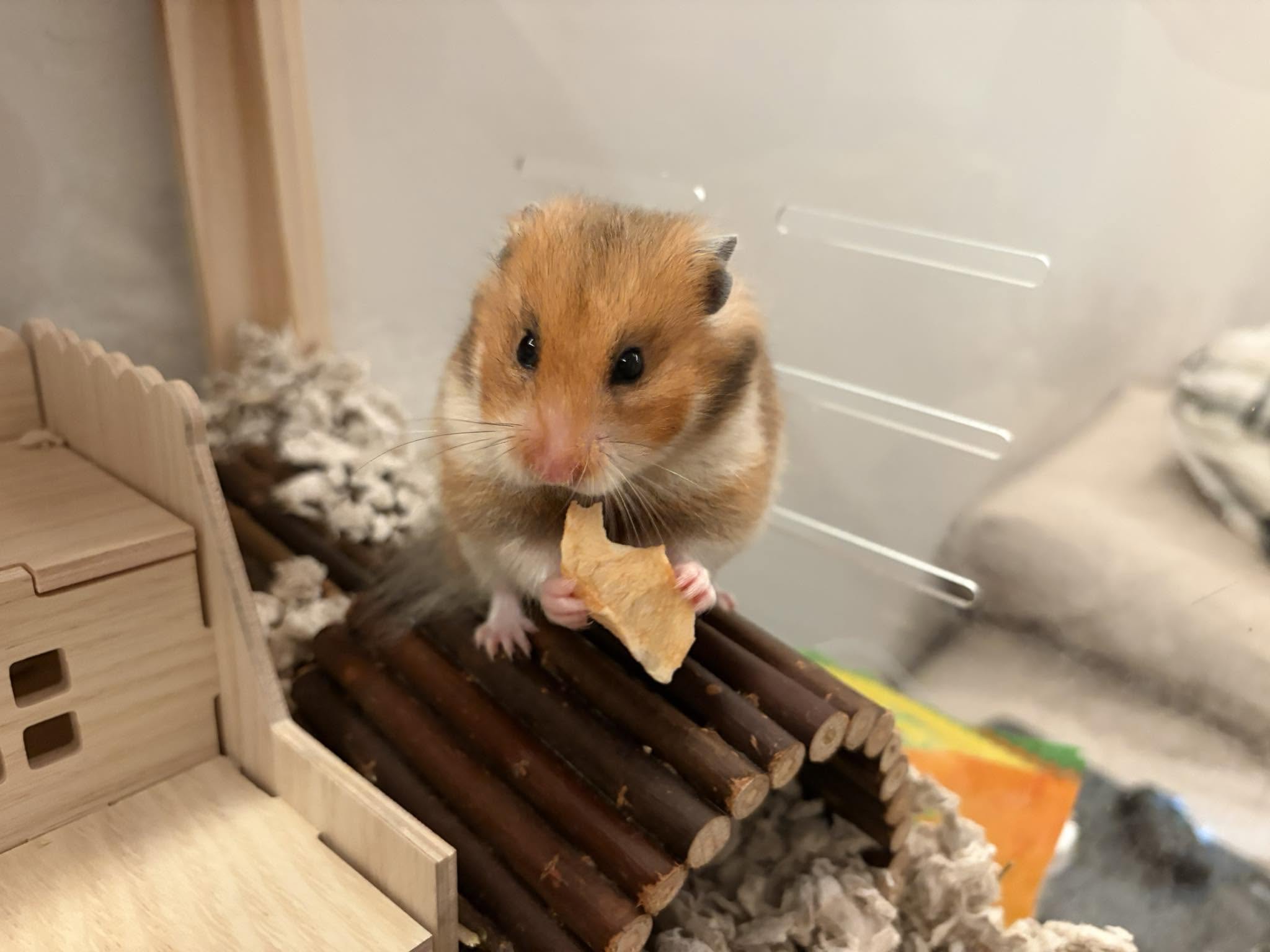
Hamster Squeaking and Not Sure Why? Come In and Describe It
We have been keeping and advising on hamsters for over 35 years. Every squeak has a context and every context has an answer. Come in and tell us what you are hearing and when — we will help you work out what your hamster is telling you and whether anything needs to change. Free advice, no obligation. That is how we have always done things.