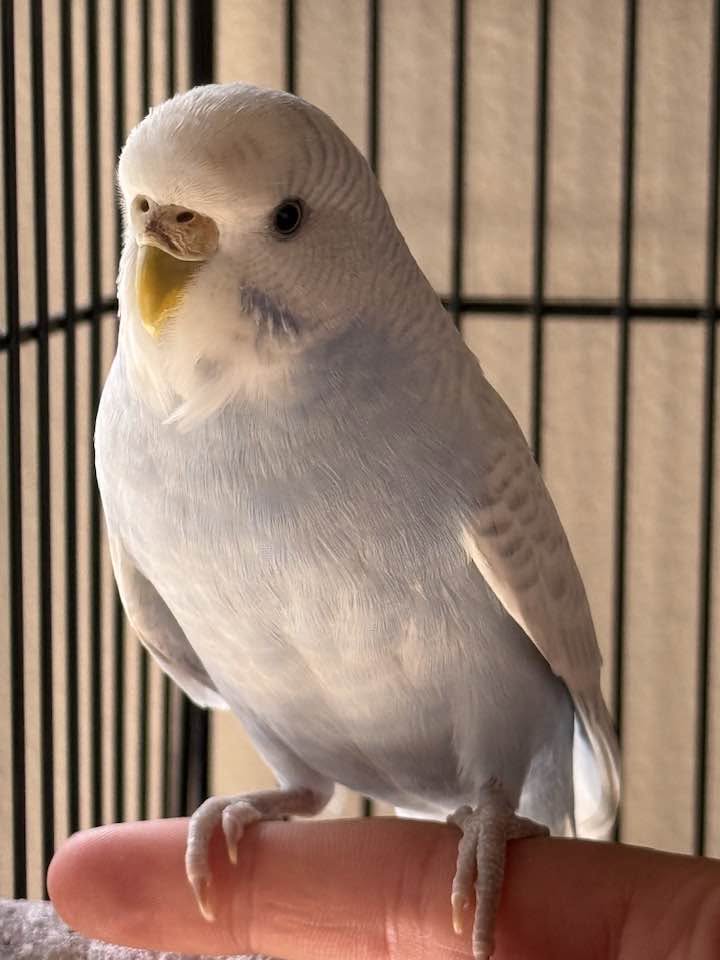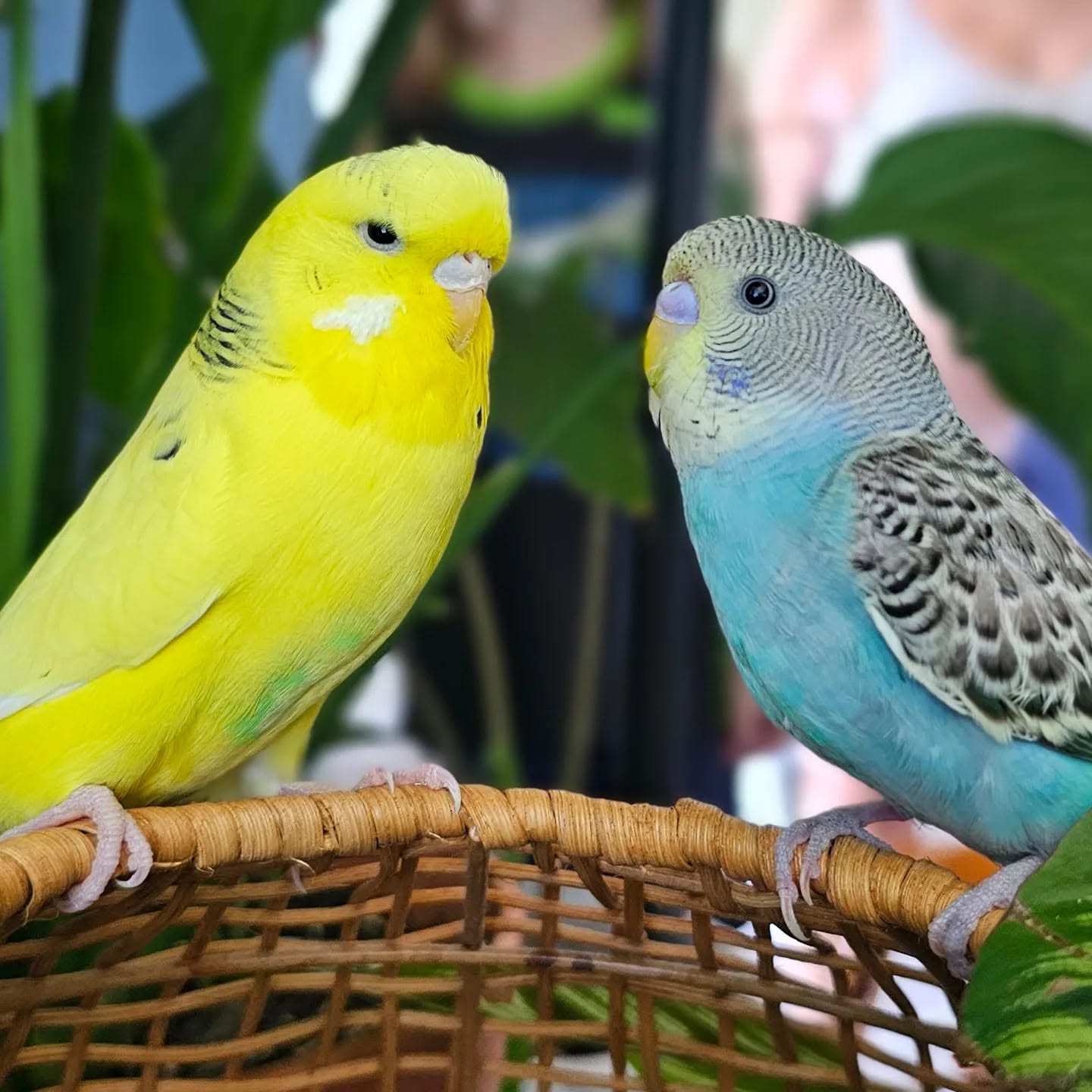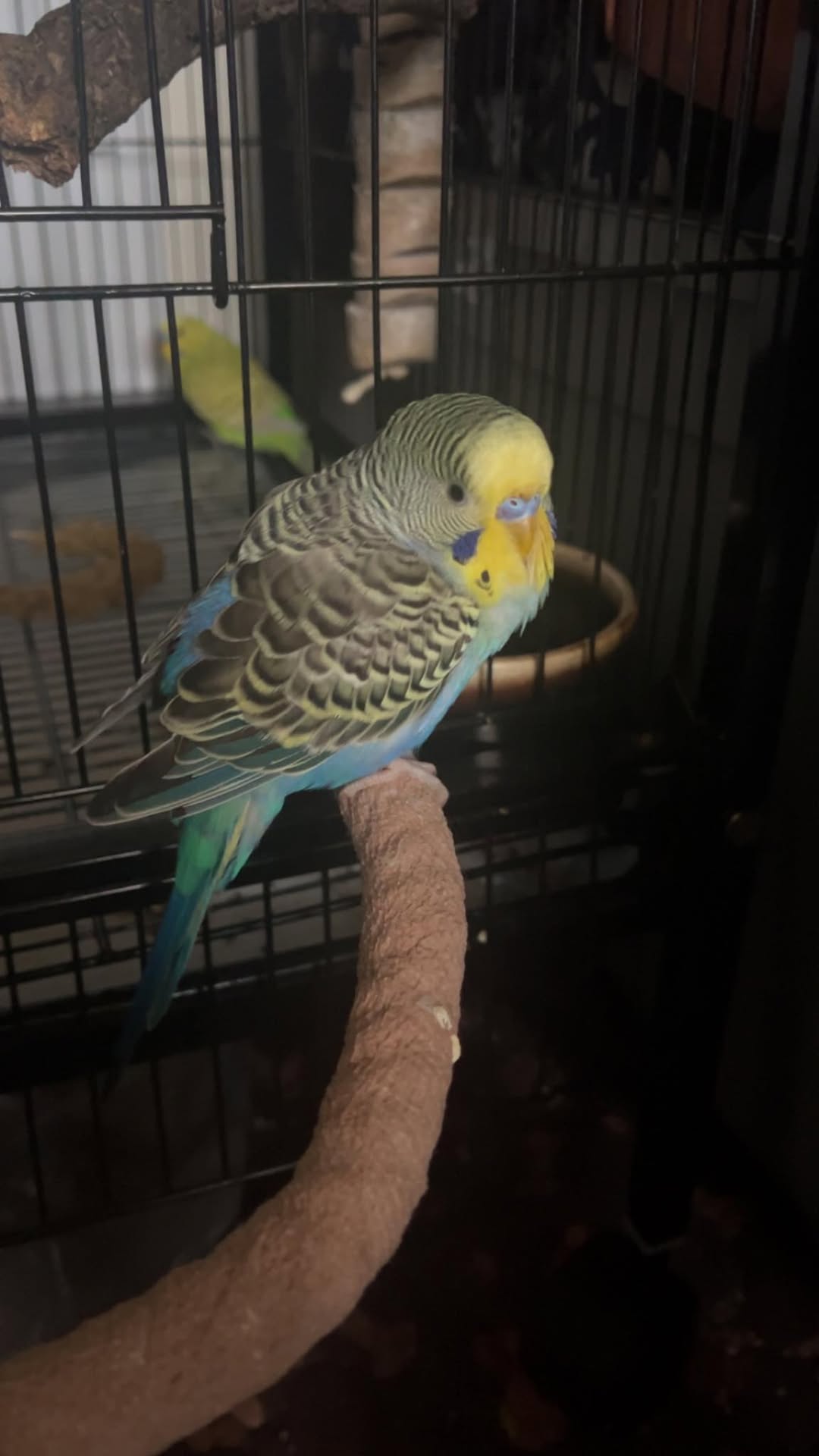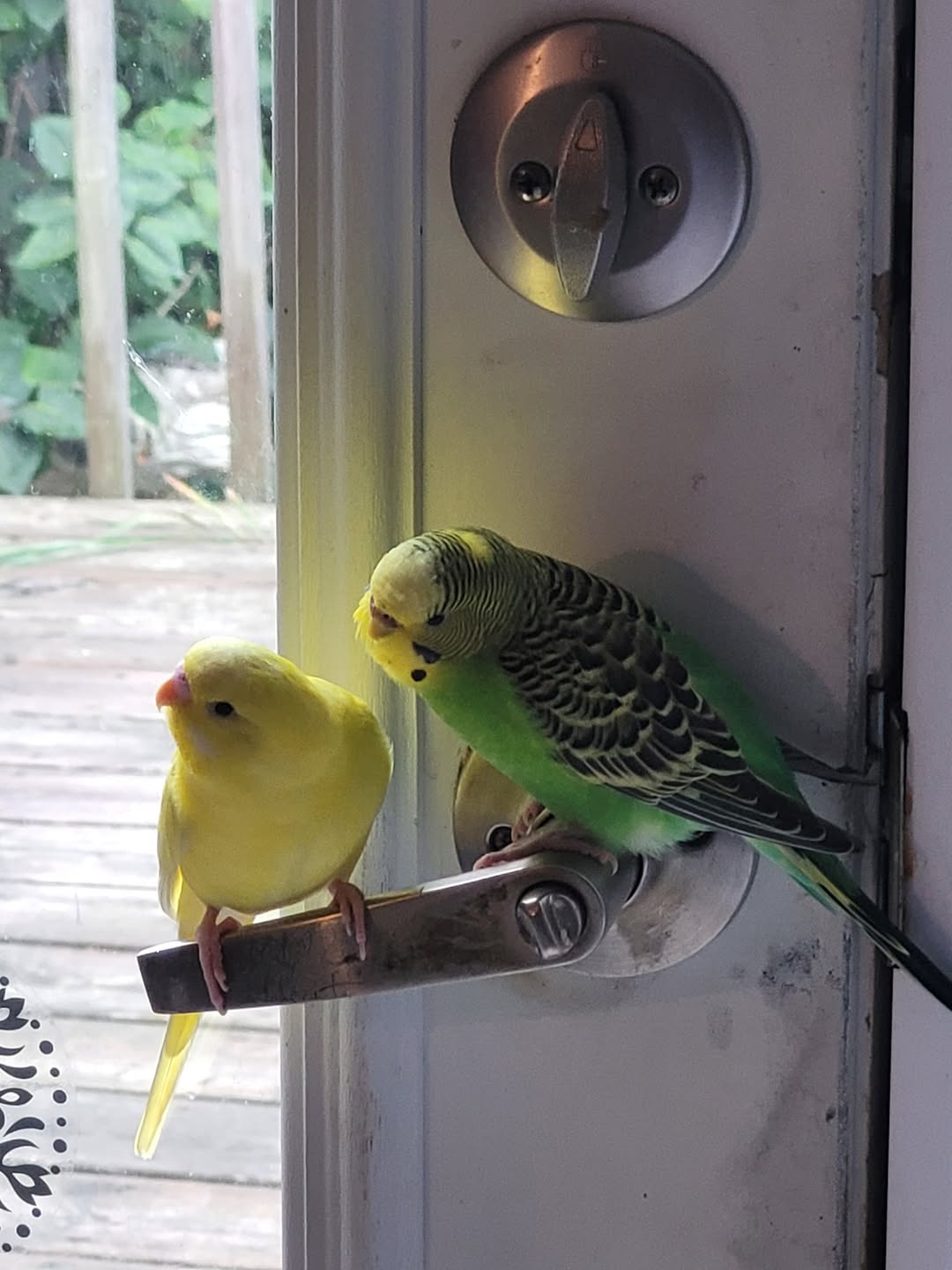
Neil has run Paradise Pets Swindon since 1988 — over 35 years of selling pet birds and receiving the calls that no bird owner ever wants to make. This summer, as in every summer before it, those calls are coming in. But not for the reason most people expect. This is the honest account of what is actually killing UK pet birds in summer — and why almost nobody tells new owners about it before it is too late.
I have written recently about heat stress in pet birds. I have written about the windowsill problem, about cage placement, about what open-beak panting looks like and what to do when you see it. That article needed to be written, and the information in it is real and important.
But heat is not the biggest killer of UK pet birds this summer. It is not even close.
The biggest killer is something that is almost certainly already in your kitchen. It has been there for years. You use it regularly, possibly every day. It does not smell of anything when it is doing its damage. It kills a small bird within minutes of exposure, and in the majority of cases the owner finds the bird dead in its cage with no idea what happened. It is not a disease. It is not a predator. It is not an accident in the conventional sense of the word.
It is the non-stick coating on your cookware. And in 35 years of running this shop, it is the cause of sudden bird death that I most wish every owner understood before it became relevant to them rather than after.
What Is Actually Happening — The Science In Plain Language
Non-stick cookware — frying pans, baking trays, waffle makers, drip pans under electric hob rings, and a range of other kitchen appliances — is coated with a substance called polytetrafluoroethylene, known by its most common brand name as Teflon. Under normal cooking conditions, at the temperatures most people use for everyday cooking, this coating is largely stable. It is when it overheats that the problem begins.
When a non-stick pan reaches temperatures above approximately 260 degrees Celsius — which a pan on a high ring can reach within three to five minutes, and a pan left unattended or allowed to run dry can exceed considerably — the coating begins to break down. It releases a mixture of colourless, odourless gases and microscopic particles. To a human adult, these gases may cause flu-like symptoms. To a bird, they are almost always fatal.
The reason birds are so acutely vulnerable where humans are not is their respiratory system. A bird breathes with extraordinary efficiency — its air sacs and the continuous, flow-through pattern of its respiration means it extracts oxygen from air far more completely than a mammal does. That same efficiency means it absorbs toxic gases from the air far more completely too. A dose of PTFE offgas that gives a human a headache and a sore throat fills a bird’s lungs with fluid and causes haemorrhaging within minutes. The bird suffocates. It is not a gradual process. It is acute and it is fast.
The reason this happens more in summer than at any other time of year is straightforward. People cook more with windows open in summer, which they assume means better ventilation — but which often means fumes travel further through the home and reach a bird’s cage in a room the owner considers safely distant from the kitchen. People use appliances they do not use in winter — barbecues with non-stick plates, outdoor grills brought indoors, small kitchen appliances taken out of storage. And more households have birds in the rooms adjacent to kitchens in summer because the birds are moved away from draughty positions. The combination produces more exposures, and more deaths, than any other season.

Why Most Owners Never Hear About This Until It Is Too Late
I want to address this directly, because it is the part of the conversation that makes me most uncomfortable, and it is the part I think matters most.
PTFE toxicity in birds is not new information. Avian veterinarians have known about it for decades. The scientific literature has documented it thoroughly. Animal poison helplines list it consistently as one of the most common airborne toxins in pet birds. It is taught to anyone who studies avian medicine.
And yet the majority of new bird owners — and a significant proportion of experienced ones — do not know about it when they bring a bird home. It is not on the labelling of non-stick cookware. It is not reliably communicated at the point of purchase in most retail environments. It is not the kind of thing that comes up in a general internet search about budgie care unless you know to search for it specifically.
In my experience, the people who lose birds to this cause overwhelmingly fall into one of two categories. The first are genuinely new bird owners who were never told. The second are owners who were told something vague — “keep birds away from kitchens” or “cooking fumes can be bad for birds” — but who did not understand the mechanism, the speed, or the scale of the risk, and who therefore did not take the practical steps that would have prevented it.
“Keep birds away from kitchens” sounds like a minor precaution, the kind of thing you might be a bit more careful about. What it actually means is: if you have non-stick cookware and a bird in your home, the two need to be managed with the same seriousness you would bring to keeping a gas leak away from an open flame. That is not an exaggeration. It is an accurate description of the risk.

It Is Not Just The Pan On The Hob — What Else Carries This Risk
This is the part that catches even owners who have heard the warning about non-stick cookware and believe they have managed the risk. Because the risk is considerably broader than a frying pan.
Non-stick coatings are used on baking trays, cake tins, roasting pans, waffle makers, sandwich toasters, some air fryers, and some rice cookers. Drip pans under electric hob rings — the small trays that sit beneath the rings and catch spills — are frequently coated with PTFE, and because of their position directly over the heat source, they reach dangerous temperatures during completely normal cooking. The ironing board cover in your spare room may be PTFE-coated. Your clothes iron almost certainly is. Self-cleaning ovens, when running their cleaning cycle, can generate PTFE offgas from the oven’s interior coating at the extremely high temperatures used.
There have been documented cases of birds dying from PTFE offgas from a clothes iron being used in a room adjacent to the one containing the cage. Cases where the cause was a new oven being heated for the first time, burning off the factory coating. Cases where the source was a hair dryer, some of which contain PTFE-coated heating elements. Cases where the cause was never definitively identified because the owner replaced the pan and assumed the risk was addressed, without considering the other PTFE-containing products still in routine use.
I am not telling you this to create anxiety about every object in your home. I am telling you because the gap between “I know about the pan” and “I understand the full picture of what carries this risk” is exactly the gap in which birds continue to die from this cause every summer, in homes where the owner genuinely believed they were managing the risk.
What The Signs Look Like — And Why There Is Almost No Time
I want to be completely honest about this, because I think the clinical description of PTFE toxicity in birds can give owners a false sense that there will be time to intervene if it happens. In most cases, there is not.
The signs of PTFE poisoning in a bird include severe respiratory distress — open-mouth breathing, tail bobbing, a rasping or wheezing sound that indicates fluid in the lungs — followed by collapse, seizure, and death. In a small bird like a budgerigar or a canary, the progression from first symptom to death can be measured in minutes rather than hours. In many documented cases, the bird was found dead in the cage with no prior signs of distress because it died before the owner returned to the room.
This is not a situation where recognising the early signs and acting quickly will save the bird in the way that, for example, acting quickly on heat stress signs can. By the time a bird is showing respiratory distress from PTFE exposure, the damage to its lungs is already severe. Veterinary care — moving the bird to fresh air, placing it in an oxygen environment, supportive treatment — gives some birds a chance, and that chance should always be taken, because some birds do survive. But the survival rate even with immediate veterinary care is very low. The case for prevention is overwhelming precisely because treatment is so rarely successful.
If you come home to find your bird dead in its cage with no prior warning, and there is any possibility that a non-stick surface was heated in your home that day, PTFE should be on the list of possibilities you discuss with an avian vet. Understanding the cause does not undo the loss, but it matters for any birds remaining in the home and for the households of anyone you might warn.

Other Airborne Killers That Share The Same Risk Profile
PTFE is the most acutely dangerous airborne household toxin for pet birds, but it is not the only one, and while I have your attention I want to cover the others because they operate through the same mechanism — a bird’s respiratory system is simply too efficient at absorbing what is in the air around it.
Aerosol sprays used in the same room or airspace as a bird are a consistent low-level risk. This includes air fresheners, furniture polish, hairspray, deodorant, and cleaning sprays. The advice is not to avoid using them entirely but to ensure the bird is never in the same room while they are used, and that the room is thoroughly ventilated before the bird is brought back into it. The rule of thumb I give is: if you can still smell it, the bird should not be in the room.
Scented candles and plug-in air fresheners are less acutely dangerous than aerosols but are a chronic low-level irritant to birds’ respiratory systems when used in the same room over a long period. I would not keep a bird in a room where these are used regularly.
Cigarette smoke, including residual smoke on clothing and in rooms where smoking has taken place. Second-hand and third-hand smoke exposure causes cumulative respiratory harm to birds and is one of the more common causes of chronic respiratory illness I see in birds presented at this counter.
Smoke from burning food — not PTFE-related, simply from food burning on any surface — is acutely dangerous to birds in the same way that any smoke is. A pan of oil or butter heated to smoking produces fumes that a bird nearby can inhale in concentrations that cause harm. This is separate from the PTFE risk and is present on any cooking surface, non-stick or otherwise.
Carbon monoxide from faulty boilers, gas appliances, or blocked flues. A bird will show signs of carbon monoxide poisoning — lethargy, respiratory distress — before a human in the same space, which historically is why canaries were used in mines. If your bird shows sudden and unexpected respiratory distress or collapse in a home with gas appliances, and there is no other obvious cause, carbon monoxide should be considered and the property ventilated and checked.

What To Actually Do — The Practical Steps That Matter
I do not want to leave this article at the level of identifying a risk without being specific about what to do about it, because the practical response is clear and achievable and I want you to leave with it rather than just with the knowledge that the risk exists.
The most effective single step is to remove PTFE-coated cookware from your home and replace it with stainless steel, cast iron, or ceramic-coated alternatives that do not carry this risk. This is a permanent solution. It removes the risk rather than managing it, and in my view it is the right answer for any household with a bird. The cost of replacing cookware is modest. The cost of not doing so, in the worst case, is not.
If you are not prepared to replace all non-stick cookware, the next best approach is strict management. Never leave non-stick cookware on a heated ring unattended. Never allow a pan to boil dry. Use the lowest temperature that achieves what you need rather than defaulting to high heat. Never use non-stick drip pans under hob rings — replace these with foil or stainless alternatives. Run the self-cleaning cycle on your oven only when all birds are removed from the property and the home is thoroughly ventilated afterwards.
Consider the non-kitchen PTFE sources I described above. Check whether your ironing board cover is PTFE-coated. Be aware that clothes irons contain PTFE elements. Do not iron in the same room as the bird, and ventilate before the bird returns.
Ensure good ventilation in your home at all times, but understand that ventilation reduces rather than eliminates the risk from PTFE. An open window while a non-stick pan overheats does not make the situation safe — it reduces how much fume reaches the bird while still allowing some to. Ventilation is a management tool, not a solution.
Keep your bird’s cage in a room as far from the kitchen as is practical in your home. Not because distance makes PTFE fumes safe — they can travel further than most owners realise through an open-plan home — but because maximum distance is always better than proximity. If your home is open-plan with a kitchen that flows into a living space, this is a conversation we should have about your specific situation.

Frequently Asked Questions
My bird has been fine for years with non-stick pans in the house. Does that mean it is not at risk?
It means the specific conditions that cause dangerous offgassing — overheating, running dry, extremely high temperatures — have not occurred during those years in a way that reached your bird. It does not mean the risk is not present, or that the same conditions will not occur in the future. PTFE offgassing is not constant — it requires the coating to reach temperatures that do not occur during careful, attended cooking. The risk is in the moments when those conditions are exceeded, which is exactly when attention lapses, pans are left unattended, or higher temperatures than intended are used.
I cook in a separate kitchen with the door closed. Is that sufficient protection?
A closed door reduces the risk considerably but does not eliminate it. PTFE offgas can travel under doors and through gaps, and in a warm house with air circulation, fumes can spread further than owners typically expect. The most reliable protection remains the removal of PTFE-coated products. If removal is not possible, a closed door with good kitchen ventilation — extractor fan running, window open, and the bird as far from the kitchen as the home allows — is a significantly better situation than an open-plan layout.
Are there specific brands of cookware that are safe for bird owners?
Stainless steel, cast iron, and cookware labelled specifically as PTFE-free and PFOA-free are the safe categories. Many manufacturers now produce ceramic-coated non-stick alternatives that do not carry the PTFE risk — look for products explicitly labelled PTFE-free rather than assuming that a non-stick finish is necessarily Teflon-based. When in doubt, contact the manufacturer directly and ask whether the product contains PTFE. Do not assume that a more expensive product or a newer product is automatically bird-safe without confirming this.
What should I do if I think my bird has been exposed to PTFE fumes right now?
Move the bird to fresh air immediately — outside if the weather permits, or to the room furthest from the cooking area with windows open. Do not waste time. Call an avian vet or an emergency animal poison helpline while you are already moving. Do not wait to see if the bird improves before making that call, because the window for any effective intervention is extremely short. If the bird is already showing respiratory distress, you are in a same-minute situation, not a same-hour one.
Does this risk apply to all types of pet birds, or mainly small ones?
All pet birds are at risk. Smaller birds — budgerigars, canaries, finches — are acutely vulnerable because less gas is required to produce a fatal dose relative to their body size, and because deterioration is faster. Larger birds — cockatiels, African Greys, other parrots — have more physiological reserve and may take slightly longer to deteriorate, but they are not immune and the outcome of serious exposure is the same. PTFE toxicity does not discriminate by species. It discriminates by how much gas was inhaled relative to body size, which is why smaller birds are so much more acutely vulnerable — but no bird owner should consider their bird safe on the basis of its size.
The Call I Remember Most
There is a phone call from a few years ago that I think about more than most. A woman, mid-afternoon, calm in a way that people sometimes are when they are holding shock at a distance. Her budgerigar — a green one, she said, she had had him for six years — was dead in his cage. She had been out. Her husband had been cooking. Nothing unusual about any of it.
I asked whether they had non-stick pans. There was a pause. Yes, she said. He had been cooking on high heat. He thought one of the pans had started to smoke slightly but had not thought much of it.
She had not known. Her husband had not known. In six years of keeping a bird, nobody had told either of them. The information was available — it is in the veterinary literature, it is on avian care websites, it is known to anyone who looks — but it had not reached them before it mattered.
That is the conversation I would rather have before than after. If you have a bird and non-stick cookware, you now know. What you do with that information is your decision, but it is at least a decision you can make with the full picture in front of you. Most owners I have spoken to, when they understand the mechanism and the speed with which it acts, make the same decision: the pans go.
If you have questions about what is safe in your home, or what to replace your cookware with, come and talk to us. It is not a complicated conversation, but it is one that matters — and it is one I would far rather have at this counter than over the phone on a quiet afternoon.
Have Questions About What Is Safe In Your Home For A Bird? Come And Talk To Us.
We will give you a straight answer about what carries risk and what does not. No pressure, no upselling. Just the honest conversation that should happen before a bird comes home — not after something goes wrong.