
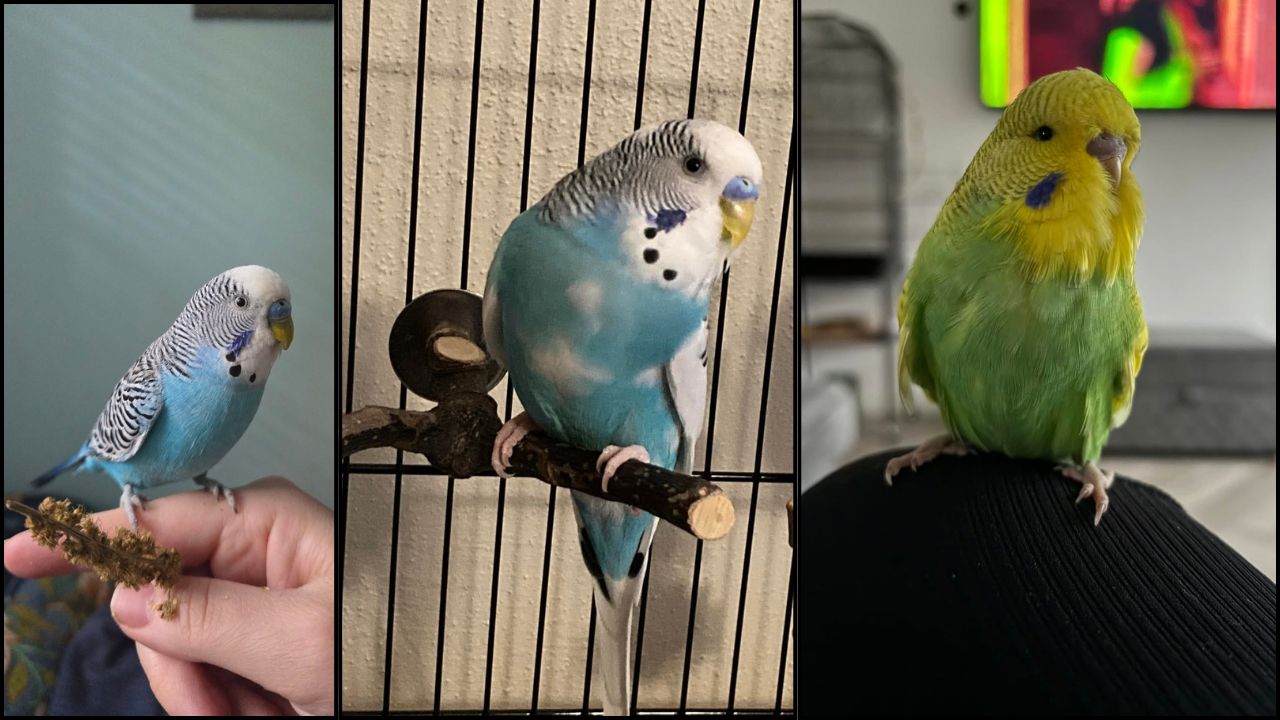

Neil has kept, bred, and sold budgies at Paradise Pets Swindon since 1988 — over 35 years of watching these birds live and watching them die, and gradually developing a clear view of why the average UK pet budgie lives significantly shorter than it should. This article is his honest answer to a question he has been thinking about for most of those 35 years.
A budgerigar in good conditions, well-fed, well-kept, and given appropriate veterinary attention, should live between ten and fifteen years.
That is the biological potential of this animal. Not an optimistic projection. Not what happens under perfect laboratory conditions. Ten to fifteen years is what properly kept budgies achieve, and there are plenty of them — kept by knowledgeable owners, breeders, and aviculturalists who understand what the bird needs.
The average pet budgie in a UK household lives somewhere between five and seven years.
In some households considerably less than that.
That gap — five to ten years between what is achievable and what typically happens — is not random. It is not bad luck. It is not down to genetics, or to the inherent fragility of the species. It is, in almost every case I have observed across 35 years of this work, the direct consequence of a specific set of care decisions that are the norm rather than the exception in UK pet budgie keeping. Decisions made by well-meaning owners who were never told what they were doing wrong, or in many cases, never told that they were doing anything wrong at all.
I want to talk about those decisions plainly. This article is not comfortable, and I am aware it covers things that some owners reading it may recognise in themselves. That is why I am writing it. I would rather have this uncomfortable conversation now than have the same one, quietly, with another customer who comes in with a bird that did not make it to eight.
The Number That Should Alarm More People Than It Does
Let me put the lifespan gap in concrete terms, because I think when it is stated as an abstract average it does not land with the weight it deserves.
A budgie that lives five years instead of twelve has had more than half its potential life removed from it. Not by accident. Not by a disease that could not have been prevented. In most cases, by a slow accumulation of suboptimal conditions across years — a diet that was incomplete, an environment that was too small or too barren, an illness that was detected too late because the owner did not know what early signs looked like.
The owners who come to me after a budgie has died at six or seven years almost never suspect that the lifespan was shortened. They describe a bird that seemed healthy, that ate, that moved, that made noise. They are surprised when I tell them what a well-kept budgie’s lifespan looks like.
They should not have to find out this way. This should be the first conversation, not the last one.
The First Reason — The Diet That Has Never Been Questioned
The standard budgie diet in UK households is a commercial seed mix. It has been the standard for decades. It is what pet shops sell alongside the bird. It is what the packaging implies is appropriate. Most owners assume that the food specifically sold for their bird is the food their bird needs.
It is not. Not on its own.
Standard seed mixes provide calories. They are high in fat and carbohydrate in the form of seeds that budgies find palatableand will eat readily. They do not provide the range of vitamins and minerals that a budgie’s body needs to maintain immune function, organ health, and normal metabolic processes over a lifespan of ten to fifteen years.
The most significant specific deficiency is vitamin A. Vitamin A is essential for the health of epithelial cells — the cells that line the respiratory tract, the digestive tract, the reproductive system, and other surfaces. A budgie deficient in vitamin A has compromised mucous membranes throughout its body. This makes it more susceptible to respiratory infection. It makes it more vulnerable to digestive disease. It reduces the immune response that should catch and contain infections before they become serious.
Most standard seed mixes contain negligible amounts of beta-carotene (the precursor to vitamin A), and the seeds that contain any significant amount — such as certain millets — contain far less than the bird requires for long-term health. A budgie eating seed as its entire diet for years will develop vitamin A insufficiency that progressively compromises its health even if it appears to be eating well.
The practical consequence of this is that seed-only UK budgies are fighting bacterial and viral challenges with an immune system that has been running on reduced capacity for years. The respiratory infection that kills a budgie at six might have been contained and managed with early treatment if the bird had been in better nutritional condition. The Macrorhabdus that progresses to an advanced state before being detected does so partly because the bird’s immune response was not what it should have been.
Diet is not the only factor in early budgie death. But it is the factor most consistently present, most easily addressed, and least often discussed at the point of purchase.
The Second Reason — The Cage That Is Always Too Small
This is the other near-universal constant, and it connects to the diet problem in ways that are not immediately obvious.
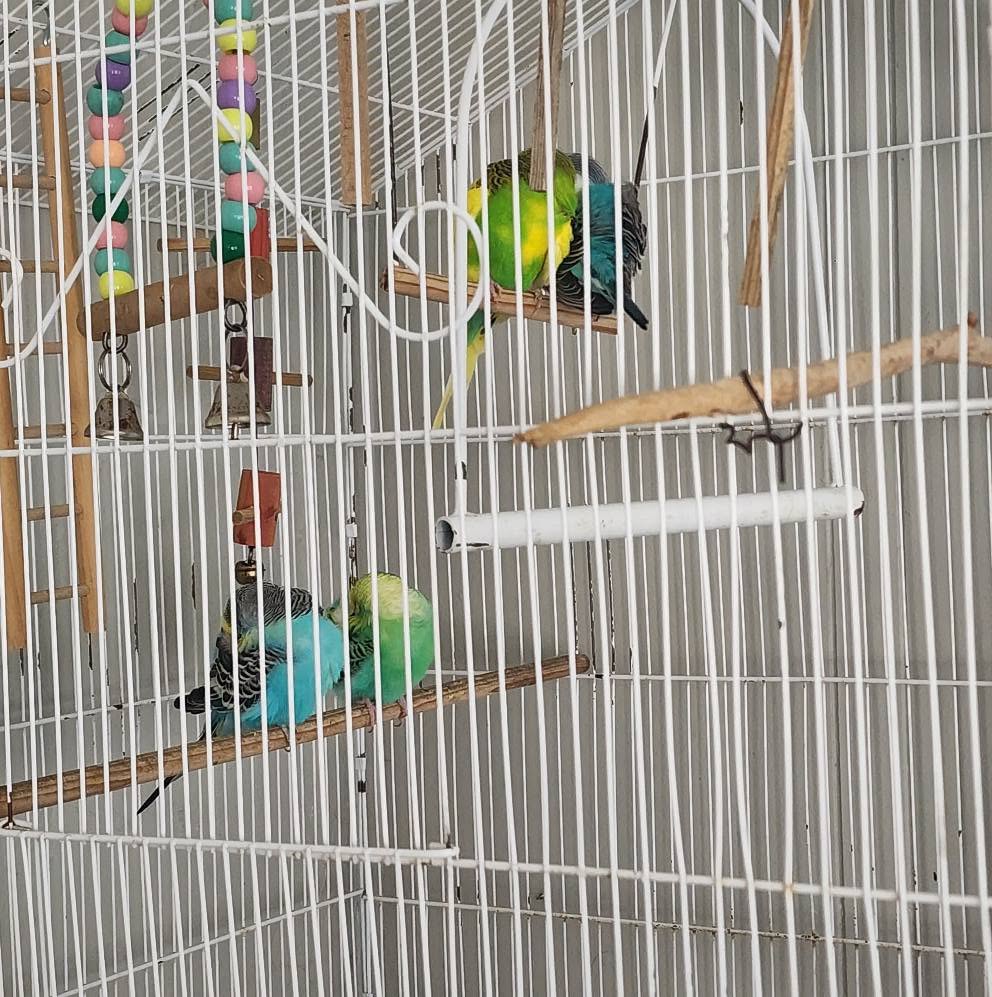
The standard cages sold for pet budgies in UK shops — the ones that come in boxes with a bag of seed and are priced as entry-level purchases — are inadequate. Not in a marginal way. In a significant way.
The minimum cage size recommended by avian welfare organisations for a single budgie is substantially larger than what most starter cages provide. For a pair of budgies, the minimum is larger still. These minimums exist because flight — actual, sustained wing-flapping flight — is a physiological requirement for birds, not a luxury. The cardiovascular and muscular systems of a bird are maintained by flight activity in the same way that the cardiovascular system of any athletic species is maintained by the activity it evolved for.
A budgie in a cage too small to fly between perches with meaningful wing extension is not getting the physical activity its body requires. Over years, this has consequences. Liver disease — one of the most common causes of early death in UK pet budgies — is worsened by obesity and reduced physical activity. A sedentary budgie on a high-fat seed diet is a budgie whose liver is under exactly the combination of stresses most likely to produce hepatic lipidosis over time.
The cage problem also connects to mental health in a way that affects physical health. Inadequate space leads to boredom, which leads to chronic low-grade stress, which in turn activates the hypothalamic-pituitary-adrenal axis and produces elevated cortisol as a permanent background state. Chronic cortisol elevation suppresses immune function. A budgie living in chronic mild stress has a compromised immune system — which circles back to the same vulnerability to infection and disease that vitamin A deficiency produces.
Small cages are among the leading welfare concerns identified by avian veterinarians and bird welfare organisations in the UK. Birds in undersized enclosures consistently show higher levels of stress indicators, reduced immune function, and lower average lifespans than those in appropriately sized housing.
The Third Reason — The Vet Visit That Never Happened
This is the factor that interacts with all the others.
The vast majority of UK pet budgies never see a vet. Not because their owners are negligent in a general sense. Because the cultural expectation around small caged birds in the UK has never included routine veterinary care, and because the cost and availability of avian-experienced vets has been a genuine barrier. Many owners assume that unless the bird is obviously, dramatically ill, a vet visit is not warranted.
The consequence of this assumption is that conditions that would be easily treatable at early stages are allowed to progress to advanced stages before they are detected. Macrorhabdus, which has a very different prognosis at early versus late stage. Respiratory infection that responds well to antibiotics in week one and much less well in week three. Liver disease that can be stabilised with diet change and supplementation when mild and that is much harder to manage when advanced.
Budgies are prey animals that conceal illness for as long as their reserves allow. By the time a budgie is showing obvious, visible signs of being unwell — sitting on the cage floor, fluffed and unresponsive — it has typically been managing an internal illness for weeks. The window for optimal treatment has often partially or fully closed.
The practical response to this is not that every budgie owner needs to take their bird to the vet monthly. It is that every budgie owner needs to know what a healthy bird’s keel feels like, so that weight loss is detected in its early weeks. It is that every owner needs to know what changed vocalisation sounds like, so that the first sign of respiratory compromise is not missed. And it is that when something changes, the response should be a same-week vet call rather than a wait-and-see period.
- Liver disease (hepatic lipidosis and related conditions): Directly linked to seed-only diet and inadequate exercise. Presents late because symptoms develop slowly. Beak changes and weight loss are the most reliable early indicators.
- Macrorhabdus ornithogaster (avian gastric yeast): Fungal digestive infection that disrupts nutrition absorption. Presents as weight loss despite normal food intake. Early treatment has much better outcomes than late treatment.
- Respiratory infection: More common and more dangerous in nutritionally compromised birds. Progresses quickly when it takes hold. Reduced vocalisation, tail bobbing, and audible breathing are the signs most often missed.
The Fourth Reason — The Loneliness Nobody Talks About
I have written a full article on budgie loneliness elsewhere on this site, and I will not repeat all of it here. But it belongs in this conversation because chronic social deprivation is a welfare condition that has physiological consequences, and those physiological consequences include shortened lifespan.
The majority of UK pet budgies are kept alone. This is partly convenience, partly the assumption that a single bird is more tameable, and partly because the social needs of budgies are not adequately communicated at the point of purchase. The result is a bird whose social drives — which are intense, species-specific, and continuous — are chronically unmet.
I have described elsewhere the specific behavioural consequences of this: the reduced vocalisation, the stereotypic behaviours, the anxious owner-dependency. The physical consequences are less visible but equally real. Chronic social deprivation in a social species activates sustained stress responses. Sustained stress means sustained cortisol. Sustained cortisol means suppressed immunity, disrupted digestion, and compromised healing and repair.
A lone budgie in a small cage on a seed-only diet, never seen by a vet, is experiencing all four of the factors I have described simultaneously. The interaction between them is multiplicative, not additive. Each factor compounds the others.
The Industry’s Role — Including Mine
I want to say something about this that is more candid than most pet shops are likely to be.
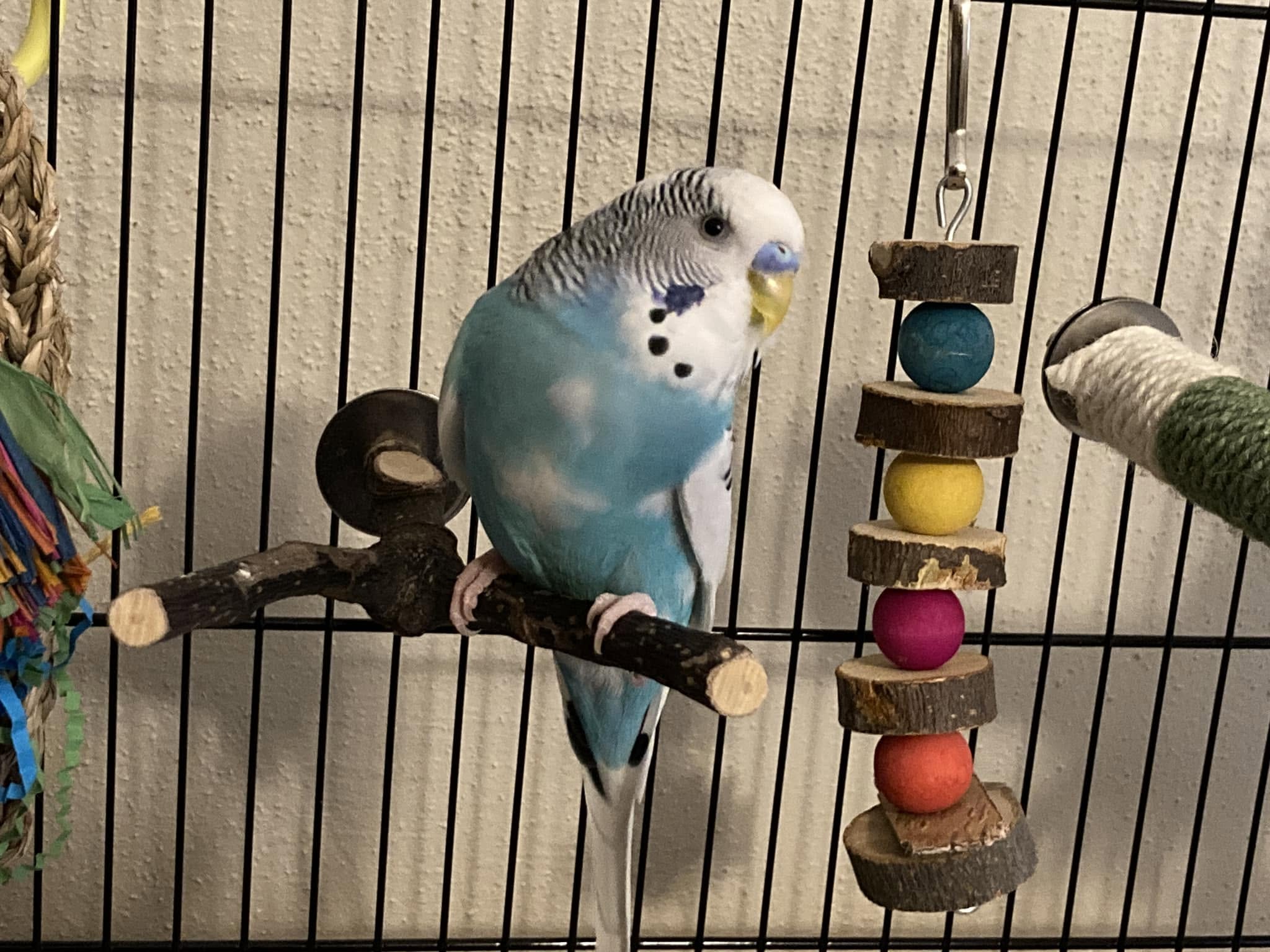
The standard entry-level budgie purchase in most UK pet shops looks like this: a bird, a cage, a bag of seed mix, and possibly some treats. The cage is inadequately sized for long-term welfare. The seed mix is the only food advised. There is no conversation about fresh food, about cage size requirements, about what early illness looks like, about the social needs of the species.
This is not deliberate negligence. It is a model that has persisted because the immediate transaction is easy and profitable, because the downstream welfare consequences happen months or years later in someone else’s house, and because the cultural expectation of small pet bird care has never been challenged at scale.
I have sold budgies at this counter for 35 years, and I have not always had the conversations I should have had at every sale. I have improved — these conversations are now a standard part of how I do this — but I cannot claim to have always been as honest as I am now. The industry as a whole has a long way to go.
The information that would prevent most of these premature deaths is not complex or expensive. Fresh vegetables for vitamin A. A larger cage or daily flight time. Knowing what the keel should feel like. Finding an avian vet before you need one urgently. Getting a second bird.
None of these require significant financial outlay. They require information — the right information, given at the right time, by the person selling the bird. That is what has consistently been missing.
What a Properly Kept Budgie’s Life Actually Looks Like
I want to close with this because I think it is useful to have a concrete picture of what the achievable version of budgie keeping looks like — not an unattainable ideal, but the practical reality of what owners who give their birds what they need actually experience.
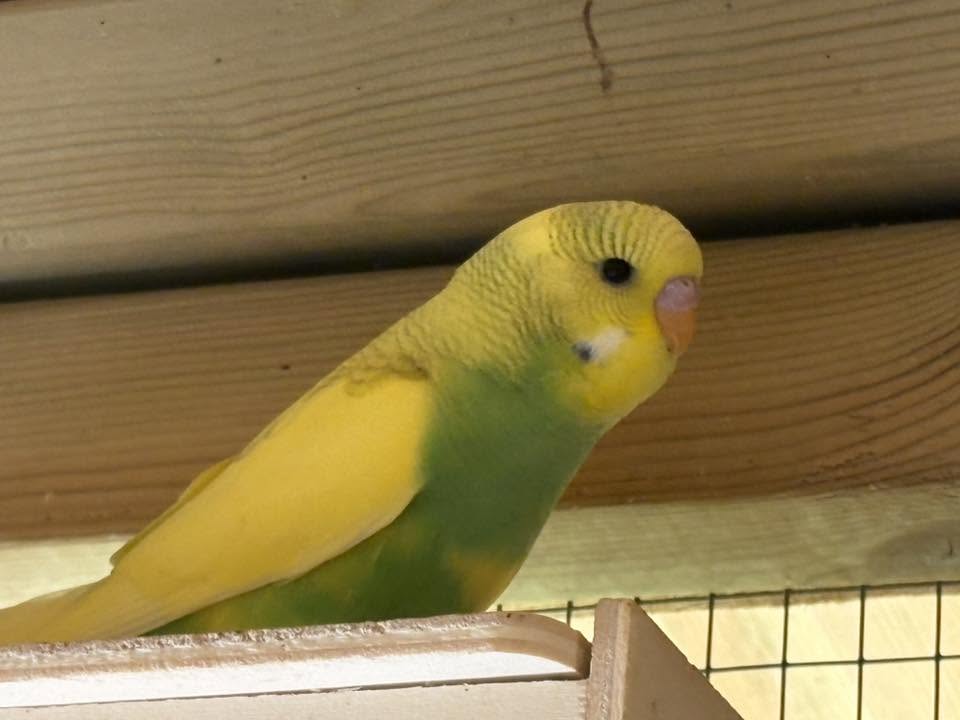
A budgie kept in an appropriately sized cage, fed a varied diet that includes fresh vegetables alongside a quality seed mix, kept with a companion bird or given consistent daily interaction, seen by an avian vet when signs change, and monitored regularly through keel checks and vocalisation awareness — that bird lives. It lives actively and with apparent wellbeing. It reaches ten, eleven, twelve years in many cases.
It is not significantly more expensive to keep than a poorly kept budgie. The vegetables are cheap. The larger cage is a one-time cost. The companion bird doubles the original purchase cost but provides a lifetime of mutual benefit to both animals. The vet visit, used at the early stage rather than when the bird is already critical, is typically less expensive than a late-stage emergency visit.
It is, in almost every practical dimension, more achievable than people assume when the alternative is described to them.
The animals that live shorter lives than they should are not in homes with bad owners. They are in homes with owners who were not given the information to make different decisions. That is the part I can address. It is the reason I am still writing these articles at this counter, 35 years in.
The Checklist — What Changes the Outcome
| Change | Why It Matters | Difficulty and Cost |
|---|---|---|
| Add fresh vegetables to the diet — carrot, leafy greens, pepper — daily | Addresses the vitamin A deficiency that underlies much of the immune compromise behind early death | Low cost, takes minutes. Main challenge is getting a seed-habituated bird to accept them — grate carrot into seed to start. |
| Upgrade cage size or provide daily out-of-cage flight time | Maintains cardiovascular and muscle health; reduces chronic stress from inadequate space | Cage upgrade is a one-time cost. Daily flight time costs nothing beyond a safe room and attention. |
| Get a companion bird | Resolves chronic social deprivation; reduces sustained cortisol; provides species-appropriate interaction 24 hours a day | One additional purchase cost. Manageable with proper introduction. Mutual welfare benefit for both birds. |
| Check the keel weekly | Detects weight loss at the earliest possible stage — before other symptoms are present | Takes thirty seconds. Requires only that you handle the bird and know your baseline. |
| Find an avian vet and register before you need one urgently | Ensures you have access to appropriate expertise when illness is detected — not a desperate search during a crisis | Time to identify the right practice. Registration is free. Annual health check is modest cost for significant peace of mind. |
| Know the early signs of illness and act on them the same week | The conditions that most often kill UK budgies early have dramatically better outcomes when treated early versus late | No cost — requires awareness and the willingness to act before certainty about the diagnosis. |
Frequently Asked Questions
How long should a budgie actually live?
A well-kept budgie should live between ten and fifteen years. This is not a theoretical maximum — it is what budgies routinely achieve in well-managed environments. The average UK pet budgie lives five to seven years. The gap between these figures is almost entirely attributable to specific care deficiencies — primarily diet, space, social isolation, and late or absent veterinary attention — rather than to genetics or inherent species fragility.
What is the most common cause of early death in UK budgies?
Liver disease, Macrorhabdus ornithogaster (avian gastric yeast), and respiratory infection are the conditions most consistently responsible for early death. All three are more common and more dangerous in nutritionally compromised birds. All three are more treatable at early stage than late stage. And all three develop over time in conditions that are the norm rather than the exception in UK pet budgie keeping. The underlying drivers are seed-only diet, inadequate exercise, social isolation, and the absence of early veterinary detection.
My budgie seems healthy — should I be doing anything differently?
A budgie that appears healthy may be accumulating nutritional deficiencies and the early stages of liver or digestive disease without showing visible symptoms. The most important preventive actions are: adding fresh vegetables (carrot, leafy greens, pepper) to the diet, checking the keel weekly for weight change, finding an avian vet and registering before the bird is ill, and ensuring adequate space and social stimulation. These actions cost very little and are the practices consistently associated with the budgies that reach ten years and beyond.
If I have been keeping my budgie on seed only for years, is it too late to change?
No — and changing the diet now is still worthwhile, even for a bird that has been on seed only for several years. The nutritional improvement provides real benefit regardless of how late it comes. The method: introduce grated carrot mixed into the seed, or hang leafy greens from the cage bars, alongside the existing seed rather than replacing it. A seed-habituated bird typically needs repeated daily exposure to new foods before accepting them. Within two to four weeks, most birds begin eating at least some fresh food. See my articles on specific foods for detailed guidance.
Why don’t more budgie owners know about these problems?
Because the information has not been given at the point of purchase, which is where it would make the most difference. The entry-level budgie purchase — bird, cage, seed, no further conversation — is the dominant model in UK pet retail, and it has persisted because it is convenient, because the consequences are delayed, and because the cultural expectation around small bird care has never been adequately challenged. This is what I am trying to change with these articles and these conversations. It is a slow process, but it matters.
Where can I buy a budgie and get honest advice in Swindon?
Come and see us at Paradise Pets — Manor Garden Centre, Cheney Manor, Swindon SN2 2QJ. I will have this conversation with you before you buy, not after. If you already have a budgie and you want honest feedback on the diet, the housing, the signs to watch for — come in for that conversation too. Call 01793 512400 before visiting.
Want to Give Your Budgie the Best Possible Chance at a Full Lifespan? Come in.
Whether you are considering getting a budgie, have recently got one, or have owned one for years and want to know whether you are doing right by it — come in and talk to me. I will tell you honestly where you are doing well and what I would change. This is the conversation I should have been having at scale for 35 years. I am having it now.