
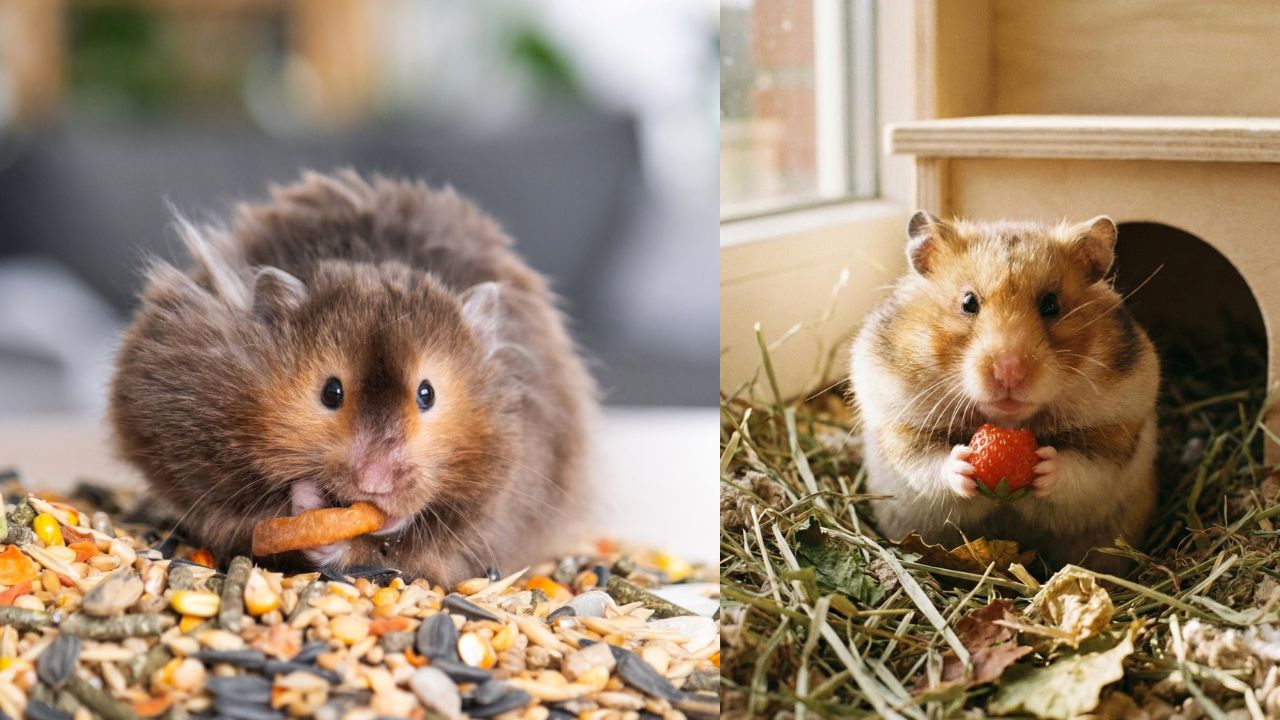

Neil has kept, bred, and sold hamsters and small animals at Paradise Pets Swindon since 1988 — over 35 years of first-hand experience with Syrian hamsters, dwarf hamsters, and every breed in between. “Why does my hamster stuff its cheeks and then just throw the food out?” is one of the questions that makes him smile most at the counter. This is his honest guide to what is actually happening — and why understanding it makes you a significantly better hamster owner.
A boy came in with his dad a few weeks ago, thoroughly baffled. “Neil,” he said, “my hamster keeps cramming food into her cheeks until her face is enormous — and then she goes into her nest and just dumps it all out. And then she does it again. Over and over. What is she doing? Is she broken?”
I told him she was not broken. She was, in fact, doing one of the most instinctively driven and perfectly normal things a hamster can do. She was hoarding. And the reason she sometimes throws food out and then re-collects it is a little more interesting than most people realise.
His face went from worried to fascinated in about thirty seconds, which is exactly the reaction I enjoy most at this counter.
In 35 years of keeping and selling hamsters, I have watched this behaviour thousands of times — the comical cheek-stuffing, the determined march back to the nest, the careful depositing, and then occasionally the apparent rejection of perfectly good food that the hamster collected only moments ago. To a new owner it looks chaotic and strange. Once you understand what is driving it, it makes complete and elegant sense.
This is my honest guide to why hamsters stuff their cheeks, why they then sometimes discard what they have collected, what is normal, what the behaviour tells you about your hamster’s wellbeing — and what it means when the behaviour changes in ways that are worth paying attention to.
First — Understanding Why Hamsters Hoard At All
To understand cheek-stuffing and hoarding, you need to go back to where hamsters come from — because this behaviour did not develop in a cage. It developed in the wild, and it is so deeply wired into the hamster that domestication has not changed it one bit.
Wild hamsters live in arid, semi-desert environments across parts of Europe and Asia. Food availability in these environments is unpredictable and seasonal. A hamster that found food and ate it on the spot was a hamster that went hungry when the food ran out. The hamsters that survived were the ones that collected food efficiently and stored large quantities in their burrows — enough to last through periods of scarcity, through winter, through bad seasons.
The cheek pouches are the solution evolution came up with. They are extraordinary structures — extending from the cheeks back past the shoulders, capable of carrying food quantities that seem impossible given the size of the animal. A Syrian hamster can carry up to half its body weight in its cheek pouches. The pouches are dry inside, which helps preserve the food during transport. The hamster stuffs them, carries the load back to its burrow, and deposits it in a carefully maintained food store.
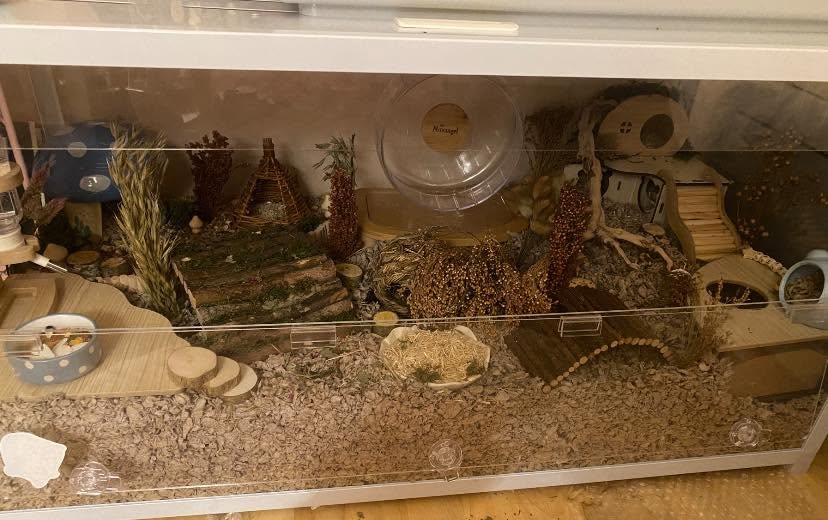
Your hamster is doing exactly this in its cage. It does not know it is in a safe, warm environment with a reliable food supply. Its brain is running ancient, powerful software that says: collect food, store food, have food. The cage is the burrow. The food bowl is the foraging ground. The nest area is the store.
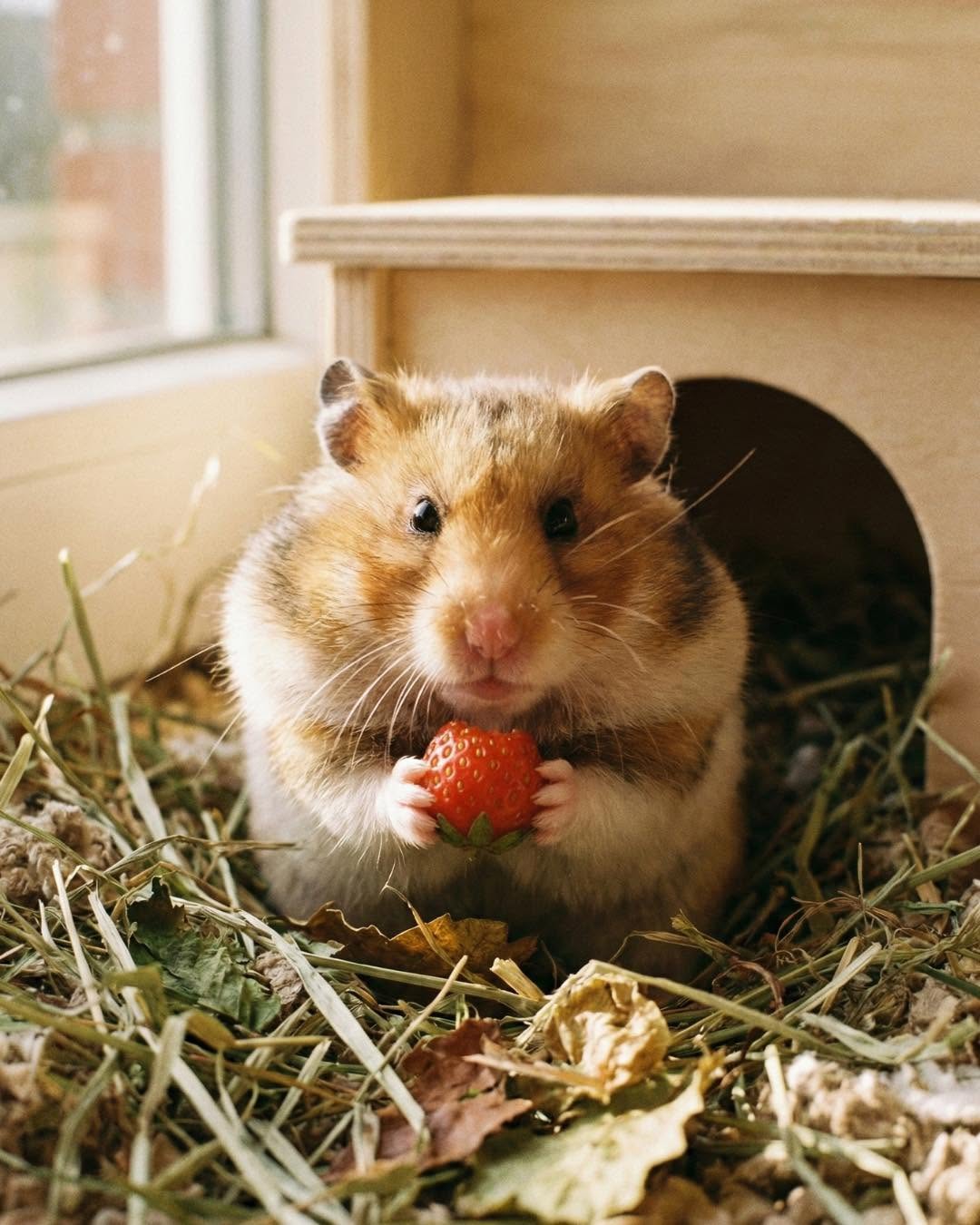
This is not a problem. This is your hamster being a hamster.
Why Does The Hamster Then Throw The Food Out?
This is the part that puzzles owners most — and it is genuinely the most interesting part of the behaviour to understand.
1. Quality Sorting — The Hamster Is Being Selective
Hamsters are not indiscriminate hoarders. They are actually quite careful about what they store. In the wild, storing food that would rot or become mouldy in the burrow would contaminate the entire store — a potentially fatal mistake. So hamsters have a built-in quality-sorting instinct. They will collect food, bring it back, inspect it in the context of the store, and sometimes reject pieces that do not pass inspection.
What looks like your hamster throwing food away is often your hamster exercising quality control. A piece of vegetable that has gone slightly soft, a seed that smells off, something with a texture that does not feel right — these can all be rejected and removed from the store. The hamster stuffed it in because the collection impulse fired. It discarded it because the quality assessment said no.
This is also why fresh foods — vegetables, fruits, soft treats — are more often discarded from the store than dry seeds and pellets. Fresh food deteriorates. The hamster knows this, even if it cannot tell you why.
2. Reorganising And Restocking The Store
Hamsters reorganise their food stores. They will periodically empty part of the store, move things around, discard older or deteriorating items, and restock with fresh material. What looks like pointless throwing-out is actually housekeeping — the hamster maintaining its store in good condition.
If you watch carefully, you will often see that the food the hamster discards from the nest does not stay discarded for long. It goes back out, collects more, brings it back, sorts again. The cycle is the behaviour, not any individual trip.
3. The Pouch-Emptying Reflex
Sometimes what looks like throwing food out is simply the mechanical process of emptying the cheek pouches. Hamsters empty their pouches by using their front paws to push the contents out from behind — and this can look quite dramatic, like the hamster is ejecting things with some force. Not everything deposited lands neatly. Not everything deposited is necessarily intended for long-term storage. Some of it gets moved immediately. This is normal pouch-emptying behaviour, not rejection.
4. The Hamster Has Simply Changed Its Mind
Hamsters make decisions based on current conditions, and those conditions include how hungry they are, how large the store already is, and what else is available. A hamster that collected something when it felt resource-anxious may discard it when it feels more settled. This sounds almost too human, but the underlying mechanism is simply the interaction of competing drives — and the result looks like a hamster that cannot make up its mind.
5. Freshness — Particularly With Perishable Foods
If you are feeding fresh vegetables or fruit and finding them discarded from the nest rather than eaten, this is almost certainly a freshness issue combined with the quality-sorting instinct. The hamster collected the food because it was fresh and appetising. By the time it made it back to the nest and began to store it, or by the time it returned to the store, the food had already started to change — and the hamster rejected it.
This is one of the practical reasons I advise hamster owners to be careful about fresh food quantities. Give enough that the hamster can eat what it needs, but not so much that large quantities end up hoarded in the nest and left to deteriorate. Rotting food in the nest is a health concern, not just an aesthetic one.
Is This Behaviour A Sign That The Hamster Is Anxious Or Unhappy?
This is the question underneath most of the worried conversations I have at the counter, and it deserves a direct answer.
Hoarding behaviour itself is not a sign of anxiety. It is a sign of a hamster being a hamster. A hamster that is collecting and storing food is doing something it is biologically driven to do, and doing it contentedly is completely normal.
However — and this is an important distinction — the intensity and compulsiveness of hoarding can sometimes reflect the hamster’s overall sense of security. A hamster that feels resource-secure tends to hoard in a more measured, routine way. A hamster that is frequently stressed, in an environment that feels unpredictable or unsafe, or that has been subjected to food scarcity, can develop more frantic, compulsive hoarding behaviour.
The signs to distinguish normal hoarding from anxious hoarding are in the rest of the hamster’s behaviour. A hamster that hoards and then rests contentedly, explores its enclosure freely, grooms normally, and is generally active and settled during its waking hours is fine. A hamster that seems unable to stop collecting, that is generally agitated, that bars-chews or stereotypes in other ways alongside the hoarding — that is a hamster whose environment or management needs attention.
The hoarding tells you less than you might think on its own. The full picture of the hamster’s behaviour tells you far more.
The Cheek Pouches — What Owners Need To Know
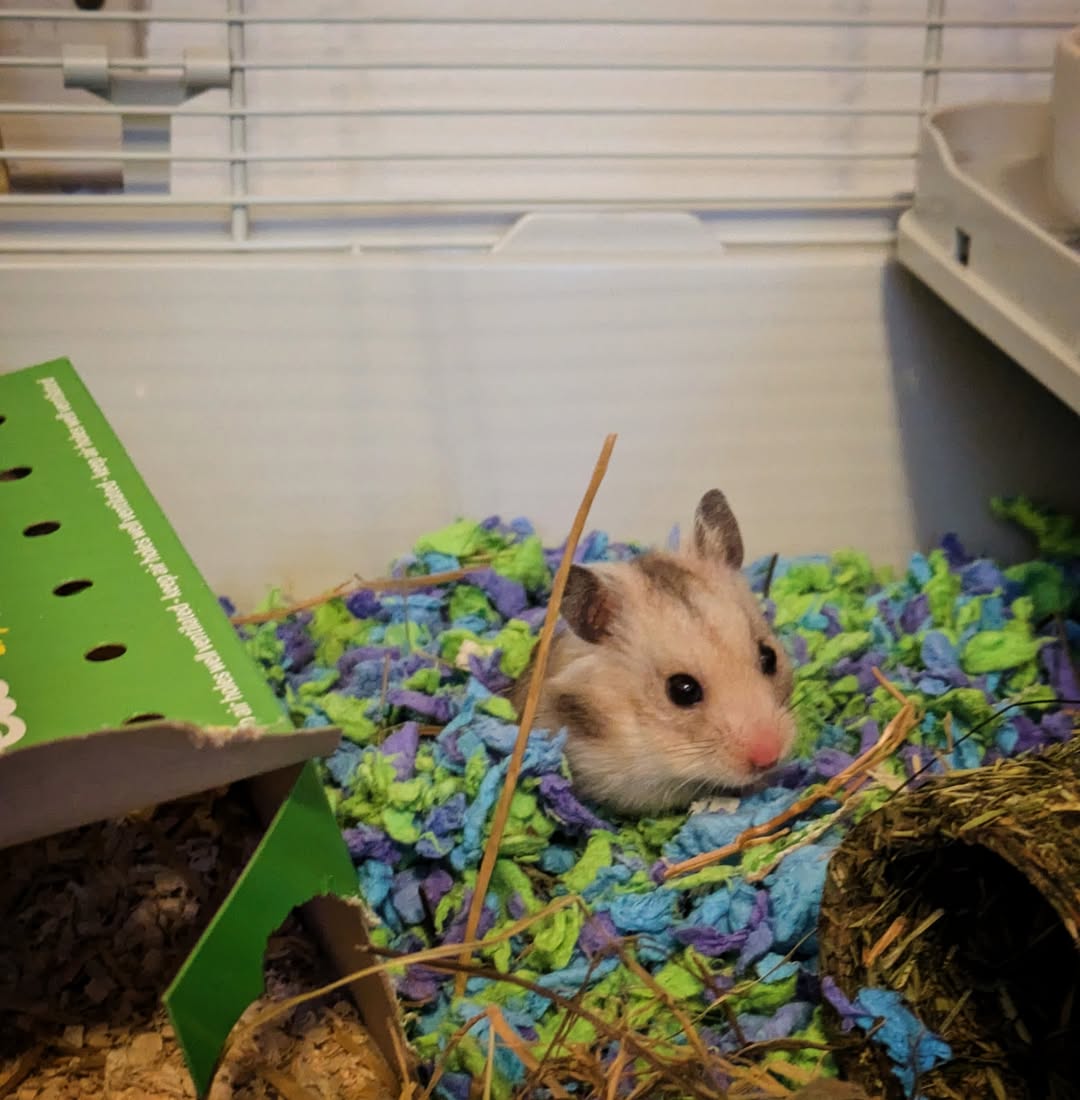
While we are on the subject of cheek-stuffing, there are a few things about the pouches themselves that I think every hamster owner should know — because problems with the cheek pouches are among the more common health issues I see, and catching them early matters.
- Pouch not emptying — a hamster whose cheeks remain stuffed for several hours, or overnight, may have a pouch impaction. Food can occasionally get stuck, particularly sticky foods, and this needs veterinary attention
- Swelling on one or both sides of the face that is not food — a persistently swollen cheek area when the hamster has not just eaten may indicate an abscess, a tumour, or a pouch prolapse
- Pouch prolapse — occasionally a cheek pouch can prolapse, turning partially inside out and appearing outside the mouth as a pink, wet protrusion. This looks alarming and needs prompt veterinary treatment
- The hamster repeatedly trying to stuff its cheeks but struggling — difficulty using the pouches, pawing at the face, or apparent discomfort during stuffing can all indicate a pouch problem
- Wet or matted fur around the cheeks or chin — can indicate a pouch problem or an abscess draining
The main practical things you can do to keep the pouches healthy are simple. Avoid sticky foods — toffee, sticky sweets, anything that could adhere to the pouch lining and cause impaction. Avoid sharp foods — very hard or sharp-edged items that could damage the delicate pouch tissue. Seeds and grains are generally fine. Soft fresh foods are generally fine in modest quantities. It is the sticky and the sharp that cause most of the pouch problems I see.
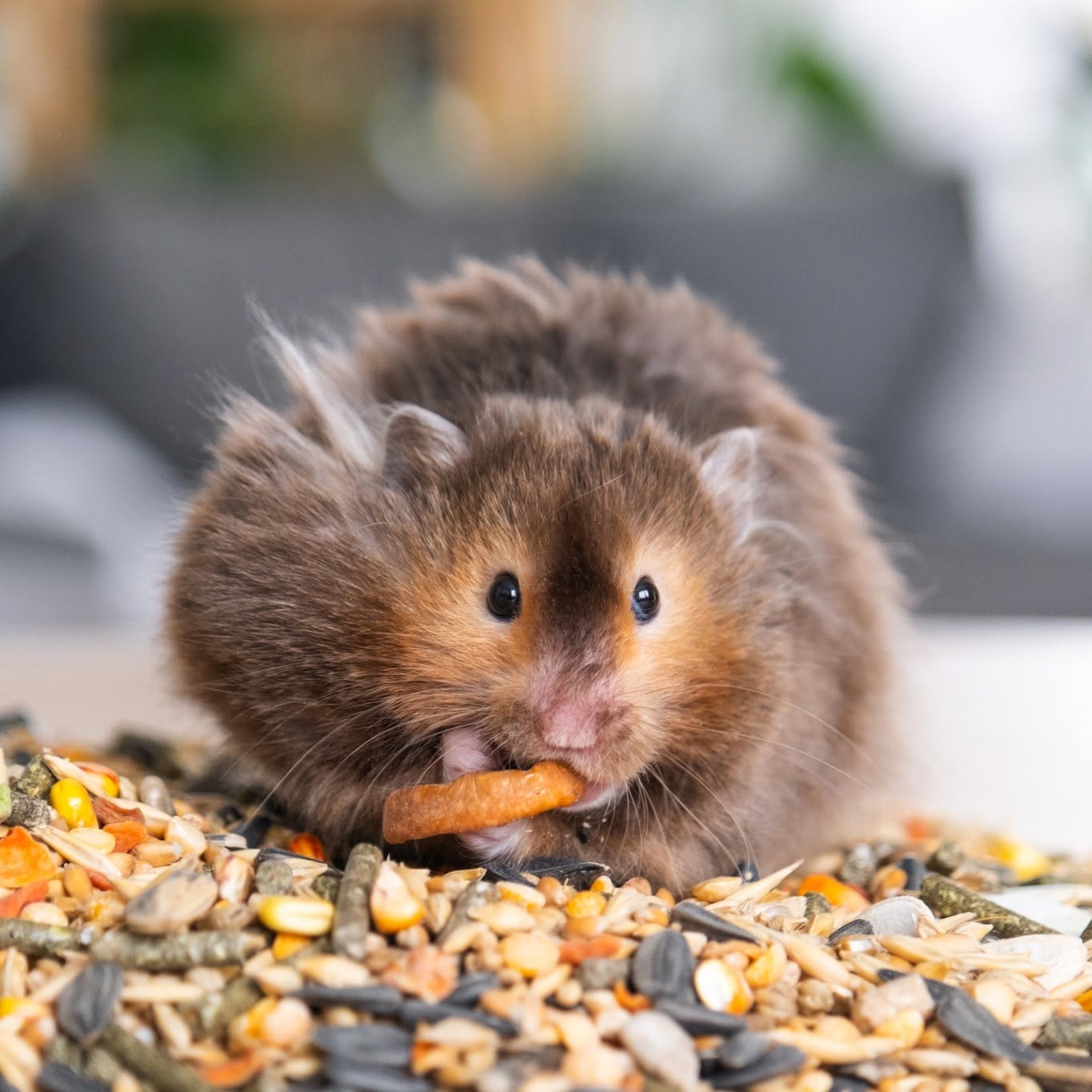
What The Hoarding Behaviour Tells You About Your Hamster’s Setup
Hoarding behaviour is also a useful diagnostic tool for the enclosure and management — and I use it that way when owners describe their hamster’s habits to me at the counter.
A hamster that hoards enormous quantities and seems unable to stop may be in an enclosure that is too small or too bare, creating a sense of insecurity. A hamster that hardly hoards at all in a situation where you would expect it to may not be eating well. A hamster that hoards only in one small corner rather than using a proper nest space may not have enough bedding or nesting material to create a proper burrow-like store.
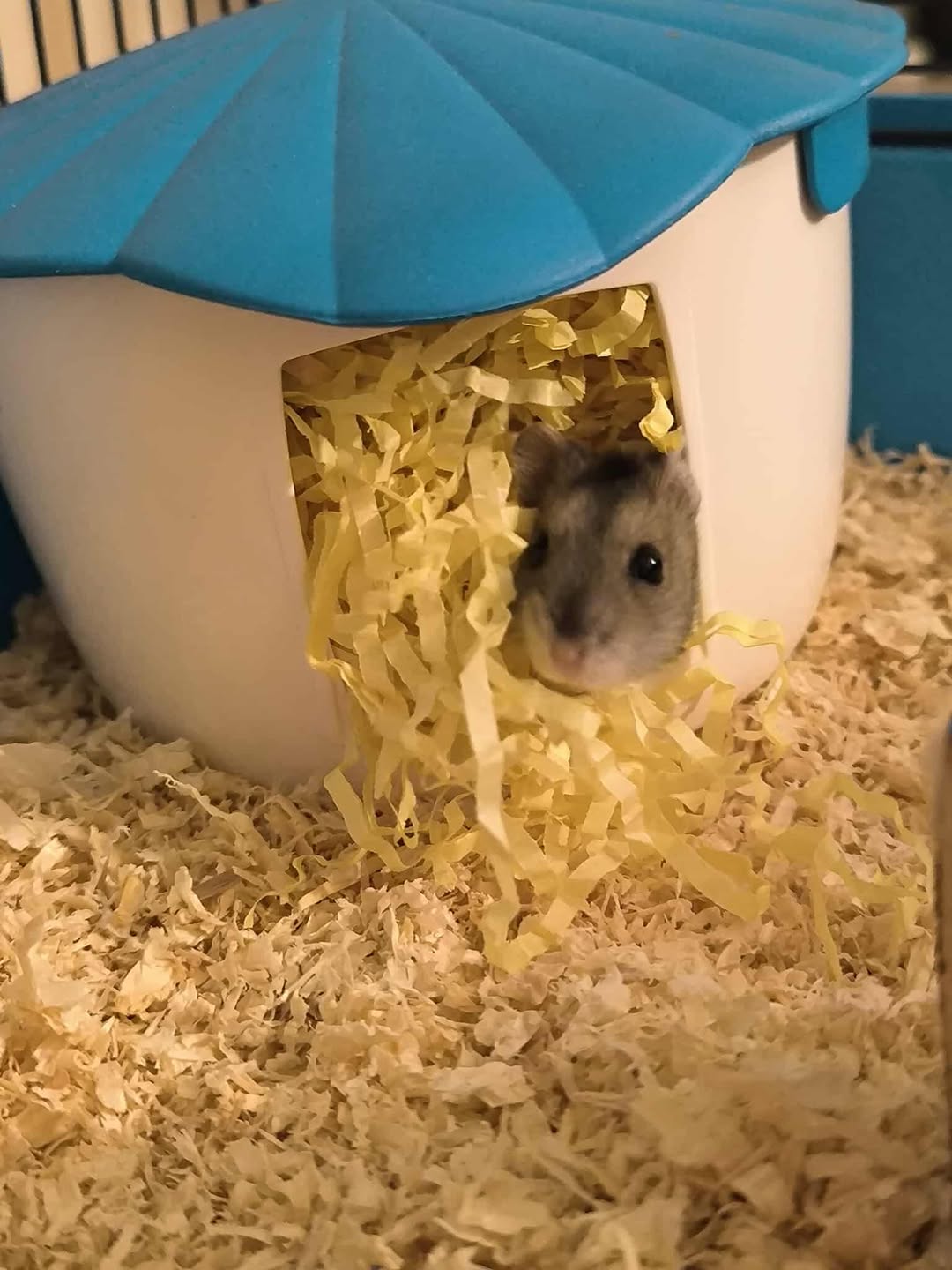
The single most important environmental factor I come back to again and again is bedding depth. Hamsters are burrowing animals. They need deep bedding — at minimum 15 to 20 centimetres, and deeper is better — to dig tunnels, create a proper nest, and establish a food store in a location that feels secure to them. A hamster on a thin layer of bedding in a small cage is a hamster without a burrow, and its behaviour will reflect that insecurity in various ways, including abnormal hoarding patterns.
If your hamster’s hoarding seems frantic or compulsive, before anything else, look at the bedding depth and the enclosure size. These two things account for a remarkable number of the behavioural problems I am asked about.
Managing Fresh Food Sensibly — The Practical Bit
Because fresh food hoarding leads to rotting food in the nest — which is genuinely a health concern — this is worth addressing practically.
The approach I recommend is simple. Give fresh foods in small quantities, at a time when you can observe the hamster eating them rather than storing them. Evening is a good time, as most hamsters are more active then. Give pieces small enough that the hamster can eat them reasonably quickly rather than feeling the need to store them.
Check the nest regularly — not to the point of disrupting the hamster or making it anxious, but a brief check every few days for discarded fresh food is sensible. Remove anything that is starting to deteriorate. Rotting food in the nest is a source of bacteria and mould that can make your hamster ill, and it is easy to prevent with a simple routine.
Seeds, pellets, and dry foods are much less of a concern for nest hoarding — they last well and a hamster storing a pile of sunflower seeds in its nest is doing exactly what it should be doing.
Quick Reference — Hamster Hoarding Behaviour At A Glance
| What You See | What It Means | Action Needed? |
|---|---|---|
| Cheeks stuffed, marching to nest | Normal hoarding instinct — healthy behaviour | ✅ None — enjoy watching it |
| Food deposited then immediately moved | Store reorganisation — normal | ✅ None |
| Fresh food discarded from nest | Quality sorting — fresh food rejected as it deteriorates | ⚠️ Reduce fresh food quantities given at once |
| Dry food stored in large quantities | Normal hoarding — the store is being built | ✅ None — adjust portion if overfeeding |
| Frantic, non-stop hoarding with no settling | Possible insecurity — environment may need improvement | ⚠️ Review enclosure size and bedding depth |
| Cheeks still full after several hours | Possible pouch impaction | 🔴 Check — vet if pouches remain full overnight |
| Swelling on face not related to food | Possible abscess, tumour, or pouch prolapse | 🔴 Vet today |
| Pink protrusion from mouth area | Pouch prolapse | 🔴 Vet urgently |
| Hamster pawing at face repeatedly | Pouch discomfort or impaction | 🔴 Vet today |
Practical Things You Can Do Right Now
- Watch the full cycle, not just one trip. Sit with your hamster for twenty minutes during its active period and watch the whole sequence — collecting, transporting, depositing, sorting. It tells you far more than any single observation.
- Check what is being discarded. Is it fresh food or dry food? Fresh food discarding is normal quality-sorting. Dry food being repeatedly discarded and re-collected may indicate the hamster is reorganising the store or something about the nesting area is not right.
- Check the nest area for rotting food regularly. Every few days, when your hamster is awake and out of the nest, briefly check for fresh food that has been stored and is deteriorating. Remove it. This is simple welfare maintenance.
- Review fresh food quantities. If you are consistently finding lots of rotting fresh food in the nest, you are giving too much at once. Reduce the quantity and give it at the time of day when your hamster is most active and likely to eat it fresh.
- Check the bedding depth. If your hamster is hoarding frantically or seems unable to create a proper store, bedding depth is the first thing to look at. Deep bedding — 15cm minimum, ideally more — allows the hamster to create a burrow-like environment that feels secure enough to store in properly.
- Watch the pouches. Cheeks that remain swollen for hours, difficulty stuffing or emptying, any pawing at the face — these are signs to take to a vet. The pouches are usually trouble-free if you avoid sticky and sharp foods, but it pays to keep an eye on them.
- Do not disturb the food store unnecessarily. Repeatedly cleaning out the hamster’s carefully assembled store creates anxiety and triggers more frantic re-hoarding. Clean out deteriorating fresh food, yes — but leave the dry food store as much as possible. It matters to your hamster.
Frequently Asked Questions
Is it normal for hamsters to stuff their cheeks with everything they find?
Completely normal — in fact, it would be unusual if they did not. Cheek-stuffing and hoarding is one of the most fundamental hamster behaviours there is, driven by instincts that developed over thousands of years in the wild. A hamster that stuffs its cheeks with food and carries it back to the nest is doing exactly what it is built to do. The only time cheek-stuffing becomes a concern is if the pouches do not empty properly, or if there are signs of physical discomfort around the face.
Why does my hamster collect food and then just leave it on the cage floor?
This usually means the hamster collected the food, started transporting it, and then — for one reason or another — did not complete the journey to the store. This might be because it was startled, because it decided the piece was not worth storing after all, or because it simply got distracted. It is not a problem. The food on the floor will either be collected again on the next trip or ignored, and either outcome is fine.
Should I clean out my hamster’s food store?
Remove fresh food that is deteriorating — yes, absolutely. Leave the dry food store alone as much as you possibly can. The food store is deeply important to your hamster’s sense of security. Repeatedly removing and replacing it causes genuine distress and triggers compulsive re-hoarding as the hamster tries to rebuild what has been taken. If the cage is due for a full clean, do it as quickly and efficiently as possible and, if you can, leave a small quantity of the stored food back in the nest area so the hamster does not wake to find everything gone.
My hamster’s cheeks look swollen even when it has not been eating — should I worry?
Yes, this is worth investigating. Persistently swollen cheeks that are not related to recent food collection can indicate an abscess, a tumour, or a pouch problem. The cheeks should return to their normal, flat appearance when the pouches have been emptied. If they are remaining puffed up for hours, or if there is asymmetric swelling on one side, get your hamster checked by a vet who has experience with small animals.
Can I train my hamster to stop hoarding?
No — and I would not try. Hoarding is not a behaviour you can train away because it is not learned behaviour. It is instinct, as fundamental to a hamster as burrowing or nocturnal activity. Attempting to prevent it by removing food stores repeatedly will cause distress, not compliance. The better approach is to manage what you feed, keep fresh food quantities sensible, and work with the behaviour rather than against it.
My hamster seems to hoard everything except its water — is that normal?
Yes. Water cannot be stored, and hamsters do not attempt to store it. In the wild, hamsters get much of their moisture from the fresh food they eat. In captivity, a water bottle or bowl is essential. The fact that your hamster hoovers up every piece of food but leaves the water alone is completely normal.
Where can I get honest small animal advice in Swindon?
Come and see us at Paradise Pets, Manor Garden Centre, Cheney Manor, Swindon SN2 2QJ. Or give us a ring on 01793 512400. The advice is free and we have been doing this for 35 years.
One Last Thing From Me
The boy who came in worried about his hamster being “broken” went home with a very different understanding of his pet. He came back about a month later — brought by his dad again — to tell me that he had started timing his hamster’s hoarding trips and keeping a little notebook of what she collected and what she discarded. He had noticed that she almost always discarded the soft bits of vegetable but always kept the seeds. He had started giving her less vegetable and more variety of seed as a result.
He was, at about ten years old, already a better hamster keeper than most adults I meet — because he had started watching and responding to what his animal was actually doing rather than what he assumed it should be doing.
That is the whole point, really. The cheek-stuffing and the discarding and the reorganising and the re-collecting — it is all information. Your hamster is telling you, in the only language it has, exactly what it is and what it needs. Learning to read that is one of the most rewarding parts of keeping small animals, and it starts with something as simple as watching your hamster fill its face with sunflower seeds and wondering why.
Come and see us if you have questions. We have been answering them for 35 years, and we genuinely enjoy it.
Questions About Your Hamster? Come And Ask Me
Bring your questions, your observations, and your concerns — and if you have a video of the behaviour, even better. I have kept and sold hamsters for over 35 years and I will give you a straight, honest answer. Free advice, no obligation. That is how we have done things since 1988.