


Neil has been keeping, breeding, and selling hamsters at Paradise Pets Swindon since 1988 — over 35 years of daily first-hand experience with these animals. Cheek pouches are one of the most asked-about features of hamster anatomy, and one of the most misunderstood. This is his honest guide to what is actually happening, what is normal, and the warning signs every owner should know.
A young boy came into the shop with his mother a few years ago, utterly delighted by something he had just watched his new hamster do. He had given it a single sunflower seed. The hamster had taken it, turned slightly, and the seed had simply vanished. No chewing. No swallowing motion. Gone.
“Where did it go?” he asked me, genuinely baffled.
I showed him. I gently held the hamster — one of ours from the shop, very used to handling — and showed him the slight bulge along the side of its head and neck. Then I offered another seed, and we watched together as the hamster tucked it into the same hidden pocket.
That moment of discovery is one I have watched play out many times over the years, and it never stops being a genuinely good introduction to one of the most distinctive features in the small animal world. Cheek pouches are remarkable pieces of anatomy — and understanding how they work, what is normal, and what is not, makes you a considerably better hamster owner.
After 35 years of working with these animals at Paradise Pets, I want to give you the complete picture — not just the charming part, but the part that matters for your hamster’s health too.
What Cheek Pouches Actually Are
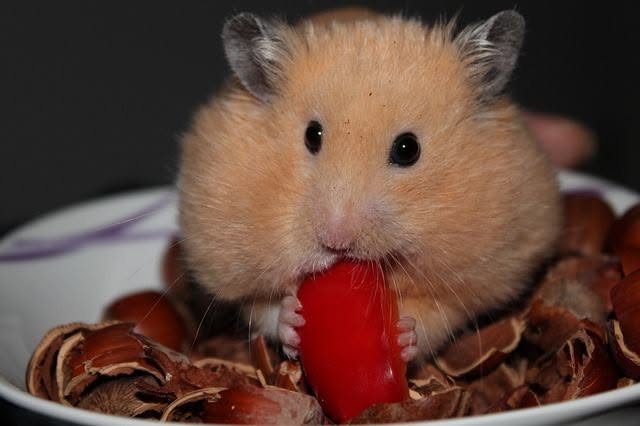
Cheek pouches are pockets of skin that extend from inside a hamster’s mouth, running back along the sides of the head, and in many hamsters, continuing back along the body as far as the shoulders. They are lined with a thin, stretchy layer of skin — not connected to the digestive system at all. Food stored in the pouches is not being digested. It is simply being carried, exactly the way you might carry shopping in a bag.
This is the detail that surprises most new owners. The pouches are not part of the stomach or throat in any functional sense. A hamster with full cheek pouches has not eaten more than usual — it has collected more than usual, with every intention of eating it later, somewhere else, usually somewhere it considers safe.
The pouches can stretch remarkably — in a Syrian hamster, a fully packed set of pouches can make the head appear roughly double its normal width. The animal can still move, still groom, still interact normally with a full load, though its movement is slightly less agile than usual.
Why Hamsters Evolved This Behaviour
To understand why your pet hamster does this in a cage with a full food bowl, it helps to understand where the behaviour comes from.
Wild hamsters live in semi-arid regions of the Middle East and parts of Asia and Eastern Europe — open, exposed terrain with limited shelter and significant predation pressure. Food sources in this environment are scattered, seasonal, and often found at a distance from the safety of the burrow. A hamster that stops to eat in the open is a hamster exposed to hawks, foxes, snakes, and other predators for longer than necessary.
The cheek pouches solve this problem elegantly. A wild hamster forages quickly, stuffs everything edible it finds into its pouches without pausing to eat, and races back to the safety of its burrow before processing and consuming the haul at leisure. The exposed foraging time is minimised. The actual eating happens somewhere safe.
This is also tied to the hamster’s burrow structure. Wild hamsters create elaborate burrow systems with specific chambers — a sleeping chamber, a toilet chamber, and critically, one or more dedicated food storage chambers. Hamsters are not opportunistic eaters in the way some rodents are. They are hoarders, building up substantial food reserves to see them through periods of scarcity.
Why Your Pet Hamster Still Does This — Even With a Full Bowl
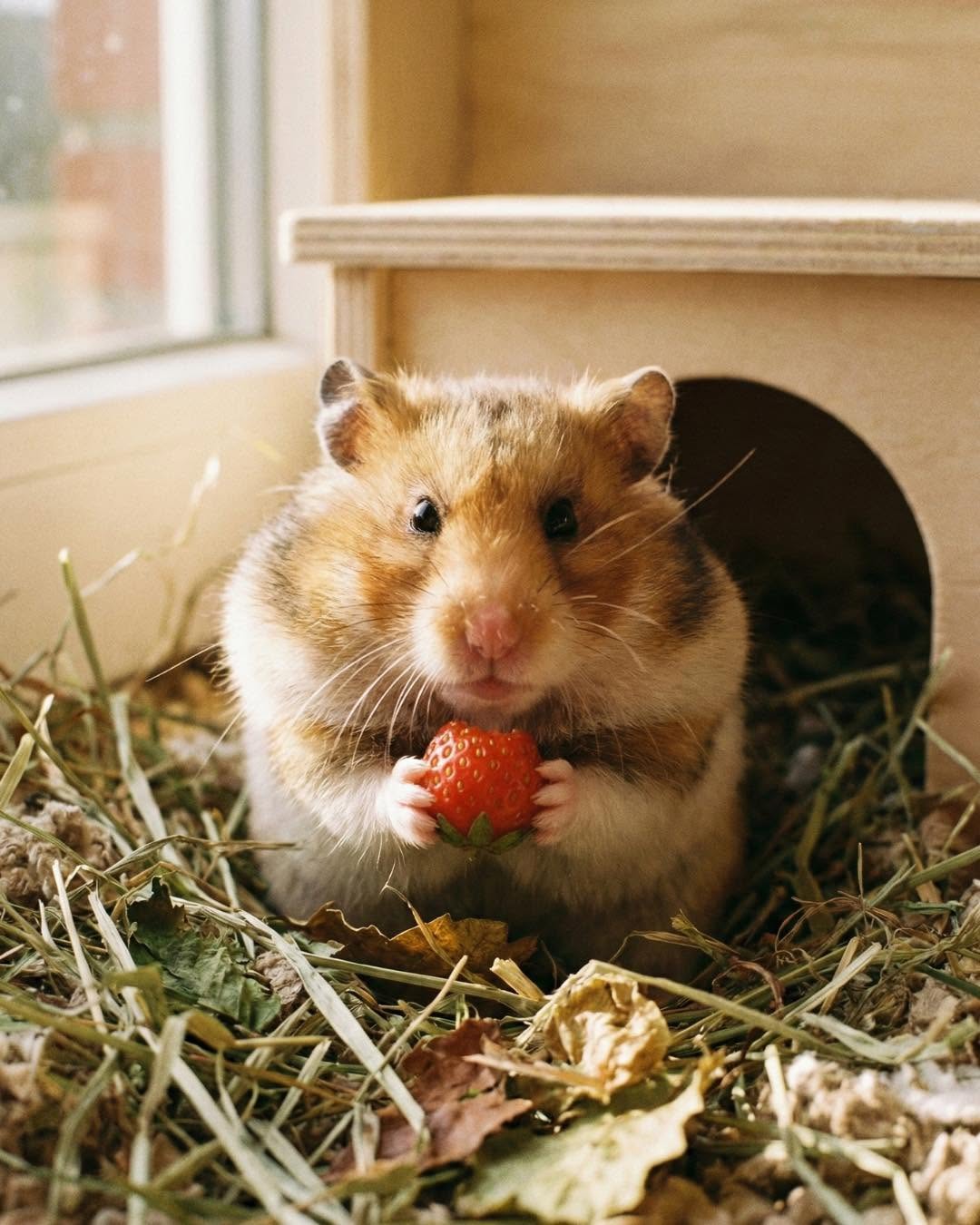
This is the part that genuinely puzzles new owners. Your hamster has a food bowl that is refilled regularly. There is no scarcity. There are no predators. And yet it still stuffs its cheeks and carries food away to hide it.
The honest answer: the instinct does not know any of that. A pet hamster’s behaviour is driven by millions of years of evolutionary programming, not by an assessment of its actual current circumstances. The hoarding instinct is not a response to genuine scarcity in your hamster’s specific cage — it is a deeply embedded behaviour pattern that activates regardless of whether scarcity actually exists.
- The behaviour is automatic, not calculated — your hamster is not making a decision about whether hoarding is necessary; it is doing what hamsters do
- A full food bowl does not switch off the instinct — even hamsters with constant access to food will hoard a portion of it elsewhere in the cage
- The behaviour is most pronounced in the evening and early morning — aligning with the wild foraging periods at dawn and dusk
- Individual hamsters vary in intensity — some hoard enthusiastically and constantly; others do it more occasionally; this is individual personality rather than indicating anything is wrong
What Happens To The Food After It Is Stored
A hamster does not simply abandon its hoarded food. The storage behaviour is part of a larger pattern of food management that is worth understanding.
The hamster carries food in its cheek pouches to a chosen location — usually a specific corner of the enclosure, inside a hide, or buried in bedding. It then uses its front paws to push the cheek pouches forward from the outside, emptying the contents at the storage site. This is a distinctive motion — you may see your hamster pressing both paws against the sides of its face and pushing forward, which looks slightly comical but is simply the mechanical process of emptying the pouches.
Once stored, the hamster will return to the cache periodically — sometimes to eat from it directly, sometimes to add more, sometimes to reorganise or move the stash to a different location. This is normal, ongoing management behaviour rather than a one-time event.
- Where does your hamster store its food? Most commonly a corner of the cage, inside a hideout, or under a layer of bedding. Some hamsters have one main stash; others maintain several smaller caches in different locations.
- Does the stash change location over time? Many hamsters periodically move their cache, particularly if disturbed or if the cage layout changes. This is normal reorganising behaviour.
- Is your hamster eating from the stash? Yes — this is the hamster using its stored food as intended. The stash is a larder, not just a hidden pile that never gets touched.
- Does your hamster defend the stash if you approach it? Some hamsters become protective of their food cache, particularly during cage cleaning. This is normal resource-guarding instinct, not aggression toward you personally.
How Much Should You Feed — Given That Your Hamster Will Hoard Some Of It
This is a practical question that follows directly from understanding the hoarding behaviour, and it is one I get asked regularly.
Many owners worry that because their hamster is hiding food rather than eating it, the animal is not getting enough nutrition. This is almost always a misplaced concern — the hoarding behaviour is part of how hamsters manage their food intake over time, and a hamster maintaining a healthy weight with a varied diet is managing this correctly.
- Feed an appropriate daily amount — roughly one to two tablespoons of good quality hamster mix per day for a Syrian hamster, slightly less for dwarf species. Some of this will be hoarded; some will be eaten immediately. Both are normal.
- Do not overfeed to compensate for hoarding — adding extra food because you think the hamster is “not getting enough” simply expands the hoard, not the actual nutrition consumed. Stick to an appropriate daily portion.
- Monitor weight rather than visible eating — a hamster that is hoarding heavily and eating from its stash regularly will maintain a stable, healthy weight. This is the metric that matters, not how much food appears to be in the bowl at any given moment.
- Fresh foods should not be hoarded long-term — vegetables and fruit offered as occasional treats can be hoarded the same way dry food is, but they spoil. Remove any uneaten fresh food from caches you can access within a day to prevent mould and bacterial growth.
The Hygiene Consideration — Why Hoarded Fresh Food Needs Checking
This is the part of cheek pouch behaviour that has a genuine practical health implication, and it is worth taking seriously.
Dry food — seeds, grains, hamster mix — stores safely in a hoard for extended periods without spoiling. Fresh food does not. A piece of cucumber, a slice of apple, a leaf of spinach tucked into a hidden cache will begin to rot within a day or two, particularly in a warm room. Mould develops. Bacteria multiply.
A hamster that eats from a mouldy cache is at risk of digestive upset and, in more serious cases, genuine illness. This is one of the few situations where you do need to interfere with your hamster’s natural hoarding behaviour.
- Check known cache locations every two to three days, particularly after offering fresh food
- Remove any fresh food that has gone soft, discoloured, or developed visible mould
- A sour or musty smell from a cache location is a sign of spoiled food that needs removing
- If your hamster has been digging in a specific area more than usual and seems reluctant to let you near it, check that area for a hidden fresh food stash that may have spoiled
- Offer fresh foods in smaller quantities to reduce the amount that ends up hoarded and potentially spoiling unnoticed
When Cheek Pouch Behaviour Becomes A Health Concern
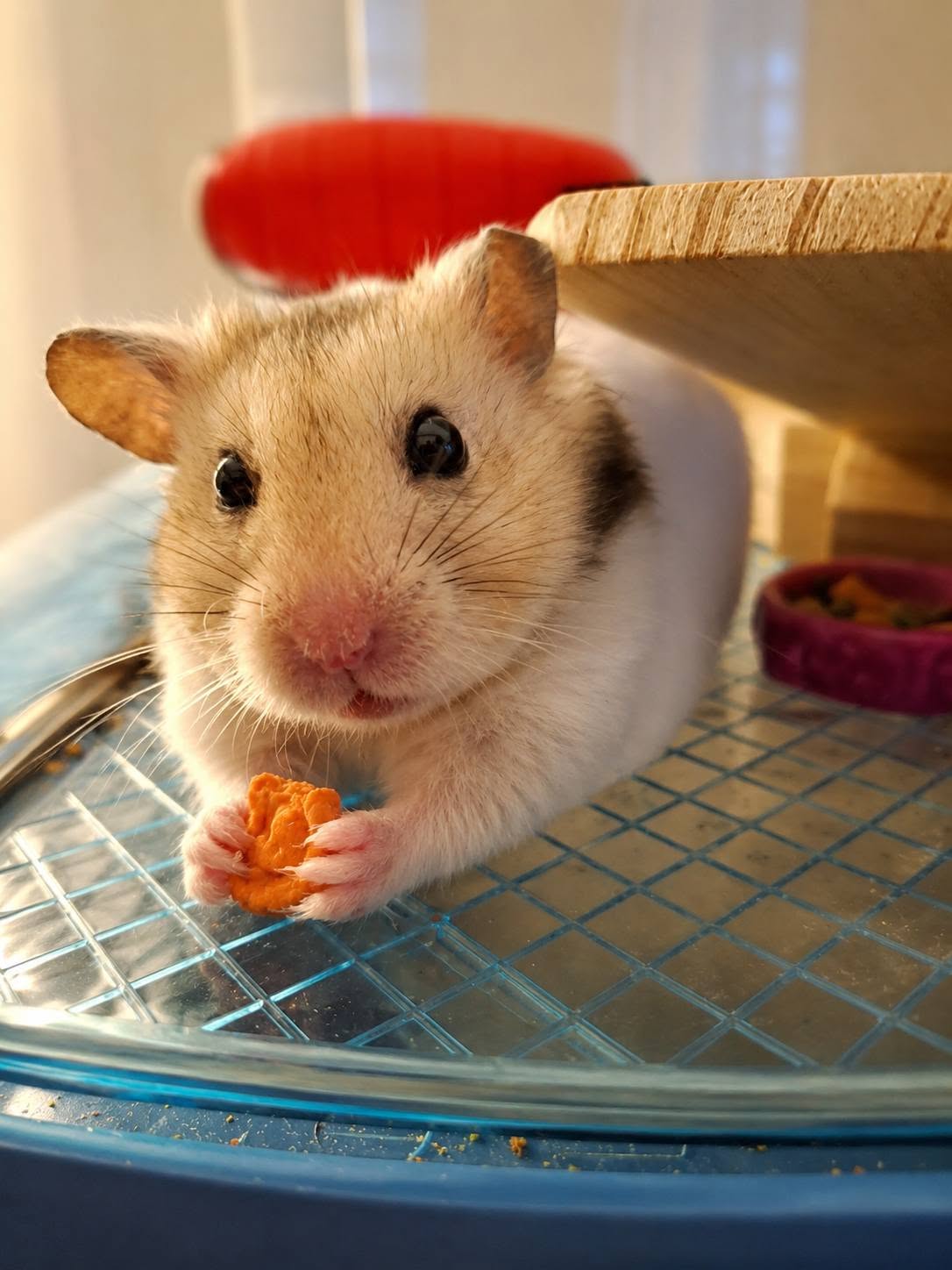
Most cheek pouch activity is entirely normal and requires no intervention. But there are specific situations where the pouches themselves, or the behaviour around them, become a genuine veterinary concern.
Cheek Pouch Impaction
Occasionally, food material — particularly sticky or fibrous food — can become impacted or stuck within the pouch itself, rather than being emptied normally. The pouch may appear permanently bulging on one or both sides, even after the hamster has had opportunity to empty it. The hamster may also paw repeatedly at the affected cheek, attempting unsuccessfully to clear it.
- One or both cheek pouches remain visibly full for an extended period — hours or days — without emptying
- The hamster paws repeatedly and seemingly unsuccessfully at the affected cheek
- Reduced eating or reluctance to eat, possibly because the pouch discomfort is interfering with normal feeding
- Visible asymmetry between the two sides of the face that does not resolve
This needs veterinary attention — a vet experienced with small rodents can examine and, if necessary, gently clear an impacted pouch. Do not attempt to manipulate or empty a hamster’s cheek pouch yourself. The tissue is delicate and the wrong technique can cause injury.
Cheek Pouch Abscesses
I want to flag this specifically because it is one of the more serious conditions associated with cheek pouches, and it is often mistaken for normal hoarding behaviour in its early stages.
A cheek pouch can become infected — sometimes following injury from a sharp piece of food, sometimes from bacterial infection unrelated to a specific injury. This produces an abscess: a painful, swollen pocket of infection within the pouch tissue. From the outside, this can look deceptively similar to a normally stuffed pouch — a visible bulge on one side of the face.
- The swelling is on one side only, persists for days, and does not reduce even when you would expect the hamster to have emptied a normal food cache
- The area feels firm, warm, or the hamster reacts with apparent pain when the area is gently touched
- Reduced appetite, lethargy, or general unwellness alongside the facial swelling
- Any discharge, unusual smell, or visible wound near the swollen area
- The hamster is reluctant to eat on the affected side, or favours chewing with the opposite side of its mouth
What to do
A persistent one-sided facial swelling that does not resolve, particularly with any sign of pain or general unwellness, needs a vet experienced with small rodents the same day. Cheek pouch abscesses require professional drainage and treatment — this is not something to wait out at home, and it is not something that resolves on its own.
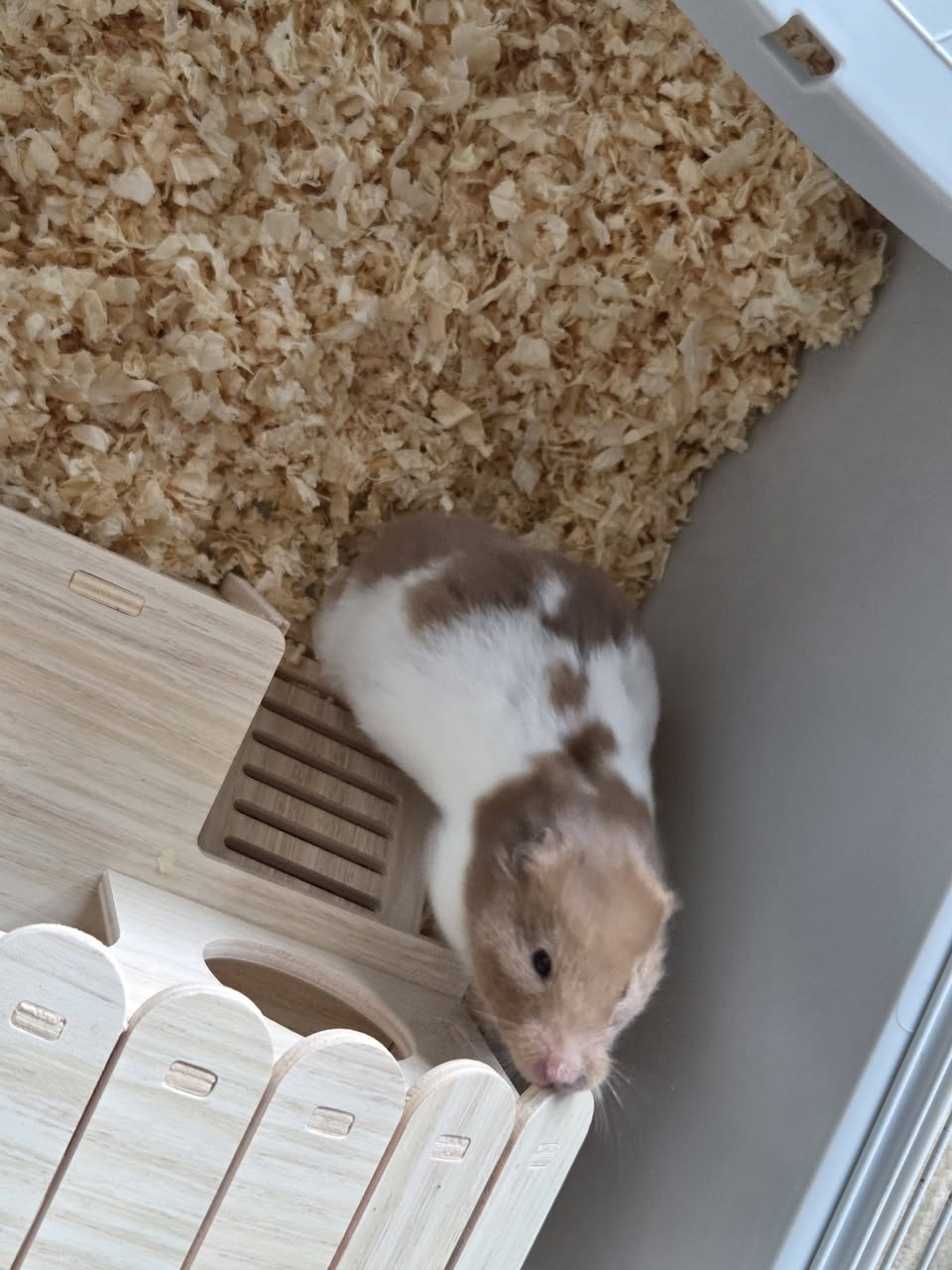
How To Tell Normal Stuffed Cheeks From A Problem
- Does the swelling go down after a period of time?
Yes, within a few hours or by the next day — normal hoarding behaviour, the hamster has emptied the pouch.
No, persisting for days — possible impaction or abscess, needs checking. - Is the swelling on both sides or one side only?
Both sides, roughly symmetrical — typical of normal foraging and hoarding.
One side only, persistent — more concerning, particularly if accompanied by other signs. - Is the hamster eating, active, and behaving normally otherwise?
Yes — reassuring, almost certainly normal cheek pouch use.
No — investigate further regardless of which side is affected. - Does the hamster react with pain when the area is gently approached?
No reaction — normal.
Flinching, pawing repeatedly, or apparent discomfort — vet visit needed. - Is there any warmth, firmness, discharge, or smell from the area?
None of these — normal.
Any of these present — vet visit, likely infection.
Enrichment Ideas That Work With The Hoarding Instinct
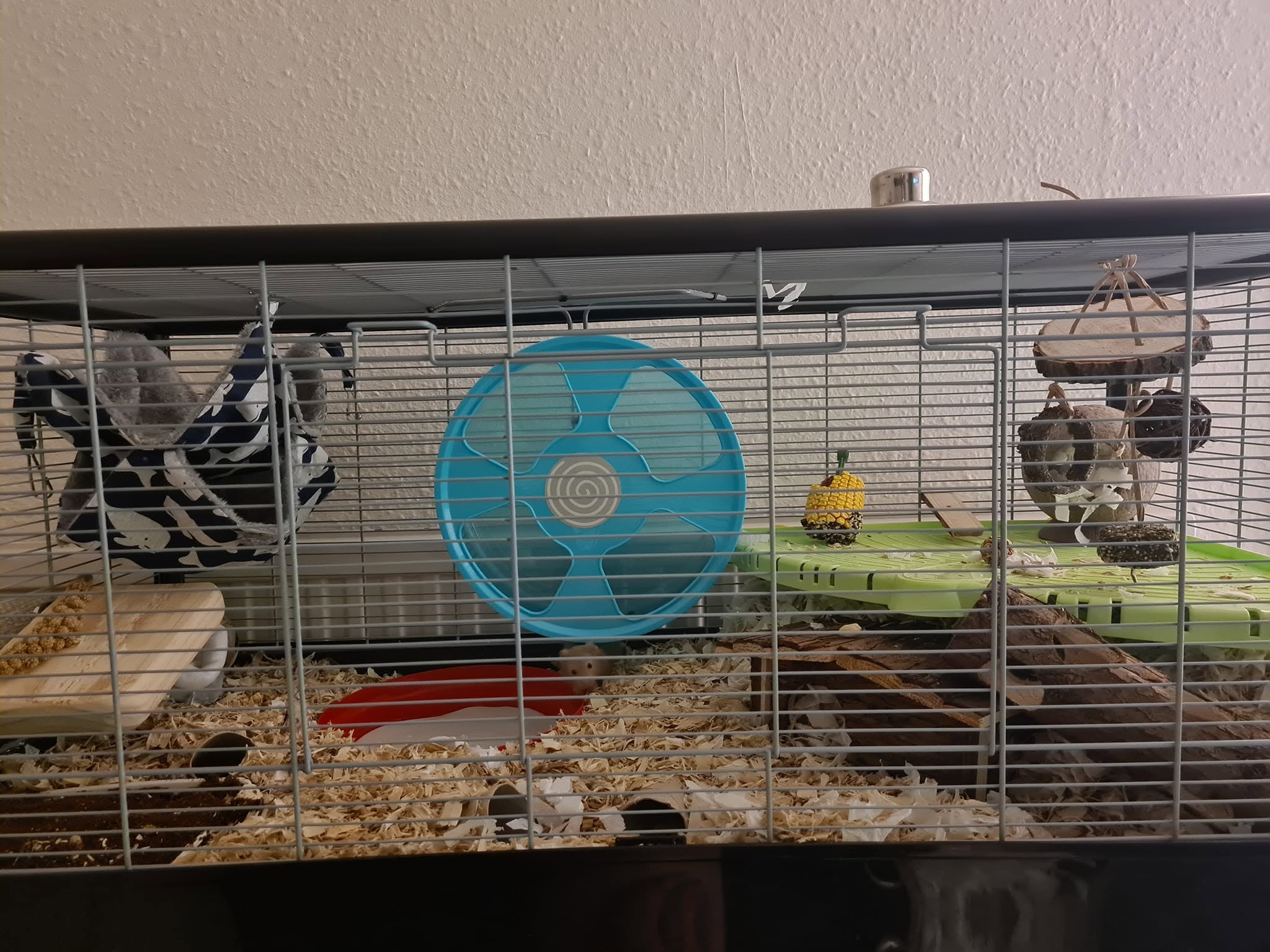
Rather than working against this deeply embedded behaviour, the best approach to hamster care works with it. Foraging and hoarding opportunities are excellent enrichment for a captive hamster, giving it a meaningful, instinct-satisfying activity that fills significant portions of its active period.
- Scatter feeding — rather than putting all the food in a bowl, scatter a portion through the bedding so the hamster has to forage for it, exactly as it would in the wild
- Foraging toys — puzzle feeders and foraging balls designed for small rodents give the hamster a task to complete to access food, extending the foraging and hoarding process meaningfully
- Deep bedding for caching — a minimum of 20 to 30cm of bedding gives the hamster room to create proper storage caches and burrow systems, satisfying the instinct far more completely than a shallow bedding layer ever could
- Multiple hide spots — providing several different hiding places throughout the enclosure encourages the natural pattern of maintaining multiple smaller caches rather than one
- Variety in food shape and size — a mix of whole seeds, larger pieces, and smaller items gives the hamster a more varied and engaging foraging experience than uniform pellets alone
Frequently Asked Questions
Should I take food away from my hamster’s hoard?
Generally no — the hoard is the hamster’s larder and disturbing it regularly causes stress. The exception is checking for and removing spoiled fresh food, which is a hygiene necessity rather than an interference with the behaviour itself. Leave dry food caches alone; they are not spoiling and the hamster will manage them appropriately.
My hamster’s cheeks look full all the time — is this normal?
Some hamsters carry food in transit for longer periods than others before emptying their pouches, and individual variation in hoarding intensity is normal. What matters is whether the fullness eventually resolves — if you observe the pouches over a day or two and see them empty and refill as part of normal activity, this is fine. Persistent fullness that never resolves, particularly on one side only, is the pattern that needs checking.
Can hamster cheek pouches turn inside out?
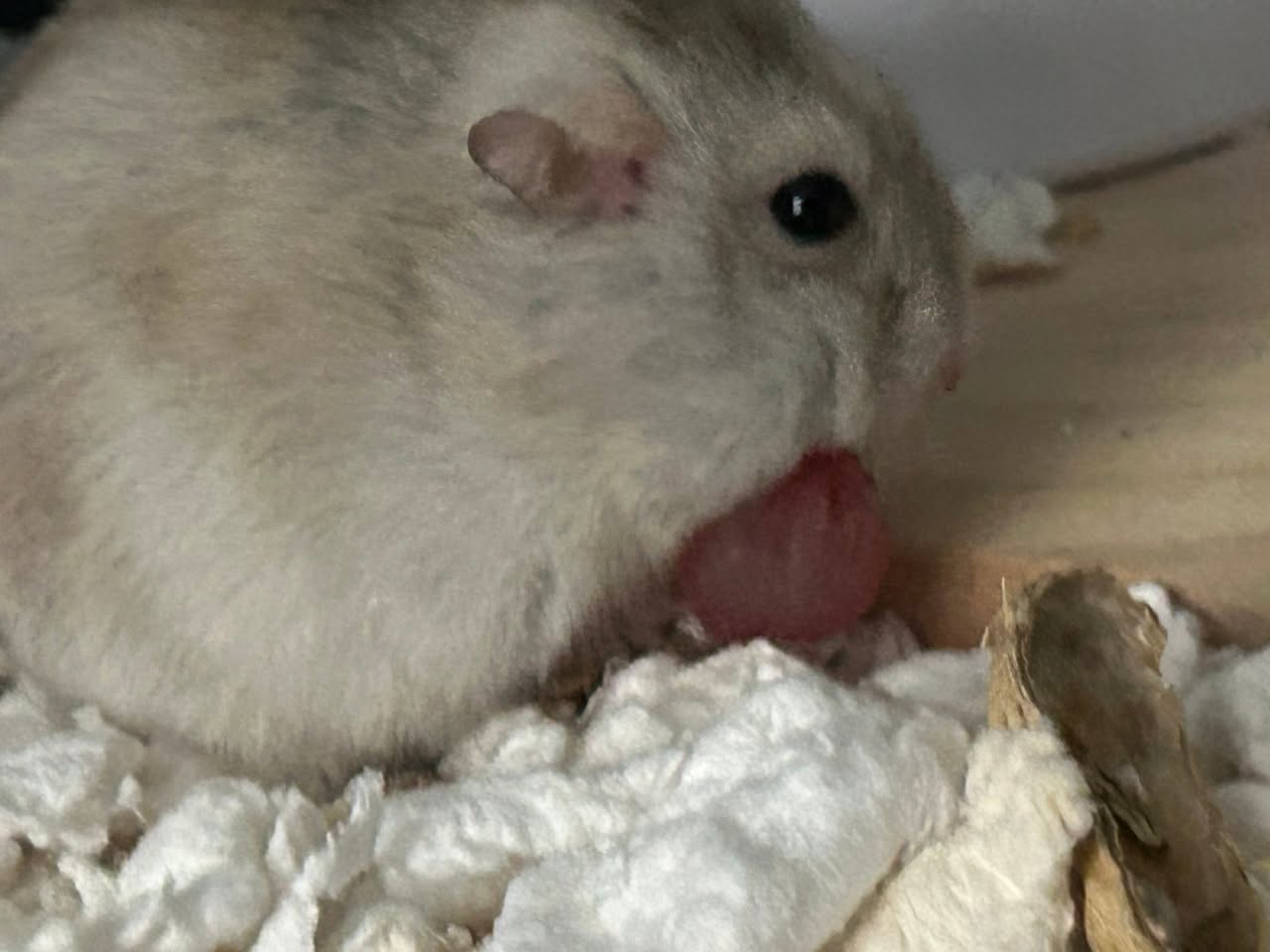
Yes — this is a known but uncommon condition called cheek pouch eversion or prolapse, where the pouch tissue turns outward, becoming visible outside the mouth. This is a veterinary emergency. The exposed tissue can be damaged or dry out quickly. If you see pink or reddish tissue protruding from your hamster’s cheek that does not look like normal stored food, contact an exotic or small animal vet immediately.
Why does my hamster stuff its cheeks even when I am just handling it, not feeding it?
Some hamsters that are mid-hoarding when picked up will keep their cheeks loaded throughout the handling session rather than emptying them, particularly if they feel any uncertainty about the situation. This is simply the hamster continuing its existing task and is not related to the handling itself. It should resolve once the hamster is back in its cage and feels secure enough to complete its caching behaviour.
Do all hamster species have cheek pouches?
Yes — Syrian hamsters, Roborovski, Campbell’s Russian dwarf, Winter White dwarf, and Chinese hamsters all have cheek pouches and all display hoarding behaviour. The pouches are proportionally similar across species relative to body size, though the overall scale of hoarding and cache size differs with the animal’s size.
Where can I get hamster care advice in Swindon?
Come and see us at Paradise Pets, Manor Garden Centre, Cheney Manor, Swindon SN2 2QJ. Or ring us on 01793 512400. For any persistent facial swelling, signs of pain, or anything that does not fit the normal pattern described in this article, see a vet experienced with small rodents. For general care and enrichment advice, we are always happy to help.
One Last Thing From Me
The boy who watched his hamster’s first seed disappear into its cheek — he came back into the shop with his mother about two months later, full of updates. He had set up a small forage area in the cage with scattered seed through the bedding. He had found his hamster’s main cache, tucked behind a hideout, and had learned to leave it alone except to check for old vegetable pieces.
He had become, in two months, a genuinely thoughtful young hamster owner — because he had understood what the cheek pouches were actually for, rather than just finding them amusing.
That is really the point of this whole article. The cheek pouches are charming, certainly. But understanding the instinct behind them — what it is for, what good enrichment looks like, and what the warning signs of a real problem are — makes you a considerably better owner than simply finding the behaviour cute and moving on.
Questions About Your Hamster’s Behaviour? Come And See Us
Cheek pouch concerns, enrichment ideas, or anything else about hamster care — come in or give us a ring. Free advice, no obligation. Over 35 years of hands-on hamster experience.