

Neil has kept, bred, and sold cage and aviary birds at Paradise Pets Swindon since 1988 — over 35 years of watching how owners feed their birds, and watching what happens when the diet is right and when it is not. Diet is the single area where I see more well-meaning mistakes than anywhere else in bird keeping. This is the honest version of what these birds actually need, not the version on the back of the cheapest bag on the shelf.
I have lost count of how many times a bird has come in with a problem — feather condition, weight, lethargy, a beak that is not quite right — and the conversation has ended up at the same place. What is it eating? And the answer, more often than I would like, reveals a diet that has been assembled with good intentions and incomplete information.
This is not a criticism of owners. Bird nutrition is genuinely more complicated than it looks from the outside, the labelling on bird food in this country ranges from excellent to actively misleading, and most people are working from advice that was correct thirty years ago and has not been updated since. I want to give you the version of bird nutrition that thirty-five years of watching the consequences has actually taught me — not the version that sells the most seed.
The Seed-Only Mistake — Why It Is Still So Common
This is where almost every conversation about bird diet starts, because it is still, by a significant margin, the most common feeding pattern I see when a new customer describes what their bird has been eating.
A bowl of mixed seed, topped up when it runs low, with little or nothing else offered consistently. It is the feeding pattern that most of us grew up with, the one that featured on the side of countless seed packets for decades, and the one that requires the least thought from the owner — which is precisely why it has persisted so long after the nutritional understanding behind it moved on.
The problem is straightforward once you understand it. Seed is calorie-dense and fat-rich, but it is nutritionally incomplete. It is low in several vitamins and minerals that birds need, and most birds presented with a mixed seed dish will selectively pick out the seeds they find most palatable — usually the highest-fat ones, like sunflower and safflower — and leave the rest. The bird is not eating a balanced mix even when a balanced mix is what was put in the bowl. It is eating the parts of the mix it likes, which skews the nutritional intake further toward fat and further away from balance.
Over months and years, a seed-only diet produces a recognisable pattern of problems: vitamin A deficiency affecting skin, feather and respiratory health, calcium and vitamin D3 deficiency affecting bone and egg-laying health in females, obesity from the excess fat intake, and a general fragility that shows up as poor feather condition, reduced resistance to infection, and a bird that simply does not have the resilience a well-nourished one has.
None of this happens overnight. That is exactly why it goes unnoticed for so long. A bird on a poor diet does not collapse in week one. It deteriorates slowly, over years, in a way that is genuinely difficult to see happening from week to week — which is why so many owners are taken by surprise when a problem eventually surfaces.
What a Genuinely Balanced Diet Actually Looks Like
Having spent the last section explaining what not to do, here is the practical alternative — the diet I actually recommend to owners at the counter, adjusted for the specific species but built on the same underlying structure.
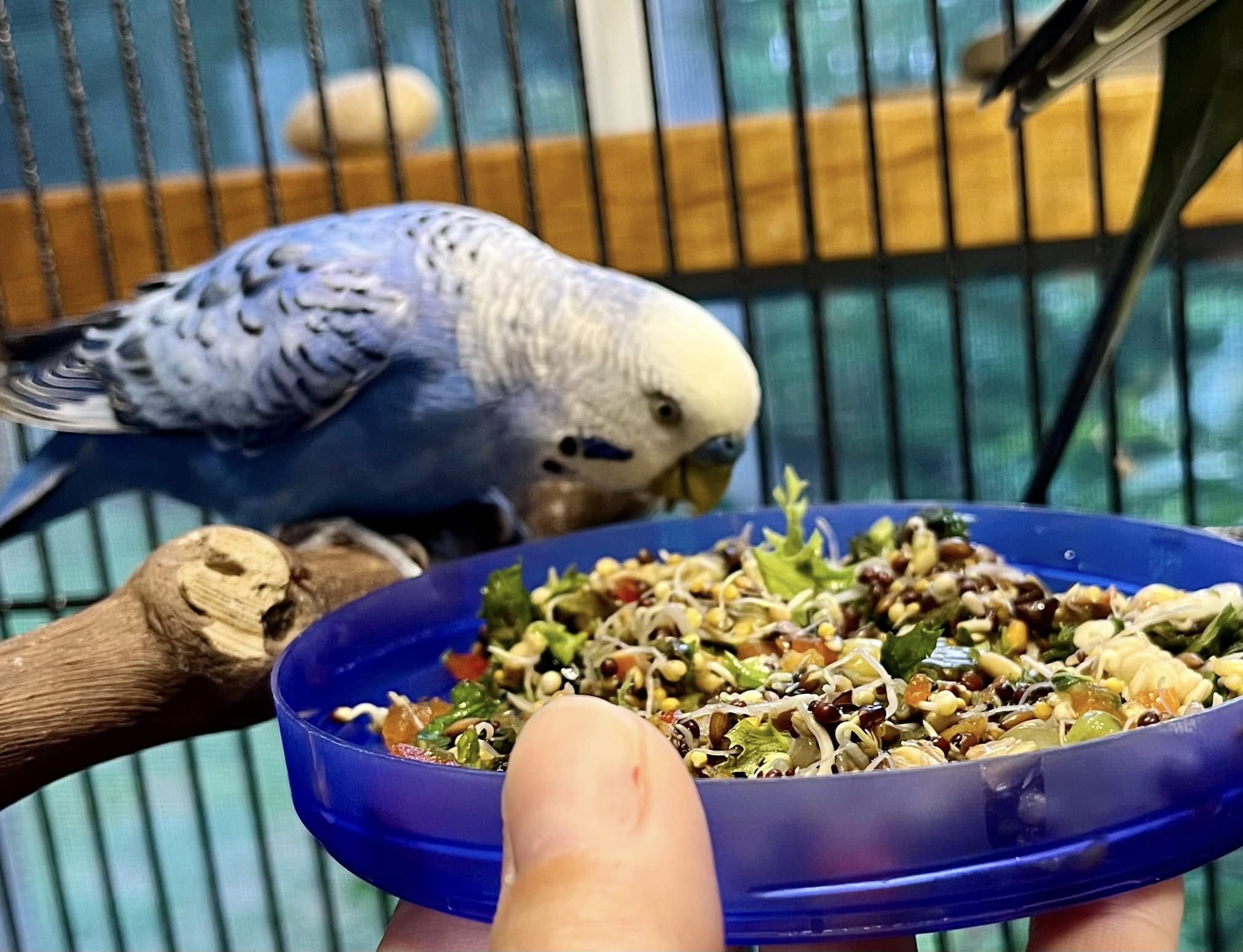
A good quality formulated pellet should form a meaningful part of the daily diet for most cage birds. Pellets exist specifically to solve the selective-eating problem that loose seed mixes create — because the nutrition is baked into every piece, a bird cannot pick out the bits it likes and leave the rest nutritionally short. Not every pellet on the market is equally good, and it is worth choosing one without excessive fillers or artificial colourants, but a quality pellet as part of the diet addresses the single biggest weakness of a seed-only approach.
Fresh vegetables and some fruit should be offered daily, not occasionally. Dark leafy greens, peppers, carrot, broccoli, and a rotating selection of other bird-safe vegetables provide vitamins that seed and even pellets do not fully replace, particularly vitamin A. Fruit can be included in smaller quantities because of its higher sugar content, but should not be left out entirely — it adds variety and additional nutrients that contribute to the overall picture.
Seed still has a place, but as a smaller component than most owners currently offer — a treat and a supplementary food rather than the foundation of the diet. For species like budgies and canaries, a smaller daily seed allowance alongside pellets and fresh food gets the balance closer to right than the seed-dominant bowl most cages still carry.
Calcium and grit deserve specific mention because they are so often overlooked. A cuttlefish bone or mineral block should be permanently available in the cage, not as an occasional addition but as a constant fixture, particularly important for breeding females whose calcium demands are significantly higher.
Fresh, clean water, changed daily, is the final and most basic element — obvious, but worth stating plainly because a stale or contaminated water supply undermines everything else about an otherwise good diet.
Species Differences — Why One Diet Does Not Fit All
This is the part of the conversation that gets skipped most often in generic feeding advice, and it matters more than people expect.
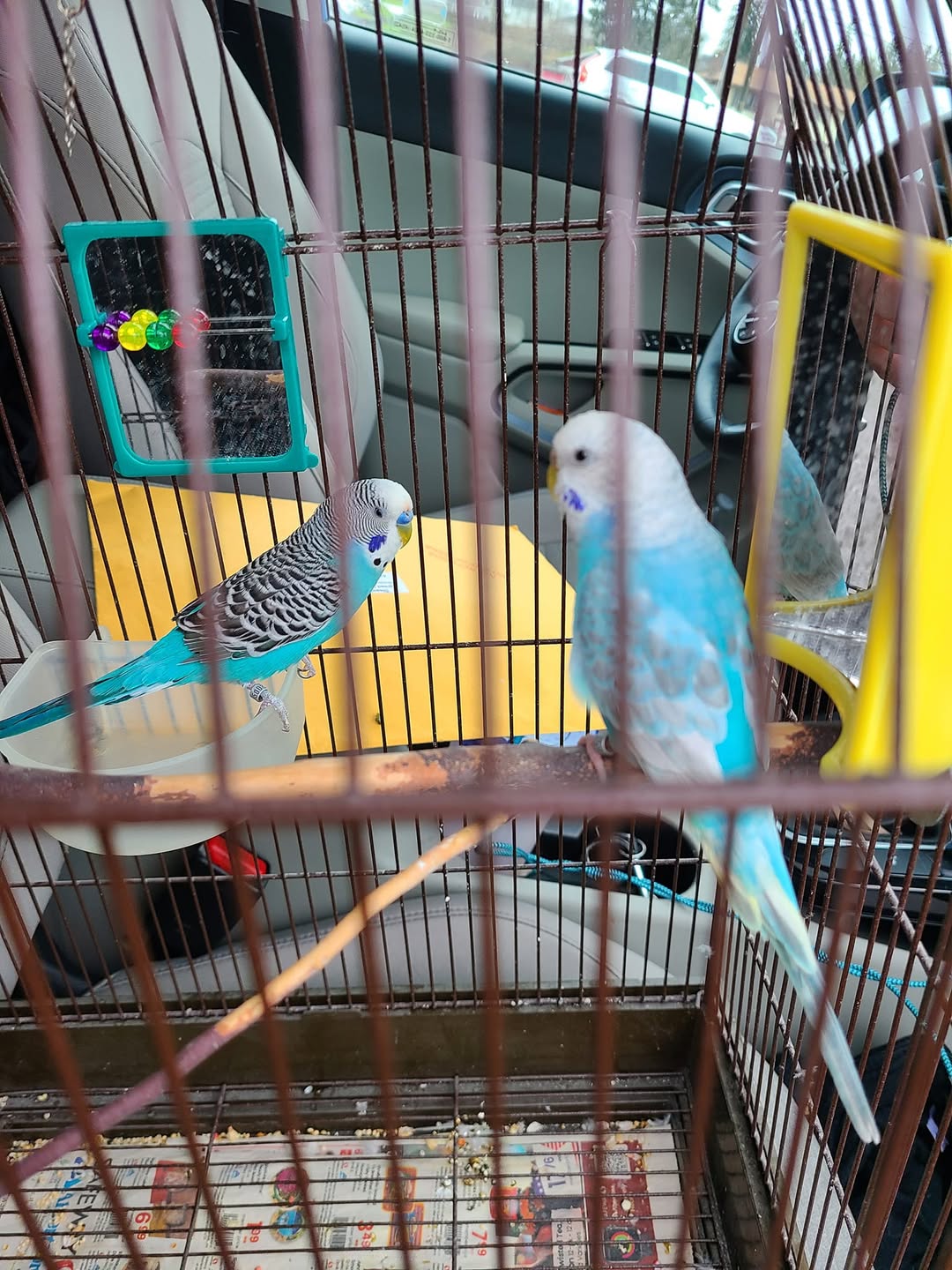
Budgerigars do well on a diet built around a smaller seed component, good quality pellets, and daily fresh vegetables, with particular attention to calcium provision given how prone they can be to reproductive health issues without it.
Canaries and finches have higher metabolic rates relative to their size and benefit from a slightly different balance, often including soft food or egg food during breeding periods to support the additional nutritional demand of raising chicks, alongside their staple seed and fresh food.
Cockatiels need a similar overall structure to budgies but in correspondingly larger quantities, and are particularly prone to vitamin A deficiency if kept on a seed-heavy diet for extended periods, which shows up in respiratory and skin health over time.
Larger parrot species have their own specific dietary considerations entirely beyond the scope of what we are discussing here for smaller cage and aviary birds, and anyone keeping a larger parrot species should be working from species-specific advice rather than generic small-bird guidance.
The point of setting this out is not to overwhelm anyone with detail, but to make clear that “bird food” as a single category does not really exist in any meaningful nutritional sense. The right diet depends on the species in front of you, and a feeding regime that works well for one can be subtly wrong for another.
The Labelling Problem — Why the Bag Does Not Tell You Enough
I want to address something that frustrates me about parts of this market, because it directly affects how well-meaning owners end up making the seed-only mistake in the first place.
A great deal of bird food packaging in this country emphasises seed variety and bright, appealing colours rather than nutritional completeness. Multi-coloured seed mixes with dyed pieces, bags marketed around the sheer number of seed types included, packaging that leans on the word “natural” without addressing the actual nutritional gaps that seed alone leaves — all of this is widely available and easy to find, and very little of it makes the selective-eating problem or the vitamin and mineral shortfalls obvious to a buyer who has not been told to look for them.
This is not universal — there are genuinely good quality, well-formulated products on the market, including proper pellet-based diets that have done the nutritional work properly. But you generally have to know what you are looking for to find them, because the labelling conventions in this category do not make the distinction obvious at a glance the way, say, nutritional labelling on human food increasingly does.
My advice is to look past the seed variety claims on the front of the packaging and check what is actually being offered nutritionally — whether there is a pellet component, what the seed-to-filler ratio looks like, and whether the product is formulated for the specific species you are feeding rather than a generic “bird seed” category.
What I Tell Owners at the Counter
When someone comes in with a bird that is not quite right and the conversation gets round to diet, I do not lecture anyone about what they have been doing wrong. Almost everyone who has fed their bird a seed-heavy diet has done so because that is what they were told to do, years ago, by someone who was working from the same outdated information.
What I do is set out the practical change: introduce a quality pellet alongside the existing seed rather than replacing everything overnight, start offering fresh vegetables daily rather than occasionally, get a cuttlefish bone or mineral block into the cage permanently, and gradually shift the balance away from seed as the dominant food and toward seed as one part of a more rounded diet.
Birds can be slow to accept new foods, particularly older birds set in their ways on a seed-only diet for years, so this is a gradual process rather than an overnight swap — but it is one of the most worthwhile changes an owner can make, and the improvement in feather condition, energy, and general resilience over the following months is something I have watched happen often enough to be confident recommending it without reservation.
Come in if you want specific advice for your own bird’s species and current diet. We are at Manor Garden Centre, Cheney Manor Industrial Estate, Swindon, SN2 2QJ — open every day. Or call us on 01793 512400.
- “It’s a balanced mix so it must be a balanced diet” — A balanced mix in the bag does not mean a balanced intake in the bird, because most birds selectively eat the highest-fat seeds and leave the rest. What is offered and what is actually consumed are two different questions.
- “Fruit and vegetables are just a treat, not a real part of the diet” — Fresh vegetables in particular should be a daily staple, not an occasional extra, because they provide vitamins that seed alone does not adequately supply.
- “All bird seed is basically the same” — Seed-to-filler ratios, the presence or absence of a pellet component, and species-specific formulation vary considerably between products, and the differences matter nutritionally even when the bags look superficially similar on the shelf.
- “My bird has eaten this way for years and seems fine” — Nutritional deficiency from a poor diet typically develops slowly over months or years, which is exactly why problems often go unnoticed until they have become established rather than being visible from the start.
- “Switching foods will just confuse or stress the bird” — A gradual transition, introducing new foods alongside the existing diet rather than an abrupt swap, allows even a bird that has eaten one way for years to adjust without unnecessary stress.
Visit Us at Paradise Pets Swindon
We stock quality pellet-based diets, fresh food guidance, and a properly selected range of seed for cage and aviary birds. If you want specific advice on your bird’s current diet and what to change, come in and talk to us.
We also stock guinea pigs, gerbils and hamsters, and rabbits.