
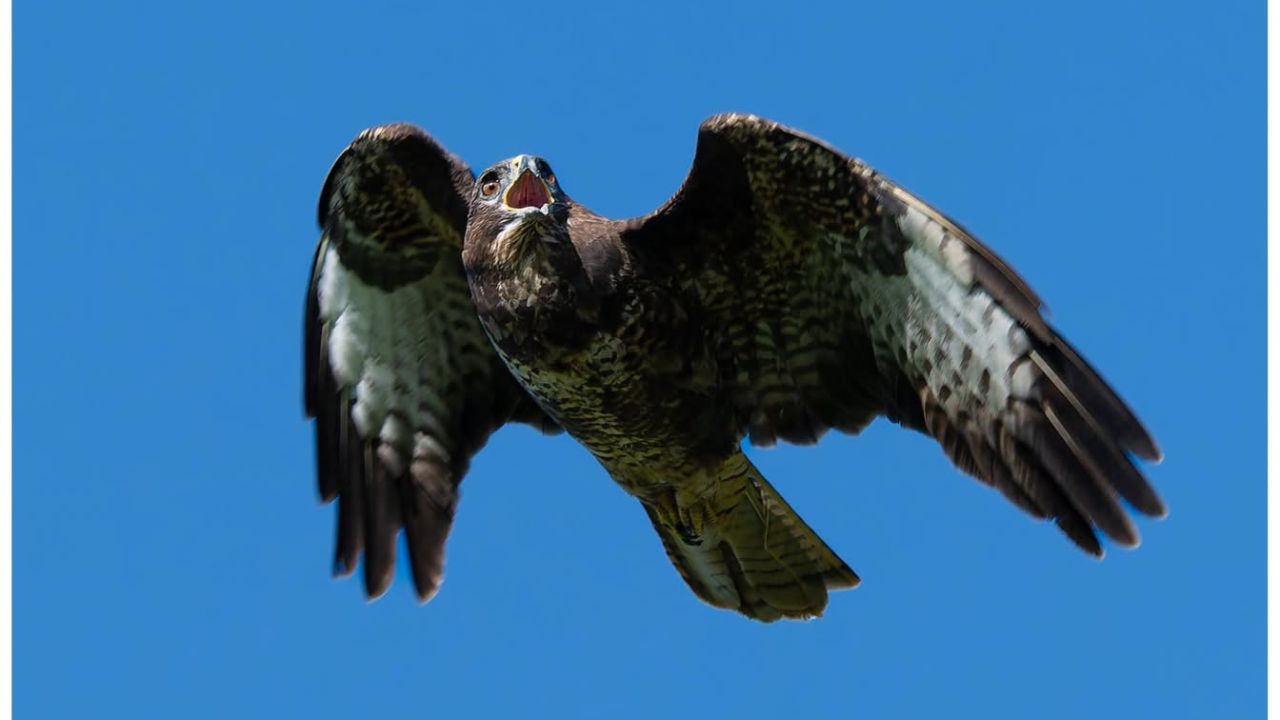

Neil has run Paradise Pets Swindon since 1988 — over 35 years of watching UK bird life, advising on birds of prey, and answering the questions that wildlife stories in the news bring through the shop door. This week, the story arriving at the counter is from Coleorton in Leicestershire, where residents are being terrorised by an aggressive buzzard attacking people on pathways almost daily. This article is his honest account of what is actually happening, why it happens, what the law says, and what people on the ground can and cannot do about it.
A man came in mid-week with a printout of the story. He had seen it shared on social media and wanted to know what he thought about it. He lives in a village on the edge of Swindon with a large mature oak at the end of his garden, and he had been watching a pair of buzzards circling over it for most of the spring.
“Could this happen here?” he said.
The honest answer — the one I gave him — is yes, it could. Not probably. Not even likely. But genuinely possible, under specific circumstances, for a specific window of time each year. And the story coming out of Coleorton this week is not a freak event. It is a story that has played out in various forms in various parts of the UK with increasing frequency as the buzzard population has recovered and expanded.
Understanding what is driving it — what is actually happening with the bird in Coleorton, what the legal situation is, and what people can realistically do — is more useful than the alarm the headlines generate. That is what this article is for.
What Is Actually Happening in Coleorton
The reports from Coleorton, Leicestershire are specific and serious. Residents of the small Leicestershire village are being terrorised by an aggressive buzzard that has been diving at people almost daily. One man suffered serious injuries during a recent attack, left with deep lacerations stretching from his forehead to the top of his skull after the buzzard struck him with its talons.
The attacks have become so frequent that villagers now live in fear of using certain pathways. Samantha Thorpe, 36, who lives near where the buzzard nests, described the situation: “It tends to swoop down and just attack anyone who walks through the pathway. I see people being swooped at almost every day, it’s that bad.” She added: “I have two kids and I don’t let them go up there either, it’s just too dangerous and my neighbours are of the same opinion.”
This is not the bird behaving erratically. It is the bird behaving exactly as its instincts dictate — and those instincts, in a nesting buzzard, are extremely powerful. The pathway the bird is defending almost certainly passes close to an active nest. Every person who walks that path is, from the bird’s perspective, a potential threat to its eggs or chicks. The response is attack.
The RSPB’s position on what is driving this is clear. The Royal Society for the Protection of Birds believes the buzzard is most likely breeding and acting on instinct to protect its young. An RSPB spokesman said: “Aggression can often be caused when birds feel threatened or are protecting their young. When faced with a bird showing aggressive behaviour, the best thing is to give them space, avoid the immediate area and even take an alternative route.”
That is sensible advice. It is also advice that is easier to follow when you do not live immediately adjacent to the pathway in question, when the pathway is the route to local amenities, or when — as with the man who was seriously injured — you did not know the attack was coming until it happened.
Why Buzzards Attack People — The Biology Behind the Headlines
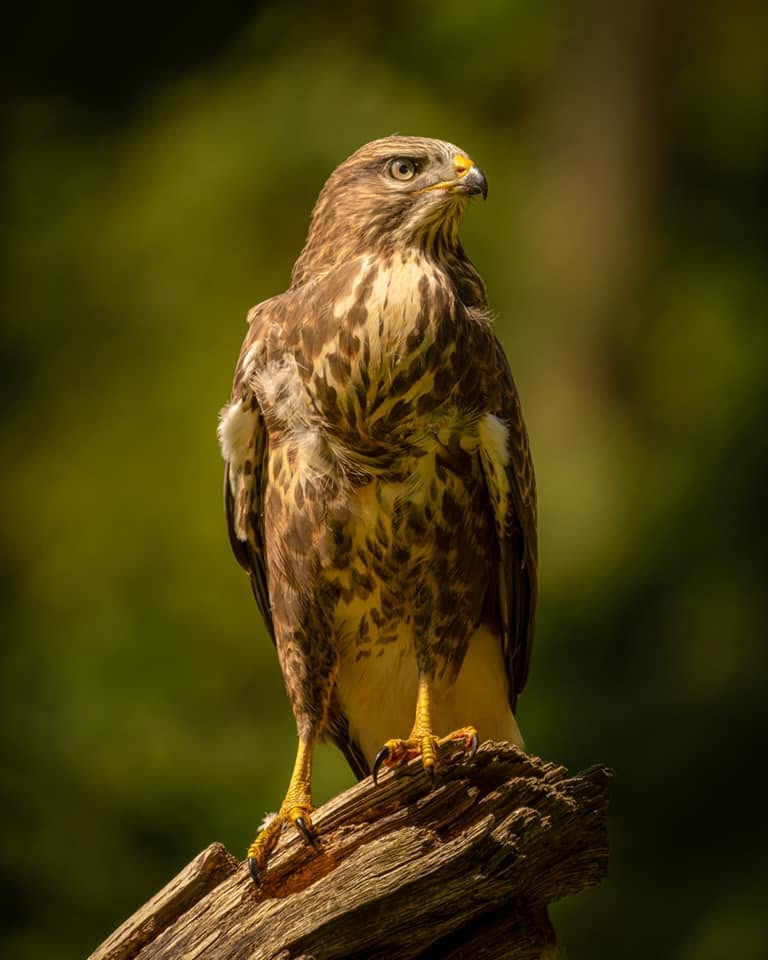
The buzzard has become the most common and widespread bird of prey in the UK. That status is recent — within living memory, the buzzard was largely confined to upland Wales, the Lake District, and parts of Scotland, having been driven from much of England by persecution through the nineteenth and early twentieth centuries. Legal protection from 1954 onward, combined with reduced persecution and the recovery of rabbit populations, allowed the buzzard to recolonise England progressively from the west and north. Today, buzzards are found in every county of England, Wales, and Scotland.
As the population has expanded into urban fringes, suburban woodlands, and village landscapes — places where the bird did not formerly breed — the likelihood of nesting pairs establishing territories in close proximity to human foot traffic has increased substantially. The Coleorton story is partly a consequence of that expansion.
Buzzard aggression toward humans is almost exclusively a nesting-season behaviour. It occurs when a nest is active — eggs or chicks present — and when the defending bird perceives human approach as a threat to that nest. The aggression is not random, not general, and not a sign of a bird that has changed its fundamental character. It is targeted, territorial, and time-limited.
- Buzzard aggression toward humans is almost always nesting-season behaviour — driven by the defence of eggs or chicks
- The bird targets anyone who passes through what it perceives as the threat zone around its nest — it does not distinguish between individuals
- Attacks typically involve a steep dive and contact with the talons to the back or top of the head — the bird strikes from behind and above, as it would strike prey
- The behaviour is instinctive and consistent — the same bird will attack repeatedly, in the same location, until the nesting cycle is complete
- The nesting season for buzzards typically runs from April to July — the peak attack period is when chicks are in the nest, roughly May to late June
- Once chicks have fledged and dispersed, the territorial defence drive diminishes rapidly and attacks typically cease
Why the Attacks Can Be Severe — What Buzzard Talons Actually Do
The injuries reported from Coleorton — deep lacerations from the forehead to the top of the skull — need to be understood in the context of what a buzzard actually is physically. This is not a garden bird. It is a medium-to-large bird of prey with physical equipment designed for killing.
An adult common buzzard weighs between 550g and 1.3kg. Its wingspan ranges from around 110cm to 130cm. Its talons — the weapons it uses in this context — are curved, sharp, and strong enough to grip and pierce the skin of a rabbit or a small mammal with sufficient force to kill. The same equipment, deployed at the back of a human head at the speed of a diving buzzard, produces the kind of injuries that have been reported from Coleorton.
The attack pattern is consistent across all reported cases. The bird approaches from behind and above — outside the victim’s visual field — and strikes the highest point it can reach, which is the top or back of the head. The strike is fast, unexpected, and disorienting. Most victims describe the initial impact as feeling more like a physical collision than a bird attack — the force is significant and the sharpness of the talons means the contact produces lacerations rather than simple bruising.
- Adult buzzards weigh up to 1.3kg with a wingspan up to 130cm — a substantial physical presence
- Talons are designed for piercing and gripping — they produce lacerations, not bruising, on contact with human skin
- The attack approach is from behind and above — outside the victim’s awareness until contact is made
- The strike targets the highest point — the top or back of the head — which means tall people are sometimes at greater risk than shorter ones
- Multiple strikes in a single encounter are possible if the person does not move out of the defended zone
- Head wounds bleed heavily even from relatively shallow lacerations — the visual impact of the injury often exceeds its medical severity, though deep lacerations as reported from Coleorton are genuinely serious and require medical attention
The Legal Situation — What Can and Cannot Be Done
This is the part of the story that generates the most frustration — and the part that most people do not fully understand before they read about it in the context of a village being terrorised.
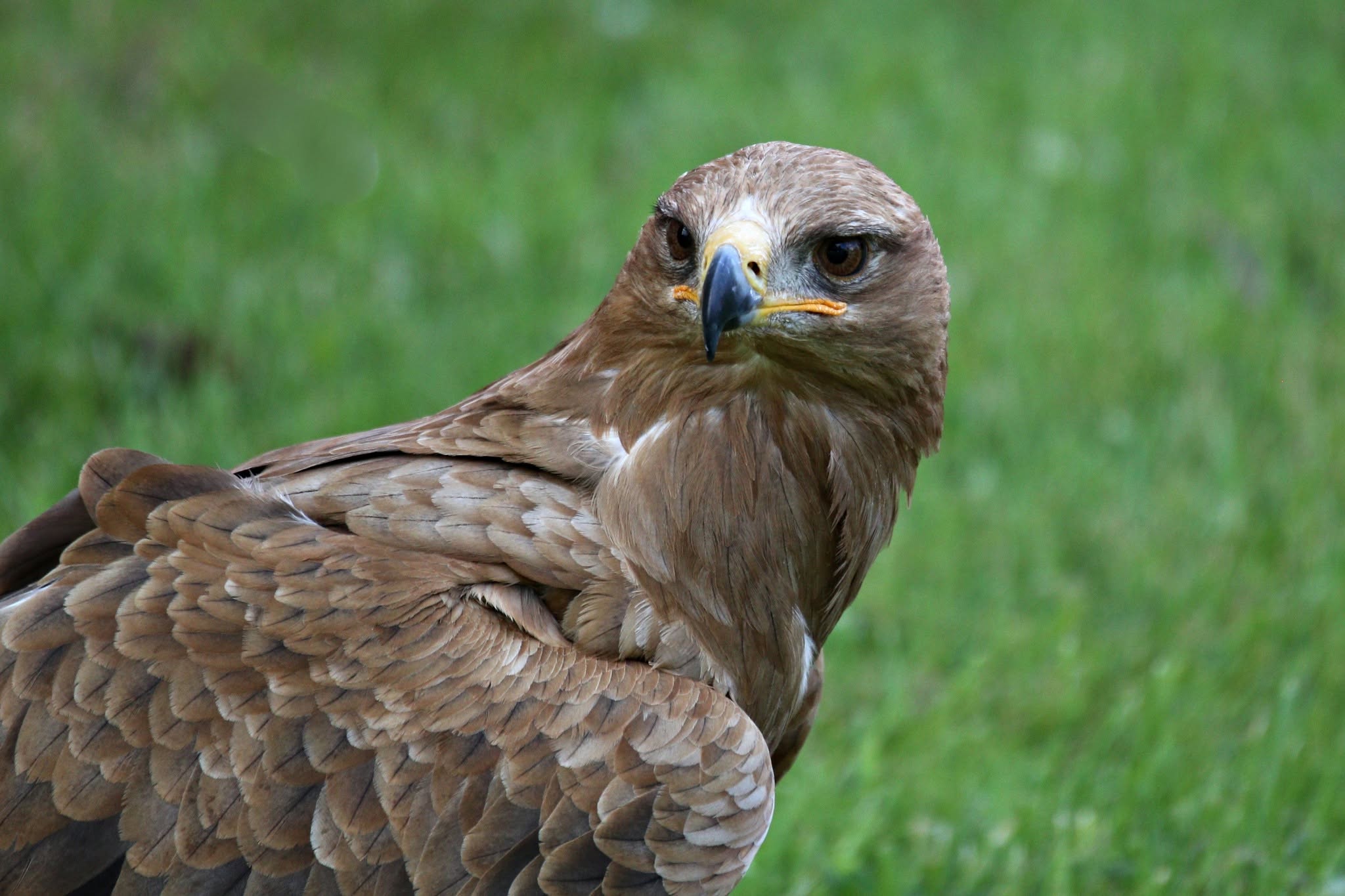
The common buzzard is protected under the Wildlife and Countryside Act 1981. It is a Schedule 1 species — among the highest level of legal protection available to any bird in the UK. It is illegal to intentionally kill, injure, or take a buzzard. It is illegal to take, damage, or destroy an active nest. It is illegal to disturb a buzzard at or near an active nest containing eggs or young.
This means that the options available to the villagers of Coleorton, and to any local authority or wildlife organisation asked to help, are severely limited by law. The bird cannot be removed. The nest cannot be disturbed. The bird cannot be deterred by means that would injure or disturb it at the nest.
What can legally be done is limited to indirect deterrence — modifying the pathway or the environment around it to reduce the likelihood of people entering the defended zone, providing clear warning signage, and advising the public to use alternative routes. None of these solve the problem for residents who live in the immediate area and have no alternative to using the affected pathway.
- The common buzzard is fully protected under the Wildlife and Countryside Act 1981 — Schedule 1 species
- It is illegal to intentionally kill, injure, or take a buzzard under any circumstances without a specific licence
- It is illegal to disturb a buzzard at or near an active nest — this severely limits what can be done while the nest is active
- Natural England can issue licences for the control of protected species in specific circumstances — but lethal control of a nesting buzzard protecting young is extremely unlikely to be licensed
- Legal options are limited to indirect deterrence — signage, path modification, public advice — none of which provides immediate relief for affected residents
- The situation resolves naturally once the nesting cycle is complete and the chicks have fledged — typically within four to eight weeks of attacks beginning
- Any deliberate disturbance of a nesting buzzard — including throwing objects, playing loud sounds near the nest, or attempting to move the nest — is a criminal offence under the Wildlife and Countryside Act 1981
- Prosecution and significant fines are possible for anyone found to have deliberately interfered with a protected bird or its nest
- If you believe a nesting buzzard poses a genuine public safety risk, contact the RSPB or Natural England for advice on legal options — do not take unilateral action
What People on the Ground Can Actually Do
The legal protection of the bird does not mean there is nothing that can be done. It means the options are different from what people instinctively reach for. Here is what practically works — and what the evidence from previous buzzard attack incidents suggests is effective.
Avoid the defended zone
The RSPB’s advice is the right starting point: avoid the area where attacks are occurring and take an alternative route. The defended zone around an active nest is typically a radius of fifty to one hundred metres from the nest site. Attacks occur consistently within this zone and rarely outside it. If an alternative route is available, use it until the nesting cycle is complete.
Protect the head when passing through
For those who must pass through the affected area, protecting the head significantly reduces the risk and severity of injury. A cycle helmet, a hard hat, or even a firmly attached wide-brimmed hat reduces the vulnerability of the head significantly. In the Scottish buzzard attack incidents of 2023, runners were specifically advised to wear helmets. The buzzard targets the head — protecting it is the most effective personal safety measure available.
Do not run
Running — the movement pattern of fleeing prey — appears to trigger a stronger attack response in nesting raptors than walking. Moving at walking pace through the defended zone is less likely to provoke an attack than running through it. This is not a guarantee, but it is consistent with how predatory instincts work in birds of prey.
Use an umbrella or raised object
Carrying an open umbrella, a walking stick held over the head, or any object that breaks the profile of the human head is effective at deterring attacks. The bird targets the highest point of the figure approaching its nest — breaking that profile with an object overhead changes what the bird is targeting and reduces the likelihood of contact with the head.
Know when it will stop
The single most useful piece of information for residents in Coleorton and anyone else dealing with a nesting buzzard situation is this: it will stop. The nesting cycle for buzzards runs from egg laying in March or April through to fledging in June or July. Once the chicks have fledged and become independent, the territorial defence drive drops away and attacks cease. The timeframe is weeks, not months. Knowing this does not make the current situation comfortable, but it provides a realistic endpoint.
Why This Is Happening More Often — The Buzzard Recovery Story
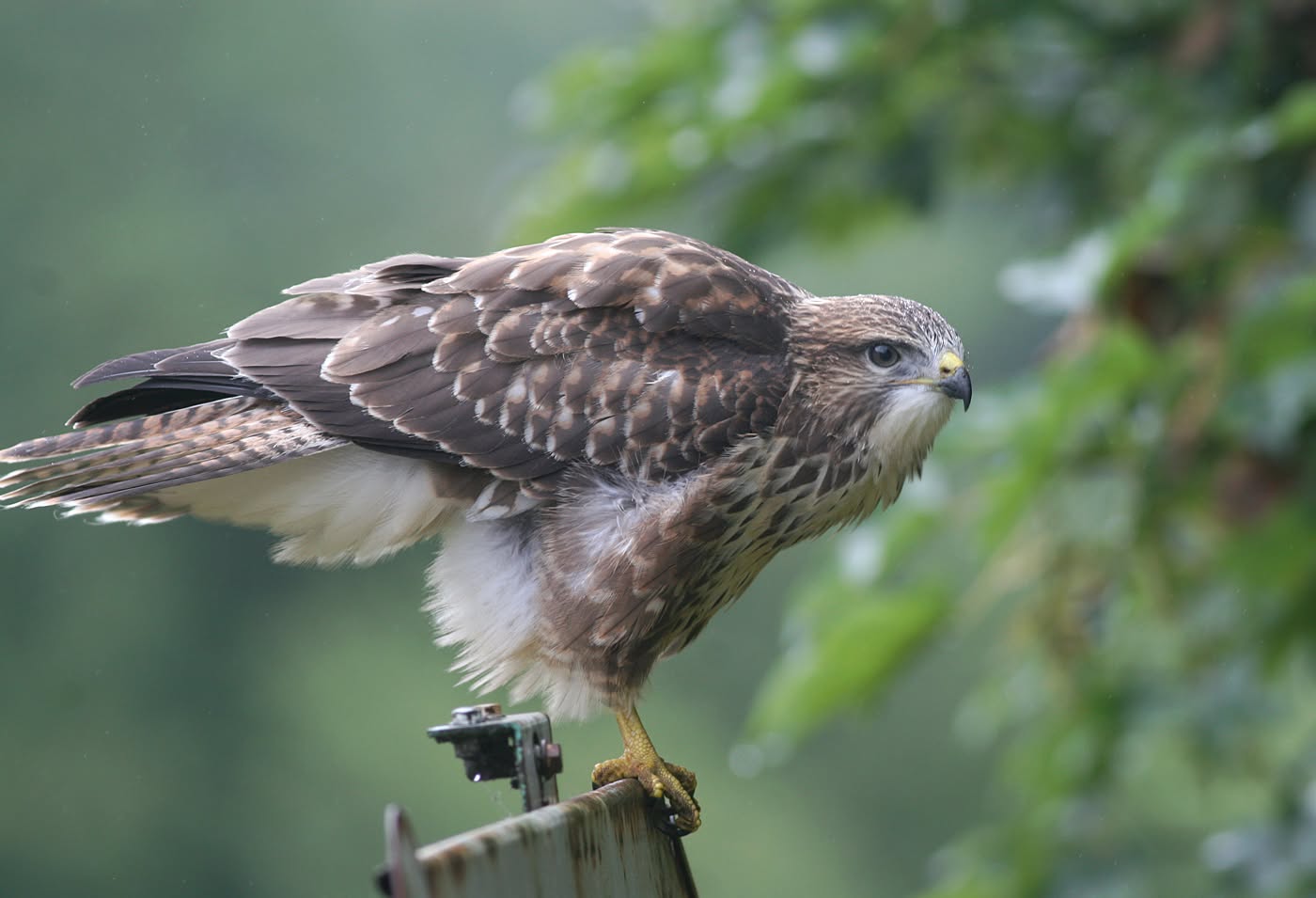
Stories like Coleorton are becoming more common — not because buzzards have become more aggressive, but because there are more of them, in more places, than at any point in the past two centuries. Understanding the recovery of the UK buzzard population provides the context for why village pathway incidents are increasing.
The buzzard was once widespread across the whole of Britain. It was systematically persecuted through the eighteenth and nineteenth centuries — by gamekeepers protecting game bird stocks, by farmers protecting poultry and livestock, and by collectors. By the mid-twentieth century, the species had been driven from most of England, surviving in significant numbers only in the uplands of Wales, the Lake District, and parts of Scotland.
Legal protection from 1954 onward — and the gradual reduction in illegal persecution that followed — allowed a slow recovery. The myxomatosis epidemic that decimated the rabbit population in the 1950s temporarily slowed this recovery, as rabbits are a significant component of the buzzard’s diet. But as rabbit populations recovered and as illegal persecution reduced further, the buzzard expanded steadily eastward and southward through England.
By the early 2000s, buzzards were breeding in every English county for the first time in well over a century. Today, the UK population is estimated at between 60,000 and 80,000 pairs — making the common buzzard the most numerous bird of prey in Britain by a considerable margin.
- The UK buzzard population has recovered from historical persecution to an estimated 60,000–80,000 breeding pairs — the most numerous bird of prey in Britain
- The species now breeds in every county of England, Wales, and Scotland for the first time in over a century
- Expansion into urban fringes and village landscapes has increased the number of nesting pairs in close proximity to human foot traffic
- More buzzards in more places means more nesting incidents in proximity to paths, roads, and residential areas
- This is a conservation success story — but success brings the complexity of a recovered predator species reintegrating into a human-dominated landscape
- Similar patterns of increased nesting conflict are seen with other recovering raptors — red kites, ospreys, and peregrines in urban areas have all produced comparable situations
Previous UK Buzzard Attack Incidents — This Is Not Without Precedent
Coleorton is not the first UK village or town to face this situation — and looking at how previous incidents have played out is useful context for what residents there can expect.
In Friockheim, Angus, in 2023, runner Ewan Cameron was left with six talon holes in his head after a buzzard attacked him on his regular running route. After he shared his story online, multiple other runners came forward saying they had experienced similar attacks in the same area. The RSPB confirmed the bird was most likely protecting its young in a nearby nest. The situation resolved naturally when the nesting season ended.
In Havering-atte-Bower, east London, a buzzard nicknamed Brenda by local schoolchildren caused a local primary school to prohibit outdoor play while the bird was active. The RSPCA confirmed the behaviour was most likely related to nest protection. Again, the situation resolved naturally with the end of the nesting cycle.
In Flitwick, Bedfordshire, several residents were attacked by a buzzard while walking and jogging. The RSPB’s Jeff Knott described the events as “extremely rare” but advised residents to avoid the area during the breeding season. The attacks stopped when the nesting cycle was complete.
The pattern across all these incidents is consistent: nesting season trigger, targeted attacks on a specific pathway or area, legal protection preventing direct intervention, and natural resolution once chicks fledge. Coleorton will almost certainly follow the same arc.
What to Do If You Are Attacked by a Buzzard
For completeness — and because the Coleorton story will have people in other parts of the country wondering what they would do if this happened to them — here is the practical guidance.
- Do not stop and face the bird — backing away while keeping upright and moving calmly out of the defended zone reduces the likelihood of a follow-up strike
- Cover the head with whatever is available — a bag, a jacket, crossed arms — to protect from a second strike while you move away
- Do not run — it triggers the predatory pursuit response. Walk quickly but do not run
- Seek medical attention for any talon wound — bird talons carry bacteria and any penetrating wound should be assessed and cleaned professionally. Lacerations to the scalp bleed heavily and may require cleaning or closure
- Report the incident to the local council and the RSPB — not to prompt action against the bird, but to ensure the area is appropriately signed and other users of the path are warned
- Do not return to the same path until the nesting season has ended — doing so increases your injury risk and does nothing to resolve the situation
Frequently Asked Questions
Can anything be done to stop the buzzard in Coleorton?
Legally, the options are limited while the nest is active. The bird cannot be removed, relocated, or deterred by any method that constitutes disturbance at the nest. What can be done is to close or sign the affected pathway, advise residents on protective measures, and wait for the nesting cycle to complete. Natural England can be contacted for advice on whether any specific licence-based intervention is possible, but this is unlikely in a straightforward nesting defence case. The most realistic answer is that the situation will resolve itself within weeks of the chicks fledging.
Is the common buzzard actually dangerous?
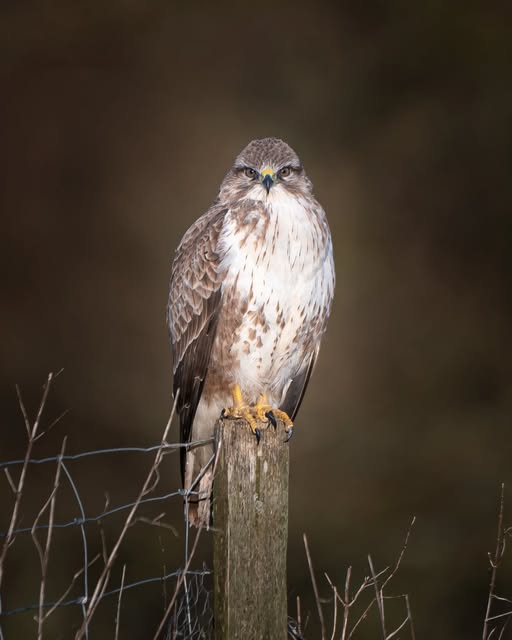
In the context of a nesting defence situation, yes — the injuries from Coleorton demonstrate that clearly. In any other context, no. A buzzard walking through a field is no more dangerous to a human than any other large bird. The aggression is entirely situational — confined to the nesting season and the area around an active nest. A buzzard seen soaring over countryside or perching on a fence post outside of the nesting context poses no risk whatsoever to anyone.
Are buzzard attacks becoming more common in the UK?
Reports of nesting buzzard conflicts with humans have increased in frequency over the past decade, which reflects the expansion of the UK buzzard population into areas where the species has not previously nested in significant numbers. More buzzards in more places, including village and suburban landscapes, means more opportunities for nesting conflicts. This does not reflect a change in buzzard behaviour — it reflects a change in buzzard distribution.
How do I know if there is a buzzard nest near me?
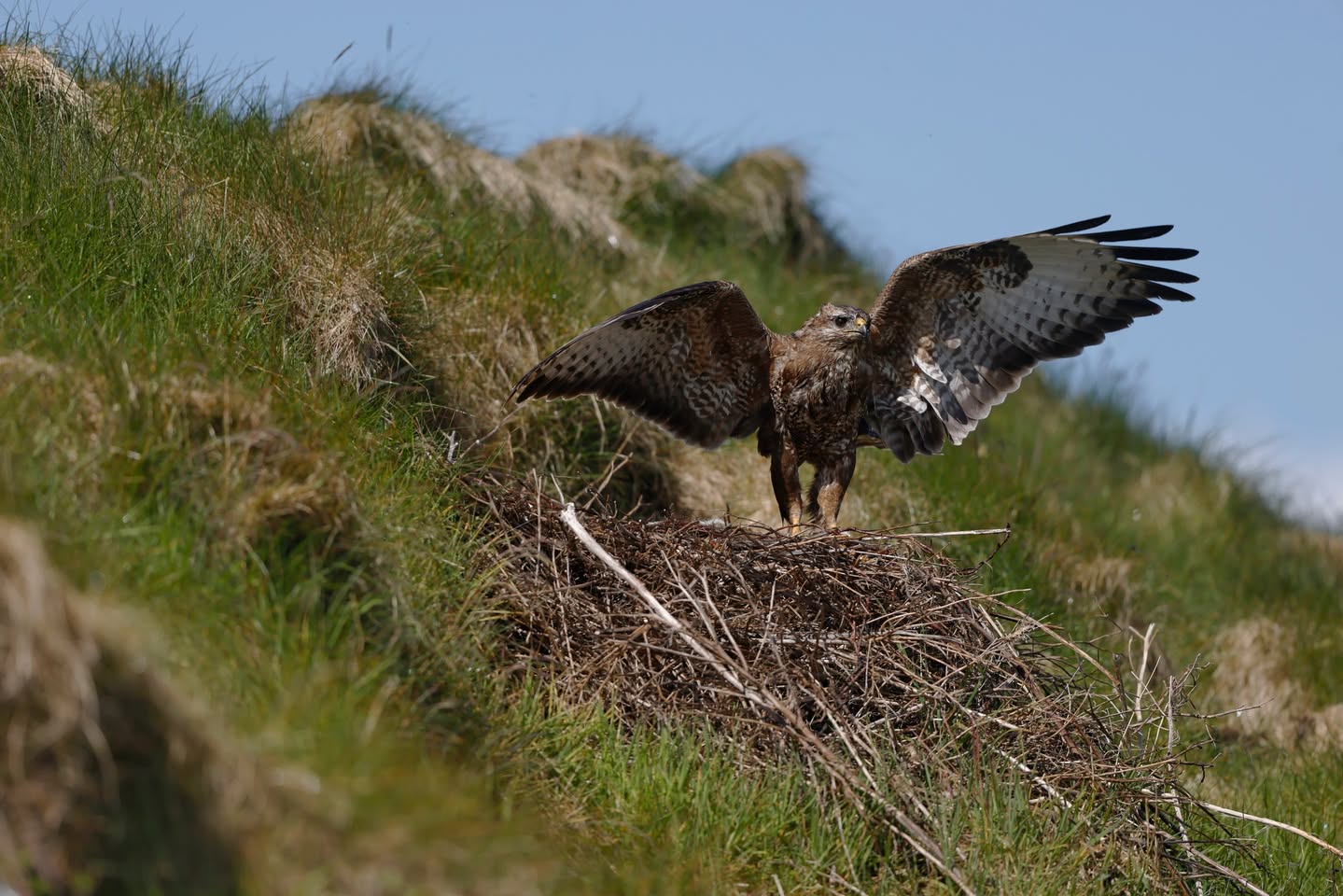
Adult buzzards become noticeably territorial around nesting sites from late March onward. They are often visible circling and calling over the nest area. The nest itself — a large platform of sticks typically in the fork of a tall mature tree — may be visible from below. If you notice a buzzard repeatedly calling and circling over the same area of trees, or making repeated low passes at the same point on a path, there is likely a nest nearby. Give the area a wide berth and note approximately where the bird appears most active.
Where can I get advice on birds of prey in the Swindon area?
Come and see us at Paradise Pets, Manor Garden Centre, Cheney Manor Industrial Estate, Swindon SN2 2QJ. Or ring us on 01793 512400. We are happy to discuss what you are seeing in your local area and help you understand what is happening. For specific incidents involving protected species, the RSPB’s helpline and Natural England are the appropriate contacts for professional guidance.
One Last Thing From Me
The man who came in with the printout left with a clearer picture of what was happening and why. He was not particularly reassured, I think — the idea of a bird capable of putting six holes in someone’s head circling over his garden oak did not sit entirely comfortably with him, and I understand that.
But I told him what I genuinely believe after thirty-five years of watching birds of prey in the UK: the buzzard’s return to the English countryside is one of the most significant and most positive wildlife stories of the past fifty years. A bird driven to the margins of Britain by two centuries of persecution has come back — quietly, steadily, on its own terms — and is now a common and widespread presence in a landscape it has a far older claim on than the people who once drove it out.
The Coleorton situation is a genuine problem for the people who live there, and I do not want to minimise that. A man has been seriously injured. Children are being kept away from pathways. That is real and it matters.
But it is also a temporary problem with a natural resolution. The nest will succeed or it will not. The chicks will fledge. The bird will move on. And next spring, the same buzzard may nest somewhere further from a footpath, or the same footpath may have enough warning that people approach it differently.
The story is not, ultimately, about an aggressive bird. It is about a recovering species navigating an increasingly human landscape — and about the occasional friction that recovery produces. That friction is worth managing. The recovery is worth protecting.
Questions About Wild Birds or Birds of Prey? Come In and Ask
We have been watching and advising on UK bird life for over 35 years. If you have seen something unexpected in your garden or local area — including birds of prey that are causing concern — come in and describe it. We are happy to help you understand what is happening and point you toward the right advice. Free guidance, no obligation. That is how we have always done things.
⭐ Customer Reviews
Amazing Bird Selection
Had a lovley visit today,staff were very friendly and very helpful,such a great petshop,their selection of birds is incredible,really impressed,thank so much to the staff at Paradise Pets

Friendly Helpful Staff
I have been coming to this place for years and they have a great stock of food for all types of pets. Have a great selection of small mammals and a lot of birds. Staff are friendly and helpful.

Great Quality Hutch
Bought a guinea pigs hutch and run combo, very happy with the service, the hutch was put in my car for me without even asking for help. The wood quality is very good, the instructions easy to follow and we are extremely happy with the fully built hutch. A good size for 2 guinea pigs

Response from Paradise Pets | Wiltshire
Thank you Melanie Latus Nice to provide services to you.
Best Bird Shop Around
It’s the best pet shop in and around Swindon. They always have an amazing selection of birds and all you need to keep them happy. I keep birds myself and the guys there are happy to answer questions and really know their stuff. I have seen budgies etc. in chain pet shops in the area looking really unhealthy and ill – I wouldn’t go anywhere else than Paradise Pets for animals.

Highly Recommended Bird Shop
I could not praise this shop enough. Really helped my Grandson buy his first bird and he’s loving it. Travelled from Somerset and was welcomed with open arms.

Great Shop with Competitive Prices
Great shop with amazing selection for small animals, hamsters, mice ect, highly recommend!
Also has a great selection for dogs & cats too & very competitive prices! 💖

