


Neil has run Paradise Pets Swindon since 1988 — over 35 years of watching UK garden birds change with the seasons, the decades, and the surveys. Every spring, the RSPB releases the results of the Big Garden Birdwatch — the world’s largest garden wildlife survey — and every spring, Neil reads them carefully. The 2026 results are in. This article is his honest assessment of what they tell us, what they do not tell us, and why the bird at number one has held that position for longer than most people realise.
A customer came in the week the 2026 Big Garden Birdwatch results were published. He had taken part for the first time this year — his teenage daughter had persuaded him — and he wanted to know where his results sat against the national picture.
He had seen house sparrows, blue tits, a blackbird, a woodpigeon, and a robin in his hour of counting. Not unusual, he said. Fairly ordinary garden.
I told him that what he had seen was almost exactly the national picture. That five of the six species he had identified were in the top five most recorded birds in the UK for 2026. That his garden, which he thought of as ordinary, was in fact doing something right — because the birds at the top of that list are not there by accident.
He looked mildly surprised. “The sparrows have always just been there,” he said.
That, I told him, is exactly the point. And exactly the thing worth understanding.
The 2026 Big Garden Birdwatch Results — What the Numbers Say
The 2026 Big Garden Birdwatch was conducted over the last weekend of January, as it is every year. Over 650,000 people took part, making it the world’s largest garden wildlife survey. In total, 9.4 million birds were counted across the Birdwatch weekend.
The top five most recorded species in UK gardens in 2026, in order, were:
- 1. House Sparrow — 1,275,378 counted over the Birdwatch weekend, celebrating its 23rd year at the top of the Big Garden Birdwatch charts
- 2. Blue Tit — 1,114,620 counted, holding its number two position
- 3. Starling — 796,002 counted, creeping up one place to number three
- 4. Woodpigeon — 787,190 counted
- 5. Blackbird — 598,783 counted
These are the headline numbers. They are interesting. But as with most headlines, what lies beneath them is more interesting still — and some of what lies beneath them is genuinely concerning.
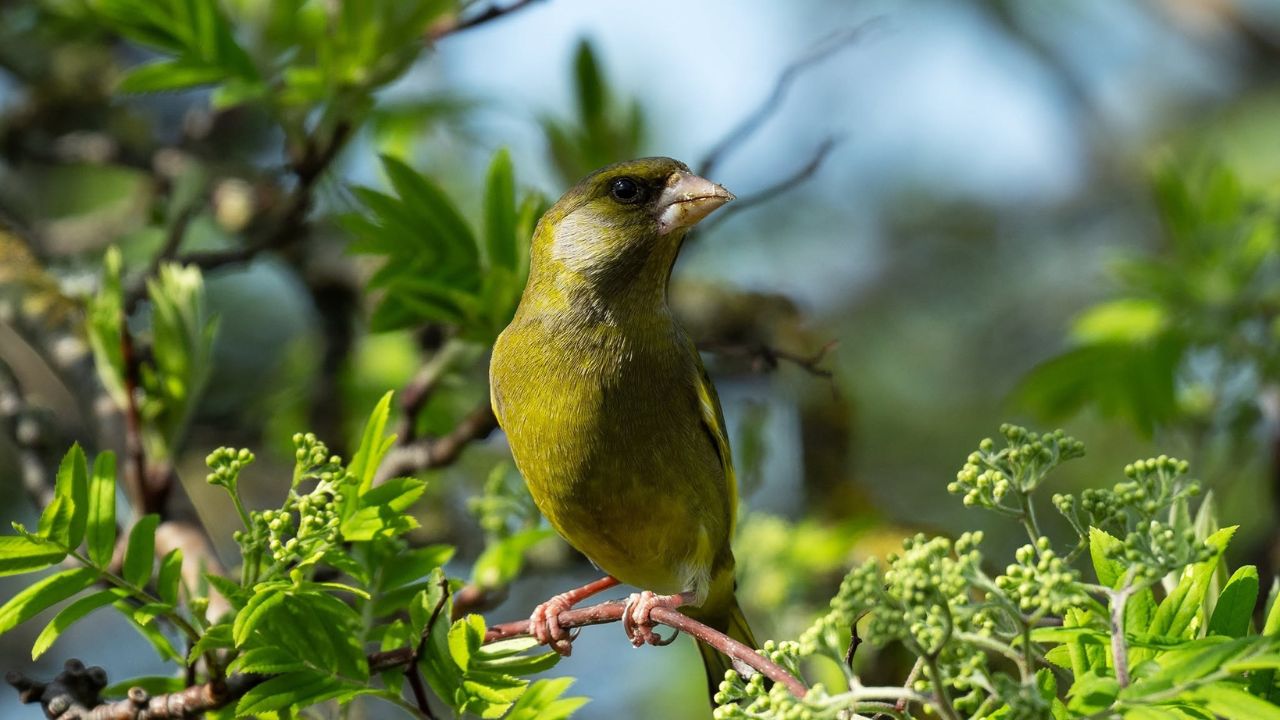
At 18th spot on the list is the greenfinch, which has seen a 67% decline in average numbers recorded since Big Garden Birdwatch began in 1979. The cause of these losses is disease, especially trichomonosis, which spreads more easily when birds gather around feeders — particularly in summer and autumn. Greenfinches are now on the UK Red List due to disease-related declines.
The sparrow’s twenty-three years at the top is the story that the results headline. But the greenfinch’s position at number eighteen — and what has taken it there — is the story that the results are quietly telling alongside it.
Twenty-Three Years at the Top — What That Actually Means
Twenty-three consecutive years as the most recorded garden bird in the UK is a remarkable statistic. It deserves some unpacking — because it is not straightforwardly a good news story, and it is not straightforwardly a bad news story. It is complicated, as most things in ecology are.
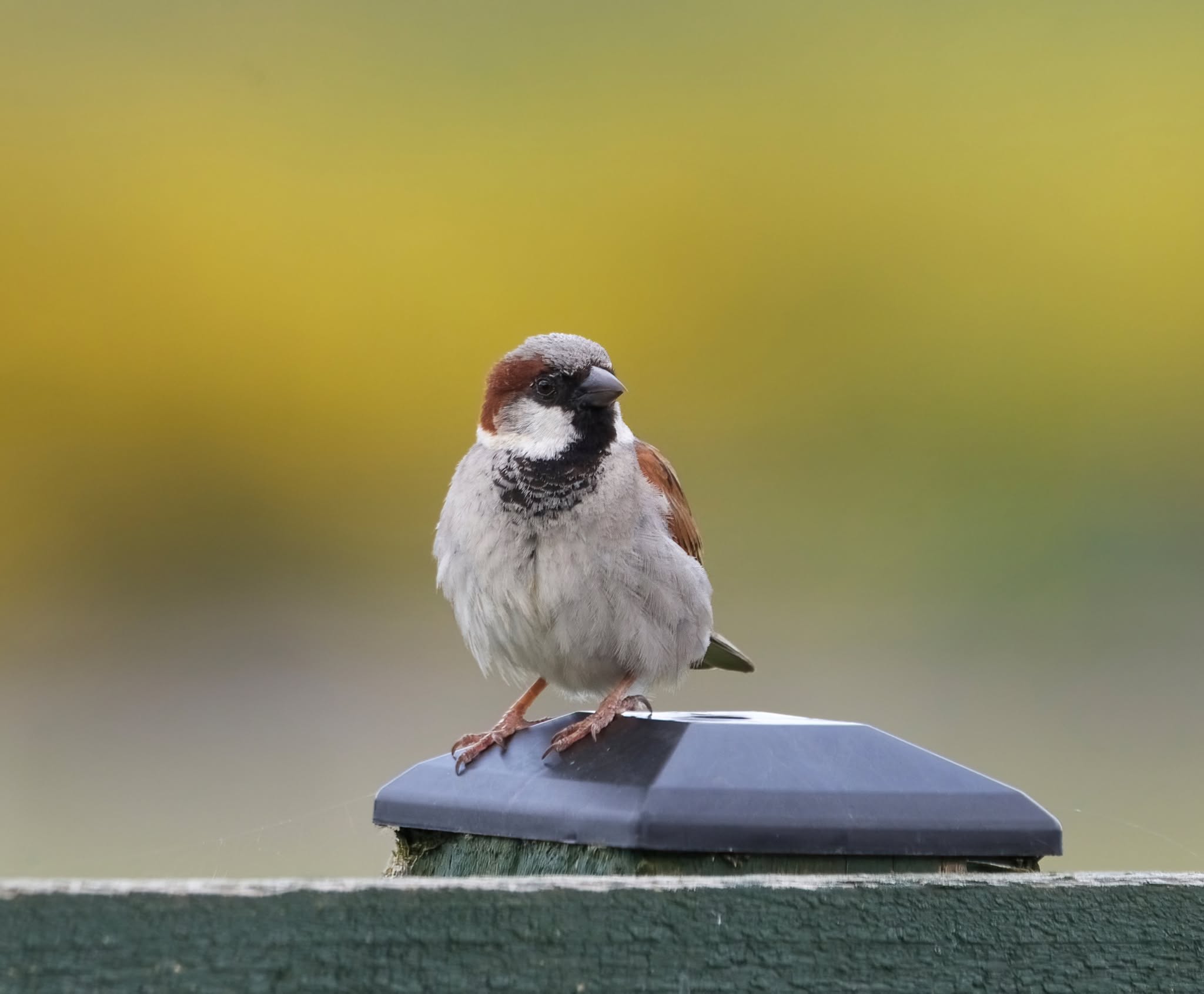
The house sparrow is the most recorded garden bird not because there are more of them than anything else, but because they are the species most consistently found in gardens across the widest range of garden types and locations across the UK. They are recorded in urban gardens and rural gardens, northern gardens and southern gardens, large gardens and small ones. Their consistency of distribution is what puts them at the top, not their sheer abundance.
And here is the complication: the house sparrow population in the UK has collapsed over the past fifty years. The species has lost approximately 60 percent of its population since the first Big Garden Birdwatch in 1979. It has been on the UK Red List — the list of birds of highest conservation concern — since 2002. It is simultaneously the most recorded garden bird in the country and a species in serious long-term decline.
How can both of these things be true? Because the decline has been most severe in the wider countryside and in the more intensive agricultural landscape, while garden populations — supported by supplementary feeding, habitat in suburban green spaces, and the nesting opportunities provided by older housing — have held up better. The garden survey sees a different picture from the wider countryside survey. Both pictures are true.
- House sparrow has topped the Big Garden Birdwatch for 23 consecutive years — the longest run of any species
- The UK house sparrow population has declined by approximately 60% since the survey began in 1979
- The species has been on the UK Red List since 2002 — the highest conservation concern category
- Garden populations have fared better than wider countryside populations — the garden survey reflects this more resilient subset
- Urban and suburban house sparrow populations are more stable than rural ones — the species has, to a significant extent, become a town bird
- The combination of number one in garden surveys and Red List status reflects the genuine complexity of the species’ position in British bird life
Who Is the House Sparrow — The Bird Most Owners Take For Granted
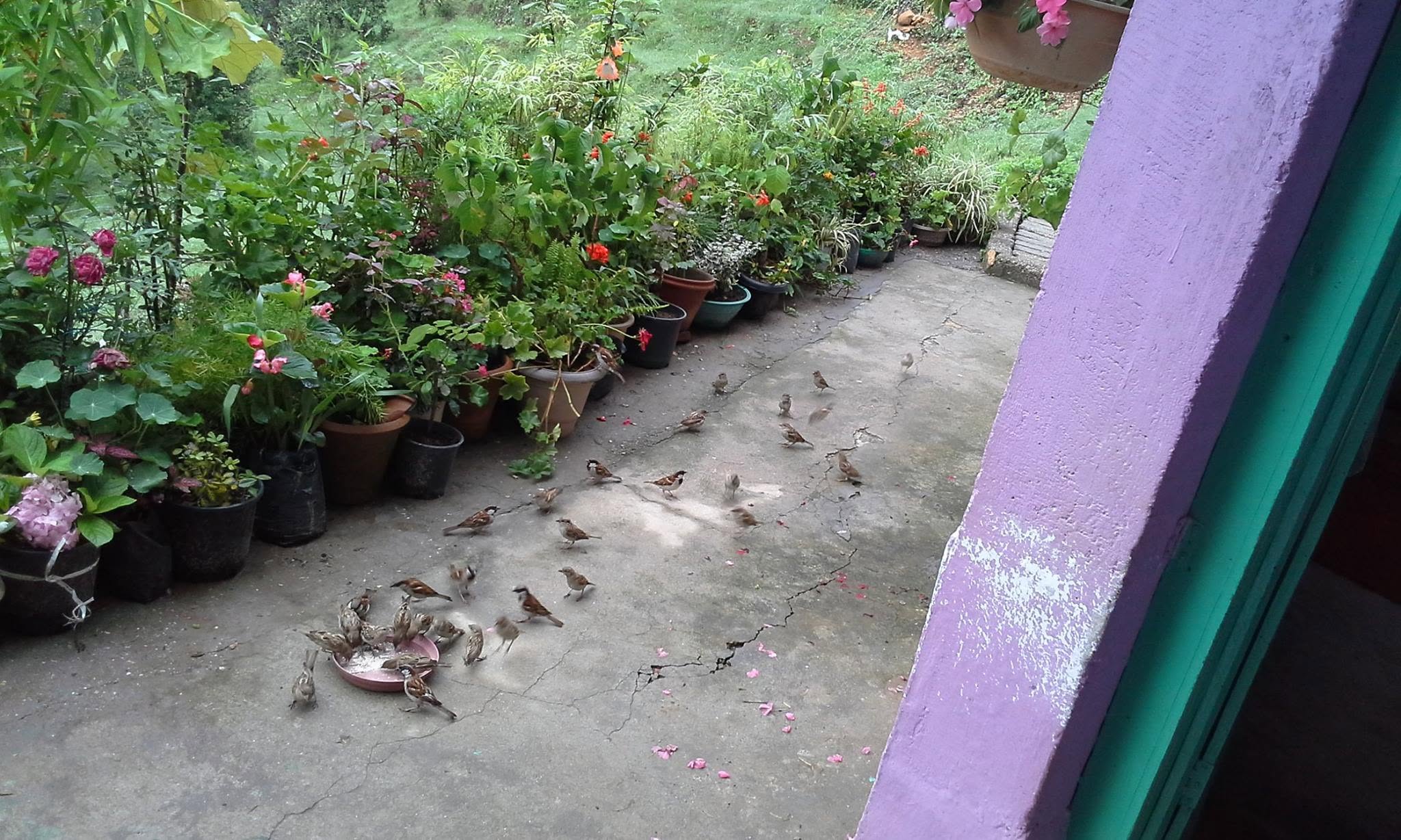
The house sparrow is so familiar that most garden bird feeders barely notice it. It is the brown, streaky, chirping bird that has always been there. The one that arrives in small noisy groups and leaves the same way. The one that people see every day and mostly do not think about.
Which is, in its own way, one of the most remarkable things about it.
The house sparrow — Passer domesticus — has lived alongside human settlement for approximately ten thousand years. Since the dawn of agriculture, this species has tracked human activity across the world, exploiting the food, shelter, and nesting opportunities that human habitation consistently provides. It is found on every continent except Antarctica. It arrived in North America in 1851 and had reached the Pacific coast by 1910. It followed humans to the Falkland Islands, to remote Pacific islands, to the Himalayas and to sea level tropical coastlines. Wherever humans settled and grew grain, the house sparrow followed.
In Britain, the house sparrow colonised every town, village, and farm. For centuries, its presence was so ubiquitous that it was barely remarked upon. It was simply there — the bird of the eaves, the thatch, the stackyard, the village green.
The decline of the past fifty years is the first significant break in that ten-thousand-year relationship. And understanding why it happened tells you everything about what house sparrows need and what they are not finding.
- House sparrows have lived alongside human settlement for approximately ten thousand years — one of the most successful human-associate species on earth
- They are found on every continent except Antarctica — following human agriculture and settlement globally
- In Britain, the species was ubiquitous in every town and rural settlement for centuries
- The 60% population decline since 1979 is the most significant break in this long relationship in recorded history
- The causes of decline are multiple and still not fully understood — but reduced insect availability, changes to urban architecture reducing nest sites, and cleaner grain handling in agriculture are all implicated
Why House Sparrows Are Declining — The Honest Picture
The question of why house sparrows have declined so dramatically is one that ornithologists have been working on for two decades. The honest answer is that there is not one single cause — there are several interacting causes, and their relative importance varies by location.
The decline in urban and suburban populations — the garden bird population — is linked most clearly to two things. The first is a reduction in insect availability during the breeding season. House sparrow chicks are fed almost exclusively on insects and caterpillars for the first week of their lives. An adult sparrow eating seeds and scraps through the winter is doing something very different from a sparrow trying to provision a nest full of chicks. If insects are not available in sufficient quantities in the area immediately around the nest, chick survival plummets.
The second is a reduction in suitable nest sites. House sparrows nest in cavities — in the eaves of buildings, behind fascia boards, under roof tiles, in gaps in old brickwork. The renovation and modernisation of older housing stock through the 1980s, 90s, and 2000s closed off enormous numbers of traditional sparrow nest sites. New housing built to modern standards provides essentially no cavity nesting opportunities. The birds that colonised every town in Britain did so partly because every building provided nest sites. That is no longer true.
In the wider countryside, the causes are different — changes to grain handling reducing spillage, loss of the mixed farmland mosaic that provided weed seeds through winter, changes to cropping cycles — but the outcome is the same. Fewer sparrows.
- Reduced insect availability during breeding season limits chick survival — sparrow chicks need insects, not seeds, in their first week
- Loss of nest sites through building renovation and modern construction standards reduces available nesting opportunities
- Reduced weed seed availability through winter in intensively managed agricultural landscapes affects rural populations
- Changes to grain handling in agriculture have reduced the spillage that historically fed large winter sparrow flocks
- Cat predation in suburban areas is a significant local factor, particularly of juveniles learning to feed independently
- The causes interact — a bird with a reduced insect supply during breeding and fewer nest sites and higher predation pressure is a bird under multiple simultaneous stresses
What the Rest of the Top Five Tells Us
The four species behind the house sparrow in the 2026 results each have their own story — and together they paint a picture of the state of UK garden bird life that is more nuanced than any single headline can convey.
Blue Tit — Number Two, and Reliably So
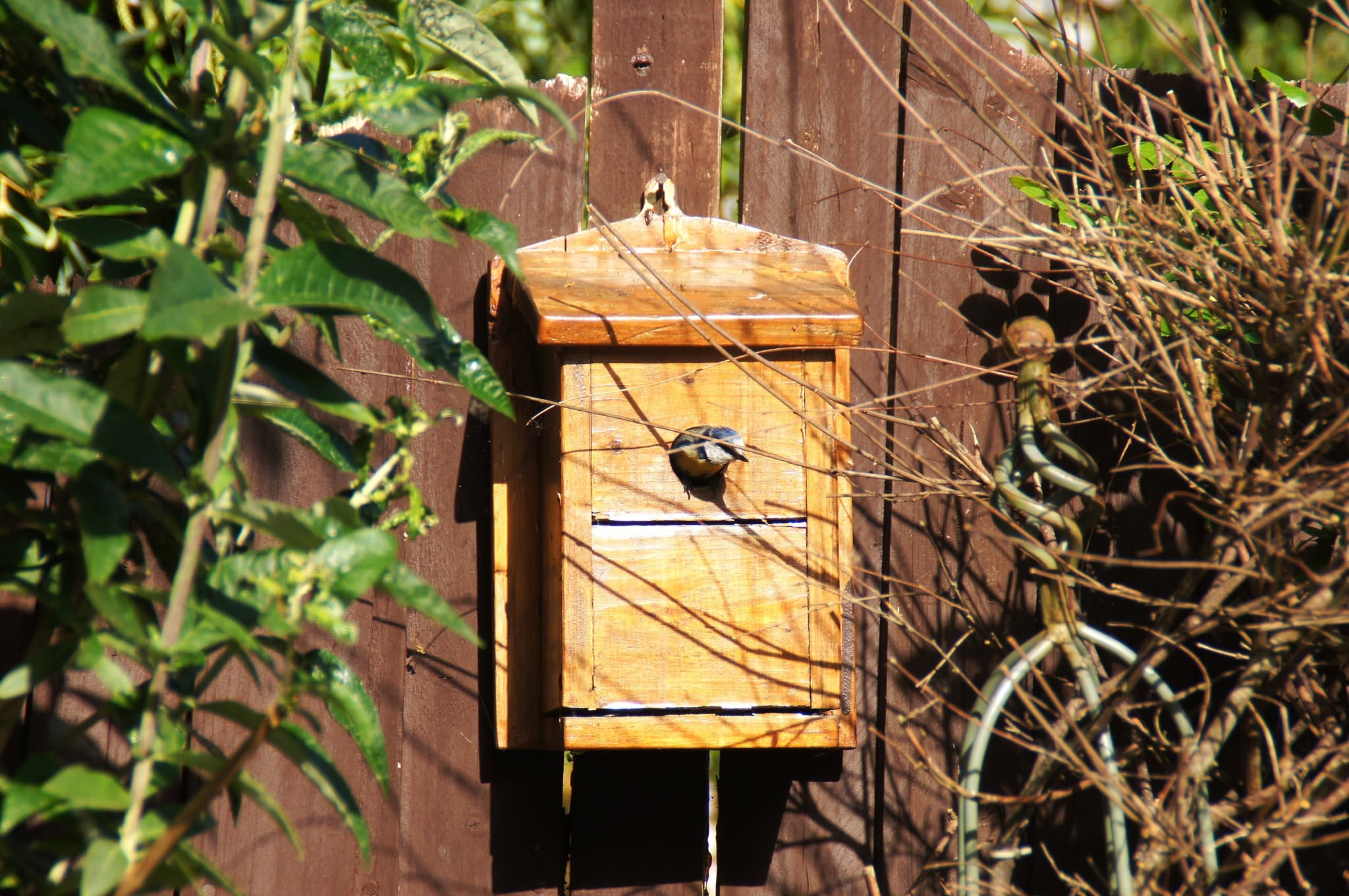
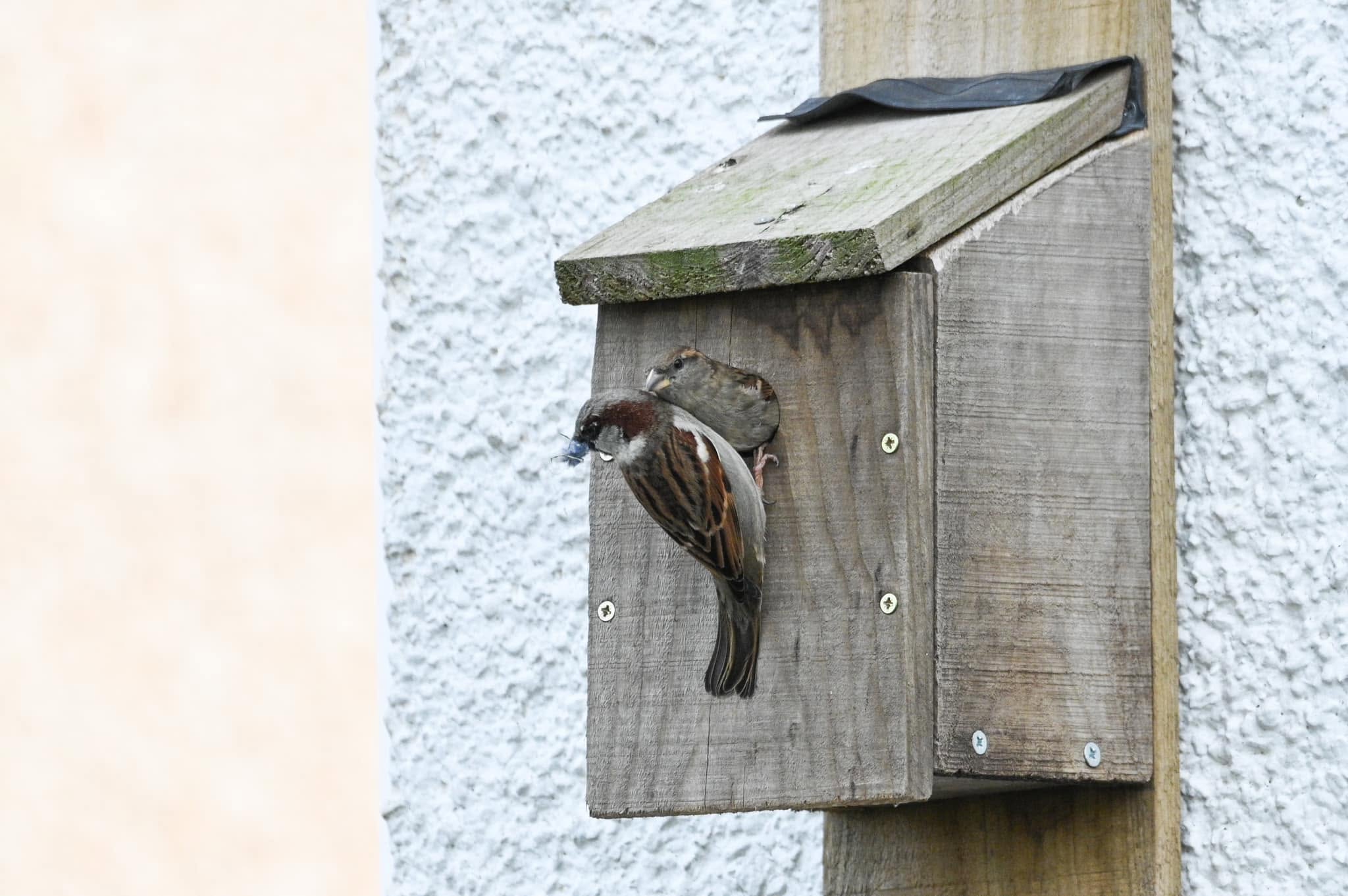
The blue tit’s consistent presence at number two in the Big Garden Birdwatch reflects both its genuine abundance and its adaptability to garden environments. It is one of the species most responsive to nest box provision — a pair of blue tits will readily occupy a nest box with a 25mm entrance hole, and gardens with appropriate boxes report significantly higher blue tit activity than those without. The blue tit is a species where individual garden action demonstrably makes a difference.
Blue tit populations fluctuate more year to year than house sparrows — they are significantly affected by the timing of oak leaf emergence and the caterpillar peak that follows it, which has shifted with climate change and does not always align with when the chicks need feeding. Years when caterpillar peak and chick hatching are well-synchronised produce good blue tit breeding years. Years when they are misaligned produce poor ones.
Starling — Up One Place to Number Three
The starling’s move up one place to number three in 2026 is notable — and the starling’s story is one of the most dramatic in British bird conservation. The UK starling population has declined by approximately 80 percent since the 1970s. It has been on the Red List since 1995. And yet it remains at number three in the garden bird survey — because the garden population, like the house sparrow’s, has proven more resilient than the wider countryside population.
Starlings are spectacular birds that their familiarity has caused most people to undervalue. The murmurations — the vast, shape-shifting flocks that perform in the sky above reed beds and starling roost sites in winter — are one of the greatest wildlife spectacles available in Britain. A starling on a garden lawn, pulling worms with its strong bill, is the everyday version of the same species.
Woodpigeon — Number Four
The woodpigeon is the only species in the top five whose population trend is genuinely positive — it has increased significantly over the past forty years, expanding from a largely rural bird into urban and suburban environments with considerable success. It is large, adaptable, and tolerant of human activity in ways that many species are not. Its presence in gardens has increased markedly over the past two decades. It is a conservation success story, though one accompanied by the agricultural damage that its increasing numbers cause.
Blackbird — Number Five
The blackbird at number five is a constant of UK garden life — one of the most familiar and most beloved of all British birds. Its position reflects both its genuine abundance and the deep affection with which garden bird watchers regard it. The male’s song — delivered from a high perch in the early morning and late evening from February onward — is one of the defining sounds of a British spring. The blackbird population has been broadly stable in the UK, though with some local declines linked to habitat change.
The Greenfinch Warning — What Feeder Hygiene Actually Means
The greenfinch story buried at number eighteen in the 2026 results is the one I want to give proper attention to — because it has direct practical implications for every garden bird feeder in the UK, and because it is the area where the RSPB has issued new guidance alongside this year’s results.
The greenfinch has seen a 67% decline in average numbers recorded since Big Garden Birdwatch began in 1979. Other UK-wide surveys show that greenfinches have dropped by over 65% since the mid-1990s, equating to the loss of over two million birds. The cause of these losses is disease — especially trichomonosis, which spreads more easily when birds gather around feeders, particularly in summer and autumn.
Trichomonosis is a parasitic disease that affects the throat and crop of finches, preventing them from swallowing food. It spreads through contaminated saliva on shared feeders and water dishes. It spreads fastest when many birds are using the same feeders in warm weather — exactly the conditions that summer garden feeding creates.
The RSPB’s new guidance alongside the 2026 results is not to stop feeding. It is to feed differently — cleaning feeders more rigorously, removing uneaten food promptly in warm weather, rotating feeder positions to prevent ground contamination build-up, and considering whether summer feeding levels need to be reduced rather than maintained at winter intensity.
- Greenfinch has declined by 67% in Big Garden Birdwatch records since 1979 — now on the UK Red List
- Trichomonosis — spread through contaminated feeders — is the primary driver of this decline
- The disease spreads fastest in warm weather when birds congregate at feeders in summer and autumn
- RSPB 2026 guidance recommends cleaning feeders more rigorously, removing uneaten food promptly, and reconsidering summer feeding intensity
- Water dishes should be cleaned and refilled daily — contaminated water is as significant a transmission route as contaminated feeders
- A dead or dying finch on the ground near a feeder that appears to have difficulty swallowing should prompt immediate feeder cleaning and a two-week feeding pause in that location
What Your Garden Can Do for the House Sparrow
The house sparrow’s position at number one is not guaranteed. Twenty-three years at the top of a survey that has tracked a 60 percent population decline is not a comfortable statistic. The garden population is resilient — but it is resilient because of specific things that gardens provide, and those things can be provided better or worse depending on what garden owners choose to do.
After thirty-five years of watching house sparrows in UK gardens, here is what I know actually makes a difference.
- Dense, thorny shrubs for nesting and shelter — sparrows nest colonially and use shrubs as gathering and roosting habitat. Hawthorn, pyracantha, and dense rose species are particularly used. A garden without cover is a garden less useful to sparrows regardless of what food it offers
- Supplementary feeding year-round, not just in winter — house sparrows use garden feeders through the year and the caloric support provided by garden feeding is particularly significant during the breeding season when adults are provisioning chicks
- Insect-friendly planting — the chick survival problem will not be solved by seed feeders alone. Native plants that support caterpillar and invertebrate populations are the longer-term answer. An oak tree in or near the garden, native wildflowers in a patch of less managed lawn, avoidance of pesticides — all of these contribute to the insect availability that sparrow chicks require
- Nest boxes specifically designed for house sparrows — terrace-style nest boxes with multiple compartments suit sparrows’ colonial nesting preference. A single nest box is less attractive than a terrace of three
- A reliable, clean water source — house sparrows drink and bathe regularly and a garden bird bath maintained in good condition year-round is used consistently
Frequently Asked Questions
How do I take part in the Big Garden Birdwatch?
The Big Garden Birdwatch takes place over the last weekend of January every year. Participants choose one hour during the survey weekend, count the maximum number of each bird species they see in their garden or local green space during that hour, and submit their results through the RSPB website at rspb.org.uk. Registration is free. The results contribute to the scientific picture of how UK garden bird populations are changing — and over 650,000 people took part in 2026, making it genuinely one of the most significant citizen science exercises in the world.
I have house sparrows in my garden but far fewer than I used to — is this normal?
Unfortunately, yes — and it reflects the broader population trend. If you had large sparrow flocks twenty or thirty years ago and now have smaller numbers, your experience matches the national picture. The most useful responses are the habitat and provision improvements described above. Dense cover, insect-friendly planting, appropriate nest boxes, and consistent year-round feeding are the interventions most supported by evidence for maintaining sparrow populations in garden settings.
Should I be worried if I see a greenfinch that looks sick near my feeder?
Yes — act on it. A greenfinch that appears lethargic, is sitting on the ground, or appears to have difficulty swallowing is likely to be infected with trichomonosis. Remove all feeders and water dishes in that location immediately, clean them thoroughly with a 10% bleach solution and rinse well, and do not replace them in the same position for at least two weeks. Report the sighting through the Garden Wildlife Health project at gardenwildlifehealth.org. Do not handle a sick bird without protective gloves.
Is the robin not in the top five?
The robin — despite being the bird most associated with British gardens in popular culture, and the unofficial national bird of Britain — consistently places outside the top five in the Big Garden Birdwatch because it is typically solitary and territorial. A garden supports one, sometimes two robins, not a group. Species like the house sparrow and blue tit gather in numbers, which raises their count significantly in an hourly survey. The robin’s cultural prominence far exceeds its numerical presence in survey terms.
Where can I get wild bird food and advice in Swindon?
Come and see us at Paradise Pets, Manor Garden Centre, Cheney Manor Industrial Estate, Swindon SN2 2QJ. Or ring us on 01793 512400. We stock a full range of wild bird food — seed, fat balls, suet products, mealworms — as well as feeders, nest boxes, and bird baths. We are happy to advise on what your specific garden needs to support house sparrows and the other species you are hoping to attract.
One Last Thing From Me
The customer who had taken part in the Birdwatch for the first time came back a few weeks later. He had looked up the full results online and spent some time reading about the greenfinch decline. He had also, he said, bought a terrace nest box and put it up on the wall of his house near where the sparrows roosted.
“I’ve had sparrows in my garden my whole life,” he said, “and I’ve never actually done anything for them. I just assumed they’d always be there.”
That assumption — that the species which have always been there will always be there — is the one that the Big Garden Birdwatch has been quietly challenging for forty-seven years. The results show us what is there. The trend data shows us where things are going. And the gap between the two is where the case for doing something is made.
Twenty-three years at the top of the chart. Sixty percent fewer birds than when the chart began. Both of those things are true at the same time. The house sparrow is still number one. Whether it is still number one in another twenty-three years is, at least in part, a question about what the owners of UK gardens decide to do.
Supporting House Sparrows and Garden Birds? We Can Help
We stock everything UK garden birds need — quality seed mixes, fat balls, suet products, sparrow terrace nest boxes, bird baths, and hygiene products for feeder cleaning. Come in and tell us what you are seeing and we will tell you what your garden can do better. Free advice, no obligation. That is how we have always done things.
⭐ Customer Reviews
Amazing Bird Selection
Had a lovley visit today,staff were very friendly and very helpful,such a great petshop,their selection of birds is incredible,really impressed,thank so much to the staff at Paradise Pets

Friendly Helpful Staff
I have been coming to this place for years and they have a great stock of food for all types of pets. Have a great selection of small mammals and a lot of birds. Staff are friendly and helpful.

Great Quality Hutch
Bought a guinea pigs hutch and run combo, very happy with the service, the hutch was put in my car for me without even asking for help. The wood quality is very good, the instructions easy to follow and we are extremely happy with the fully built hutch. A good size for 2 guinea pigs

Response from Paradise Pets | Wiltshire
Thank you Melanie Latus Nice to provide services to you.
Best Bird Shop Around
It’s the best pet shop in and around Swindon. They always have an amazing selection of birds and all you need to keep them happy. I keep birds myself and the guys there are happy to answer questions and really know their stuff. I have seen budgies etc. in chain pet shops in the area looking really unhealthy and ill – I wouldn’t go anywhere else than Paradise Pets for animals.

Highly Recommended Bird Shop
I could not praise this shop enough. Really helped my Grandson buy his first bird and he’s loving it. Travelled from Somerset and was welcomed with open arms.

Great Shop with Competitive Prices
Great shop with amazing selection for small animals, hamsters, mice ect, highly recommend!
Also has a great selection for dogs & cats too & very competitive prices! 💖

