

Neil has kept, bred, and sold cage and aviary birds at Paradise Pets Swindon since 1988 — over 35 years of watching the UK’s bird world from the inside. Occasionally something happens in that world that pulls in not just the dedicated birders but a much wider audience. The events of the past week in North Wales are exactly that kind of moment — and worth understanding, even if you have never picked up a pair of binoculars in your life.
I had three separate conversations at the counter this week about a heron. Not about anything we stock — about a bird that turned up in a harbour in North Wales and has, by all accounts, caused several hundred people to drop what they were doing and drive across the country to look at it.
That is not an exaggeration for effect. It actually happened, and it is still happening as I write this. A bird that has never once been recorded in the United Kingdom in the entire history of British ornithology appeared at Foryd Bay near Caernarfon on the sixth of June, and within hours the birdwatching community had mobilised in a way that, even after thirty-five years around birds, I still find genuinely remarkable to watch from the outside.
Here is what happened, why it matters, and why a single grey-blue heron can produce that kind of reaction in people who, on any other weekend, would tell you they are perfectly sensible.
What Was Found — And Why It Is a First
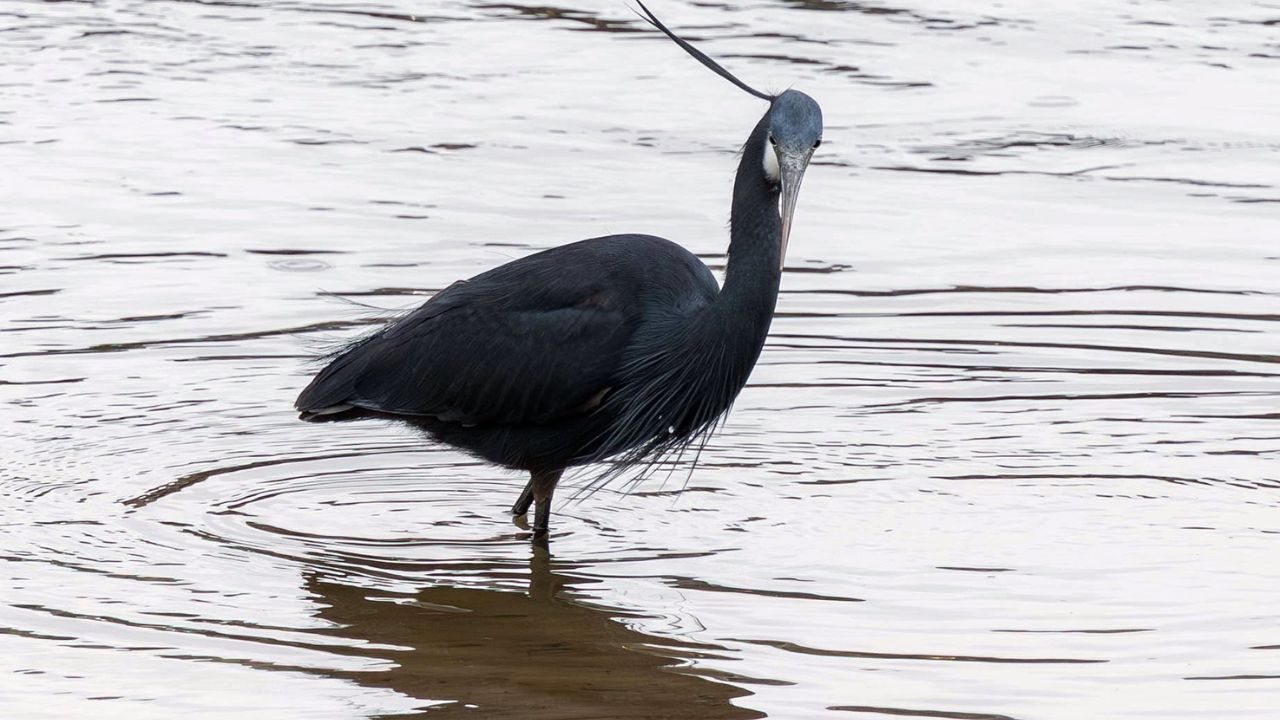
The bird is a Western Reef Heron — Egretta gularis, a medium-sized heron found in southern Europe, Africa and parts of Asia, with a mainly coastal distribution. It was identified at Foryd Bay, Caernarfon, by ornithologist Simon Hugheston-Roberts, who made the discovery at approximately 10am on Saturday morning while doing his routine bird monitoring activities.
What makes this a genuinely historic sighting rather than simply an unusual one is that the species has never previously been documented within the United Kingdom. Not rare. Not infrequent. Never. In the entire recorded history of British bird observation, this is the first confirmed individual of this species to appear anywhere in the country.
Mr Hugheston-Roberts, who has extensive field experience from West Africa and the Middle East, was well placed to recognise what he was looking at. After identifying the bird, he quickly shared the news through a birdwatching WhatsApp group, and from that point the story moved very fast indeed.
The Rush to Caernarfon — What Actually Happened
News of a genuine first-for-Britain travels through the UK birding community at a speed that surprises people outside it. Within the hour of the WhatsApp message going out, birders across the country were checking maps, cancelling plans, and getting in their cars.
Mike Barth, a bird photographer from Cheshire, described the moment he heard. About 11am on Saturday morning I was alerted by the app to the initial reports of the Western Reef Heron – which if proven would be a first for Britain. He didn’t hesitate. So any plans I had needed to be dropped or rearranged whilst I quickly jumped in the car for my two hour drive from Macclesfield to Caernarfon, specifically Fforyd Bay.
He was not alone for long. By the afternoon, about 300 ornithologists arrived in the town hoping to catch sight of the egretta gularis. Some had come from much further afield than Cheshire. Barth noted that he had no doubt many around the country were already making plans to come up on the Sunday or Saturday evening to stay overnight.
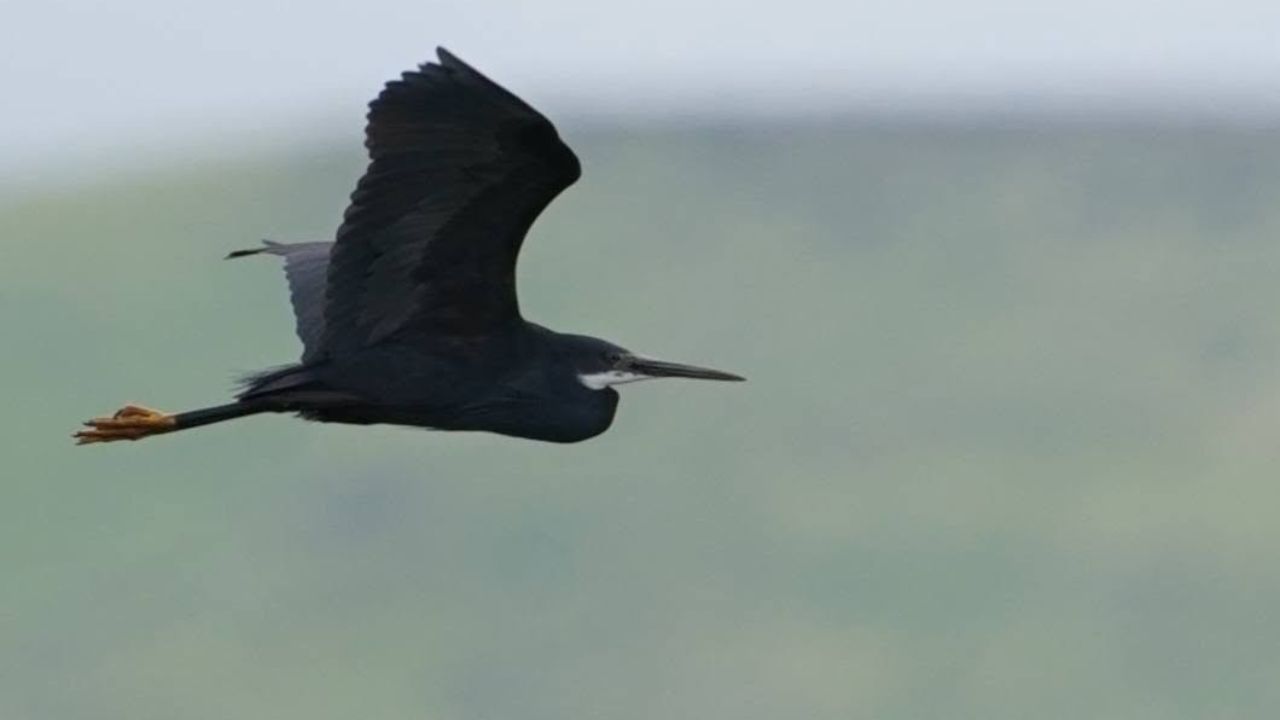
The bird did not stay in one place, which only added to the drama of the chase. Hundreds of birders travelled to the area throughout Saturday and into Sunday, when the bird was relocated nearby at Caernarfon, where it settled in the harbour itself — feeding among the boats in the harbour, only a stone’s throw from the town’s famous castle. Naturalist and broadcaster Iolo Williams, who happened to be filming locally when the news broke, described the visitor simply as a “smart bird” with a “lovely grey-blue” appearance.
Over the following days the heron continued to move between locations around Caernarfon — observed foraging near Cei Llechi in the harbour, resting in trees beside the Aber Bridge, and flying over the area — giving repeated opportunities for the steady stream of birders still arriving to catch a view.
Why a Heron From West Africa Ended Up in Wales
The natural question, once you know what the bird is, is how it got there. A coastal heron with a range stretching from West Africa to the Indian subcontinent does not casually find itself in a Welsh harbour.
Part of the answer is weather. Mike Barth suggested the bird may have ended up in Wales due to strong southerly winds — a mechanism familiar to anyone who follows rare bird sightings in Britain, where unusual weather systems regularly carry vagrant birds well outside their normal range.
But there is a broader pattern behind this individual sighting that makes it less of a freak accident and more the leading edge of a genuine trend. Hugo Touzé of the French rare birds records committee noted that there has been a resurgence in sightings of the species over the last two or three years, with exceptional northern records far from the more expected Mediterranean coast. Since April 2026 this has included two birds in unusual northerly locations in central France, suggesting that the species’ range, or at least its pattern of vagrancy, has been shifting northward for some time before this bird made it all the way to Wales.
In other words — Caernarfon was unusual, but it was not entirely without warning if you had been paying attention to the wider pattern across the Channel over the preceding two years.
Why This Matters Beyond the Birding Community
I think there is something worth understanding here even if you have never been birdwatching and have no particular interest in herons.
A first-for-Britain sighting like this one is, in its own way, a live demonstration of how closely connected and how quickly mobilised a community built entirely around observing wild animals can be. Hundreds of people, most of whom had never met each other, organised themselves within hours through a phone app to converge on a small Welsh harbour town for the chance to see a single bird for a few minutes. No one was paid to do this. No one was required to. It happened because enough people care enough about birds to treat a genuine first sighting as something worth significant personal effort.
It also says something about how birdwatching itself is changing. Recent research into UK travel habits found that 55 per cent of UK travellers are keen to try birdwatching on their next trip, with younger demographics leading the renewed interest — British Millennials are leading this trend, with 85 per cent saying they’d be interested in birdwatching while on holiday. A pastime that has traditionally been seen as a middle aged man’s pastime is visibly broadening, and a story like the Caernarfon heron — widely covered, visually striking, genuinely historic — is exactly the kind of event that pulls new people into paying attention.
For conservation more broadly, events like this also have value beyond the spectacle. Vagrant records contribute to the scientific understanding of how species ranges are shifting — whether in response to climate patterns, weather events, or longer-term ecological change. The Western Reef Heron’s apparent push northward through Europe over the past several years, of which this bird may be one data point, is the kind of pattern that ornithologists track closely because it can be an early signal of broader environmental shifts.
What I Tell People at the Counter
When I talk about this at the counter, the reaction from most people is somewhere between amusement and genuine curiosity. The idea of three hundred adults dropping their weekend plans to drive across the country for a heron strikes most non-birders as slightly absurd until you explain what a true first-for-Britain actually means in the context of a hobby that has been systematically recording British bird sightings for well over a century.
What I want people to take from a story like this is not really about the heron specifically. It is about what it reveals — that there is a huge, engaged, fast-moving community in this country built entirely around paying close attention to birds, and that community is growing, not shrinking. The same enthusiasm that sent three hundred people to a Caernarfon harbour is, in a smaller and quieter form, the same enthusiasm that brings people into a shop like ours wanting to understand the birds in their own garden, or wanting to keep one of their own.
If a story like this has sparked an interest you did not know you had — in birds, in birdwatching, in keeping a bird of your own — come and talk to us. We are at Manor Garden Centre, Cheney Manor Industrial Estate, Swindon, SN2 2QJ — open every day. Or call us on 01793 512400.
- Species: Western Reef Heron (Egretta gularis), a medium-sized heron native to coastal southern Europe, Africa, and parts of Asia.
- Significance: The first confirmed record of this species ever recorded in Britain.
- Discovery: Found by ornithologist Simon Hugheston-Roberts at Foryd Bay, Caernarfon, North Wales, on the morning of Saturday 6 June 2026.
- Crowd response: Approximately 300 birdwatchers travelled to the area by the Saturday afternoon, with numbers continuing to grow over the following days as the bird relocated around Caernarfon Harbour.
- Plumage: The individual is a dark-morph adult with breeding plumes — one of the species’ two main colour forms alongside an all-white morph.
- Likely cause of vagrancy: Strong southerly winds, against a backdrop of an increasingly regular pattern of the species appearing further north in Europe over the past two to three years.
Visit Us at Paradise Pets Swindon
We stock a full range of cage and aviary birds — and we love talking about the birds outside the shop just as much as the ones inside it. If a story like this has sparked an interest in birds, come and find us.
We also stock gerbils and hamsters, guinea pigs, and rabbits.
⭐ Customer Reviews
Amazing Bird Selection
Had a lovley visit today,staff were very friendly and very helpful,such a great petshop,their selection of birds is incredible,really impressed,thank so much to the staff at Paradise Pets

Friendly Helpful Staff
I have been coming to this place for years and they have a great stock of food for all types of pets. Have a great selection of small mammals and a lot of birds. Staff are friendly and helpful.

Great Quality Hutch
Bought a guinea pigs hutch and run combo, very happy with the service, the hutch was put in my car for me without even asking for help. The wood quality is very good, the instructions easy to follow and we are extremely happy with the fully built hutch. A good size for 2 guinea pigs

Response from Paradise Pets | Wiltshire
Thank you Melanie Latus Nice to provide services to you.
Best Bird Shop Around
It’s the best pet shop in and around Swindon. They always have an amazing selection of birds and all you need to keep them happy. I keep birds myself and the guys there are happy to answer questions and really know their stuff. I have seen budgies etc. in chain pet shops in the area looking really unhealthy and ill – I wouldn’t go anywhere else than Paradise Pets for animals.

Highly Recommended Bird Shop
I could not praise this shop enough. Really helped my Grandson buy his first bird and he’s loving it. Travelled from Somerset and was welcomed with open arms.

Great Shop with Competitive Prices
Great shop with amazing selection for small animals, hamsters, mice ect, highly recommend!
Also has a great selection for dogs & cats too & very competitive prices! 💖

