
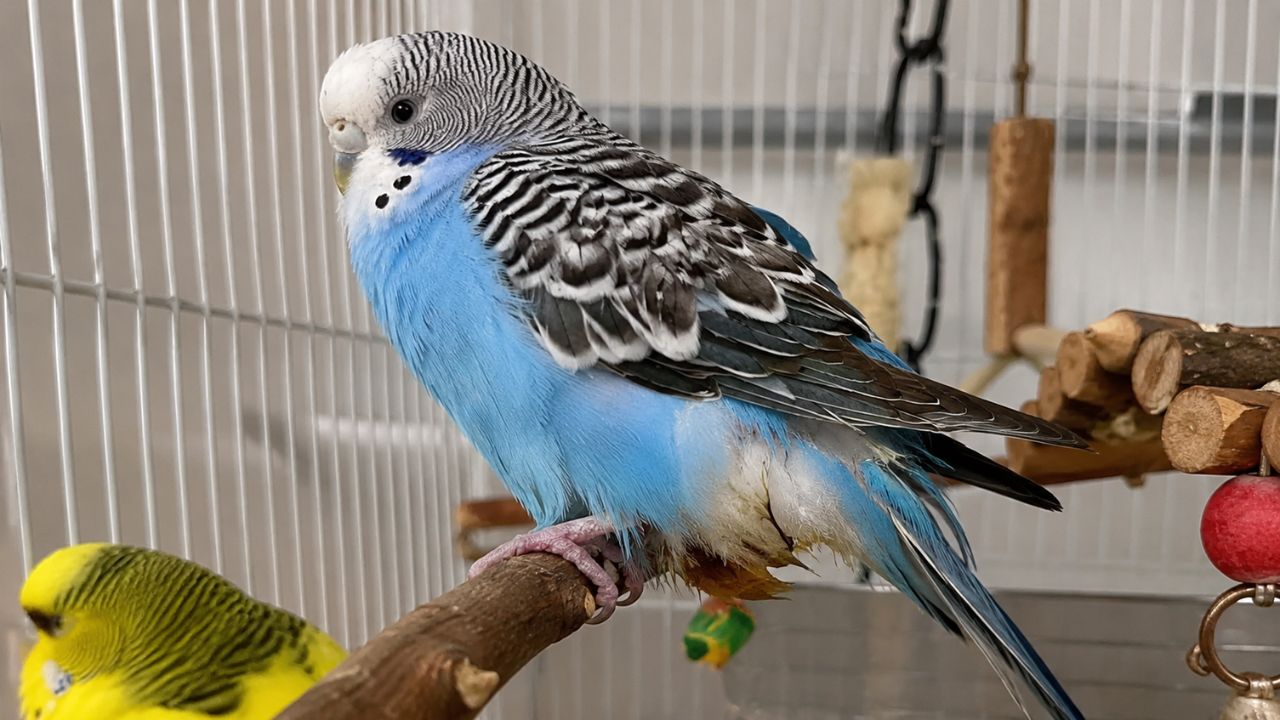

Neil has kept, bred, and sold budgerigars at Paradise Pets Swindon since 1988 — over 35 years of first-hand experience with these birds. A wet or dirty vent is one of the signs that owners sometimes notice but do not always act on quickly enough. In most cases it is a symptom of something that needs attention promptly. This guide explains what causes it, what to look for, and exactly when to call a vet.
It is not the most comfortable thing to bring up at the counter. People approach it indirectly — they say the bird seems a bit off, or that the cage floor looks different, or that something seems wrong around the back end. Then they describe what they have actually seen, and the picture becomes clear.
A wet vent. Or a dirty one — matted feathers, discolouration, droppings stuck to the feathers around the cloaca. Sometimes a smell. Sometimes the bird is also fluffed, or less active, or eating differently. Sometimes it appears completely normal in every other respect except for that one sign.
I take it seriously every time. And I tell every owner who describes it to me the same thing: a dirty or wet vent on a budgie is not something to wait and see with. It is a sign that something is happening inside that bird, and in most cases the sooner it is investigated the better the outcome.
Here is what I have learned about it across thirty-five years.
What the Vent Is — And What Normal Looks Like
The vent — or cloaca — is the single opening through which a budgie passes droppings, urine, and in females, eggs. In a healthy budgie it should be clean and dry. The feathers immediately surrounding it should be smooth and unsoiled. There should be no staining, no matting, no moisture, and no accumulation of dried material.
Budgies are fastidious animals. They preen constantly and keep themselves clean as a matter of instinct. The vent area in particular tends to stay clean in a healthy bird without any intervention from the owner. When that area becomes wet or soiled, it is almost always because something abnormal is passing through it — in terms of volume, consistency, or frequency — and the feathers cannot keep up.
That is the key point to understand. The dirty vent is not the problem itself. It is the evidence of a problem that already exists. What you are seeing on the outside is the result of something happening on the inside.
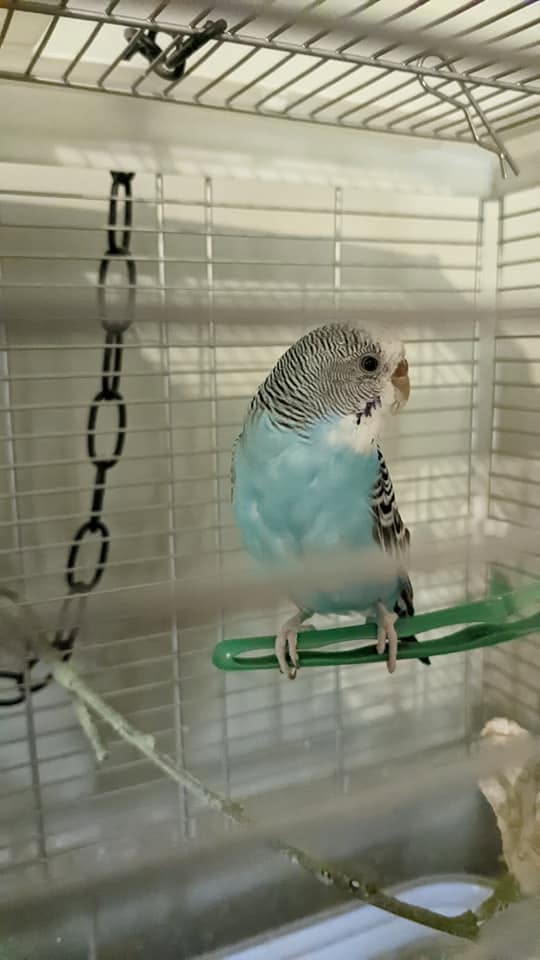
The Most Common Cause — Diarrhoea and Loose Droppings
A budgie’s normal droppings have three visible parts: a small, firm dark green or brown faecal portion, a white or cream urate component, and a small clear liquid urine section. When you know what normal looks like, the abnormal becomes obvious very quickly.
Loose or watery droppings — diarrhoea — are the most common cause of a wet or soiled vent, and they have a long list of possible underlying causes. Bacterial infection. Parasitic infection. A dietary change. Spoiled food. Too much fruit or fresh food high in water content. Stress. A viral illness.
The loose droppings pass more frequently and in greater volume than normal, they do not clear the vent cleanly, and over time the feathers around the vent become saturated and matted with the residue.
The cause of the diarrhoea matters enormously for treatment, which is why a vet visit is necessary rather than a home remedy. Bacterial and parasitic infections require specific treatment — the wrong approach, or no approach, allows the underlying condition to progress while the bird continues to lose fluid and condition.
One important point about diet: some owners notice looser droppings after giving their budgie more fruit or leafy greens, and assume this is normal. Fresh food with high water content does soften droppings somewhat. But genuinely watery, shapeless droppings that are soiling the vent are beyond normal dietary variation — that is a sign of a digestive system that is not functioning properly, regardless of what the bird has been eating.
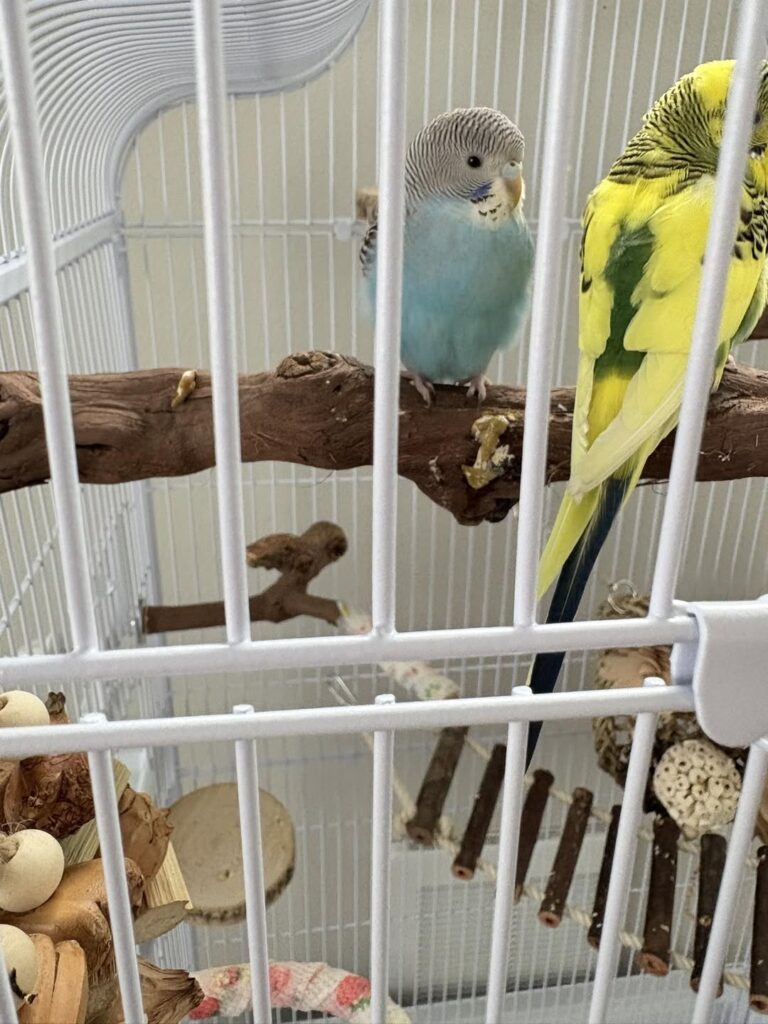
Bacterial and Parasitic Infection
These sit at the more serious end of the causes and are worth understanding specifically, because they are common in budgies and they do not resolve on their own.
Bacterial infections affecting the gastrointestinal tract — particularly E. coli, Salmonella, and Campylobacter species — produce loose, often discoloured droppings, lethargy, and vent soiling. They spread readily in an aviary setting and can be introduced through contaminated food, water, wild bird contact through an outdoor aviary, or from a newly introduced bird that was not properly quarantined.
Parasitic infections — particularly Giardia, a single-celled intestinal parasite — are extremely common in budgies and frequently missed because the symptoms can be intermittent. A budgie with Giardia may have periods of apparently normal health interspersed with bouts of loose droppings, weight loss, and vent soiling. It also often causes feather condition problems — dry, itchy feathers, excessive preening, feather destruction in severe cases. If your budgie has recurring episodes of vent soiling alongside poor feather quality, Giardia is high on the list of things to rule out.
Neither of these will resolve without appropriate treatment. Both are diagnosable with a vet and a faecal sample. Both are treatable. The longer they are left, the more depleted the bird becomes.
Egg Binding — The Emergency Female Owners Must Know
This section is specifically for owners of female budgies, and it is the most urgent cause in this entire article.
Egg binding is a condition in which a female budgie is unable to pass an egg that has formed in the reproductive tract. It is life-threatening. A bird with egg binding can deteriorate and die within hours if the condition is not identified and treated.
The vent presentation in a potentially egg-bound female can include wetness or soiling around the vent, straining, a swollen or distended abdomen, and a bird that is sitting very low on the perch or on the cage floor, often with its feathers fluffed and its tail bobbing with effort. She may appear weak and disoriented.
If you have a female budgie and you are seeing any of these signs together — do not wait until tomorrow. This is a same-day vet visit. Egg binding does not resolve on its own and the window for successful treatment is short.
Female budgies can lay eggs without a male present. Many owners are caught off guard by this because they did not know it was possible. If your female has access to a nest box, a nest-like corner of the cage, or any dark enclosed space, her reproductive instincts may have been triggered. Removing these nesting opportunities reduces the likelihood of unwanted laying.
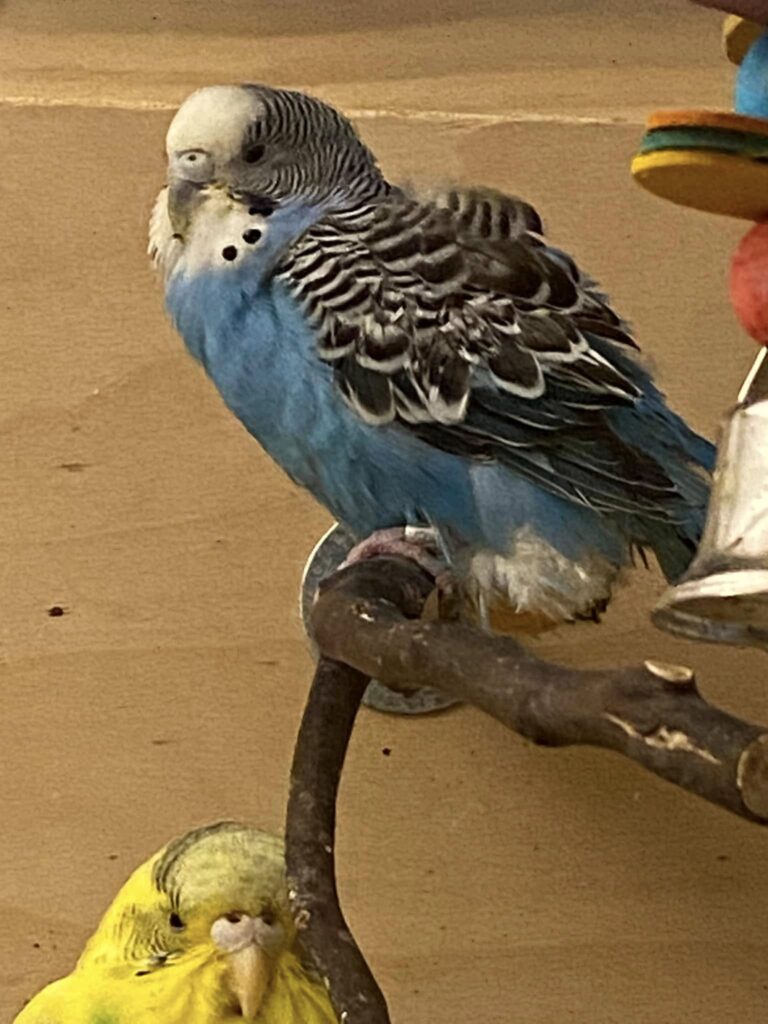
Cloacal Prolapse — What It Looks Like and What to Do
A cloacal prolapse is a condition in which tissue from inside the cloaca protrudes visibly outside the vent opening. It presents as a visible red or pink mass at the vent — sometimes small, sometimes substantial. It is unmistakeable once you have seen it, and it is always an emergency.
Prolapses can occur as a result of straining — from egg binding, from severe diarrhoea, or from other causes of prolonged effort. The tissue that prolapses dries out rapidly, and the longer it remains exposed, the more difficult treatment becomes and the lower the chance of a successful outcome.
If you see any tissue protruding from your budgie’s vent, do not attempt to clean it, push it back, or apply anything to it. Keep the bird calm, keep it warm, and get it to a vet immediately. This is not a twenty-four hour situation. This is a same-hour situation.
Intestinal Worms and Internal Parasites
Roundworms and other intestinal parasites are less common in cage-kept budgies than in birds with outdoor access, but they do occur — particularly in birds kept in outdoor aviaries, in birds that have come from less controlled breeding environments, or in birds housed alongside species that carry a higher parasite burden.
The symptoms can be vague for a long time before they become obvious. Weight loss despite normal appetite. Gradual decline in condition. Changes in droppings — sometimes loose, sometimes simply different from the bird’s normal. Eventually, vent soiling as the intestinal disruption worsens.
Worm infestations in budgies are diagnosed through faecal examination and treated with appropriate antiparasitic medication. They do not resolve on their own and the bird will continue to lose condition until the underlying cause is addressed.
If your budgie has been losing weight, seems less vibrant than it used to, and now has vent soiling — worms or internal parasites belong on the list of possibilities that a vet needs to assess.
Diet Problems — When the Cause Is Simpler Than Expected
Not every case of vent soiling traces back to infection or disease. In some cases, particularly in birds that have recently had a significant dietary change, the cause is simpler.
Too much fruit — particularly watery fruit like cucumber, watermelon, or citrus — can loosen droppings substantially. A bird that has been given large amounts of fresh food it is not accustomed to may have temporarily disrupted its digestive balance. If the vent soiling started directly after a dietary change and the bird is otherwise well — bright, active, eating, not fluffed — a controlled dietary correction is a reasonable first step.
Remove the high-water foods, return to a primarily seed or pellet diet for a few days, and see whether the droppings normalise and the vent clears up.
But I want to be direct about this: dietary causes are the exception rather than the rule. Most vent soiling in budgies is not because the bird ate too much fruit. If the bird is fluffed, quiet, less active, losing weight, or showing any other sign alongside the vent change — do not assume it is dietary. Get it seen.
How to Check Your Budgie’s Vent — And What Else to Look At
When you notice vent soiling, do not just look at the vent. Look at the whole bird. The vent is one data point. The picture it is part of matters as much as the vent itself.
Check the droppings on the cage floor first. Are they loose, watery, or discoloured? Is the urine portion clear or is it coloured — green or yellow urine can indicate liver or kidney involvement. Is there more urine than normal? Is the faecal portion absent or very small?
Look at the bird’s posture. Is it sitting upright or is it fluffed and hunched? Is it on the perch or on the cage floor? A bird that has moved to the floor is a bird in difficulty.
Check its weight in your hand if you can do so without causing significant stress. Does it feel lighter than usual? Budgies lose condition quickly — a bird that has been unwell for even a few days may be noticeably lighter than normal.
Check its breathing. Is the tail bobbing when the bird is at rest? Are you hearing any clicking or wheezing? Respiratory signs alongside vent soiling can indicate a systemic illness rather than a purely digestive one.
All of this takes thirty seconds. And the picture you get from those thirty seconds is exactly what a vet will want to know when you call.
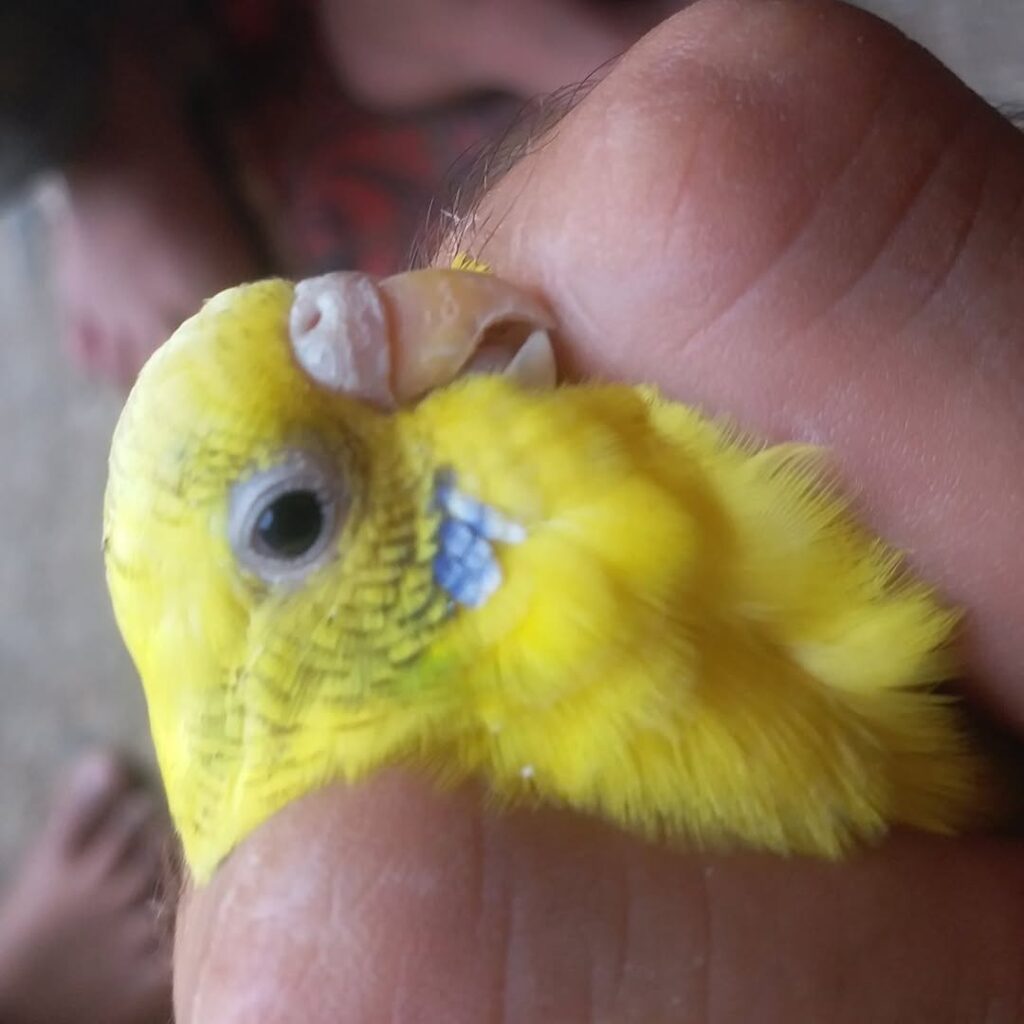
Cleaning the Vent — What to Do While You Wait for the Vet
If the feathers around the vent are heavily matted with dried droppings, it is worth very carefully cleaning the area before the vet visit — not as a treatment, but because significant dried faecal accumulation can itself cause discomfort and can impede normal passing of droppings.
Use warm water on a cotton pad or soft cloth. Dampen the matted area gently to soften the material, then remove it with very light pressure. Do not pull at the feathers. Do not use soap, disinfectant, or any topical product on the vent area. Do not attempt to probe or clean inside the vent.
Keep the bird warm after any contact with water — a damp budgie loses heat quickly and a bird that is already unwell is particularly vulnerable to chill.
This is supportive care only. It does not treat the underlying cause. The vet visit still needs to happen.
What I Tell Budgie Owners at the Counter
When someone describes a wet or dirty vent, I ask them three things immediately. How long has it been like that? Is the bird fluffed or on the floor? And is it a female?
Those three answers tell me almost everything I need to know about urgency. A female bird that is fluffed and has vent soiling gets the same answer every time: vet today, not tomorrow. The risk of egg binding alone makes waiting unacceptable.
For other birds — a male or a bird whose sex is unknown — the calculus is similar. Vent soiling that has been present for more than a day, or that is accompanied by any other sign of illness, is a vet visit within twenty-four hours. Not in a few days. Not when it is convenient.
The thing I want to leave every budgie owner with is this: budgies are small animals with fast metabolisms and limited reserves. They do not have the same margin for delay that a larger animal might have. A condition that would give a dog or cat a week before becoming critical can take a budgie down in two or three days.
I am not saying this to alarm anyone. I am saying it because it is true, and because acting early is almost always the difference between a straightforward treatment and a much harder situation.
If you are in any doubt about what you are seeing — come and see us. We are at Manor Garden Centre, Cheney Manor Industrial Estate, Swindon, SN2 2QJ — open every day. Or call us on 01793 512400. Describe exactly what you are seeing and we will help you work out what needs to happen next.

- “It’s probably just from sitting in the droppings” — A healthy budgie does not sit in its droppings. Birds that are perching normally do not accumulate faecal matter on the vent feathers. If the vent is soiled, the soiling has come from abnormal droppings passing through it — not from the bird sitting in the tray.
- “It cleared up once before on its own so I’ll wait and see” — A vent that has been soiled before and cleared without treatment is not evidence that the problem resolves itself. It is evidence that the underlying cause is recurring. Intermittent episodes of vent soiling — particularly in budgies — are a classic presentation of Giardia, which requires specific treatment and will not go away on its own.
- “She’s probably just moulting — the feathers look different” — Moulting does not cause vent soiling. Wet or matted feathers around the vent are not a moult symptom. These are separate and unrelated. If you are seeing vent changes during a moult, the moult is not the cause.
- “It’s only a small amount — it’s probably nothing serious” — The amount of soiling does not map directly onto the seriousness of the cause. A small amount of persistent vent soiling can indicate a chronic infection that has been quietly progressing. Small does not mean insignificant.
- “I’ll just clean it and see if it comes back” — Cleaning the vent treats the symptom, not the cause. If it comes back — and it will, if the underlying cause has not been addressed — the situation is the same as before except that time has passed. Clean it if necessary for the bird’s comfort, then get it to a vet.
- Female budgie, vent soiling, fluffed, sitting low on perch or on cage floor, tail bobbing.
Possible egg binding — same-day vet. Do not wait. This is the most time-critical situation on this list. - Any budgie, visible red or pink tissue protruding from the vent.
Cloacal prolapse — emergency vet immediately. Keep the bird warm and calm. Do not touch the tissue. This is a same-hour situation. - Budgie with loose or watery droppings, vent soiling, fluffed or quieter than normal.
Probable infection — bacterial, parasitic, or viral. Vet within 24 hours. Faecal testing will be needed to identify the cause. - Budgie with intermittent vent soiling, recurring episodes, poor feather condition alongside it.
Probable Giardia or other intestinal parasite. Vet visit with a fresh faecal sample. This will not resolve without specific treatment. - Vent soiling that started directly after a large amount of fresh watery food, bird otherwise bright and active.
Possible dietary cause — remove the high-water foods, return to normal diet, monitor for 48 hours. If droppings do not normalise, or if any other sign appears, see a vet. - Vent soiling with gradual weight loss, bird eating but visibly lighter, long-term change in condition.
Possible worm or parasite burden — vet with faecal examination. Do not delay; the bird has likely been losing condition for longer than is immediately obvious. - Unsure what you are seeing or whether it is serious.
Come in and talk to us, or call. Describe what you are seeing in detail. We will help you work out the right next step.
Visit Us at Paradise Pets Swindon
We stock budgerigars year-round alongside a full range of cage and aviary birds — all UK-sourced, kept in proper conditions before going to a new home. If you have a concern about your budgie’s health, or you want advice on care before a problem develops, come in and talk to us. We are always willing to help.
We also stock gerbils and hamsters, guinea pigs, and rabbits.
⭐ Customer Reviews
Amazing Bird Selection
Had a lovley visit today,staff were very friendly and very helpful,such a great petshop,their selection of birds is incredible,really impressed,thank so much to the staff at Paradise Pets

Friendly Helpful Staff
I have been coming to this place for years and they have a great stock of food for all types of pets. Have a great selection of small mammals and a lot of birds. Staff are friendly and helpful.

Great Quality Hutch
Bought a guinea pigs hutch and run combo, very happy with the service, the hutch was put in my car for me without even asking for help. The wood quality is very good, the instructions easy to follow and we are extremely happy with the fully built hutch. A good size for 2 guinea pigs

Response from Paradise Pets | Wiltshire
Thank you Melanie Latus Nice to provide services to you.
Best Bird Shop Around
It’s the best pet shop in and around Swindon. They always have an amazing selection of birds and all you need to keep them happy. I keep birds myself and the guys there are happy to answer questions and really know their stuff. I have seen budgies etc. in chain pet shops in the area looking really unhealthy and ill – I wouldn’t go anywhere else than Paradise Pets for animals.

Highly Recommended Bird Shop
I could not praise this shop enough. Really helped my Grandson buy his first bird and he’s loving it. Travelled from Somerset and was welcomed with open arms.

Great Shop with Competitive Prices
Great shop with amazing selection for small animals, hamsters, mice ect, highly recommend!
Also has a great selection for dogs & cats too & very competitive prices! 💖

