
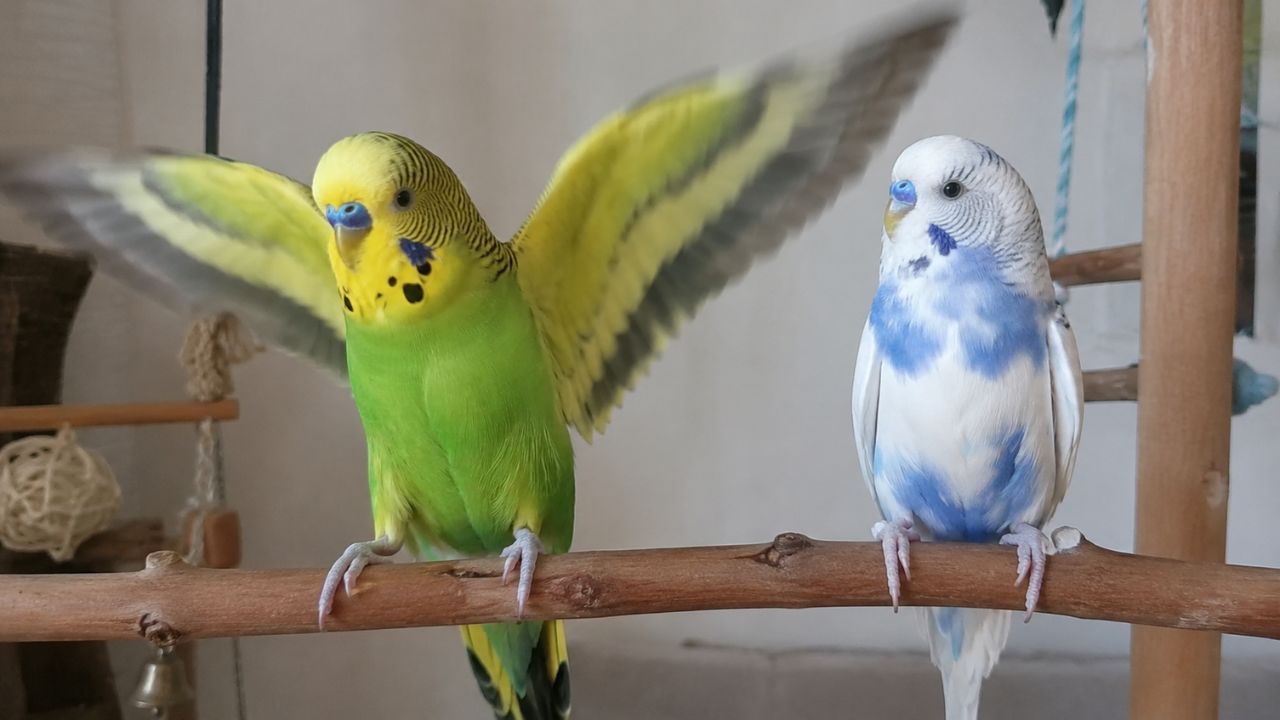

Neil has kept, bred, and sold budgerigars at Paradise Pets Swindon since 1988 — over 35 years of first-hand experience with these birds. Wing flapping on the perch is one of the most frequently misread behaviours new budgie owners bring to the counter. In most cases, it is entirely normal. In a small number of cases, it is not. This guide explains how to tell the difference.
It is usually a new owner who asks. They come in — sometimes a little concerned, sometimes quite worried — and say that their budgie keeps flapping its wings while sitting on the perch. Not flying. Not going anywhere. Just flapping in place, sometimes vigorously, then stopping.
They want to know if something is wrong with it.
In the majority of cases, nothing is wrong at all. Wing flapping on the perch is one of the most natural things a budgie does. But the word majority matters here — because there are specific patterns of wing flapping that can signal something that does need attention, and knowing how to read the difference is genuinely useful.
I have been selling budgies for thirty-five years. The wing-flapping questions I hear come down to a short list of very specific situations, and once you understand what each one looks like, the answer becomes straightforward.
Here is that understanding.
The Most Common Reason — Exercise and Muscle Maintenance
This is what accounts for the vast majority of wing flapping on the perch, and it is the reason most new owners do not immediately think of because it seems too simple.
Budgies in the wild fly continuously — foraging, moving between trees, covering distances that a cage bird never approaches. A caged budgie still has the same flight muscles, the same neurological drive to use them, and the same need to keep them in working order. Wing flapping on the perch is how a bird that is not flying enough exercises the muscles it would otherwise use constantly.
Think of it as the budgie doing press-ups. It is not going anywhere. It is just using its wings in the only way currently available to it.
This type of flapping has a specific look. The bird is settled and relaxed on the perch — not crouched, not fluffed, not showing any other signs of distress. It flaps vigorously for a few seconds, sometimes while gripping the perch tightly, sometimes while shifting its weight. Then it stops, ruffles its feathers briefly, and goes back to whatever it was doing. It may do this several times across the day.
There is nothing to be concerned about here. If anything, it is a sign that the bird is engaged and physically active rather than lethargic. If your budgie has access to a larger cage or regular supervised time outside the cage, you will often see this flapping reduce — because the bird is getting the flight exercise it needs in a more natural way.
Morning Flapping — The Daily Greeting
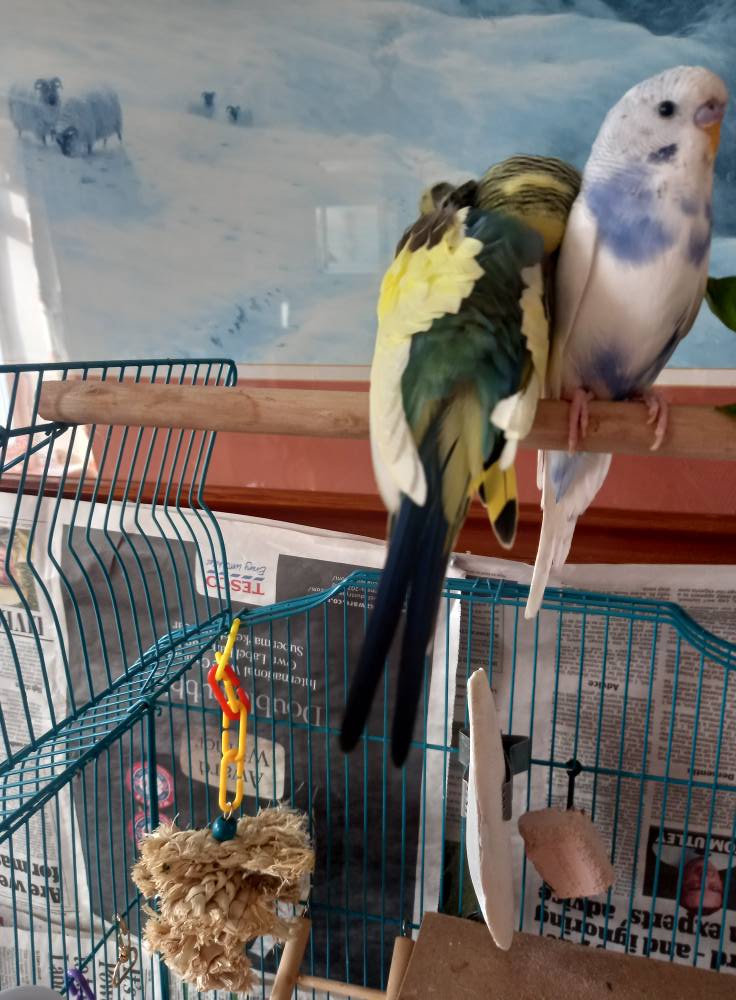
Budgies are flock birds. In the wild, mornings are loud, active, social events — birds calling to each other, moving, establishing contact across the group. A pet budgie retains every instinct of that flock behaviour, and its owner — or the other birds in the cage — is its flock.
Wing flapping first thing in the morning, often accompanied by chirping, chattering, or calling, is greeting behaviour. The bird is announcing itself to its flock, warming up for the day, and responding to the stimulation of light and activity returning to the room.
This is entirely normal and, in my experience, one of the signs of a well-adjusted, socially engaged budgie. A bird that does not respond to the morning with any kind of energy or vocalisation is actually more worth paying attention to than one that does.
The morning flapping pattern is usually the most vigorous of the day. It tends to settle down once the bird has been awake for twenty minutes or so and the initial stimulation has passed.
Attention and Communication — The Budgie Is Talking to You
Budgies communicate through movement as much as through sound. Wing flapping directed toward an owner — particularly accompanied by eye contact, head bobbing, or calling — is often a direct bid for attention or interaction.
If your budgie flaps its wings when you walk into the room, when you approach the cage, or when it sees you preparing to let it out, that flapping is communicative. It is not distress. It is the bird expressing anticipation, excitement, or a request.
Budgies that are well-bonded to their owners become very good at this kind of targeted communication. The flapping says: notice me, come here, let me out, give me attention. It is the bird working with the limited vocabulary available to it.
If this is the pattern you are seeing — flapping that happens specifically in response to your presence rather than at random — there is nothing to be concerned about. If anything, it suggests the bird is engaged, bonded, and actively communicating. Respond to it. Interact with the bird. That communication is something to encourage, not worry about.
Displaying to a Partner or Mirror — Courtship Behaviour
Male budgies in particular will flap their wings on the perch as part of courtship display — often directed at a female in the same cage, at their own reflection in a mirror, or occasionally at a toy or object they have formed an attachment to.
This display flapping has a specific character. It tends to be paired with other courtship signals — the male sitting very upright, puffing his chest, regurgitating food toward the object of his attention, tapping his beak on the perch or on the cage bars near the female. The wings are often held slightly away from the body before the flap, and the bird may bob repeatedly while flapping.
In a single-bird household with a mirror in the cage, this behaviour is extremely common. The budgie has bonded to its reflection and is directing normal courtship behaviour toward it. This is harmless but worth knowing about — if the bird is spending a lot of time intensely fixated on the mirror, removing it can sometimes be beneficial, as the reflection cannot respond in a way that satisfies the social need the bird is trying to meet.
In a cage with a female, this is simply normal reproductive behaviour. Nothing to be concerned about unless it is causing the female obvious distress.
Wing Flapping With Feathers Fluffed — When to Pay Attention
Everything above describes wing flapping in a bird that is otherwise relaxed and in normal posture. This is different, and the difference matters.
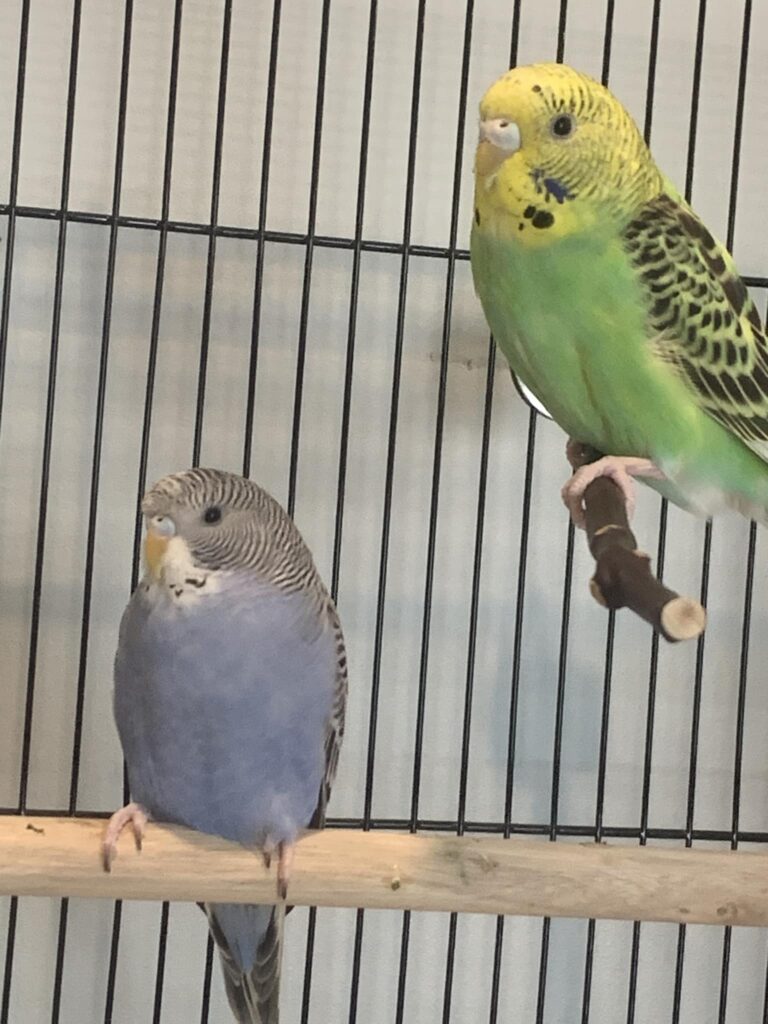
A budgie that is flapping its wings while also sitting fluffed up — feathers raised, body rounded, looking larger than normal — is showing a combination of signals that warrants attention. Fluffing is a sign of cold, illness, or discomfort. A healthy, comfortable budgie does not sit fluffed during normal activity. It fluffs briefly when resting or sleeping, but not while actively moving or responding to its environment.
Wing flapping paired with persistent fluffing, particularly if it is accompanied by reduced interest in food, reduced vocalisation, spending more time at the bottom of the cage, or a change in droppings, is a sign that something may be physically wrong.
Budgies are prey animals. Like all prey species, they are very good at concealing illness for as long as possible — the instinct to appear healthy is a survival mechanism that can make it genuinely difficult to tell when a bird is unwell until the situation has progressed. By the time a budgie is visibly unwell in multiple ways at once, it has often been managing a problem for some time.
If you are seeing wing flapping alongside any of these other signs, see an avian vet promptly rather than waiting to see if it resolves on its own.
Laboured Wing Movement — Distinguishing Flapping From Struggling
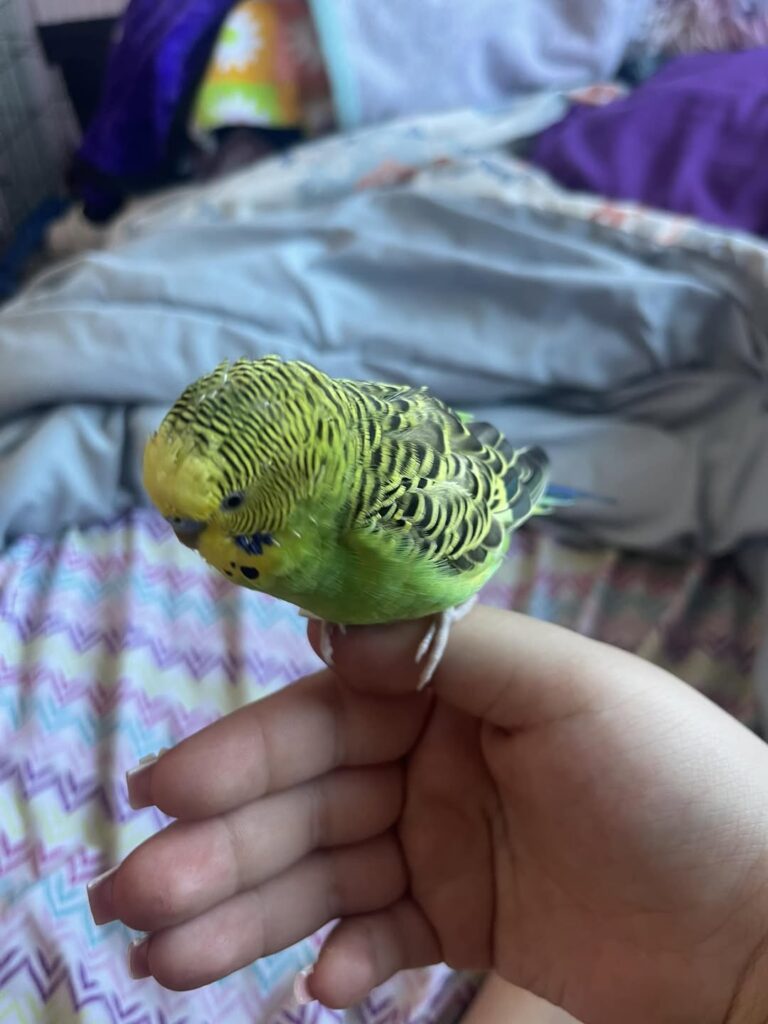
There is a difference between a budgie flapping its wings normally on the perch and a budgie that appears to be struggling to hold itself upright, making effortful wing movements that look less like exercise and more like the bird is trying to compensate for something.
Normal wing flapping is controlled, vigorous, and brief. The bird is clearly in command of what it is doing. It flaps, stops, ruffles, continues normally.
Laboured or uncontrolled wing movement — where the bird seems to be using its wings to balance or brace itself, or where the movement looks weak and effortful rather than strong and deliberate — can indicate a balance problem, a neurological issue, an injury, or a number of other conditions that require veterinary attention.
The clearest way I can describe the distinction: normal flapping looks purposeful. The bird is doing something. Laboured movement looks like the bird is compensating for a difficulty. If you are uncertain which category your bird is in, record a short video on your phone and show it to a vet or bring the bird in for us to look at. That distinction matters, and it is usually obvious to someone who has seen both.
After a Bath or Misting — Completely Normal
This is one that surprises people who have not seen it before. After bathing or being misted with water, many budgies will flap their wings vigorously on the perch — sometimes quite dramatically — as part of drying off and redistributing the natural oils through their feathers.
This post-bath flapping can look alarming if you have not seen it before because it is more sustained and energetic than most normal flapping. The bird may also shake its head, ruffle extensively, and repeat the whole sequence several times.
It is entirely normal. It is the bird doing what birds do after getting wet. If your budgie has just had a bath and is doing this, leave it alone to dry and settle. Make sure the room is warm enough that a damp bird is not getting cold — a chill after bathing is a genuine risk, and the room temperature matters.
What I Tell Budgie Owners at the Counter
When someone comes in about a wing-flapping budgie, I ask two questions first: is the bird otherwise behaving normally, and what does its posture look like when it flaps?
Those two questions resolve most of the cases. A budgie that is eating normally, active, vocalising, and sitting upright when it flaps is almost certainly doing something completely normal for reasons explained above. A budgie that is fluffed, quiet, less interested in food, or showing any other change alongside the flapping is a different conversation.
The thing I want every budgie owner to leave with is an understanding of normal. Once you know what normal budgie behaviour looks like — what the exercise flapping looks like, what the morning greeting looks like, what the courtship display looks like — the things that are not normal become much easier to spot.
Most of the time, your budgie is just being a budgie. And a budgie that is flapping its wings on the perch, chirping, interacting with you, and eating well is a budgie that is doing exactly what it should be doing.
But if something feels different — if the flapping is accompanied by other signs, or if your bird has changed from how it normally is — come and see us or get it checked. We are at Manor Garden Centre, Cheney Manor Industrial Estate, Swindon, SN2 2QJ — open every day. Or call us on 01793 512400. Describe what you are seeing in detail and we will help you work out whether it needs attention.

- “It’s flapping because it wants to escape” — Budgies do not flap on the perch because they are trying to escape. Escape attempts look entirely different — the bird moves toward the cage door or bars, it does not stay on the perch and flap in place. Perch flapping is almost always internal to the bird, not a response to the cage.
- “Wing flapping means the budgie is unhappy” — This is almost the reverse of what flapping usually signals. An unhappy or unwell budgie typically becomes quieter and less active, not more. Vigorous, energetic wing flapping in an otherwise normal bird is usually a sign of engagement and health rather than distress.
- “My budgie only flaps one wing — that’s normal” — This one needs more careful attention. A bird that regularly extends and stretches one wing at a time as part of a full body stretch is doing something normal. A bird that holds one wing dropped or flaps one wing asymmetrically — where the two sides look different in movement or position — may have an injury or muscular issue worth having checked.
- “It flaps more when I’m in the room because it’s scared of me” — In a well-settled bird, increased activity when you enter the room is almost always a positive social response, not fear. Fear looks different — a frightened budgie moves away from you, crouches low, may call in alarm. A bird that flaps and chirps when you approach is generally pleased to see you.
- “I should discourage the flapping so it doesn’t wear itself out” — Wing flapping is a natural, necessary behaviour. Discouraging it is not appropriate and not effective. If the bird needs to flap, it will flap. What you can do is give it more opportunity to actually fly — out-of-cage time, a larger flight cage — so the flapping in place reduces naturally as the need is met more fully.
- Bird flapping on the perch, relaxed posture, eating and behaving normally.
Exercise or communication behaviour — entirely normal. No action needed. If it is very frequent, consider whether the cage is large enough and whether the bird is getting sufficient out-of-cage time. - Bird flapping vigorously first thing in the morning with vocalisation.
Morning greeting behaviour — normal and healthy. A sign of a well-adjusted, socially engaged bird. - Bird flapping toward you specifically when you enter the room or approach the cage.
Attention and communication behaviour — normal bonding response. Interact with the bird. Encourage it. - Male bird flapping at a female or mirror with chest-puffing and head-bobbing.
Courtship display — normal. If directed at a mirror obsessively, consider removing the mirror. Otherwise no concern. - Bird flapping while also fluffed up, quiet, eating less, or with changed droppings.
Possible illness — see an avian vet this week. Do not wait to see if it resolves. Budgies conceal illness well; multiple signs together are significant. - Asymmetrical wing movement, one wing held differently from the other, or movement that looks effortful rather than controlled.
Possible injury or neurological issue — vet promptly. Record a short video to show the vet exactly what you are seeing. - Post-bath flapping, sustained and energetic after being misted or bathing.
Normal drying behaviour — no concern. Ensure the room is warm enough for a damp bird to dry comfortably.
Visit Us at Paradise Pets Swindon
We stock budgerigars year-round alongside a full range of cage and aviary birds — all UK-sourced, all kept in proper conditions before they go to a new home. If you have a question about your budgie’s behaviour, or you are thinking about getting your first bird and want to understand what to expect, come in and talk to us. We are always happy to help.
We also stock gerbils and hamsters, guinea pigs, and rabbits.