

Neil has run Paradise Pets Swindon since 1988 — over 35 years of keeping, breeding, and advising on budgies. In that time, he has had more conversations than he would like about birds that were harmed by food their owners genuinely believed was safe. This article is for every owner who wants to make sure they are not next.
A woman came in a few years ago with a look on her face that I have seen before and never like seeing. She had lost her budgie the previous evening. Healthy bird. Eating well. No signs of illness. Dead by morning.
She had given it a small piece of avocado the day before. She had looked it up online, she said — and she had found an article that listed avocado alongside other safe fruits for birds.
She had found the wrong article.
I am not telling this story to upset anyone. I am telling it because it is true, and because the information that costs birds their lives is almost never the obviously dangerous information. Nobody gives their budgie bleach. The birds that die from food are the ones given things their owners genuinely believed were harmless — things that appear on safe food lists, things that seem natural and healthy, things that the family eats every day without consequence.
After 35 years of working with budgies at Paradise Pets, I have a very clear picture of which foods cause the most harm — not because they are the most toxic in laboratory terms, but because they are the ones owners are most likely to give without knowing the risk. That is what this article is about.
Why Budgies Are So Vulnerable To Food Toxins
Before the list, I want to explain something about budgie physiology that makes this more than just a matter of “a little bit won’t hurt.”
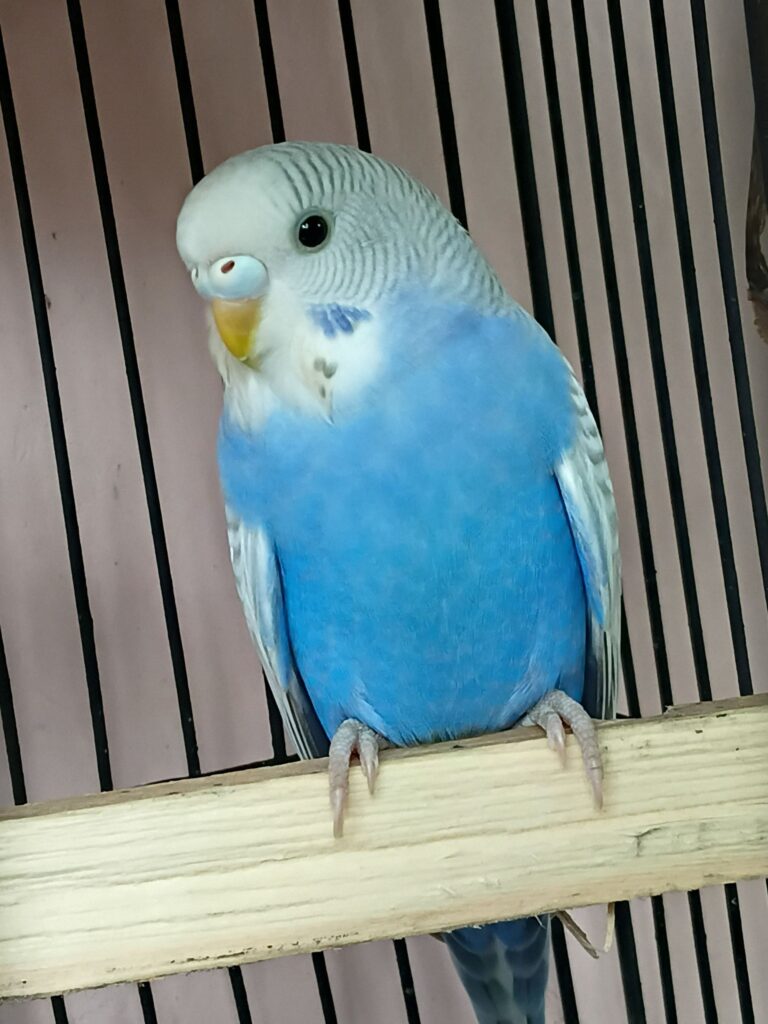
Budgies are small. A standard budgie weighs around 35 grams. A toxic compound that a human would metabolise and excrete without noticeable effect can reach a lethal concentration in a bird that small after a quantity that seems completely trivial. The dose that harms a budgie is not a bowlful. It is a bite. Sometimes less.
Their respiratory system amplifies this further. Budgies absorb substances through the respiratory tract with extraordinary efficiency — which is why airborne toxins like non-stick fumes are so dangerous. But it also means that toxic compounds in food that produce vapour or aromatic compounds — onion, garlic, certain fruits — can affect them through two routes simultaneously.
And unlike dogs, which often vomit toxic substances before serious harm is done, budgies cannot vomit. What goes in, stays in until it is metabolised. There is no safety valve.
This is why “a tiny piece” is not a safe dose for many of the foods on this list. The size of the piece is not the determining factor. The toxicity of the compound is.
The Foods UK Budgie Owners Most Commonly Get Wrong
1. Avocado — The One That Looks Like a Health Food
Avocado is the most dangerous food on this list in terms of the gap between how it appears to owners and what it actually does to birds. It is marketed as a superfood. It appears on every healthy eating list. It seems natural and nutritious. It is, for birds, acutely toxic.
Avocado contains a compound called persin, present throughout the fruit — in the flesh, the skin, the stone, and even the leaves of the plant. Persin causes cardiac damage in birds. It disrupts the heart muscle, causes fluid to accumulate around the heart and lungs, and leads to respiratory distress and death. In a budgie, the onset of symptoms can be rapid and the progression to death can happen within 24 to 48 hours of ingestion.
- No part of the avocado plant is safe for budgies — not the flesh, not the skin, not the stone
- There is no safe dose — a small piece of avocado flesh is enough to cause serious harm
- If your budgie has eaten any avocado, phone an avian vet immediately — do not wait for symptoms
- Guacamole contains avocado — do not allow access
- Avocado plants kept as houseplants are also a risk if the bird has free flight access to them
2. Onion and Garlic — The Kitchen Staples That Are Quietly Dangerous
These appear together because they share the same mechanism of toxicity and because they appear in almost every UK kitchen in forms that owners sometimes offer without thinking — a small piece of onion, a little garlic bread, a taste of something cooked with both.
Onions and garlic contain organosulfur compounds — thiosulphates and disulfides — that damage red blood cells in birds by causing a condition called hemolytic anaemia. The red blood cells rupture, the bird cannot carry oxygen effectively, and the result is weakness, breathlessness, and eventually death from oxygen deprivation.
The toxicity applies to all forms of onion and garlic: raw, cooked, dried, powdered. Cooking does not neutralise it. The powdered form used in seasonings is actually more concentrated and potentially more dangerous per gram than fresh onion.
- Raw onion — toxic
- Cooked onion — toxic
- Onion powder — toxic, more concentrated than fresh
- Raw garlic — toxic
- Garlic bread — toxic
- Garlic powder — toxic
- Any food seasoned with onion or garlic — do not share with your budgie
The practical implication: do not share human food with your budgie unless you know exactly what is in it. Processed and cooked foods almost always contain onion or garlic in some form, and the small amount in a seasoned cracker or a piece of toast with spread is enough to cause harm over time.
3. Apple Seeds and Stone Fruit Stones — The Hidden Danger in Safe Fruits
This is one of the most common sources of confusion I encounter. Apple is safe for budgies. Pear is safe. Plum, cherry, peach, apricot — all safe in the flesh. And owners, knowing this, share these fruits with their birds without thinking about the seeds or stones.
Apple seeds and the stones of all stone fruits — cherries, plums, peaches, apricots, nectarines — contain amygdalin, a compound that breaks down into hydrogen cyanide when ingested. In the quantities a small bird might consume from chewing a seed, this is genuinely dangerous.
A budgie given a whole apple, or a cherry with the stone, or a peach slice with part of the stone attached, has access to a cyanide source. The flesh is fine. The seed is not.
- Apple — remove all seeds before offering any piece
- Pear — remove seeds
- Cherry — remove stones completely
- Plum, peach, apricot, nectarine — remove stones and do not give any flesh that was in direct contact with the stone
- Mango — the seed is not cyanogenic but is very large and a choking risk; remove it
- The flesh of all these fruits is safe — only the seeds and stones are the problem
4. Chocolate — More Dangerous Than Most People Realise
Most owners know chocolate is bad for dogs. Fewer realise it is bad for birds too — and bad in a different way, because a budgie is so much smaller that the toxic threshold is dramatically lower.
Chocolate contains theobromine and caffeine. In birds, these compounds cause central nervous system stimulation, cardiac arrhythmias, seizures, and death. Dark chocolate contains higher concentrations than milk chocolate, but milk chocolate is not safe — the difference is only in how much causes harm, and for a 35-gram bird, the amount is very small.
White chocolate contains minimal theobromine but is extremely high in fat and sugar — not acutely toxic in the same way, but genuinely harmful to a small bird’s metabolic health and absolutely not something to offer.
- Dark chocolate — acutely toxic, even in tiny amounts
- Milk chocolate — toxic, lower threshold but still dangerous for a budgie
- Chocolate cake, biscuits, or any food containing chocolate — do not share
- Cocoa powder — highly concentrated, do not allow access
- White chocolate — not acutely toxic but high fat and sugar; still avoid
5. Caffeine — In All Its Forms
Tea. Coffee. Energy drinks. Cola. Any caffeinated food or drink.
Caffeine in birds causes cardiac arrhythmia, hyperactivity, elevated heart rate, and in sufficient doses, cardiac arrest. A budgie that has consumed caffeine — even from a small sip of tea — may appear hyperactive, trembling, and distressed before the cardiac effects develop.
This one matters in UK households specifically because tea is ubiquitous. Owners leaving a cup of tea unattended near a free-flying budgie. A budgie landing on the rim of a mug. A damp spot on the kitchen counter from a spilled cup that the bird walks through and then preens.
- Tea — including green tea, which owners sometimes assume is bird-safe because it is “natural”
- Coffee — in any form, including decaffeinated which still contains small amounts
- Cola and energy drinks — caffeine plus high sugar content
- Chocolate — already listed separately, but contains caffeine alongside theobromine
- Some herbal teas — not all herbal teas are caffeine-free, and some contain compounds that are harmful to birds even without caffeine
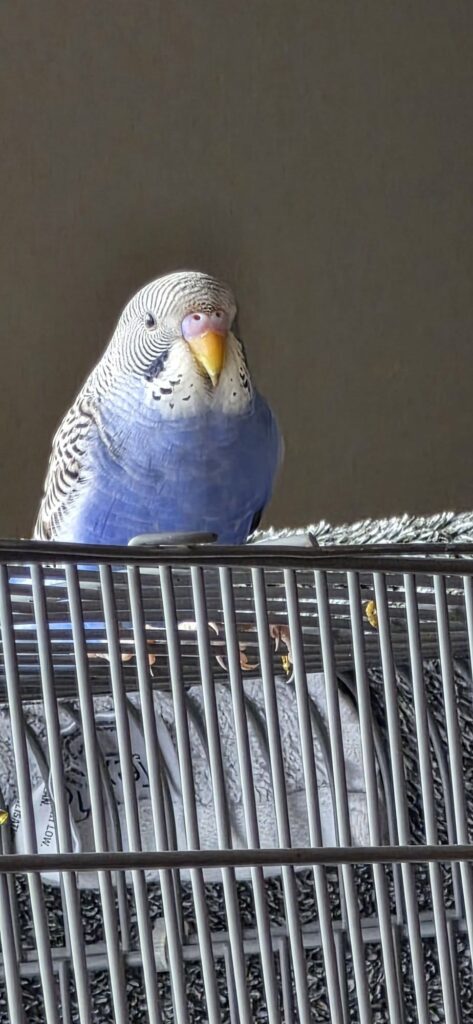
6. Salt — In Amounts That Seem Trivially Small
Salt toxicity is one of the most underappreciated dangers in budgie care — and one of the most common, because salt appears in so many foods that owners share casually with their birds.
A budgie’s kidneys cannot handle salt in anything approaching the quantities found in human food. A single salted crisp. A corner of a cracker. A piece of cheese. A tiny bit of salted butter on a piece of toast. These are not dramatic quantities. To a 35-gram bird with kidneys calibrated for an entirely salt-free wild diet, they represent a significant sodium load.
Salt toxicity causes neurological symptoms — tremors, incoordination, seizures — alongside kidney stress and dehydration. Chronic low-level salt exposure from repeated small amounts in human food causes cumulative kidney damage over time.
- Crisps and salted snacks — never
- Salted crackers or biscuits — never
- Cheese — high salt content, do not offer
- Salted butter or margarine — never
- Processed meat — high salt, do not offer
- Anything seasoned with salt — check before sharing any human food
7. Mushrooms — Often Assumed Safe Because They Are Vegetables
Mushrooms occupy an odd category in budgie food discussions because they are not always listed on danger lists, and because commercially grown mushrooms like button mushrooms seem so benign. They are eaten raw, they are natural, they have no obvious poison warning.
The issue with mushrooms for budgies is not acute toxicity in the way avocado or onion is. It is that certain compounds in mushrooms — even common varieties — can cause digestive upset, liver stress, and in some cases more serious organ damage depending on the variety and the quantity. Wild mushrooms in particular carry obvious serious risks. But even cultivated mushrooms are not a food that birds evolved to eat, and there is enough evidence of digestive and organ problems from mushroom ingestion that I tell owners to avoid them entirely.
There is no shortage of safe vegetables for a budgie. There is no need to include one that carries any level of uncertainty.
8. Raw Onion Tops, Chives, and Leeks — The Allium Family
The organosulfur toxicity I described for onion and garlic applies to the entire allium family — a point that catches owners out because they may know onion is dangerous but not realise that spring onion tops, chives, and leeks carry the same risk.
Chives in particular are easy to miss because they appear in salads, on baked potatoes, in dips and soft cheeses. An owner who carefully avoids onion may not think twice about a dish containing chives.
The rule is simple: nothing from the allium family, in any form, for budgies.
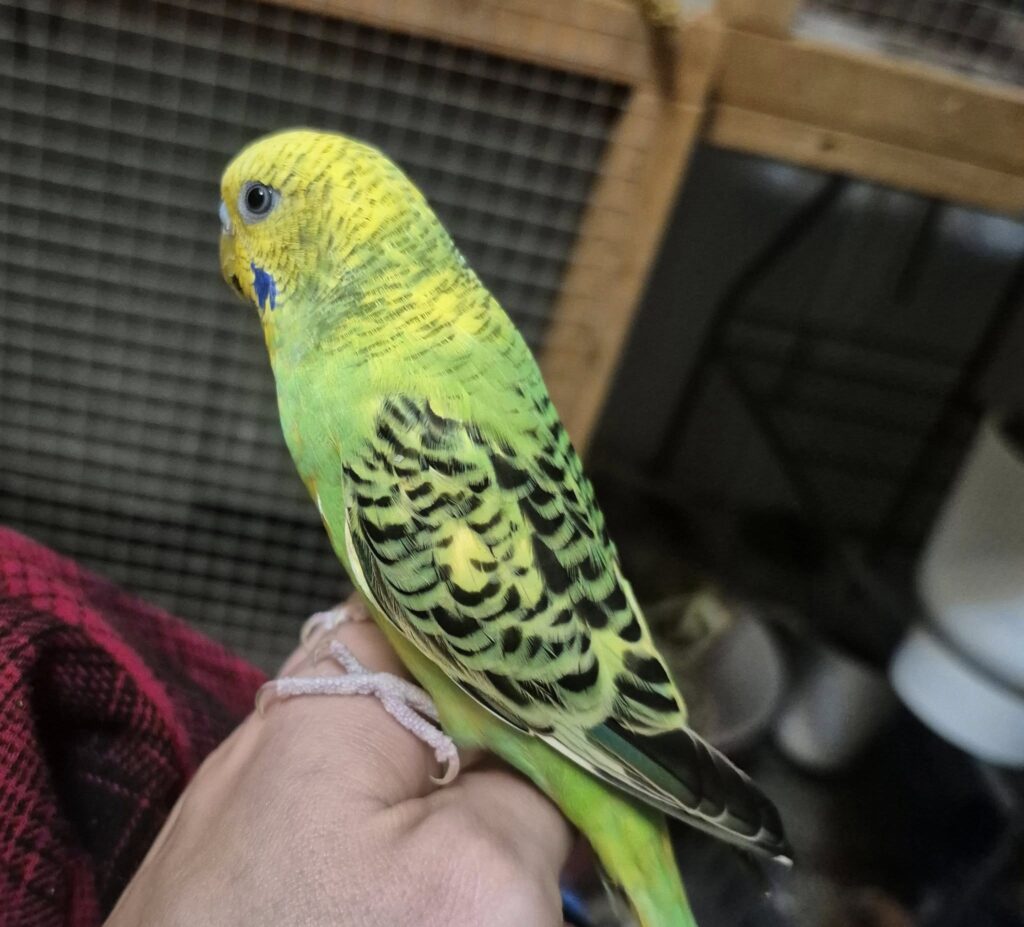
9. Alcohol — Including The Amounts In Food
This one goes without saying for deliberate exposure — nobody is giving their budgie wine. The risk comes from the less obvious sources: fruit cake, Christmas pudding, tiramisu, rum-soaked raisins, cooking wine used in food that is then shared.
A budgie’s liver is not equipped to metabolise ethanol. Even very small amounts cause rapid intoxication — the bird becomes uncoordinated, then sedated, then potentially dies from respiratory depression. A small piece of Christmas cake with brandy in it is not a safe treat. It is a potentially fatal one.
The lesson: any human food that contains alcohol in any amount is not safe for a budgie. This includes foods that “had the alcohol cooked off” — not all ethanol evaporates in cooking, and the residual amount can still be harmful to a bird this small.
10. Rhubarb — Both The Stalks And Especially The Leaves
Rhubarb is toxic to budgies — the leaves significantly so, the stalks also problematic through their high oxalic acid content. Oxalic acid binds calcium in the body, leading to calcium deficiency and kidney damage, and can cause acute toxic symptoms in birds at quantities far smaller than in mammals.
UK gardens commonly contain rhubarb, and a free-flying budgie that accesses a garden or a room where rhubarb has been brought in can encounter both leaves and stalks. The leaves are the most acutely dangerous part but owners should not consider the stalks safe either.
- Rhubarb — avoid entirely, both leaves and stalks
- Spinach — high in oxalic acid; safe in small amounts occasionally but not as a daily food
- Beet greens and chard — high oxalate, limit frequency
- Note: spinach is often listed as safe for budgies, and small amounts are fine — the issue is daily feeding in large quantities, not an occasional leaf
The Foods That Are Safe — A Clear Positive List
I want to balance this article with what budgies can eat, because the picture so far may seem restrictive and I do not want owners to be afraid of feeding their birds anything.
- Leafy greens — romaine lettuce, kale, watercress, dandelion leaves, basil, coriander, parsley (in moderation)
- Vegetables — broccoli, carrot, courgette, cucumber, peas, sweetcorn, red and yellow bell pepper (not seeds)
- Fruits — apple (no seeds), pear (no seeds), mango (no seed), melon, grapes (seedless, halved), blueberries, strawberries, raspberries
- Herbs — basil, coriander, dill, mint in small amounts
- Grains — cooked plain rice, plain cooked pasta, cooked quinoa
- Eggs — small amounts of hard-boiled egg white; occasionally a useful protein source
The rule of thumb I give owners: if it is plain, unseasoned, and does not appear on the dangerous list — it is probably fine to try in a small amount. If it is processed, seasoned, cooked with other ingredients, or you are not sure exactly what is in it — do not offer it until you have checked.
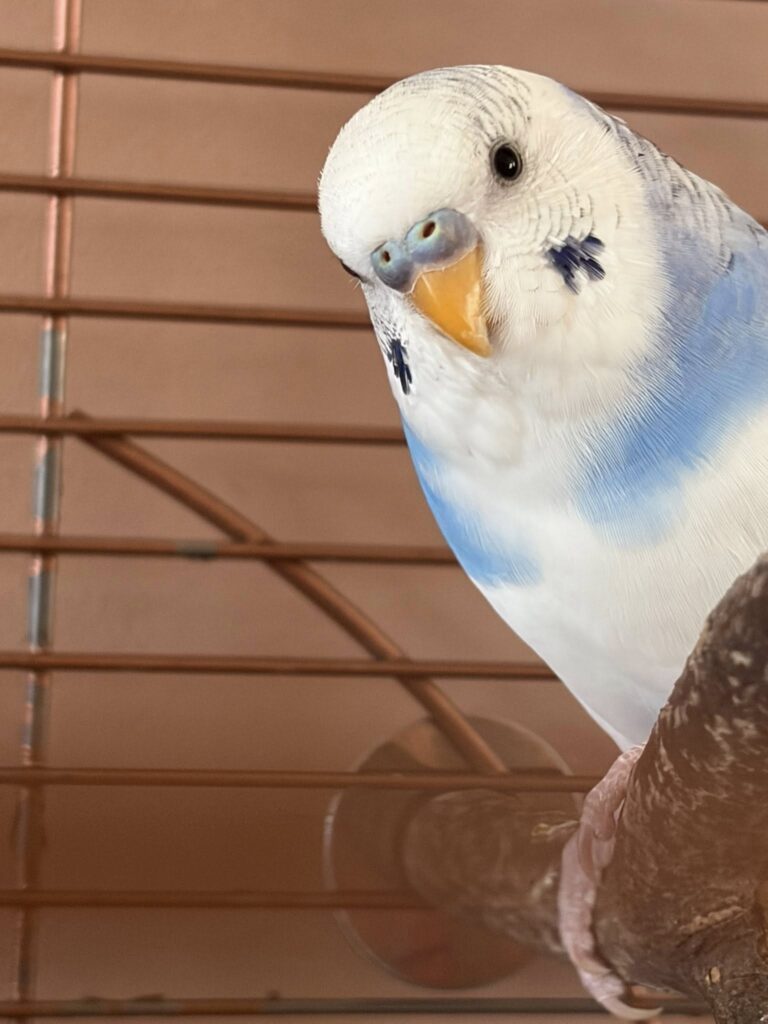
What To Do If Your Budgie Has Eaten Something Toxic
- Do not wait for symptoms to develop — by the time a budgie looks unwell after toxic ingestion, the damage is often already significant
- Phone an avian vet immediately — describe exactly what was eaten and approximately how much
- Do not try to induce vomiting — budgies cannot vomit and attempting to force it causes additional harm
- Keep the bird warm and quiet — minimise stress while you arrange veterinary care
- Take a sample or packaging if available — the vet will want to know exactly what compound was involved to advise on treatment
- If you are in Swindon, ring us on 01793 512400 — we will help you identify an avian vet immediately
The Quick Reference — Dangerous Foods For Budgies
| Food | Why it is dangerous | Is any amount safe? |
|---|---|---|
| Avocado | Persin causes cardiac damage and death | No — zero tolerance |
| Onion (all forms) | Organosulfur compounds cause haemolytic anaemia | No — includes cooked and powdered |
| Garlic (all forms) | Same mechanism as onion, more concentrated | No — includes garlic bread and powder |
| Chives, leeks, spring onion | Allium family — same toxicity as onion | No |
| Apple seeds / stone fruit stones | Amygdalin breaks down to hydrogen cyanide | No — flesh is safe, seeds and stones are not |
| Chocolate | Theobromine and caffeine cause cardiac arrhythmia | No — all types including milk chocolate |
| Caffeine | Cardiac arrhythmia, elevated heart rate, death | No — includes tea, coffee, cola |
| Salt | Kidney damage, neurological symptoms | No added salt — naturally occurring trace amounts in fresh food are fine |
| Alcohol | Liver cannot metabolise ethanol — rapid toxicity | No — includes foods cooked with alcohol |
| Rhubarb | High oxalic acid, kidney damage — leaves acutely toxic | No — avoid entirely |
| Mushrooms | Digestive and potential organ stress | Avoid — no nutritional need to include them |
Frequently Asked Questions
My budgie had a tiny taste of avocado — what should I do?
Phone an avian vet immediately. Do not wait for symptoms. Avocado toxicity in birds can progress quickly, and early intervention is significantly more effective than waiting until the bird looks unwell. Tell the vet what was eaten, when, and approximately how much. Speed matters here.
Are grapes safe for budgies?
Yes — seedless grapes in small amounts are safe for budgies and many birds enjoy them. Cut them in half before offering to prevent any choking risk. Do not offer grape seeds. Raisins and dried fruit generally are very high in sugar and should be avoided or given only as an occasional tiny treat.
Can budgies eat bread?
Plain wholegrain bread in very small amounts is not toxic, but it is not nutritionally useful either. White bread has negligible nutritional value and is high in salt compared to what a budgie needs. Any bread with seeds, nuts, or flavouring is potentially problematic. There are so many better foods to offer that bread is not worth including.
Is it safe to share my meal with my budgie?
Not without knowing exactly what is in it. The danger is not usually the main ingredient — it is the seasoning, the cooking fat, the salt, the onion or garlic that appears in almost every cooked human meal. If you want to share food with your budgie, offer plain fresh vegetables or fruits directly rather than portions of cooked or processed food.
My budgie ate something from this list weeks ago and seems fine — should I be worried?
Some toxic foods cause acute effects. Others cause cumulative damage that is not visible until it reaches a threshold. A bird that ate something toxic and appeared fine may have sustained some organ damage that will not be visible in behaviour until the damage is significant. If the exposure was significant or repeated, a vet check with blood work is worthwhile to establish a baseline. For a single tiny incidental exposure to a lower-toxicity food on this list, ongoing monitoring is reasonable.
Where can I get budgie diet advice in Swindon?
Come and see us at Paradise Pets, Manor Garden Centre, Cheney Manor, Swindon SN2 2QJ. Or ring us on 01793 512400. Diet questions are some of the most common we get and we are always happy to talk through what your bird should and should not be eating. For suspected toxic ingestion, go straight to an avian vet.
One Last Thing From Me
The woman who lost her budgie to avocado — she had done what most owners do. She looked it up. She found information that seemed credible. It was wrong.
The internet contains a great deal of budgie feeding advice, and not all of it has been written by people who have spent 35 years watching what these birds can and cannot handle. Some of it is copied from other sources. Some of it is outdated. Some of it is simply incorrect.
The list in this article is based on the cases I have seen, the vets I have spoken to, and three and a half decades of keeping these birds. I hope it saves someone the conversation I had with that woman.
When you are not sure about a food — do not give it until you are. The safe food list is long enough that there is never a reason to guess.
Questions About What To Feed Your Budgie? Come And See Us
Diet is one of the most common topics at the counter. Come in for an honest conversation about what your budgie should be eating — and what it definitely should not. No obligation, no pressure. Over 35 years of hands-on budgie care experience.