


Neil has kept, bred, and sold budgies at Paradise Pets Swindon since 1988 — over 35 years of first-hand experience with these birds. If your budgie is on the cage floor right now and you are reading this, do not spend long on this introduction. Scroll to the assessment section immediately and work through it. Time matters with a budgie on the floor.
Stop.
Before you read anything else — if your budgie is on the cage floor right now, I need you to do one thing immediately. Look at the bird. Is it breathing? Is the chest or tail moving, even slightly? Is it responsive at all when you tap the cage or speak to it?
If yes — it is still alive, and that matters enormously. Keep reading. Every minute counts, but the fact that the bird is still breathing means there is still a window.
If no — I am sorry. Come back to this article when you are ready, and it will help you understand what happened and what to watch for with any future bird.
For those of you whose bird is still breathing — here is exactly what to do.
Do This Right Now — Before You Read Anything Else
I am going to give you the immediate action list first, before I explain anything. If your bird is on the floor right now, do these things in this order.
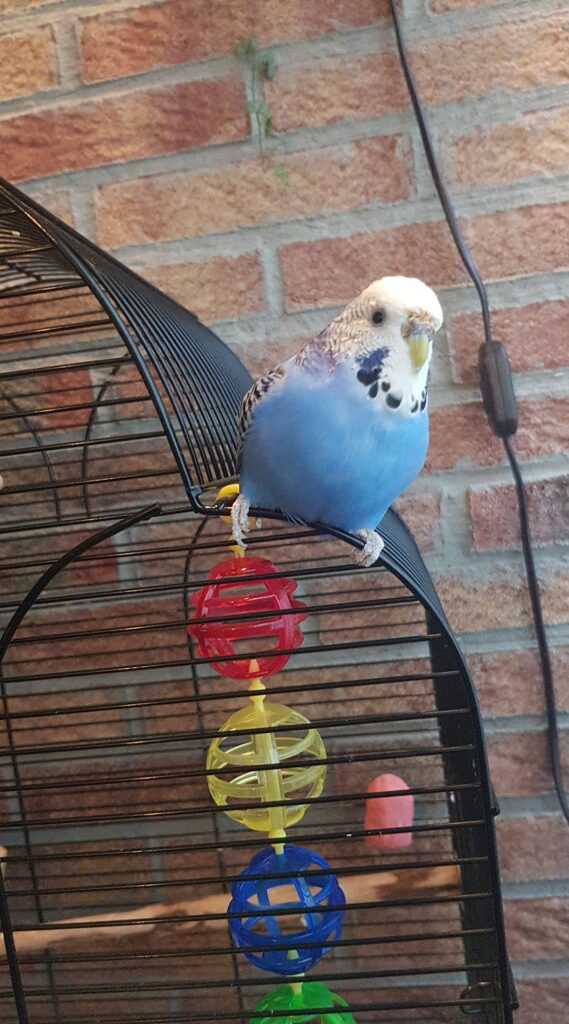
- Step 1 — Warm the bird gently. A budgie on the floor is often cold. Move the cage to a warm room — not hot, not near a direct heat source, but comfortably warm. Approximately 25 to 30 degrees Celsius if possible. You can place a heat lamp or a heating pad set to low on one side of the cage — not underneath the whole cage, just one side so the bird can move away from the heat if it needs to.
- Step 2 — Move food and water to floor level. Place seed and water on the cage floor near the bird. Do not make the bird reach up to eat or drink. Make everything as easy as possible to access from where it is sitting.
- Step 3 — Reduce all stress. Dim the lights slightly. Keep the room quiet. Cover three sides of the cage to give the bird a sense of security. Do not handle the bird unless absolutely necessary — handling a critically ill budgie can cause additional stress that worsens its condition.
- Step 4 — Call an avian vet right now. While you are doing steps one to three, have someone else call an avian vet or call yourself. Tell them your budgie is on the cage floor, still breathing, and describe what you see. Most avian vets will triage over the phone and tell you whether to come in immediately or within the hour.
- Step 5 — Take a short video on your phone. Thirty seconds of footage showing the bird on the floor, its breathing, and its posture. This is invaluable for the vet — it lets them see exactly what you are seeing before you arrive.
Have you done those things, or have you at least started them? Good. Now let me explain what is likely happening and what comes next.
Why a Budgie Ends Up On the Cage Floor — The Honest Explanation
A budgie on the floor of its cage is not resting. It is not choosing to sit down for a change. Budgies are perching birds — they are anatomically designed to grip a perch, and they do so even when sleeping. The floor of the cage is where a budgie ends up when it can no longer maintain its position on a perch.
This matters because it tells you something important about the state of the bird. A budgie on the floor has already been declining — usually for at least a day, often for several days — and has reached the point where its body can no longer sustain the effort of perching. By the time you see the bird on the floor, the underlying problem has been building quietly for some time.
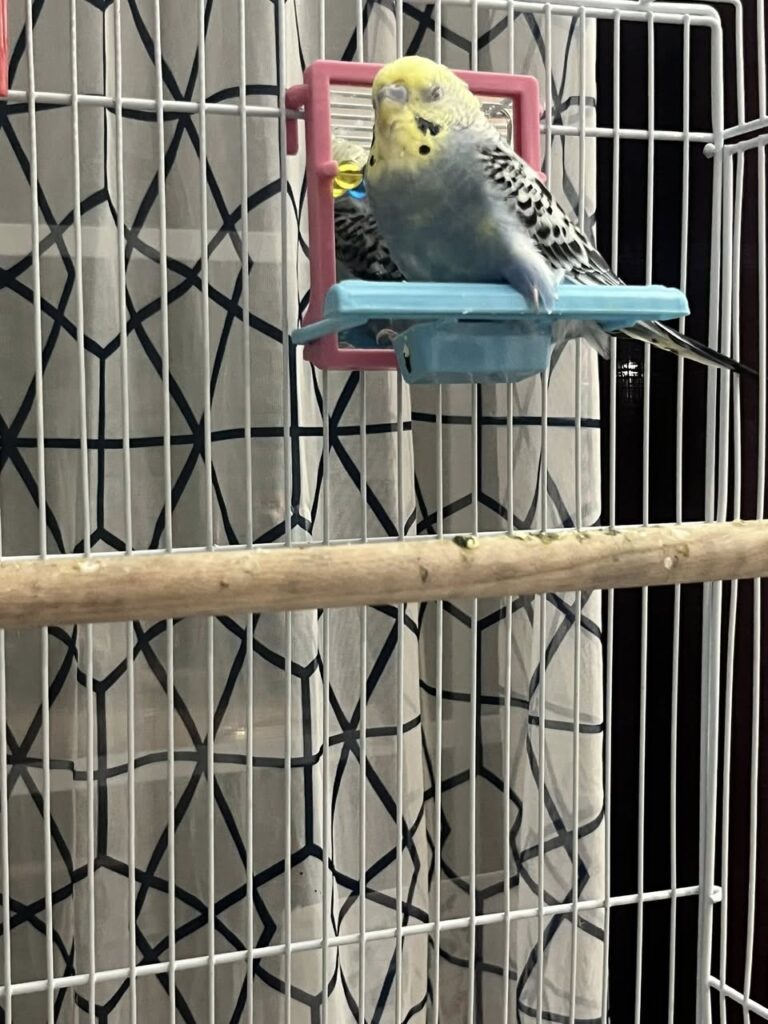
This is why I always say — a budgie on the floor is not the beginning of a problem. It is the visible end stage of something that has been happening for a while. That does not mean the situation is hopeless. It does mean you need to act fast.
What the Bird on the Floor Actually Looks Like — Read This Carefully
The specific signs you are seeing alongside the floor-sitting tell you a great deal about how urgent the situation is. Work through this carefully.
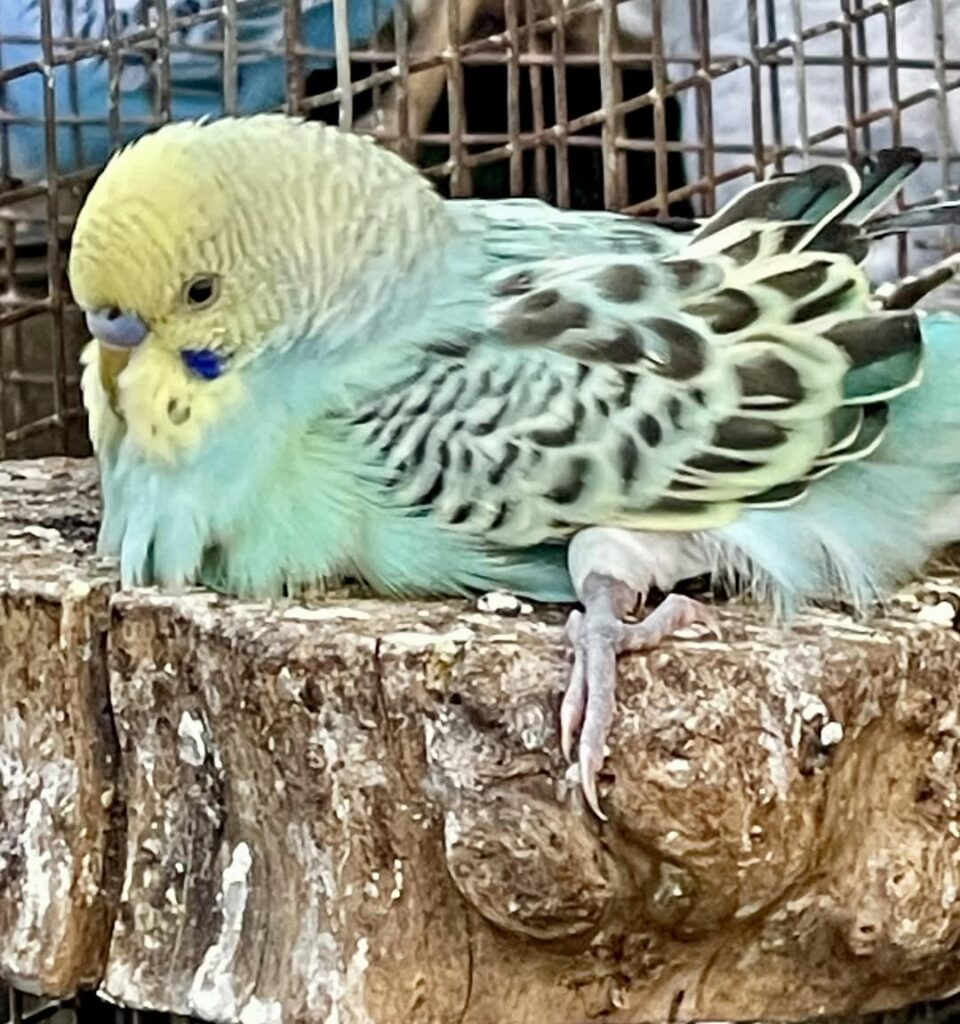
- Fluffed feathers + floor sitting — the bird is cold or unwell and conserving heat. This is a serious sign. The bird needs warmth and a vet today.
- Eyes closed or half closed during the day + floor sitting — a bird that cannot keep its eyes open during daylight hours is in significant distress. Vet today, urgently.
- Tail bobbing + floor sitting — the tail moving rhythmically with each breath means the bird is struggling to breathe. Respiratory emergency alongside whatever else is wrong. Vet now.
- Any audible sound when breathing + floor sitting — clicking, wheezing, rattling. Respiratory involvement, vet now.
- Female bird + floor sitting + swollen lower abdomen — possible egg binding. This is a same-hour emergency. Get to a vet immediately.
- Bird responsive to your voice but cannot perch — some awareness, which is a better sign than total unresponsiveness. Still urgent, but the bird has more reserves than one that is completely unresponsive.
- Bird completely unresponsive + floor sitting — most critical situation. Vet immediately, do not delay for any reason.
The Most Likely Causes — In Order of How Often I See Them
These are the causes I most commonly find behind a budgie on the cage floor when owners bring the bird in. I am listing them in the order of frequency so you have a framework — but the cause does not change the immediate action, which is always the same: warmth, reduced stress, vet today.
1. Advanced Illness — The Most Common Cause
The most common reason a budgie ends up on the cage floor is an illness that has been developing for several days and has now progressed to the point where the bird can no longer compensate. Respiratory infection, bacterial infection, liver disease — any of these can reach a stage where the bird’s energy reserves are depleted and floor-sitting is the result.
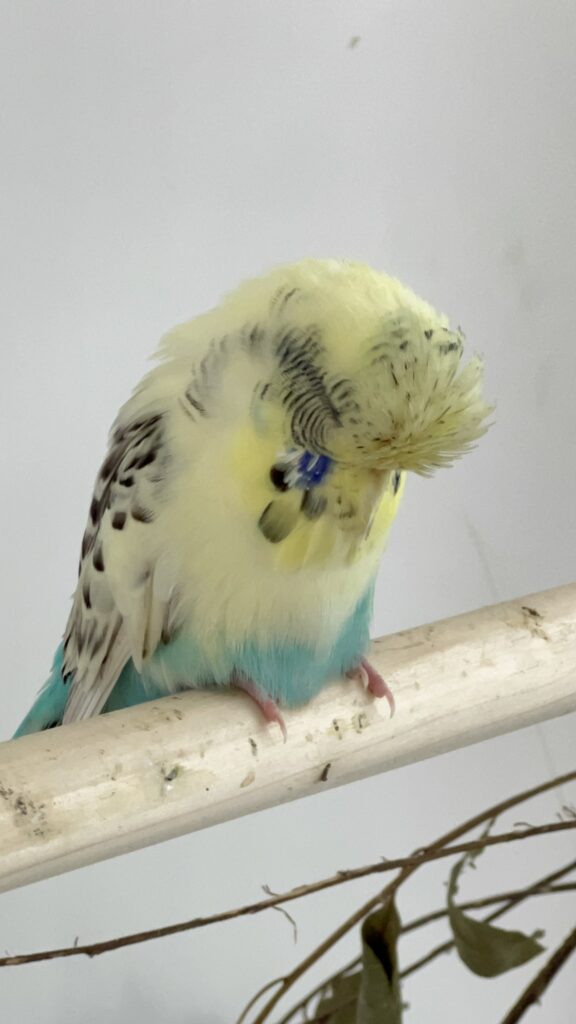
The critical thing to understand here is that the illness reaching floor-sitting stage does not mean the bird is beyond help. Birds can and do recover from this stage with prompt veterinary treatment. But the window is narrower than it was two days ago when the signs were subtler. Every hour matters.
2. Egg Binding in Female Budgies
If the bird on the floor is female, egg binding must be considered immediately. Egg binding — when a hen cannot pass an egg — causes weakness, inability to perch, and rapid deterioration. It can be fatal within hours without treatment.
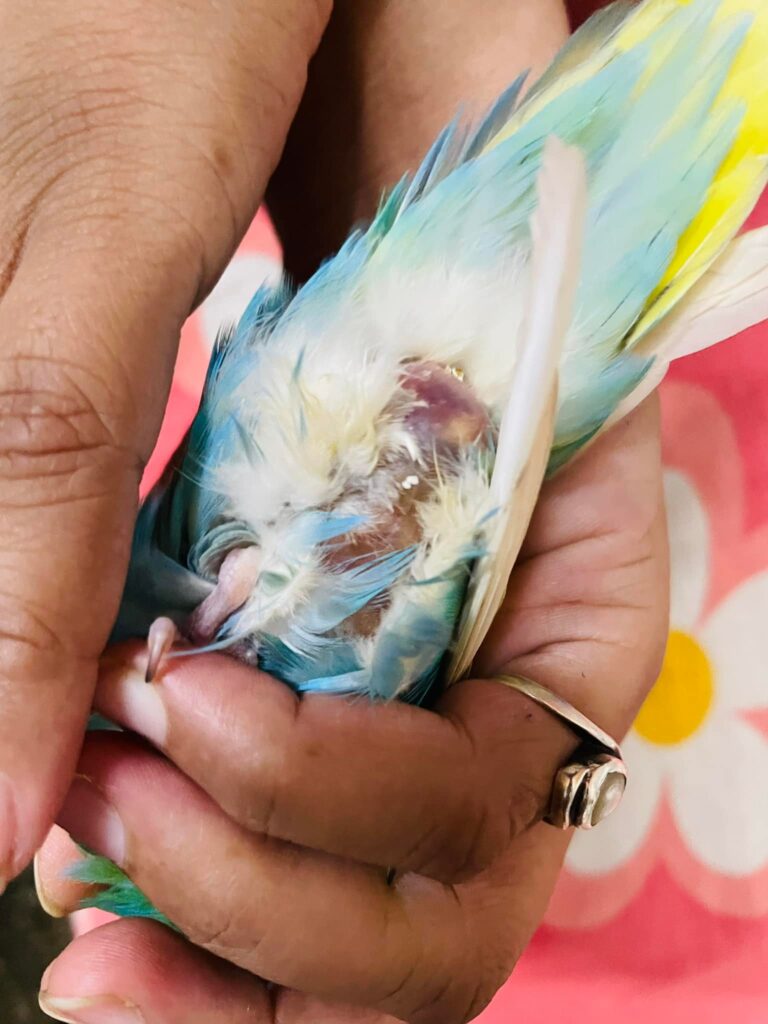
Look at the lower abdomen — is it visibly swollen or rounded? Is the bird making any straining movements? These alongside floor-sitting in a female mean get to a vet right now, this hour, not this afternoon.
3. Toxic Exposure
If the floor-sitting came on suddenly — the bird was on its perch an hour ago and is now on the floor — toxic exposure is the first thing to consider. Overheated non-stick cookware, aerosol sprays, scented candles — these can cause rapid and severe deterioration in a budgie.
If there is any possibility of toxic exposure, move the bird to fresh air immediately, open all windows, and get to an emergency avian vet now. Do not wait.
4. Injury From a Fall or Night Fright
A bird found on the floor in the morning — that was fine the previous evening — may have experienced night fright. A sudden noise or light during the night caused the bird to thrash around the cage in the dark, injure itself, and end up on the floor.
Signs that night fright occurred include feathers scattered across the cage floor, the bird in an unusual position, and visible injuries. A bird in this situation still needs a vet the same day — even if it appears to be recovering, internal injury is possible.
5. End-of-Life Decline in an Elderly Bird
If your budgie is seven years old or older and has been gradually becoming less active over weeks or months, floor-sitting may be a sign of natural age-related decline rather than acute illness. This does not mean veterinary care is unnecessary — it means the conversation with the vet may be different. A vet can help manage comfort and quality of life in an elderly bird, and can help you understand what you are seeing.
What the Vet Will Do — So You Know What To Expect
I include this section because owners sometimes delay going to the vet because they are uncertain about what will happen — and uncertainty causes hesitation at exactly the wrong moment.
An avian vet seeing a budgie that is on the cage floor will start with a physical examination — weight, body condition, breathing, eyes, nostrils, abdomen, legs. They will ask about the diet, the environment, how long the bird has been unwell, and any recent changes.
Depending on what they find, they may recommend blood tests, an X-ray, or other diagnostics. They will almost certainly provide supportive care — warmth, fluids if the bird is dehydrated, and potentially syringe feeding if the bird has not been eating. They will then treat the underlying cause once they have identified it.
This process works. Birds that have been on the cage floor, treated promptly, do recover. Not every time — sometimes the underlying condition is too advanced. But prompt treatment gives the best possible chance of a good outcome, and waiting removes options that are available right now.
What To Do If You Cannot Reach a Vet Immediately
In an ideal world, you call a vet and get seen within an hour. In the real world, particularly in rural areas or outside normal hours, this is not always immediately possible. Here is what to do while you are trying to arrange veterinary care.
- Keep the bird warm — this is the single most important thing you can do. A temperature of 25 to 30 degrees Celsius near the bird, achieved without direct heat source contact. A hospital cage setup with a heat lamp on one side, or a warm room with the cage placed near (not against) a radiator.
- Keep food and water at floor level — seed, water, and if the bird will take it, a small piece of soft fruit or vegetable. Do not force feed.
- Minimal handling — only handle if absolutely necessary. The stress of handling a critically ill bird can tip the balance in the wrong direction.
- Keep the environment quiet and dim — three sides of the cage covered, lights reduced, no sudden sounds or movements near the cage.
- Keep trying to reach a vet — call your regular vet, call any avian vet you can find, call an emergency animal hospital that sees birds. Do not stop trying.
- Do not give human medications or home remedies — nothing you can buy over the counter is appropriate for a critically ill budgie. These can make the situation worse.
The Warning Signs You Missed — And What To Watch For Next Time
I want to spend a moment on this — not to make anyone feel guilty, but because understanding the earlier signs is the most valuable thing that can come from this experience.
A budgie on the cage floor has almost always given earlier signals — subtle ones, easy to miss if you do not know what to look for. These are the signs I cover in detail in our article on what owners miss before a budgie dies suddenly and our guide on the hidden signs of illness in budgies.
The signs that typically appear in the days before floor-sitting are sleeping slightly more than usual, being quieter than normal in the morning, feathers slightly raised, tail bobbing — even briefly, eating slightly less, and changed droppings. None of these are dramatic. All of them are significant.
Please read both articles when your bird is stable and you have the headspace for it. The knowledge will serve the bird you have now — and any bird you keep in the future.
What To Do Right Now — The Full Summary
| What You Are Seeing | What To Do | How Urgently |
|---|---|---|
| Bird on floor, still breathing, fluffed feathers | Warmth, reduced stress, avian vet today | Today, within hours |
| Bird on floor + tail bobbing or audible breathing | Avian vet now — respiratory emergency | Right now |
| Female on floor + swollen abdomen | Avian vet now — possible egg binding | This hour |
| Bird on floor + eyes closed during the day | Avian vet today, urgently | Today, as soon as possible |
| Sudden onset — possible toxic exposure | Fresh air immediately, emergency vet now | Right now |
| Found on floor in morning — night fright suspected | Warmth, quiet, vet same day to check for injury | Today |
| Elderly bird, gradual decline over weeks | Vet today to assess comfort and rule out treatable causes | Today |
One Last Thing — From Me to You
If you are reading this with your budgie on the floor beside you, I want to say something directly.
You are doing the right thing by looking for information. You are doing the right thing by acting today rather than tomorrow. The owners whose birds make it through situations like this are almost always the ones who moved quickly — who did not wait another day, who got the bird warm and got to a vet and gave the treatment a chance to work.
I have watched birds come back from situations that looked very serious indeed. I have also watched birds not make it despite everything being done right. That is the honest reality of small animal keeping. But the odds improve significantly with every hour you act sooner rather than later.
If you are in Swindon or within a reasonable drive — come in. Bring the bird. We will look at it and tell you honestly what we see, and we will help you find the right veterinary care as fast as possible. The advice is free. The drive might matter.
Frequently Asked Questions
My budgie is on the cage floor but still breathing — is it dying?
Not necessarily. A budgie on the floor is seriously unwell, but the fact that it is still breathing means there is still a window for intervention. The outcome depends on the underlying cause and how quickly treatment begins. Get to an avian vet today — this hour if possible. Keep the bird warm and reduce stress while you arrange it.
Should I pick up my budgie if it is on the cage floor?
Only if necessary. Handling a critically ill bird adds stress that can worsen its condition. The priority is warmth, quiet, and getting to a vet. If the bird needs to be transported, handle it gently and minimally — cup it in your hands to keep it warm during the journey rather than putting it back in a cold cage.
How do I keep my budgie warm at home while I wait for the vet?
Move the cage to a warm room — around 25 to 30 degrees Celsius. Place a heat lamp on one side of the cage only, so the bird can move away from the heat if it needs to. Alternatively, place a heating pad set to low under one side of the cage, again not the whole cage. Cover three sides with a cloth to retain warmth and reduce stress. Do not use hot water bottles directly against the bird or put the cage in a very hot room.
Could my budgie recover from being on the cage floor?
Yes — birds do recover from floor-sitting when the underlying cause is identified and treated promptly. The earlier treatment begins, the better the odds. Do not assume that because the bird is on the floor, it is too late. Act now.
What if I cannot reach an avian vet today?
Keep trying — call every avian vet in your area, call emergency animal hospitals that see birds, call any exotic animal practice. In the meantime, keep the bird warm, quiet, and with food and water at floor level. Do not give any medication or home remedy. Every hour matters, so keep trying to arrange care while you are providing supportive warmth.
Where can I get urgent budgie help in Swindon?
Come straight to Paradise Pets at Manor Garden Centre, Cheney Manor, Swindon SN2 2QJ. Or ring us on 01793 512400. We will look at the bird immediately and help you get to the right veterinary care as fast as possible. The advice is free and we understand that this is urgent.
Budgie On The Floor? Come In Right Now
Bring the bird in. We will look at it immediately and help you find the right care fast. Free advice, no waiting, no obligation. That is how we have done things for over 35 years.
⭐ Customer Reviews
Amazing Bird Selection
Had a lovley visit today,staff were very friendly and very helpful,such a great petshop,their selection of birds is incredible,really impressed,thank so much to the staff at Paradise Pets

Friendly Helpful Staff
I have been coming to this place for years and they have a great stock of food for all types of pets. Have a great selection of small mammals and a lot of birds. Staff are friendly and helpful.

Great Quality Hutch
Bought a guinea pigs hutch and run combo, very happy with the service, the hutch was put in my car for me without even asking for help. The wood quality is very good, the instructions easy to follow and we are extremely happy with the fully built hutch. A good size for 2 guinea pigs

Response from Paradise Pets | Wiltshire
Thank you Melanie Latus Nice to provide services to you.
Best Bird Shop Around
It’s the best pet shop in and around Swindon. They always have an amazing selection of birds and all you need to keep them happy. I keep birds myself and the guys there are happy to answer questions and really know their stuff. I have seen budgies etc. in chain pet shops in the area looking really unhealthy and ill – I wouldn’t go anywhere else than Paradise Pets for animals.

Highly Recommended Bird Shop
I could not praise this shop enough. Really helped my Grandson buy his first bird and he’s loving it. Travelled from Somerset and was welcomed with open arms.

Great Shop with Competitive Prices
Great shop with amazing selection for small animals, hamsters, mice ect, highly recommend!
Also has a great selection for dogs & cats too & very competitive prices! 💖

