
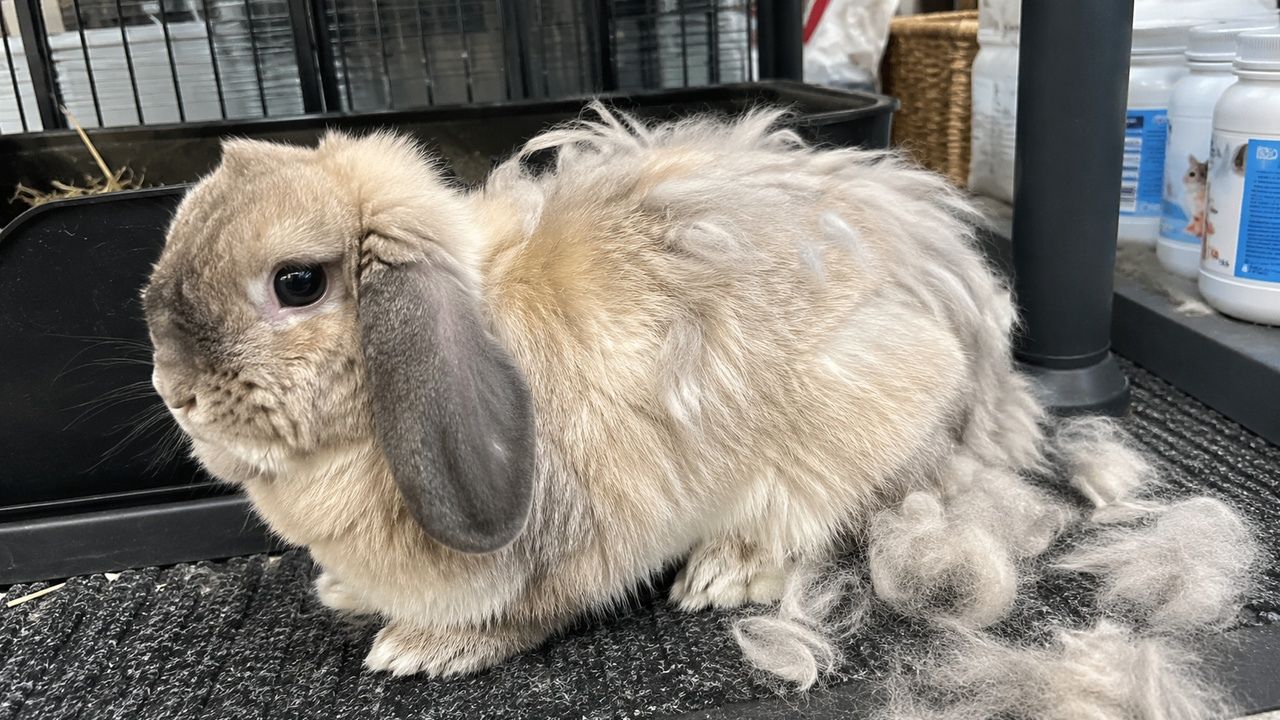

Neil has run Paradise Pets Swindon since 1988 — over 35 years of keeping, breeding, and advising on rabbits. Excessive shedding is one of the most common concerns rabbit owners bring to the shop. This is his honest guide on what is normal, what is not, and what every UK owner needs to know.
A mother came in last spring with a handful of white fur in a small plastic bag. She held it up over the counter with a look somewhere between bewildered and alarmed.
“This all came off my rabbit,” she said. “In one morning. Is she dying?”
I get some version of this every year without fail, usually in March or April when the season turns. A rabbit that was perfectly normal yesterday suddenly appears to be dissolving. Fur everywhere. On the sofa. In the water bowl. Drifting across the kitchen floor like the world’s most unsettling tumbleweed.
The honest answer, most of the time, is: your rabbit is moulting and this is completely normal. But — and this matters — not every rabbit losing fur in large amounts is simply moulting. There are situations where significant fur loss in a rabbit is a sign of something that needs attention. And knowing the difference is exactly what this article is about.
After 35 years of keeping and selling rabbits at Paradise Pets, I have seen both ends of that spectrum many times. Here is what I have learned.
Normal Moulting — What It Looks Like and Why It Happens
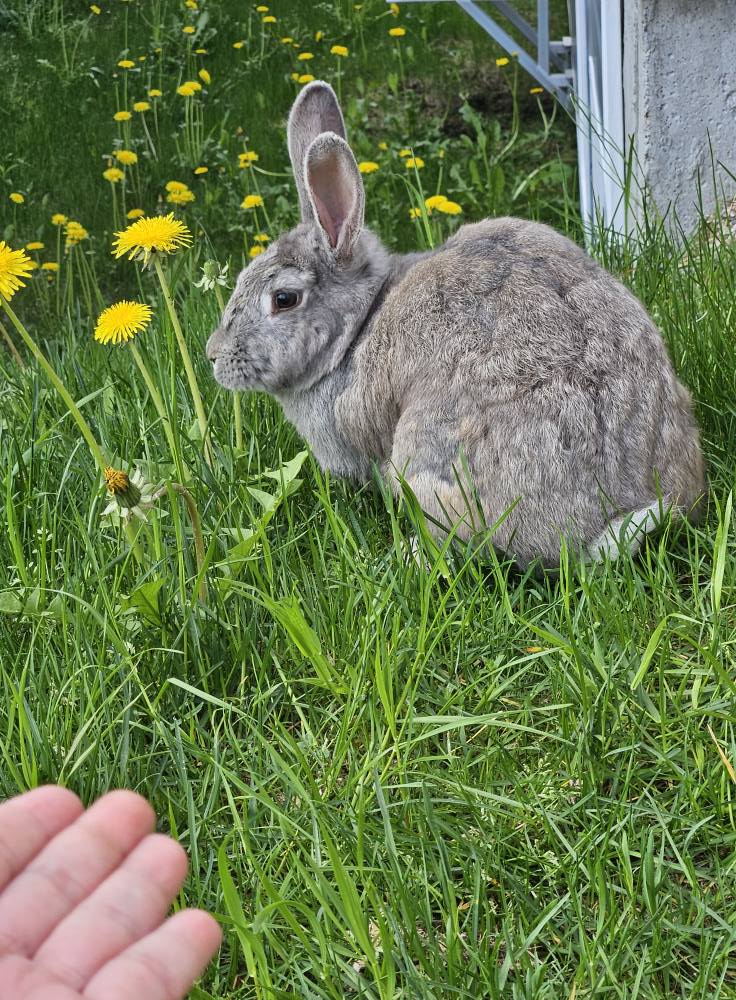
Rabbits moult. All of them, every year, usually twice — once in spring as they shed their heavy winter coat, and once in autumn as they exchange their lighter summer coat for the winter one. The spring moult is almost always the more dramatic of the two.
During a moult, a rabbit can lose what appears to be an alarming amount of fur in a very short space of time. The fur often comes out in waves — starting at the head, working back along the body, finishing at the hindquarters. You may see a visible line on the rabbit’s back where the old coat ends and the new coat begins. The shedding area can look patchy, slightly scruffy, and in long-haired breeds, frankly dishevelled.
This is all completely normal. The rabbit is not ill. It is not stressed. It is doing what rabbits have done for millions of years when the seasons change.
- Fur comes out evenly across the body — not just in one spot or one area
- The rabbit is otherwise completely normal — eating, drinking, active, producing normal droppings
- New fur is visible growing in behind the shedding area — the coat progresses in a visible wave
- No bare patches on the skin — even in heavy moulters, the skin underneath should not be completely exposed
- No scratching, biting, or obvious discomfort — normal moulting is not itchy or painful
- Timing matches the season — spring and autumn are the expected times
If all of those are true — your rabbit is moulting. It will pass. But keep reading, because there is one important thing you must do during every moult.
The Most Important Thing To Do During Every Moult — Grooming
I want to address this before anything else because it is the single most critical piece of advice for any rabbit owner going through a moult — and the one most often missed.
Rabbits groom themselves constantly. Unlike cats, they swallow the fur they groom. Unlike cats, they cannot vomit it back up. Which means that during a heavy moult, when a rabbit is ingesting significantly more loose fur than usual, that fur accumulates in the digestive tract.
This is called wool block — or more accurately, gastrointestinal stasis caused by fur accumulation — and it is one of the leading causes of death in pet rabbits in the UK. The gut slows, the fur compacts, and the rabbit stops eating. Once it reaches that stage, it is a veterinary emergency.
- Rabbit has reduced its food intake or stopped eating entirely
- Droppings have become smaller, fewer, misshapen, or strung together with fur
- Rabbit is sitting hunched, not moving much, less interested in its surroundings
- Abdomen feels hard or distended when touched gently
- Rabbit is grinding its teeth — a sign of abdominal pain in rabbits
- Any of the above during a moult period is a same-day vet visit — do not wait
What to do during a moult
Groom your rabbit daily — every single day during a moult. Use a proper slicker brush or a grooming glove and remove as much loose fur as possible before the rabbit ingests it. For long-haired breeds, daily grooming is not optional during a moult — it is essential.
Ensure unlimited hay is available at all times. Hay keeps the gut moving and helps push any ingested fur through the digestive system. During a moult, the importance of hay is even higher than usual.
If the rabbit stops eating, even briefly, during a moult — that is a vet call the same day. Do not wait to see if it improves. It usually does not on its own once gut stasis has set in.
When Shedding Is Not Normal — The 6 Causes To Know
Cause 1: Parasites — Mites and Fur Mites
Fur mites — particularly Cheyletiella, sometimes called walking dandruff — are the most common parasitic cause of excessive fur loss in UK rabbits. They are more widespread than most owners realise, they spread easily between rabbits, and they cause a specific pattern of fur loss and skin irritation that is identifiable once you know what to look for.
A rabbit with fur mites will lose fur in a pattern that is often concentrated around the back, neck, and rump. The fur loss is accompanied by visible dandruff — white flakes in the coat — and the rabbit will often be scratching, biting at itself, or generally uncomfortable. Look very closely at the flakes: in bright light, some of them move. That is why it is called walking dandruff.
- Visible white flakes or dandruff in the coat — particularly along the back
- Fur loss that is patchy and concentrated rather than even across the body
- Rabbit is scratching, biting at the coat, or rubbing against surfaces
- Skin underneath the fur loss looks irritated, red, or scaly
- More than one rabbit in the household affected — mites spread easily
- New rabbit recently introduced — mites are often brought in by new animals
What to do
Vet visit — parasites need proper diagnosis and prescription treatment. Do not use over-the-counter treatments without veterinary guidance; some are ineffective for the specific parasite involved and some are unsafe for rabbits. Treat all rabbits in the household simultaneously, and treat the environment — mites can survive off the host for a period. Your vet will advise on the full treatment protocol.
Cause 2: Barbering — One Rabbit Pulling Another’s Fur
If you have more than one rabbit and are seeing fur loss in one of them, barbering is worth considering. Barbering is exactly what it sounds like — one rabbit repeatedly plucking fur from another, often from the face, ears, back, or flanks.
It is usually a dominance behaviour, though it can also happen between bonded pairs when one rabbit is stressed or bored. The rabbit doing the barbering is not necessarily behaving aggressively in an obvious way — it may look like grooming from a distance. But the pattern of fur loss tells the story: concentrated patches, often on areas the rabbit cannot easily groom itself, with clean edges rather than the gradual thinning of a moult.
- Do you have more than one rabbit? Barbering only happens between animals — a single rabbit cannot be barbered.
- Where is the fur loss? Barbering typically affects areas around the face, ears, back, and rump — places the affected rabbit cannot easily reach itself.
- Are the bare patches clean-edged? Barbering produces relatively neat patches; moulting produces diffuse, gradual thinning.
- Is there any tension between the rabbits? Chasing, mounting, or displacement from the food bowl alongside fur loss points to barbering.
What to do
Identify which rabbit is doing the barbering — watch them together if you are unsure. Ensure the enclosure is large enough for both rabbits to have space away from each other. Provide multiple feeding stations so the dominant rabbit cannot guard the food. In persistent cases, a temporary separation may be needed while you address the underlying dynamic. Neutering, if not already done, can reduce dominance-driven behaviour significantly. Come in and talk to us if you are not sure what you are seeing — we have dealt with this many times.
Cause 3: Stress-Related Fur Pulling
Rabbits under chronic stress sometimes pull their own fur. This is a self-directed behaviour — the rabbit is not being barbered by another animal, but is pulling or biting its own coat. It is most commonly seen in rabbits that are kept alone, in inadequate space, with insufficient enrichment, or in environments with persistent stressors they cannot escape.
Female rabbits will also pull their own fur during a false pregnancy — a hormonal event that can occur in unspayed females even without a male being present. A doe in a false pregnancy will pull fur from her dewlap and belly to build a nest. This is hormone-driven, not a welfare problem in itself, but it is worth knowing about.
- Rabbit is kept alone with no companion and limited human interaction
- Enclosure is too small — the rabbit cannot express normal behaviours
- Persistent nearby stressor — a predator smell, a dog, loud noise, a cat that watches the hutch
- Unspayed female — fur pulling from the belly and dewlap may indicate a false pregnancy
- Rabbit is otherwise well but the fur pulling is compulsive and repetitive
What to do
Address the underlying cause. For stress-related pulling, the priority is the environment — more space, more enrichment, a companion if the rabbit is alone, and removal of any persistent stressor. For false pregnancy fur pulling in an unspayed female, the behaviour usually passes within two to three weeks. Spaying prevents it from recurring. Speak to your vet if you are unsure whether the fur pulling is stress-related or has another cause.
Cause 4: Ringworm — A Fungal Infection, Not a Worm
Despite the name, ringworm is a fungal infection — and it causes a very specific pattern of fur loss that is worth knowing. It produces circular or irregular bald patches, usually with a slightly scaly or crusty appearance at the edges. The patches are most commonly seen on the face, ears, and limbs, though they can appear anywhere.
Ringworm in rabbits is also zoonotic — meaning it can spread to humans. If you are seeing circular bald patches on your rabbit and you or anyone in the household has developed similar patches on the skin, that connection should be taken seriously.
- Circular or irregular bald patches with defined edges
- Scaly, crusty, or slightly reddened skin at the edges of the bald area
- Patches most commonly on the face, ears, and limbs
- Rabbit may or may not be scratching — ringworm is not always itchy
- Anyone in the household has developed similar circular patches on their skin
- Recently introduced a new rabbit, or the rabbit has been in contact with other animals
What to do
Vet visit — ringworm needs antifungal treatment and proper diagnosis to confirm. It will not resolve on its own. Handle the rabbit carefully and wash hands thoroughly after contact until treatment is confirmed. If anyone in the household has skin symptoms, mention it to your own doctor as well as the vet.
Cause 5: Hormonal Causes and Uterine Disease — Unspayed Females
Unspayed female rabbits are at significantly higher risk of several conditions that can cause excessive fur loss — including uterine cancer, which affects the majority of unspayed does over the age of four or five years in the UK. Hormonal imbalances associated with reproductive disease can affect the coat, causing diffuse thinning and shedding that goes beyond what a normal moult would produce.
This cause tends to be accompanied by other signs that something is wrong — a pot-bellied appearance, reduced activity, changes in behaviour, or in later stages, blood in the urine.
- Is the rabbit an unspayed female? Uterine disease is extremely common in unspayed does over four years old.
- Is the fur loss diffuse and generalised rather than patchy? Hormonal fur thinning tends to be spread across the body rather than concentrated in specific areas.
- Are there other signs? Weight changes, altered behaviour, blood in urine, or abdominal swelling alongside fur loss in an unspayed female should be taken seriously.
- How old is the rabbit? Reproductive disease is rare in young rabbits and significantly more common from four years onwards.
What to do
Vet visit — particularly if the rabbit is an unspayed female over three years old with unexplained fur loss and any other signs. Spaying before the age of two significantly reduces the risk of reproductive disease. If you have an unspayed female and have not spoken to a vet about spaying, I would encourage you to do so.
Cause 6: Poor Nutrition — The Slow, Gradual Cause
A rabbit fed a poor diet — too much pellet, not enough hay, insufficient variety in fresh greens — will often have a coat that reflects that nutritional deficiency over time. The fur becomes dull, brittle, and prone to excessive shedding beyond what a normal moult would produce.
This is a gradual cause. It develops over months, not days. And it is entirely preventable.
- Unlimited hay should form 80 to 90 percent of the diet — this is the single most important dietary fact for rabbits, and the one most often got wrong
- Fresh leafy greens daily — variety matters; different greens provide different nutrients
- Pellets as a supplement, not the main meal — a small daily portion of good quality pellets, not a bowl kept constantly full
- No muesli-style mixes — rabbits selectively eat the sugary components and leave the nutritious ones, leading to deficiencies
- Fresh water at all times — dehydration affects coat quality significantly
What to do
Review the diet honestly. If hay is not the foundation of every day, change that immediately. Introduce more variety in fresh greens. Reduce pellets to a measured daily portion. Coat improvement from better nutrition is real but gradual — allow several weeks before expecting visible change. If the coat does not improve with dietary correction, a vet visit is worthwhile to rule out other causes.
What I Check When An Owner Comes In About Rabbit Shedding
When someone comes in about a rabbit losing fur, I do not guess. Here is the sequence I go through.
- What time of year is it?
Spring or autumn — moult is the first and most likely explanation. Everything else still needs checking. - Is the fur loss even across the body or concentrated in patches?
Even, with new coat visible behind it — moulting.
Patchy, with bare skin — parasites, ringworm, barbering, or hormonal cause. - Is the rabbit scratching, biting at itself, or uncomfortable?
Yes — parasites or ringworm. Vet visit needed.
No — moult, stress, or nutritional cause more likely. - Is there visible dandruff or flaking in the coat?
Yes, especially if it appears to move — fur mites. Vet visit needed. - Is there more than one rabbit?
Yes — consider barbering. Observe them together. - Is the rabbit eating and producing normal droppings?
No change — reassuring for now, but monitor closely during moult.
Any reduction — potential wool block. Vet same day. - Is the rabbit an unspayed female over three years?
Yes — add reproductive disease to the list of possibilities. Vet visit worthwhile.
How To Manage a Moult — Practical Guide
For the majority of owners who come in with a shedding rabbit, the answer is a normal moult. Here is how to manage it well.
| What to do | Why it matters | How often |
|---|---|---|
| Brush with a slicker brush or grooming glove | Removes loose fur before the rabbit ingests it — prevents wool block | Every day during active moult |
| Ensure unlimited hay | Keeps the gut moving and helps push ingested fur through | Constant — never let the hay run out |
| Check droppings daily | Smaller or fewer droppings is the earliest sign of slowing gut — catch it early | Every day |
| Offer fresh greens | Hydration and nutrition support gut health during moult | Daily |
| Avoid bathing | Wet rabbits are very difficult to dry safely and the stress can cause shock | Do not bathe during moult |
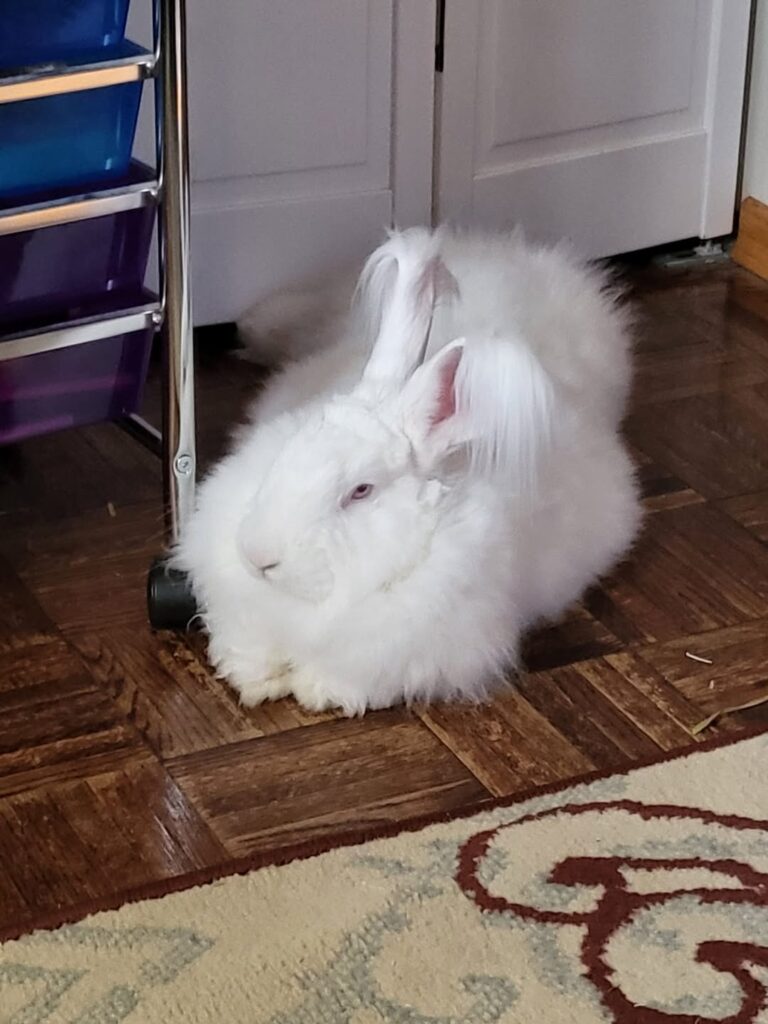
| Check for matting in long-haired breeds | Loose fur can mat in Angoras and Lionheads — mats pull the skin and cause pain | Every day in long-haired breeds |
Frequently Asked Questions
Is it normal for a rabbit to shed fur all year round?
Some low-level shedding is normal year-round — rabbits never fully stop losing some fur. The two major moults in spring and autumn are when shedding becomes dramatic and noticeable. If a rabbit is shedding heavily outside of those seasons, or the shedding is accompanied by any other sign of a problem, it is worth investigating.
My rabbit is losing fur in clumps — should I be worried?
Clumping fur loss during a moult is normal — the old coat often releases in patches rather than gradually. If the clumps are leaving bare skin behind, if the rabbit is uncomfortable, or if the loss is concentrated in specific areas rather than spread across the body, get it looked at. During a moult, clumps with new fur visible underneath are almost always fine.
How long does a rabbit moult last?
Typically two to six weeks, though this varies between individuals and breeds. Long-haired breeds often moult more dramatically and for longer than short-haired ones. The moult is complete when the new coat has fully grown in and the rabbit looks neat and even again.
Can I speed up my rabbit’s moult?
Daily grooming is the most effective thing you can do — removing loose fur encourages the moult to progress and prevents the problems associated with fur ingestion. Some owners find that slightly increasing grooming frequency as the moult begins helps it move through faster. Beyond that, the moult takes as long as it takes.
My rabbit is shedding and not eating — what should I do?
Phone an avian or exotic vet the same day. A rabbit that has stopped eating during a moult may have wool block — fur accumulation in the gut that has slowed or stopped digestion. This is a genuine emergency in rabbits. Do not wait overnight. A rabbit that has not eaten for twelve hours is already in serious trouble.
Where can I get rabbit advice in Swindon?
Come and see us at Paradise Pets, Manor Garden Centre, Cheney Manor, Swindon SN2 2QJ. Or ring us on 01793 512400. For health concerns — particularly a rabbit that has stopped eating — go straight to a vet. We will help you work out which situation you are in.
One Last Thing From Me
The woman who came in with the bag of white fur? Her rabbit was moulting. A perfectly normal spring moult, dramatic enough to fill a sandwich bag in a single brushing session, on an otherwise completely healthy two-year-old rabbit. She left with a grooming glove and a reminder to check the droppings daily.
She came back three weeks later. The moult was over, the new coat was in, and the rabbit looked immaculate.
That is the most common ending to this story — normal moult, brief anxiety, quick resolution. But I am glad she came in rather than simply worrying at home, because the handful of times I have seen a shedding rabbit that was not simply moulting, it has mattered that the owner acted.
Know what normal looks like. Groom during every moult. Watch the droppings. And if anything does not fit the normal pattern — do not sit on it.
Worried About Your Rabbit? Come And See Us — Or Speak To A Vet
For rabbits that have stopped eating or show signs of illness alongside fur loss — go straight to a vet. For everything else — grooming advice, identifying a moult, checking for parasites — come in or ring us. Free advice, no obligation. Over 35 years of rabbit experience.
⭐ Customer Reviews
Amazing Bird Selection
Had a lovley visit today,staff were very friendly and very helpful,such a great petshop,their selection of birds is incredible,really impressed,thank so much to the staff at Paradise Pets

Friendly Helpful Staff
I have been coming to this place for years and they have a great stock of food for all types of pets. Have a great selection of small mammals and a lot of birds. Staff are friendly and helpful.

Great Quality Hutch
Bought a guinea pigs hutch and run combo, very happy with the service, the hutch was put in my car for me without even asking for help. The wood quality is very good, the instructions easy to follow and we are extremely happy with the fully built hutch. A good size for 2 guinea pigs

Response from Paradise Pets | Wiltshire
Thank you Melanie Latus Nice to provide services to you.
Best Bird Shop Around
It’s the best pet shop in and around Swindon. They always have an amazing selection of birds and all you need to keep them happy. I keep birds myself and the guys there are happy to answer questions and really know their stuff. I have seen budgies etc. in chain pet shops in the area looking really unhealthy and ill – I wouldn’t go anywhere else than Paradise Pets for animals.

Highly Recommended Bird Shop
I could not praise this shop enough. Really helped my Grandson buy his first bird and he’s loving it. Travelled from Somerset and was welcomed with open arms.

Great Shop with Competitive Prices
Great shop with amazing selection for small animals, hamsters, mice ect, highly recommend!
Also has a great selection for dogs & cats too & very competitive prices! 💖

