

Neil has kept, bred, and sold rabbits at Paradise Pets Swindon since 1988 — over 35 years of first-hand experience with these animals. Thumping is one of the most common rabbit behaviours that owners misunderstand. This is his honest guide to what it means and when it matters.
A couple came in one Saturday morning and the first thing they said to me was that their rabbit had been acting strangely. Buster — a two-year-old Dwarf Lop — had started thumping repeatedly the previous evening. Not once. Multiple times, over about an hour. They had no idea what had caused it, and by the time they came to me they had convinced themselves something was seriously wrong.
I asked a few questions. Had anything changed in the house the previous evening? Yes — they had had people round for dinner. Lots of noise, different voices, some of the guests had gone out to look at the rabbit, which lived in a hutch in the garden. The thumping had started around the time the guests arrived.
That was the explanation. Buster was not ill. He was not in pain. He was doing exactly what rabbits do when they sense something unfamiliar in their environment — he was warning the rest of his (imaginary) warren that danger might be near.
Understanding why rabbits thump is one of those things that transforms your experience of keeping them. Once you know what the behaviour means, you stop panicking and start listening. Because a rabbit’s thump is actually one of the clearest forms of communication you will get from a prey animal that has very few ways of telling you what is going on.
What Thumping Actually Is
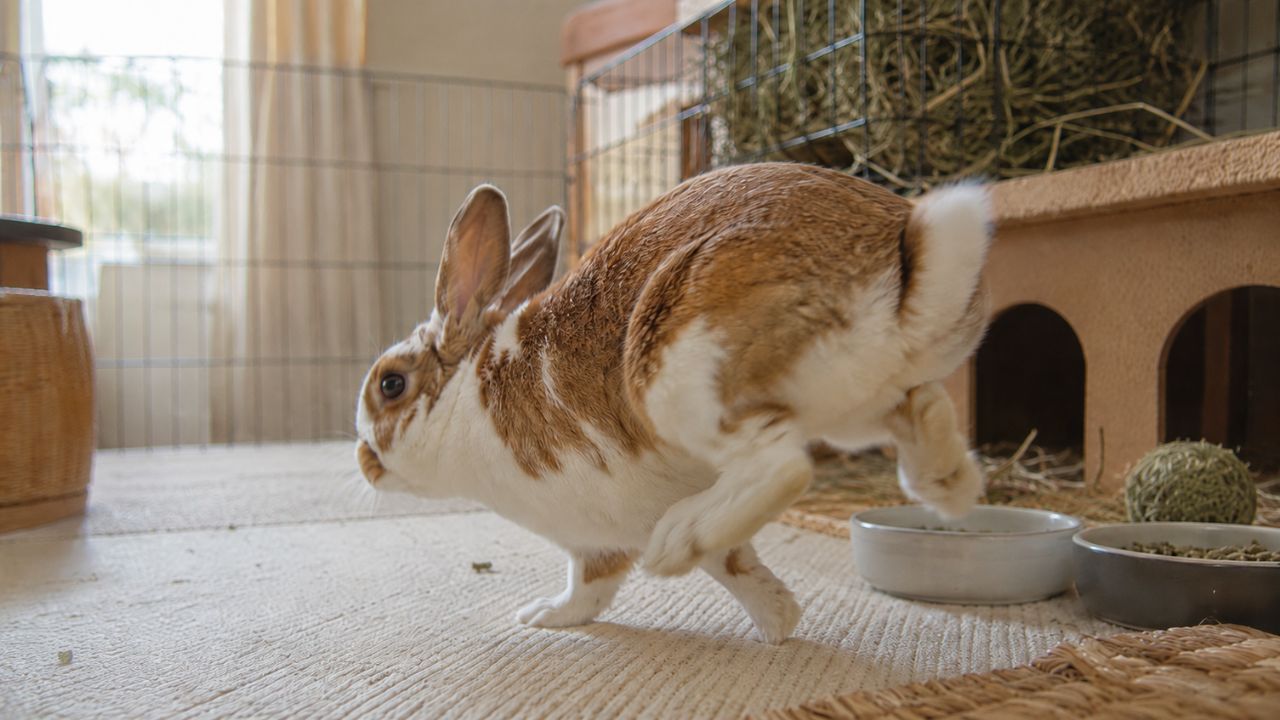
Thumping is when a rabbit stamps one or both of its back feet hard against the ground, producing a distinctive loud sound. In the wild, Mongolian and European rabbits use this behaviour to warn other members of the warren about potential threats — predators, unusual sounds, unfamiliar smells. The vibration carries through the ground and alerts other rabbits to be on alert.
In a domestic rabbit, the instinct is exactly the same. The rabbit has detected something it considers a threat or something unfamiliar, and it is doing what rabbits do — it is thumping to warn others. The fact that there are no other rabbits to warn does not stop the instinct from firing.
A single thump usually means “I noticed something.” Repeated thumping over a sustained period usually means “I am genuinely alarmed and I cannot settle.”

The 6 Most Common Reasons Rabbits Thump
Reason 1: Something Unfamiliar Nearby — By Far The Most Common
This accounts for the vast majority of thumping episodes I hear about at the counter. The rabbit has detected something in its environment that it does not recognise and has interpreted as a potential threat.
That something can be almost anything. A new person visiting the house. A different animal the rabbit can smell but not see. A delivery van parked outside. Building work nearby. Fireworks. A predator — a cat, a fox, even a large bird — passing through or near the garden. Strong perfume. A new piece of furniture placed near the hutch that has a different smell.
Rabbits have extraordinary senses. Their hearing range extends well beyond what humans can detect. Their sense of smell is similarly acute. They pick up on things we are completely unaware of, and their instinct is to treat anything unfamiliar as potentially dangerous until proven otherwise.

- Foxes near outdoor hutches — a very common cause of night thumping
- Cats in the garden — even friendly cats trigger the predator response
- Fireworks or thunder — loud unexpected sounds cause immediate alarm
- New people visiting the house — unfamiliar voices and smells
- Changes near the hutch — new objects, moved furniture, different smells
- Other pets being introduced — dogs particularly trigger this response
- Building work or machinery nearby — unfamiliar vibrations and sounds
Reason 2: The Rabbit Is Annoyed or Unhappy
This one surprises people, but rabbits do thump to express displeasure. It is not always about fear or alarm — sometimes it is simply a rabbit communicating that it is not happy about something.
Common triggers for annoyance-thumping: being put back in the hutch when it does not want to go. Having its space invaded — particularly during hormonal phases. Being woken when it is trying to sleep. Having its food changed. Being given attention when it wants to be left alone.
Annoyance-thumping is usually a single thump or a short sequence, and the rabbit’s body language afterwards tends to be a deliberately turned back — the classic rabbit snub. If you have been dismissed by a rabbit, you will know it.
Reason 3: Pain or Illness
This is the cause that owners most need to be aware of, because it is the one that requires action rather than observation.
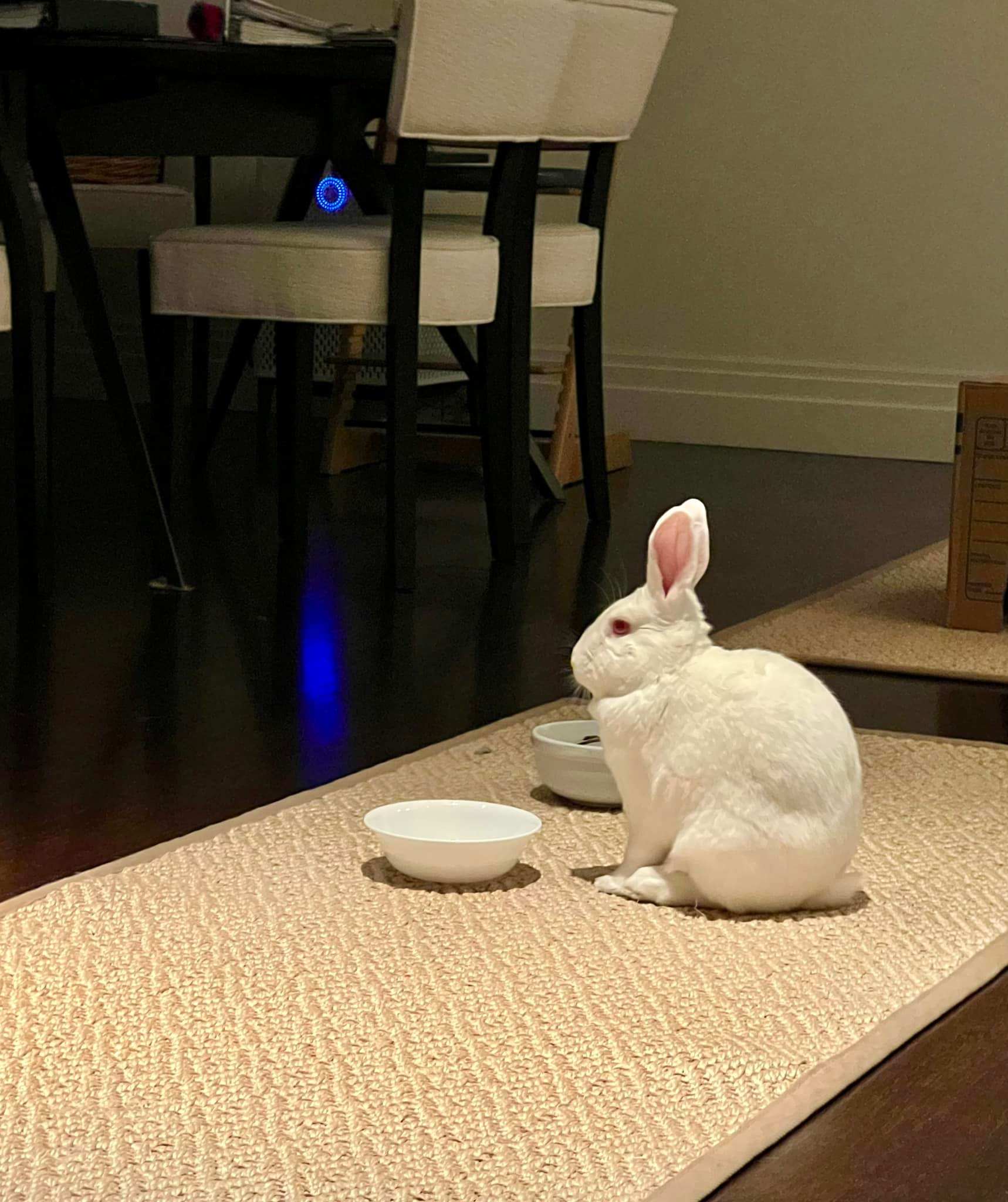
A rabbit in pain or discomfort will sometimes thump repeatedly. The pain can be from almost any source — gas pain from gut stasis, a urinary problem, dental pain, an injury, arthritis in an older rabbit. The thumping in these cases tends to be persistent rather than episodic, combined with other signs of distress — hunching, reluctance to move, reduced eating, changed droppings.
If your rabbit is thumping repeatedly and you cannot identify an obvious environmental trigger — nothing has changed, no obvious stressor is present, and the behaviour is sustained rather than in response to something specific — treat it as a potential health issue and see a vet. Our guide on why rabbits stop eating covers the health signs that often accompany pain-related behaviour changes.
Reason 4: Hormonal Thumping
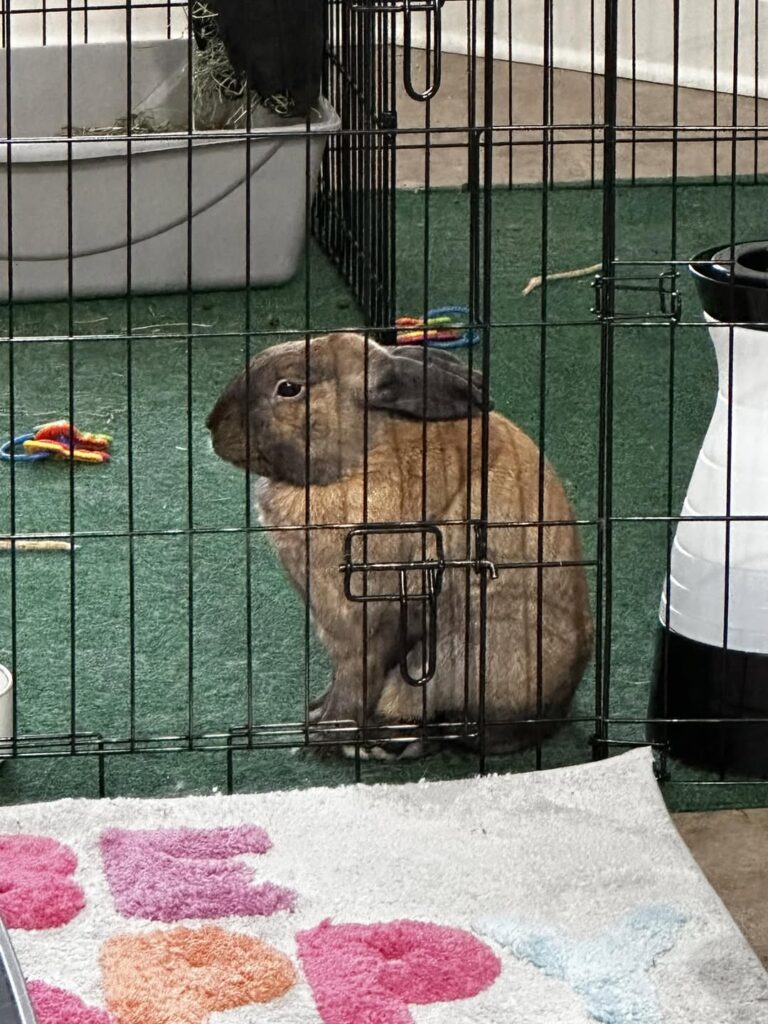
Unneutered rabbits — particularly males — go through hormonal phases that significantly affect their behaviour. During these phases, a buck may become territorial, more aggressive, and may thump more frequently as part of asserting himself or responding to perceived competition.
If your rabbit is unneutered and the thumping is combined with increased aggression, spraying, or territorial behaviour around the hutch, hormonal causes are likely. Neutering resolves most hormonal behavioural issues in rabbits and is something I always recommend for pet rabbits not intended for breeding.
Reason 5: Boredom or Frustration
A rabbit that is not getting enough exercise, stimulation, or space can develop repetitive behaviours including thumping. This is less common than the causes above but worth knowing about, particularly for rabbits kept in smaller hutches without regular run time.
Rabbits need space to run, explore, and express natural behaviours. A rabbit that is confined for long periods becomes frustrated. Thumping is one of the ways that frustration manifests. If your rabbit thumps frequently and you have ruled out environmental triggers and health issues, it may simply need more space and more activity.
Reason 6: Night Thumping — A Specific Concern for UK Rabbit Owners
This deserves its own section because I hear about it so often, particularly from owners with outdoor rabbits in the UK.
Night thumping — a rabbit that thumps repeatedly in the middle of the night — is almost always caused by a predator in the area. Foxes are the most common cause in the UK, but cats, rats, and even badgers can trigger this response. The rabbit can smell or hear the predator and is doing exactly what its instincts tell it to do.
If your rabbit thumps at night and you have outdoor cats or foxes in the area, the solution is security rather than reassurance. Check that the hutch and run are properly secured — a determined fox can get through surprisingly inadequate defences. A solid wooden hutch with proper latches, positioned away from fence lines where foxes commonly travel, makes a significant difference.

When Thumping Is Normal vs When To Worry
- One or two thumps, then settles — almost certainly normal.
The rabbit noticed something, warned the warren, and it resolved. Watch and move on. - Thumping in response to a specific event — normal and explainable.
New visitors, unusual sound, unfamiliar animal. The cause is identifiable. Remove or address the trigger if possible. - Sustained thumping over more than 30 minutes with no identifiable trigger — worth investigating.
Check for something in the environment the rabbit has detected that you have not. Also watch for any health signs. - Thumping combined with hunching, not eating, changed droppings, or reluctance to move — see a vet.
This combination suggests pain or illness rather than environmental alarm. - Night thumping repeatedly over several nights — check hutch security.
A predator is almost certainly in the area. Improve security rather than just reassuring the rabbit.
What To Do When Your Rabbit Thumps
| Situation | What to do | Urgency |
|---|---|---|
| Single thump, settles immediately | Nothing — monitor | Not urgent |
| Thumping when guests arrive | Give the rabbit space, let it settle, do not force interaction | Not urgent |
| Night thumping, outdoor rabbit | Check hutch security for predator access | Address within a day or two |
| Sustained thumping, no obvious cause | Investigate environment, watch for health signs | Monitor closely |
| Thumping plus not eating, hunching | Vet visit today | Urgent |
| Thumping plus reluctance to move | Vet visit today | Urgent |
Can You Stop a Rabbit From Thumping?
Honestly — you can reduce it, but you cannot and should not try to eliminate it entirely. Thumping is communication. Trying to stop a rabbit from communicating is both impossible and counterproductive.
What you can do is remove the triggers where possible. A secure, well-positioned hutch where the rabbit cannot see or smell predators reduces night thumping. A calm, consistent routine reduces alarm thumping. Neutering reduces hormonal thumping. Regular handling and interaction reduces the probability that normal household activity will trigger alarm responses.
A rabbit that thumps occasionally in response to the world is a normal rabbit. A rabbit that never thumps may simply be too frightened to express itself, which is not what you want either.

Frequently Asked Questions
Why does my rabbit thump at night for no reason?
It almost certainly has a reason — you just cannot detect it. A fox, a cat, a rat, or even a hedgehog in the garden can trigger this response in an outdoor rabbit. The rabbit can smell or hear something your senses cannot. Check hutch security and look for signs of predator activity in the garden.
Is thumping a sign my rabbit is unhappy?
Not necessarily. Thumping is a communication tool — it means the rabbit has detected something, is annoyed, or is alarmed. A rabbit that thumps occasionally in response to specific events is a normal, communicative rabbit. Persistent thumping without obvious cause, or thumping combined with other signs of distress, is worth investigating further.
My rabbit thumps when I put it back in the hutch — what does that mean?
It means it does not want to go back in. This is annoyance-thumping. The rabbit is communicating its displeasure clearly and directly. It does not mean anything is wrong — it means your rabbit has an opinion and is not shy about expressing it.
Should I go to my rabbit when it thumps?
It depends on the context. If the thumping is in response to something environmental, going to the rabbit and speaking calmly can help it settle — your presence tells it that the danger is not serious enough to concern you. If it is annoyance-thumping, going to it immediately every time may reinforce the behaviour. Use your judgement based on what caused the thump.
Where can I get honest rabbit advice in Swindon?
Come and see us at Paradise Pets, Manor Garden Centre, Cheney Manor, Swindon SN2 2QJ. Or give us a ring on 01793 512400. The advice is free and I have been doing this for 35 years.
Worried About Your Rabbit? Come And See Us
Bring your rabbit, bring a video, or just bring your questions. We will have a proper look and tell you honestly what we think. Free advice, no obligation. That is how we have done things for 35 years.
⭐ Customer Reviews
Amazing Bird Selection
Had a lovley visit today,staff were very friendly and very helpful,such a great petshop,their selection of birds is incredible,really impressed,thank so much to the staff at Paradise Pets

Friendly Helpful Staff
I have been coming to this place for years and they have a great stock of food for all types of pets. Have a great selection of small mammals and a lot of birds. Staff are friendly and helpful.

Great Quality Hutch
Bought a guinea pigs hutch and run combo, very happy with the service, the hutch was put in my car for me without even asking for help. The wood quality is very good, the instructions easy to follow and we are extremely happy with the fully built hutch. A good size for 2 guinea pigs

Response from Paradise Pets | Wiltshire
Thank you Melanie Latus Nice to provide services to you.
Best Bird Shop Around
It’s the best pet shop in and around Swindon. They always have an amazing selection of birds and all you need to keep them happy. I keep birds myself and the guys there are happy to answer questions and really know their stuff. I have seen budgies etc. in chain pet shops in the area looking really unhealthy and ill – I wouldn’t go anywhere else than Paradise Pets for animals.

Highly Recommended Bird Shop
I could not praise this shop enough. Really helped my Grandson buy his first bird and he’s loving it. Travelled from Somerset and was welcomed with open arms.

Great Shop with Competitive Prices
Great shop with amazing selection for small animals, hamsters, mice ect, highly recommend!
Also has a great selection for dogs & cats too & very competitive prices! 💖

