
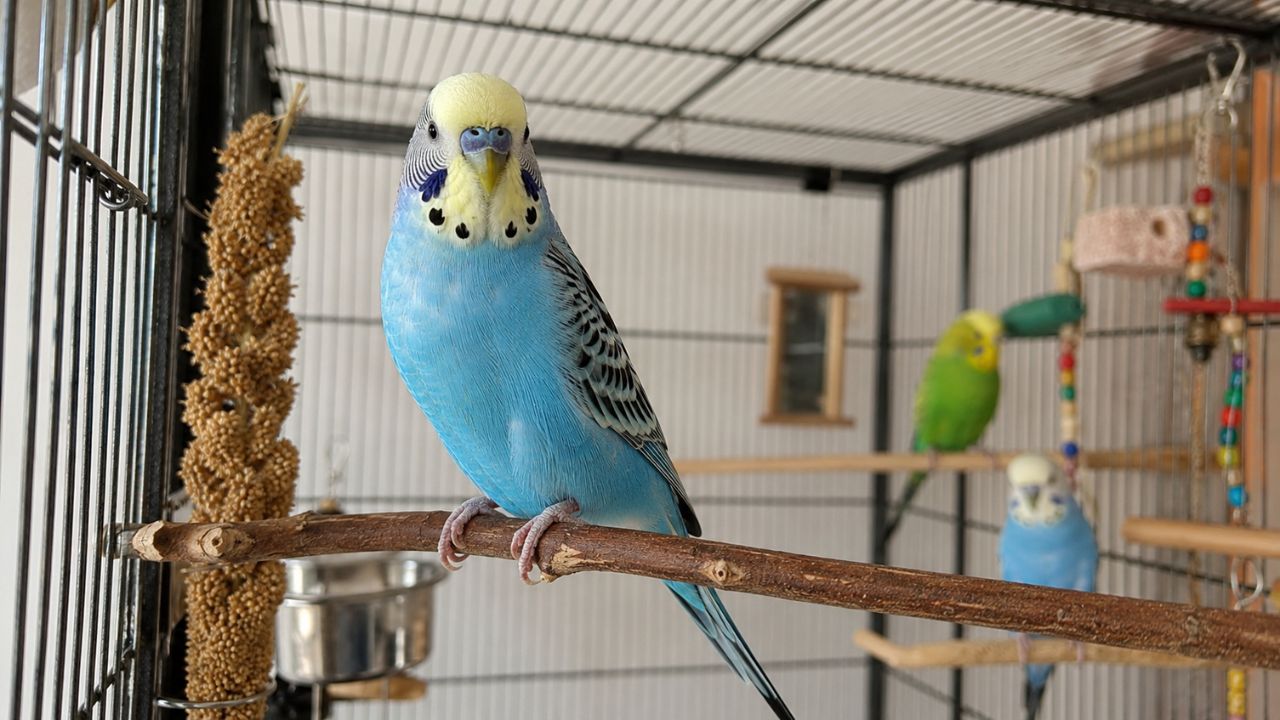

Neil has sold budgerigars at Paradise Pets Swindon since 1988 — over 35 years of first-hand experience with one of the UK’s most popular pet birds. In that time, he has watched hundreds of new owners walk out with a budgie in a carrier and the wrong cage at home waiting for it. This article is his honest, practical guide on what actually matters when choosing a budgie cage in the UK — and what most owners get completely wrong.
I sell a lot of budgies. Always have. They are one of the most popular pet birds in the UK, and they have been for decades — intelligent, sociable, long-lived when kept properly, and genuinely rewarding birds to have in the house.
But there is one conversation I have had more times than I can count, and it goes something like this. Someone comes in, buys a budgie — sometimes two — takes them home, and a few weeks later comes back. The birds are quiet. They are not flying. They are sitting on the same perch in the same spot all day. Something is not right.
Nine times out of ten, when I ask them to describe the cage, I know the problem before they have finished the sentence.
The cage is too small. Or it is the wrong shape. Or it is positioned somewhere it should not be. Or it has three plastic perches of identical diameter, no foraging opportunity, and a mirror stuck on the side as the only entertainment.
I do not blame the owners. The information available to new budgie keepers in the UK is genuinely confusing — pet shops sell cages that are too small, manufacturers label them “budgie cages” when they are nothing of the sort, and online advice ranges from brilliant to dangerously wrong.
So here, after 35 years, is what I actually tell people.
The Single Biggest Mistake UK Budgie Owners Make
Before anything else, let me get this on the table. The most common mistake I see — the one that causes more problems than anything else — is buying a cage based on price or appearance rather than size.
There are hundreds of cages sold in the UK, in pet shops and online, that are marketed specifically for budgies. Some of them are beautifully designed. Some of them are very affordable. And a significant number of them are genuinely too small for a budgie to live a healthy life in.
A budgie is not a decorative object. It is an active, intelligent bird that in the wild flies considerable distances every day, lives in a flock, forages, climbs, explores, and communicates constantly. A cage that prevents those natural behaviours — because it is too small, too narrow, too cramped — does not give the bird a home. It gives it a prison.
I have seen budgies kept in cages the size of a bedside table. I have seen pairs of budgies crammed into single-bird cages. I have seen birds that could not open their wings fully in their own home. These birds do not thrive. They become quiet, inactive, feather-poor, and often unwell.
Size is not one consideration among several. It is the first and most important consideration. Everything else comes after.
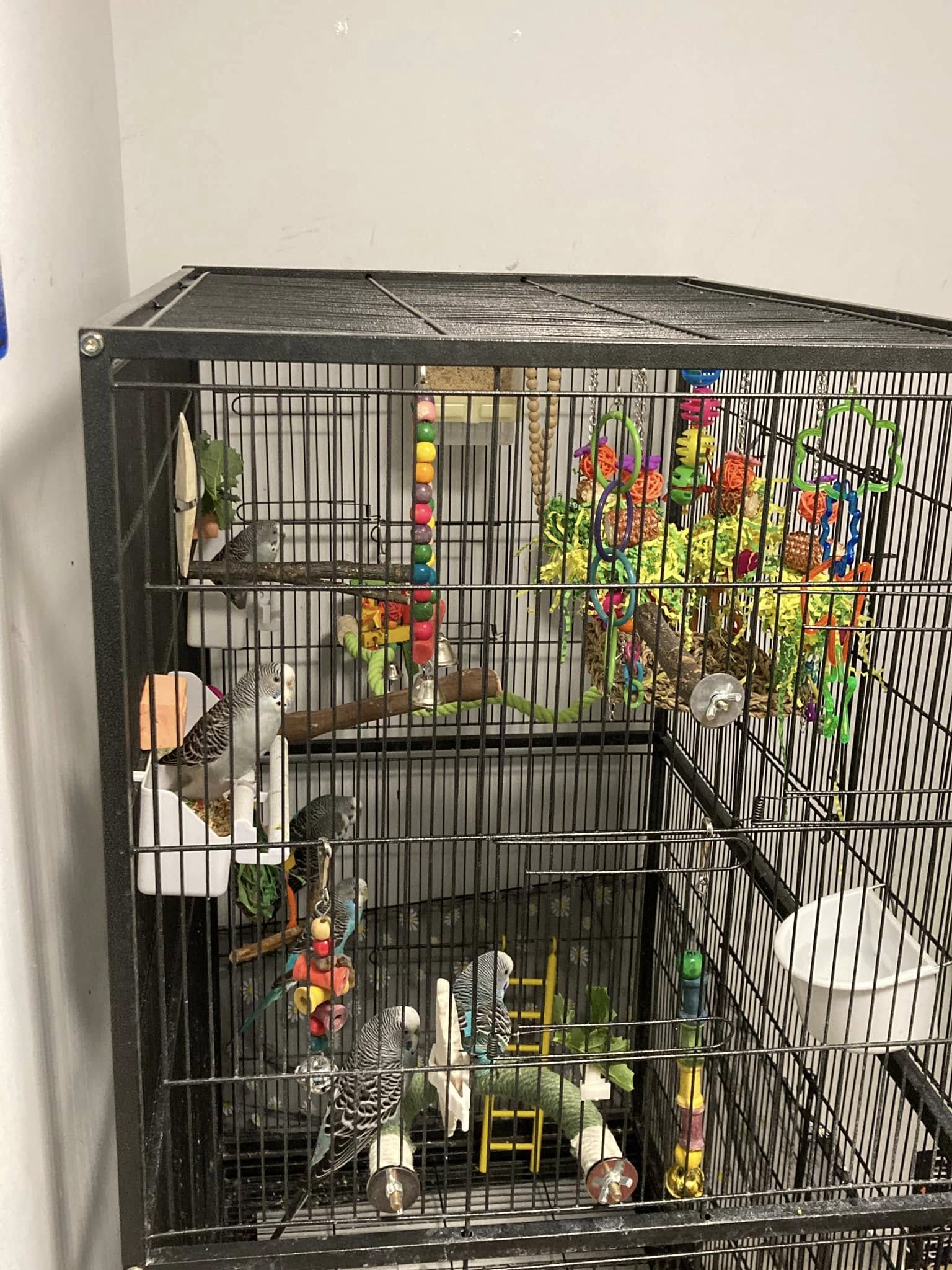
- Single budgie (though I always recommend pairs): at least 60cm wide × 40cm deep × 60cm tall — and that is a genuine minimum, not a comfortable size
- A pair of budgies: at least 90cm wide × 50cm deep × 80cm tall — wider is always better than taller
- Three or more budgies: you are moving into aviary territory — a flight cage of at least 120cm wide is needed
- The bird must be able to fully extend both wings simultaneously without touching the bars
- There must be enough horizontal space for the bird to actually fly short distances between perches — not just hop
- When in doubt, go bigger. You will never regret a cage that is too large. You will always regret one that is too small.
Width Matters More Than Height — Here’s Why
This is something most first-time budgie owners do not know, and it is important.
Budgies fly horizontally. They do not fly up and down. In the wild, they cover huge distances across open Australian scrubland — long, straight flight paths, not vertical ones. A cage that is tall but narrow gives the impression of being spacious while actually providing very little usable flying space for the bird.
When you are looking at cages, the measurement that matters most is the width — the horizontal distance from one end to the other. A cage that is 90cm wide and 60cm tall gives a bird far more opportunity for meaningful movement than one that is 60cm wide and 90cm tall, even though the second cage has a larger overall volume.
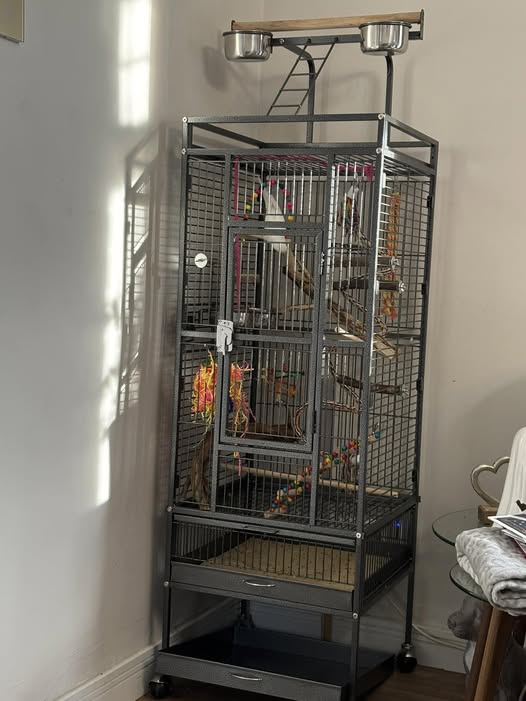
This is why those elegant, narrow, tower-style cages that look impressive in a living room are often completely unsuitable for budgies. They are designed to look good in a human space, not to serve the needs of the bird inside.
When I am advising a customer, I always start with width. How wide is the cage? That one number tells me more than any other measurement.
Bar Spacing — A Detail That Can Be Dangerous
Bar spacing is one of those things that does not sound important until you understand why it matters.
For budgies, the correct bar spacing is between 10mm and 12mm. Not more. Bars that are further apart than this — anything 15mm or above — create a genuine risk of the bird getting its head or foot caught between the bars. This happens more often than people realise, and it can result in serious injury or death.
A lot of cages sold as “budgie cages” in the UK have bar spacing that is too wide, particularly cheaper imported ones. Always check the bar spacing before you buy.
Bar orientation matters too. Budgies are climbers as well as flyers. A cage with horizontal bars — or at least some horizontal bars on the longer sides — gives the bird a climbing surface as well as perching space. Fully vertical bars on all sides are harder for budgies to navigate and reduce the variety of movement available to the bird.
- Bar spacing 10mm to 12mm — not more
- Horizontal bars on at least two sides if possible
- No sharp edges, rust, or chipped coating on the bars — these are health hazards
- Bar material should be stainless steel or powder-coated steel — avoid zinc-coated or painted bars that can flake and be ingested
- Check the door mechanisms — they should be secure but easy for you to open; budgies are surprisingly good at working out latches
Perches — Where Most Owners Get It Completely Wrong
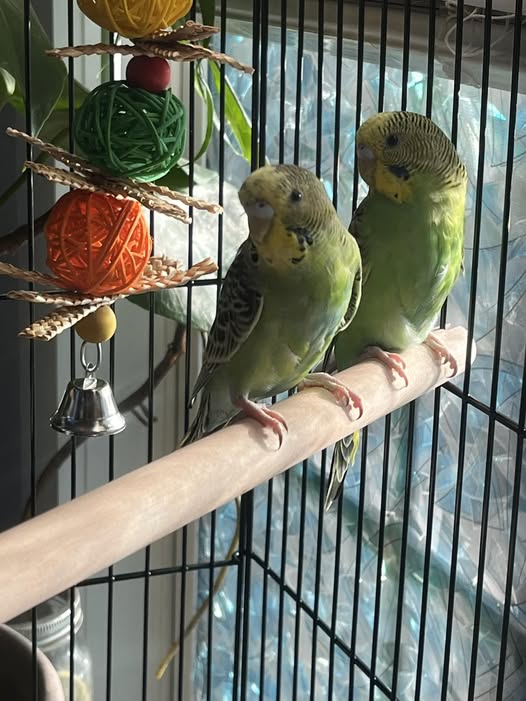
Almost every cage sold in the UK comes with perches included. Almost all of those included perches are, in my honest opinion, inadequate — and in some cases actively harmful.
The standard smooth plastic or wooden dowel perch, uniform in diameter along its entire length, is the worst thing you can put in a budgie cage. Here is why.
A budgie’s foot grips a perch constantly, all day, every day. When the perch is uniform in diameter, the foot is always in exactly the same position, applying pressure to exactly the same points. Over time, this causes pressure sores, foot problems, and in persistent cases, the condition known as bumblefoot — a bacterial infection of the foot that develops in areas of repeated pressure and reduced circulation.
Natural branch perches — from fruit wood, willow, hazel, or similar safe species — vary in diameter along their length. The bird’s foot shifts position constantly as it moves along the branch. Different muscle groups are used. Circulation is maintained. The bird’s feet stay healthy.
- Use natural branch perches as the primary perching material — apple, willow, hazel, pear are all safe
- Vary the diameters — some thinner branches the bird can grip fully, some thicker ones where the foot rests more open
- Position perches at different heights and different angles — flat, angled, and slightly irregular perches all encourage different movements
- One rope or cotton perch is fine for variety, but should not be the only option
- Concrete or mineral perches near food and water help naturally wear the claws — one is sufficient
- Remove the smooth plastic dowels that come with the cage — replace them on day one
If you are not sure which wood species are safe for birds, come and ask us. Some garden woods are toxic and should never be used. We stock safe natural perches and can advise on what to use and avoid.
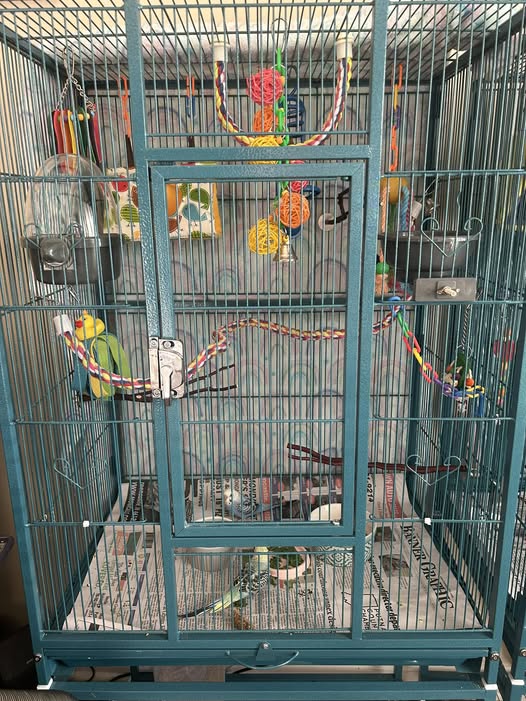
Cage Position — The Decision Most Owners Make Without Thinking
Where you put the cage in your home is almost as important as the cage itself. I have seen well-chosen cages in terrible positions create health and behaviour problems in birds that were otherwise well set up.
Here is what I advise.
- Against a wall, not in the middle of a room.
Budgies feel secure when at least one side of the cage is against a solid surface. A cage in the centre of a room, exposed on all sides, makes the bird feel vulnerable. One wall at the back, ideally in a corner, provides that security. - At eye level or just below — not on the floor.
Budgies are prey animals. Low positions feel exposed and threatening. Eye level placement allows the bird to see the room clearly from a position of relative safety. - In a room where the family spends time — but not the kitchen.
Budgies need social interaction. A cage in a rarely-used room is isolating. But the kitchen is the one room I always advise against — cooking fumes, non-stick cookware releasing toxic fumes, and sudden temperature changes make the kitchen genuinely dangerous for birds. - Away from windows that get direct afternoon sun.
Some natural light is good. Hours of direct sun is not — cages heat up quickly and budgies overheat easily. Bright ambient light rather than direct sun is ideal. - Away from draughts — especially at night.
UK homes lose heat quickly in the evenings. A cage near a door, window, or external wall can drop to temperatures that stress the bird significantly overnight. Check where the cold air moves in your home and keep the cage away from it. - Somewhere you can cover the cage at night.
Budgies need ten to twelve hours of darkness and quiet for proper rest. A cage cover or a position where the lights can be dimmed is essential. A bird that is not sleeping properly will not stay healthy long-term.
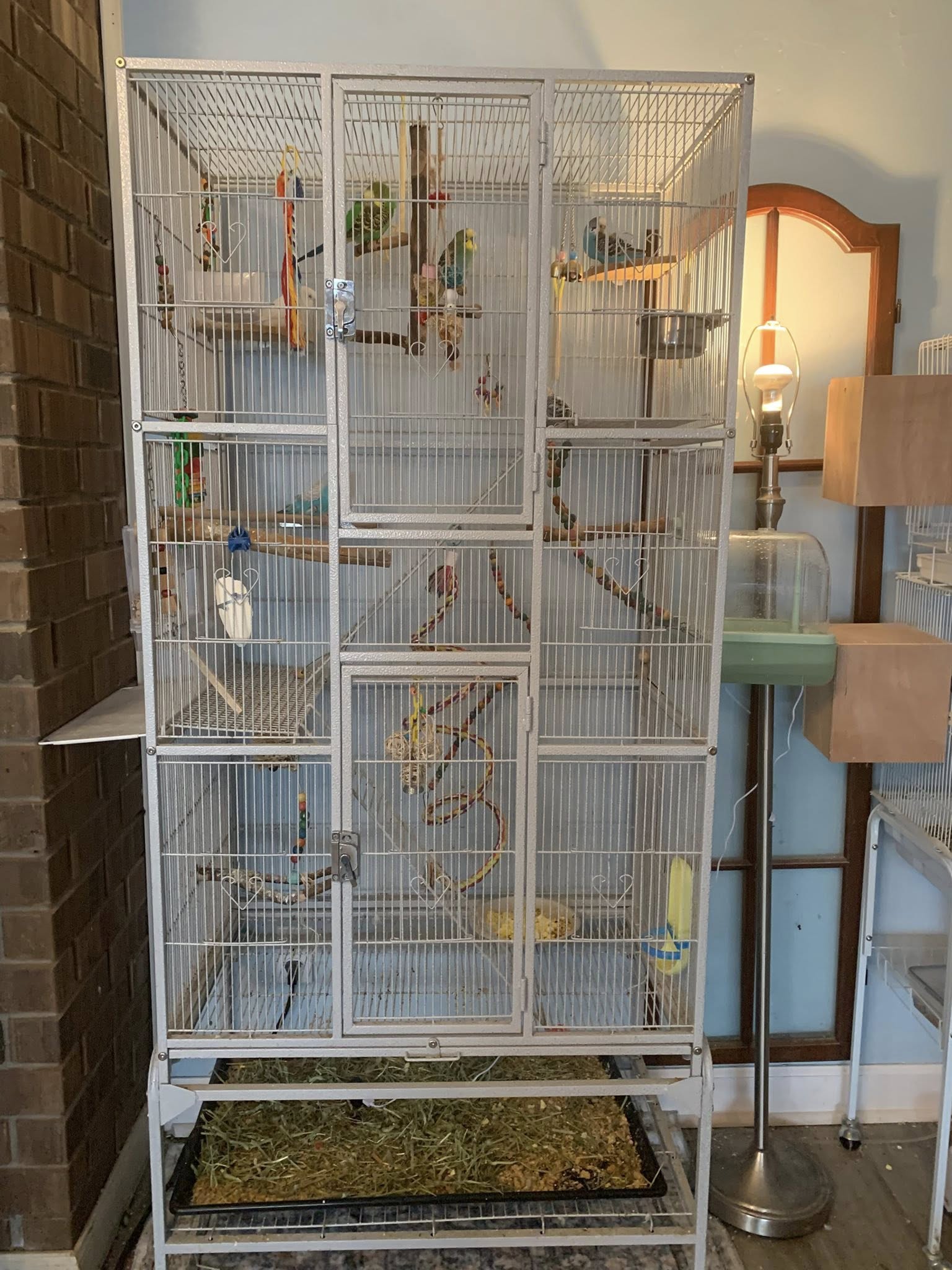
Toys and Enrichment — More Important Than the Cage Itself
I tell people this and they sometimes look surprised: the toys and enrichment inside the cage can matter more to the bird’s wellbeing than the cage brand or finish.
A budgie needs mental stimulation. It needs things to investigate, to chew, to manipulate, to problem-solve with. A bare cage with a water dish, a seed feeder, and a mirror is not a stimulating environment — it is a boring one. And a bored budgie, over time, becomes an unhealthy one.
- Foraging toys — small treat holders or puzzle feeders the bird has to work to access. This is the single most enriching addition you can make to a cage
- Chew toys — cuttlebone, mineral blocks, safe wooden toys to chew. Budgies need to chew; their beak grows continuously and needs wearing down
- Swings and moving perches — most budgies enjoy them and they encourage balance and coordination
- Shreddable toys — paper, palm leaves, woven grass toys the bird can pull apart. Satisfies natural foraging and destruction instincts
- Rotation matters — swap toys out every week or two. A new toy is interesting; the same toy for six months is ignored. Rotating keeps the cage fresh without spending a lot of money
A word on mirrors. They are sold everywhere as budgie accessories, and plenty of budgies seem to enjoy them. But a mirror is not a substitute for a real companion bird, and a single budgie with only a mirror for company is still a lonely bird. Mirrors have their place, but they should supplement social interaction — not replace it.
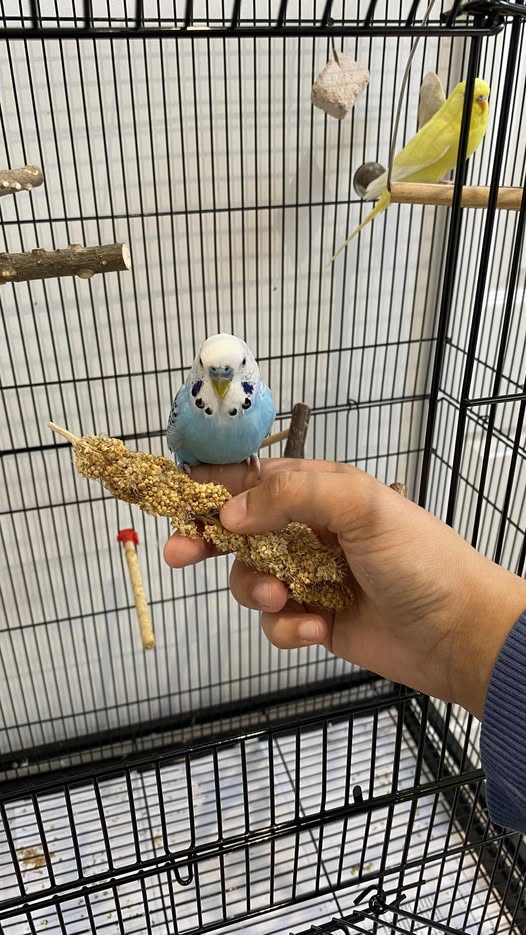
One Bird or Two — And Why It Affects What Cage You Buy
I will say this plainly because I think it matters: budgies should not be kept alone if it can be avoided.
In the wild, budgies live in enormous flocks. They are not solitary birds by nature. A single budgie kept in a home — even one with attentive owners who interact with it every day — is living without the constant flock companionship that is fundamental to its nature. Many single budgies adapt and form bonds with their human families. But many others become quiet, withdrawn, and less healthy than they would be with a companion.
Two budgies are not twice the work. They are, if anything, more entertaining to watch, more active, more vocal, and more likely to stay healthy.
The reason this matters for the cage discussion is straightforward. If you are going to keep two budgies — and I recommend it — you need a cage that is sized for two birds from the start. The minimum dimensions I gave earlier are the starting point for a pair. Do not buy a single-bird cage thinking you will upgrade later; upgrade from day one.
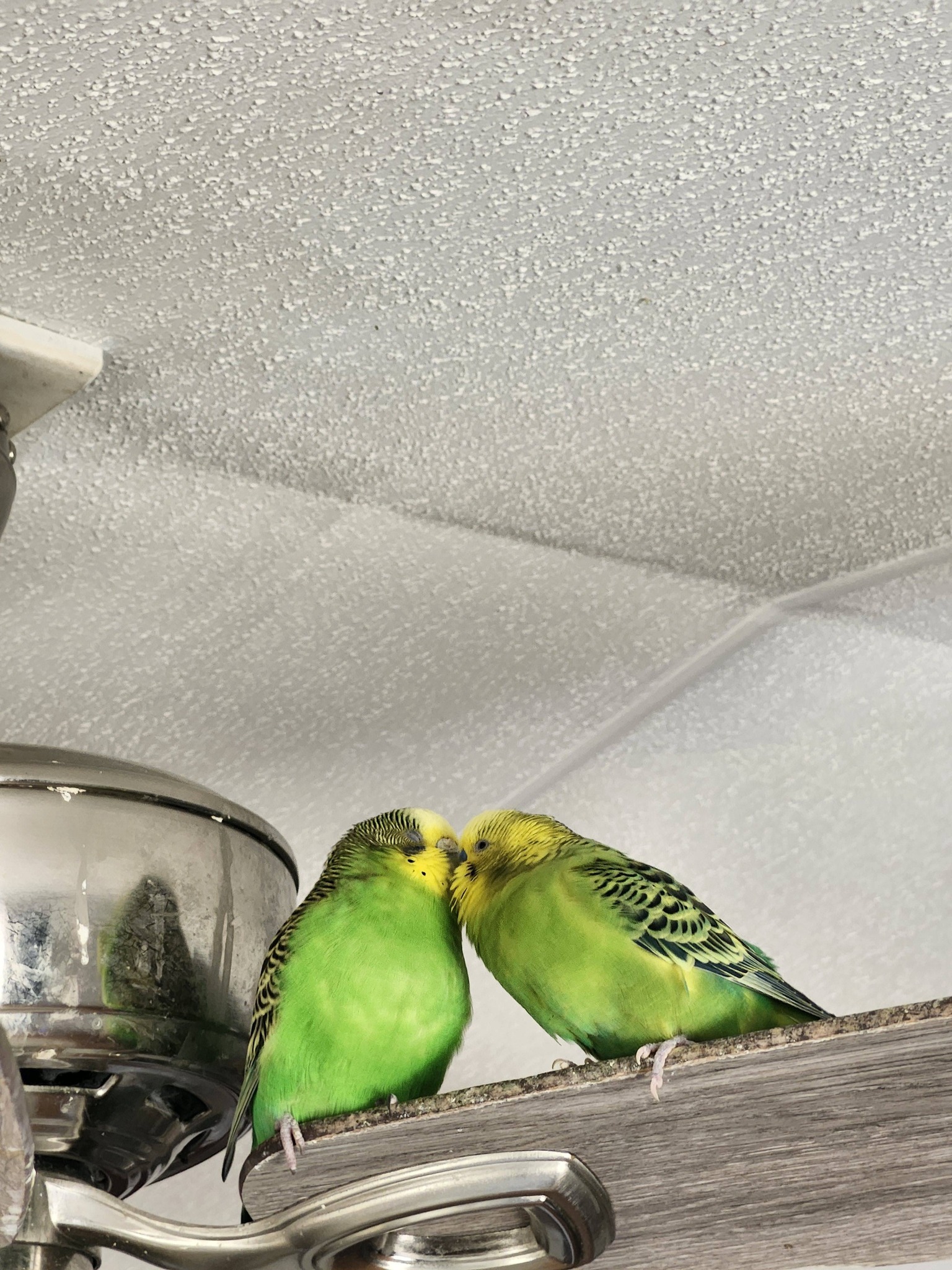
Cleaning and Practicality — What to Look for in the Cage Design
I have spent enough time cleaning cages over 35 years to have strong opinions about practical design. Here is what to look for when you are assessing a cage.
- A pull-out tray at the base — makes daily cleaning quick and the bird does not need to be disturbed. Avoid cages where the only way to clean the floor is to open the main door and reach in
- Wide doors — you need to be able to get your hand in easily for handling, cage maintenance, and adding or removing enrichment. Narrow doors are frustrating and can stress the bird when you are trying to reach inside
- Separate food and water positions from perches — droppings in the water bowl is a permanent hygiene problem in poorly designed cages where perches are directly over feeding stations
- Grill above the base tray — prevents the bird from sitting in its own droppings on the floor. Essential, not optional
- No ornate, hard-to-reach corners or decorative elements — decorative cages look lovely but accumulate grime in areas that are almost impossible to clean properly
I always tell customers: clean the tray daily, wipe the bars weekly, and do a full cage clean monthly. That schedule keeps disease to a minimum and is easy to maintain if the cage is designed sensibly. A badly designed cage makes that schedule feel like a chore and people stop doing it consistently — and that is when health problems start.
What About Cage Material and Finish?
The safest cage material for budgies is stainless steel — it is durable, easy to clean, and does not corrode. It is also the most expensive option.
For most UK owners, a powder-coated steel cage is a perfectly good choice. The coating prevents rust and is non-toxic when intact. The key word there is intact — a cage with chipping or flaking coating should be replaced, because ingested paint or coating fragments can cause serious illness.
What to avoid:
- Zinc-coated or galvanised cages — zinc is toxic to birds. A budgie that spends time chewing on galvanised bars — which they will do — is at risk of zinc poisoning
- Painted cages with unknown paint formulations — particularly cheap imported cages where the paint composition is unclear
- Wicker or bamboo cages — they look attractive and are completely impractical. They absorb moisture and droppings, cannot be properly cleaned, and harbour bacteria. I will not sell them
- Acrylic or plastic-heavy designs — poor ventilation, difficult to clean, and not structurally suited to a bird that chews constantly
What I Actually Recommend After 35 Years
People ask me all the time — what cage should I actually buy? Rather than list specific products that may or may not still be available, I will tell you exactly what to look for.
- Width of at least 90cm for a pair — this is the minimum, not the ideal. If you can go wider, go wider.
- Bar spacing of 10mm to 12mm — measured yourself, not taken on trust from the product description.
- Horizontal bars on the long sides — so the bird can climb as well as fly.
- Powder-coated or stainless steel — no zinc, no chipping paint, no wicker.
- Pull-out base tray — daily cleaning without disturbing the bird.
- Wide access doors — at least one large door for easy access.
- Grill above the base tray — keeps the bird off the floor.
- Enough depth for perches front-to-back without overcrowding — at least 45cm to 50cm deep for a pair.
- Neutral or dark finish rather than white — white shows dirt immediately and makes the cage look permanently grubby after a week.
- No unnecessary decorative elements — fussy roof structures and ornamental finials look nice in photographs and are a nightmare to clean.
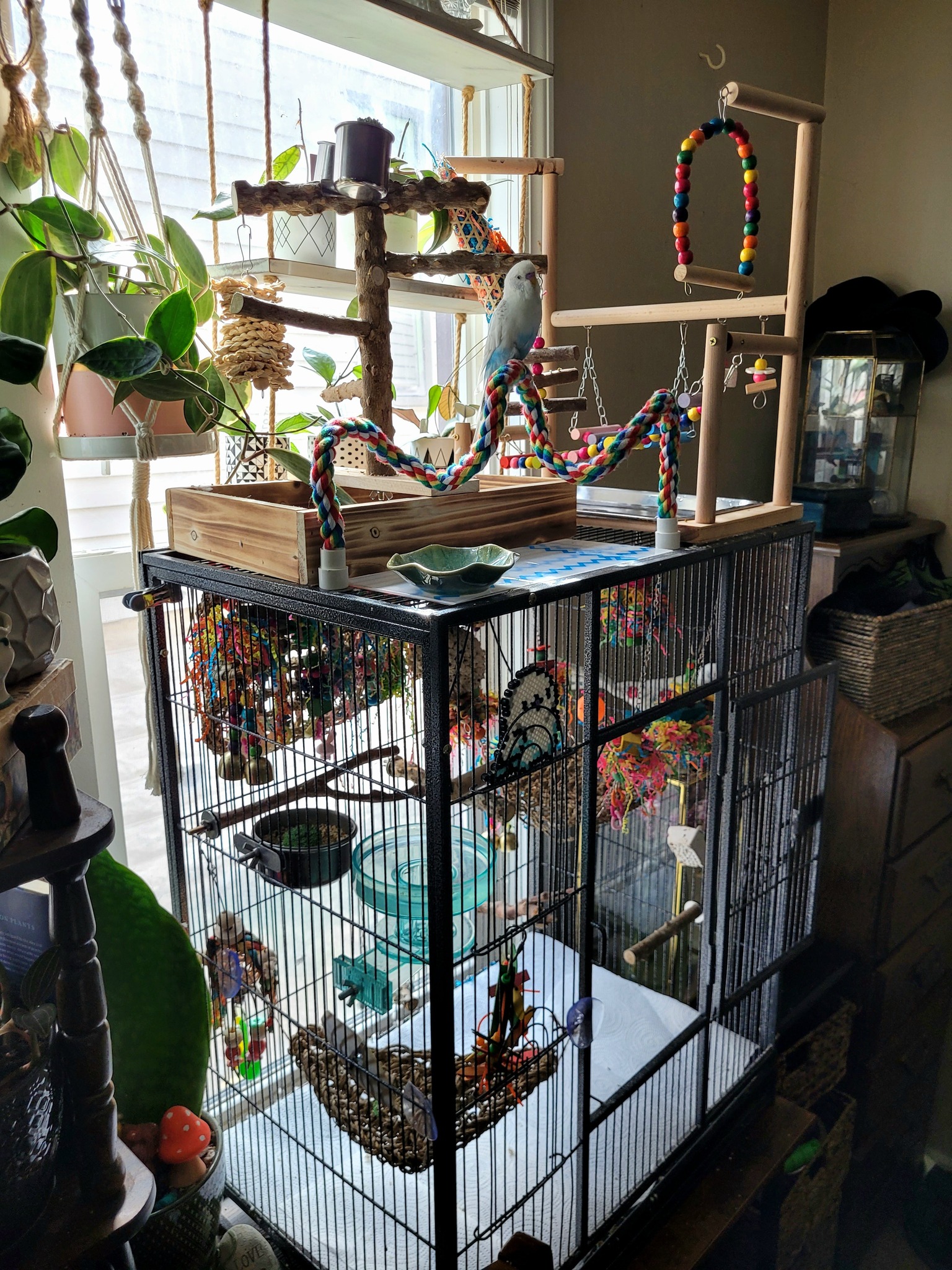
If you are coming into the shop and want to talk through specific options, we are happy to do that. We have been advising on budgie setups for 35 years and we will tell you honestly what is worth buying and what is not.
Frequently Asked Questions
What is the minimum cage size for a budgie in the UK?
For a single budgie, a minimum of 60cm wide × 40cm deep × 60cm tall — and I always say that is the floor, not the target. For a pair, you are looking at 90cm wide as a minimum. In both cases, wider is always better because budgies fly horizontally. When in doubt, buy the bigger cage.
Can I keep a budgie in the cage full time?
Not ideally, no. Budgies need time outside the cage every day to fly freely, explore, and exercise properly. Even the best cage is a limited environment. Most budgie owners allow their birds out for at least an hour daily in a bird-proofed room. If your setup genuinely cannot accommodate this, you need to be honest about whether the bird’s welfare needs can be met.
Is it better to have one budgie or two?
Two. Almost always. Budgies are flock birds and they are far healthier and happier with a companion. Two budgies together are more active, more vocal, and generally in better condition than single birds. The only reason I would suggest a single bird is if the owner genuinely intends to dedicate significant daily time to taming and interacting with the bird — and even then, the bird would arguably prefer a companion.
What wood is safe for budgie perches?
Apple, pear, willow, hazel, and birch are all safe and commonly used. Avoid cherry, oak, yew, privet, and anything that may have been treated with pesticides or preservatives. If you are collecting branches from your garden, make sure the tree species is confirmed safe and that it has not been sprayed. When in doubt, come and ask us.
How often should I clean a budgie cage?
The base tray daily — it takes thirty seconds and makes a significant difference to hygiene. Bar wipe-down weekly. Full clean with appropriate bird-safe disinfectant monthly. If you have more than two birds, increase frequency accordingly. Do not leave it longer than a month for the full clean — droppings accumulate, bacteria build up, and the bird’s respiratory health suffers.
Where can I get budgie cage advice in Swindon?
Come and see us at Paradise Pets, Manor Garden Centre, Cheney Manor Industrial Estate, Swindon SN2 2QJ. Or ring us on 01793 512400. We have budgies in stock regularly and we will take the time to make sure you have the right setup before you take a bird home. That is how we have always done things.
One Last Thing From Me
I have said this to customers thousands of times: the cage is the most important purchase you will make for your budgie, and it is the one where people are most likely to compromise because of cost or appearance.
Please do not compromise. A budgie can live for ten to fifteen years with proper care. The cost difference between an adequate cage and an excellent one is often less than twenty or thirty pounds. Spread over a decade of the bird’s life, that difference is nothing. The difference it makes to the bird’s quality of life is everything.
Get the cage right from the start. Size it properly. Set it up with natural perches and enrichment. Position it sensibly. And if you are not sure about any of it, come and talk to us before you buy.
We would much rather spend twenty minutes helping you get the setup right than see you come back in six months with a bird that has never thrived because the foundations were wrong.
Thinking About a Budgie? Come In Before You Buy the Cage
We stock budgies regularly and we will always make sure you have the right setup before you take one home. Come in and have a look, ask every question you have got, and leave with exactly what the bird needs. Free advice, no obligation. That is how we have done things for 35 years.
⭐ Customer Reviews
Amazing Bird Selection
Had a lovley visit today,staff were very friendly and very helpful,such a great petshop,their selection of birds is incredible,really impressed,thank so much to the staff at Paradise Pets

Friendly Helpful Staff
I have been coming to this place for years and they have a great stock of food for all types of pets. Have a great selection of small mammals and a lot of birds. Staff are friendly and helpful.

Great Quality Hutch
Bought a guinea pigs hutch and run combo, very happy with the service, the hutch was put in my car for me without even asking for help. The wood quality is very good, the instructions easy to follow and we are extremely happy with the fully built hutch. A good size for 2 guinea pigs

Response from Paradise Pets | Wiltshire
Thank you Melanie Latus Nice to provide services to you.
Best Bird Shop Around
It’s the best pet shop in and around Swindon. They always have an amazing selection of birds and all you need to keep them happy. I keep birds myself and the guys there are happy to answer questions and really know their stuff. I have seen budgies etc. in chain pet shops in the area looking really unhealthy and ill – I wouldn’t go anywhere else than Paradise Pets for animals.

Highly Recommended Bird Shop
I could not praise this shop enough. Really helped my Grandson buy his first bird and he’s loving it. Travelled from Somerset and was welcomed with open arms.

Great Shop with Competitive Prices
Great shop with amazing selection for small animals, hamsters, mice ect, highly recommend!
Also has a great selection for dogs & cats too & very competitive prices! 💖

