


Neil has kept, bred, and sold budgies at Paradise Pets Swindon since 1988 — over 35 years of first-hand experience with these birds. In that time, he has answered countless questions from UK owners curious about their budgie’s daytime behaviour. This article is his honest, practical guide on what it means when your budgie plays during the day — and what is actually going on.
A young mum came into the shop on Wednesday morning, smiling but with a puzzled look. “Neil,” she said, “I have to ask. Our budgie is the most active little thing during the day. He plays with his bell, swings on his perch, chats to himself constantly. My friend’s hamster sleeps all day, and she said birds should be similar. Is something wrong with him? Or is he just unusual?”
I had to smile. Because it is one of the loveliest questions I get at the counter, and one of the easiest to answer. The honest truth is this — budgies are supposed to play during the day. That is exactly what they are wired to do. A budgie that plays, chirps, climbs, and entertains itself during daylight hours is not unusual or problematic. It is a normal, content, healthy budgie doing exactly what budgies do.
In 35 years of selling budgies in Swindon, the families who are happiest with their birds are usually the ones who watched and enjoyed this exact behaviour. Daytime play is one of the most rewarding things about owning a budgie. Children love watching it. Parents enjoy having a little personality in the home. And the bird itself is genuinely thriving when this is happening.
But it is also a question worth answering properly — because there are subtle differences between healthy daytime play and worrying daytime activity, and understanding the difference helps you know what to look for as your budgie settles in.
This article is the conversation I have at the counter, written down for every UK budgie owner who has paused to watch their bird and wondered “is this normal?” — and for everyone considering a budgie who wants to know what to expect.
Yes — Budgies Are Daytime Birds
Let me give you the proper answer first, then explain it.
Budgies are diurnal animals. That means they are active during daylight hours and sleep at night. This is the opposite of nocturnal animals like hamsters, who sleep through the day and wake up at night.
In the wild, budgies live in the open grasslands of Australia. They are flock birds — flying considerable distances each day to find food, water, and other budgies. From sunrise to sunset, wild budgies are constantly moving, foraging, communicating, and engaging with their environment. At night, they roost together in trees, sleeping in flocks for safety.
When you bring a budgie into a UK home, this biology comes with it. Your budgie is wired to be active during daylight hours. Play is the domestic version of the activity it would naturally be doing in the wild — flying, foraging, socialising, exploring. A budgie that plays during the day is not strange or unusual. It is doing exactly what its biology expects.
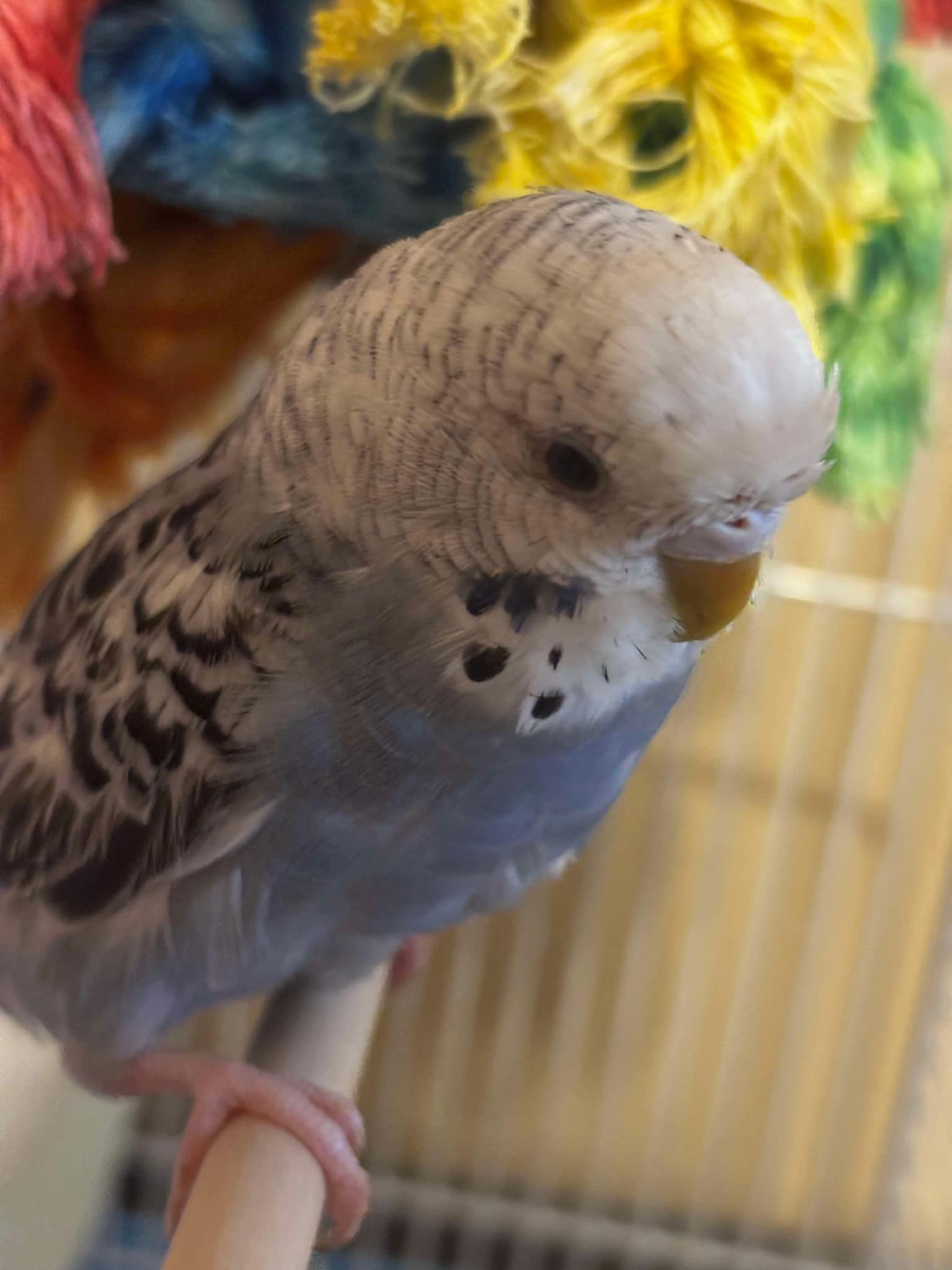
What Daytime Play Actually Looks Like
Let me describe what a normal, healthy budgie’s daytime activity actually looks like — because once you know what to expect, you will recognise it easily.
A budgie having a good day will:
- Wake up at sunrise — often the moment the room starts getting light. May vocalise briefly to “say good morning.”
- Eat and drink in the first hour — heading straight for food and water after waking
- Have bursts of energy — climbing, flapping, jumping between perches
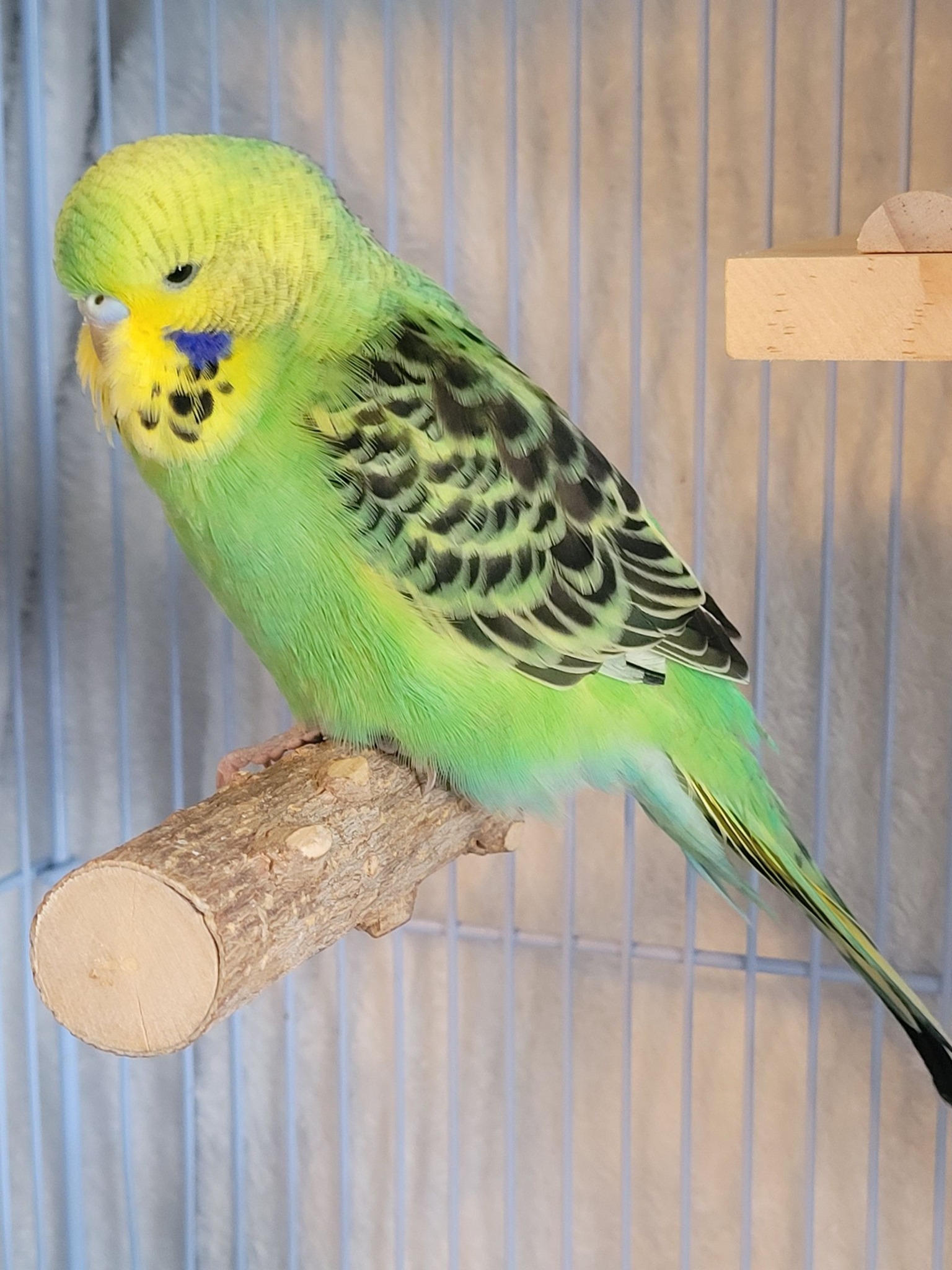
- Play with toys — ringing bells, swinging on perches, attacking shreddable toys, looking at itself in a mirror
- Vocalise frequently — chirping, whistling, chattering to itself or to family members
- Preen itself — grooming feathers, stretching wings one at a time
- Take short naps — particularly in the middle of the day, sometimes on one foot with feathers slightly fluffed
- Get more vocal again in the afternoon — second burst of activity around 4-6pm
- Settle down at dusk — quieting and preparing for sleep as the light fades
That overall pattern — active in the morning, midday rest, afternoon activity, settled at night — is what 35 years of watching budgies tells me is “doing well.” If your budgie is following this rhythm, you have a content, healthy bird.
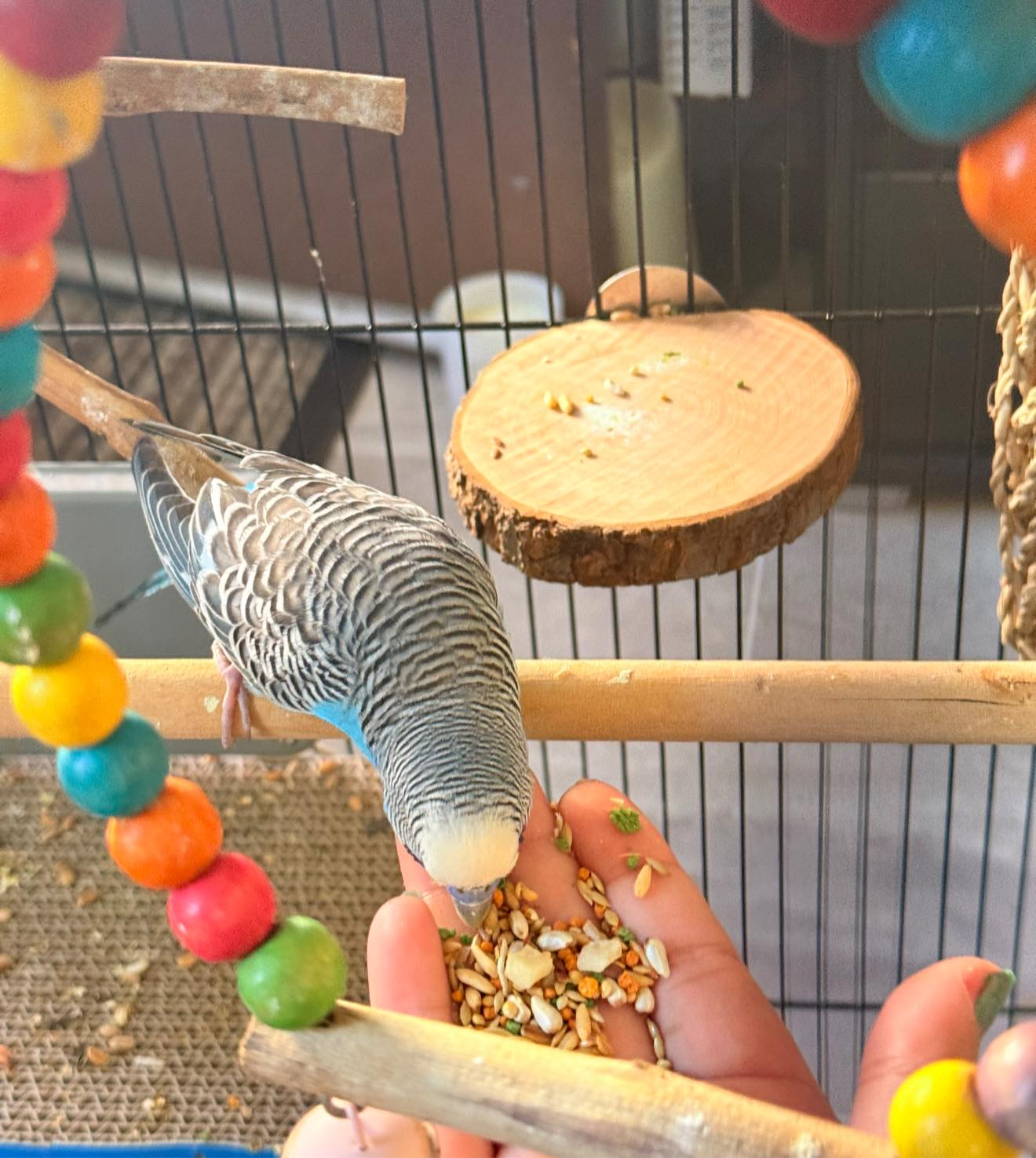
Why Some UK Owners Get Worried About Daytime Play
This is the part of the conversation I have most often at the counter. Because the concern usually comes from one of three places.
1. Comparing Budgies To Other Pets
This is what catches most UK families off guard. Hamsters are nocturnal. Cats sleep most of the day. Dogs nap a lot. Children and parents are used to pets that sleep much of the day. So when they get a budgie that is awake and active for 10 to 12 hours straight, it can feel unusual.
It is not unusual. It is just that budgies have a different biology to mammalian pets. Their natural pattern is to be active during all daylight hours. They have evolved that way, and there is nothing wrong with a budgie that follows this natural rhythm.
2. Confusing Activity With Restlessness
Some new owners see all this daytime activity and wonder if it means the bird is “stressed” or “anxious.” Genuine restlessness in budgies has very different signs — pacing, bar biting, repetitive head movements, vocalising in distress, lack of normal sleep cycles. Playful activity looks completely different. It involves curiosity, engagement, varied behaviour, normal eating and drinking, and clear rest periods.
3. Wondering If The Bird Is Bored Or Lonely
This one is the most legitimate concern, because boredom can show up as different kinds of activity. A bored budgie may engage in repetitive, joyless behaviours — biting the same bar over and over, pacing the same spot, doing the same circular movement. But a budgie that is genuinely playing — switching between activities, exploring its toys, vocalising happily — is not bored. It is engaged and active.
- Variety of activities? Playful budgies switch between toys, perches, food, mirror, vocalising. Bored budgies repeat the same action.
- Bright eyes and engagement? Playful birds look alert and curious. Bored birds may look dull, with half-closed eyes.
- Normal eating and drinking? Playful budgies eat and drink throughout the day. Bored or unwell birds reduce food intake.
- Normal sleep cycle? Playful budgies still rest properly at night. Restless or stressed birds have disturbed sleep.
- Vocalisations sound happy? Chirps, whistles, content chatter = happy. Loud screams, distress calls = something wrong.
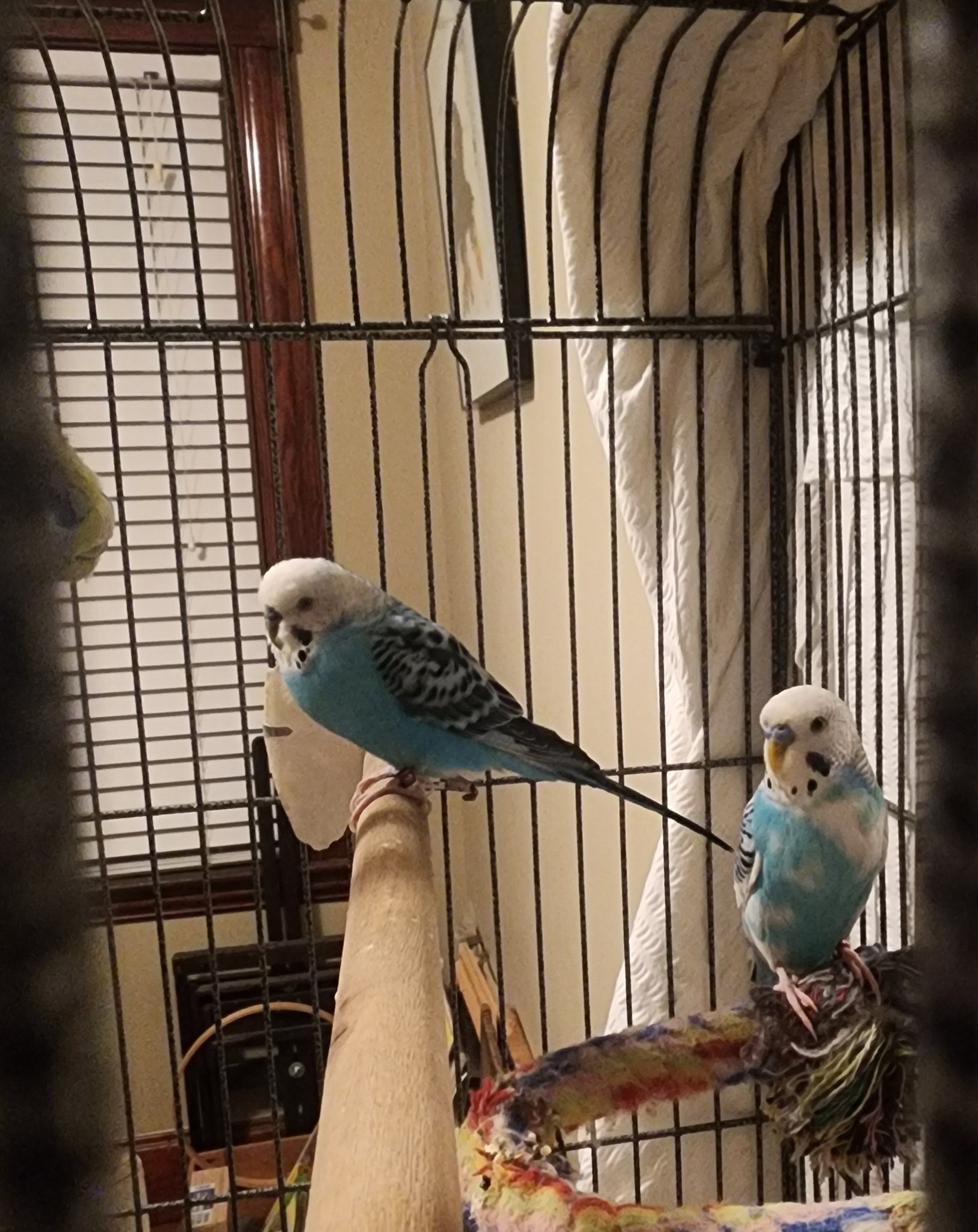
What A Budgie Actually Plays With
This is the part I find owners enjoy hearing about, because budgie play is genuinely entertaining once you know what to look for. Different birds have different favourites, but here are the activities I see budgies doing most often.
1. Ringing Bells And Making Noise
Budgies love bells. They will tap them with their beak, bang their head against them, sit on them, and ring them deliberately. This is one of the most common daytime activities, and it is a clear sign of a happy bird.
2. Swinging On Perches
Budgies particularly enjoy swing-type perches or platforms. They will climb on, jump off, balance back on, and use them as gymnastic equipment. Some birds spend hours doing this.
3. Mirror Play
Single budgies often interact extensively with their mirror — chatting to it, pecking at it, displaying to the “other budgie.” This can be lovely to watch, though it has trade-offs (single budgies that bond too strongly with mirrors sometimes ignore human bonding). If you have a paired budgie, mirrors are usually unnecessary.
4. Shreddable Toys
Budgies love destroying things. Paper, cardboard, soft wood, shreddable toys — they will reduce these to pieces with great enthusiasm. This is a particularly good sign of a content, well-stimulated bird.
5. Climbing And Exploring
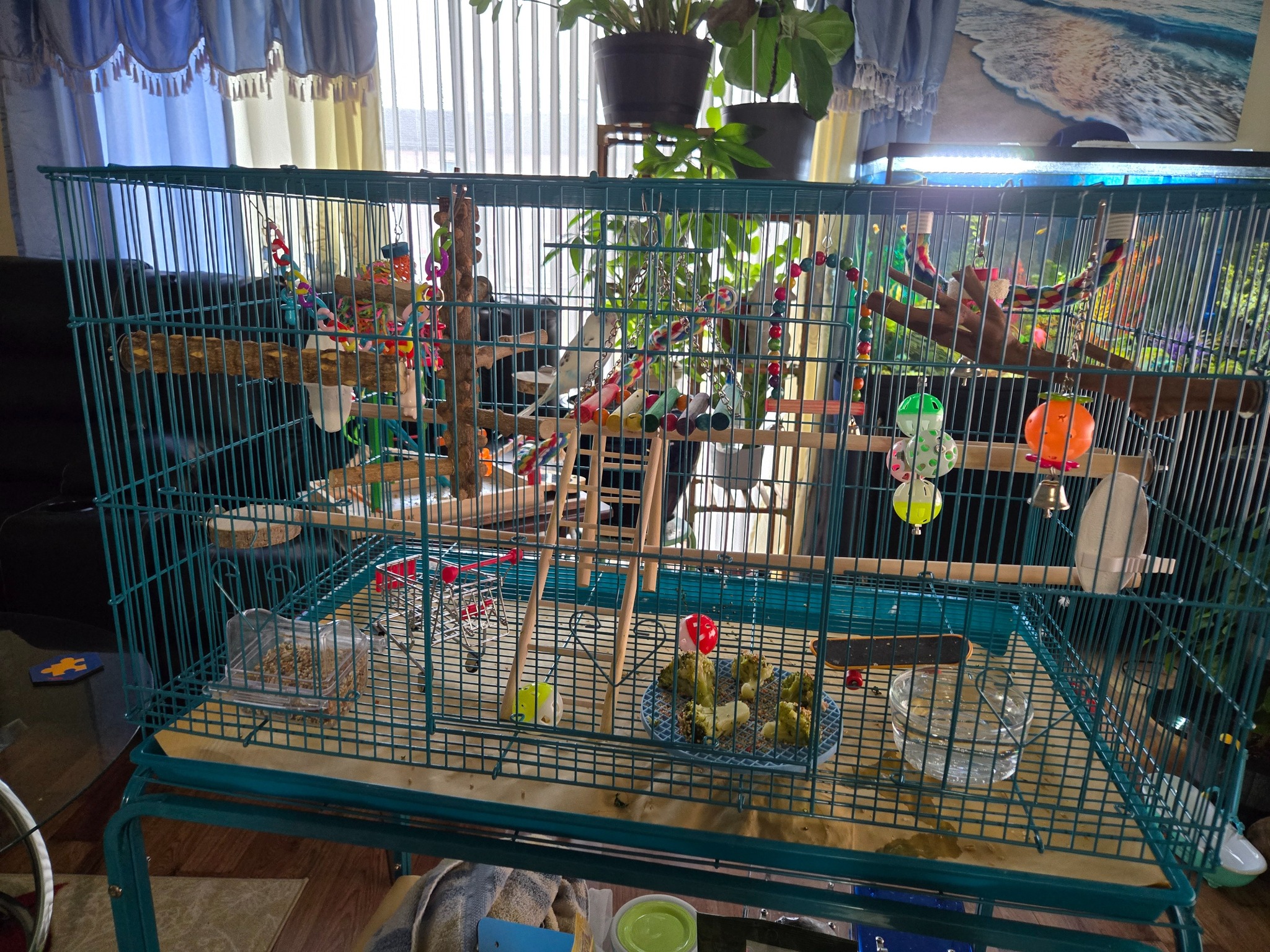
A cage with multiple perches at different heights, ladders, and rope perches gives a budgie plenty to climb on and explore. Active budgies use all of this constantly.
6. Vocalising And Talking To Themselves
Budgies are talkative little birds. They will chirp, whistle, chatter, and sometimes mimic sounds they hear in the household. A budgie that vocalises throughout the day is a happy budgie.
7. Foraging
If you scatter food in the bottom of the cage, or hide treats in shreddable toys, budgies will spend significant time foraging — pecking, searching, finding food. This mimics their natural behaviour in the wild and is excellent enrichment.
When Daytime Activity Is Worrying Instead Of Normal
Now, in the interest of being properly honest, let me address the other side of this. Because most daytime activity is normal play, but there are situations where activity patterns can indicate a problem.
- Repetitive behaviours — bar biting in the same spot, head bobbing, circular movements
- Frantic or panicked movement — flying repeatedly into the same spot, can’t settle anywhere
- Aggressive screaming or distress calls — different from normal chirping, sounds sharper or more urgent
- Refusing to eat or drink while being “active” — frenetic activity without normal feeding
- Visible plucking or pulling at own feathers during “play”
- Excessive activity in a previously calm bird — sudden change without obvious cause
- No rest periods at all — bird cannot settle for the whole day
- Activity combined with other signs of illness — fluffed up feathers, discharge, abnormal droppings
The difference between play and distress can be subtle, but with practice it becomes obvious. Play involves choice and variety — the bird is engaging with different objects, switching activities, taking breaks. Distress involves repetition, urgency, and an inability to settle.
If you genuinely cannot tell which one you are seeing, take a short video of your bird and either come into the shop or send it to an avian vet. We can usually tell quickly which kind of activity it is.
What Affects How Active Your Budgie Is During The Day
Different budgies have different activity levels, and several factors affect how much your bird plays. Understanding these helps you know what to expect and what you can do to encourage healthy play.
1. Age
Young budgies are often the most active. Birds between 4 months and 3 years old typically have the highest play drive — running, climbing, exploring, and vocalising for most of the day. Older budgies (8+ years) tend to slow down somewhat, taking longer rest periods and being less constantly active. This is normal ageing, not illness.
2. Light Levels
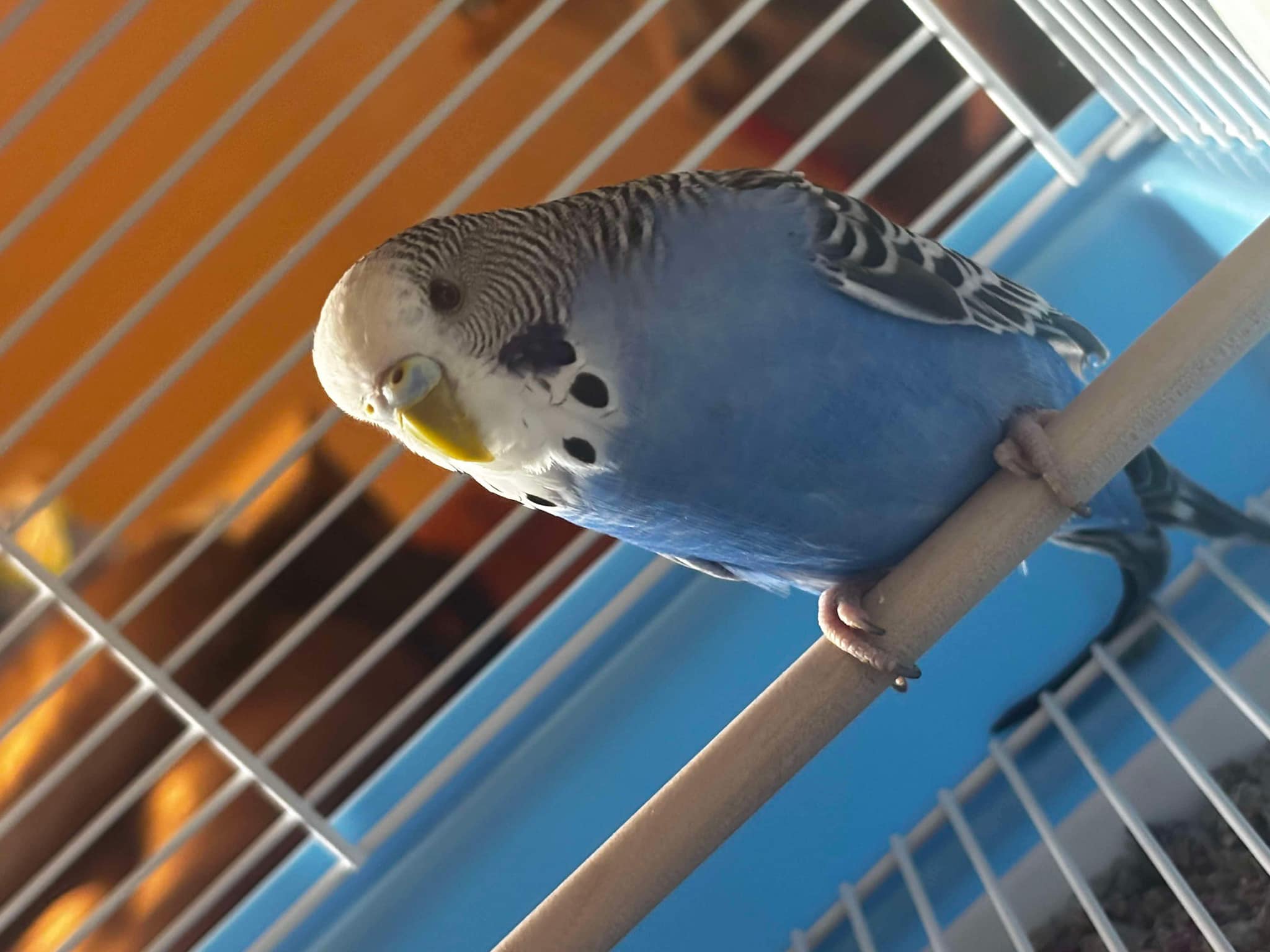
Budgies take their activity cues from light. A cage in a bright, naturally-lit room will see the bird active for longer. A cage in a darker corner may see the bird less active overall. Long UK summer days bring out more activity; short winter days reduce it.
3. Diet
Birds on poor diets (seed-only) often have lower energy and reduced play behaviour. Birds on proper varied diets with pellets, fresh vegetables, and occasional treats are noticeably more active and engaged.
4. Cage Setup
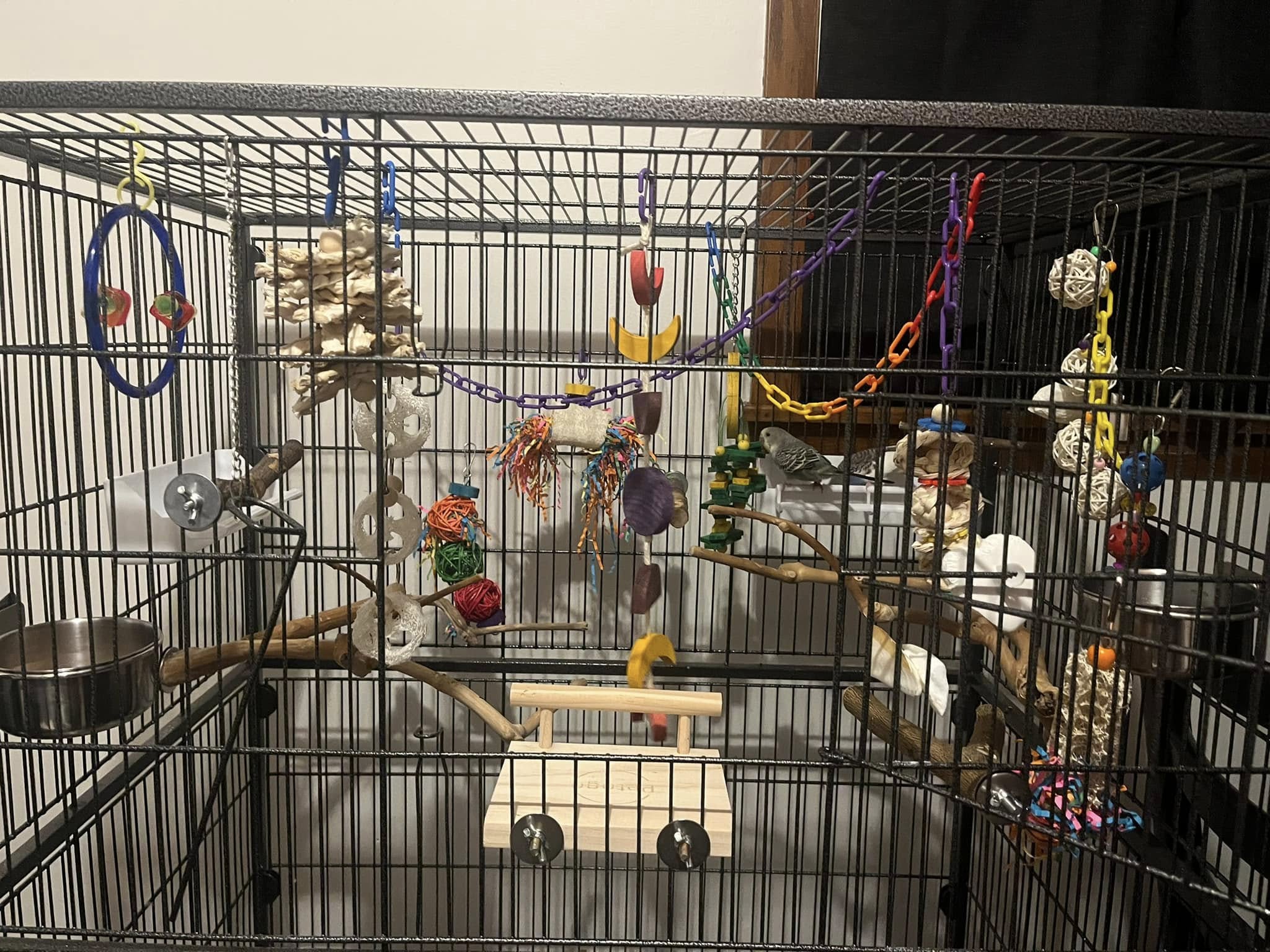
The more there is for the bird to do, the more it will do. A budgie in a small cage with two perches and a single toy will be less active than one in a properly-sized cage with multiple perches, varied toys, and foraging opportunities.
5. Companionship
Single budgies that bond with their owners can be very interactive during the times their humans are present. Paired budgies are often more active overall, interacting with each other constantly. The trade-off — paired budgies bond less strongly with humans.
6. Time Of Day
All budgies have natural daily rhythms. Most active early morning and late afternoon, quieter through midday and evening, settled at night. This is normal and matches their wild biology.
How To Encourage Healthy Daytime Play
If your budgie is playing during the day, you are mostly doing things right — but there are always ways to make their life even better. Here is what I tell every UK budgie owner who wants to maximise their bird’s quality of life.
- Provide multiple varied toys — bells, swings, ladders, shreddable items, mirrors (for single birds)
- Rotate toys weekly — same toys for months become invisible. Swap in something new regularly.
- Use foraging toys — hide millet sprays in cardboard, scatter food, encourage natural behaviour
- Multiple perches at different heights — varied diameters and textures
- Position the cage in a sociable spot — living room, near activity, but not in chaos
- Allow daily out-of-cage time — minimum 1 hour, ideally more, in a bird-proofed room
- Provide proper diet — quality seed mix plus pellets plus fresh vegetables and herbs
- Talk to the bird daily — budgies love hearing their humans, even from across the room
- Cover the cage at night — proper darkness ensures good night sleep, fuelling daytime play
- Watch and enjoy — paying attention to your bird’s play behaviour is one of the best parts of owning a budgie
What I Tell Worried Owners At The Counter
Honestly, most of the time when an owner asks me about their budgie’s daytime activity, the answer is the same — they have a healthy, happy bird, and they should enjoy it. But to be properly thorough, here is what I work through.
- What does the play actually look like?
Variety = healthy. Repetition = potentially boredom or stress. - Does the bird eat, drink, and rest normally too?
Yes = healthy. No = something else going on. - Does the bird sleep properly at night?
8-10 hours of solid sleep is essential. Disrupted sleep is concerning. - How is the bird’s mood overall?
Bright, alert, vocalising, eating, droppings normal = healthy. Subdued or showing other symptoms = look closer. - What is the cage setup like?
Plenty of toys and varied perches encourage healthy play. Sparse cages can lead to boredom behaviours. - Has anything changed recently?
Sudden change in activity level worth investigating.
Five minutes of these questions usually confirms whether the owner is looking at a wonderful, content budgie (most of the time) or whether there is something subtle to look at more carefully.
How Much Sleep Does A Budgie Actually Need?
This is the flip side of “playing during the day” — and it is important to address properly. Budgies need solid, undisturbed night sleep to support all that daytime energy. Without proper sleep, even the most active budgie will become stressed, less playful, and eventually unwell.
The honest requirements:
- 8 to 10 hours of solid sleep per night — minimum, more is better
- Cover the cage if needed — particularly in lit households at night
- Quiet environment — TV in the same room until late disrupts sleep
- Consistent bedtime — same time every night, ideally aligned with sunset
- No bright lights after bedtime — even bright overnight bathroom lights through doorways can disrupt sleep
A budgie that gets 8 to 10 hours of solid sleep at night will play happily during the day. A budgie that is constantly disturbed — TV, lights, late-night noise — will be less playful, more stressed, and ultimately less healthy.
For more on the importance of proper sleep for budgies, our guide on how much budgies should sleep covers the broader topic of sleep and rest in detail.
The Bigger Picture — What Daytime Play Tells You
If I had to give every UK budgie owner one piece of advice about daytime activity, it would be this — treasure it. Because daytime play is not just normal, it is one of the most important signs of a thriving budgie.
The budgies I have seen live into their teens at Paradise Pets have all had one thing in common — they were active, playful, engaged birds throughout their lives. Owners who described their birds as “always busy doing something” almost universally had budgies that lived long, happy lives.
The opposite is also true. Budgies that I have heard owners describe as “quiet” or “doesn’t really do much” often turn out to have something wrong — illness, depression from isolation, poor diet, or chronic stress. A budgie that is not playing during the day is a budgie that is potentially not thriving.
So watching your budgie play is not just enjoyable. It is genuinely informative. Every chirp, every bell ring, every swing on the perch is telling you that something is going right for your bird.
Common Questions From UK Families
Some specific situations come up often enough at the counter that they are worth addressing directly.
“My budgie plays all day — should I be concerned about exhaustion?”
No. Budgies are wired to be active all day and rest at night. A bird that plays through the day and sleeps properly at night is doing exactly what it should be doing. There is no risk of “overexertion” from normal play.
“My budgie plays in the morning but not the afternoon — is something wrong?”
Probably not. Many budgies have a strong morning activity peak, settle for a long midday rest, and then have a second smaller burst of activity in the late afternoon. This is normal. If the bird is otherwise healthy — eating, drinking, alert — the pattern is fine.
“My new budgie isn’t playing yet — when will it start?”
Most new budgies take 1 to 4 weeks to fully settle into a new home before they start playing properly. The bird needs time to feel safe before it will engage with toys and explore the cage. Give it space, keep the environment calm, and the play behaviour will emerge as the bird settles.
“My budgie ignores its toys — what should I do?”
Try different types. Some birds love bells but ignore mirrors, or love shreddable toys but ignore swings. It takes some trial and error to find what your bird enjoys. Try introducing toys one at a time, watching what gets attention, and rotating regularly so nothing becomes too familiar.
“My budgie is more active than my friend’s budgie — why?”
Individual variation. Just like humans, budgies have different personalities — some are constantly busy, some are more laid-back. Both can be perfectly healthy. As long as your bird is eating, drinking, sleeping properly, and showing no signs of illness, the activity level is just who they are.
Frequently Asked Questions
Is it normal for a budgie to be active all day?
Yes, completely normal. Budgies are diurnal — active throughout daylight hours and sleeping at night. A budgie that plays, chirps, and explores during the day is doing exactly what its biology expects. This is one of the strongest signs of a healthy, happy bird.
How many hours do budgies sleep at night?
8 to 10 hours of solid night sleep is ideal. Budgies need this proper rest to fuel their daytime activity. A bird that is regularly disturbed at night (by TV, lights, noise) will be less playful and more stressed during the day.
Why does my budgie play with its mirror so much?
Single budgies often see the mirror reflection as another budgie and will spend hours interacting with it. This is normal behaviour but has trade-offs — birds that bond too strongly with mirrors sometimes ignore human bonding. For single budgies that are very social with humans, removing mirrors can help.
What toys do budgies enjoy most?
Bells, swings, shreddable toys, ladders, mirrors (for single birds), and foraging toys are all popular. Individual budgies have preferences, so it takes some trial and error. Rotate toys weekly to keep them interesting — same toys for months become invisible to a budgie.
My budgie isn’t playing — does this mean it’s sick?
Possibly. A budgie that suddenly stops playing, combined with other signs (less eating, fluffed up, less vocal), may be unwell and needs a vet check. A new budgie that hasn’t started playing yet is usually just settling in — give it a few weeks.
Do budgies sleep during the day?
Yes, briefly. Most budgies take a midday rest of an hour or two, often sleeping on one foot with feathers slightly fluffed. This is normal. Extended daytime sleep — sleeping for hours during peak activity times — can be a sign of illness and worth investigating.
Where can I get honest budgie advice in Swindon?
Come and see us at Paradise Pets, Manor Garden Centre, Cheney Manor, Swindon SN2 2QJ. Or give us a ring on 01793 512400. The advice is free and we have been doing this for 35 years.
One Last Thing From Me
“Why is my budgie playing during the day?” is the question. The honest answer, after 35 years of selling these birds, is — because that is exactly what budgies are supposed to do. A playful, active, daytime budgie is a healthy budgie. Enjoy it.
The young mum I mentioned at the start of this article? Her budgie was a happy, healthy, perfectly normal young bird doing exactly what budgies do. We talked through it, I reassured her, and she went home feeling much better. A few weeks later she came back with a smile, telling me she now spends time every morning watching her budgie before work — “he is so funny, Neil, I had no idea birds had so much personality.”
That is the outcome you want. A budgie that fills your home with life and activity and personality. A bird that genuinely seems to enjoy being alive and shares that with the people around it. Most UK families who get a budgie have no idea how entertaining and engaging these little birds can be — and the daytime play is the heart of what makes them so good as companions.
If you are reading this with a happy active budgie at home, well done. You have one of the best small pets there is, and you are clearly looking after it properly. Just keep doing what you are doing. And if you ever want a chat about your bird, or you want to compare notes with someone who has been doing this for 35 years, come and see us.
Got Questions About Your Budgie? Come And See Me
Bring a video, bring your questions, or just come for a chat about your bird. I will take a proper look and tell you honestly what I think. Free advice, no obligation. That is how we have done things for 35 years.
⭐ Customer Reviews
Amazing Bird Selection
Had a lovley visit today,staff were very friendly and very helpful,such a great petshop,their selection of birds is incredible,really impressed,thank so much to the staff at Paradise Pets

Friendly Helpful Staff
I have been coming to this place for years and they have a great stock of food for all types of pets. Have a great selection of small mammals and a lot of birds. Staff are friendly and helpful.

Great Quality Hutch
Bought a guinea pigs hutch and run combo, very happy with the service, the hutch was put in my car for me without even asking for help. The wood quality is very good, the instructions easy to follow and we are extremely happy with the fully built hutch. A good size for 2 guinea pigs

Response from Paradise Pets | Wiltshire
Thank you Melanie Latus Nice to provide services to you.
Best Bird Shop Around
It’s the best pet shop in and around Swindon. They always have an amazing selection of birds and all you need to keep them happy. I keep birds myself and the guys there are happy to answer questions and really know their stuff. I have seen budgies etc. in chain pet shops in the area looking really unhealthy and ill – I wouldn’t go anywhere else than Paradise Pets for animals.

Highly Recommended Bird Shop
I could not praise this shop enough. Really helped my Grandson buy his first bird and he’s loving it. Travelled from Somerset and was welcomed with open arms.

Great Shop with Competitive Prices
Great shop with amazing selection for small animals, hamsters, mice ect, highly recommend!
Also has a great selection for dogs & cats too & very competitive prices! 💖

