
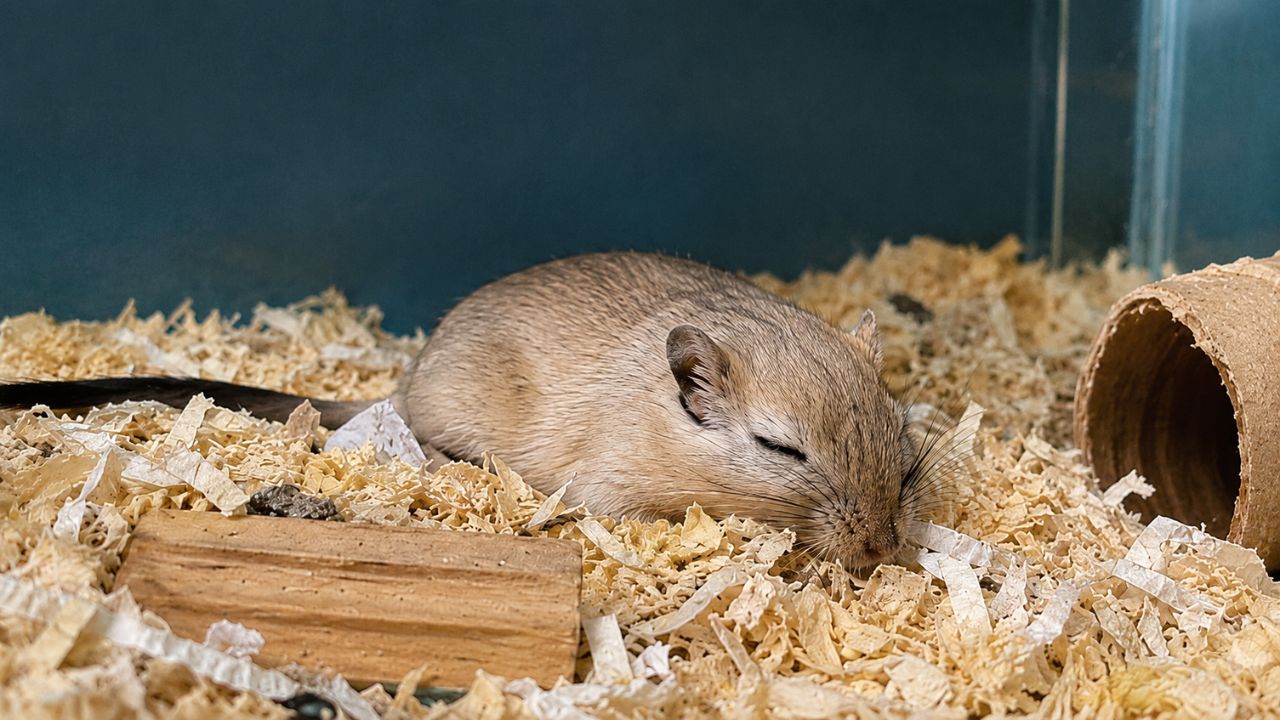

Neil has kept, bred, and sold gerbils at Paradise Pets Swindon since 1988 — over 35 years of watching owners panic, misread their animals, and occasionally do exactly the right thing at exactly the right time. A gerbil that is not moving is one of the most frightening things a new owner encounters. This is his complete, honest guide to what is actually happening — and what to do about it.
A man came in a couple of years ago, white as a sheet. He had found his daughter’s gerbil lying completely still at the bottom of the cage that morning. Not responding. Barely breathing, as far as he could tell. He had come straight to us before calling a vet because he did not know if it was even still alive.
I asked him one question: had it been cold in the house overnight?
He thought about it. Yes — the heating had gone off early the night before and it had been a chilly night. Maybe five or six degrees in the room.
I told him to go home, warm the room up gently, and hold the gerbil carefully in his cupped hands for ten minutes. He looked at me as though I had suggested something completely mad. I gave him my number and told him to call me in twenty minutes.
He called me in fifteen. The gerbil was running around the cage eating sunflower seeds.
That is the reality of gerbils and the “not moving” problem. Sometimes it is something serious. Sometimes it is something easily fixed if you know what you are looking for. And sometimes — not often, but sometimes — there is nothing to be done. The job is knowing which situation you are in, and knowing it quickly.
Start Here — The First Thing to Do Before You Assume Anything
Before you panic, before you call a vet, before you do anything else — check the room temperature.
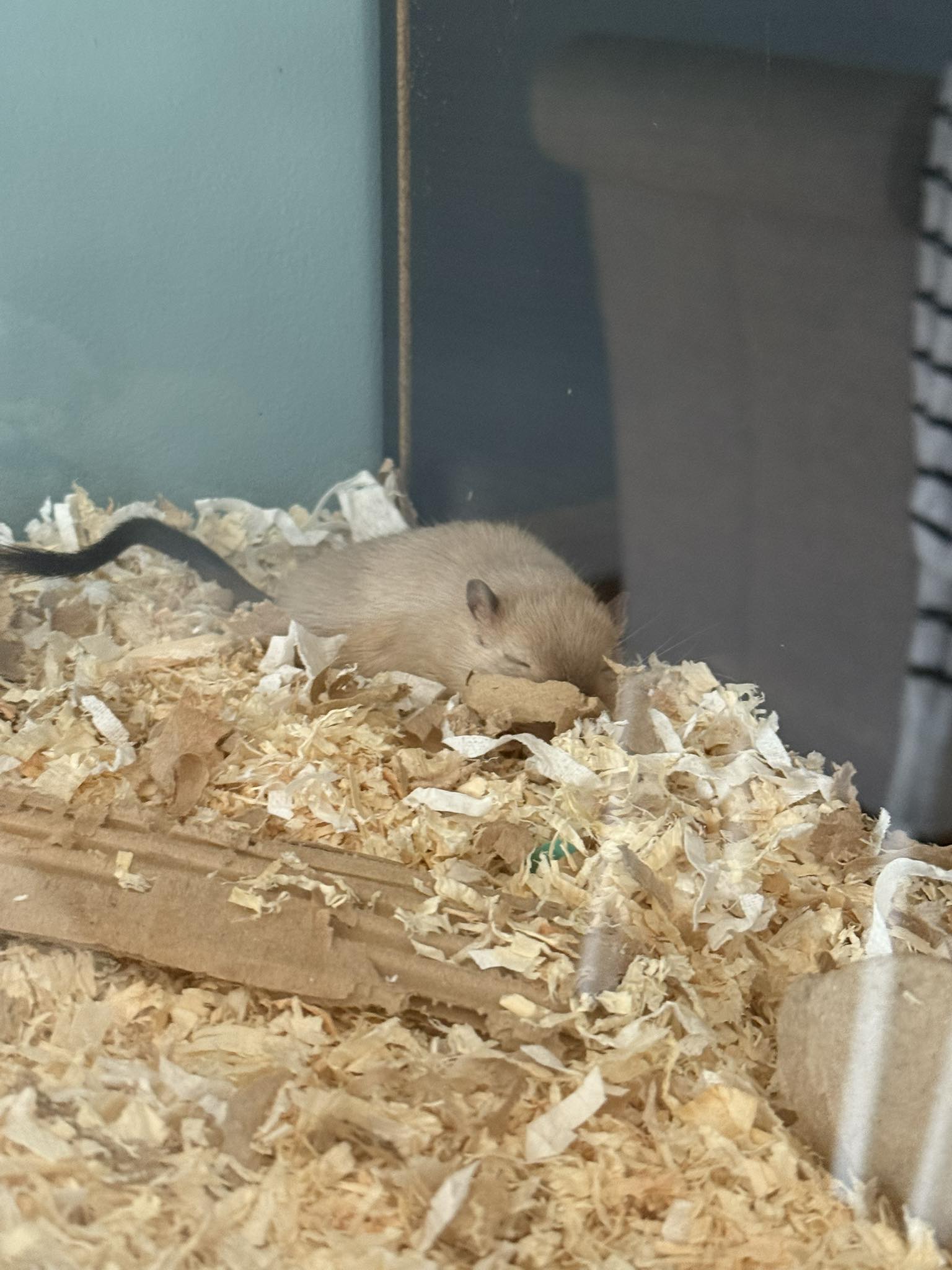
Gerbils can enter a state called torpor when exposed to cold temperatures, particularly when the temperature drops suddenly or overnight. Torpor is not true hibernation — gerbils are not hibernating animals — but it is a similar emergency physiological response. The gerbil’s body slows right down. Breathing becomes shallow and almost imperceptible. The body feels cool to the touch. The animal is completely unresponsive. To an owner who does not know what they are looking at, a gerbil in torpor looks exactly like a gerbil that has died.
It has not died. It is in a state of metabolic slowdown, and with gentle, gradual warming it will usually recover fully.
The temperatures that trigger torpor in gerbils are lower than most people expect — typically below 10°C, and sometimes as low as 15°C in animals that are already stressed, underweight, or unwell. A cold room, a draught from an open window overnight, a cage placed on a stone floor in winter — any of these can be enough.
- Has the temperature dropped overnight or recently? Cold is the single most common cause of a motionless gerbil in the UK.
- Is the gerbil cool to the touch but not rigid? A gerbil in torpor feels cold but the body is still flexible.
- Is the breathing very shallow but present? Hold the gerbil close and watch carefully — the chest may be barely moving.
- Did the gerbil eat and behave normally yesterday? A sudden change is more likely torpor or shock. A gradual decline points to illness.
How to Warm a Gerbil in Torpor — Do It Slowly
If you believe your gerbil is in torpor, the method of warming matters enormously. Do not put the gerbil next to a radiator. Do not use a heat lamp. Do not place it on a hot water bottle. Rapid rewarming can send a gerbil into shock and make the situation worse.
The right method is simple: hold the gerbil gently in your cupped, warm hands. Your body heat is the right temperature. Sit quietly for ten to fifteen minutes. You may feel the gerbil begin to twitch, then shift, then gradually become more alert. Some gerbils come around quite quickly. Others take twenty minutes or more. Be patient, be still, and do not jostle the animal.
If after twenty minutes of careful hand-warming there is no change at all — no twitching, no response, no increase in breathing — you are dealing with something other than straightforward torpor, and a vet call is needed.
Once the gerbil has recovered and is moving normally, put it back in its cage with food and water within easy reach, make sure the room is warm enough, and watch it for the next few hours. A gerbil that comes around from torpor and eats, drinks, and grooms normally is almost certainly fine. One that recovers but then becomes still again, or does not eat, needs veterinary assessment.
Other Reasons a Gerbil Might Stop Moving
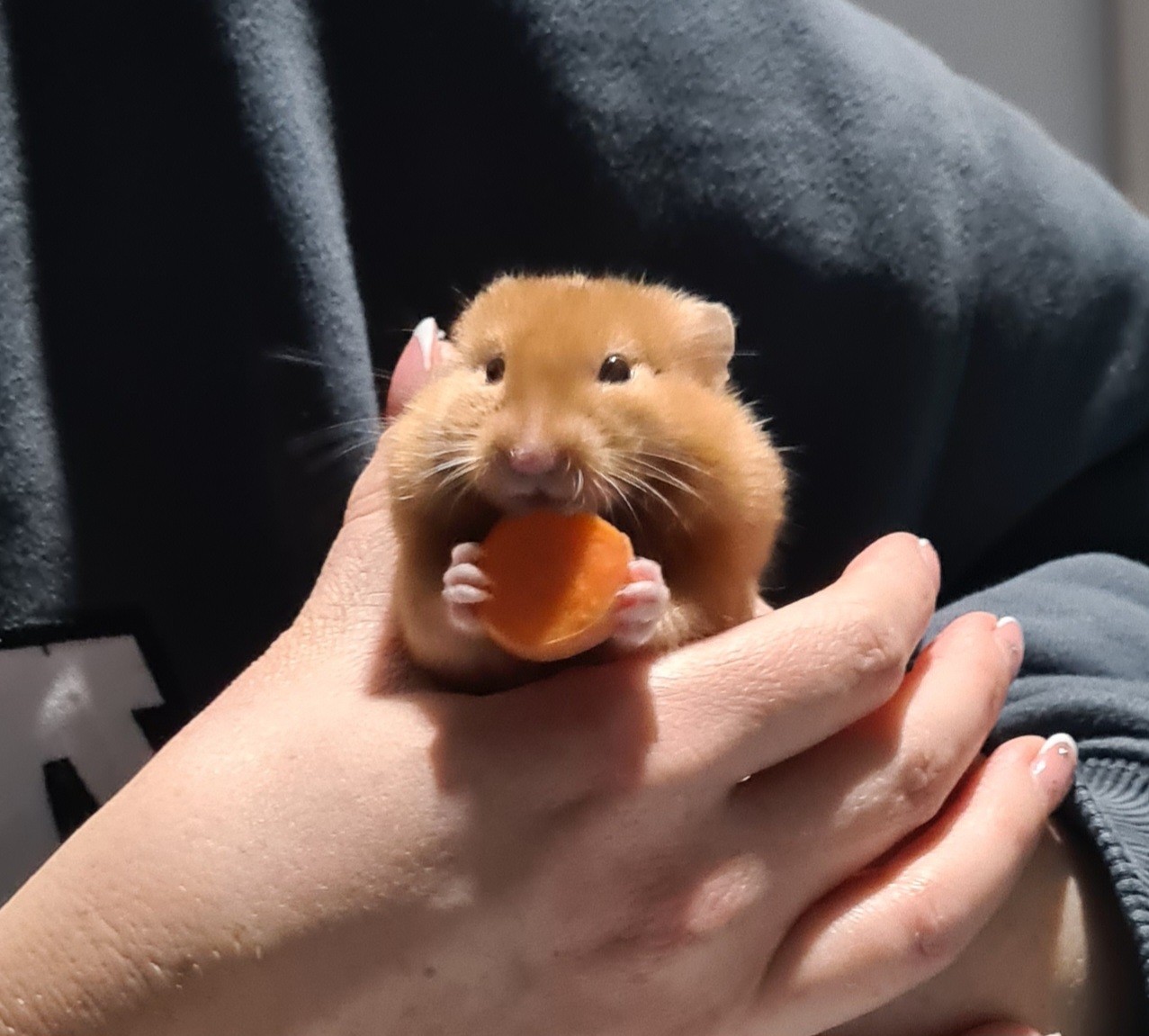
Torpor is the most common cause of a completely motionless gerbil, but it is not the only one. Here are the other situations you may be dealing with.
Deep Sleep — More Common Than Owners Realise
Gerbils sleep deeply. Unlike hamsters, which are strictly nocturnal, gerbils have a polyphasic sleep pattern — they nap in short bursts throughout a 24-hour period. This means they can be found fast asleep at almost any time of day or night, and when they are in a deep sleep they can be surprisingly unresponsive.
A gerbil that is simply sleeping will usually wake up within a few seconds if you tap gently on the side of the cage or rustle something near the entrance to its burrow. It will be warm to the touch and its breathing will be clearly visible. This is not a cause for concern — it is a healthy gerbil doing what gerbils do.
Shock or Fright Response
Gerbils have a strong freeze response to sudden fear. A loud noise, the appearance of a predator animal nearby — a cat, a dog, even a large bird outside the window — or being handled roughly can cause a gerbil to freeze completely. This can last from a few seconds to several minutes and looks, to an inexperienced owner, alarming.
A gerbil in a fright freeze will be stiff, alert, with eyes wide open, and will be holding itself rigid rather than limp. This is different from torpor, where the body is relaxed and unresponsive, and different from illness, where the animal is usually hunched and lethargic rather than rigid.
Remove whatever caused the fright if you can, give the gerbil quiet and space, and it should return to normal behaviour within minutes. If the cage is in a location where it is regularly exposed to other pets or sudden loud noises, that is worth addressing — chronic stress in gerbils is a real welfare problem.
Illness — The Signs That Distinguish It from Torpor
A gerbil that is not moving due to illness usually looks different from one in torpor. The key differences are these:
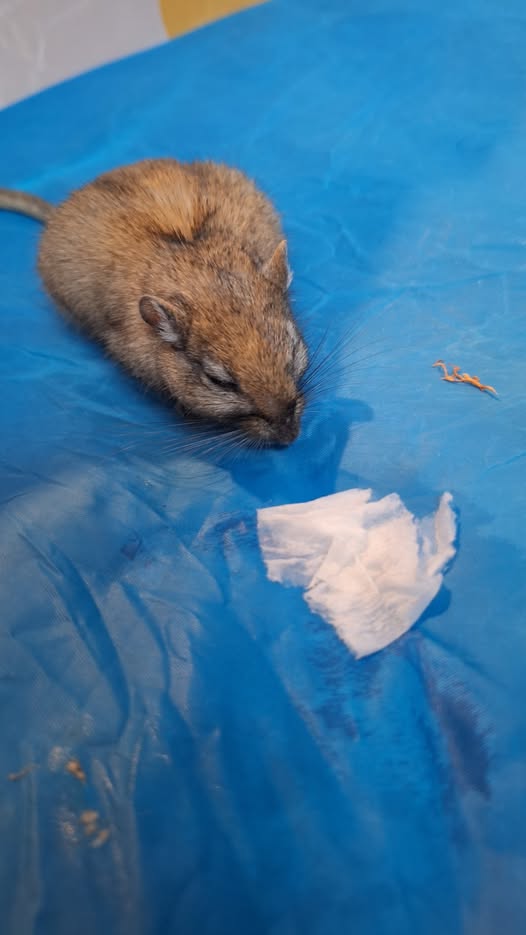
A sick gerbil is typically still warm — its body temperature has not dropped. It may be hunched rather than lying flat. Its coat may look dull, ruffled, or unkempt. Its eyes may be half-closed or have discharge around them. It may be sitting in an unusual position or in an unusual part of the cage rather than in its normal sleeping area. It may not have touched its food.
Torpor gerbils are cold, flat, and completely unresponsive. Sick gerbils are warm, listless, and may still react to touch even if they do not want to move.
Common illnesses that cause lethargy and reduced movement in gerbils include respiratory infections, Tyzzer’s disease — a bacterial infection that can progress very rapidly — tumours, and dental problems. Older gerbils, particularly those over two years, are more prone to tumours and age-related slowing down that is normal but should still be monitored.
- The gerbil is warm but unresponsive or barely responsive — this is not torpor, this is illness or injury
- Clicking, rattling, or wheezing sounds when breathing — respiratory infection, can deteriorate very quickly
- Wet fur around the tail area — wet tail is an emergency in any small animal
- Visible swelling, wound, or abnormal posture — injury or tumour, needs assessment
- Not eating or drinking for more than 24 hours — a small animal that stops eating deteriorates fast
- Discharge from the nose or eyes — sign of infection
- Seizure or twitching — neurological episode, needs immediate attention
Epileptic Seizures in Gerbils — Something Every Owner Should Know About
This is worth a section of its own because it genuinely catches owners off guard, and because the wrong response can make a difficult situation worse.
Gerbils have a relatively high rate of epilepsy compared to other small animals. Estimates suggest that up to 20–30% of gerbils carry a genetic predisposition to seizures. A gerbil having a seizure may appear to freeze, then begin twitching or convulsing, then lie still and unresponsive for a period before gradually recovering. The whole episode may last anywhere from a few seconds to a couple of minutes.
If you witness what looks like a seizure, do not pick the gerbil up during the episode. Do not try to restrain it. Move anything hard or sharp away from it so it cannot injure itself, and let the episode run its course. Gerbils usually recover from seizures without lasting harm.
Occasional mild seizures — sometimes called hypnotic or trance-like episodes — are not always a welfare concern, particularly if they are brief, infrequent, and the gerbil recovers normally and behaves normally in between. More frequent, severe, or prolonged seizures, or seizures that seem to be increasing in frequency, are worth a vet visit.
What triggers seizures? Stress, sudden changes in environment, loud noises, and handling in a nervous gerbil can all trigger episodes in susceptible animals. The more settled and secure the gerbil’s environment, the less frequently seizure-prone animals tend to fit.
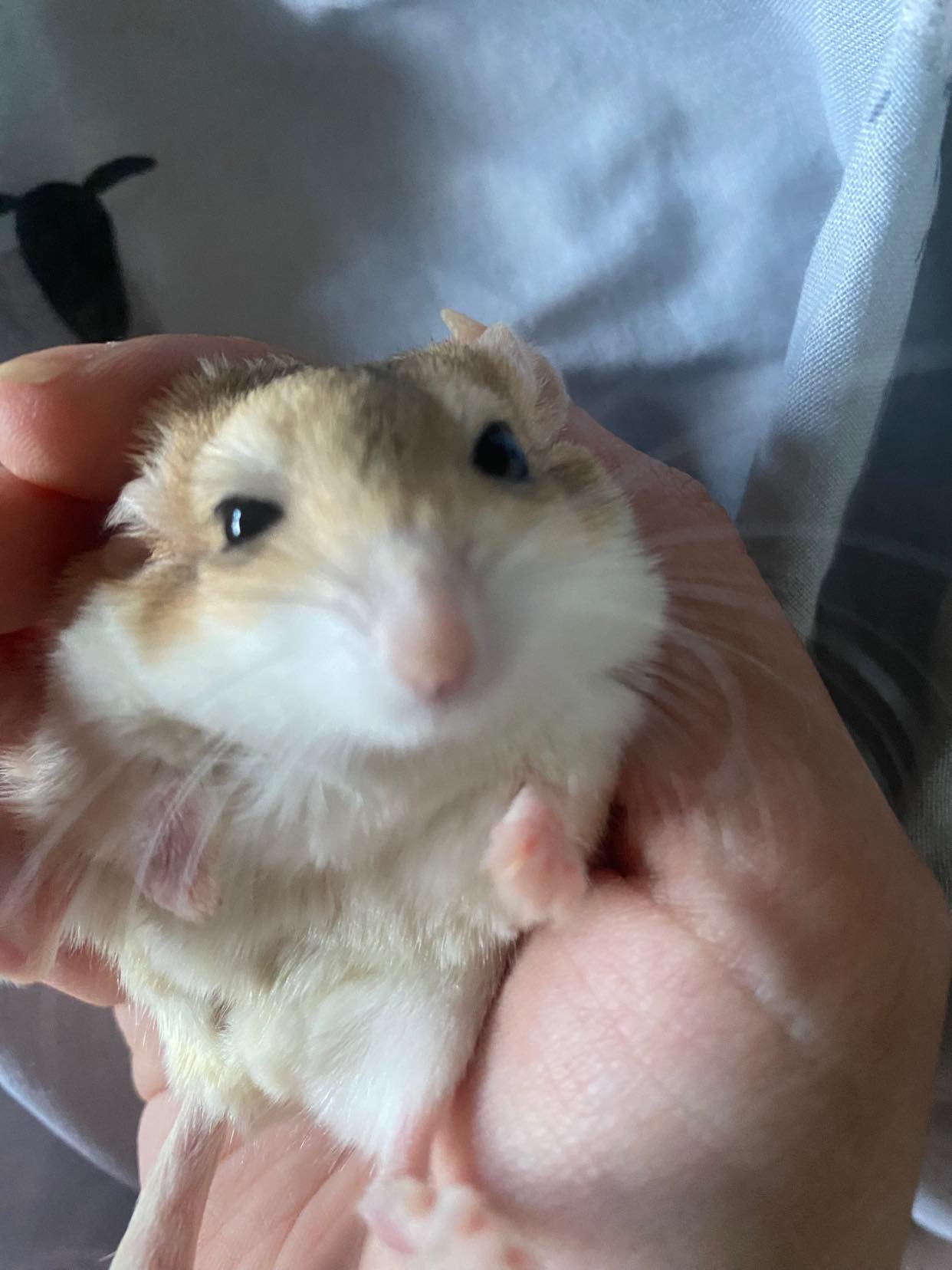
How to Tell If a Gerbil Has Died
I will not dance around this. Sometimes the answer to “why is my gerbil not moving” is the hardest one, and owners deserve a clear, honest answer rather than having to search through vague information at a distressing moment.
A gerbil that has died will be completely still, not breathing, and will feel cold and stiff to the touch. Rigour — the stiffening of the body after death — sets in relatively quickly in small animals, usually within a couple of hours. The eyes will typically be open. There will be no response whatsoever to handling, sound, or warmth.
Compare this to torpor: a gerbil in torpor is cold but usually still flexible, breathing is still present though very shallow, and gentle warmth will usually produce a response within fifteen to twenty minutes.
If you have warmed a cold, unresponsive gerbil gently for twenty minutes and there has been absolutely no response — no twitch, no change in breathing, no shift in the body — I am sorry to say that the animal has most likely passed.
If you have a second gerbil in the cage, remove the deceased animal promptly but do not be in too much of a hurry with the surviving gerbil. A gerbil that has lost its cage mate will often become withdrawn, less active, and lethargic itself in the days following the loss. This is normal grief behaviour and is not necessarily a sign of physical illness — though it does need to be managed carefully, because a lone gerbil that remains alone for a long period can develop health problems as a result of the isolation and stress.
Come and speak to us if you lose one of a pair. Introducing a new companion to an adult gerbil is not straightforward, but it is possible, and it is almost always better for the surviving animal than leaving it alone.
The Position of the Cage Matters More Than Most Owners Think
I have seen several cases over the years where the root cause of a gerbil regularly entering torpor, or regularly seeming lethargic and unwell, has turned out to be where the cage was positioned in the house.
Gerbils should be kept at a stable temperature between 18°C and 24°C. Not on the floor, which is colder than the room temperature. Not near a window, where temperature fluctuates and cold draughts are possible. Not in a conservatory or garage, where overnight temperatures in a UK winter can drop well below what is safe for them. Not directly next to a radiator, which creates excessive heat when on and cold when off.
A stable temperature environment, away from draughts and extremes, prevents torpor and reduces stress. The number of “my gerbil won’t move” situations I have seen that had nothing to do with illness and everything to do with a cold bedroom or a conservatory cage would surprise you.
Quick Reference — Why Your Gerbil Is Not Moving
| What You’re Seeing | Most Likely Cause | What To Do |
|---|---|---|
| Cold, limp, barely breathing, unresponsive | Torpor — temperature drop | Warm gently in cupped hands for 10–20 mins. If no response, call a vet. |
| Warm, unresponsive, not breathing | Possible illness or injury | Same-day vet. Do not wait. |
| Warm, breathing, eyes half-closed, hunched | Illness — infection, Tyzzer’s, dental | Same-day vet. Small animals decline quickly. |
| Rigid, staring, then twitching, then recovering | Epileptic seizure | Do not restrain. Let it pass. Monitor frequency — vet if increasing. |
| Stiff, wide-eyed, freezing but alert | Fear response | Remove fright source. Give quiet and space. Should resolve in minutes. |
| Lying flat, clearly breathing, warm | Deep sleep | Tap the cage gently. Should stir within seconds. Nothing to worry about. |
| Cold, stiff, rigid, absolutely no response to warmth | Deceased | Remove from cage. Speak to us about the surviving gerbil. |
The Rule I Give Every Gerbil Owner
If your gerbil is not moving and you are not certain why — check the temperature first. That resolves more cases than anything else.
If the temperature is fine and the gerbil is still not moving normally, do not adopt a wait-and-see approach. Gerbils are small animals with limited reserves. A gerbil that is genuinely ill in the morning and left untreated can be in serious difficulty by the evening. The window is short.
Call a vet, describe what you are seeing, and let a professional make the decision about whether a visit is necessary. Most vets who see small animals regularly — and there are good ones in this area — would rather take a two-minute call than see an animal that has been left too long.
I have been at this counter since 1988. The owners whose animals do best are the ones who act early, not the ones who wait and hope. I know it feels like you might be overreacting. You are not overreacting. Act early.
Frequently Asked Questions
My gerbil is not moving but is breathing — what should I do?
Check the room temperature immediately. If it has been cold, the gerbil may be in torpor — warm it slowly and gently in your cupped hands for fifteen to twenty minutes. If the temperature is normal and the gerbil is warm to the touch but not moving, this is more likely illness, and a same-day vet call is the right course of action. Do not leave it until tomorrow.
How do I know if my gerbil is in torpor or has died?
A gerbil in torpor will be cold and unresponsive but still flexible — the body will not be stiff. Breathing will be present, though very shallow. Gentle, gradual warming in your hands should produce a response within fifteen to twenty minutes. A gerbil that has died will be cold, completely stiff, not breathing, and will not respond to warmth at all. If you have warmed a gerbil for twenty minutes with no response, I am sorry to say it has most likely passed.
My gerbil keeps having episodes where it freezes and twitches — is this serious?
This sounds like epileptic seizures, which are more common in gerbils than most owners realise — up to a third of all gerbils carry some genetic predisposition to them. Brief, infrequent episodes that the gerbil recovers from normally are not always a welfare emergency, but they should be mentioned to your vet. If the episodes are becoming more frequent, longer, or more severe, that needs prompt veterinary assessment.
Can a gerbil die from cold overnight?
Yes. If a gerbil enters torpor and is not warmed and remains in a cold environment, it can die. Torpor is a stress response, not a safe state. A gerbil in torpor needs to be warmed and monitored, and the cage position needs to be reviewed so it does not happen again. Gerbils should be kept between 18°C and 24°C in a stable environment away from draughts and cold floors.
My gerbil is moving slowly and seems less active than usual — should I be worried?
Yes — take gradual lethargy seriously, particularly if it is accompanied by any change in coat condition, eating, or weight. A gerbil that is less active than normal is telling you something. It may be the early stage of an illness, a dental problem making eating painful, or in an older gerbil, a developing tumour. Get it seen rather than waiting to see if it improves.
My gerbil’s cage mate died — now the surviving gerbil is barely moving. Is it grieving?
Gerbils form strong social bonds and the loss of a cage mate genuinely affects them. A surviving gerbil may be less active, less interested in food, and spend more time sleeping in the days after losing its companion — this is real behavioural grief and is not unusual. However, watch carefully: prolonged lethargy, not eating, or weight loss in a bereaved gerbil can quickly become a physical health problem driven by isolation and stress. Come and speak to us about carefully introducing a new companion — it is the most effective long-term solution.
Where can I get gerbils in Swindon?
We keep Mongolian gerbils at Paradise Pets — all from UK breeders, always in pairs or available to be matched to a lone gerbil where appropriate. We are at Manor Garden Centre, Cheney Manor, Swindon SN2 2QJ, or call us on 01793 512400. Happy to answer questions before you visit.
Not Sure What’s Wrong With Your Gerbil? Come and Talk to Us
If your gerbil is not moving and you are not sure what you are dealing with — come in. Bring a short video on your phone if you can. I will give you my honest assessment from 35 years of keeping and selling these animals. And if I think it needs a vet, I will tell you so directly.
⭐ Customer Reviews
Amazing Bird Selection
Had a lovley visit today,staff were very friendly and very helpful,such a great petshop,their selection of birds is incredible,really impressed,thank so much to the staff at Paradise Pets

Friendly Helpful Staff
I have been coming to this place for years and they have a great stock of food for all types of pets. Have a great selection of small mammals and a lot of birds. Staff are friendly and helpful.

Great Quality Hutch
Bought a guinea pigs hutch and run combo, very happy with the service, the hutch was put in my car for me without even asking for help. The wood quality is very good, the instructions easy to follow and we are extremely happy with the fully built hutch. A good size for 2 guinea pigs

Response from Paradise Pets | Wiltshire
Thank you Melanie Latus Nice to provide services to you.
Best Bird Shop Around
It’s the best pet shop in and around Swindon. They always have an amazing selection of birds and all you need to keep them happy. I keep birds myself and the guys there are happy to answer questions and really know their stuff. I have seen budgies etc. in chain pet shops in the area looking really unhealthy and ill – I wouldn’t go anywhere else than Paradise Pets for animals.

Highly Recommended Bird Shop
I could not praise this shop enough. Really helped my Grandson buy his first bird and he’s loving it. Travelled from Somerset and was welcomed with open arms.

Great Shop with Competitive Prices
Great shop with amazing selection for small animals, hamsters, mice ect, highly recommend!
Also has a great selection for dogs & cats too & very competitive prices! 💖

