
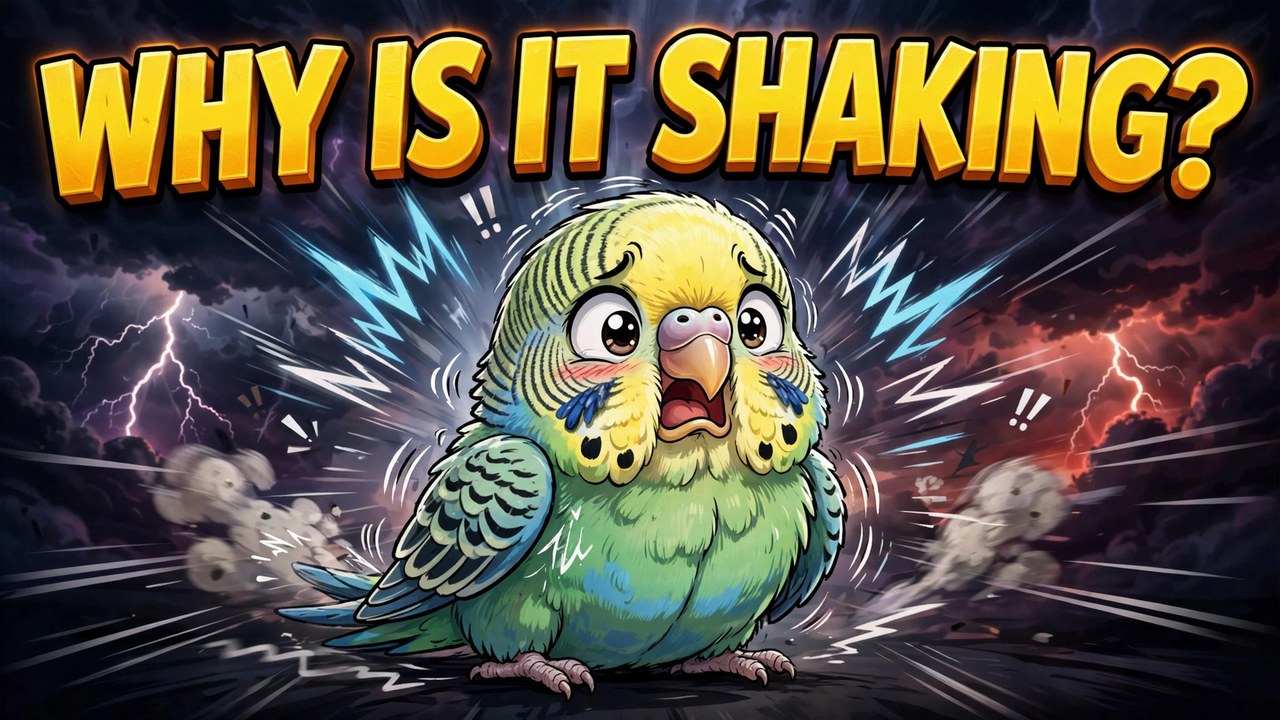

You’re watching your budgie when suddenly it starts trembling — tiny rapid vibrations running through its body. Your stomach drops. Is it sick? Scared? Dying?
Take a breath. Shaking in budgies is one of the most misread behaviors in pet bird ownership. Sometimes it’s an emergency — but most of the time, it’s completely normal. The trick is knowing which one you’re looking at. Here are the 5 real explanations, from harmless to serious, and exactly how to tell them apart.
5 Reasons Your Budgie Shakes or Vibrates
1. It’s Cold — Shivering to Stay Warm
This is the most common and most innocent cause. Like humans, budgies shiver to generate body heat through rapid muscle contractions. A chilly budgie will typically fluff its feathers up at the same time — trapping warm air against its body — and may tuck its beak or sit on both feet instead of one.
Budgies are comfortable roughly between 18–27°C (65–80°F). Below that, especially with drafts, shivering kicks in. Check for: cage near a window, air conditioner blowing directly on it, or sudden evening temperature drops. The fix is simple — move the cage away from drafts, cover part of it at night, and keep the room stable. If the shaking stops once warm, you’ve found your answer.
2. It’s Frightened or Stressed
A trembling budgie in a new home is almost always a scared budgie. Fear-shaking looks different from cold-shivering: the feathers stay sleeked tight against the body (making the bird look thin), the eyes are wide, and the bird may freeze or press itself into a cage corner.
Common triggers include: a new environment, unfamiliar people or pets (especially cats), loud sudden noises, fast hand movements, or being chased and grabbed. This is a prey animal’s alarm response — adrenaline flooding a tiny body.
What to do: reduce the threat, don’t add to it. Speak softly, move slowly, dim harsh lights, and give the bird space. Never try to “comfort” a terrified budgie by grabbing it — that confirms its worst fears. Most new-bird shaking fades within days as the environment becomes predictable.
3. It’s Excited or Happy — Yes, Really
Here’s the one nobody expects: some budgies vibrate with excitement. It usually happens around things they love — their favorite person arriving, a beloved toy, or the first millet spray of the day. The vibration is brief, the bird’s body language is open and engaged (leaning forward, eyes bright, possibly chattering), and it stops as quickly as it started.
Males in breeding condition also do a distinctive rapid wing-shiver as part of courtship display. If your bird shakes for a few seconds while bobbing its head at you or a toy, then goes back to normal — congratulations, that’s joy, not illness.
4. It’s Sick — The One You Must Not Miss
This is the serious one, and learning to recognize it can save your bird’s life. Sickness-related shaking comes with a cluster of warning signs that fear or cold don’t produce:
- Shaking plus constant fluffing, even in a warm room
- Sitting on the cage floor instead of perching
- Eyes half-closed, lethargic, uninterested in food or interaction
- Discharge around eyes or nostrils, tail bobbing with each breath
- Changes in droppings — color, consistency or volume
Birds hide illness instinctively (in the wild, showing weakness attracts predators), so by the time shaking is visible alongside these signs, the bird has likely been unwell for a while. Don’t wait and watch. An avian vet visit is urgent — birds deteriorate far faster than mammals, and “wait until tomorrow” is how emergencies happen.
5. It’s a Courtship or Hormonal Display
During breeding season, male budgies perform an elaborate shaking ritual: rapid head-bobbing combined with a fine body vibration, often directed at a mate, a mirror, or even a favorite toy. Females may respond with their own subtler version.
You’ll recognize this one by context — it happens around a “chosen object,” the bird is otherwise healthy and energetic, and the behavior is rhythmic and deliberate rather than panicky. It’s normal hormonal behavior. If it becomes obsessive (constant regurgitation, aggression, chronic egg-laying in females), reducing daylight hours to 10–12 and removing nest-like spaces helps calm hormones down.
Quick Diagnosis: Which Shaking Is It?
| What You See | Likely Cause | What To Do |
|---|---|---|
| Shaking + fluffed up, room feels cool | Cold | Warm the room, block drafts |
| Shaking + sleek feathers, wide eyes, frozen | Fear/stress | Remove the threat, give space |
| Brief vibration + bright, chatty, engaged | Excitement | Nothing — enjoy it |
| Shaking + lethargy, floor-sitting, discharge | Illness | Avian vet, urgently |
| Rhythmic shake + head-bobbing at mate/toy | Courtship | Normal; manage hormones if excessive |
When Shaking Is an Emergency
Call an avian vet immediately if shaking is accompanied by: inability to perch, seizures or loss of balance, labored breathing, bleeding, or sudden collapse. Keep the bird warm (around 27–29°C), dim and quiet while you arrange care — warmth buys critical time for a sick bird.
Frequently Asked Questions
Why does my new budgie shake in its cage?
Almost certainly fear and adjustment stress. New surroundings, new sounds, new giant creatures — it’s overwhelming. Keep the environment calm and predictable, don’t force interaction for the first few days, and the shaking typically stops within a week as the bird learns it’s safe.
My budgie vibrates when I talk to it. Is that bad?
Usually the opposite — brief vibration paired with leaning toward you, bright eyes and chattering is excitement and engagement. Your bird is happy you’re there.
Can budgies have seizures?
Yes, though it’s uncommon. True seizures look distinctly different from shivering — loss of coordination, falling off the perch, rigid spasms. Causes range from toxins and infections to nutritional deficiencies. Any suspected seizure warrants an immediate vet visit.
Why does my budgie shake after a bath?
Wet feathers can’t insulate, so the bird shivers while drying — completely normal. Make sure baths happen in a warm room with no drafts, ideally in the morning so the bird dries fully before night. Never use a hair dryer on high heat.
Is shaking related to night frights?
Often, yes. After a night fright — that sudden panicked thrashing budgies are prone to — birds commonly tremble for several minutes from the adrenaline surge. A dim night light greatly reduces the chances of one happening, though it won’t prevent every episode; after one happens, just speak softly and let the bird calm down on its own.
Note: This guide helps you interpret behavior, not diagnose disease. When in doubt — especially with lethargy, appetite loss or breathing changes — see an avian veterinarian promptly. Birds hide illness, so early action matters.
