
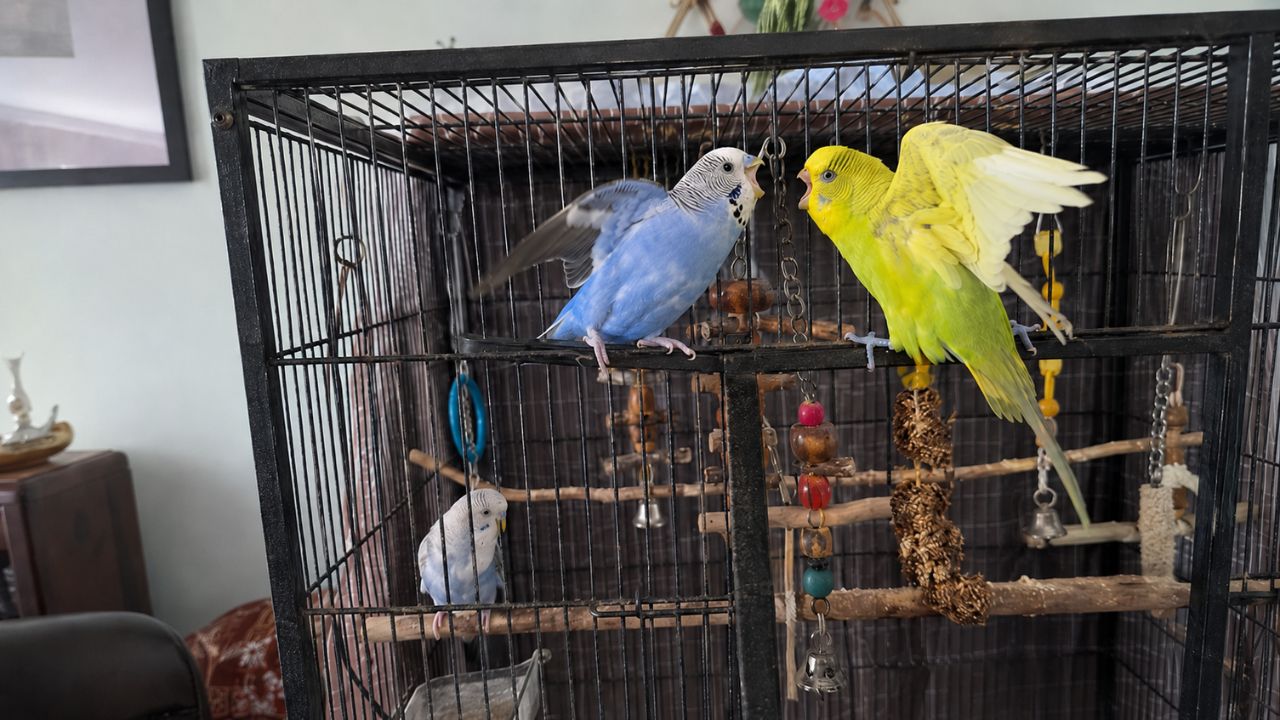

Neil has kept, bred, and sold budgies at Paradise Pets Swindon since 1988 — over 35 years of first-hand experience with these birds. In that time, he has helped hundreds of UK owners through one of the most worrying things to witness — one budgie suddenly attacking another in the same cage. This is his honest, practical guide on what budgie-on-budgie aggression actually means, why it happens, and exactly what to do before serious injury occurs.
A young couple walked into the shop one Saturday morning, clearly upset. “Neil,” the husband said, “we have had Bonnie and Clyde for about a year. They were the best of friends — preening each other, sleeping side by side, the lot. But this week Clyde has started attacking Bonnie. Properly going for her. She’s already missing some feathers from her head. What do we do?”
I asked them to sit down for a few minutes and tell me the full picture — when did it start, what changed recently, was either bird unwell, had they moved house, was it spring. By the time they had finished, I had a strong idea of what was going on. Clyde had gone into spring hormonal condition. Bonnie had not. He was trying to court her in increasingly aggressive ways, and she was paying the price. Two days later, after separating them temporarily and rearranging the cage setup, peace had returned to the household. By the following spring, with proper management, they avoided the same problem entirely.
The honest truth is this — budgies attacking each other in the same cage is one of the most distressing things UK owners can witness, and one of the most preventable. After 35 years of selling and breeding these birds, I can tell you the cause is almost always identifiable, and most cases can be resolved without anyone getting seriously hurt.
But the difference between “this will pass with some changes” and “one of these birds is going to die if you do not act today” is often subtle. Owners who recognise the warning signs early usually save both birds and the relationship. Owners who wait and hope it will sort itself out often end up with one injured bird, one stressed bird, and a much harder problem to fix.
This article is the conversation I have at the counter with worried owners watching their bonded pair turn on each other. By the end of it, you will know exactly why it happens, the difference between normal squabbling and serious aggression, what to do in the immediate term, and how to prevent it happening again.
First — The Difference Between Squabbling And Real Aggression
Before we go into causes, you need to understand the difference between normal budgie interactions and genuine aggression. Bonded budgies bicker constantly — it is part of how they communicate, and most “fights” UK owners worry about are nothing more than normal social friction.
Normal budgie interactions include:
- Beak fencing — birds tapping or pushing beaks together briefly
- Brief perch disputes — one bird moving the other off a favourite spot
- Soft pecks during preening — gentle corrections during mutual grooming
- Food bowl pushing — minor territorial behaviour at feeding time
- Occasional loud chattering arguments — sounds dramatic but resolves quickly
- Brief chasing — usually playful or assertive but not damaging
- Wing flicking displays — communication, not threat
None of these are problems. They are how budgies establish their social order and communicate with each other. A bonded pair that never disagrees does not really exist — and trying to stop normal social friction will only stress both birds.
Real aggression looks different. The warning signs that genuine attacks have begun are:
- Pinning the other bird down — one budgie holding the other on the floor or perch
- Biting hard enough to draw blood — feathers in beak, visible wounds
- Targeting feet, toes, or beak — these injuries can be life-threatening
- Repeated, sustained attacks — not a brief skirmish but persistent harassment
- One bird hiding constantly — refusing to come down to food or water
- Plucked feathers around the head and neck — particularly bald patches
- The victim bird losing weight or going quiet
- Blood visible on either bird or in the cage
If you see any of these signs, you are no longer dealing with normal squabbling. You are dealing with real aggression that needs immediate intervention — not in a few days, today.

The 8 Real Reasons One Budgie Attacks Another
After 35 years of watching pairs and groups of budgies, I can tell you the causes of cage-mate aggression are not random. The cause is almost always one of these eight situations — and identifying which it is, is the key to fixing it.
1. Hormonal Aggression (Spring Especially)
This is by far the most common cause of sudden aggression between budgies that have previously got on well. As daylight hours increase in spring, both males and females experience hormonal changes that affect behaviour. A male in breeding condition may pursue his cage-mate persistently — and if she is not ready or willing, things can turn aggressive quickly.
Signs of hormonal aggression:
- Started suddenly in spring or early summer
- Increased mating behaviour — regurgitating, mounting attempts, intense vocalising
- Cere colour changes — male’s cere very vivid blue, female’s becoming crusty
- Nesting behaviours — paper shredding, seeking dark corners
- The aggressor is constantly chasing or pestering the other bird
- One bird, often the female, looking exhausted and defensive
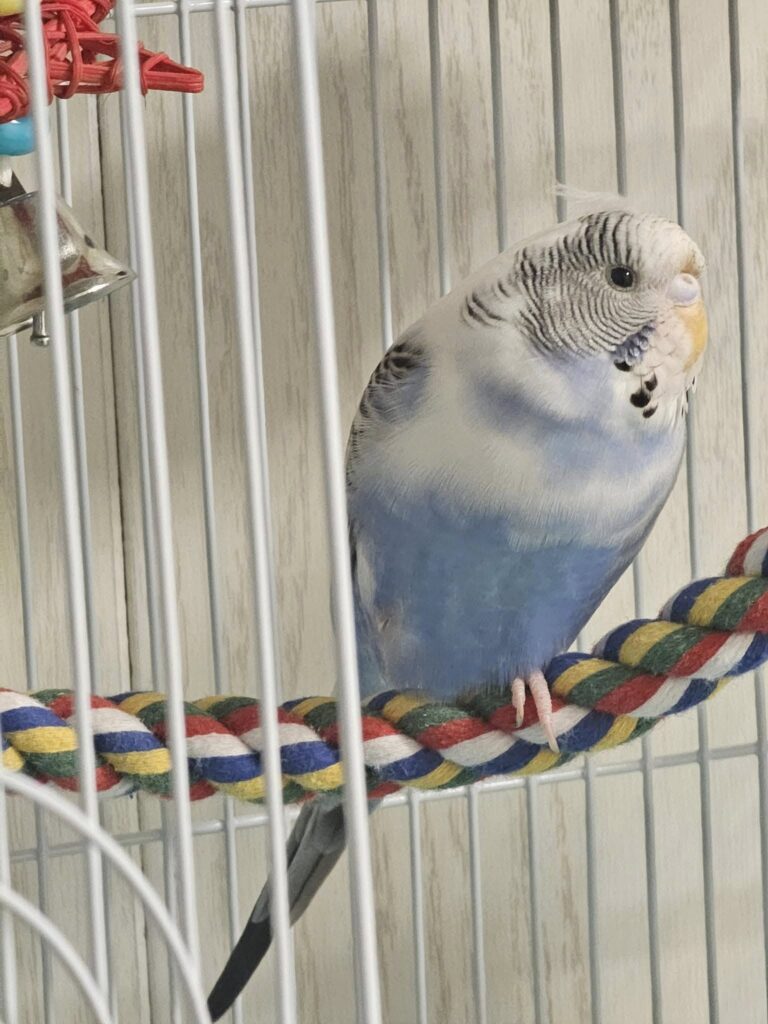
What to do: reduce daylight hours, remove anything that triggers nesting (paper, dark corners, nest-like spots), separate temporarily if injury risk is real, and wait for the hormonal phase to pass. Most cases resolve within 2-4 weeks of intervention.
2. Female-On-Female Aggression
Two female budgies in the same cage is genuinely the highest-risk combination, and it is the combination I most often try to talk UK owners out of when they buy two birds. Females are naturally more territorial than males, and two females in confined space can develop serious conflict, particularly during hormonal phases.
Signs:
- Two females living together
- Aggression intensifies in spring or when one starts showing breeding behaviour
- Both birds may be aggressors — not just one dominant bird
- Territorial disputes around food bowls, perches, and favourite spots
- Can escalate to serious injury fast
What to do: female pairs sometimes cannot live together long-term. If aggression is sustained and serious, permanent separation is often the only humane solution. Two males or a properly-introduced mixed pair are far more likely to live peacefully.

3. Mismatched Sizes Or Personalities
Budgies have genuine personality differences — some are bold and pushy, others are gentle and shy. Pairing a dominant bird with a meek one can work beautifully, but it can also turn into one bird relentlessly bullying the other, particularly in a small cage.
Signs:
- One bird is noticeably larger, more confident, or more vocal
- The smaller or quieter bird is constantly displaced from food, water, perches
- The victim is losing weight or showing signs of stress
- The aggressor does not back down when the victim retreats
- No specific seasonal trigger — this is constant background bullying
What to do: a bigger cage, multiple food and water stations, and plenty of perches at different heights can ease pressure. In severe cases, permanent separation may be needed. Sometimes the birds simply are not compatible, no matter what you change.
4. Cage Too Small For Two Birds
A cage that is fine for one budgie can become a battleground for two. Lack of space is one of the most common underlying causes of escalating aggression — birds need room to move away from each other, to claim their own perches, and to feel they have personal territory.
UK minimum recommendations for a pair:
- Cage size minimum: 80cm x 50cm x 50cm — bigger is always better
- Bar spacing under 12mm for safety
- Multiple perches at different heights and thicknesses
- Two food bowls in separate locations
- Two water sources if possible
- Plenty of toys to occupy attention
- Room for both birds to fly short distances inside the cage

What to do: upgrade the cage if it is too small. This single change often resolves aggression dramatically. A pair of budgies in a generous cage with proper layout rarely fight seriously.
5. Resource Competition
Even in an adequate cage, if there is only one food bowl, one water source, or one favourite perch, the birds may compete for these resources to the point of aggression. The dominant bird controls access, the subordinate bird becomes stressed and may eventually be denied basic needs.
Signs:
- Aggression concentrated around food bowls, water, or specific perches
- The victim eats less, drinks less, or appears at food only when the aggressor is elsewhere
- The aggressor is guarding resources actively, not just defending personal space
- Behaviour worsens when food is replenished or treats are offered
What to do: provide multiple food stations, multiple water sources, multiple perches of varied types at different heights. The more options each bird has, the less reason there is to fight over any single one.
6. New Bird Introduction Done Wrong
This is the cause I see most often when UK owners bring a second bird home and put it straight into the existing budgie’s cage. The original bird sees the new arrival as an invader of its territory, and aggression can be immediate and severe.
Signs:
- Aggression started the day a new bird was added
- The original bird is the aggressor — defending its established space
- The new bird is hiding, cowering, or trying to escape
- No prior period of separate housing or supervised meetings
What to do: separate the birds immediately. Quarantine the new bird in a separate cage for at least 30 days for health reasons. Allow visual contact through cage bars for another 2-3 weeks. Only consider housing together after careful supervised meetings, and only in a neutral, freshly cleaned and rearranged cage that neither bird considers “their territory.”
7. Illness In One Bird
Sick budgies are sometimes attacked by their cage-mates. In the wild, a weak bird draws predators to the flock — and budgies’ instincts can drive them to drive away or attack a sick companion, even one they have lived with peacefully for years.
Signs:
- The victim bird looks puffed up, quiet, or off food
- Aggression has started suddenly without seasonal or environmental trigger
- The victim may have been quieter than usual for some days before attacks started
- The aggressor seems to specifically target the weak bird
What to do: separate the birds immediately for the sick bird’s safety. Examine the victim properly — puffed up posture, droppings, breathing, eating. Contact an avian vet today. The aggression is a symptom of an underlying illness in one of the birds, and treating that illness is the real priority.
8. Environmental Stress
Sometimes aggression breaks out not because of anything between the birds, but because of an external stressor that puts both birds on edge. A move, a new pet in the house, building work, fireworks — stress affects budgies, and stressed budgies are more likely to lash out at each other.
Signs:
- Aggression started after a clear environmental event
- Both birds seem more on edge, jumpy, or vocal than usual
- The stress trigger is identifiable in retrospect
- Behaviour may improve once the stressor is removed
What to do: identify and remove or reduce the stressor where possible. Restore calm routines. Give both birds time to settle. Most environmental aggression resolves within a few weeks of removing the underlying cause.
The Warning Signs You Must Act On Today
For UK owners, the most important question is — when is this a problem to manage gradually, and when is it a problem that needs separating today? Here are the warning signs that mean immediate intervention is essential.

- Blood on either bird — actual injuries that have broken skin
- Missing feathers in large patches — particularly on the head, where the victim cannot preen
- Targeted attacks on feet or toes — toe injuries can be life-threatening
- The victim cannot access food or water freely — being kept from basic needs
- The victim is hiding constantly or on the cage floor — late-stage stress sign
- One bird pinning the other down repeatedly — dominance turning to harm
- Aggression has escalated rather than reducing over a few days
- The victim is losing weight or visibly weakening
- You can hear or see attacks at night — particularly dangerous
If any of these apply, do not wait to see if things improve. Separate the birds into different cages today. You can work on reintroduction later, but right now the priority is preventing serious injury or death.
What To Do Right Now — Your First 24 Hours
For UK owners watching their budgies fight right now, here is the practical action plan. Work through these steps in order.
- Assess injury level immediately
Check both birds carefully. Any blood, broken feathers in unusual places, visible wounds, or distress? - Separate immediately if injury is visible
Put each bird in its own cage today. Stress about reintroduction later — safety first. - If no injuries yet, observe for one more hour
Is this passing squabble or sustained attack? Real aggression keeps coming back to the same victim. - Identify the cause from the 8 reasons above
Spring? New bird? Resource issues? Size mismatch? Illness? This determines the fix. - Make immediate environmental changes
Add more food bowls, more perches, reduce light hours if hormonal, remove nest-triggering items. - Check the victim for illness signs
Puffed up, quiet, off food? May need a vet. - Consider cage upgrade if the cage is small
This single change resolves many cases. - Plan reintroduction carefully if you separated
Neutral, rearranged cage. Supervised meetings first. No rush.
For most cases that are not yet at the serious-injury stage, addressing the underlying cause and making environmental changes resolves the aggression within a few weeks. For cases where injuries have occurred, separation is essential and reintroduction is a slow process that may not always work.
How To Reintroduce Separated Budgies Safely
For UK owners who have had to separate their birds, getting them back together safely is a skill. Done well, it usually works. Done badly, it just restarts the aggression.

- Address the underlying cause first
Spring hormones passed? Cage upgraded? Resource issues fixed? Do not reintroduce until the cause is resolved. - House the birds in separate cages with visual contact
Position cages where they can see and hear each other but not reach each other. - Continue this for at least 1-2 weeks
Look for signs of mutual interest — calling to each other, perching close to each other’s cage. - Try supervised out-of-cage meetings
In a neutral room neither bird considers home territory. Stay present throughout. - Watch for genuine bonding signs
Preening through bars, calling softly, no aggression during meetings. - Clean and rearrange the shared cage thoroughly
Move perches, change toy positions. Neither bird should feel territorial about the layout. - Reintroduce in the morning when both are calm
Stay nearby for the first few hours. Watch closely. - Be prepared to separate again if aggression returns
Some pairings cannot live together permanently. Accepting that is sometimes the kindest outcome.
The whole process should take 4-6 weeks minimum. Rushing reintroduction is the single most common mistake I see — owners desperate to put their birds back together too quickly, and the aggression starting all over again.
Preventing Aggression In The First Place
For owners thinking of getting a second budgie, or those whose birds get along now and want to keep it that way, here is the prevention checklist that genuinely works.
- Choose compatible birds carefully — two males generally pair best, mixed pairs work well with proper introduction, two females are highest risk
- Get a properly sized cage from the start — minimum 80cm x 50cm x 50cm for a pair, bigger is better
- Provide multiple resources — two food bowls, two water sources, plenty of perches
- Quarantine new birds properly — 30 days minimum in a separate cage
- Manage spring carefully — reduce light hours, remove nest triggers, watch for hormonal changes
- Watch for early warning signs — chasing, displacement, missing feathers, anything new
- Address conflicts early — minor issues are easier to fix than escalated aggression
- Have a backup plan — be prepared to separate permanently if needed
- Health-check both birds annually — illness can trigger aggression

The owners who prevent aggression are the ones who pay attention early and act on minor signs before they escalate. The owners who wait and hope are the ones who end up in my shop with one injured bird and a difficult choice ahead.
Understanding Why It Happens — A Quick Counter Comparison
Here is the quick reference table I work through with UK owners to identify the cause.
| Sign | Most Likely Cause |
|---|---|
| Started suddenly in spring | Hormonal aggression |
| Two female birds together | Female-female territorial conflict |
| One bird visibly larger or bolder | Personality mismatch / bullying |
| Aggression around food or perches | Resource competition |
| Started when you got a second bird | Improper introduction |
| Victim bird looks puffed up or quiet | Illness in one bird — see a vet |
| Followed a household change or move | Environmental stress |
| Cage feels small for two birds | Space limitation — upgrade cage |
Most cases match one of these patterns clearly. Once you know the cause, the solution becomes much more obvious.
When To Get Professional Help
After 35 years, this is when I tell UK owners to stop trying to fix it themselves and get proper help.
- Either bird has visible injuries — bleeding, missing feathers, swelling
- The victim is showing illness signs alongside being attacked
- You have separated and reintroduction repeatedly fails
- The aggression continues despite addressing obvious causes
- You suspect one bird has a serious health problem
- You are not sure whether to keep trying or accept permanent separation
- The behavioural pattern does not match any of the 8 causes above
A specialist avian vet can help with health-related aggression. An experienced bird keeper — like us at Paradise Pets — can help with behavioural and management issues. Both perspectives are useful and neither is a substitute for the other.
Frequently Asked Questions
Why has my budgie suddenly started attacking my other budgie?
Sudden aggression between previously bonded budgies is almost always triggered by a specific cause — most commonly spring hormones, illness in one bird, an environmental change, or escalating resource competition. Look at what changed in the days or weeks before the attacks started. The trigger is usually identifiable, and addressing it usually resolves the aggression.
Can two female budgies live together?
Yes, but it is the highest-risk pairing. Two females are more likely to develop territorial conflict, particularly during hormonal phases. If you do keep two females together, give them generous cage space, multiple resources, and watch carefully for early signs of aggression. Two males, or a properly-introduced mixed pair, are generally less risky.
Should I separate my budgies if they fight?
Yes, if there is any injury — blood, missing feathers, visible wounds — separate them today. Yes, if the victim cannot access food or water. Yes, if the aggression is escalating rather than reducing. For minor squabbling without injury, you can work on addressing causes while keeping them together, but watch closely.
Will my budgies stop fighting on their own?
Sometimes, but not always. Hormonal aggression usually resolves naturally once the season passes. Stress-related aggression often resolves when the stressor is removed. Personality mismatches and improper introductions rarely resolve without intervention. Waiting and hoping is the most common mistake UK owners make.
Why is my male budgie attacking my female budgie?
Most commonly hormonal — he is trying to court her in increasingly aggressive ways, and she is not interested or ready. Reduce daylight hours, remove nest-triggering items, separate temporarily if needed. Sometimes the female is simply not interested in him and never will be — in which case permanent separation may be the kindest solution.
How long does budgie hormonal aggression last?
Spring hormonal phases typically last 4-8 weeks. Most aggression linked to hormones resolves within this window once you reduce light hours and remove nest triggers. If aggression continues much beyond that, the cause is probably not just hormones — look for other factors.
Where can I get honest budgie advice in Swindon?
Come and see us at Paradise Pets, Manor Garden Centre, Cheney Manor, Swindon SN2 2QJ. Or give us a ring on 01793 512400. Bring both birds if you can — five minutes of watching them interact tells me more than half an hour on the phone. The advice is free and we have been doing this for 35 years.
One Last Thing From Me
“My budgie is attacking my other budgie — what do I do?” is one of the most upsetting calls I get from UK owners. The honest answer, after 35 years of selling and breeding these birds, is — the cause is almost always identifiable, most cases can be resolved with the right intervention, but some pairings simply do not work and accepting that is sometimes the kindest decision.
The young couple with Bonnie and Clyde? They separated the birds for two weeks while spring hormones settled, upgraded to a bigger cage, added a second food bowl, and removed the small paper-shredding toy Clyde had become obsessed with. By April the birds were back together peacefully, and the following spring they were ready — light hours managed, nest triggers gone, both birds healthier. They popped in last summer to show me the photos. Bonnie and Clyde preening each other on a sunny windowsill. Both birds healthy, settled, and clearly bonded.
That is the outcome you want — and the outcome that is genuinely achievable for most UK owners willing to read the situation properly and act on what they see. Budgie aggression is not random and it is rarely hopeless. It is usually a problem you can fix, if you fix it early.
If you are reading this with two budgies fighting at home, please do not panic. Go through the eight causes. Identify which one matches. Make the changes the situation needs. Separate immediately if injury is happening. And if you are local to Swindon and unsure what to do, come and see us. We have helped hundreds of UK owners through exactly this situation, and we are always happy to take a proper look.
Worried About Your Fighting Budgies? Come And See Me
Bring both birds in or give us a ring. Five minutes of watching them interact, plus a few honest questions, usually identifies the cause. Free advice, no obligation. That is how we have done things for 35 years.