
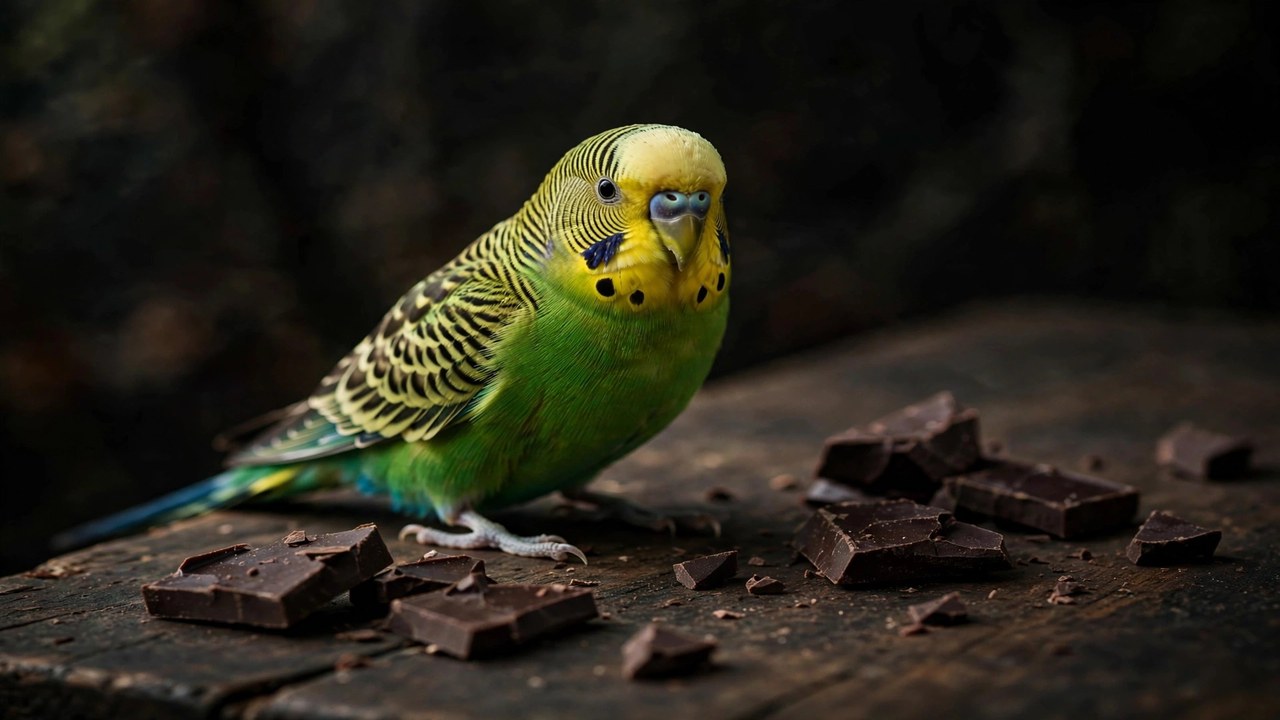

It looks harmless — a tiny crumb of chocolate cake, a lick of ice cream, a dropped M&M. But for a bird, chocolate is one of the most dangerous human foods in your home. Unlike dogs, where most owners at least know the risk, bird owners are often completely unaware — until it’s too late.
Here’s the full science of why chocolate can kill birds, how little it takes, and what to do if your bird eats some.
The Two Poisons Inside Every Bite
Chocolate contains two related stimulant compounds called methylxanthines:
1. Theobromine — The Main Killer
Theobromine is the compound that makes chocolate toxic to most pets. In birds it is rapidly absorbed, and because of their tiny body size and very high metabolic rate, even small amounts trigger severe clinical signs — overstimulation of the heart and nervous system. Symptoms include hyperactivity, rapid heartbeat, muscle tremors, seizures — and at high enough doses, cardiac arrest and death.
2. Caffeine — The Amplifier
Chocolate also contains caffeine, which compounds theobromine’s effects: restlessness, increased heart rate, trembling. Together, the two stimulants hit a bird’s tiny cardiovascular system with devastating force.
Why Birds Are More Vulnerable Than Dogs
- Tiny body weight: A budgie weighs about 30 grams. A dose that’s trivial for a Labrador is enormous — relative to body weight — for a bird.
- Fast metabolism: Birds process compounds quickly, which means toxins hit harder and faster.
- Sensitive hearts: Avian cardiovascular systems are finely tuned for flight; stimulants disrupt them easily.
Not All Chocolate Is Equally Dangerous
| Chocolate Type | Theobromine Level | Danger Level |
|---|---|---|
| Baking/cocoa powder | Highest | Extremely dangerous |
| Dark chocolate | High | Very dangerous |
| Milk chocolate | Moderate | Dangerous |
| White chocolate | Trace amounts | Low, but still avoid |
The darker and more bitter the chocolate, the more theobromine it contains. But no chocolate is safe — even white chocolate brings sugar, fat and dairy a bird’s system isn’t built for.
What to Do If Your Bird Eats Chocolate
- Act immediately — don’t wait for symptoms. Note what type and roughly how much was eaten, and when.
- Call an avian veterinarian right away. Time matters enormously with stimulant toxicity.
- Keep the bird calm, warm and quiet while you arrange care — stress worsens cardiac symptoms.
- Do not try home remedies like inducing vomiting unless a vet specifically instructs you.
Frequently Asked Questions
Can birds eat a tiny bit of chocolate safely?
No safe dose has been established for birds. Given their tiny size and sensitivity, even small amounts can cause harm. The only safe amount is zero.
What about chocolate-flavored bird treats from pet stores?
Reputable bird treats don’t contain real chocolate — they’re flavored with carob, which is safe. Always check ingredients, and avoid anything listing cocoa or chocolate.
My bird stole a chocolate chip once and was fine. Was I just lucky?
Probably, yes. A single small chip of milk chocolate may not reach a toxic dose for a larger parrot — but it easily could for a budgie or finch. Don’t use one lucky escape as proof of safety.
Are there other common sweets that are toxic to birds?
Yes — anything with xylitol (sugar-free gum, some peanut butters) is extremely dangerous, and caffeine in coffee/tea/soda is toxic for the same stimulant reasons as chocolate.
Note: If your bird shows tremors, vomiting, hyperactivity or collapse after eating chocolate, treat it as an emergency and contact an avian vet immediately.
